
Des Moines Real-Time AQI Tracker


Get Alerts For Unhealthy AQI In Your Area
When air quality in your area reaches unhealthy levels, we'll send you a quick alert, along with expert tips on how to reduce your exposure.
What's Actually In Des Moines Air Today?
What High AQI Means for Your Lungs in Des Moines
How to Read AQI
The Air Quality Index (AQI) measures how polluted the air is and how it may affect your health.
0–50 (Good): Air quality is satisfactory.
51–100 (Moderate): Acceptable, but some pollutants may pose minor concerns.
101–150 (Unhealthy for Sensitive Groups)
151–200 (Unhealthy)
201–300 (Very Unhealthy)
301+ (Hazardous)
Moderate
Still okay for most, but if you have asthma or allergies, take it easy and avoid long outdoor workouts.
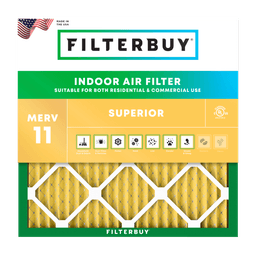
Shop MERV 11 filters→What's the Right Filter for Your AQI Level?


Check Today's Live Real Time Air Quality Index AQI Map in Des Moines, IA Now
TL;DR
The live AQI map above, from U.S. air filter maker Filterbuy, shows Des Moines, IA air quality from Polk County and Iowa DNR monitors via EPA AirNow. The city has two kinds of bad air days: hot afternoons when ozone builds, and fine-particle spikes, mostly from Canadian wildfire smoke. At AQI 100, where we tell households to act, switch to MERV 13, set the fan On, run a portable HEPA cleaner in each occupied room, and close up. On ozone days, filters can't catch it; closing up and timing do the job.
Key Takeaways
Polk County earned a D for both ozone and short-term particles in the 2026 State of the Air report.
The map names the pollutant behind each reading. Filters capture smoke particles, not ozone.
Polk County halts open burning at AQI 90. EPA's sensitive-groups range starts at 101.
At AQI 100, we recommend four steps: MERV 13, fan On, a HEPA cleaner in each occupied room, and closing up.
How to Read the Live Des Moines AQI Map in a Minute
The map shows a 0 to 500 Air Quality Index score for whichever pollutant is highest that hour. Here that is usually ozone on hot afternoons, or PM2.5, fine particles 2.5 micrometers or smaller, during smoke or winter haze. Statewide, see the Iowa air quality map.
The Polk County Air Quality Division runs three monitors, and readings differ, so watch the one closest to home.
Straight-line distance to Polk County's published site coordinates.
What Each AQI Range Means for a Des Moines Household
EPA's range for sensitive groups begins at 101, but two earlier markers matter here. Polk County halts open burning at 90, and we start the four steps at 100, because keeping smoke out of a closed-up house is easier than clearing it once it's in.
Categories follow the EPA AirNow scale. 90 is Polk County's open burning cutoff; 100 is Filterbuy's action line.
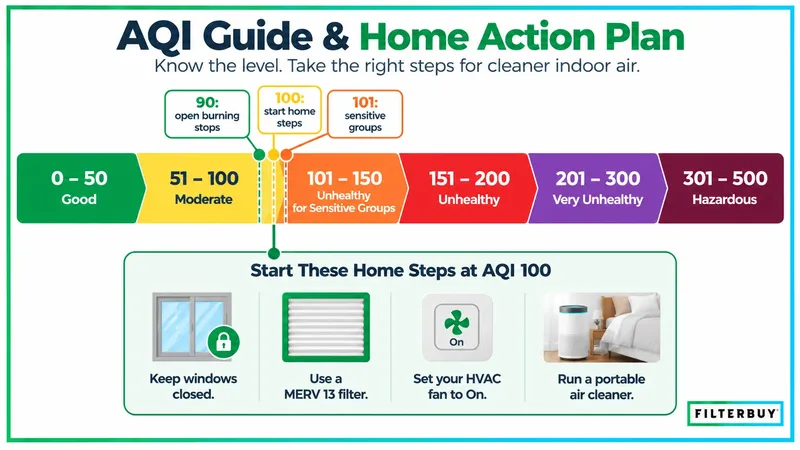
Filterbuy's Four Steps at AQI 100
At AQI 100, start with official guidance from Iowa DNR and Polk County, including any stay-indoors or evacuation orders, and check the AirNow reading. Then:
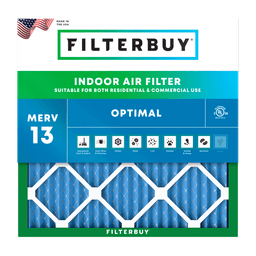
Install a MERV 13 filter. EPA notes that most furnaces and HVAC systems can take MERV 13 without equipment problems when the filter is replaced often.
Set the thermostat fan to On. Auto filters only while the system heats or cools; On filters continuously.
Run a portable HEPA cleaner in each occupied room, bedrooms first. EPA recommends a CARB-certified unit with a smoke CADR of at least two-thirds of the room's square footage, so a 150-square-foot bedroom needs a CADR of 100 or more. Skip ionizers and ozone generators; EPA advises against cleaners that produce ozone.
Close windows and doors, set any fresh-air intake to recirculate, and skip candles, frying, smoking and vacuuming without a sealed unit.
On ozone days, closing up still helps because ozone breaks down indoors; the filter steps target particles.
Why Des Moines AQI Readings Can Look Off or Lag
AirNow's hourly particle readings use NowCast, which weights the most recent hours, while the federal standard is a 24-hour average. When smoke moves in or out quickly, the two can disagree.
Monitors also describe neighborhoods, not streets. Before dawn on May 24, 2023, smoke from driftwood burn piles at Saylorville Lake slid down the Des Moines River valley under an inversion. By 4 a.m., Des Moines station WHO 13 reported, the Polk County Health Department sensor read Very Unhealthy while West Des Moines read far lower.
Is Des Moines Air Safe to Breathe Right Now?
That depends on the reading above and who is breathing it. AirNow says sensitive groups should cut back on long or heavy outdoor exertion once the AQI passes 100, and everyone should above 150. Iowa DNR counts people with heart or lung disease, older adults, children and teenagers, and outdoor workers as sensitive to fine particles. Your doctor's advice comes first.
Going to the Iowa State Fair in August? Check the map that morning, and on an ozone day, walk the grounds before the afternoon peak.
Des Moines Air Quality Alerts and Burn Rules
Iowa DNR issues Air Quality Alerts for smoke or ozone, relayed by the National Weather Service in Des Moines. Polk County sends EnviroFlash email notices from its current AQI page, and Filterbuy's alert sign-up on this page emails you too. The AirNow Fire and Smoke Map and Filterbuy's Des Moines wildfire and smoke map track smoke.
Open burning has been banned in Des Moines, West Des Moines, Clive, Windsor Heights, Urbandale, and Pleasant Hill since September 21, 1983, under Polk County rules. Elsewhere, rules vary by property, but no open burning is allowed at AQI 90 or above.
What's Actually in Des Moines Air
Ozone forms on hot, sunny afternoons from vehicle and industrial emissions, and wildfire smoke adds gases that feed it. Fine particles, or PM2.5, come from Canadian wildfire smoke, spring prairie and habitat burns, and winter haze.
Midwest research finds particulate nitrate now makes up as much as 40 percent of the region's winter fine-particle mass, formed when farm ammonia meets nitrogen oxides from vehicles and power plants. Year-round, the metro still passes the federal particle standard, per the 2026 State of the Air report.
Canadian Wildfire Smoke: Des Moines' Biggest Air Quality Swing
Canadian smoke can turn Des Moines air unhealthy within a day. On May 7, 2016, it pushed the city's daily average PM2.5 to 50.7 micrograms per cubic meter, according to the State Hygienic Laboratory at the University of Iowa. On June 3, 2025, Iowa DNR issued a statewide alert, and on July 31 it expected exceedances across most of Iowa. Our Canadian smoke guide explains how plumes travel.
What If Your Des Moines Home Has No Central HVAC?
Filterbuy makes HVAC filters, so we'll be direct: without ducts there is no filter slot, so portable HEPA cleaners are your primary layer. With radiators, baseboards, a ductless heat pump, or window units, run a CARB-certified HEPA cleaner in each occupied room during smoke. If that is out of reach, EPA describes a do-it-yourself box-fan cleaner built with MERV 13 filters. Use a certified fan made in 2012 or later, never leave it running unattended, and treat it as a stopgap until you can get a certified air cleaner.
Our Take: Des Moines Has Two Kinds of Bad Air Days, and Filters Fix One
Filterbuy has made HVAC filters in the U.S. since 2013. With a D on both pollutants, the first question on a bad day is which one the map names. Ozone peaks in the afternoon and fades after sunset; smoke can arrive at any hour, often with a campfire smell.
We'll say it plainly as a filter company: on an ozone day, no filter we make will help, so exercise in the morning and close up in the afternoon. On a particle day, the four steps apply, and the fan setting matters as much as the filter. Smoke tends to arrive in air-conditioning season, when a fan on Auto sits idle between cycles.
The number is a cue to act, not a stat to admire. When it climbs, close the windows, switch your HVAC to recirculate, and run a MERV 13 filter so your system pulls those smoke particles out of the air you’re breathing.
Filterbuy, from Wildfire Smoke and the Air Quality Index: A Homeowner’s Guide
Which Filter the Des Moines AQI Calls For
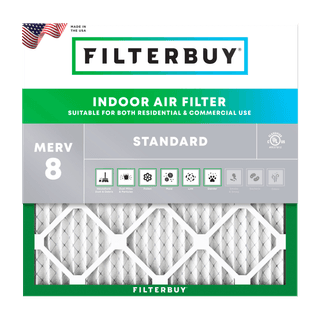
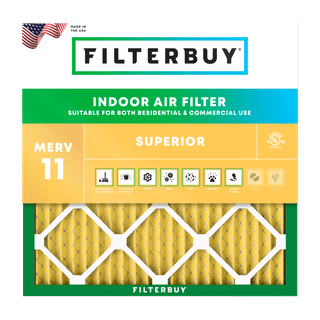
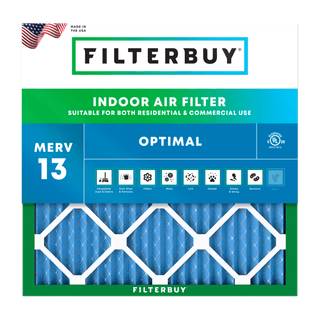
For readings from 0 to 99, a MERV 8 or MERV 11 filter handles ordinary dust and pollen. At AQI 100, during smoke or winter haze, switch to MERV 13. EPA recommends MERV 13 or higher during smoke events, and Filterbuy makes MERV 13 air filters in over 600 sizes. Check that it fits snugly.
Our 90-day filter life assumes normal household dust, not smoke. During heavy smoke, check the filter often and replace it once it looks dark brown or black, which can be well before the normal interval. Buy a spare on a clear spring day, or let Filterbuy auto-delivery handle it.
Supporting Statistics
Polk County earned a D for ozone and for short-term particles.
About 3 unhealthy ozone days a year, ranking 80th worst (2022 to 2024).
About 2.5 unhealthy particle days a year, ranking 76th worst.
Source: American Lung Association, State of the Air 2026
Closing up alone leaves indoor PM2.5 at about 55 to 60 percent of outdoor levels during smoke.
Across homes, it ranges from 30 to 100 percent.
That is why the four steps add filtration to closing up.
Source: U.S. EPA, Strategies to Reduce Exposure Indoors
On July 31, 2025, Iowa DNR expected smoke to push fine particles past the federal limit across most of Iowa.
The limit is 35 micrograms per cubic meter over 24 hours.
Source: Iowa Department of Natural Resources
Frequently Asked Questions
What Is the Air Quality in Des Moines Today?
The live map above shows the current AQI and the pollutant driving it.
Is the Air Quality Bad in Des Moines Today?
Check the map above. At 101, sensitive groups should take precautions; at 151, everyone. Filterbuy starts home steps at 100.
Can I Burn Leaves or Brush in Des Moines?
No. It has been banned in Des Moines and five neighboring cities since 1983, and all Polk County open burning stops at AQI 90.
What MERV Rating Should I Use for Wildfire Smoke in Des Moines?
MERV 13, the top tier Filterbuy makes. EPA recommends MERV 13 or higher during smoke events, and notes most home systems take it when the filter is changed often.
How Do I Check Des Moines PM2.5 Right Now?
Tap the nearest station on the live map to see its PM2.5 reading; the monitor table above matches areas to stations.
Glossary
AQI: The EPA's 0 to 500 Air Quality Index, divided into six health categories.
PM2.5: Fine particles 2.5 micrometers or smaller, the main component of smoke and winter haze.
Ground-level ozone: A lung-irritating gas that forms in sunlight; HVAC filters do not capture it.
NowCast: AirNow's hourly method that weights recent hours.
Temperature inversion: Warm air above cooler ground air, trapping smoke near the surface.
Iowa DNR and Polk County Air Quality Division: The state and county agencies that monitor Des Moines air.
MERV: Minimum Efficiency Reporting Value, a 1 to 16 rating of particle capture; Filterbuy color-codes its media by MERV level.
CADR: Clean air delivery rate, how much filtered air a portable cleaner delivers.