
Des Moines, IA Live Wildfire Smoke Map
Get Alerts For Wildfires In Your Area
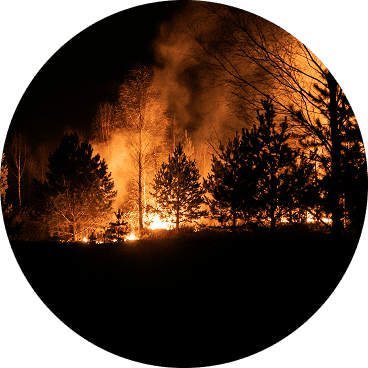
The moment a wildfire starts near you, you'll get an instant alert and simple tips to reduce your smoke exposure.
What's In The Smoke
30xSmaller than a human hair
Fine enough to reach deep into the lungs. A MERV 13 is built to capture it.
How Far It Travels


It Doesn't Stay Local
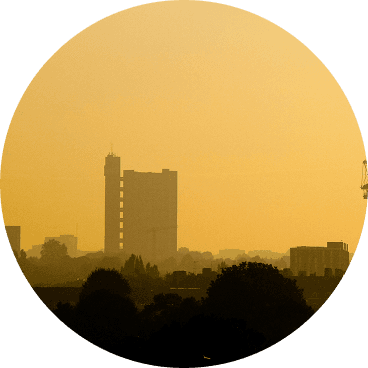
Smoke rides the wind far downwind — you can get smoky air with no fire nearby.
What To Do During A Smoke Event
Simple steps to reduce indoor exposure.
- Stay In, Close UpShut windows and doors to keep smoke out.
- Set Fan To "On"Keeps air cycling through your filter, not just when heating or cooling.
- Recirculate AirSwitch off fresh-air intake so you're not pulling smoke in.
- Run A MERV 13Built to capture the fine PM2.5 in smoke.
- Add A PurifierExtra filtration for the room you use most.
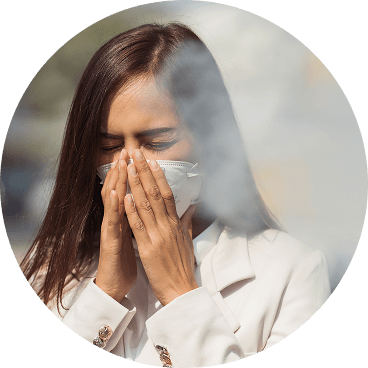
- Wear an N95 if OutsideFits snug to block fine particles — a cloth mask won't.


The Best Air Filter For Wildfire Smoke
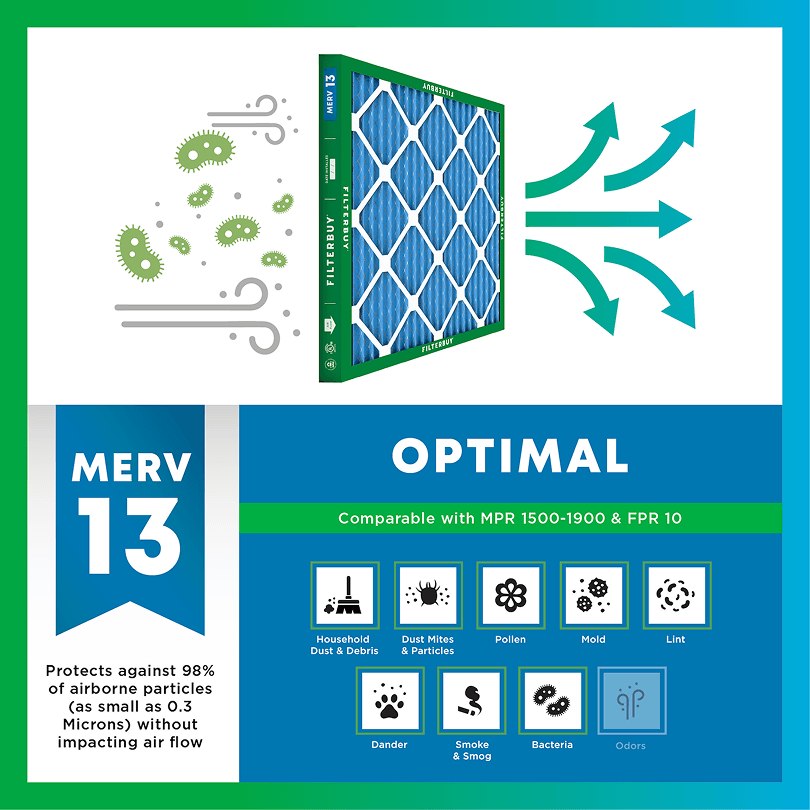
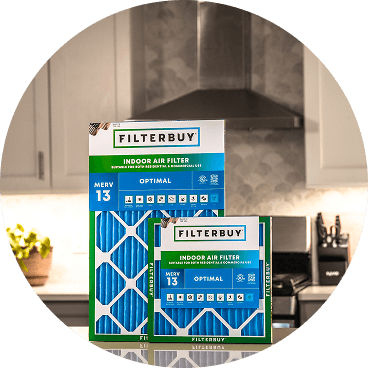
During smoke events, the EPA recommends upgrading to a MERV 13 filter — or the highest-rated filter your system can handle — to help reduce the fine particles smoke brings indoors. MERV 13 is the level most home HVAC systems can run while still capturing PM2.5, the fine particulate that makes up the bulk of wildfire smoke.
- Captures PM2.5 particles
- Blocks ash, soot, and smoke odor
- Keeps your indoor air safe—even when the outdoor air is dangerous
- Meets the EPA's recommended rating for filtering fine wildfire smoke particles.

Wildfire Smoke FAQs
Facts About Wildfires
Over 70,000 wildfires burn in the U.S. every year.
Wildfire smoke can travel 1,000+ miles, affecting states that aren't even near the blaze.
Exposure to wildfire smoke can worsen asthma, trigger heart issues, and lead to ER visits.
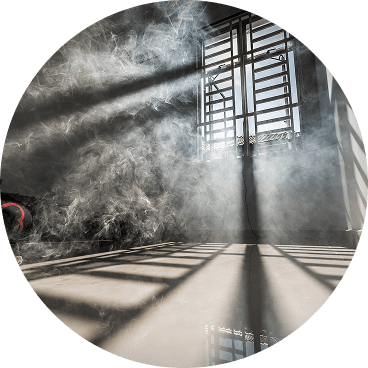
Indoor air can hold more fine particles during wildfire events unless it's properly filtered.
The EPA advises using MERV 13 filters or portable HEPA air cleaners during wildfire smoke events.
Don't Wait Until The Smoke's Inside.
Use the live wildfire smoke tracker and upgrade your air filters today to protect your lungs and your home.
Shop Filters For Smoke Protection
Live Des Moines, IA Forest Wildfire & Smoke Map Today: Local Air Quality Tracking & Indoor Protection Solutions
By Michelle Wan, Brand Manager and Air Quality Writer at Filterbuy | Technically reviewed by David Clark, Licensed HVAC Technician
Published August 28, 2026 | Updated August 28, 2026
TL;DR
Des Moines has almost no wildfire risk of its own, so the smoke that turns central Iowa skies orange was carried here from somewhere else, usually Canada. The map below layers satellite fire detections, the smoke plume overhead, and ground-level PM2.5 from Polk County's monitors. Watch that last number rather than the haze, because it decides whether it's safe to be outside today and how hard your furnace filter has to work.
Key Takeaways
Des Moines receives smoke; it doesn't produce it. No local agency will knock on your door, so a state alert and a colored dot on a map are your whole warning system.
A hazy sky doesn't always mean unhealthy air. Smoke riding high overhead can dim the sun while ground-level PM2.5 stays green.
"Des Moines County, Iowa" is not Des Moines. It's 170 miles southeast, and it's a common false match in automated fire alerts.
The federal 24-hour PM2.5 standard is 35 µg/m³. Iowa DNR issues air quality alerts when smoke is forecast to push the state past it.
A MERV 13 filter is your best indoor defense, but only while the blower runs. In a mild Iowa September, that fan setting matters more than the filter you buy.
Is There a Wildfire Burning Near Des Moines Right Now?
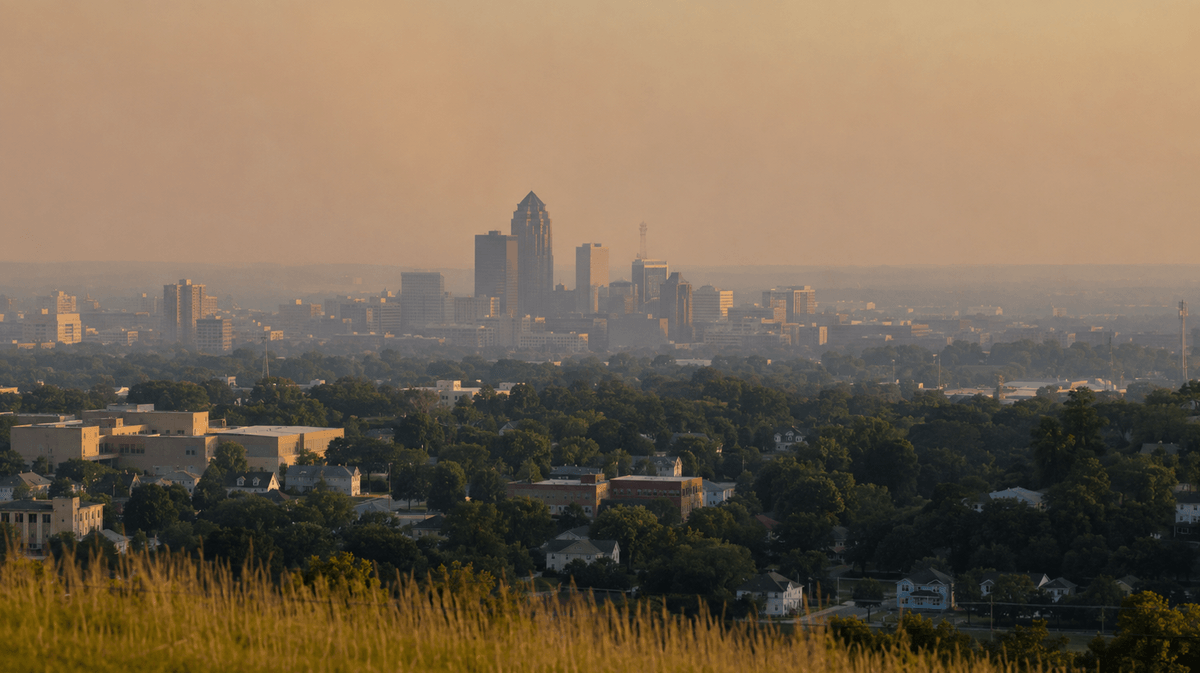
Almost certainly not. Des Moines sits in Iowa's row-crop prairie, without the forest fuel base a wildfire needs, so smoke on the map arrived on upper-level winds from hundreds or thousands of miles away. You are not preparing to evacuate. You are preparing to keep outdoor particles out of your house for two to five days.
Polk County runs a free EnviroFlash service that emails you when local AQI is forecast to reach unhealthy levels, and signing up takes a minute.
The "Des Moines County" Trap
Automated fire alerts frequently name Des Moines County, Iowa, which is not the city. It sits in the far southeast corner of the state, roughly 170 miles away, and fires flagged there are usually grass or agricultural burns with no bearing on metro air. If an alert names a county rather than a city, check which one before reacting.
How to Read Today's Des Moines Smoke Map in Three Layers
A smoke map is three datasets stacked on top of each other, and only the third one should change your plans. Reading them in order takes about fifteen seconds and resolves the usual contradiction, which is that the sky looks terrible while the app says the air is fine.
Layer 1: Fire detections. Red or orange hotspots are satellite heat signatures. For a Des Moines viewer, these are context rather than threat, since zooming out usually finds the source burning in Canada or the northern Rockies.
Layer 2: The smoke plume. Gray shading shows smoke anywhere in the atmospheric column at any altitude. This is the layer that turns your sky milky, and the one people misread most, because smoke drifting five miles overhead is dramatic to look at and irrelevant to breathe.
Layer 3: Ground-level PM2.5. The colored dots are monitors measuring street-level air, and this is the only layer that should change your behavior. That data comes from three sites run by Polk County Air Quality: Carpenter at the county Health Department, Indian Hills Jr. High in Clive, and Sheldahl in Polk City. When they turn orange or red, the plume has mixed down to the surface, and that's your cue to close the house up.
When Smoke Reaches Des Moines, and Why Timing Matters
Canada is the dominant source, and the season peaks in mid-to-late summer. Des Moines hit AQI 107 on September 6, 2023, as Canadian smoke settled over the state, and by August 10, 2026, more than 600 wildfires were burning across Canada.
That window collides with the calendar Des Moines spends outdoors: RAGBRAI the last full week of July, eleven open-air days of the Iowa State Fair in August, and fall sports two-a-days the same month. All three are sustained exertion, which is what turns a moderate AQI into a real problem, since you inhale far more air per minute working hard than sitting still. If you're riding, coaching, or watching a kid at practice, check the map the morning of rather than the night before.
What Today's AQI Number Means for Your Day
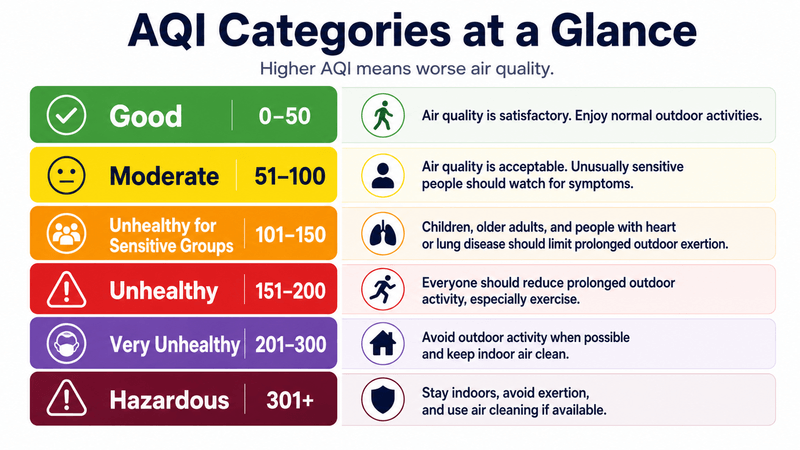
Match your plans to the color the map shows, then cross-check against Iowa's AirNow monitors if a reading looks off.
Green and Yellow (0–100): Normal activity. Unusually sensitive people may notice irritation at the top of yellow.
Orange (101–150): Children, older adults, and anyone with asthma, COPD, or heart disease should shorten outdoor exertion or move it inside.
Red (151–200): Everyone limits outdoor exertion. Windows closed, HVAC fan running.
Purple (201+): Stay indoors, seal the house, and treat it as a multi-day event.
Fine particles measure 2.5 micrometers or smaller, roughly 1/30th the width of a human hair, which is small enough to travel deep into lung tissue and into the bloodstream.
How to Protect the Air Inside Your Des Moines Home
Your house is not sealed, and smoke follows you indoors. Even with windows shut and no air cleaner running, EPA finds indoor PM2.5 settles at roughly 55 to 60% of outdoor levels during a smoke event, and reaches 100% in leaky homes. Closing up is step one, not the whole answer.
The Iowa Shoulder-Season Problem
Des Moines smoke arrives in the weeks when local homes need the least heating and cooling, which creates a failure mode most filtration advice never mentions: you can own exactly the right filter and get almost nothing from it, because your blower barely runs in September. A filter only cleans the air that passes through it, and on a 72-degree afternoon with the AC satisfied, that's close to none of it.
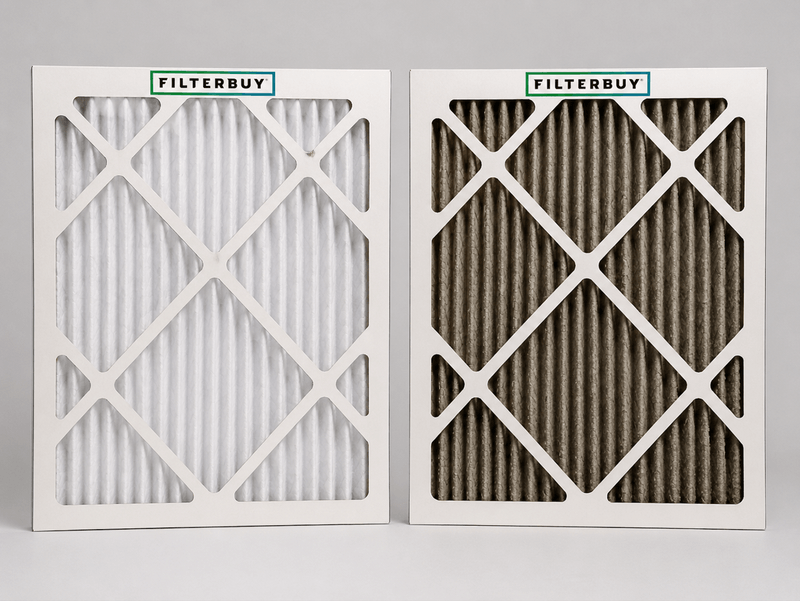
1. Install a MERV 13 filter. Under ASHRAE 52.2, MERV 13 captures at least 50% of particles in the 0.3 to 1.0 micron range, which is where wildfire smoke lives. MERV 8, the builder-grade default in most Des Moines homes, isn't rated in that range at all. One limit we'd rather state than sell around: no filter removes smoke's gases, only its particles, so a campfire smell that outlasts the haze needs activated carbon media instead of a higher MERV number.
2. Run the blower. Switch the thermostat fan from AUTO to ON so the system circulates continuously. This costs nothing; it's the step people skip, and in a Des Moines September it's the difference between a filter that works and one that sits there.
3. Check compatibility, then replace often. Most modern systems handle MERV 13, but an older furnace or undersized return is worth a technician's static-pressure check first. Then inspect monthly through smoke season and replace the filter when it looks gray, not when the calendar says to.
If You Rent or Don't Have Central Air
Several of the best options don't involve buying a filter at all, and we'll say that plainly as a company that sells them. Close the fresh-air damper on a window AC so it recirculates. Build a box fan with a MERV 13 taped to the intake for the bedroom, an EPA-studied approach that measurably lowers PM2.5 in one room. If you can't modify anything, use the interior room with the fewest windows, keep the door shut, and skip the candles, frying, and vacuuming that add particles of their own.
We've manufactured filters in the U.S. since 2013 and shipped millions of them into homes across the country, and the lesson repeats every fire season: heavy smoke loads a high-MERV filter in days, not months. The households that ride out a bad week with the least disruption aren't the ones who bought the highest-rated filter on paper. They're the ones who had it installed, had the fan running, and had a spare in the closet before the smoke ever showed up on a map.
David Clark, Licensed HVAC Technician
Supporting Statistics
1. Polk County averages 2.5 unhealthy particle-pollution days a year, and the metro ranks 76th worst nationally. Those days cluster into single multi-day stretches rather than spreading out, which is exactly when homeowners discover their filter is a builder-grade MERV 8.
Source: American Lung Association, "State of the Air," April 2026
2. Asthma ER visits ran 17% above expected during the 19 U.S. wildfire smoke days of April to August 2023. The largest increases hit ages 5 to 17 and 18 to 64, so if someone in your house is school-age with an inhaler, orange is your action line rather than a warning meant for someone else.
Source: CDC MMWR, August 2023
3. A high-efficiency filter with the fan running continuously cuts indoor PM2.5 by about 50%, versus 24% for a standard filter. Half the available benefit comes from a thermostat setting rather than a purchase, which is an odd thing for a filter manufacturer to lead with and exactly why we do.
Frequently Asked Questions
Get Your Filter in Place Before the Next Plume
The map above tells you what's in the air over Des Moines today, and the filter in your furnace decides how much of it you breathe tonight. Check it on a clear day and order your size before smoke arrives, because Filterbuy manufactures MERV 13 in over 600 sizes at our own U.S. factories and ships factory-direct, free.
Shop MERV 13 by size · Set up auto-delivery · Build a custom size
Written by Michelle Wan, who covers indoor air quality for Filterbuy, and technically reviewed by David Clark, Licensed HVAC Technician, for accuracy on airflow and static pressure. Filterbuy is a family-owned American company manufacturing HVAC filters in the U.S. since 2013 in over 600 sizes. This page reflects that experience alongside current EPA, ASHRAE, Iowa DNR, and Polk County guidance, and is not a substitute for advice from a qualified HVAC professional about your system.
Subscribe to wildfire smoke alerts for Des Moines, IA, to get a heads-up before the next event reaches your area.