
Corona Real-Time AQI Tracker

Get Alerts For Unhealthy AQI In Your Area
When air quality in your area reaches unhealthy levels, we'll send you a quick alert, along with expert tips on how to reduce your exposure.
What's Actually In Corona Air Today?
What High AQI Means for Your Lungs in Corona
How to Read AQI
The Air Quality Index (AQI) measures how polluted the air is and how it may affect your health.
0–50 (Good): Air quality is satisfactory.
51–100 (Moderate): Acceptable, but some pollutants may pose minor concerns.
101–150 (Unhealthy for Sensitive Groups)
151–200 (Unhealthy)
201–300 (Very Unhealthy)
301+ (Hazardous)
Moderate
Still okay for most, but if you have asthma or allergies, take it easy and avoid long outdoor workouts.
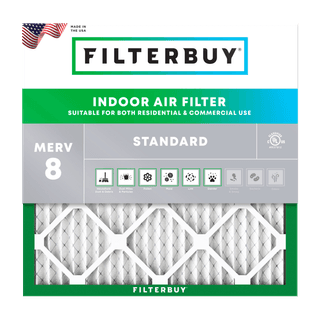
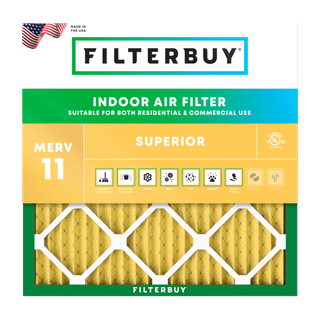
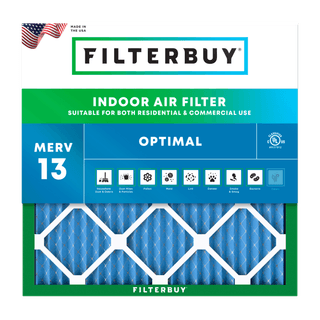
Shop MERV 11 filters→What's the Right Filter for Your AQI Level?


Check Today's Live Real Time Air Quality Index AQI Map in Corona, CA Now
By Michelle Wan, Brand Manager & Air Quality Writer, Filterbuy · Technically reviewed by David Clark, Licensed HVAC Technician and CEO of Filterbuy HVAC Solutions · Published August 12, 2026 · Updated August 12, 2026
The live air quality index (AQI) map below shows real-time air quality in Corona, CA right now. Find your neighborhood to see the current AQI number and color, Good (green) to Hazardous (maroon). The reading updates through the day using data from South Coast AQMD, AirNow, and the California Air Resources Board. Filterbuy built this page to turn that reading into practical steps.
TL;DR
Corona sits at the mouth of the Santa Ana Canyon, where the afternoon sea breeze pushes coastal and Orange County air inland through the SR-91 gap. That makes Corona a downwind receptor city: its worst air forms elsewhere, then arrives after lunch. Check the map, then check which pollutant is behind the number. Ozone and smoke need different responses.
Key Takeaways
Corona's live AQI comes from South Coast AQMD, AirNow, and the California Air Resources Board.
AQMD forecasts Corona as Source Receptor Area 22, "Norco/Corona."
Ozone (smog) dominates Corona's summer; wildfire-smoke PM2.5 dominates its fall.
Riverside County ranked second worst in the nation for ozone (American Lung Association, 2026).
Corona's air is cleanest in the early morning and worst from roughly 1 p.m. to 7 p.m. in summer.
A pleated filter captures PM2.5 but does not remove ozone, so summer afternoons call for closing up, not filtering.
AQI 101+ (orange) means sensitive groups should ease up; 151+ (red) means everyone should.
What Is the Air Quality in Corona Today?
To see what the air quality in Corona is today, check the live AQI map above. It reports Corona's air pollution today as one number and color on a 0–500 scale. Lower is cleaner. Because conditions shift with heat, wind, and smoke, the number may differ sharply from this morning's.
The U.S. Environmental Protection Agency (EPA) sets the categories, published through AirNow AQI Basics:
AQI categories set by the U.S. Environmental Protection Agency. PM2.5 breakpoints were updated May 6, 2024.
AQI categories set by the U.S. Environmental Protection Agency. PM2.5 breakpoints were updated May 6, 2024.
See how the AQI is calculated and the full AQI color chart.
Why Does Corona's Air Quality Change So Much During the Day?
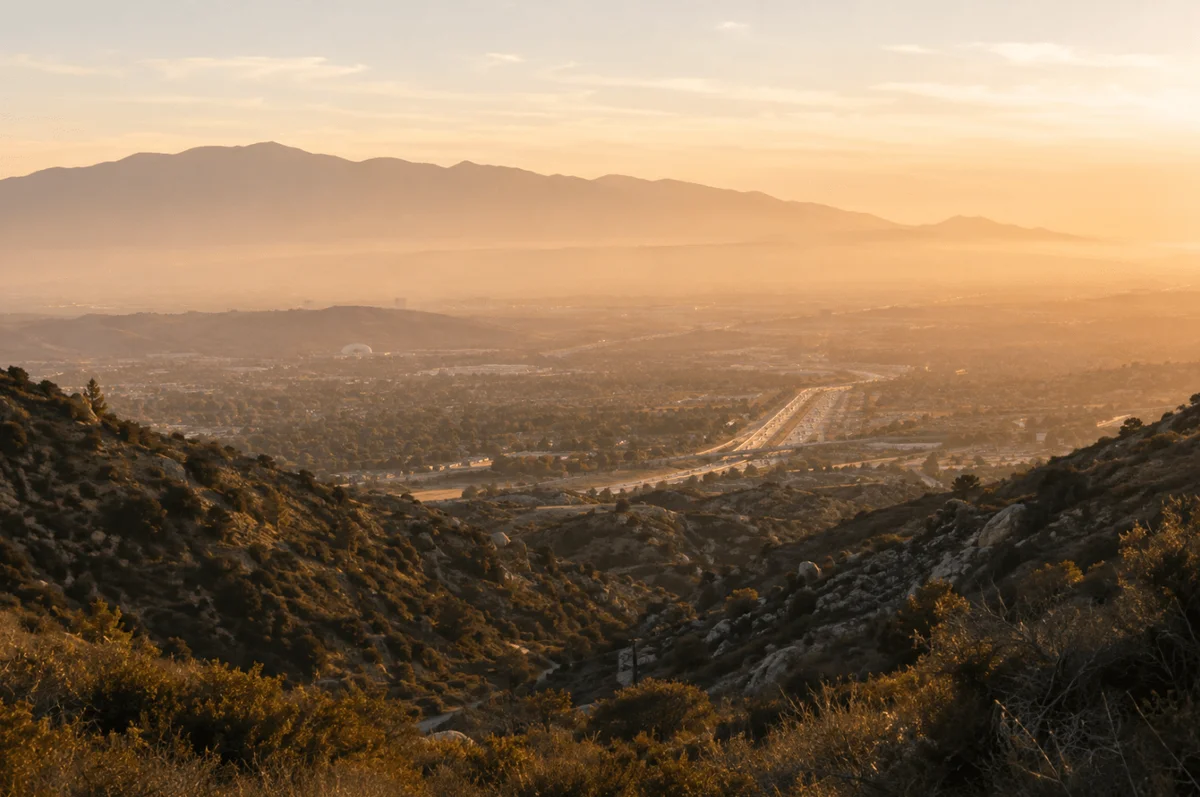
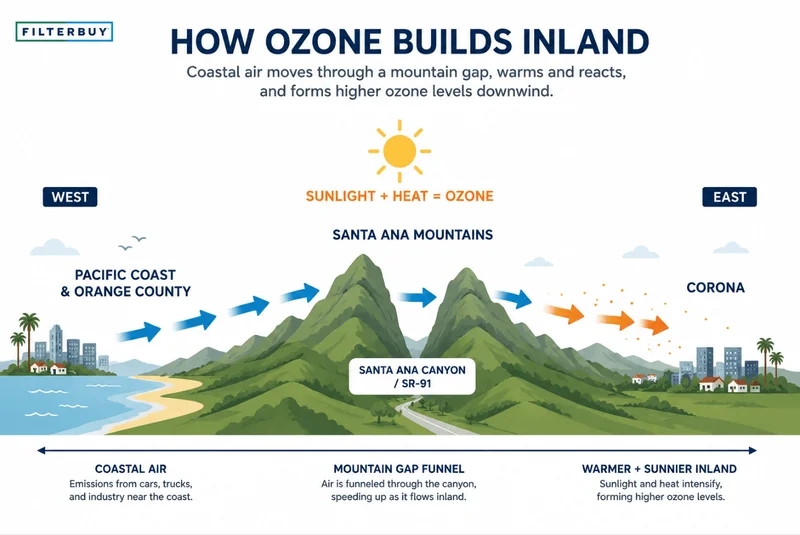
Corona's air changes through the day because it is a downwind receptor city, not a pollution source. Corona sits at roughly 679 feet in western Riverside County, where the Santa Ana Canyon cuts through the mountains and carries State Route 91 between the coast and the Inland Empire.
That canyon is the key. Each afternoon the sea breeze pushes air inland from Los Angeles and Orange County, including Irvine, through the SR-91 gap. Emissions released near the coast that morning cook in sunlight for hours, reaching Corona as ozone. Temescal Canyon along I-15 feeds a second stream.
The result is a rhythm residents recognize once pointed out: mornings read Good or low Moderate, then the number climbs all afternoon though nothing local changed. Ozone is invisible and odorless, so a clear sky at 4 p.m. tells you nothing.
I pull AQI data for U.S. cities every morning, and the number itself is rarely the interesting part. A reading of 160 caused by ozone and a reading of 160 caused by wildfire smoke look identical on a screen, but they call for different decisions.
Michelle Wan, Brand Manager and Air Quality Writer, Filterbuy
Which South Coast AQMD Forecast Zone Covers Corona?
South Coast AQMD forecasts Corona as Source Receptor Area 22, "Norco/Corona." The agency splits its territory into numbered zones and forecasts each daily: 8-hour ozone, 24-hour PM2.5, and a maximum AQI. Corona's live figures sit on the current readings by air monitoring subregion page, the outlook on the air quality forecasts page.
Knowing your zone matters: "Riverside County" spans Corona to the Coachella Valley, areas sharing neither weather nor air. AQMD runs free air alerts by zone.
Corona's Two Main Pollutants: Ozone and PM2.5
Corona's air quality is driven mainly by ground-level ozone and PM2.5. The live map above usually flags which one is behind today's number.
Sources: South Coast AQMD and the U.S. EPA.
Sources: South Coast AQMD and the U.S. EPA.
PM2.5 matters most indoors. Per the U.S. EPA, these particles reach deep into the lungs and bloodstream, and pass through leaky windows and cheap filters. See Filterbuy's MERV 13 vs. HEPA for wildfire smoke.
Supporting Statistics: The Research Behind Corona's Air
Four findings put Corona's air in context.
2nd worst county in the nation for ozone. The American Lung Association ranked Riverside County second nationally, at a weighted average of 126.7 unhealthy ozone days, and 10th for both particle measures. South Coast AQMD counters that 2025 ozone was among the lowest on record regionally. Source: ALA State of the Air 2026.
"Extreme" ozone rating. The EPA rates the Los Angeles–South Coast Air Basin, which contains Corona, as Extreme nonattainment for ozone, the most severe of six Clean Air Act categories. Only one other U.S. region shares it. Source: U.S. EPA Green Book.
90% of time spent indoors. Americans spend about 90% of the day inside, where some pollutants run 2 to 5 times higher than outdoors. Source: U.S. EPA Report on the Environment.
40% fewer fine particles. California school testing swapped MERV 8 filters for MERV 13, and classroom PM2.5 fell roughly 40%. Nothing else changed. Source: Lawrence Berkeley National Laboratory, U.S. DOE.
What a Filter Can and Cannot Do About Corona's Air
Here is where Filterbuy parts ways with most air quality pages, and it costs us a sale: a pleated air filter does not remove ozone. Ozone is a gas. Pleated media captures particles. On a high-ozone Corona afternoon, which is most of the summer, your filter is not the fix. Close the house and move exertion to the morning instead.
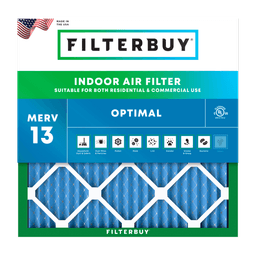
Filtration earns its keep on Corona's other half: PM2.5 from wildfire smoke, canyon dust, and diesel on the 91. That is what a Filterbuy MERV 13 captures. So the daily question is not "how bad is the number," but "which pollutant is driving it." The answer changes which lever works.
One warning matters here. Some devices sold as "air purifiers" work by generating ozone, marketed as "activated oxygen." They add the pollutant you want gone. Since 2010, portable indoor air cleaners sold in California must be CARB certified and stay under 0.05 ppm of ozone. CARB notes ozone numbs the sense of smell, so odor is no guide.
When Is Corona's Air Worst? A Season-by-Season Guide
Corona's air is worst in summer, when ozone peaks on hot afternoons, and in fall, when wildfire smoke drives PM2.5. Spring and winter are milder.
What Should You Do When Corona's AQI Is High?
When Corona's AQI climbs above 100, reduce outdoor exertion and clean the air inside. Sensitive groups should act at lower levels.
Check which pollutant is driving the number. The map flags it, and it sets which step below matters most. In fire season, cross-check the AirNow Fire and Smoke Map.
Shift outdoor activity to the morning. Ozone is lowest before mid-morning, so moving a workout three hours earlier changes exposure more than any indoor step.
Close up the house by early afternoon. Shut windows before the canyon breeze arrives. This matters most on ozone days.
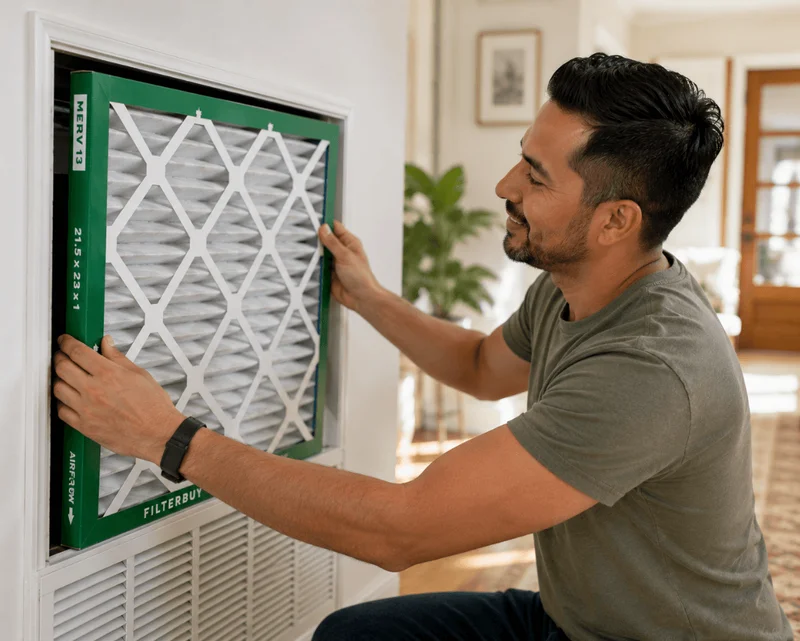
Run your HVAC with a clean filter. Smoke Ready California advises setting the fan to "on" rather than "auto" so air is filtered constantly, and closing any fresh-air intake.
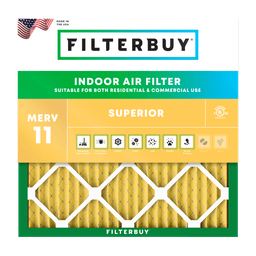
Upgrade to a filter that captures PM2.5. A Filterbuy MERV 13 traps a high share of fine smoke particles while maintaining airflow. A MERV 11 is lighter for moderate days.
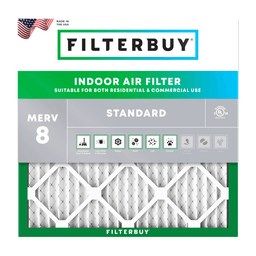
On green days a MERV 8 covers routine dust and pollen. Because Corona smoke events run for days, Filterbuy Auto Delivery keeps a spare on hand.
How Is Corona's Air Quality Measured?
South Coast AQMD blends regulatory monitors, calibrated sensors, and models to estimate AQI at more than 1,200 neighborhood-scale locations. That is why one Corona address can read differently from another.
Geography explains the spread. Sierra Del Oro, Corona's westernmost neighborhood on Green River Road, sits inside the canyon mouth two miles from the Orange County line and meets incoming air first. Central Corona sits on the open valley floor. South Corona and Dos Lagos, near I-15, catch the Temescal Canyon flow. Search your address, not a citywide figure.
On May 6, 2024, the EPA tightened the PM2.5 breakpoints, dropping the "Good" ceiling from 12.0 to 9.0 micrograms per cubic meter. Identical air now reads Moderate more often, worth knowing before assuming Corona's air worsened.
Corona Air Quality FAQs
About the Author and Review
Michelle Wan is Filterbuy's Brand Manager and Air Quality Writer, turning MERV ratings, filtration, and HVAC airflow into plain-English advice. She pulls live AQI data across Filterbuy's coverage cities each morning and tracks wildfire-smoke maps.
Reviewed for technical accuracy by David Clark, Licensed HVAC Technician and CEO of Filterbuy HVAC Solutions, who inspects filter performance in smoke events.
Filterbuy has manufactured air filters in the USA since 2013, across plants in Alabama, Florida, Pennsylvania, and Utah. That is why this page says when a filter is not the answer. Filterbuy's advice for Corona: check the number, check the pollutant, seal the house, run a clean filter.
Clean air, without the hassle. When smoke reaches Corona, find the right MERV 13 filter and set up Filterbuy Auto Delivery. Elsewhere, use Filterbuy's California AQI map.
Glossary
AQI (Air Quality Index): A 0–500 EPA scale converting pollution into one number and color, Good to Hazardous.
Ozone (O₃): A gas that forms ground-level smog when heat and sunlight react with emissions; Corona's main summertime pollutant.
PM2.5: Fine particles under 2.5 microns that reach deep into the lungs; the main pollutant in wildfire smoke.
SRA (Source Receptor Area): A numbered AQMD forecast zone. Corona is SRA 22, "Norco/Corona."
MERV 13: A filter rating; a Filterbuy MERV 13 captures a high share of fine particles like smoke while keeping airflow.
Sensitive groups: Children, older adults, pregnant people, and anyone with asthma, COPD, or heart disease.
CARB certified: California's required air-cleaner label, capping ozone output at 0.05 ppm.
Sources: South Coast AQMD, AirNow (U.S. EPA), California Air Resources Board, CAL FIRE, the American Lung Association, and the U.S. EPA.
Air quality data on this page is provided for informational purposes and is not medical advice. If you have a health condition, follow the guidance of your doctor and local health authorities.