
Irvine Real-Time AQI Tracker


Get Alerts For Unhealthy AQI In Your Area
When air quality in your area reaches unhealthy levels, we'll send you a quick alert, along with expert tips on how to reduce your exposure.
What's Actually In Irvine Air Today?
What High AQI Means for Your Lungs in Irvine
How to Read AQI
The Air Quality Index (AQI) measures how polluted the air is and how it may affect your health.
0–50 (Good): Air quality is satisfactory.
51–100 (Moderate): Acceptable, but some pollutants may pose minor concerns.
101–150 (Unhealthy for Sensitive Groups)
151–200 (Unhealthy)
201–300 (Very Unhealthy)
301+ (Hazardous)
Moderate
Still okay for most, but if you have asthma or allergies, take it easy and avoid long outdoor workouts.
Shop MERV 11 filters→What's the Right Filter for Your AQI Level?



Live Air Quality Index AQI Map Irvine California Today | Filterbuy.com
Live Air Quality Index AQI Map Irvine California Today
Check the live Air Quality Index for Irvine, California right now — and find out what today's AQI actually means for the air inside your home.
Most air quality tools stop at the outdoor number. We don't. After manufacturing millions of air filters in the U.S. and helping homeowners across Southern California protect their indoor air since 2013, we've learned something most people overlook: when Irvine's AQI spikes from wildfire smoke, I-5 corridor emissions, or regional ozone buildup, those same pollutants are pulled directly into your home through your HVAC system. Based on what we've seen firsthand, a single poor-air-quality day can load your air filter with particulates that would normally accumulate over weeks.
Use our live AQI map below to monitor conditions in Irvine today, then take the one step that makes the biggest difference for your family's indoor air — making sure the right filter is in place before outdoor pollution becomes an indoor problem.
TL;DR Quick Answers
Live Air Quality Index AQI Map Now Today in Irvine California
Irvine's live AQI is updated in real time using data from EPA monitoring stations and the South Coast Air Quality Management District's network of over 1,200 sensors across the region. Check the map at the top of this page for current conditions.
What to know at a glance:
AQI 0–50 (Green): Air is clean. Safe for all outdoor activities.
AQI 51–100 (Yellow): Moderate. Sensitive individuals should take note.
AQI 101–150 (Orange): Unhealthy for sensitive groups. Limit prolonged outdoor exertion.
AQI 151+ (Red and above): Unhealthy for everyone. Stay indoors and check your HVAC filter.
What most AQI maps won't tell you: After manufacturing millions of air filters and working with Irvine homeowners since 2013, we've learned that outdoor AQI is only half the equation. Your HVAC system pulls outdoor pollutants directly into your home — and on elevated AQI days, your air filter is the single most important line of defense between what's outside and what your family breathes inside. A MERV 11 or MERV 13 filter, replaced on schedule, is the fastest way to turn today's AQI reading into actual indoor air protection.
Top 5 Takeaways
Irvine's AQI changes fast. Freeway emissions, Santa Ana winds, and wildfire smoke can flip conditions in hours — and your HVAC system pulls those pollutants straight indoors.
Indoor air is often worse than outdoor air. The EPA reports indoor pollutant levels can run 2 to 5 times higher than what's outside — even on green AQI days.
Orange County earns a failing air quality grade every year. Ozone season and wildfire smoke make this an annual pattern, not an occasional event.
Your air filter is your home's single best defense. A MERV 11 or MERV 13 filter, replaced on schedule, captures the fine particulates that drive unhealthy AQI readings before they circulate through your living spaces.
Don't just check the AQI — act on it. Check the map. Check your filter. Adjust your replacement schedule when conditions spike. That's the difference between reading about air quality and actually breathing cleaner air at home.
What Is the Air Quality Index and Why Does It Matter in Irvine?
The Air Quality Index is a standardized scale from 0 to 500 that measures how clean or polluted your outdoor air is at any given time. The lower the number, the cleaner the air. Readings between 0–50 are considered good, while anything above 100 starts posing health concerns — especially for children, older adults, and anyone with respiratory conditions.
Irvine generally benefits from coastal airflow that helps keep pollution levels in check, but the city isn't immune to poor air days. Its location in the heart of Orange County means freeway emissions, construction activity, and seasonal Santa Ana winds can shift conditions quickly.
What Outdoor Air Quality Means for Your Indoor Air
Pollen, smoke particulates, vehicle exhaust residue, and fine dust all get pulled through your ductwork and into the rooms where your family eats, sleeps, and spends most of their time.
After more than a decade of manufacturing air filters and working directly with homeowners, we've found that the days following an AQI spike are when indoor air quality takes its biggest hit. Your HVAC filter is the primary line of defense, and if it's clogged or underrated for the job, those outdoor pollutants circulate through your home unchecked.

Protecting Your Irvine Home When AQI Levels Rise
A higher-rated filter captures smaller particles — including the fine smoke and smog particulates common during Irvine's poorest air quality days. Pairing the right filter with a regular replacement schedule keeps your system running efficiently while trapping pollutants before they reach your living spaces.
At Filterbuy, we manufacture every filter in the U.S. and offer over 600 sizes — plus custom options — shipped factory-direct to your door. Whether Irvine's AQI is green today or climbing toward red, having the right filter already in place means your indoor air stays clean without the last-minute scramble.
"After manufacturing millions of air filters and working with homeowners across Southern California for over a decade, we've seen firsthand how a single high-AQI day can overwhelm an undersized or neglected filter — turning your HVAC system from a line of defense into a way of circulating the very pollutants you're trying to avoid."
— Filterbuy Air Quality Team
7 Air Quality Resources Every Irvine Homeowner Should Have on Hand
Look, we're air-obsessed — it's what we do. But protecting your family's air isn't just about having the right filter in place (though that's a big part of it). It starts with knowing what's actually happening outside your door. We've pulled together the seven most useful air quality resources for Irvine residents, organized so you can go from "what's the AQI right now?" to "here's my plan" in minutes — not hours.
1. AirNow.gov — Your First Stop for Irvine's Real-Time Air Quality
The U.S. Air Quality Index is the EPA's primary tool for communicating about outdoor air quality and health, using a color-coded scale where values of 50 or below represent good air quality and values over 300 represent hazardous conditions. Think of it as the weather forecast for your lungs — one quick look tells you whether it's a windows-open kind of day or a keep-everything-sealed situation.
2. South Coast AQMD Current Data — The Most Detailed AQI Map for Your Irvine Neighborhood
Their interactive map blends data from regulatory monitoring stations, hundreds of low-cost fine particle pollution sensors, and a forecast model to generate air quality index values at over 1,200 locations. That means you're not just seeing Orange County's average — you're seeing what's happening near your actual home. After over a decade of helping Southern California homeowners protect their indoor air, we can tell you: those neighborhood-level differences matter more than most people realize.
URL: https://www.aqmd.gov/home/air-quality/current-air-quality-data
3. IQAir Irvine — See How Today's AQI Compares to Irvine's Bigger Picture
Although Irvine's air quality has averaged "good" levels in recent years, the city does experience short-term pollution events where air quality reaches "unhealthy" levels or worse, and has consistently failed to meet the EPA's passing grade for high ozone days since 1996. IQAir pairs real-time data with historical trends and PM2.5 forecasts, so you can spot the seasonal spikes — like wildfire season and summer ozone buildup — before they catch you off guard.
URL: https://www.iqair.com/us/usa/california/irvine
4. EPA AQI Basics — What the Colors Actually Mean (and When to Take Action)
This EPA resource breaks it down clearly. The AQI is divided into six categories, each corresponding to a different level of health concern with a specific color that makes it easy for people to quickly determine whether air quality is reaching unhealthy levels in their communities. We recommend bookmarking this one. When Irvine's AQI starts climbing, you'll want to know exactly which level means "time to check your air filter" versus "keep the kids inside."
URL: https://www.airnow.gov/aqi/aqi-basics/
5. EPA Patient Exposure Guide — Extra Guidance for Families with Allergies, Asthma, or Heart Conditions
If anyone in your family deals with asthma, allergies, or cardiovascular issues, this resource goes deeper than the standard AQI chart. It focuses on health effects that may be experienced within a few hours or days after breathing polluted air, with specific clinical guidance tailored to sensitive groups. We've worked with enough homeowners managing respiratory concerns to know that the general recommendations aren't always enough — this fills the gap.
URL: https://www.epa.gov/pmcourse/patient-exposure-and-air-quality-index
6. First Street Irvine Forecast — Plan Ahead with 30-Year Air Quality Projections
First Street shows how air quality will change for the city of Irvine over the next 30 years as a result of climate change. If you're a homeowner thinking about long-term investments in your HVAC system, indoor air quality, or even your next home purchase, this kind of forward-looking data helps you make smarter decisions today — not just reactive ones when the next wildfire season hits.
URL: https://firststreet.org/city/irvine-ca/636770_fsid/air
7. South Coast AQMD Mobile App — Get Notified the Moment Irvine's Air Quality Drops
Real-time air quality values are determined using a technique developed by South Coast AQMD scientists and published in a peer-reviewed scientific journal that is considerably more accurate than other methods. The app sends push notifications when pollution spikes in your area, so you're not caught off guard. Pair that alert with the right MERV-rated filter already in your HVAC system, and you've got a one-two punch that keeps your indoor air clean — even when the outdoor air isn't cooperating.
URL: https://www.aqmd.gov/home/air-quality
What the Data Says — and What We've Seen Firsthand
After manufacturing millions of air filters in the U.S. since 2013, we've learned things about indoor air that most AQI maps won't show you. Here are three statistics that match what we see every day.
1. Your Indoor Air May Be Up to 5x Worse Than What's Outside
Americans spend approximately 90 percent of their time indoors, where pollutant concentrations are often 2 to 5 times higher than typical outdoor levels.
What we've seen firsthand:
Irvine homeowners pull out visibly dirty filters even after weeks of "Good" outdoor AQI readings
Dust, pet dander, cooking particulates, and household chemical residues accumulate fast in closed environments
None of these show up on any outdoor AQI map — your filter is the only thing telling you the real story
Source: U.S. EPA — Indoor Air Quality Report
2. Every Southern California County — Including Orange County — Earned a Failing Grade
Over 156 million Americans live in counties that received an F for ozone or particle pollution, and every Southern California county earned an "F" for high ozone days.
What we've seen firsthand:
Our Southern California order volume spikes noticeably during peak ozone and wildfire months
Customers report filters saturating weeks ahead of schedule during the summer and fall
That pattern has repeated every year since we started tracking it
If your filter looks dirtier faster in August than it does in February, you're not imagining it.
Source: American Lung Association
3. When AQI Crosses 100, Your HVAC Becomes the Front Line
AQI values above 100 mean air quality is unhealthy — first for sensitive groups, then for everyone as values climb higher.
What we've seen firsthand:
Your HVAC system doesn't stop cycling when AQI spikes — it pulls those pollutants straight into your home
We've examined filters after major smoke events that showed two to three months of buildup in under a week
A properly rated MERV filter handles that surge; an old or underrated one lets fine particulates pass right through
Source: U.S. EPA — AirNow AQI Basics
Final Thoughts and Opinion: The Number on the Map Is Just the Starting Point
Here's our honest take after more than a decade in the air filtration business and millions of filters shipped to homes across the country: most people are looking at air quality backwards.
They check the AQI, see green, and assume everything is fine. Or they see red, close the windows, and figure they've done enough. Both reactions miss the bigger picture — and it's a gap we've watched play out with Irvine homeowners year after year.
The outdoor AQI is a useful snapshot. But here's what it doesn't tell you:
What's been quietly accumulating inside your ductwork all week
That your HVAC system has been pulling in particulates nonstop — even on moderate days
That the filter you installed three months ago may already be overwhelmed after a stretch of elevated ozone or wildfire smoke
In our experience, the homeowners who breathe the cleanest indoor air aren't the ones in the lowest-AQI zip codes. They're the ones who treat outdoor air quality data as a trigger to act — not just information to consume.
What that looks like in practice:
They check the AQI map, then check their filter
They know their MERV rating and what it's actually capturing
They replace on schedule — or ahead of schedule when conditions demand it
They've connected the dots between what's happening outside and what's circulating through their home
That connection is what we built Filterbuy around. We're not just selling filters — we're trying to change the way people think about the air inside their homes. The AQI map on this page gives you the data. What you do with it is what actually protects your family.
Next Steps: Protect Your Indoor Air Starting Today
You've checked the AQI. You know what the numbers mean. Here's how to act on it.
1. Check Your Current Filter
Pull it out and look at it. If it's gray, clogged, or you can't remember when you installed it, it's time. Takes less than two minutes and tells you more about your indoor air than any app.
2. Know Your MERV Rating
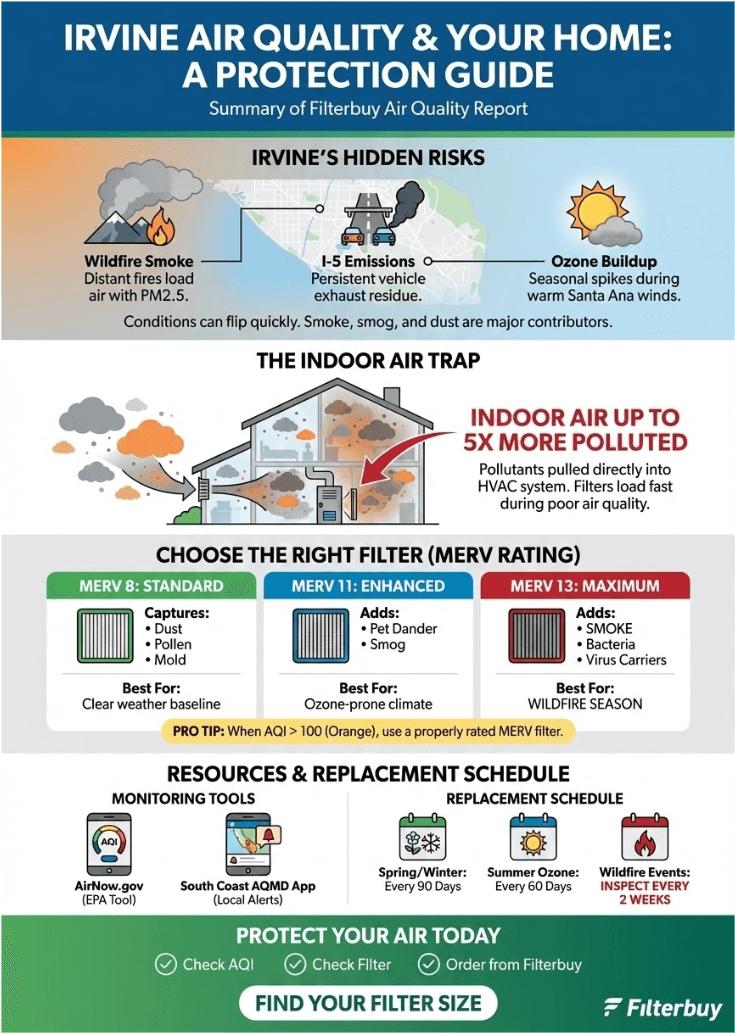
Your MERV rating determines what your filter actually captures:
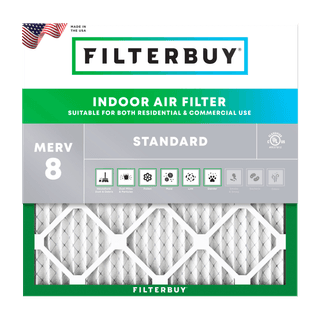
MERV 8 — Dust, pollen, mold spores. Solid baseline for most homes.
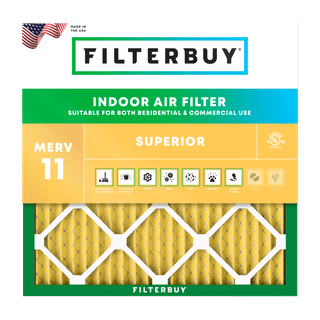
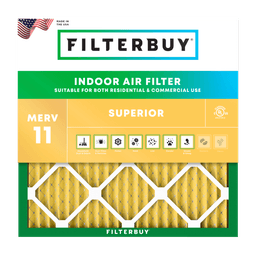
MERV 11 — Adds pet dander, smog, and dust mite protection. Smart pick for Irvine's ozone-prone climate.
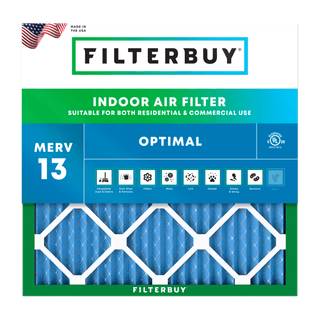
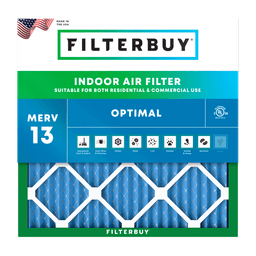
MERV 13 — Captures smoke, bacteria, and virus carriers. Our recommendation for the Southern California wildfire season and heavy traffic areas.
Not sure which is right for your system? We'll help you figure it out in a few clicks.
3. Set a Replacement Schedule — Then Adjust for AQI Spikes
Spring and winter (typical AQI): Replace every 90 days
Summer ozone season: Check monthly, replace every 60 days
Active wildfire periods: Inspect every two weeks, replace as needed
4. Automate It
Filters get forgotten. Our auto-delivery program sends the right filter to your door on your schedule — no subscription traps, no commitments. Just clean filters when you need them.
5. Find Your Size and Order Direct
Over 600 standard sizes plus custom options. Made in the U.S. Shipped factory-direct with free shipping. No middlemen. No markups.
Frequently Asked Questions
Q: What is the Air Quality Index (AQI) and how is it measured in Irvine, California?
A: The AQI is a 0-to-500 scale developed by the EPA that tells you how clean or polluted your air is right now. In Irvine, readings come from:
EPA regulatory monitoring stations
Local sensors operated by the South Coast Air Quality Management District
Six tracked pollutants: PM2.5, PM10, ozone, nitrogen dioxide, sulfur dioxide, and carbon monoxide
The overall score reflects whichever pollutant is highest at the time. From our experience shipping filters to Irvine homeowners, ozone and fine particulate matter are the biggest culprits — and the ones that show up most visibly on used filters from this area. We've seen a direct correlation between what the AQI reports and what customers pull out of their systems days later.
Q: Why does Irvine's air quality change so quickly from day to day?
A: Geography and timing. Irvine benefits from coastal breezes most days, but several factors override that advantage fast:
I-5 and I-405 corridor emissions create a persistent pollution baseline
Santa Ana winds push desert dust and inland smog coastward without warning
Wildfire smoke from fires burning hundreds of miles away can flip Irvine's AQI from "Good" to "Unhealthy" in hours
We've tracked these swings through our own order data for years. When Irvine's AQI spikes suddenly, replacement filter orders from those zip codes follow within days. The rapid, unexpected shifts are the ones that catch homeowners off guard — and do the most damage to both filters and indoor air quality.
Q: What AQI level should Irvine residents start worrying about?
A: The EPA draws the official line at 100. But based on what we've seen across millions of filters, we'd push awareness lower:
0–50 (Green): Air is clean. The routine filter schedule is fine.
51–100 (Yellow): Pollutants are present. Worth checking your filter — especially if it's been 60+ days.
101–150 (Orange): Unhealthy for sensitive groups. Your HVAC is actively pulling in elevated pollutants.
151+ (Red and above): Unhealthy for everyone. Your filter is working overtime.
The customers we work with who maintain the cleanest indoor air don't wait for red or purple days. They treat yellow and orange as early-warning signals — checking filters, adjusting schedules, and staying one step ahead.
Q: How does outdoor air quality in Irvine affect the air inside my home?
A: More directly than most people realize. Every time your HVAC system cycles, it draws in surrounding air — and everything in it:
Pollen and mold spores
Smoke and smog particulates
Vehicle exhaust residue
Fine dust and allergens
The EPA reports indoor pollutant concentrations can run 2 to 5 times higher than outdoor levels. After over a decade of examining what collects on our filters, we can confirm that it tracks with reality. We've had Southern California customers show us filters that went from white to nearly black in three weeks during wildfire events — filters that would normally last a full 90 days. Your air filter is the one barrier between the AQI reading outside and the air your family breathes inside.
Q: What is the single most effective step I can take to protect my indoor air when Irvine's AQI is high?
A: Have the right filter already in place before the spike — not after. Here's what we recommend:
MERV 11 — Strong choice for Irvine's ozone-prone climate. Captures smog, pet dander, and dust mite debris.
MERV 13 — Our recommendation for wildfire season and heavy traffic areas. Traps smoke, bacteria, and virus carriers.
Replace every 60–90 days under normal conditions. Check every two weeks during active wildfire or high-ozone periods.
Set up auto-delivery so a fresh filter arrives on schedule — especially heading into summer and fall.
We manufacture every filter in the U.S. and carry over 600 sizes plus custom options. Factory-direct. Free shipping. No middlemen. The homeowners who stay ahead of AQI events consistently report less dust, fewer allergy symptoms, and noticeably cleaner air — even during Irvine's worst pollution months.
Don't Just Monitor Irvine's Air Quality — Take Control of the Air Inside Your Home
Now that you've checked today's live AQI for Irvine, take the one step that turns that number into real protection for your family — find your filter size at Filterbuy.com and have the right MERV-rated filter shipped factory-direct to your door with free shipping. Because the best time to upgrade your indoor air is before the next spike hits, not after.