
Can't Sleep? Your Air Might Be the Problem
July 23, 2026

You've tried the white noise machine. You've cut back on coffee. You've even ditched your phone before bed. But if you're still waking up exhausted, there's one culprit most people never think to check: the air in your bedroom.
Dust mites, mold spores, rising CO₂ levels, and chemical vapors from furniture can quietly disrupt your sleep all night long without you ever knowing it. The good news? It's one of the easiest sleep problems to fix.
Why Indoor Air Affects Your Sleep
Your body doesn't pause when you sleep, it's working hard to repair, restore, and reset. That process depends on a steady supply of clean oxygen. When the air in your bedroom is stale or polluted, your body has to work harder just to breathe, and that's enough to pull you out of deep sleep, often without waking you fully enough to remember it.
Here's what's actually happening:
Pollutants irritate your airways. Even mild inflammation from dust or mold makes breathing slightly harder. Your body reacts by waking you up more frequently usually for just a few seconds, but enough to fragment your sleep.
CO₂ builds up in closed rooms. Every breath you exhale raises the CO₂ level in an unventilated bedroom. High CO₂ has been directly linked to more restless sleep and less time in deep sleep stages.
Low oxygen = shallower sleep. Polluted air reduces the oxygen your body can absorb, pushing your sleep into lighter stages where you get less of the restorative rest your brain and body actually need.
Sleep apnea gets worse. If you have sleep apnea, allergens and dust in the air can inflame your upper airway, making the dangerous breathing pauses more frequent and more severe.
The Most Common Bedroom Pollutants
Most of these are invisible which is exactly what makes them easy to ignore.
Common Bedroom PollutantsWhat Science Says About Indoor Air & Sleep
We're not guessing here. Researchers have been studying exactly this and the results are consistent.
Study 1: Open Your Window, Sleep Better
Researchers at ETH Zurich [1] tracked 35 people over four weeks, adjusting bedroom ventilation from low to moderate to high. The result: better ventilation meant fewer nighttime awakenings, more deep sleep, and less time in light sleep. Even a modest improvement in fresh air circulation made a measurable difference.
What this means for you: Before bed, crack a window for 10–15 minutes. If outdoor air quality is poor or you have allergies, run your HVAC system with a quality MERV filter instead.
Study 2: Pollution Affects Everyone's Sleep (Not Just Allergy Sufferers)
A review of 22 studies across all age groups found consistent links between common indoor pollutants — cooking fumes, dust, secondhand smoke — and worse sleep in children, adults, and the elderly. It wasn't just people with respiratory conditions who suffered. Healthy people sleeping in polluted rooms slept worse too. [2]
What this means for you: You don't need to have asthma to feel the effects. Reducing everyday pollution sources in your bedroom can improve your sleep even if you've never had an allergy in your life.
Study 3: Dirtier Air = Fewer Hours of Sleep
A five-year study tracking nearly 17,000 college students found that higher levels of air pollution (measured by PM2.5, PM10, NO₂, and AQI) were directly linked to shorter sleep duration. The effect held across different living situations and lifestyles. [3]
What this means for you: If you're consistently falling short on sleep hours — not just sleep quality — your air environment may be shortening your night without you realizing it.
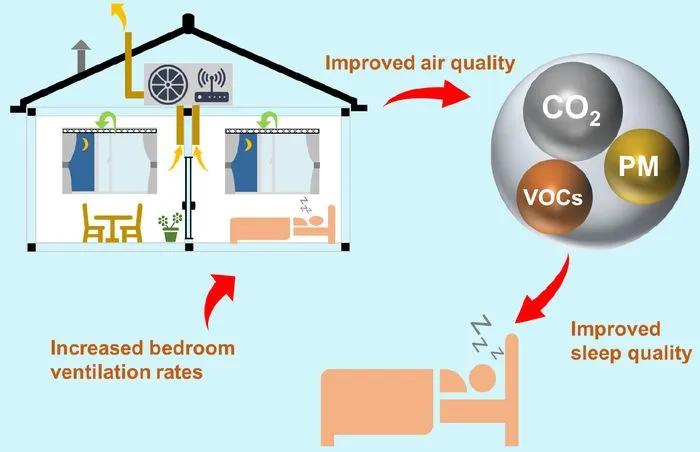
[Source: Science Direct]
How To Fix It (5 Simple Steps That Actually Work)
You don't need to overhaul your home. These five steps will have the biggest impact on your bedroom air tonight.
1. Change your air filter — seriously, just do it. Your HVAC filter is your first line of defense against bedroom pollutants. If it's clogged, it's useless. Change it every 90 days (every 60 if you have pets). Choose a MERV 11 or MERV 13 filter — these capture the fine particles that basic filters miss.
2. Ventilate before bed. Open a window or run your HVAC for 15–20 minutes before you sleep. This flushes out accumulated CO₂ and dilutes any chemical vapors that built up during the day. On bad air quality days, skip the window and rely on your filtered HVAC instead.
3. Keep humidity between 30–50%. This range prevents two of the biggest sleep disruptors: mold (which thrives above 60% humidity) and dry air irritation (which worsens below 25%). A basic hygrometer costs under $15 and tells you exactly where you stand.
4. Run an air purifier with a HEPA filter. HEPA filters capture 99.97% of particles 0.3 microns or larger — including most dust, mold, pollen, and pet dander. Place it within 10 feet of your bed for maximum effect. Run it on low overnight; it shouldn't be loud enough to disturb you.
5. Reduce sources, not just symptoms. Wash bedding weekly in hot water to kill dust mites. Avoid burning candles in your bedroom. Don't use heavily fragranced sprays before bed. If you have a gas stove, make sure your kitchen is well-ventilated when cooking in the evening.

Indoor Air & Sleep Seasonal Guide
Your bedroom air shifts with the seasons, and so should your approach.
Spring & Summer: Pollen counts spike, and if you open windows for ventilation, you're trading CO₂ for allergens. Use your HVAC with a MERV 13 filter on high-pollen days. Consider an indoor air quality monitor to track particle levels in real time.
Fall & Winter: Homes seal up tight, and indoor pollutants accumulate faster. Heating systems kick on — which can stir up dust that settled in ducts over summer. Schedule a filter change at the start of the heating season and consider a humidifier to counter dry indoor air (aim for 40–50% humidity).
Year-round: CO₂ buildup and dust mites are constant. Weekly bedding washing and regular filter changes are your baseline, regardless of season.
Frequently Asked Questions: Indoor Air Quality and Sleep
Does Indoor Air Quality Impact Sleep?
Yes it does! Many of us underestimate the tiny pollutants like dust mites and mold spores that can hide in our bedrooms. These irritants can disrupt sleep patterns and leave you feeling groggy. You can create a more restful sleep environment by improving your indoor air quality.
Seasonal Snooze Shifts: how weather impacts your sleep
Seasonal changes can disrupt your sleep through their impact on indoor air quality. Here's why:
Spring & Summer: Pollen counts soar during these seasons. If you have allergies, increased pollen indoors can irritate your airways and disrupt sleep.
Winter: Drier winter air can lead to congestion and itchy eyes, making sleep uncomfortable.
You can create a more consistent sleep environment year-round by using air purifiers and MERV HVAC air filters and adjusting ventilation (opening windows in mild weather and using humidifiers in dry winters).
Does my air conditioner or heater affect my sleep?
Yes, dirty air conditioners and heater filters can worsen allergies, dust, and even mold, disrupting your sleep. Clean filters trap these irritants, creating a cleaner and more breathable environment for better sleep. Upgrade to MERV 13 filters and change them regularly. HEPA filters offer the best defense for allergy sufferers.
Can certain houseplants help me sleep better?
Yes! Certain plants like the Snake Plant can improve air quality by absorbing pollutants and releasing oxygen, potentially creating a more comfortable sleep environment. READ MORE: 10 Best Air Purifying Plants
Does Location Affect Sleep?
Where you live could have an impact on how well you sleep, especially when it comes to the quality of your indoor air. City dwellers might breathe in more pollutants, affecting sleep quality. Rural areas often boast cleaner air, potentially leading to better sleep. This is just one-factor influencing sleep, but it's an important one to consider.
Why Does the Air Quality in My House Get Worse at Night?
The air quality in your house may get worse at night due to a variety of factors. One main reason is that many homes are designed to be energy efficient and therefore are more sealed off from the outside, reducing ventilation. During the night, when the house is closed, pollutants can build up. These can come from sources like cooking, cleaning, or even off-gassing from furniture and paint. Additionally, dust and allergens can also accumulate, leading to poorer air quality.
How to Sleep With Bad Air Quality?
If the air quality in your bedroom is bad, there are a few steps you can take to make sleeping easier. First, consider investing in an air purifier to filter out pollutants. Using a humidifier can also help if the air is dry. Try to keep your bedroom clean to reduce dust and allergens. You may also want to consider using hypoallergenic bedding and keeping pets out of the bedroom. Lastly, consider increasing ventilation by opening a window if it's safe and practical to do so.
How to Improve Air Quality in Bedroom at Night?
To improve air quality in your bedroom at night, you could use an air purifier, especially one with a HEPA filter. Regularly cleaning your room, including vacuuming and dusting, can also help reduce pollutants. Avoid using products with strong fragrances or chemicals in your room. Increasing ventilation by opening windows and doors, or using fans, can also help improve air circulation.
Can Poor Air Quality Make You Sleepy?
Yes, poor air quality can make you feel sleepy. This is because poor air quality can lead to a lower oxygen level in the body, causing fatigue and drowsiness. It can also cause headaches and dizziness, which can make you feel more tired.
What Symptoms Are Often Linked to Poor Indoor Air Quality?
Symptoms often linked to poor indoor air quality include coughing, sneezing, watery eyes, fatigue, dizziness, headaches, and upper respiratory congestion. If you notice these symptoms are worse when you're at home and improve when you're away, it might be a sign of poor indoor air quality.
What Are the Symptoms of Bad Air Quality in a House?
Symptoms of bad air quality in a house can range from mild to severe, including allergies, chronic sinusitis, frequent headaches, shortness of breath, fatigue, dizziness, nausea, and even certain types of cancers in extreme cases.
What Happens if You Sleep in a Poorly Ventilated Room?
If you sleep in a poorly ventilated room, you might experience various health issues. These can include difficulty breathing, allergies, sleep apnea, and increased susceptibility to colds and respiratory illnesses. Over time, lack of fresh air can lead to more serious health problems, including heart disease and stroke.
What Happens if You Sleep in a Room With No Ventilation?
Sleeping in a room with no ventilation can lead to a buildup of carbon dioxide, causing headaches, dizziness, shortness of breath, and sleep disturbances. In extreme cases, it can lead to unconsciousness or even death due to lack of oxygen. It's important to have some level of air circulation in your sleeping area.
Does Drinking Water Help With Bad Air Quality?
Drinking water doesn't directly help with bad air quality, but it can help your body deal with the effects of pollutants. Staying hydrated helps your body function optimally, including your body's ability to detoxify and maintain a healthy respiratory system.
Do Air Purifiers Actually Work?
Yes, air purifiers do work. They can help to remove pollutants from the air, including dust, allergens, mold, and even some types of bacteria and viruses. However, they are not a cure-all and should be used in conjunction with other strategies to improve air quality.
How Can I Test the Air Quality in My Bedroom?
There are a few ways to test the air quality in your bedroom. You could use an indoor air quality monitor, which gives readings on things like particulate matter, VOCs (volatile organic compounds), humidity, and temperature. You could also hire a professional to perform a more comprehensive test.
Do Air Purifiers Improve Air Quality?
Yes, air purifiers can definitely improve air quality. They work by filtering out airborne particles like dust, allergens, and pollutants. However, it's important to remember that they are not a cure-all and should be used as part of a broader strategy to improve indoor air quality. This can include regular cleaning, increasing ventilation, and reducing the use of products that release pollutants into the air.
Sources:
1. A single-blind field intervention study of whether increased bedroom ventilation improves sleep quality - ScienceDirect 2. Air pollution exposure and adverse sleep health across the life course: A systematic review - PMC 3. The Association between Air Pollution and Sleep Duration: A Cohort Study of Freshmen at a University in Beijing, China - PMC 4. The Association of Ambient Air Pollution with Sleep Apnea: The Multi-Ethnic Study of Atherosclerosis - PMC

Key Takeaways
Indoor air can be up to 5x more polluted than outdoor air — especially at night
Cleaner bedroom air has been linked to fewer nighttime awakenings and more deep sleep
Simple fixes like changing your air filter, cracking a window, or running an air purifier can make a noticeable difference
Replace HVAC filters every 90 days (sooner if you have pets)