April 17, 2026

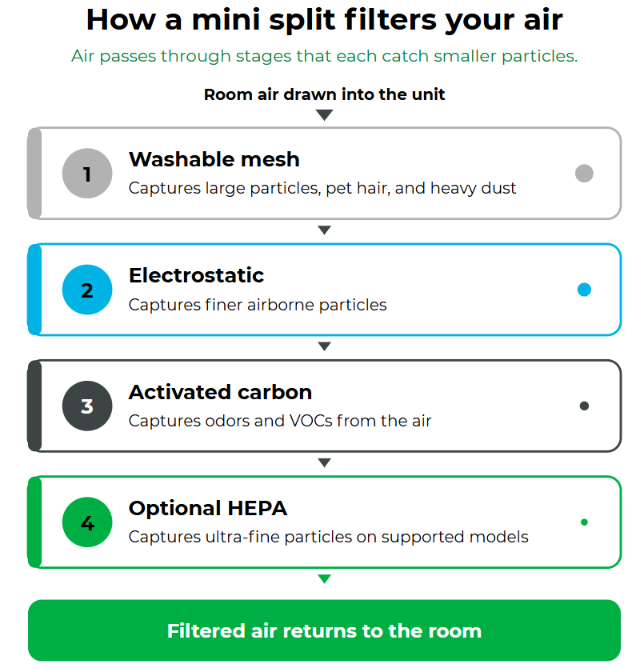
Yes — a mini split pulls each room’s air through a multi-stage filter and sends it back without traveling through shared ductwork. Because every indoor unit filters its own room, dust from one space is not pushed into the others.
Each stage of the filter catches something different:
Washable mesh — captures large particles, pet hair, and heavy dust.
Electrostatic — captures finer airborne particles.
Activated carbon — captures odors and VOCs.
Optional HEPA — captures ultra-fine particles on supported models.
Keeping those filters clean every few weeks is what keeps the air moving and the filtration working. If you’re weighing a ductless upgrade, you can explore Filterbuy mini split systems built around this kind of multi-stage filtration.
Not sure which filter your system needs? Answer a few quick questions and we’ll match you to the right one.
If you have ever noticed dust blowing from your vents when the air conditioning kicks on, you are definitely not alone. Most homeowners focus entirely on temperature control when choosing an HVAC system. They forget that these cooling units also play a massive role in the air their families breathe every day.
Ductless systems have become a popular choice for their energy efficiency, but their air purification capabilities are equally impressive. This guide explains how these modern systems capture allergens, stop mold before it starts, and keep your home healthier. You will also learn practical maintenance routines to keep your equipment running at its absolute best.
Air Quality Matters: HVAC systems are not just about heating and cooling; they directly impact the air you and your family breathe.
Ductless Systems Purify Air: These systems effectively capture allergens, reduce pollutants, and prevent mold growth, contributing to a healthier home environment.
Energy Efficiency and Performance: Ductless systems combine efficient energy use with advanced air purification, making them a smart choice for modern households.
Regular Maintenance is Crucial: Simple maintenance routines, such as cleaning filters and scheduling inspections, can ensure optimal performance and longevity of your HVAC system.
We tend to think of pollution as an outdoor problem involving smog and exhaust fumes. According to the EPA, Americans actually spend about 90% of their time indoors. Shockingly, the air inside your home can be two to five times more polluted than the air outside.
Every day activities release invisible contaminants into your living spaces. Common indoor pollutants include dust mites, pet dander, mold spores, and volatile organic compounds (VOCs) emitted by household cleaners. Without a reliable way to filter these particles, they continue to circulate through your rooms, potentially triggering allergies and respiratory issues.
Not all air conditioning systems handle airborne particles the same way. The design of your cooling system directly impacts the purity of your home's air.
Traditional central air relies on an extensive network of ductwork hidden behind your walls and ceilings. Over time, these ducts accumulate layers of dust, debris, and, in some cases, mold. Whenever the blower turns on, the system pushes air through these dirty channels, recirculating contaminants throughout your entire house.
Window air conditioners provide a quick cooling fix, but they offer very little in terms of air purification. They rely on basic, thin-mesh screens that only block large debris, such as hair and heavy dust. They have limited airflow cleaning capability and do almost nothing to catch microscopic allergens.
When it comes to the ductless air conditioner's air quality advantage, the benefits are clear. Going ductless means there is no hidden network of dirty pipes to contaminate your air. Furthermore, these systems provide zoned air delivery. Because each room has its own air handler, contaminants from the kitchen or basement do not get pushed into your bedrooms.
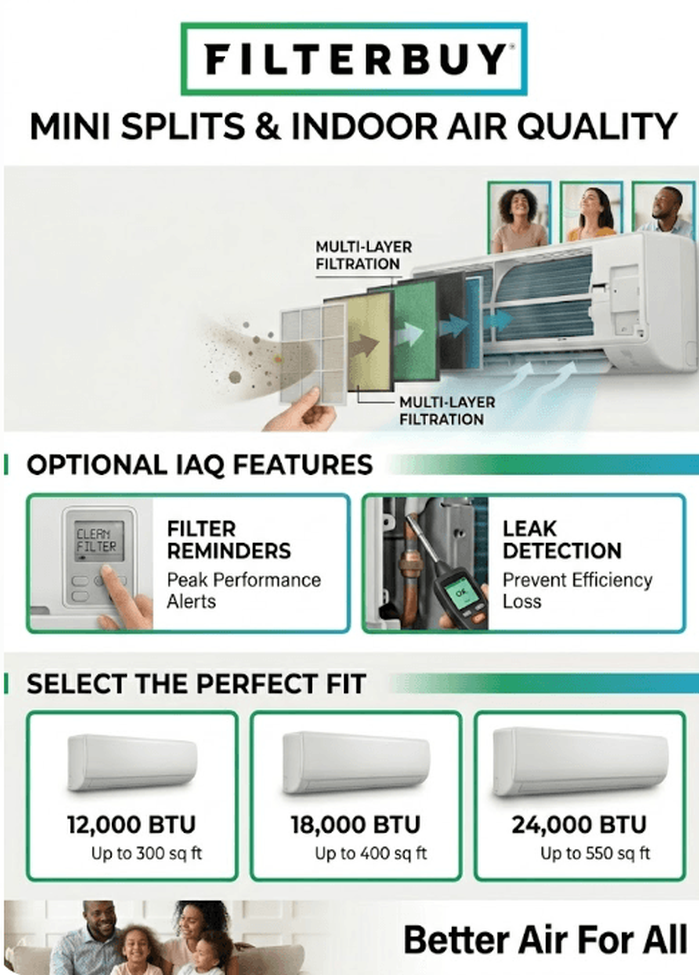
The secret to a healthier home lies inside the indoor air-handling unit. Advanced mini split AC filters use a multi-stage filtration system to trap unwanted particles.
Depending on your specific model, the filtration process typically includes:
Washable mesh filters: These catch large airborne particles, such as pet hair and heavy dust.
Electrostatic filters: Designed to pull fine particles out of the air using static electricity.
Activated carbon filters: These excel at absorbing unpleasant odors and harmful VOCs.
Optional HEPA filters: Some units support medical-grade filtration to capture ultra-fine particles.
This combination often delivers MERV 8-13-equivalent performance, effectively capturing microscopic allergens such as pollen, pet dander, and mold spores before they reach your lungs.
Fungi thrive in dark, damp environments. Thankfully, ductless systems actively combat these conditions. They help maintain an ideal indoor humidity range of 30% to 50%. Many models feature a built-in “Dry Mode” that specifically targets and removes excess moisture from the air, drastically reducing condensation compared to traditional central systems.
Even the best technology requires human intervention to stay clean. Mini split AC mold usually develops due to neglect. Dirty filters restrict airflow, causing moisture to linger on the cooling coils. Clogged drain lines can also cause water to back up into the unit. Both scenarios create the perfect breeding ground for mold.
Modern units often include an automatic self-cleaning feature. This technology typically uses high-temperature coil drying, sometimes heating the internal components to 55°C. This bakes off excess moisture, significantly reducing the risk of bacterial growth. However, this helpful feature does NOT replace manual cleaning.
Routine mini split AC filter cleaning is the single most important task for maintaining your indoor air quality.
Recommended Schedule:
If you live in a dusty environment or have pets, you should clean your filters every two to four weeks. For the average household, a thorough cleaning once a month is the absolute minimum.
Steps:
Turn off the unit at the remote and the breaker to ensure safety.
Gently lift and remove the front panel of the indoor air handler.
Carefully take out the mesh filters.
Vacuum the filters using a brush attachment, or rinse them with lukewarm water.
Let the filters dry completely in a shaded spot.
Reinstall the dry filters and close the front panel.
Why it matters: Sticking to this schedule prevents mold growth, maintains strong airflow, and improves your equipment's overall energy efficiency.
Consistent upkeep ensures you breathe easy year-round. Follow these mini split maintenance tips:
Clean your filters regularly using the steps above.
Wipe down the internal coils and louvers monthly with a damp cloth.
Check the outdoor drainage line to ensure water flows freely away from your home.
Schedule an annual professional service to check refrigerant levels and deeply clean the blower wheel.
If you want to upgrade your home's cooling and filtration in one step, selecting the right equipment is vital. A high-quality option like a Filterbuy Mini Split provides a multi-layer healthy filtration system designed to protect your family's health.
These units feature self-cleaning technology that uses 55°C coil cleaning to prevent internal moisture buildup. You also get a built-in filter cleaning reminder, taking the guesswork out of your maintenance schedule. With advanced refrigerant leak detection and fast, free shipping, upgrading your home has never been more secure.
To get the best air quality, you must choose the right size for your space. Use this quick reference:
12,000 BTU: Up to 250–300 sq ft (Available in 115V or 230V). Best for 1-car garages or small rooms.
18,000 BTU: Up to 350–400 sq ft (230V). Best for large 1-car or small 2-car garages.
24,000 BTU: Up to 500–550 sq ft (230V). Best for 2-car garages or larger living spaces.
Ductless systems deliver significantly cleaner air than traditional HVAC setups. By eliminating dirty ductwork and utilizing advanced multi-stage filters, they keep indoor pollution to an absolute minimum.
As long as you follow a regular cleaning schedule, you face a much lower risk of mold and enjoy a comfortable, allergy-friendly home. Explore Filterbuy's mini split systems designed for cleaner air and upgrade your home’s air quality today.
Yes, mini splits can significantly improve indoor air quality. Unlike traditional systems, they don’t rely on ductwork, which often collects dust and mold. Instead, they use advanced mini split AC filters to capture allergens like pollen, pet dander, and dust—delivering cleaner air directly into each room.
You should clean the mini-split AC filter every 2–4 weeks during heavy use and at least once a month for typical households. Regular cleaning helps maintain airflow, improves efficiency, and prevents dust buildup that can lead to mold growth.
Yes, mold can develop in a mini-split AC system if it isn’t properly maintained. Mold typically forms when moisture builds up inside the unit due to dirty filters, clogged drains, or high humidity. The good news is that regular cleaning and proper drainage can prevent this issue.
Absolutely. Mini splits are a great option for allergy sufferers because their filtration systems remove airborne irritants like dust, pollen, and pet dander. Plus, their ductless design prevents contaminants from circulating throughout the home.
Most mini splits use multi-stage filtration, including:
Washable mesh filters (for dust and debris)
Electrostatic filters (for fine particles)
Activated carbon filters (for odors and VOCs)
Some models also support HEPA-level filtration for even better air purification.
No. Self-cleaning features help reduce moisture and bacteria inside the unit, but they do not replace manual mini split AC filter cleaning. You still need to clean the filters regularly to maintain air quality and system performance.
In many cases, yes. Mini splits avoid the dust and mold buildup common in duct systems and provide targeted filtration in individual rooms. This often results in cleaner, healthier air—especially in homes with allergy or asthma concerns.
Neglecting filter cleaning can lead to:
Reduced airflow
Higher energy bills
Dust and allergen buildup
Increased risk of mold inside the unit
Regular maintenance is essential to keep your system running efficiently and your air clean.
The ideal indoor humidity range is 30–50%. Mini splits help maintain this range through built-in dehumidification modes, reducing the risk of mold growth and improving overall comfort.
Yes, mini splits are excellent for homes with pets. Their filters capture pet hair and dander, helping reduce odors and airborne allergens, especially when filters are cleaned regularly.