July 9, 2026
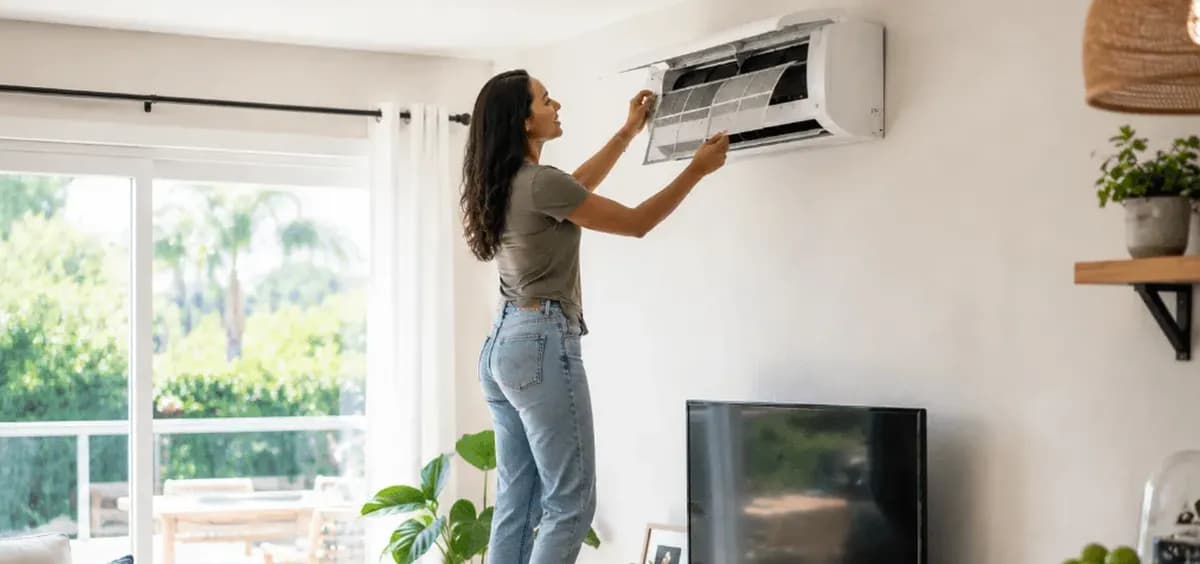
If your mini split is running but blowing warm air, the cause is almost always restricted airflow, a settings mistake, or low refrigerant. Start with the free five-minute checks (mode, temperature, air filter, and the outdoor unit), because those fix the majority of "not cooling" complaints. If cold air still won't come, the problem is likely refrigerant, electrical, or a failing part, and that's when you call a licensed HVAC technician.
A clogged air filter is the single most common reason a mini split stops cooling. Cleaning or replacing it restores airflow and often fixes the problem in minutes.
Wrong settings fool a lot of homeowners. A mini split set to Fan or Dry mode will blow air without cooling it, so switch to Cool and set the temperature below the room's current reading.
The outdoor unit needs 18–24 inches of clear space to release heat. Leaves, mulch, or cottonwood fluff on the condenser can shut cooling down.
Low refrigerant is never a DIY fix. By federal law, only an EPA Section 608-certified technician can add or remove refrigerant from a mini split.
Ice on the unit means "stop and thaw." Running a frozen mini split can damage the compressor, the most expensive part to replace.
Four of the eight causes are safe to handle yourself; four call for a pro. Knowing which is which saves you a service fee, or your system.
Before spending a dollar, rule out the simple stuff. These four checks resolve most "ductless AC not blowing cold" cases, and every one is free and safe.
Check the mode. On the remote, confirm the unit is set to Cool (usually a snowflake icon), not Fan, Dry, or Heat.
Check the temperature. Set the target at least a few degrees below the current room temperature so the system has a reason to run.
Check the filter. Pop open the indoor unit's front panel and look at the mesh filter. If it's gray with dust, that's very likely your answer.
Check the outdoor unit. Make sure nothing is packed against the outdoor condenser and that its fan is spinning when the system calls for cooling.
If cold air returns after these, you're done. If not, work through the eight causes below. They're ordered roughly from easiest and cheapest to most technical.
We ordered these eight causes the way a technician triages a service call: cheapest and safest first, refrigerant and electronics last. Use the table to gauge each fix before you start; it's general guidance, so always follow your unit's manual, and when in doubt, call a licensed technician.
General guidance only. Always follow your unit's manual, and call a licensed technician when unsure.
“Most 'my mini split won't cool' calls I take come down to airflow: a filter no one has rinsed, or an outdoor unit buried in yard debris. A homeowner can fix those in an afternoon. The day it's refrigerant, though, stop: that's a leak, and by law it's a certified tech's job.”
David Clark, Licensed HVAC Technician · Filterbuy HVAC Solutions
Most people arrive here knowing exactly what their mini split is doing wrong. This table flips the list around: find your symptom on the left, then jump to the numbered section that covers it. Symptoms overlap, so treat it as a starting point, not a diagnosis.
Symptoms can overlap. Start with the free checks, then use the numbered sections below.
The quick answer: A mini split set to Fan or Dry mode moves air without cooling it, and a target temperature set at or above the room temperature gives the system no reason to run. Switch the remote to Cool, set the temperature several degrees below the current room reading, and give it a few minutes. This costs nothing and resolves a surprising share of "warm air" complaints.
It sounds almost too simple, but a mini split in Fan mode simply circulates room-temperature air, and Dry mode prioritizes dehumidifying over cooling. It's an easy mistake: a bumped remote, a guest, or a "smart" schedule can all switch the mode without you noticing.
One more setting trap: pushing the temperature far below the room reading doesn't cool faster. Setting the target more than four or five degrees under the current indoor temperature can make the system short-cycle, turning on and off rapidly, working harder while never settling in, per Lennox's troubleshooting guidance. Set a realistic target and let it run.
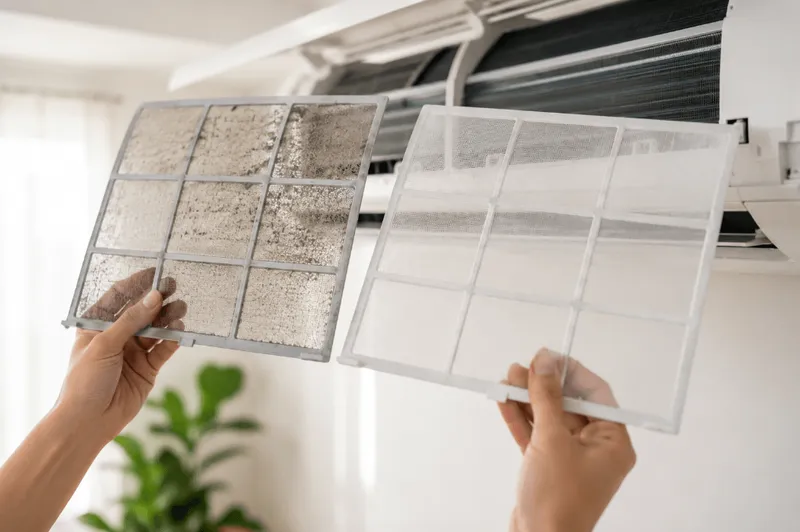
The quick answer: A dirty air filter is the most common reason a mini split stops cooling. When the filter clogs with dust, airflow across the coil drops, and the unit can't move enough cooled air into the room. Open the indoor unit, remove the mesh filter, rinse it under warm water, let it dry completely, and reinstall. Most mini split filters need cleaning every one to three months.
Airflow is the whole game with a ductless system, and the filter is the first thing standing in its way. HVAC pros consistently name the filter as the number-one thing to check. As Carrier's repair guidance puts it, a clogged filter blocks air from passing over the coils to be cooled, and dirty filters are the most common airflow problem they see.
Most mini splits use a reusable mesh pre-filter you rinse rather than replace. Here's the clean way to do it: turn the unit off, open the front panel, slide out the filter, wash it with warm water and mild soap, and (this part matters) let it dry fully before putting it back, so you don't invite mold. Check your manual for your model's schedule.
Filtration and airflow are what we do at Filterbuy. We've built filters in the U.S. for over a decade, so we'll say plainly what the spec sheets tend to bury: on a ductless system, airflow is nearly the whole ballgame, and the filter is the cheapest place it goes wrong. In our experience it's the first thing worth ruling out, not the last. If your home also runs a central HVAC system alongside your mini split, the same rule applies there, where a fresh, correctly sized filter (we make 600+ standard sizes, shipped factory-direct) keeps air moving. Learn how often you should change your air filter and which MERV rating fits your system.
The quick answer: The outdoor condenser has to release the heat your mini split pulls from indoors, and it can't do that if it's smothered. Leaves, mulch, tall grass, or cottonwood fluff packed against the coil or fan can force the system to shut cooling down to protect itself. Clear an 18–24 inch radius around the unit and gently rinse the fins with a garden hose, never a pressure washer.
Think of the outdoor unit as your system's exhaust. If it can't breathe, heat has nowhere to go, and the refrigerant cycle stalls. This is why manufacturers like Trane recommend keeping shrubbery and plants at least two feet away from the unit.
To clean it safely: shut off power to the outdoor unit first, clear away any debris by hand, then rinse the fins gently from the outside with a standard garden hose. The fins are thin aluminum and bend easily, so skip the pressure washer. If the coil is greasy or matted with dirt that a rinse won't touch, that's a job for a professional coil cleaning during a seasonal tune-up.
The quick answer: Ice on the indoor coil or refrigerant lines blocks airflow and stops cooling entirely. A frozen evaporator coil is usually a symptom of restricted airflow (a dirty filter or blocked vent) or low refrigerant. Turn the unit off, switch to Fan mode to help it thaw, and let the ice melt fully before restarting. If it freezes again, stop running it and call a technician.
Counterintuitive as it sounds, a mini split that ices up will blow warm. The ice is a wall your air can't get through. The important safety point: don't keep running a frozen unit. Forcing a system to cool through a block of ice stresses the compressor, the single most expensive part in the whole system.
Once it's thawed, play detective. If the filter was filthy, you likely found your cause, so clean it and monitor. If the filter was clean and it still freezes, the likely culprit is low refrigerant or a coil issue, both of which need a professional. Repeated freezing is the system telling you something is wrong upstream.
The quick answer: As a mini split cools, it pulls humidity from the air and drains that water outside through a condensate line. If algae or debris clogs that line, water backs up, and many units will sense the backup and shut down cooling to prevent an indoor leak. A clogged drain often shows up as water dripping from the indoor unit or a musty smell.
This one is a mixed bag: sometimes an easy DIY clear, sometimes a service call. On many systems you can flush the drain line or clear a visible blockage yourself. But drain routing varies a lot by installation, and it's easy to turn a small clog into a bigger mess. If the line isn't obvious, if there's a condensate pump involved, or if water has already leaked onto walls or flooring, bring in a pro. A musty smell, in particular, points to buildup inside the drain that's worth having cleaned properly.
The quick answer: If the indoor unit runs but the outdoor unit is silent, or the whole system is dead, check power first. Look at your electrical panel for a tripped breaker on the mini split's circuit, and confirm the outdoor disconnect switch is on. Reset a tripped breaker once. If it trips again, or if you smell burning or see scorching, stop and call a licensed electrician or HVAC technician immediately.
A single trip can be a fluke, and flipping the breaker back is a reasonable one-time DIY step. Repeated tripping is not. It's a warning that something is drawing too much current or shorting, and chasing it yourself is genuinely unsafe.
Beyond the breaker, mini splits rely on sensors, capacitors, and a control board that a homeowner can't safely test. If power is on, the filter is clean, the thermostat is set correctly, and you're still getting warm air, the trouble may be electrical inside the unit, and that's a technician's job with the right tools and training. If you're sorting out the power side, our guide to mini split electrical requirements explains the dedicated circuit, breaker sizing, and disconnect every ductless system needs.
The quick answer: Refrigerant is the fluid that actually moves heat out of your home, and a mini split is a sealed system, so it should never "use up" refrigerant. Low refrigerant means a leak. Warning signs include weak or warm airflow, ice on the lines, and a hissing or bubbling sound. This is a pro-only repair: by federal law, only an EPA Section 608-certified technician may handle it.
Here's the rule homeowners often don't realize is a legal one, not just a safety suggestion. Under Section 608 of the Clean Air Act (40 CFR Part 82, Subpart F), technicians who service equipment that could release refrigerant must be EPA-certified. The EPA specifically confirms that adding or removing refrigerant from a mini split requires Section 608 certification. Refrigerant can also cause frostbite and is hazardous to handle without training.
So topping it off yourself isn't an option, and even if it were, adding refrigerant to a leaking system just leaks out again. A qualified technician has to find the leak, repair it, and recharge the system to the manufacturer's spec. If you suspect low refrigerant, turn the unit off (running it low can damage the compressor) and schedule service.
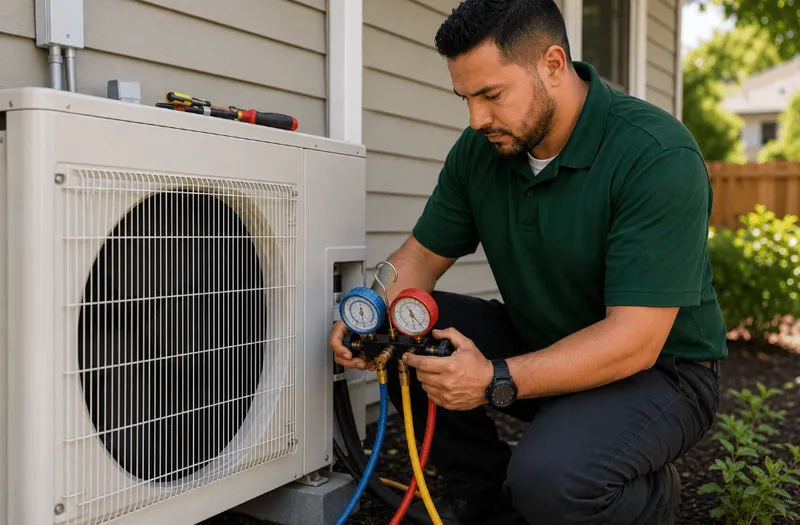
The quick answer: The compressor is the heart of your mini split. If it's failing, the system may run but never cool, or it may short-cycle on and off. A faulty temperature sensor can misread the room and keep the unit from cooling properly, and a stuck reversing valve can leave a heat-pump model stuck in the wrong mode. All three require professional diagnosis and, usually, parts.
These are the least common causes on this list, and they share one trait: you can't safely or reliably diagnose them at home. Strange noises (grinding, buzzing), a system that shuts off unexpectedly, or a unit that "cools" in short bursts and quits all point toward internal component trouble. A technician will test the sensors, evaluate the compressor, and check the valve to pin down which part is at fault before recommending a repair or replacement.
If the diagnosis points to replacement rather than repair, it helps to know Filterbuy builds its own ductless mini-split systems (variable-speed, 17 SEER2) and offers an Installer Concierge that connects you with a licensed HVAC pro in your area. That solves the other half of the problem this page keeps circling back to: finding someone qualified to do the work.
The quick answer: Most ductless mini splits use a thin, reusable mesh pre-filter you slide out and rinse, not the thick disposable pleated filter a central HVAC system uses. So on a mini split, "changing the filter" almost always means cleaning it every one to three months, not buying a replacement. This trips up a lot of homeowners searching for a drop-in filter that doesn't exist for their unit.
Here's the distinction worth keeping straight, because it changes what you do when cooling drops off:
Mini-split (ductless): a washable mesh screen that catches dust and protects the coil. Rinse, dry fully, reinstall. Some models also accept small add-on filtration inserts, so check your manual before buying anything aftermarket.
Central HVAC (ducted): a sized disposable pleated filter rated by MERV. This is where a fresh, correctly sized filter matters most for airflow and air quality, and it's the filter worth keeping on an auto-delivery schedule.
One thing worth being blunt about, because it's easy to miss: that built-in mesh screen is a comfort filter, built to protect the equipment, not a health filter for the air your family breathes. After building filters for over a decade and serving millions of homeowners, that's the distinction Filterbuy sees people overlook most. For real allergen or smoke control, the heavy lifting happens at your central system's filter or a portable air cleaner, not the mini split's mesh.
If your home runs both (a mini split in one room and central air everywhere else), you're maintaining two different filters on two different schedules. Confusing the two is a quiet, common reason a system underperforms. When in doubt on the central side, our MERV rating chart shows what each rating actually captures.
If the free checks didn't fix it, a five-minute prep before you call saves the technician time, and can save you money on the visit. Have these in hand:
Your unit's brand and model number. Both are on the nameplate: one on the indoor head, one on the outdoor unit.
What you already tried. Mode and temperature, filter cleaned, outdoor unit cleared, breaker checked, and whether anything changed.
The exact symptom and when it started. Note whether it's constant or only on hot afternoons, and how long it's been happening.
Any clues the system is giving. Sounds (hissing, buzzing), ice, water pooling, or an error code on the remote or display.
Warranty and install details. Whether the unit is still under warranty, and who installed it, since warranty work often has to route through the original installer.
The quick answer: Most mini split cooling failures trace back to maintenance that slipped. Clean the filter every one to three months, keep the outdoor unit clear year-round, and schedule a professional tune-up once a year for a cooling-only unit (twice a year if your mini split also heats). A little upkeep prevents the expensive breakdowns.
A simple rhythm keeps a ductless system happy: rinse the filter monthly during heavy use, glance at the outdoor unit whenever you mow, and book a seasonal service before summer arrives. Manufacturers recommend at least annual maintenance for cooling-only mini splits and twice-yearly service for heating-and-cooling models.
If your home also runs central HVAC, don't let that filter slide either. A clogged central filter strains the whole system and worsens your indoor air. Filterbuy's auto-delivery sends the right filter to your door on schedule, so it's one less thing to remember. And if you want to see what's in the air your system is fighting, check your local air quality on our live AQI map.
Government data backs up the advice above. Three numbers worth knowing:
5% to 15% less energy. A clean filter lowers an air conditioner's energy use by that much. It's why a dirty filter (cause #2) is the first thing to check. Source: ENERGY STAR (EPA)
88% of U.S. homes have air conditioning. Cooling uses about 12% of household electricity, roughly $29 billion a year. Restricted airflow wastes it. Source: U.S. Energy Information Administration (EIA)
90% of your time is spent indoors. Some pollutants run 2 to 5 times higher inside than out. A mini split that isn't moving air well isn't cleaning it well either. Source: U.S. EPA
A mini split that runs without cooling is almost always dealing with restricted airflow, a settings error, or low refrigerant. Check that it's set to Cool below room temperature, clean the filter, and clear the outdoor unit first. If warm air continues after those, the likely cause is a refrigerant leak, an electrical fault, or a failing part, so call a technician.
No. Handling refrigerant requires EPA Section 608 certification under the Clean Air Act, and refrigerant is hazardous without the right training and equipment. Only a licensed HVAC technician can legally locate the leak, repair it, and recharge the system.
Most mini split filters should be cleaned every one to three months, and monthly during heavy summer use. Rinse the reusable mesh filter with warm water, let it dry completely, and reinstall. Always follow your manufacturer's specific schedule.
Ice on a mini split usually points to restricted airflow (a dirty filter or blocked vent) or low refrigerant. Turn the unit off and let it thaw fully, then clean the filter. If it freezes again with a clean filter, you likely have a refrigerant or coil problem that needs a professional.
Often, yes. Many "not cooling" issues are cheap DIY fixes like a dirty filter or a blocked outdoor unit. Refrigerant and electrical repairs cost more, and a failing compressor on an older unit may tip the decision toward replacement. Start with the free checks before assuming the worst.
Air handler (indoor unit): The wall- or ceiling-mounted indoor component of a mini split that blows conditioned air into the room and holds the evaporator coil and filter.
Condenser (outdoor unit): The outdoor component that releases the heat pulled from inside your home; it must have clear airflow to work.
Condensate drain line: The tube that carries away the water a mini split removes from indoor air; a clog can back up water and shut the system down.
Ductless mini split: A heat-pump-based heating and cooling system with an outdoor condenser connected to one or more indoor air handlers by refrigerant lines, without ductwork.
EPA Section 608: The Clean Air Act rule (40 CFR Part 82, Subpart F) requiring technicians who handle refrigerant to be certified; it applies to mini split refrigerant work.
Evaporator coil: The indoor coil where refrigerant absorbs heat from your room's air; it can freeze when airflow is restricted or refrigerant is low.
MERV rating: Minimum Efficiency Reporting Value, the ASHRAE 1–16 scale measuring how effectively an air filter captures particles; higher numbers trap smaller particles. Relevant mainly to central HVAC filters. See our MERV rating chart.
Refrigerant: The sealed-system fluid that carries heat out of your home; low levels always indicate a leak, never normal use.
Short cycling: When a system rapidly turns on and off without completing a full cooling cycle, often caused by a too-low setpoint, a dirty filter, or a failing part.
Filterbuy makes air filters and ductless mini-split systems in the USA, shipped factory-direct, backed by more than a decade of manufacturing and millions of homeowners served. Better Air For All™
