
HVAC Heat Pump Guide: How Heat Pump HVAC Systems Work, Installation Cost, Efficiency Ratings, and Why Homeowners Are Making the Switch
October 10, 2026
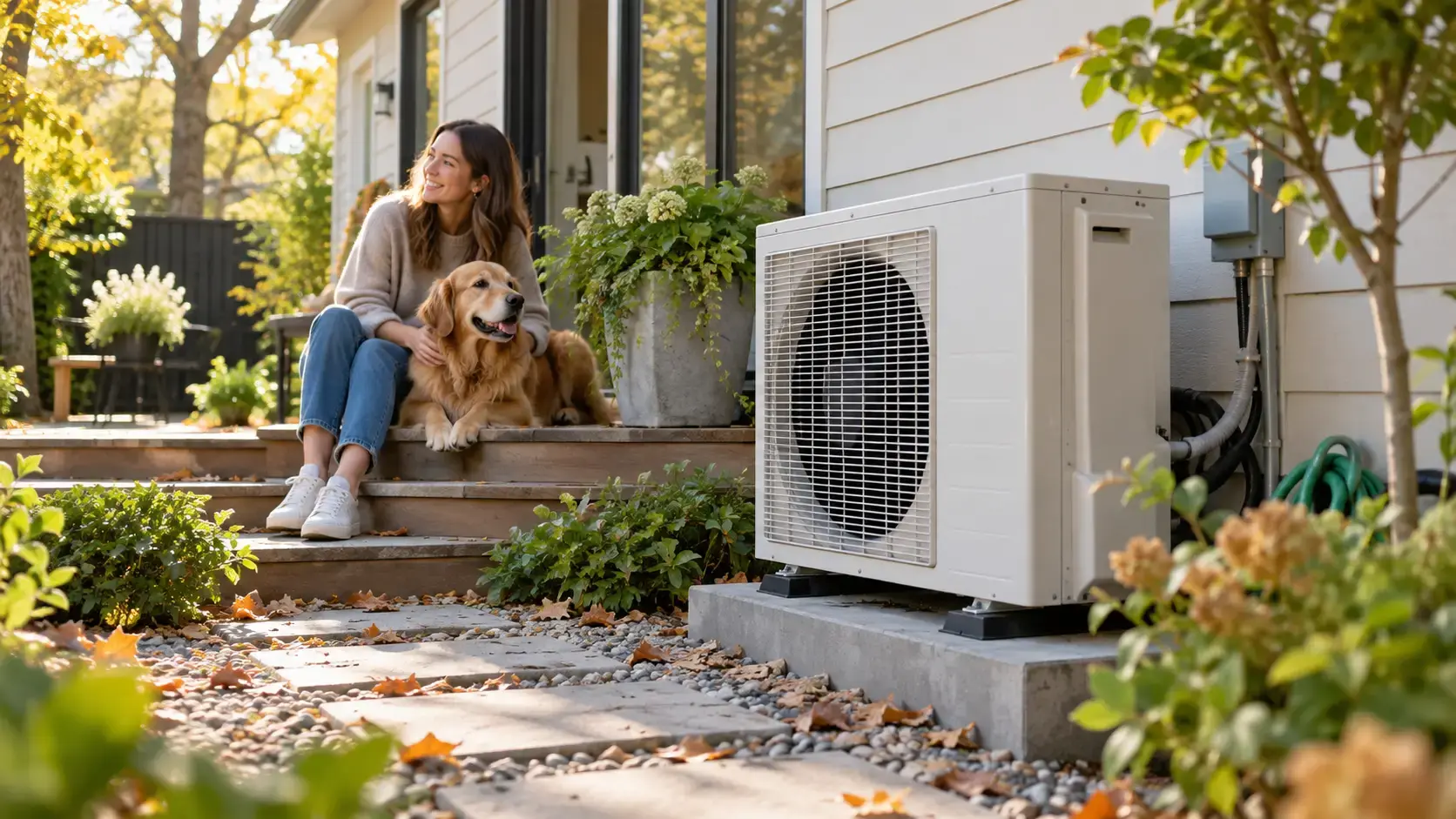
An HVAC heat pump is a single electric system that heats and cools your home by moving heat instead of burning fuel. In winter, a heat pump pulls heat from outdoor air and carries it indoors. In summer, it runs in reverse. Because a heat pump moves heat rather than making it, many homeowners now replace an aging furnace and air conditioner with one.
TL;DR
A heat pump HVAC system uses refrigerant and a reversing valve to heat and cool a home with one outdoor unit. Installed cost depends mostly on system type and existing ductwork. Compare SEER2 for cooling and HSPF2 for heating, and choose a cold-climate model where winters stay below freezing. Because the blower runs in both seasons, a heat pump filter needs year-round attention.
Key Takeaways
Federal standards require new split-system heat pumps to meet at least 14.3 SEER2 and 7.5 HSPF2. ENERGY STAR requires 15.2 SEER2 and 7.8 HSPF2.
Cold-climate heat pumps that meet ENERGY STAR criteria deliver at least 1.75 units of heat per unit of electricity at 5°F.
The federal Section 25C heat pump tax credit does not apply to systems placed in service after December 31, 2025.
A neglected heat pump can use 10% to 25% more energy than a well-maintained one, and filter changes are part of basic maintenance.
What Is an HVAC Heat Pump?
An HVAC heat pump is an electric heating and cooling system that transfers heat between indoor and outdoor air using refrigerant, a compressor, and two coils. A heat pump can replace both the furnace and the central air conditioner, or pair with a gas furnace in a dual-fuel setup for the coldest days.
The term usually means a central, ducted air-source heat pump: an outdoor unit paired with an indoor air handler that pushes air through your ducts. Ductless mini splits and geothermal (ground-source) systems are heat pumps too. Our heat pump vs. furnace and AC comparison guide shows how the two setups differ.
How Does a Heat Pump HVAC System Work?
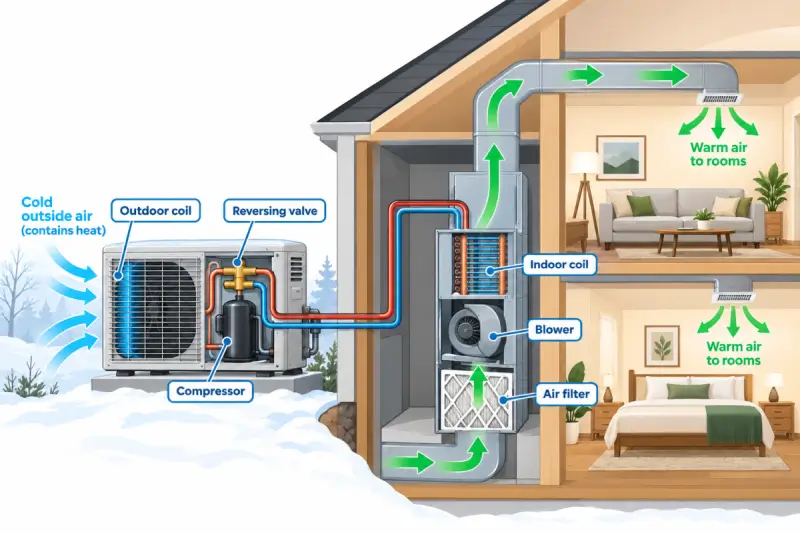
A heat pump HVAC system works like a refrigerator that can run in both directions. Refrigerant absorbs heat where it evaporates and releases heat where it condenses. A reversing valve decides which coil does which job, so one system heats in January and cools in July.
In heating mode, the cycle runs in four steps:
Cold refrigerant in the outdoor coil absorbs heat from outside air, even below freezing, and evaporates.
The compressor squeezes the gas, raising its temperature.
The hot gas reaches the indoor coil, where the blower pushes household air across it and into your ducts.
The refrigerant condenses back to liquid, passes an expansion valve, and returns outside.
In cooling mode, the reversing valve flips the flow, and the indoor coil absorbs heat and moisture from your rooms.
Two details surprise first-time owners. In cold, damp weather, the system runs short defrost cycles, and you may see steam rising from the outdoor unit. Many ducted systems also carry electric heat strips for defrost and deep cold. Those strips draw far more power than the heat pump, so a correctly sized system that rarely uses them costs less to run.
Which Type of Heat Pump Fits Your Home?
The right heat pump type depends mostly on your ductwork and climate. Homes with sound ducts usually get the best value from a ducted air-source system. Ductless mini splits suit homes without ducts and room additions. Geothermal costs the most up front but draws on steady underground temperatures.
Heat Pump Types Compared
Cost ranges come from Filterbuy's heat pump cost guide. Panel upgrades, duct repairs, and permits can add $1,000–$5,000. Final quotes vary by home size and region.
For one room or a single zone, the Filterbuy 12,000 BTU ductless mini split heat pump ships with fast and free 2-day delivery to most US states and a 7-year compressor and 3-year parts warranty. At 17 SEER2, it clears the federal minimum and is built for value. In regions with long subzero stretches, choose a model listed for cold-climate performance. Professional installation keeps the warranty valid, and our step-by-step mini split installation guide shows what your installer will do.
How Much Does Heat Pump Installation Cost?
Heat pump installation cost runs from about $3,000 for a single-zone ductless system to $35,000 or more for geothermal, according to Filterbuy's heat pump installation and operating cost guide. Most ducted air-source replacements fall between $4,000 and $8,000 installed. Electrical panel upgrades, duct repairs, and permits can add $1,000 to $5,000.
Five factors move a quote up or down:
Capacity. Size comes from a room-by-room load calculation, not square footage alone.
Efficiency tier. Higher ratings and variable-speed compressors cost more to buy and less to run.
Duct condition. Leaky or undersized ducts may need sealing or resizing.
Electrical capacity. Older 100-amp panels sometimes need an upgrade.
Zones. Each added mini split indoor head adds equipment and labor.
Budget without a federal tax credit. The IRS guidance on the Section 25C credit states that the Energy Efficient Home Improvement Credit is not allowed for property placed in service after December 31, 2025. Many states and utilities still run rebates, and the DSIRE database of state incentives lists current programs by state.
What Do SEER2 and HSPF2 Ratings Mean?
SEER2 measures a heat pump's seasonal cooling efficiency, and HSPF2 measures its seasonal heating efficiency. Higher numbers mean less electricity for the same comfort. The "2" marks the federal test procedure that took effect in 2023, which uses more realistic duct pressure than the older SEER and HSPF tests. EER2 rates cooling at a single hot peak condition.
The table shows where a quote lands. The floor comes from federal efficiency standards in 10 CFR 430.32, and the higher tiers from the ENERGY STAR heat pump criteria.
Heat Pump Efficiency Ratings Compared
Federal minimums apply to split-system heat pumps manufactured on or after January 1, 2023. ENERGY STAR also requires 11.0 EER2 or higher for split systems.
Do Heat Pumps Work in Cold Climates?
Yes. The ENERGY STAR cold-climate tier requires a coefficient of performance (COP) of at least 1.75 at 5°F. A qualifying unit still delivers 1.75 units of heat per unit of electricity at 5°F, while electric baseboard heat delivers 1.0. HSPF2 testing stops at 17°F, so cold-region shoppers should check the NEEP cold climate heat pump product list for low-temperature performance data.
Why Are Homeowners Making the Switch?
Homeowners are switching because one heat pump replaces two machines and lowers energy bills in most homes. Air-source heat pump shipments passed gas furnace shipments in 2025 (see Supporting Statistics).
One system, both seasons. One outdoor unit, one tune-up schedule.
No on-site combustion. An all-electric heat pump needs no flue.
Higher efficiency floors. 2023 federal standards raised minimum ratings.
Cold-climate progress. Qualifying units keep at least 70% of their heating capacity at 5°F.
Why Heat Pump Filters Work Harder Than Furnace Filters
A heat pump's air filter works in every season because one blower moves air for heating and cooling. At Filterbuy, we manufacture pleated MERV 8, MERV 11, and MERV 13 filters in hundreds of sizes in our U.S. factories. Our view is simple: a filter with no off-season should be changed on the system's calendar, not the furnace calendar.
We call this the changeover filter schedule:
Fall changeover. Install a fresh filter the day you switch the thermostat from cool to heat.
Midwinter check. Pull the filter when heating run time peaks, and replace it if it looks gray or clogged.
Spring changeover. Replace the filter when you switch from heat to cool.
Midsummer check. Inspect it during the longest cooling stretch.
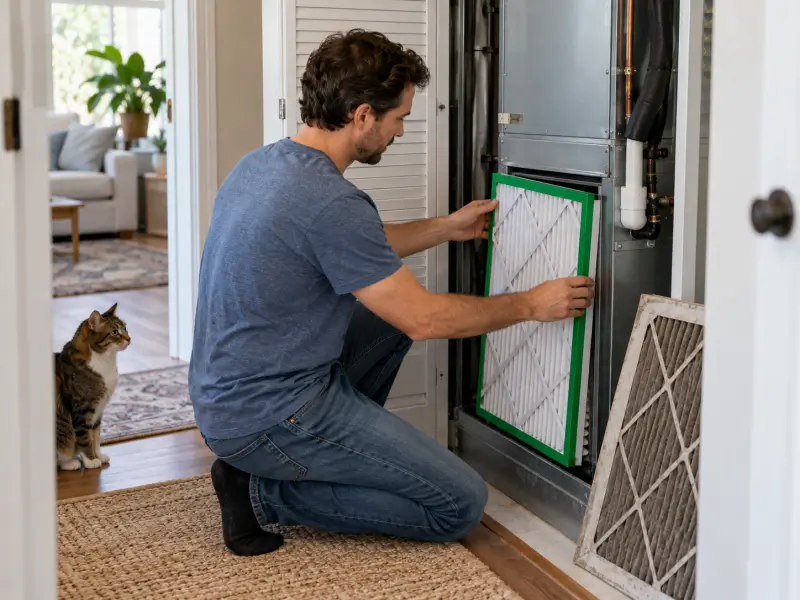
Between those dates, follow the interval for your filter depth in our guide on how often to change your HVAC filter. Heat pump filters sit in the air handler cabinet, behind a return grille, or both. Note the size printed on each frame before you order.
Most residential heat pumps accept MERV 8, 11, or 13 pleated filters. Check your equipment manual for its approved MERV range before choosing a higher rating. Filterbuy heat pump replacement air filters come in all three ratings, ship free, and can arrive on auto-delivery before each changeover.
What to Ask Before You Sign a Heat Pump Quote
A strong quote answers these six questions in writing. Compare quotes on the answers as well as the price.
Did you run a Manual J load calculation for my house?
What are this model's heating capacity and COP at 5°F?
Can my ducts carry the airflow this system needs, commonly 400 to 500 cubic feet per minute per ton?
When will the backup heat strips turn on, and how is that controlled?
Where is the filter, what size does it take, and what MERV range does the manufacturer approve?
Which state or utility rebates does this model qualify for, and who files the paperwork?
"A heat pump runs its blower through every season, so the filter inside it never gets a break. We build filters in hundreds of sizes in our American factories because the right fit, changed on schedule, keeps a heat pump running the way its installer designed it."
David Heacock, Founder and CEO, Filterbuy
Supporting Statistics
Three data points from U.S. government and nonprofit sources:
62% to 95% of U.S. households would see lower energy bills with a heat pump.
The range depends on the heat pump's efficiency level.
Home site energy use drops 31% to 47% on average.
Source: NREL heat pump cost and benefit analysis (February 2024)
U.S. manufacturers shipped 3,644,596 air-source heat pumps in 2025.
Gas furnace shipments totaled 3,247,426 in the same year.
Heat pumps outshipped gas furnaces by about 397,000 units.
Source: AHRI monthly shipment statistics (December 2025 release)
A neglected heat pump can use 10% to 25% more energy than a well-maintained one.
The U.S. Department of Energy advises cleaning or changing filters every three months or as the manufacturer recommends.
Frequently Asked Questions
Is a Heat Pump the Same as an HVAC System?
No. HVAC (heating, ventilation, and air conditioning) is the whole category. A heat pump is one type of HVAC equipment that handles both heating and cooling.
Can a Heat Pump Fully Replace My Furnace?
In most U.S. climates, yes. In very cold regions, choose a cold-climate model or a dual-fuel setup that keeps a gas furnace for the coldest days.
Are Federal Heat Pump Tax Credits Still Available in 2026?
No. The federal Section 25C credit ended for heat pumps placed in service after December 31, 2025. Many states and utilities still run their own rebates.
Does a Heat Pump Need a Special Air Filter?
No. A heat pump uses a standard pleated filter in the size its air handler or return grille takes. Stay within your manual's MERV range and check the filter monthly in peak seasons.
What SEER2 Rating Should I Look For?
Look for 15.2 SEER2 or higher, the ENERGY STAR level. In cold regions, weigh HSPF2 and COP at 5°F more heavily.
Why Does My Heat Pump Blow Steam in Winter?
Steam usually means a normal defrost cycle melting frost off the outdoor coil. Call a technician if the coil stays caked with ice.
Glossary
Air Handler: The indoor cabinet holding a ducted heat pump's coil, blower, and filter.
Coefficient of Performance (COP): Heat delivered divided by electricity used.
Defrost Cycle: A short routine that reverses refrigerant flow to melt frost off the outdoor coil.
Dual-Fuel System: A heat pump paired with a gas furnace that takes over in very cold weather.
EER2: Energy Efficiency Ratio 2, cooling efficiency at one hot peak condition.
HSPF2: Heating Seasonal Performance Factor 2, the federal rating for a heat pump's seasonal heating efficiency.
Manual J: The standard room-by-room calculation used to size heating and cooling equipment.
MERV: Minimum Efficiency Reporting Value, a 1 to 16 scale rating how well an air filter captures airborne particles.
Reversing Valve: The part that switches a heat pump between heating and cooling.
SEER2: Seasonal Energy Efficiency Ratio 2, the federal rating for a heat pump's seasonal cooling efficiency.
Ton: A unit of heating and cooling capacity equal to 12,000 BTUs per hour.