
Air Quality in Cities vs. Rural Areas: Key Differences Explained
July 14, 2026
Author: Michelle Wan, Air Quality Writer | Reviewer: David Clark, Licensed HVAC Technician | Publish Date / Updated Date: July 14, 2026
Air Quality in Cities vs. Rural Areas: Which One Is Actually Worse?
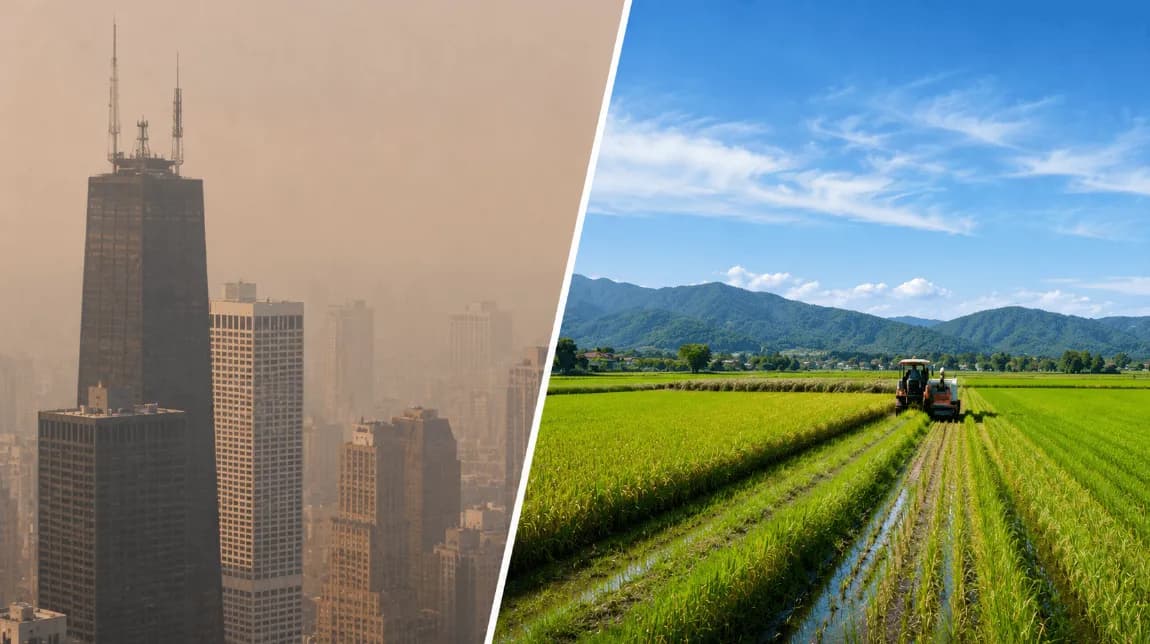
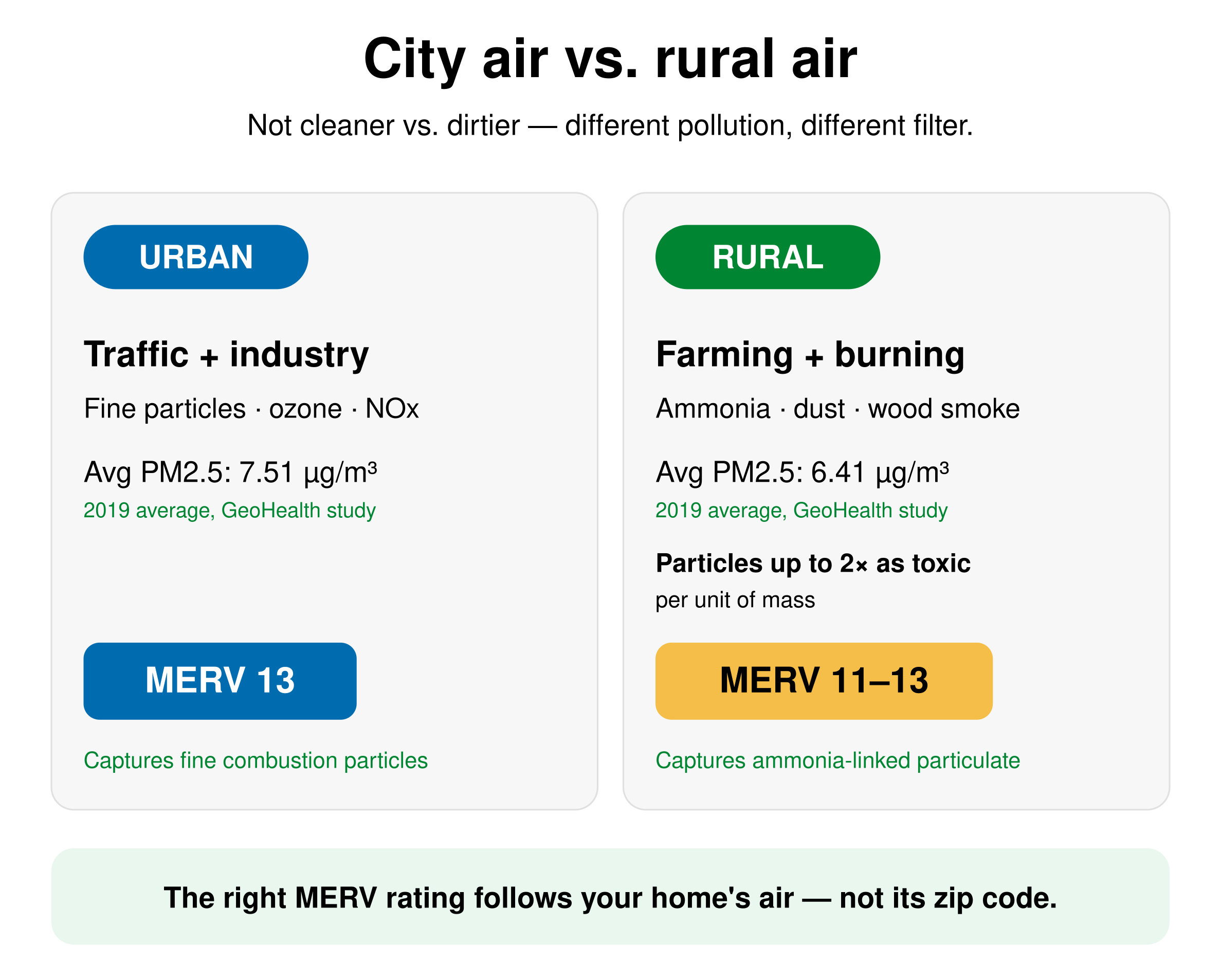
Neither is automatically safer — city air and rural air carry different pollution, not more or less of the same kind. Cities run higher in fine particles and ozone from traffic and industry. Rural areas carry more ammonia, dust, and smoke from farming and burning. Rural particles can even run up to twice as toxic per unit of mass, so a lower AQI in the country does not guarantee cleaner air inside your home.
The filter that fits your home follows the air drifting past your door, not your zip code:
- Dense urban / high-traffic: MERV 13 — captures fine combustion particles and smoke
- Suburban / light industrial: MERV 11 — captures vehicle exhaust and pollen
- Rural / agricultural: MERV 11–13 — captures ammonia-linked fine particulate and seasonal smoke
- Wildfire-prone (either setting): MERV 13
Not sure which profile fits your home? Answer a few quick questions and we’ll match you to the right filter.
Ready to shop by size, brand, or MERV rating? Browse Filterbuy air filters →
TL;DR
City air and rural air carry different pollution problems, not simply more or less of the same one. Urban areas concentrate fine particulate matter and ozone from traffic and industry. Rural areas carry more ammonia, dust, and smoke from agriculture and burning. Rural particles can be more toxic per unit despite lower concentrations, so neither setting is automatically the safer place to breathe.
Key Takeaways
Urban PM2.5 averaged 7.51 micrograms per cubic meter in 2019, compared with 6.41 in rural census tracts, according to a 2024 GeoHealth study.
Cities generate more fine particulate matter and ozone from vehicle and industrial combustion.
Rural areas generate more ammonia, dust, and smoke from agriculture, livestock, and seasonal burning.
University of Illinois researchers found rural particulate matter can carry up to twice the toxicity of urban particulate matter per unit of mass.
Rural ozone concentrations fell 31 percent between the 1990 to 2002 average and the 2020 to 2022 average, per the EPA's power sector air quality progress report, though transported ozone still raises rural readings.
The right MERV rating depends on a home's specific pollution profile, not on whether its zip code counts as urban or rural.
Is City Air Really Worse Than Rural Air?
The short answer is no, not in the way most people mean it. Urban air runs higher in fine particulate matter and ozone because of traffic and industrial combustion. Rural air carries its own load of ammonia, dust, and seasonal smoke from agriculture. Because rural particles can be more toxic per unit despite a lower reading, a lower AQI number in the country does not automatically mean safer air.
The common assumption treats city air as dirty and country air as clean. Real monitoring data tells a more specific story. Urban counties post higher average PM2.5 and more high-ozone days than rural counties. Rural counties are not pollution-free in return. Livestock operations, fertilized fields, wood stoves, and wildfire smoke all add particulate matter and gases that a city dweller rarely encounters at the same scale. The honest comparison is not cleaner versus dirtier. It is different sources, different particle types, and in some cases, different levels of harm per particle.
Filterbuy ships filters to homes in both settings, from downtown high-rises to farms two hours from the nearest traffic light, and that vantage point shapes how this comparison gets framed here. The question that actually matters is not which zip code sounds cleaner. It is which pollutants show up in a specific home's air, and whether the filter installed there was ever chosen for that mix.
What Makes Urban Air Pollution Different
Traffic And Combustion Emissions
Vehicle exhaust is the largest single contributor to urban air pollution. Cars, trucks, and buses release nitrogen oxides and fine particulate matter continuously throughout the day, with sharp spikes during rush hour. Dense traffic corridors and highway-adjacent neighborhoods carry the highest concentrations.
Industrial Sulfur Dioxide And Volatile Organic Compounds
Manufacturing, refining, and power generation add sulfur dioxide and volatile organic compounds on top of traffic emissions. These compounds react with sunlight and combustion byproducts to form secondary pollutants that would not otherwise exist in the same concentration.
Ozone Formation In Cities
Ground-level ozone forms when nitrogen oxides and volatile organic compounds react in sunlight, a reaction that runs hardest in dense, high-traffic areas during warm months. Ozone is a gas, not a particle, so it affects the respiratory system differently than PM2.5 and cannot be filtered out of indoor air the way particulate matter can.
Fine Particulate Matter Concentration In Urban Areas
Urban tracts held an average PM2.5 concentration of 7.51 micrograms per cubic meter in 2019, down from 9.56 in 2010, according to Kilpatrick et al. in GeoHealth. That decline reflects real regulatory progress, though urban concentrations still ran higher than rural concentrations throughout the study period. Filterbuy still recommends stronger filtration for dense metro homes for this reason, even as national air quality trends improve.
What Makes Rural Air Pollution Different
Agricultural Ammonia And Livestock Emissions
Livestock waste and fertilized fields release ammonia, a gas that reacts in the atmosphere to form fine particulate matter. This source barely exists in urban air and is one of the main reasons rural particulate composition differs so sharply from urban particulate composition. Filterbuy factors this ammonia-linked particulate into the MERV recommendations later on this page.
Wood Burning And Dust
Wood stoves, agricultural burning, and unpaved roads add particulate matter that cities rarely produce at the same scale. Dust from tilled fields and gravel roads contributes coarse particles, while wood burning adds fine particles similar in size to urban combustion particles but different in chemical makeup.
Wildfire Smoke Drift Into Rural Areas
Rural regions often sit closer to active wildfires and in the direct path of smoke plumes, so they can face some of the highest short-term PM2.5 spikes of any setting during fire season. Filterbuy's guide on how to read a wildfire smoke map walks through how to track a plume and time indoor protection before a smoke event peaks.
Particle Toxicity In Rural Samples
A University of Illinois research team measured the oxidative potential, meaning the capacity to cause biological damage, of particles collected in rural and urban Midwest locations. Rural particles showed up to twice the toxicity of urban particles of the same mass, tied to seasonal spikes in agricultural activity. Lower concentration does not guarantee lower harm.
This is the detail most general air-quality guides skip. A rural AQI reading can look reassuring on a phone screen while the particles behind that number do more damage per breath than a dirtier-looking city reading.
Urban Vs. Rural Air Quality: Side-By-Side Comparison
The table below places the two pollution profiles next to each other. Each row names a specific factor rather than a general impression, so the comparison holds up on its own. Filterbuy built this comparison to replace vague location assumptions with the specific factors that actually drive a filtration decision.
Source: Kilpatrick et al., GeoHealth (2024); CDC MMWR Rural and Urban Differences in Air Quality; University of Illinois oxidative potential research.
Does Rural Air Actually Protect Your Health?
Rural air does not automatically protect anyone's health, even where particulate concentration runs lower than in cities. The University of Illinois toxicity finding is the clearest evidence against the assumption. Particles collected in agricultural regions caused more biological damage per unit of mass than particles collected in cities, largely tied to the chemical makeup of livestock and fertilizer-linked pollution. A rural household with a lower AQI reading is not necessarily breathing a lower-risk mix of pollutants. The type of particle matters as much as the count.
Most coverage of this topic stops at the concentration numbers, since concentration is what regulators measure and publish. Toxicity per particle is harder to headline, so it rarely makes it into a city-versus-country comparison, even though it changes the practical answer for anyone deciding how seriously to take their own local air quality. It is also the reasoning Filterbuy applies before recommending a rating for a specific address, rather than defaulting to a lower rating just because a location reads as rural.
What If Your Home Doesn't Fit Either Label?
Most U.S. households do not live in a dense downtown or a farm at the end of a gravel road. They live somewhere in between, in a suburb with commuter traffic on one side and open fields or a feedlot on the other, or in a small town that sits downwind of both a highway and a grain elevator. The urban-versus-rural framing used throughout this page is a useful starting point, not a strict rule that applies to every address.
A five-minute walk-through beats waiting for a government dataset to catch up with a specific block. Here is how to figure out which pollution profile actually applies at home right now.
Check the filter before changing it. A fine gray film points toward traffic and combustion sources. A coarser, dustier buildup with an earthy or barnyard smell points toward agriculture.
Look at what sits within a mile. A highway, warehouse district, or rail yard behaves like an urban source. A feedlot, tilled field, or gravel road behaves like a rural one, even inside a suburb.
Match the season to the symptom. Watery eyes and haze in summer point toward ozone. A dusty windowsill in spring or fall points toward planting, harvest, or agricultural burning.
Notice smoke specifically. A gray haze that smells like a campfire, even far from any visible flame, usually means wildfire smoke rather than everyday pollution, in either setting.
Watch for still, humid, or foggy days. Weak wind and a temperature inversion trap whatever is already local, so a mild pollution source can feel worse on a still day than a stronger one on a windy day.
None of these checks replace a real-time AQI reading, but they point to which section above, urban or rural, actually describes the air at a specific address. Filterbuy rates and sizes filters the same way regardless of address, which is exactly why this self-check matters more than a location label.
How Location Changes The Air Inside Your Home
Indoor air quality tracks outdoor air quality closely in both settings, through different paths. In cities, outdoor PM2.5 and ozone infiltrate through windows, doors, and HVAC intakes, so indoor air quality mirrors the surrounding traffic and industrial pattern. In rural homes, wood stoves, agricultural drift, and periodic burning add indoor particulate sources that a city apartment rarely has, on top of whatever outdoor air makes its way inside. Neither setting gets a pass on indoor filtration.
In both settings, the HVAC filter is the one piece of equipment standing between outdoor air and the air a household actually breathes. That is why Filterbuy treats filter selection as a function of what is in the air outside a specific door, not a generic upgrade sold the same way in every zip code.
Which MERV Rating Fits Your Environment?
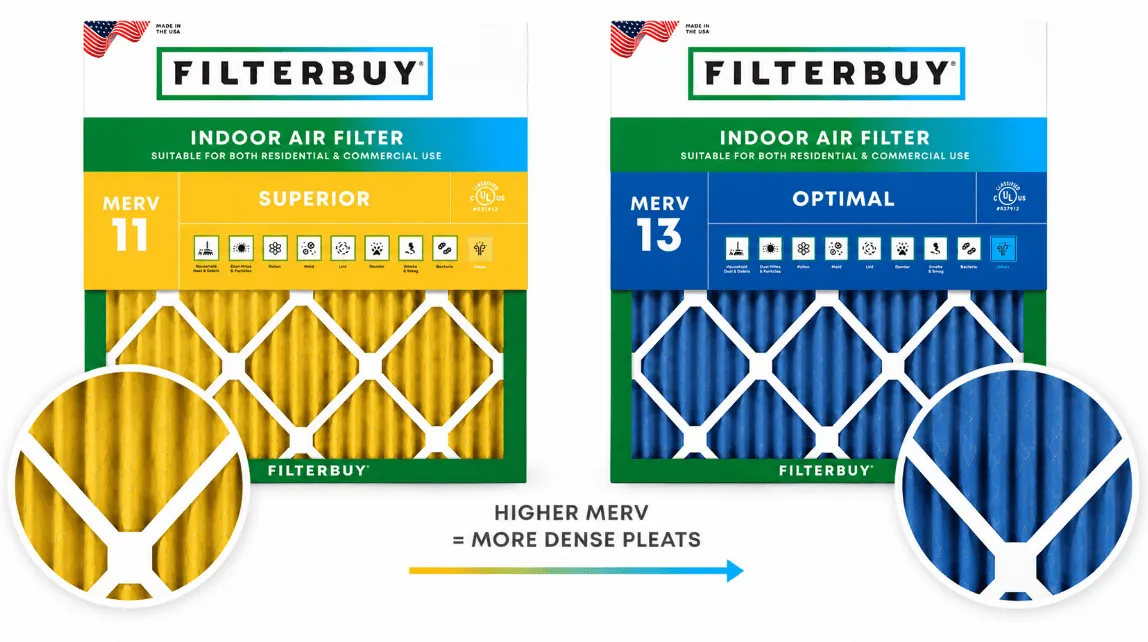
The right MERV rating follows the pollution profile of a specific home, not a generic urban or rural label. The table below breaks down a starting recommendation by setting, and Filterbuy's MERV rating guide covers how to confirm a specific HVAC system can handle that rating without restricting airflow.
Source: EPA MERV rating guidance; Filterbuy wildfire smoke filtration guidance.
The mistake we see most often is picking a filter rating based on a general reputation for a place instead of what's actually drifting past a specific address. A dense neighborhood and a farm two counties over both need real filtration. They just need it for different reasons.
— David Heacock, Founder and CEO, Filterbuy
The mistake I see most often is homeowners treating the furnace filter as a once-a-year afterthought. During smoke season it's the opposite. That filter is your home's first line of defence, and it can load up in weeks instead of months. If you do one thing when the air turns, upgrade the filter and set the fan to run continuously.
— David Clark, Licensed HVAC Technician (Reviewer)
How To Check Your Local Air Quality Right Now
A single MERV recommendation only goes so far without a current reading. Filterbuy's live air quality and wildfire smoke map pulls real-time AQI and smoke data for any city, county, or zip code, urban or rural, so a household can confirm current conditions before deciding whether to upgrade a filter or run a portable air cleaner.
Frequently Asked Questions
Is Country Air Always Cleaner Than City Air?
No. Rural areas typically post lower average PM2.5 and fewer high-ozone days than cities, but rural particles can carry higher toxicity per unit of mass, driven by agricultural ammonia. Lower concentration does not guarantee lower health risk.
What Is The Biggest Air Pollution Difference Between Cities And Rural Areas?
Source type is the biggest difference. Urban pollution comes mainly from vehicle and industrial combustion. Rural pollution comes mainly from agricultural ammonia, dust, and burning.
Why Does Rural Air Sometimes Cause More Lung Damage Than City Air?
University of Illinois researchers found rural particles can carry up to twice the oxidative potential of urban particles of the same mass, tied to the chemical makeup of agricultural pollution rather than to how much of it is in the air.
Does Wildfire Smoke Affect Rural Areas More Than Cities?
Rural areas often sit closer to active fires and directly in a smoke plume's path, so they can see sharper short-term PM2.5 spikes than cities during a wildfire event, even though cities are not immune once smoke travels far enough.
What MERV Rating Is Best For A Home In A Rural Area?
Most rural homes do well with a MERV 11 to MERV 13 filter, which captures ammonia-linked fine particulate and seasonal smoke without restricting airflow in most residential systems. A home near frequent agricultural burning or wildfire exposure should stay at the MERV 13 end of that range. Filterbuy carries filters across that full range in sizes built for most residential HVAC systems.
What About Suburbs? Are They More Urban Or Rural?
Most suburbs carry a blend of both profiles. Commuter traffic behaves like an urban source, while nearby farmland, feedlots, or gravel roads behave like a rural one. The five-question self-check above works better than a strict urban or rural label for a suburban address.
Essential Resources
Confirm Your Filter Matches The Particle Sizes In Your Air
Source: EPA's MERV Rating Guide. explains exactly how filter ratings translate to the particle sizes a home actually needs to catch.
Check Real-Time Pollution Levels For Any Zip Code
Source: AirNow's AQI Basics Guide. breaks down the color-coded scale behind current AQI readings, in cities and rural counties alike.
See How A Specific County Compares Nationally
Source: American Lung Association's State of the Air Report. grades every state and county on ozone and particle pollution so a household can see how their area compares nationally.
Supporting Statistics
Urban And Rural Air Quality Differ Sharply By County Type
High-ozone risk and PM2.5 both drop as counties get more rural, per CDC's county-level analysis.
Relative risk of a high-ozone day: 0.62 in large fringe metro counties, 0.17 in the most rural (noncore) counties.
Average annual PM2.5: 11.15 micrograms per cubic meter in large central metro counties, 8.87 in noncore counties.
Source: CDC MMWR: Rural and Urban Differences in Air Quality. the federal surveillance report behind the county-type comparison cited on this page.
Agricultural Ammonia Emissions Compromise Rural Air Quality
Farming and livestock operations add a pollution source cities rarely face, per NIH-backed research.
Large-scale animal feeding operations release ammonia that can compromise regional air quality in rural areas.
Children with asthma living near these operations have shown acute lung function problems tied to that exposure.
Agricultural burn smoke exposure of as little as two weeks a year can worsen children's respiratory health outcomes.
Source: NIEHS: Air Pollution And Your Health. the National Institutes of Health's summary of agricultural air pollution research cited on this page.
Rural Particles Can Carry Twice The Toxicity Of Urban Particles
Lower particle counts in rural air do not mean lower harm, per University of Illinois research.
Researchers compared particle samples from Indianapolis, St. Louis, and Chicago against rural Illinois sites.
Rural particles caused up to twice the biological damage of urban particles of equal mass.
The toxicity gap was strongest during peak agricultural months.
Source: KCUR's Coverage Of The Toxicity Study. reports the University of Illinois findings in plain language, with direct quotes from the study's lead researcher, Vishal Verma.