
What FPR and MERV Filter Should I Use? A Guide to Choosing the Right Air Filter Rating
July 23, 2026
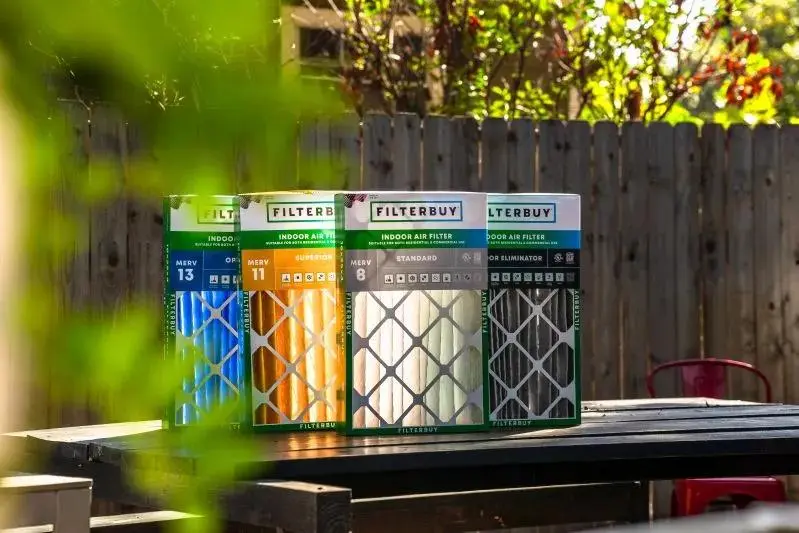
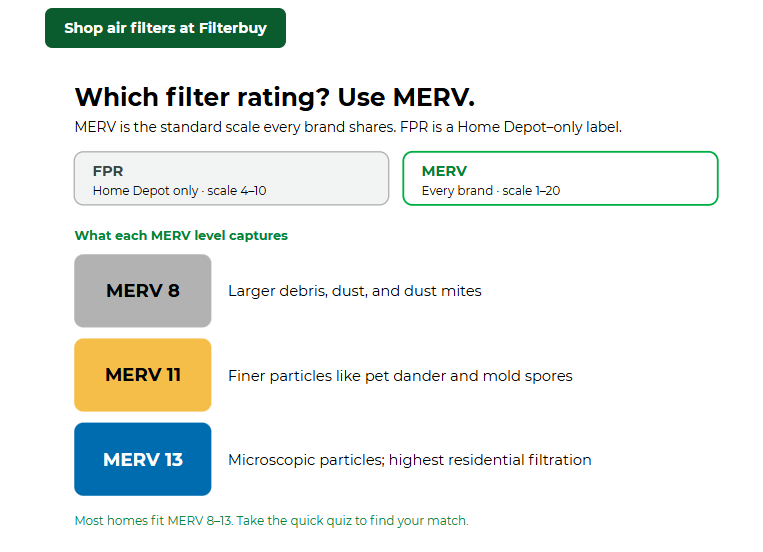
For most homes, a MERV 8 to MERV 13 filter is the right choice. MERV is the industry-standard rating that every brand shares, so you can compare it anywhere. FPR is a label you will only find at The Home Depot, so it cannot be matched to filters sold elsewhere.
MERV 8 — captures larger debris, dust, and dust mites.
MERV 11 — captures finer particles like pet dander and mold spores.
MERV 13 — captures microscopic particles; highest residential filtration.
Not sure which filter fits your system? Answer a few quick questions and we will match you.
For most homes, a MERV 8 to MERV 13 filter strikes the right balance between clean air and healthy airflow. MERV is an ASHRAE-standardized rating used across the entire industry, while FPR is a proprietary scale found only at The Home Depot. If you want a filter rating you can rely on and compare, MERV is the one to know.
Key Takeaways
MERV ratings are standardized by ASHRAE and apply to filters across all brands and retailers.
FPR is a Home Depot-only scale that cannot be compared to filters sold elsewhere.
MERV 8 to MERV 13 covers the range most homes need, from basic dust control to serious allergy protection.
Filterbuy pleated MERV filters are built to deliver consistent filtration without restricting airflow.
Choosing the right rating protects your air quality, extends your HVAC system's life, and keeps energy costs in check.
What Is FPR, and Why Does It Matter?
FPR stands for Filter Performance Rating. It is a proprietary system created by The Home Depot, running on a color-coded scale from 4 to 10. A higher number indicates better filtration, and the color-coding makes it easy to quickly grab a filter in-store.
The limitation is that FPR is a store-specific label rather than an industry benchmark. You cannot reliably compare an FPR-rated filter to any filter sold outside of The Home Depot. It also offers limited detail about how a filter handles specific particle sizes. If you have found FPR labels confusing, that is partly by design. They are built for quick in-store decisions, not informed comparisons.
What Is MERV, and Why Is It More Useful?
MERV stands for Minimum Efficiency Reporting Value. It was developed by ASHRAE, the organization that sets standards for heating, ventilation, and air conditioning, and it runs from 1 to 20.
Because MERV is standardized, every filter rated MERV 11, for example, has been tested to the same benchmark regardless of which brand made it or where you bought it. That consistency makes it a much more reliable tool for choosing the right filter for your home. The higher the MERV rating, the smaller the particles the filter captures, from household dust and pollen down to mold spores, pet dander, smoke, and bacteria.
FPR vs. MERV: A Simple Side-by-Side
Which MERV Rating Does Your Home Need?
You do not need the highest rating available. You need the one that fits your home and your HVAC system. Here is a practical breakdown:
MERV 8: Solid everyday protection for standard homes. Captures dust, pollen, and lint. A good starting point if you do not have pets or allergy concerns.
MERV 11: A step up for homes with pets or mild allergies. Traps fine particles like pet dander and mold spores while maintaining strong airflow.
MERV 13: Built for households dealing with asthma, serious allergies, or air quality concerns. Captures fine particles including smoke and certain bacteria.
One important note: filters rated at MERV 14 or higher are designed for commercial and medical-grade systems. In a standard home HVAC unit, airflow can be restricted, straining the blower motor and raising energy costs while wearing the system down faster. For residential use, a MERV rating of 8-13 is the right range.
Before you order, check the size printed on the frame of your current filter. Getting the right dimensions is just as important as the rating.
What Filterbuy MERV Filters Offer
Filterbuy pleated MERV filters feature deep, dense pleats that increase the filter's surface area. More surface area means more particles get captured. The design also keeps the pressure drop low, so your HVAC system does not have to work harder to push air through. That is a straightforward benefit for both your air quality and your monthly energy bill.
Every Filterbuy filter is made in the USA and ships directly to your door. No last-minute store runs, and no guessing at the shelf.
Based on feedback from customers who switched from mid-range FPR filters to properly matched Filterbuy MERV filters, many report less visible dust and fewer allergy symptoms within the first few weeks. These are consistent patterns from real homeowners, and they reflect what the right filter rating can actually do.
"When customers ask which rating to trust, the answer is always MERV," says a Filterbuy Air Quality Specialist. "It's an independently tested standard, so no matter where you buy, you always know exactly what you're getting."
Real-World Results: What We Have Seen
Allergy Relief in Atlanta, GA
A family using FPR 7 filters was dealing with ongoing allergy symptoms, pet dander, and asthma flare-ups. After switching to Filterbuy MERV 13 filters with guidance on the right fit and change frequency, they reported fewer allergy symptoms within two weeks, better sleep, and no airflow issues.
HVAC Efficiency in Phoenix, AZ
A property manager had installed very high-rated filters across all HVAC units, leading to low airflow and higher energy bills for tenants. Switching to Filterbuy MERV 11 filters normalized airflow across the building. Based on the property manager's own utility comparisons, bills dropped noticeably the following month, and MERV 11 became the standard for the property going forward.
Pet Dander Control in Los Angeles, CA
A homeowner with three cats had been cycling through various filter brands with little improvement in air quality. After switching to Filterbuy MERV 13 filters and adjusting the change schedule to every 60 days, visible pet hair on vents decreased noticeably and the household reported a meaningful reduction in pet-related allergy symptoms within the first month.
Dust Reduction in New York, NY
A couple in a high-traffic urban apartment were struggling with rapid dust buildup on surfaces despite regular cleaning. After upgrading from a basic FPR 4 filter to a Filterbuy MERV 11 filter, they noticed significantly less dust accumulation within three weeks and reported that the cleaning frequency dropped as a result.
Air Quality Improvement in Washington, D.C.
A government office building was receiving complaints from staff about poor indoor air quality, particularly during high-pollen season. Facility managers switched the entire building to Filterbuy MERV 13 filters and reported a reduction in air quality complaints, improved staff comfort, and no measurable drop in HVAC system performance.
What Trusted Sources Say About Indoor Air Quality
According to the EPA, most Americans spend about 90 percent of their time indoors, where air can carry dust, dander, and allergens, making filter choice a genuine health consideration.
Per ASHRAE, MERV 13 filters capture at least 85 percent of fine particles in the 1 to 3 micron range, including pollen, pet dander, mold spores, and some viruses.
The EPA also notes that indoor air can be 2 to 5 times more polluted than outdoor air, particularly in homes with poor ventilation or weak filters.
Stay on Schedule with Filterbuy
Replacing your filter on time is just as important as choosing the right one. A clogged filter restricts airflow and lets particles build up in your system.
MERV 8 to 11: Replace every 2 to 3 months.
MERV 13: Replace every 1 to 2 months, especially during allergy season or in homes with pets or smokers.
Filterbuy makes it simple to stay on track with auto-delivery subscriptions. Choose your size, pick your MERV rating, and set your delivery frequency. You will get a fresh filter when you need it, without having to remember.
Next Steps: How to Choose and Order
Check your filter size. The dimensions are printed on the frame of your current filter.
Choose your MERV rating. Use the guide above to match the rating to your home's needs.
Shop Filterbuy MERV-rated pleated filters. Pick your size and rating, and set up auto-delivery if you want the convenience.
Set a change reminder. Use a calendar alert or let Filterbuy's delivery schedule do it for you.
Ready to upgrade your air quality? Choose a MERV 11–13 filter from Filterbuy for the best balance of performance and efficiency. It's the ideal choice for most homes, capturing everything from dust and pollen to pet dander and fine particles. Shop Filterbuy's MERV 11–13 pleated filters today and breathe easier tomorrow.
Frequently Asked Questions
What is the difference between FPR and MERV?
MERV is an ASHRAE-standardized rating used across the entire filter industry, running from 1 to 20. FPR is a proprietary rating used only by The Home Depot, running from 4 to 10. The two scales cannot be compared directly, and FPR offers less detail about actual particle filtration performance.
Which rating system is more reliable?
MERV is more reliable. It is tested to a consistent standard regardless of the brand or retailer, which makes it a more useful tool for choosing the right filter for your home.
What MERV rating should I use?
MERV 8 for basic dust and pollen control, MERV 11 for homes with pets or mild allergies, and MERV 13 for asthma, serious allergies, or fine particle filtration. Always confirm your HVAC system supports your chosen rating before ordering.
Can a high MERV rating damage my HVAC system?
Yes, if the rating exceeds what your system is designed to handle. Filters rated MERV 14 and above can restrict airflow in standard residential HVAC units, straining the blower motor and raising energy costs. Stay within MERV 8 to 13 for most home systems.
How often should I replace my MERV filter?
Every 2 to 3 months for MERV 8 to 11, and every 1 to 2 months for MERV 13. Homes with pets, smokers, or allergy sufferers may need more frequent changes.