June 23, 2026

Most air filters are made from one of five core materials: spun fiberglass, pleated polyester or cotton-paper blends, activated carbon, or electrostatically charged synthetic fibers. That material, the filter media, is the porous layer inside the frame that does the actual work of trapping particles as air passes through. Your choice of media determines what the filter can capture, how long it lasts, how much it restricts airflow, and what you'll pay.
Not all media materials perform equally. Spun fiberglass costs less but only catches large debris. A pleated polyester-cotton blend costs a bit more but captures fine allergens and lasts three times as long. That performance gap drives differences in your air quality, your energy bills, and how often you replace the filter.
The filter media is essential for trapping airborne particles like dust and pollen, protecting both your lungs and your HVAC system.
The quality of the filter media significantly impacts indoor air quality, energy efficiency, and maintenance frequency.
Investing in a high-efficiency pleated filter may reduce costs and improve air quality in the long run compared to less effective options, such as cheap spun-glass panels.
People use "air filter" and "filter media" interchangeably, but they don't mean the same thing.
The air filter is the complete, ready-to-install unit. It includes the outer frame (usually cardboard, plastic, or metal), plus any wire backing for support, and the filtration material itself.
The filter media is the porous material inside that frame. It's the part that physically traps particles as air passes through.
In most residential HVAC systems, you replace the entire unit, frame and all. Some larger homes and commercial systems use media rolls or pads that slot into permanent housings, so you only swap the media. For the average home, though, "buying a new filter" means replacing the whole thing.
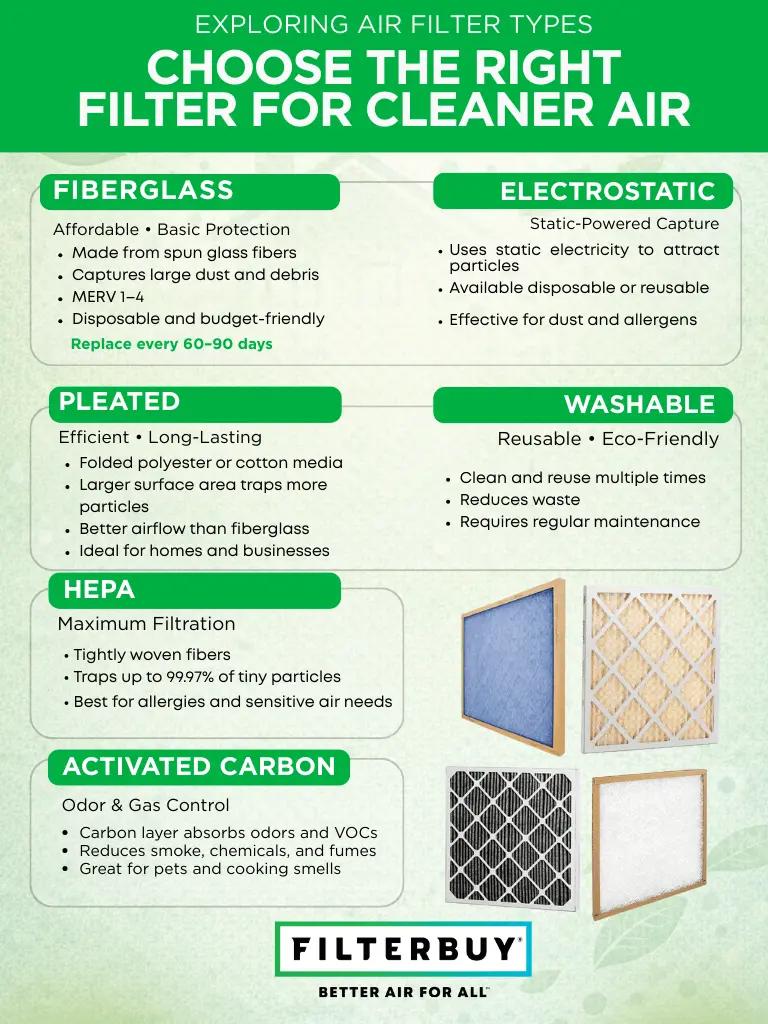
Not all filter media do the same job. Here's what each type is made of, what it captures, and who it fits best.
Know your MERV, find your filter
Most homes land in the MERV 8–13 range. Shop by size and rating to match your system.
Shop MERV FiltersAir filter media at a glance
This distinction trips up a lot of homeowners, so it's worth clearing up before we get into materials.
An HVAC filter sits inside your central heating and cooling system. Its first job is protecting expensive equipment (the blower motor, coils, and ductwork) from dust buildup. Its second job is cleaning the air that circulates through your home. Because air has to move freely through your ducts, HVAC filters must balance filtration with airflow.
A standalone air purifier is a self-contained appliance that cleans the air in a single room. It has its own dedicated fan, which lets it pull air through very dense media without affecting your central system.
That difference explains why true HEPA filters belong in air purifiers, not in most central HVAC systems. HEPA media is so dense that a standard residential blower motor can't push enough air through it. Forcing the issue can cause the system to overheat, freeze up, or wear out early. We'll cover this again below, but keep it in mind as you read.
With Filterbuy's broad selection, finding the ideal filter is a breeze. This ensures that your air remains as fresh as the morning dew and your space stays beautifully healthy.
Fiberglass filters are like the dependable old friend of air filtration. Made from layers of spun glass fibers arranged in a simple, panel-like structure, they're designed to snag those more enormous dust bunnies and debris. Ideal for homes without concern for allergies, they handle the basics without fuss.
While fiberglass filters might not dazzle with high-efficiency ratings (a humble MERV of 1 to 4), they're the face of the budget-friendly world. Their no-frills design means they might miss the tiniest dust particles, but they're the reliable choice for keeping the air clean without damaging your wallet.
Think of fiberglass filters as your home's trusty sidekick. A quick monthly check-up and a swap every 60 to 90 days are all they need to stay in peak form. This straightforward care routine keeps your system running like a charm, slashes those energy bills, and ensures your equipment's longevity. With Filterbuy's range, you'll find these dependable filters that effortlessly keep your air fresh and your wallet happy.
Imagine upgrading from a trusty old toolkit to a sleek, high-performance gadget. That's the leap you make with pleated paper filters. While fiberglass might be your basic, no-frills option, pleated paper filters are like the upgrade to premium tech gear. Their elegant, pleated design expands their surface area, turning them into powerful air-clearing machines.
Here's why pleated paper filters are the superhero of air filtration:
■ Higher Filter Efficiency: Consider them air's best detective, quickly catching even the tiniest particles.
■ Extended Durability: Their expansive surface area outlasts fiberglass, meaning fewer replacements and more peace of mind.
■ Improved Airflow: Despite their efficiency, they keep things flowing smoothly, ensuring your system doesn't have to break a sweat.
■ Flexibility: Perfect for any setting, whether a cozy home or a bustling business, they adapt to your needs effortlessly.
Switching to pleated paper filters is like giving your air system a high-five. They deliver a stellar mix of performance and value, keeping your environment cleaner and healthier while offering extra comfort in your daily life.
Selecting the right filter for your space can feel like finding a needle in a haystack, but with Filterbuy's diverse range, it's more like discovering a treasure trove of options. From top-tier HEPA filters that capture the tiniest specks of dust to practical pleated paper filters that handle the basics, there's something for every air quality need. Remember that higher-rated filters might need more TLC to stay their best, but they deliver cleaner air in return.
Think about your specific environment and needs. A standard pleated filter could be your best ally in maintaining clean air without fuss in a low-pollution area. Always double-check your equipment's specs to ensure compatibility so you get the best performance without any surprises.
Routine maintenance is the secret to a well-functioning air system. Regularly inspecting and replacing filters—around every three months—keeps your system running efficiently and avoids unnecessary wear and tear. Stay on top of this task, and you'll reap the benefits of cleaner air and a more durable system.
Air filter media can be crafted from fiberglass, pleated paper, polyester, cotton, and activated carbon. These materials are selected based on their ability to trap airborne particles, including dust, pollen, and pollutants. The effectiveness of an air filter depends on the type of media used.
A media filter is the material inside the filter that captures contaminants. An air filter, on the other hand, is the complete unit that houses the media and fits into HVAC systems or other setups. Media filters often refer to high-efficiency air filters that capture smaller particles, enhancing indoor air quality. The media filter is a part of the air filter, and its quality affects its overall performance.
Air filters can be made from fiberglass, pleated paper, synthetic fibers, and electrostatic materials. These materials are chosen for their ability to capture varying sizes of particles, from large debris to microscopic contaminants, impacting the filter's efficiency, durability, and cost.
Media air filters are often worth the investment, especially in environments requiring high air quality, such as homes with allergy sufferers or commercial buildings. They generally offer better efficiency in trapping fine particles compared to standard filters. Despite a higher initial cost, their superior performance and longer lifespan often make them a better value.
Media air filters usually last longer than standard filters, often up to six months or a year, depending on usage and conditions. Their extended lifespan is due to their higher contaminant-holding capacity and efficient design. Regular maintenance is still crucial for optimal performance and air quality.
No, air filters are not exclusively made of fiberglass. While fiberglass is standard, other materials like pleated paper, polyester, cotton, and synthetic fibers are also used. The choice of material depends on the application's specific needs, such as the type of particles to be filtered and the desired efficiency. Fiberglass filters are typically for essential filtration, while other materials cater to more advanced needs.
The three common types of filter media are mechanical, electrostatic, and activated carbon. Mechanical filters trap particles with a mesh structure, electrostatic filters use charged fibers to attract contaminants and activated carbon filters absorb odors and gases. Each type addresses different aspects of air quality.
Three types of air filters are HEPA (High-Efficiency Particulate Air) filters, electrostatic filters, and activated carbon filters. HEPA filters capture at least 99.97% of particles as small as 0.3 microns, electrostatic filters use static electricity to trap particles and activated carbon filters remove odors and volatile organic compounds. Each type is suited to specific air quality needs.
Filter media material is the substance within an air filter that captures airborne particles and contaminants. Common materials include fiberglass, pleated paper, polyester, cotton, and activated carbon. The choice of media impacts the filter's performance, durability, and suitability for different applications.
Yes, you can create a homemade air filter using a box fan and a high-efficiency furnace filter. By attaching the furnace filter to the fan, you can make a simple, cost-effective device to improve indoor air quality. However, homemade filters may not match the performance or reliability of commercial air filters, especially in capturing fine particles and allergens.
Cheap air filters are often made from fiberglass or low-grade synthetic fibers. These materials offer basic filtration, capturing larger particles like dust and dirt, but are less effective for smaller particles and allergens. While more affordable, these filters typically have a shorter lifespan and lower efficiency than higher-quality options.
The best material for an air filter depends on the application and air quality needs. HEPA material is highly regarded for its efficiency in capturing fine particles, trapping at least 99.97% of particles as small as 0.3 microns. Activated carbon is effective for removing gases and odors and is often used alongside other filtration media.