
Augusta Real-Time AQI Tracker


Get Alerts For Unhealthy AQI In Your Area
When air quality in your area reaches unhealthy levels, we'll send you a quick alert, along with expert tips on how to reduce your exposure.
What's Actually In Augusta Air Today?
What High AQI Means for Your Lungs in Augusta
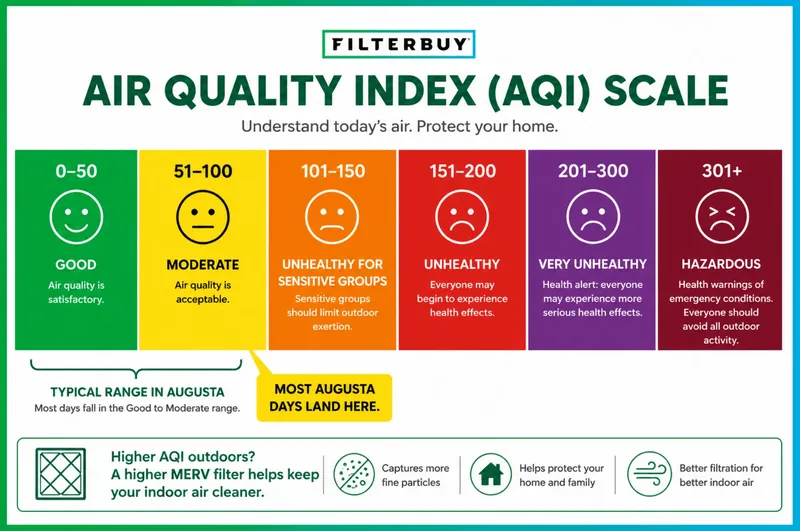
How to Read AQI
The Air Quality Index (AQI) measures how polluted the air is and how it may affect your health.
0–50 (Good): Air quality is satisfactory.
51–100 (Moderate): Acceptable, but some pollutants may pose minor concerns.
101–150 (Unhealthy for Sensitive Groups)
151–200 (Unhealthy)
201–300 (Very Unhealthy)
301+ (Hazardous)
Moderate
Still okay for most, but if you have asthma or allergies, take it easy and avoid long outdoor workouts.
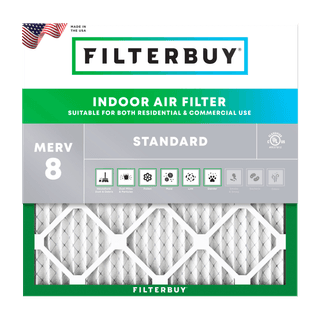
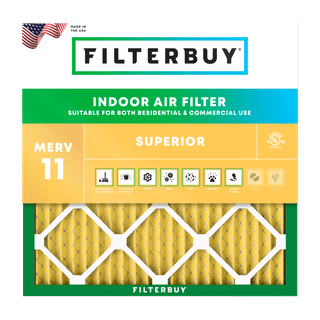
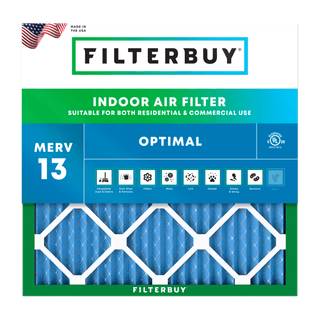
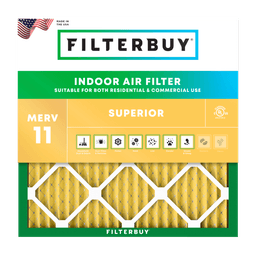
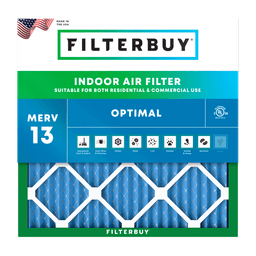
Shop MERV 11 filters→What's the Right Filter for Your AQI Level?



Check Today's Live Real-Time Air Quality Index (AQI) Map in Augusta, GA
Michelle Wan, Brand Manager & Air Quality Writer | Filterbuy · Reviewed by David Clark, Licensed HVAC Technician · Published July 19, 2026 · Updated July 19, 2026
TL;DR
Augusta's live air quality index (AQI) usually reads Good to Moderate, drawn from EPA and Georgia EPD monitors reporting through the bi-state Augusta-Aiken, GA-SC area. But the AQI is a snapshot of a few outdoor pollutants, not everything you breathe. Augusta earns an A for ozone, a failing grade for year-round particle pollution, and pollen never appears in the index at all. Check the map first, then check what's driving the number.
Key Takeaways
Augusta's AQI comes from a bi-state reporting area: EPA's AirNow publishes conditions under Augusta-Aiken, GA-SC, covering Richmond County, GA and Aiken County, SC.
The report card is split: in the American Lung Association's State of the Air 2026, the Augusta metro earned an A for ozone, a B for short-term particles, and a failing grade for year-round particles (41st worst nationally).
The AQI does not measure pollen — Augusta's most notorious air problem has zero effect on the number.
Georgia issues no daily forecast for Augusta. EPD forecasts cover Atlanta, Macon, and Columbus only.
PM2.5 is the pollutant that matters most here, and it's the one a MERV 13 filter is built to capture — which is why your indoor number is the one you can actually change.
What Is the Air Quality in Augusta Today?
Augusta's air quality today is whatever the live map above reports — most often Good (0–50) or Moderate (51–100), with fine particulate matter (PM2.5) as the dominant pollutant. The AQI runs 0–500 and converts pollutant concentrations into one color-coded number. A reading under 100 is typical and means healthy adults can go about their day, while unusually sensitive people may want to ease up on hard outdoor exertion.
The number updates hourly, so check it before a morning run at the Augusta Canal or a kid's practice at Diamond Lakes. Green and yellow are ordinary Augusta days. Orange means unhealthy for sensitive groups. Red or worse is rare here, and when it happens it's almost always smoke.
How to Read Augusta's Live AQI Map: The 3-Number Check
Read the AQI as three numbers, not one. The value sets the health category. The dominant pollutant decides what you should actually do. The monitor distance tells you how much to trust it for your address. A 62 driven by PM2.5 smoke calls for a different response than a 62 driven by ozone on a hot afternoon.
The 3-number check: read the value, then the pollutant, then the distance. The pollutant decides what you actually do about it.
Georgia monitors ground-level ozone March through October, per federal requirements. If you're checking the AQI in January, you're almost certainly looking at a particle number, not a smog number.
What Augusta's AQI Number Does Not Tell You
The AQI does one narrow job well: reporting a handful of regulated outdoor pollutants at a regional monitor, right now. It was never designed to describe everything in the air around your house — and in Augusta, several things residents actually notice are invisible to the index.
A good AQI is necessary but not sufficient in Augusta. The two problems this city is known for, chronic fine particles and pollen, are the two the daily number shows worst.
In Augusta, a good AQI is necessary but not sufficient. The two problems the city is genuinely known for — chronic fine-particle exposure and brutal pollen — are the two the daily number is worst at showing you.
What Is Augusta's Air Quality Report Card, and How Does It Compare to Atlanta?
Augusta's grades contradict each other, and that contradiction is the whole story. In the American Lung Association's State of the Air 2026 (EPA data, 2022–2024), Augusta rarely has a bad day but has a persistently particle-heavy year. If you moved here from Atlanta, you traded up on the two measures that produce visible bad days — and didn't move at all on the one nobody can see.
Source: American Lung Association, State of the Air 2026 (April 21, 2026). Augusta-Richmond County, GA-SC and Atlanta-Athens-Clarke County-Sandy Springs metros. Grades reflect EPA monitoring data from 2022–2024.
Augusta beats Atlanta by five letter grades on ozone and by 58 places on short-term particle spikes — then both cities fail year-round particles, three places apart. Atlanta has the reputation; Augusta has nearly the same annual soot number and none of the alarm, which is exactly how a problem stays invisible for a decade. The daily AQI is built to flag bad days; the annual average flags exactly what Augusta has. That's why "the AQI says 45, so we're fine" is the wrong conclusion here.
Our Take: Augusta's Air Problem Isn't Dramatic, and That's Exactly Why It Gets Missed
Most cities with an air quality reputation have bad days you can see coming. Augusta mostly doesn't. It earns an A for smog and rarely climbs past orange. Three things are true at once, and no single number holds all three: Augusta's ozone really is clean, its year-round particle average really isn't, and the pollen that coats every car in the CSRA each spring isn't in the index at all.
We make filters, not forecasts, so here's the honest version: we can't move Augusta's annual average, and no filter removes ozone — we'd rather say so than sell around it. What we can tell you, after building pleated filters in the USA since 2013, is that the fine particles behind Augusta's failing grade are the same particles a MERV 13 is built to catch, and the tree pollen the AQI leaves out is the same pollen that ends up in your return vent. That's the gap this page exists to close.
Why Is Augusta's Air Quality Bad on the Days It Is Bad?
When Augusta's AQI climbs, it's almost always particles, usually from one of four local sources. Ozone can rise on hot, still summer afternoons, but the A grade means it rarely becomes the problem.
Prescribed burns and land management. Controlled burning is standard forestry practice across the CSRA, and the smoke is PM2.5. Georgia ties burn permission to Augusta's air: under Georgia EPD's prescribed burning guidance (PDF), Richmond and Columbia counties use the Augusta-Aiken AQI, and burning is barred once the ozone AQI hits 100 (color code orange or worse).
Vehicle traffic. I-20, I-520, and Washington Road add combustion particles plus brake and tire wear — a steady contributor to the annual average, not a dramatic spike.
Pollen — invisible to the AQI, unmistakable in your filter. Augusta ranked 36th on AAFA's 2026 Allergy Capitals (12th in 2025; treat the swing as noise, the long intense tree-pollen season as signal). The visible yellow pine pollen is coarse; the particles that drive symptoms are the invisible oak, birch, and hickory. Richmond County also lost ~10% of its tree canopy to Hurricane Helene in 2024, which may affect how stressed surviving trees produce pollen.
Regional smoke. Wildfire smoke from hundreds of miles away can raise PM2.5 for days. If smoke reaches Augusta, our guide to the best air conditioner filter for wildfire smoke covers what to do.
Is the Air Quality Bad in Augusta Today? What to Do at Each Level
Match your response to the number and the pollutant. Outdoor AQI affects your indoor air, so if you're protecting a child, an older parent, or anyone with asthma, start with what AQI levels are unsafe for sensitive groups. Once the number passes 100, our guide on what to do when AQI is above 100 walks through the steps.
Health guidance follows the U.S. EPA AirNow AQI categories. This is general information, not medical advice.
How to Protect Your Indoor Air in Augusta
You can't change Augusta's AQI. You can change the number inside your house, and the highest-leverage move is the filter in your return vent. A MERV 13 captures 98% of airborne particles down to 0.3 microns — covering PM2.5, the exact pollutant behind Augusta's failing grade, plus the tree pollen the AQI ignores. MERV 11 captures 95% and is a strong step up if your system can't handle 13. Unsure? Start with our MERV rating chart or which MERV rating you should use.
Three moves that actually matter: match the filter to the problem (particles and pollen → MERV 11/13; odors and VOCs → activated carbon; ozone is a gas, so shift outdoor time to mornings instead); change it on schedule (Augusta filters load faster in spring than the calendar suggests, and a clogged filter strains the system cooling your house through a Georgia August); and run the fan on bad-air days (fan "on" beats fan "auto" — a filter only cleans air that passes through it).
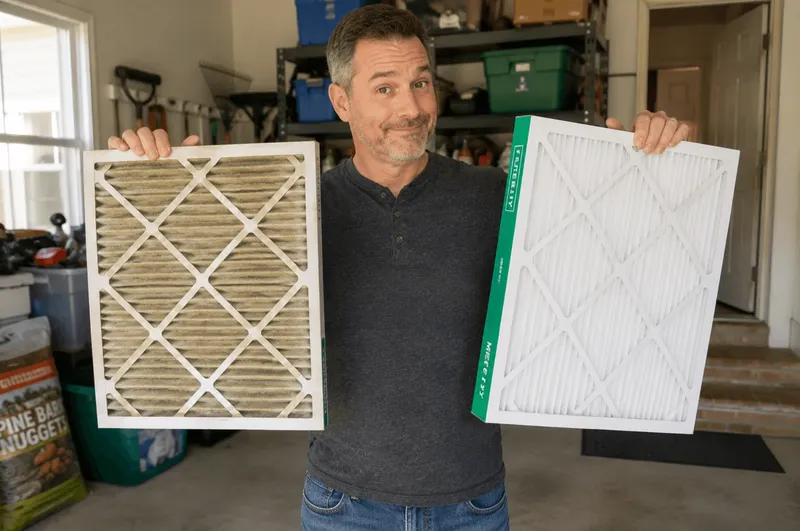
"In peak pollen season I'll pull a return-air filter that's only a few weeks old and it's already packed grey-green with tree pollen — that's the stuff the AQI never shows you. MERV 13 is the right call for most Augusta homes, but airflow is the part people skip. On an older system with undersized return ducts, check your static pressure before you upgrade. And in spring, don't wait on the calendar. Pull the filter and look at it."
Ready to fix the number you can control? Shop MERV 13 air filters, or build a custom size if your vent isn't standard. Filterbuy has made pleated filters in the USA since 2013 and ships factory-direct — or set up auto-delivery so a fresh filter arrives before pollen season does.
The Augusta Air Quality Calendar
Augusta's air runs on a schedule, and almost none of it shows up in today's number. Knowing what month it is often tells you more about your air than the AQI does.
Sources: Georgia EPD summer open burning ban (Richmond and Columbia counties, May 1–September 30, fines possible, prescribed burning exempt outside the 19-county metro Atlanta area); Georgia EPD ambient air monitoring plan (ozone monitored March–October); South Carolina DES air quality forecast (ozone season April–September). Pollen timing per AAFA and local reporting.
The burn rule most people miss. There are two rules, and they get mixed up. From May 1–September 30, Georgia EPD's summer open burning ban stops residents and businesses in Richmond and Columbia counties from burning yard or land-clearing debris; EPD says fines are possible. Campfires, barbecues, and forestry prescribed burning are exempt. The second rule is for the burners: even when allowed, prescribed burning stops once the Augusta-Aiken ozone AQI hits 100. In summer, the map governs the professionals; the calendar governs you.
7 Resources That Make Augusta's AQI Actually Useful
The number up top is a starting point. These seven sources each fill a gap the live map leaves open.
The number every app copies — AirNow, Using the AQI (U.S. EPA). Augusta lives under the Augusta-Aiken, GA-SC area; settle app disagreements here.
Where your reading comes from — Georgia Ambient Air Monitoring Program (airgeorgia.org). Shows which station feeds your number.
The forecast almost nobody knows — SCDES Air Quality Forecast. Georgia doesn't forecast Augusta; South Carolina forecasts its whole state daily, and Aiken County breathes the same air. The closest thing to a next-day heads-up.
Know when smoke is coming — Georgia Wildfire Public Viewer (GFC). Live burn permits, PM2.5 at every monitor, NOAA smoke plumes, and wind — the tool we'd hand any homeowner over an AQI app.
A whole year of Augusta air — State of the Air 2026, Augusta-Richmond County GA-SC. Where the A for smog sits beside the failing grade for soot.
Why allergies flare on a "Good" day — 2026 Allergy Capitals (AAFA). Pollen isn't in the AQI at all.
Turn the number into cleaner air — EPA Guide to Air Cleaners in the Home. Points you to MERV 13 or the highest rating your system handles.
Supporting Statistics
The bar for clean air moved 25%. In February 2024 the EPA cut the annual fine-particle limit from 12.0 to 9.0 µg/m³, resetting the AQI so a reading of 50 now means 9.0. Augusta's failing year-round grade is scored against the stricter bar. Source: EPA PM NAAQS final reconsideration; Federal Register, March 6, 2024.
Georgia prescribe-burns 1.4 million acres a year, on purpose. Good fire prevents bad fire, but the smoke is fine particles — which is why burn permission here is tied to Augusta's AQI, not a calendar. Source: Georgia Forestry Commission, Prescribed Burn.
You spend ~90% of your life indoors, where some pollutants run 2–5× higher than outside, and the most vulnerable spend even more time inside. The outdoor number gets the headline; the indoor one gets the hours. Source: EPA, Report on the Environment: Indoor Air Quality.
Frequently Asked Questions
Sources
American Lung Association, State of the Air 2026 — Georgia findings
Georgia EPD — prescribed burning & Augusta-Aiken AQI guidance (PDF)
Georgia Forestry Commission — Georgia Wildfire Public Viewer
About the Author
Michelle Wan is Brand Manager and Air Quality Writer at Filterbuy, where she covers indoor air quality, HVAC filtration, and regional air quality reporting for homeowners.
Reviewed by David Clark, Licensed HVAC Technician.
Filterbuy has manufactured air filters in the USA for over a decade and ships factory-direct in 600+ standard and custom sizes.
This page reports outdoor air quality conditions for general information. It is not medical advice. If you have asthma, COPD, heart disease, or another condition affected by air quality, follow your doctor's guidance.
Glossary
AQI: EPA's 0–500 scale converting outdoor pollutant concentrations into one color-coded number. 0–50 Good; 101–150 Unhealthy for Sensitive Groups.
PM2.5: Fine particles ≤2.5 microns (≈1/30th a hair's width), small enough to reach deep into the lungs. Augusta's dominant pollutant.
PM10: Coarser particles up to 10 microns, including dust and larger pollen grains.
Ground-level ozone (O3): A gas formed when sunlight reacts with vehicle and industrial emissions; a lung irritant, monitored March–October in Georgia.
Augusta-Aiken, GA-SC reporting area: The AirNow area covering Richmond County, GA and Aiken County, SC, under which Augusta's AQI is published.
Georgia EPD: Georgia's environmental regulator; its Air Protection Branch runs monitoring and forecasts for Atlanta, Macon, and Columbus.
AirNow: The EPA's national air quality reporting platform behind most AQI maps and apps.
Sensitive groups: Children, adults 65+, pregnant people, and anyone with asthma, COPD, or cardiovascular disease.
MERV: The 1–16 scale rating filter capture. MERV 13 captures PM2.5; MERV 11 captures most pollen and dander.
Prescribed burn: A controlled, permitted forest-management fire; a seasonal PM2.5 source across the CSRA.
Year-round (annual) particle pollution: Average PM2.5 across a full year — the measure Augusta fails.
State of the Air: The American Lung Association's annual report card grading counties and metros on ozone and particle pollution.