
What Temperature Should You Set Your Thermostat in Winter? Day, Night & Away Settings
October 6, 2026
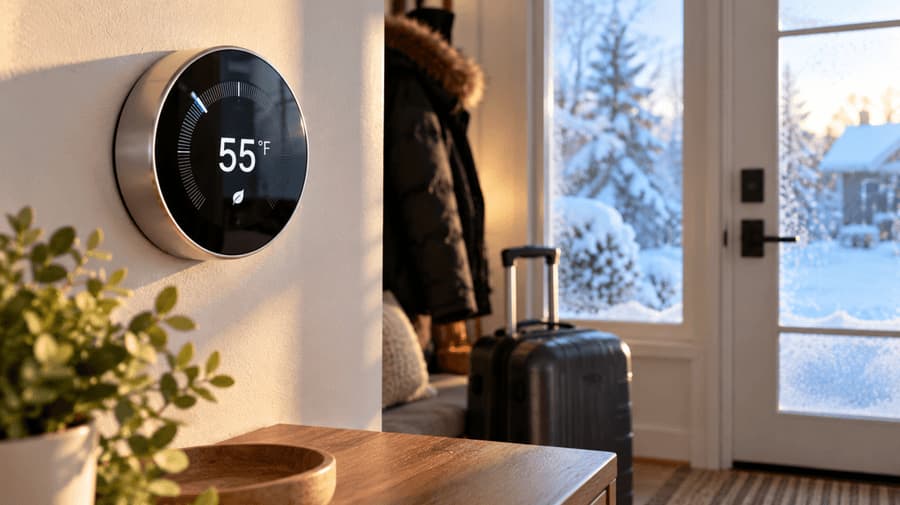
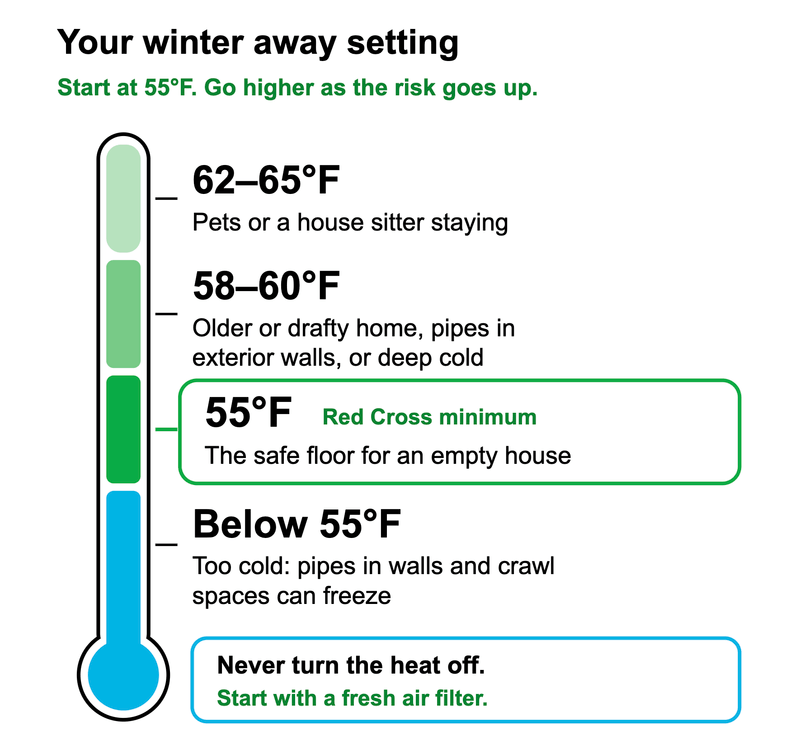
Keep your thermostat at 55°F or higher when you leave home in winter. That's the American Red Cross minimum for an empty house. For older homes and deep cold snaps, Filterbuy recommends 58–60°F. Never turn the heat off.
55°F: well-insulated home, normal forecast
58–60°F: older or drafty home, pipes in exterior walls, or single-digit lows
62–65°F: pets or a house sitter staying
55°F only protects your pipes while the furnace keeps running, and a clogged filter can make it overheat and shut down. Take the quick quiz below to match your filter before you go.
Find Your Filter Before You Leave
Answer a few quick questions and we'll match you to the right filter for your system.
TL;DR
Keep your thermostat at 55°F or higher when you leave home in winter, the American Red Cross minimum for an empty house. For older homes and deep cold snaps, Filterbuy recommends 58–60°F. As an air filter manufacturer, Filterbuy adds a step many guides skip: a fresh filter, since 55°F only protects your pipes while the furnace keeps running.
Key Takeaways
55°F is the safe floor. It's the Red Cross minimum for an empty house in cold weather.
Go higher when the risk goes up. For older homes and single-digit forecasts, Filterbuy recommends 58–60°F.
Never shut the heat off. One burst pipe costs far more than a few days of heat.
A fresh filter protects the trip. A clogged one can make the furnace overheat and shut down while no one is home.
I don't want anyone to feel like they need an HVAC license just to pick the right filter. My job is to give you the straight answer, explain why it matters, and let you get back to your day.
Michelle Wan, Brand Manager and Air Quality Writer, Filterbuy
What Is the Lowest Safe Temperature to Keep a House in Winter?
For an empty house in winter, 55°F is the lowest safe setting. The American Red Cross recommends keeping the heat at 55°F or higher any time you're away in cold weather.
Why 55°F and Not 33°F?
Water freezes at 32°F, so a few degrees above that might sound like plenty. But your thermostat reads the air in a warm hallway, while your pipes run through exterior walls and crawl spaces that can be far colder.
A 55°F setting builds in a buffer for that gap. According to the Red Cross, the pipes likeliest to freeze sit against exterior walls or where the water line enters the foundation. Your thermostat can't see either spot.
When Do Pipes Actually Start to Freeze?
Uninsulated pipes in unheated spaces like attics typically start to freeze at about 20°F outside, based on field tests by the University of Illinois Building Research Council. Homes in warmer climates are often at greater risk, because builders there tend to run pipes through attics and outside walls.
Does Turning the Heat Down While Away Actually Save Money?
Yes. The U.S. Department of Energy estimates you can save up to 10% a year on heating and cooling by turning your thermostat back 7–10°F for 8 hours a day.
So why not go lower? A deep setback on a long trip can backfire: if a cold spell hits, pipes that would normally stay safe can freeze and burst (source).
What Vacation Thermostat Setting Should You Choose?
For a typical, well-insulated home, 55°F is the right vacation setting. Higher-risk homes do better at 58–60°F. The 55°F floor comes from the Red Cross; the higher settings below are Filterbuy guidance. Trip length matters less than your house and the forecast.
TABLE 1: Vacation thermostat settings by situation
The 55°F floor follows American Red Cross guidance for homes left empty in cold weather. Higher settings are Filterbuy guidance for riskier homes and forecasts.
Should You Turn the Heat Off Completely When You Leave?
No, and the math makes the case. The average U.S. household spent $519 on space heating for all of 2020, while the average water damage or freezing claim comes to $15,400. One burst pipe can cost about 30 times a full year of heating.
What About Heat Pumps?
Heat pumps play by different rules. The Department of Energy notes that setting one back in heating mode can cancel out the savings, since big recoveries call on costly electric backup (auxiliary) heat. Keep setbacks modest.
What Should You Do Before Leaving Home in Winter?
Before a winter trip, set the thermostat to at least 55°F and protect the pipes it can't reach. Then put in a fresh air filter and line up someone to check on the house. Some of this needs lead time, so do it in two rounds.
A Week Before You Leave
Replace the furnace air filter. Filterbuy tip: write the install date on the frame in marker so you'll know its age when you get home.
Test your smoke and carbon monoxide (CO) alarms. The Red Cross recommends detectors with battery backups.
Check the thermostat batteries. Some thermostats can't call for heat once the battery dies. On a Wi-Fi model, turn on low-temperature alerts too.
Top off oil or propane. If you heat with either, schedule a delivery so the tank can't run dry while you're gone.
Line up someone to check on the house. Give them a key and the short list below.
The Day You Leave
Set the thermostat to 55°F or higher. Use "hold" or "vacation" mode so a saved schedule can't override it.
Open the cabinet doors under sinks on exterior walls, and leave interior doors open too. The Red Cross recommends this so warm air can reach the pipes.
Disconnect garden hoses and close the garage door. If your spigots have an interior shutoff, close it and drain the line.
On longer trips, shut off the main water valve. Closing it and draining the lines is the strongest protection against a burst pipe. If you have a hot-water boiler or fire sprinklers, ask a licensed technician first; those systems may need water.
What to Tell the Person Checking on Your House
Check the thermostat. It should show your away setting, and the furnace should kick on when they nudge it up. If not, they should call you and an HVAC technician.
Look for water. A puddle under a sink or a faucet that barely trickles can mean a frozen or leaking pipe, so show them the main shutoff.
Take a CO alarm seriously. If it sounds, they should get to fresh air right away and call 911.
How Do You Protect Your Furnace While You're Away?
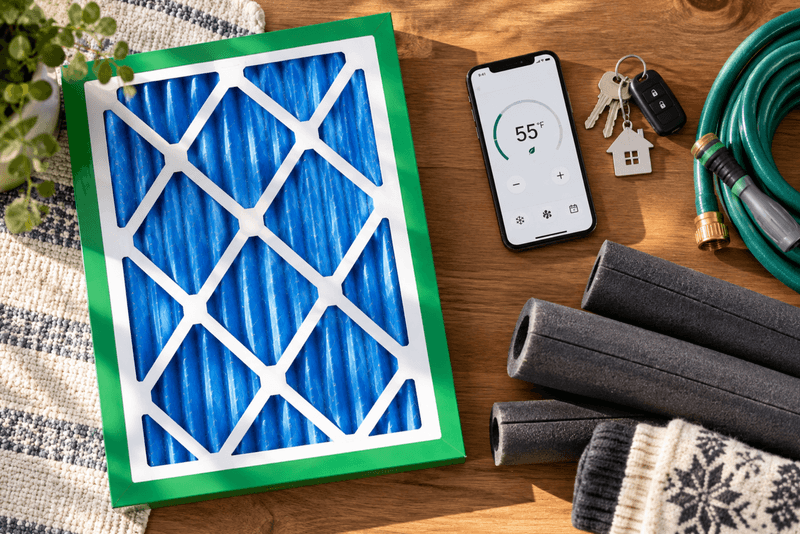
Start the trip with a clean air filter. Many thermostat guides stop at the number. As a family-owned manufacturer that makes 100% of its filters in the USA, Filterbuy sees the other half. A clogged filter is one of the most common reasons a furnace shuts itself down.
Why a Dirty Filter Can Shut Your Furnace Down
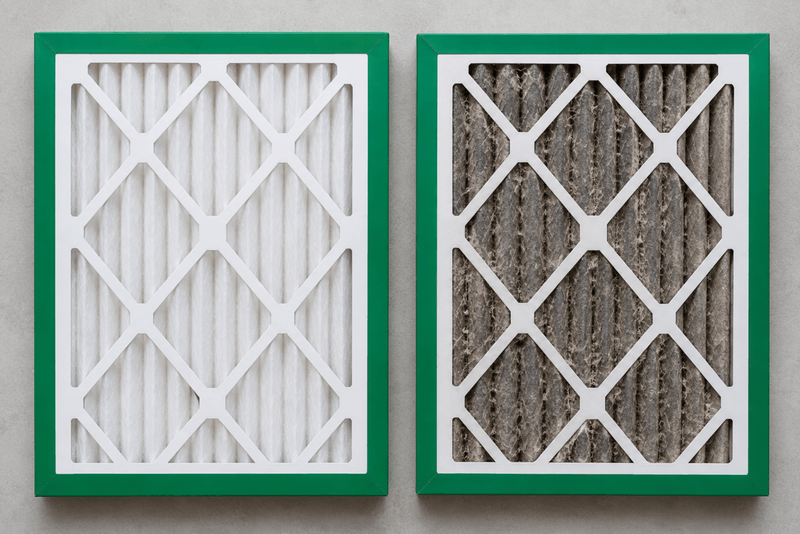
As a furnace filter fills with dust and pet hair, less air gets through and heat builds up inside the furnace. Eventually a safety device called a high-limit switch shuts off the burners. The furnace may then cycle on and off or stop heating altogether.
ENERGY STAR, the EPA and DOE efficiency program, recommends checking your filter monthly and warns that a dirty one can lead to early equipment failure.
In our years of manufacturing filters and testing them under real-world conditions, we've found that winter is the season most homeowners underestimate. A filter that looks fine in October can be completely choked by December, and that's when we see the most avoidable furnace failures.
Filterbuy Manufacturing Team
When Should You Change the Filter Before a Trip?
Check the filter before every trip. Filterbuy's winter furnace filter guide recommends a monthly check through heating season, and in winter a 1-inch filter often needs replacing every 30 days. Skip the hold-it-to-the-light test; as our guide on how often to change your air filter explains, a new pleated filter already blocks light. Hold it against white paper, and if it looks gray, swap it.
Not sure of your size? Order by the size printed on the frame. Filterbuy cuts every filter half an inch under that number so it slides into the slot. Or use our guide to find your exact size, then shop 600+ filter sizes, made in the USA and shipped free. Travel often in winter? Set up auto-delivery so a fresh filter always arrives on schedule.
What to Check When You Get Home
Back home, raise the thermostat to your normal setting; cranking it higher won't warm the house any faster. Then check under sinks and along exterior walls for drips. If a faucet only trickles, the Red Cross says to suspect a frozen pipe. Keep the faucet open and apply gentle heat, never an open flame. If you can't reach the frozen section, call a plumber.
Does the house smell stale when you walk in? Filterbuy's guide to winter indoor air quality explains why it happens and what helps.
Supporting Statistics
1. Water Damage and Freezing Claims Average $15,400
About 1 in 60 insured homes files a water damage or freezing claim every year, second only to wind and hail.
Why it matters: a single burst pipe costs far more than keeping an empty house at 55°F.
Source: Insurance Information Institute (Triple-I), Facts + Statistics: Homeowners and Renters Insurance, ISO data, 2018–2023.
2. Space Heating Is 42% of Home Energy Use
Space heating is the largest energy use in U.S. homes, averaging $519 per household in 2020.
Why it matters: heating is where a 55°F setback saves the most.
Source: U.S. Energy Information Administration, 2020 Residential Energy Consumption Survey, released June 15, 2023.
3. More Than 400 Americans Die Each Year From Accidental CO Poisoning
Accidental CO poisoning also sends more than 100,000 people to emergency departments each year.
Why it matters: your furnace keeps running while you're away, so test your CO detectors before you travel.
Source: Centers for Disease Control and Prevention, Carbon Monoxide Poisoning Basics, updated January 12, 2026.
Frequently Asked Questions
Is 50°F Too Cold for an Empty House in Winter?
Yes. 50°F falls below the Red Cross minimum and leaves little margin for pipes in exterior walls. Once it drops toward 20°F outside, pipes in unheated spaces often begin to freeze.
What Temperature Should I Set My Thermostat to Prevent Frozen Pipes?
Keep it at 55°F or higher, and 58–60°F during extreme cold or in an older, drafty home. Opening sink cabinets on outside walls also helps warm air reach the pipes.
Should I Let Faucets Drip While I'm Away?
The Red Cross says a slow drip helps prevent freezing, but an unattended drip can back up a slow drain. On longer trips, shutting off the main water valve is usually safer.
Glossary
TABLE 2: Glossary of key terms