
How To Reset A Furnace: Where The Reset Button Is And When Not To Press It
September 30, 2026
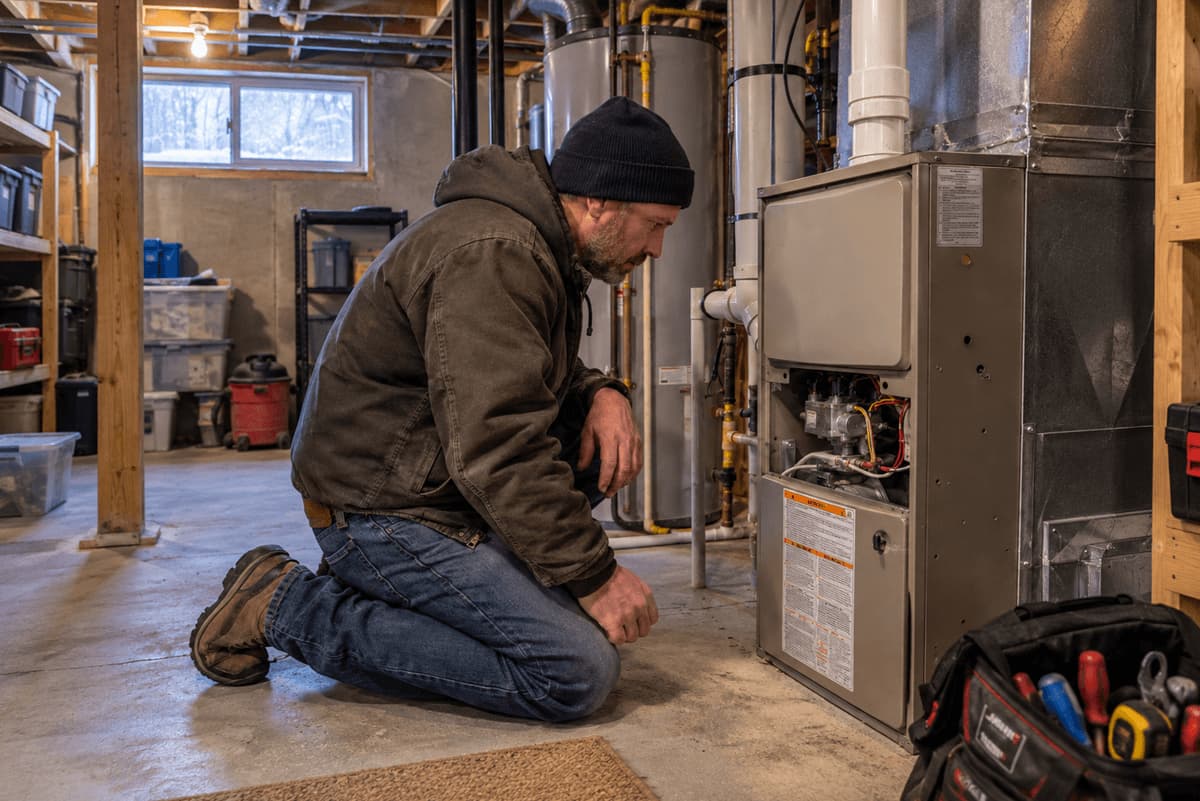
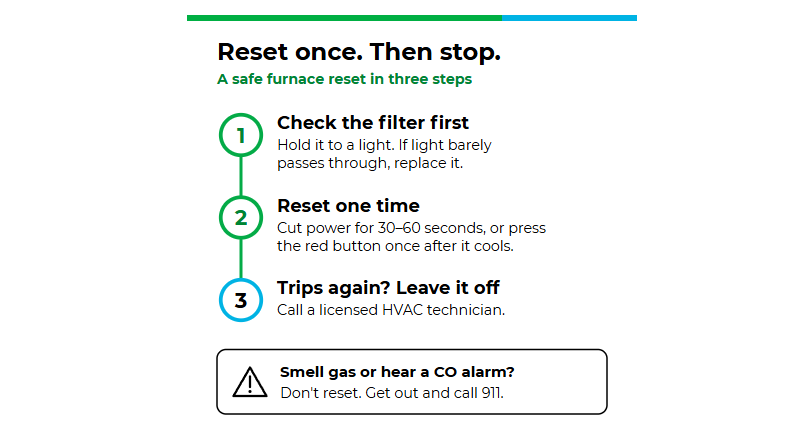
Most modern gas furnaces reset at the service switch: turn it off for 30 to 60 seconds, then back on. Older gas furnaces, oil burners, and some electric units have a red button instead, which you press once after the unit cools. Never reset while you smell gas or hear a carbon monoxide alarm. A clogged filter is a common cause of repeat winter shutdowns, so take the quick quiz below to match the right filter to your furnace.
Answer a few quick questions and we’ll match it to the right filter.
Most modern gas furnaces don't have a red reset button. To reset one, switch off power at the furnace service switch for 30 to 60 seconds, then turn it back on to clear the control board's lockout. Older gas furnaces and oil burners do have a manual button, and so do some electric units. Because Filterbuy makes air filters, we'll put our bias up front: a clogged filter is the first thing we'd have you check, since a reset won't clear it.
TL;DR
Cycle the power for 30 to 60 seconds on a modern gas furnace, or press a red reset button once after the unit cools. Never reset while you smell gas or hear a carbon monoxide alarm. If the furnace trips a second time, leave it off and call a licensed HVAC technician. In winter, repeat shutdowns often point to a clogged filter or a snow-blocked vent.
Key Takeaways
How a furnace shuts down points to the likely cause, so watch one startup attempt before you reset.
Write down the blinking status light code before cutting power, because a power cycle often erases it.
After a second lockout, stop resetting and call a technician.
A fresh, correctly sized filter often ends repeat winter shutdowns caused by an overheating heat exchanger.
Where Is The Reset Button On A Furnace?
The reset button's location depends on the furnace type, and most modern gas furnaces don't have one. They reset at the service switch, a light-style switch on or near the unit. Manual reset buttons are small and red and usually sit behind the lower access panel, so cut the power before you remove it.
Check These Four Things Before You Reset
Rule out these simple causes first, because any one of them can keep a furnace off.
Thermostat. Set it to heat above room temperature and replace weak batteries.
Air filter. Hold it up to a light, and if light barely passes through, replace it before resetting. Filterbuy's guide to clogged furnace filter symptoms covers other warning signs.
Power and door. Confirm the service switch is on and the breaker hasn't tripped, then latch the blower door so its safety switch closes.
Gas supply. On a gas furnace, the manual gas valve handle should run parallel to the pipe.
Read The Shutdown Pattern Before You Reset
How a furnace quits usually points to what tripped it. Watch one startup attempt and match what you see to the table below.
How To Reset A Furnace, Step By Step
Give the method that matches your furnace one attempt, then watch a full startup cycle.
Gas Furnace With No Reset Button
A gas furnace without a button resets through a power cycle.
Write down the blinking status light pattern. A power cycle clears it on many furnaces, and it's the fastest clue a technician can get.
Set the thermostat to off.
Switch off the service switch or furnace breaker for 30 to 60 seconds.
Restore power and set the thermostat back to heat.
Watch the startup: the inducer runs first, then the burners light, and the blower follows.
Furnace With A Red Reset Button
Press the red reset button once, and only after the furnace cools. Cut power, wait about 10 minutes, and press the button firmly before restoring power and calling for heat.
Electric Furnace
An electric furnace usually shuts down because its breaker tripped. Flip the breaker fully off and back on, then call for heat. If it trips again, leave it off, since a repeat trip points to a wiring or heating element fault.
Oil Furnace
Press the red button on an oil burner's primary control once. Each extra press can push more oil into the combustion chamber and risk a dangerous puff-back, so call for service if the burner doesn't fire.
When Not To Press The Reset Button
Skip the reset whenever a safety device may be warning you about gas or combustion. The U.S. Environmental Protection Agency lists leaking furnaces and blocked or disconnected flues among the indoor sources of carbon monoxide. Filterbuy sells filters, and none of the situations below is a filter problem.
Why A Furnace Keeps Tripping: Start With The Filter
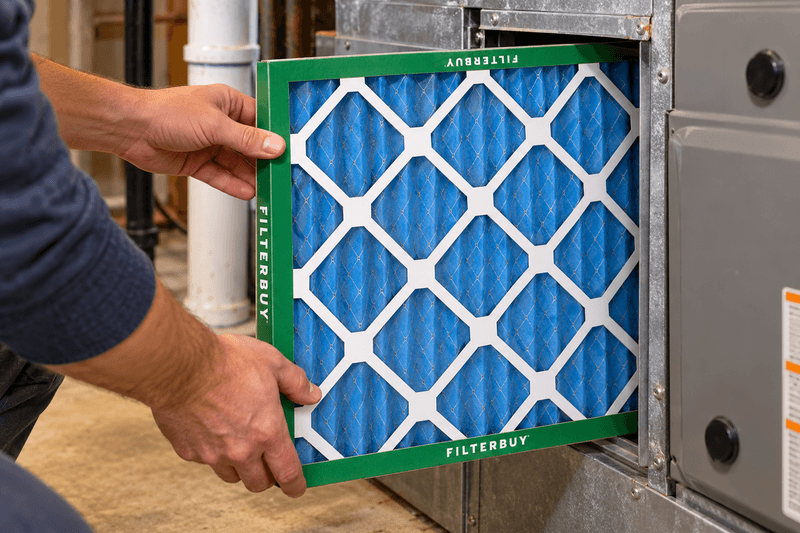
A furnace that runs briefly and then shuts off is usually overheating, and a clogged air filter is one of the most common causes. The high-limit switch cuts the burners when restricted airflow lets the heat exchanger get too hot.
Winter loads filters faster because the furnace runs longer. A filter that looked clean at Thanksgiving can be matted gray by January, which is why Filterbuy recommends a monthly check through the heating season, even on a filter rated for 90 days. The Filterbuy walkthrough on how to change a furnace filter covers the swap.
Fit matters as much as freshness, and making filters gives us a view most reset guides skip. The size printed on the frame is a nominal size. A Filterbuy 20x25x1 actually measures 19.50 x 24.50 x 0.75 inches, so it slides into the rack. A filter forced into place can bow, while one that rattles lets air slip around the media.
Order by the size printed on your old frame, or get custom air filters cut to your measurements. Filterbuy's guide to which MERV rating to use compares pleated MERV 8, MERV 11, and MERV 13, but check your HVAC manual for the highest MERV rating your system supports first.
Filterbuy Tip: Write the install date on the new filter's frame so you can tell at a glance whether it's overdue, or set up filter auto-delivery so a fresh one arrives on schedule.
If the furnace still short cycles with a fresh filter, our guides to furnace overheating and filter issues and why HVAC systems short cycle in winter cover the next causes to rule out.
Winter Lockouts: Snow, Ice, And Power Outages
Most winter-only lockouts come from snow-blocked vent pipes or frozen condensate lines on high-efficiency furnaces, and power outages can leave a control board stuck in lockout. The U.S. Consumer Product Safety Commission's winter weather safety tips also call for clearing snow from furnace vents so carbon monoxide can't build up indoors.
If you'll be away during a cold stretch, the American Red Cross advises keeping the heat at 55°F or higher to prevent frozen pipes. Ask a neighbor to check that the furnace is still running.
"When a furnace locks out on the first cold night of the season, the filter is the first thing I pull, because a packed filter trips the high-limit switch before anything else fails."
David Clark, Licensed HVAC Technician
Supporting Statistics
46% of home heating equipment fires happen from December through February, according to the National Fire Protection Association's heating safety data. The NFPA recommends having heating systems inspected and cleaned each year before the season starts.
More than 400 Americans die each year from unintentional carbon monoxide poisoning not linked to fires, according to the Centers for Disease Control and Prevention's carbon monoxide basics. The CDC recommends battery-operated or battery-backup CO detectors near every sleeping area.
47% of U.S. homes used natural gas as their main heating fuel in 2024, and 42% used electricity, according to the U.S. Energy Information Administration's residential heating fuel analysis. That split is why this guide covers both gas and electric furnace resets.
Frequently Asked Questions
Will A Furnace Reset Itself?
Often, yes. Many modern control boards retry ignition on their own after a timed lockout, but a manual reset or blower overload switch stays tripped until someone presses it.
Why Does My Furnace Keep Going Into Lockout?
Gas furnaces lock out after several failed ignition attempts. A dirty flame sensor or a blocked vent is the usual culprit, though a gas supply problem can cause it too.
Why Does The Blower Keep Running After The Burners Shut Off?
The blower is cooling an overheated heat exchanger after a high-limit trip. That usually means restricted airflow, so check the filter and supply vents before resetting.
Is It Safe To Reset A Furnace Myself?
Yes, one power cycle or one press of a manual button is a routine homeowner task. Stop and call a technician after a second lockout, and never reset while you smell gas or hear a CO alarm.
Glossary
Control Board Lockout: A safety state that stops ignition attempts after repeated failures.
Service Switch: A light-style switch that cuts a furnace's power.
High-Limit Switch: A sensor that shuts off the heat when the heat exchanger overheats.
Flame Rollout Switch: A safety switch near gas burners that trips when flames escape.
Flame Sensor: A metal rod that confirms the burner flame is lit. If it can't, the gas valve closes.
Pressure Switch: A gas furnace sensor that confirms the vent is drawing before the burners light.
Condensate Line: The drain tube on a high-efficiency condensing furnace.
MERV: Minimum Efficiency Reporting Value, the ASHRAE Standard 52.2 filter rating scale.
Keep The Heat On This Winter
The filter check is the easiest part of any furnace reset, and Filterbuy cuts filters in 600+ sizes. Shop air filters by size in pleated MERV 8, MERV 11, or MERV 13, matched to the highest rating your HVAC manual allows, with fast and free 2-day delivery to most US states.