
How Dirty Filters Drain Energy in Winter And How to Prevent It
March 2, 2026
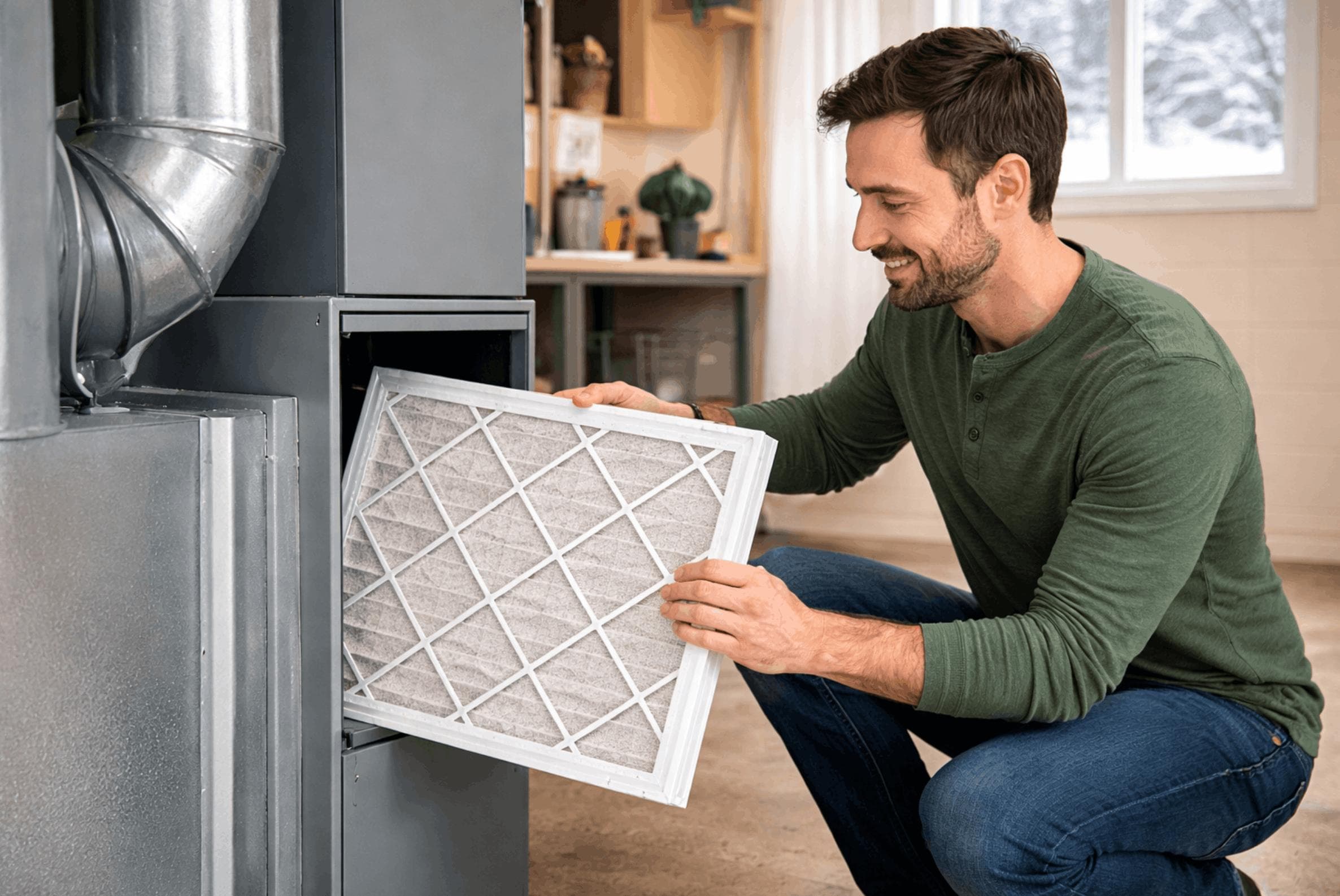
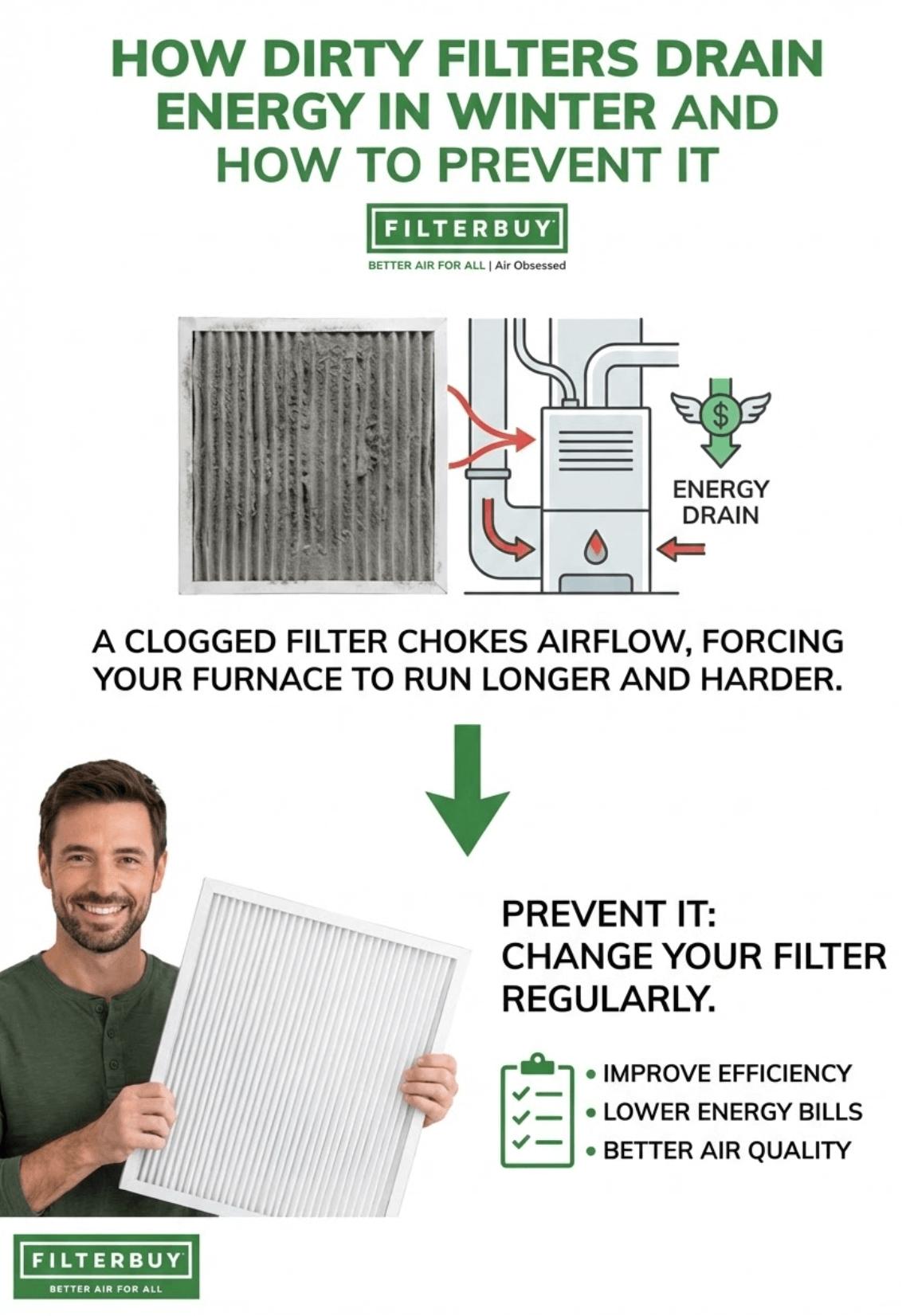
A dirty air filter is one of the most overlooked reasons your heating bill spikes in winter — and after manufacturing millions of filters at our U.S. facilities, we've seen firsthand what happens when homeowners wait too long to swap one out. A clogged filter chokes airflow, forcing your furnace to run longer and harder just to maintain temperature. Based on what we've observed across thousands of customer conversations, most people don't realize their filter is the problem until they're staring at an energy bill that's 5% to 15% higher than it needs to be.
The fix is simple, fast, and surprisingly affordable. Below, we'll walk you through exactly how dirty filters drain energy and your heating system's efficiency in winter — from the warning signs most homeowners miss to the easy steps you can take to prevent it — and how replacing your air filter on a regular schedule can reduce your heating bill and keep your HVAC running the way it should all winter long.
TL;DR Quick Answers
How Do Dirty Filters Drain Energy in Winter — and How Can You Reduce Your Heating Bill by Replacing Your Air Filter?
A dirty air filter restricts airflow to your furnace, forcing it to run longer and harder to heat your home. The U.S. Department of Energy estimates this can increase your energy consumption by up to 15%.
After manufacturing millions of filters and hearing from homeowners every day, here's what we know works:
Check your filter monthly during winter — pull it out and hold it up to a light. If you can't see through it, replace it.
Replace 1-inch filters every 30 to 60 days during heavy heating season. Thicker filters can go 60 to 90 days.
Choose the right MERV rating for your system — MERV 8 through 13 covers most homes. The best filter is the one your system can handle and you actually change on time.
Stay on a consistent schedule — a single filter change helps, but the real savings come from replacing it every time, not just when you remember.
The bottom line from our decade-plus of building filters in the U.S.:
A clean air filter is the cheapest, fastest, and most effective way to reduce your heating bill, protect your HVAC system, and improve the air your family breathes all winter. Everything else — thermostats, insulation, duct sealing — works better when your filter isn't choking off airflow to begin with.
Top Takeaways
Your air filter is the single biggest lever you have over your heating bill. Heating makes up nearly 29% of your utility costs. A clogged filter can add up to 15% more energy usage on top of that. A fresh filter on a consistent schedule is the cheapest, fastest fix available.
Winter is the hardest season on your filter — and the easiest season to forget about it. Your home is sealed. Your furnace runs all day. Your filter fills up faster than any other time of year. Check it monthly. Replace 1-inch filters every 30 to 60 days during heavy heating season.
A dirty filter doesn't just waste energy — it triggers a compounding chain reaction:
Longer furnace cycles that wear out your blower motor and heat exchanger
Cold spots that make you crank the thermostat higher
Particles bypassing the loaded media back into your living space
One neglected filter creating all three problems simultaneously
The air inside your winter home can be 2 to 5x more polluted than outdoor air. Every window shut. Every door closed. Your HVAC recirculating the same air through the same filter. If that filter is loaded, it's no longer protecting your family — it's just letting particles pass through.
Staying on schedule matters more than buying the most expensive filter. A MERV 8 changed on time outperforms a MERV 13 left in for six months. The best filter is the one that fits your system, matches your needs, and actually gets replaced when it should.
Why Your Furnace Works Harder With a Dirty Filter
Your HVAC system relies on steady airflow to heat your home efficiently. When your air filter fills up with dust, pet dander, and debris, it creates a barrier that restricts that airflow. Your furnace compensates by running longer cycles and consuming more energy to push warm air through the blockage. We test filters every day in our U.S. manufacturing facilities, and the difference in airflow resistance between a clean filter and one that's gone a few months past its replacement date is significant — and so is the impact on your energy bill.
The harder your system works, the more wear it puts on critical components like the blower motor and heat exchanger. That means a dirty filter isn't just costing you money month to month — it can shorten the lifespan of equipment that costs thousands to replace.
The Warning Signs Most Homeowners Miss
A clogged filter doesn't announce itself. Instead, it shows up as a collection of small problems that are easy to brush off individually but tell a clear story together. If your home takes longer to reach the thermostat setting, certain rooms feel noticeably colder than others, you're seeing more dust on surfaces shortly after cleaning, or your furnace seems to cycle on and off more frequently than usual, your filter is likely the culprit.
One thing we hear regularly from customers is that they didn't connect these issues to the filter until they finally replaced it and noticed the difference immediately. That instant improvement is something generic troubleshooting guides won't tell you — but it's one of the most common things our customer support team hears.
How a Clean Filter Reduces Your Heating Bill
Replacing a dirty air filter restores the airflow your furnace was designed to operate with. When air moves freely through the system, your furnace reaches the set temperature faster, runs shorter cycles, and uses less energy in the process. For most homes, that translates to a 5% to 15% reduction in heating costs — real savings that add up quickly over a full winter season.
Beyond the energy savings, a clean filter also does the job it was built for: trapping airborne particles like dust, pollen, mold spores, and pet dander before they circulate through your living space. So you're not just protecting your wallet — you're protecting your indoor air quality and your family's comfort at the same time.
How Often Should You Replace Your Air Filter in Winter?
Winter is one of the hardest-working seasons for your HVAC system, which means your filter fills up faster than it might during milder months. As a general rule, standard 1-inch filters should be replaced every 30 to 60 days during heavy-use periods, while 4-inch and thicker filters can typically go 60 to 90 days. Homes with pets, allergy sufferers, or higher-than-average dust levels may need to replace even more frequently.
After building filters for over a decade and hearing from millions of customers, the single biggest mistake we see is treating filter replacement as a yearly task instead of a seasonal one. Checking your filter once a month during winter takes less than a minute and can save you hundreds over the course of the heating season.
The Easiest Way to Stay Ahead of Filter Changes
Staying on schedule doesn't have to mean remembering one more thing on your to-do list. With Filterbuy's auto-delivery option, the right filter for your system shows up at your door exactly when it's time to change it — no store runs, no guessing on sizes, and no lapsed filters silently driving up your heating costs. We offer over 600 sizes with free shipping, factory-direct, so keeping your HVAC running efficiently is as simple as opening your front door.
"After manufacturing millions of filters and talking with homeowners every day, the one thing we can say with certainty is that a five-dollar filter replaced on time will save you more on your heating bill than almost any other upgrade in your home."
7 Resources That'll Actually Help You Stop Overpaying to Heat Your Home
Look, we've been making air filters in the U.S. for over a decade — and if there's one thing we know, it's that a clean filter does a lot more than most people realize. But we also know you don't have to take our word for it. These are the resources we trust and recommend to homeowners who want the full picture on how filter maintenance, HVAC efficiency, and energy savings all connect. Bookmark the ones that matter most to you.
1. See Exactly How Much of Your Money Goes to Heating
U.S. Department of Energy — Home Heating Systems Here's a number worth knowing: heating typically makes up about 29% of your utility bill. That's the biggest chunk of energy spending in most homes — and it's exactly why something as simple as checking your filter every month can make a real dent. The DOE breaks it all down here.
🔗 https://www.energy.gov/energysaver/home-heating-systems
2. Get the Filter Change Schedule That Actually Saves You Money
ENERGY STAR — Heat & Cool Efficiently If you're not sure how often to swap your filter, this is the resource to check. ENERGY STAR recommends checking your filter every month during heavy-use seasons like winter and replacing it at minimum every three months. They also cover duct sealing and thermostat tips that stack on top of your filter savings. It's the kind of practical advice we love.
🔗 https://www.energystar.gov/saveathome/heating-cooling
3. Keep Your Family Breathing Clean Air When the House Is Sealed Up Tight
U.S. EPA — Care for Your Air: A Guide to Indoor Air Quality Winter means closed windows, locked doors, and your HVAC recirculating the same air over and over. The EPA calls regular filter replacement one of the most basic and effective steps for improving indoor air quality — and we couldn't agree more. When your home is buttoned up for the season, your filter is doing double duty: protecting your system and protecting your air.
🔗 https://www.epa.gov/indoor-air-quality-iaq/care-your-air-guide-indoor-air-quality
4. Pick the Right MERV Rating (Without Overthinking It)
Filterbuy — Which MERV Rating Should I Use? MERV ratings can feel confusing, but they don't have to be. We built this guide to cut through the noise and help you match the right filtration level to your system, your home, and your family's health needs. The big takeaway? A MERV 8 filter changed every 90 days outperforms a clogged MERV 13 any day. It's not about buying the highest number — it's about staying on schedule with the right fit.
🔗 https://filterbuy.com/resources/air-filter-basics/which-merv-rating-should-I-use/
5. Swap Your Filter in Under Five Minutes — Even If You've Never Done It
Filterbuy — Step-by-Step Guide: How to Change or Replace a Furnace Filter We hear it all the time: "I didn't know it was that easy." That's why we put together this step-by-step walkthrough. It covers everything from finding your filter and confirming the right size to getting the airflow arrows pointed the right direction and avoiding the most common mistakes. No tools, no stress, no excuses.
6. Understand What's Actually Happening Inside Your Furnace
U.S. Department of Energy — Furnaces and Boilers If you want to go a little deeper — and we respect that — this DOE resource explains how furnace efficiency is measured through AFUE ratings and walks through the professional maintenance checkpoints that matter most. It's helpful for understanding why a dirty filter doesn't just waste energy — it puts stress on parts that are expensive to fix or replace.
🔗 https://www.energy.gov/energysaver/furnaces-and-boilers
7. Check Your Filter Choice Against the Industry's Own Standard
ASHRAE — Filtration and Disinfection FAQ ASHRAE created the MERV rating system, so when it comes to filter performance standards, this is the source. Their Standard 52.2 recommends a minimum of MERV 6 for residential use, with higher ratings for homes dealing with allergies or respiratory issues. It's a good gut-check to make sure the filter you're buying actually fits what your system and your family need.
🔗 https://www.ashrae.org/technical-resources/filtration-and-disinfection-faq
The Numbers Behind the Filter: 3 Stats Every Homeowner Should Know
After manufacturing millions of air filters and shipping them to homes across the country, we've learned something that surprises most people: the biggest energy drain in your house often comes down to the smallest maintenance task you keep putting off. These three numbers tell the story best.
1. Your Heating System Is Your Biggest Energy Expense — and Your Filter Controls How Hard It Works
The U.S. Department of Energy reports that heating typically accounts for about 29% of your utility bill— the single largest energy cost in most homes.
What we've observed through years of customer conversations is that the homeowners who see the sharpest drops in winter energy costs aren't upgrading thermostats or adding insulation first. They're getting on a consistent filter replacement schedule.
Why it matters:
A clean filter lets your furnace breathe freely and reach temperature faster
Shorter run cycles mean less energy consumed per heating day
One simple habit — replacing your filter on time — can shift the entire equation
Source: U.S. Department of Energy — Home Heating Systems
🔗 https://www.energy.gov/energysaver/home-heating-systems
2. A Clogged Filter Forces Your System to Burn Up to 15% More Energy
According to the U.S. Department of Energy, a clogged filter causes heating and cooling systems to use 15 percent more energy. Factor in that nearly half of all household energy goes toward heating and cooling, and the real-world cost adds up fast.
We see the proof every time a customer reaches out after months of putting off a change. The story is almost always the same:
Rising energy bills with no obvious explanation
Uneven temperatures from room to room
A furnace that seems to run nonstop
Then a noticeable improvement within the first billing cycle after replacing the filter
What that 15% actually looks like:
On a $200/month energy bill → up to $30/month wasted
Over a full winter season → potentially $90 to $180 lost on a filter that should have been swapped weeks ago
That's the kind of waste we built our auto-delivery program to prevent — because forgetting to change your filter shouldn't cost you hundreds a year.
Source: U.S. Department of Energy, via ENERGY STAR — Heat & Cool Efficiently
🔗 https://www.energystar.gov/saveathome/heating-cooling
3. The Air Inside Your Home Can Be More Polluted Than the Air Outside — Especially in Winter
EPA research shows that Americans spend roughly 90 percent of their time indoors, where concentrations of certain pollutants are often two to five times higher than typical outdoor levels.
That finding hits differently when you think about what winter looks like inside your home:
Every window sealed, every door closed
Your HVAC cycling the same air through the same filter — over and over
A loaded filter no longer trapping particles, but letting them pass back into your living space
This is something we think about constantly as a manufacturer. It's why we engineered our pleated filters with electrostatically charged media that captures particles as small as 0.3 microns — because clean air isn't just about energy efficiency. It's about what your family is actually breathing when the house is closed up tight and the furnace is doing all the work.
Source: U.S. Environmental Protection Agency — Indoor Air Quality Report on the Environment
🔗 https://www.epa.gov/report-environment/indoor-air-quality
Final Thought: The Cheapest Fix in Your Home Is the One Most People Forget
After more than a decade of manufacturing air filters, shipping millions of them to homes across the country, and talking with homeowners every single day — we can tell you that the air filter is the most underestimated component in your entire HVAC system.
It doesn't make noise when it needs attention. It doesn't flash a warning light. It just quietly clogs up, month after month, until the damage is already showing up on your energy statement or in the way your house feels.
Here's our honest take as a company that lives and breathes this every day:
The steps in this guide aren't complicated:
Replace your filter on schedule
Check it monthly during winter
Choose the right MERV rating for your system
These are small, inexpensive actions most homeowners already know they should be doing — but life gets busy, the filter is out of sight, and it falls to the bottom of the list.
That gap between knowing and doing is where the real cost lives. After hearing from thousands of customers who finally got on a regular replacement schedule, the results are remarkably consistent:
Lower energy bills within the first billing cycle
More even temperatures throughout the home
Noticeably less dust on surfaces
Fewer allergy and respiratory flare-ups
No other home maintenance task delivers this much return for this little effort.
What most generic advice on this topic misses:
Nearly every article out there recycles the same DOE statistic about 15% energy savings and stops there. What that number doesn't capture is the compounding chain reaction we've witnessed across real households over real winters:
A dirty filter forces longer furnace cycles — which accelerates wear on your blower motor and heat exchanger
Reduced airflow creates cold spots — which makes you crank the thermostat higher, burning even more energy
Particles bypass the loaded filter media — which degrades your indoor air quality and puts strain on internal system components
One neglected filter triggers all three problems simultaneously — and by the time most homeowners notice, they've already paid for it several times over
That compounding effect is something we see play out constantly — and it's the reason a $5 to $15 filter replacement prevents hundreds of dollars in wasted energy, unnecessary repairs, and premature system wear.
Our perspective as a manufacturer is simple:
We don't just sell filters. We build them — right here in the U.S., in our own facilities, with our own teams. We see the raw materials go in and the finished product come out. We read the reviews. We hear the phone calls. The pattern is always the same:
Homeowners who stay on schedule stay ahead of problems
Homeowners who don't end up paying more in energy, repairs, and discomfort than they ever needed to
That's why we created auto-delivery and offer over 600 sizes with free shipping — because we believe the only thing standing between most families and better air, lower bills, and a longer-lasting HVAC system is a fresh filter that shows up on time.
A clean filter isn't just maintenance. It's the single easiest way to protect your home, your family's air, and your wallet — all at once.
What to Do Next: 3 Simple Steps to Lower Your Heating Bill Starting Today
You've got the information. Now here's how to put it to work. These three steps take less than 10 minutes total — and based on what we've seen from millions of customers, they're the fastest path to lower energy bills and cleaner air this winter.
Step 1: Check Your Current Filter Right Now
This is the step most people skip — and it's the one that matters most.
Turn off your HVAC system at the thermostat
Locate your filter — usually in the return air vent, blower compartment, or a rack near your furnace
Slide it out and hold it up to a light source
If light can't pass through the media or the surface looks gray and matted, it's time for a replacement
Quick tip from our team: Write today's date on the edge of every new filter you install. Two seconds of effort, zero guesswork later.
Step 2: Find Your Exact Filter Size and MERV Rating
You need two pieces of information before you order:
Filter size:
Check the printed dimensions on your current filter's frame (example: 20x25x1)
If the print has worn off, measure the length, width, and depth with a tape measure
MERV rating: For most homes, MERV 8 through 13 covers everything you need. A standard home with no pets or allergies does well with MERV 8. If you have pets, mild allergies, or moderate dust levels, MERV 11 is the sweet spot. For households dealing with severe allergies, asthma, smokers, or poor outdoor air quality, MERV 13 provides the highest level of residential filtration.
One thing we always tell customers: Check your system's manual before jumping to the highest rating. A filter your system can't handle restricts airflow just like a dirty one does. The best filter is the one that matches your system and gets changed on time.
Step 3: Get on a Replacement Schedule You Won't Forget
A single filter change helps. Staying consistent is where the real savings live.
How often to replace during winter:
1-inch filters → every 30 to 60 days during heavy heating season
4-inch and thicker filters → every 60 to 90 days
Homes with pets, allergies, or high dust → check monthly regardless of filter thickness
Two ways to make it automatic:
Set a phone reminder for the first of every month — a quick visual check takes less than 60 seconds
Use Filterbuy's auto-delivery — the right filter shows up at your door exactly when it's time to change it. No store runs. No guessing on sizes. No lapsed filters quietly running up your bill.
We offer over 600 standard sizes plus custom filters. All made in the U.S. All shipped free, factory-direct. If you can open your front door and slide a filter into a slot, you can handle this — and your heating bill will reflect it.
Frequently Asked Questions
Q: How much can a dirty air filter actually increase my heating bill?
A: The U.S. Department of Energy puts the number at up to 15% more energy consumption. But from what we've observed working directly with homeowners for over a decade, the real-world cost often goes beyond that single statistic.
Here's what the data doesn't fully capture:
A clogged filter forces your furnace into longer run cycles
Most homeowners also raise the thermostat a degree or two to offset the cold spots they're feeling
That behavioral adjustment stacks on top of the mechanical inefficiency
What we've seen in practice:
Customers recover $15 to $30 in the very first billing cycle after a filter change
Over a four- to five-month heating season, that adds up to $90 to $180 in preventable waste
A few dollars' worth of replacement filters prevents all of it
It's the kind of math that made us build our entire business around making this one task easier.
Q: How often should I replace my air filter during winter to reduce my heating bill?
A: Check it monthly. Replace standard 1-inch filters every 30 to 60 days during peak heating months. Thicker 4-inch filters can typically stretch to 60 to 90 days.
But here's what we've learned from thousands of customer conversations that most guides won't tell you: your actual timeline depends on what's happening inside your specific home.
Real-world examples from our customers:
A household with two dogs, a cat, and a family member with asthma loads a filter two to three times faster than a single-occupant home with no pets
We've seen customers pull out filters after just three weeks in winter and find them completely packed
Others in similar-sized homes get a solid two months from the same filter
The most reliable approach:
Pull your filter out on the first of every month
Hold it up to a light source
If you can't see through it, don't wait — replace it
That 30-second habit is the advice our customer support team gives more than any other.
Q: Can replacing my air filter really make a noticeable difference in how my furnace performs?
A: Yes — and you'll likely feel it the same day.
What happens mechanically:
A clean filter removes the restriction forcing your blower motor to push air through trapped debris
Airflow returns to what your furnace was engineered for
The system reaches your thermostat setting faster and shuts off sooner instead of running continuously
What our customers consistently report after reading tens of thousands of reviews:
Rooms that were always colder suddenly balance out
Noticeably less dust accumulating on furniture within days
A general feeling that the house "works" again
One pattern we've noticed over a decade of reading this feedback: the longer someone waited to change the filter, the more dramatic the improvement feels. It's never too late to make the swap — but the sooner you do it, the less you've paid for air your system was struggling to move.
Q: Does the MERV rating of my filter affect my energy bill?
A: It can — and this is where we see more well-intentioned mistakes than almost anywhere else.
The common instinct: Buy the highest MERV rating available, assuming more filtration equals better performance.
The reality we've observed across millions of filter shipments: The relationship is more nuanced than that.
A MERV 13 captures finer particles than a MERV 8 — excellent for air quality
But if your blower isn't designed for that level of airflow resistance, a high-MERV filter creates the same problem a dirty filter does
We've talked with homeowners who upgraded to MERV 13 and saw their bills go up, not down, because their system couldn't handle it
Our guidance based on what actually works:
Check your HVAC manufacturer's specs for maximum recommended MERV rating
Choose the highest MERV your system supports comfortably
Pour your energy into replacing it consistently
The filter that gets changed on schedule will always protect your home better than the premium filter collecting dust for six months.
Q: What happens if I don't replace my air filter all winter?
A: We've had a front-row seat to the answer for more than ten years — and the pattern is predictable enough that we could almost set a calendar by it.
What we see every late January and February:
A spike in customer support calls from homeowners dealing with problems they can't explain. The house won't heat evenly. The system runs constantly. Energy bills have crept up since November. And when we ask when they last changed their filter, the answer is almost always the same — they can't remember.
Here's what's been happening inside their system all season:
Filter overloads by mid-December — airflow drops significantly
Furnace compensates with longer, harder cycles — accelerating stress on the blower motor and heat exchanger
Cold spots develop — homeowner raises the thermostat, burning even more energy
Particles bypass the loaded media — recirculating through the home, degrading air quality, and coating internal components with debris
By the time they call us, they've been paying for all four problems simultaneously for weeks or months.
The cost of waiting:
Frozen coils, burned-out motors, and emergency HVAC calls
Repair bills that almost always dwarf what a full year of replacement filters would have cost
The single most avoidable expense in home maintenance
It's the reason we built auto-delivery into our business from the start. We never want a customer to end up in that cycle when all it takes to prevent it is a clean filter, on time.
Don't Let a Dirty Filter Drain Your Energy or Your Wallet This Winter
A clean air filter is the fastest way to reduce your heating bill, protect your HVAC system, and improve the air your family breathes — and it starts with finding the right one for your home. Shop your size at Filterbuy and get American-made filters delivered free to your door, on your schedule, so you never overpay to heat your home again.