February 9, 2026
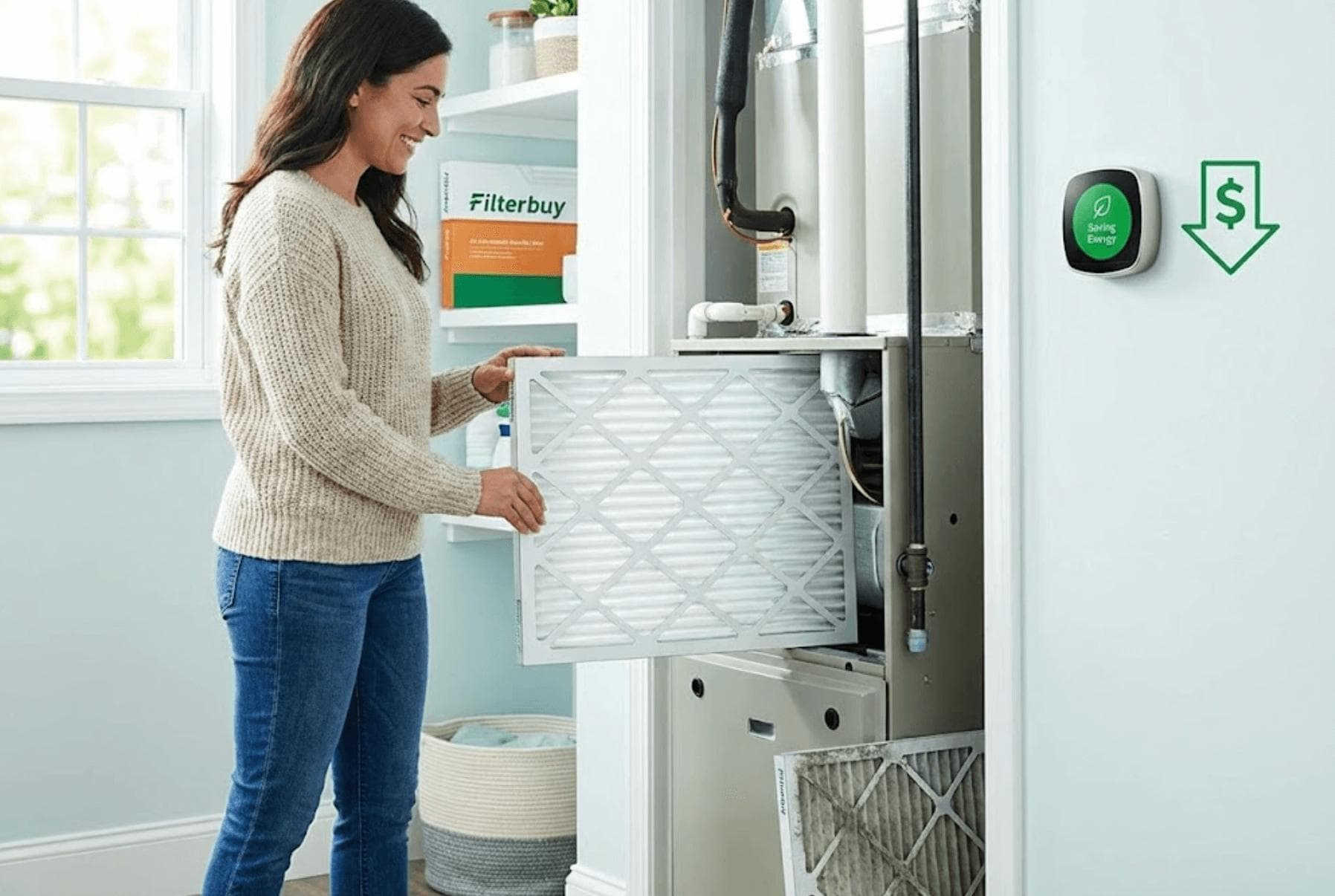
As temperatures drop, your furnace works overtime. A simple, often-overlooked task can make its job easier and lower your heating bill: changing your HVAC filter. A dirty, clogged filter forces your system to work harder, increasing energy costs and straining your furnace. This can lead to uneven heating, poor air quality, and expensive repairs.
Regularly changing your HVAC filter is one of the most effective ways to save energy and money in winter. This guide will explain how a clean filter boosts efficiency, how often you should change it, and which type is best for your home. We'll also share other practical tips to keep your home comfortable without breaking the bank.
Start with your filter — it's the fastest win. After manufacturing millions of air filters since 2013 and hearing from homeowners every winter, here's the approach we've seen work best:
Replace your air filter with a pleated MERV 8–13 — a clogged filter wastes up to 15% more energy
Set your thermostat to 68°F — drop it 7–10°F at night or when away to save up to 10% annually
Seal drafts around windows, doors, and outlets with caulk and weatherstripping
Check your ductwork — leaky ducts lose 20–30% of heated air before it reaches your rooms
The key insight most people miss: These steps work best together. From our experience, homeowners who only change the filter see good results — but those who combine a fresh filter with sealed leaks, sound ducts, and a smart thermostat setting see the biggest drop in their winter bills. Your HVAC system accounts for over 52% of your home's energy use. A clean, properly rated filter is the five-minute fix that keeps the whole system running the way it should.
Your filter is the easiest way to cut your winter heating bill. Heating and cooling eat up over 52% of your home's energy. A clogged filter can spike consumption by up to 15%. A fresh pleated MERV 8–13 filter fixes it in under five minutes.
Check monthly during winter — not quarterly. Your furnace runs constantly in the cold months. Homes with pets or allergies should check every 30 days. Quick test: hold it to the light. No light means it's time.
A filter alone isn't enough. The biggest savings come from combining a clean filter with:
Sealed drafts around windows and doors
Sound, insulated ductwork
A thermostat set to 68°F
Hidden waste adds up fast. Air leaks cost the average home $200–$400 per year. Leaky ducts lose 20–30% of heated air before it reaches your rooms. Basic caulk, weatherstripping, and a duct check can recapture much of that.
Make it automatic so you never forget. Set a monthly phone reminder or use Filterbuy auto-delivery. We ship your exact size on your schedule — fast, free, and factory-direct from our U.S. facilities.
Let's clear up a common misconception: some people believe pleated air filters can strain an HVAC system by restricting airflow. In reality, high-quality pleated filters are excellent for both winter heating and summer cooling because they offer a superior balance of filtration and airflow.
Unlike flat fiberglass filters, the pleated design creates a larger surface area to trap dust, pet dander, and other airborne particles without choking your system. This means your furnace can breathe easier, circulating warm air efficiently throughout your home.
Filterbuy specializes in high-quality pleated filters because they are reliable, effective, and safe for residential HVAC systems. They strike the perfect balance between capturing contaminants and maintaining the strong airflow your furnace needs to operate efficiently.
A dirty air filter is more than just an inconvenience; it's a direct drain on your wallet. When your filter is clogged with dust and debris, it sets off a chain reaction that makes your entire heating system less efficient.
Think of a clogged filter like a roadblock for the warm air your furnace produces. The fan motor must push harder to force air through the dense layer of grime, using more energy just to do its basic job. This constant struggle means your furnace runs longer and more frequently to reach the temperature set on your thermostat.
That extra work translates directly into higher energy consumption. According to a study by Arawda, simply changing your filter before winter can lead to energy savings of up to 15%. When your system can operate smoothly without obstruction, it uses less power, which is reflected in a lower monthly heating bill.
A clogged filter doesn’t just trap particles—it eventually stops working effectively. This allows dust and allergens to circulate back into your home, reducing indoor air quality. Furthermore, restricted airflow often leads to uneven heating, creating cold spots in some rooms while others are too warm.
The old rule of thumb to change your filter every three months doesn't apply to every household, especially during winter when your heating system is in constant use. How often you need to replace your filter depends on your specific living situation.
Based on guidance from experts at Palmetto and our experience at Filterbuy, here are some general recommendations:
Average home with no pets: Every 60–90 days.
Home with one or two pets: Every 30–60 days, as pet dander clogs filters faster.
Households with allergy sufferers: Every 30 days to maintain optimal indoor air quality.
Homes with heavy heating use or larger families: Check your filter monthly and replace it as needed.
If you’re ever in doubt, just take a look at your filter. If it appears gray or caked with dust, it’s time for a change.
Choosing the right filter is crucial for maximizing your energy savings. Not all filters are created equal, and the right one will balance filtration with airflow to keep your system running smoothly.
MERV, or Minimum Efficiency Reporting Value, measures how effectively a filter captures airborne particles. For most residential HVAC systems, a MERV rating between 8 and 13 is ideal. Here’s why:
Great Airflow: These filters are designed to allow ample air to pass through, preventing your furnace from being overworked.
Excellent Filtration: They effectively capture common household particles like dust, pollen, pet dander, and mold spores.
System Compatibility: MERV 8–13 filters are compatible with the vast majority of residential HVAC systems without causing strain.
This range provides the perfect balance of clean air and energy efficiency, making it one of the best HVAC energy saving tips for homeowners.
Homeowners trust Filterbuy because our products are designed with system efficiency in mind. We offer:
Custom Sizing: We can create a filter to fit any HVAC system, ensuring there are no gaps for unfiltered air to sneak through.
Auto-Delivery Options: Our filter replacement subscription service saves you money and ensures you never forget to change your filter.
High-Quality Materials: Our pleated filters are made in the USA with high-performing materials that maintain system efficiency and longevity.
Changing your filter is a great first step, but you can save even more energy during winter with a few simple adjustments to your habits.
According to both Tom’s Guide and USA Today, setting your thermostat to 68°F during the day is the optimal balance between comfort and savings. This is considered the most energy-efficient temperature for winter because it keeps you comfortable without making your furnace work overtime. At night or when you're away, you can lower it even further to save more.
The U.S. Department of Energy recommends checking for drafts around windows, doors, and electrical outlets. Use weatherstripping or caulk to seal any leaks where warm air might escape. This simple fix can significantly reduce your heating load and help you save energy during winter.
Home expert Jeanette Sanders, writing for The Spruce, suggests several small habits that add up to big savings. These winter energy tips include:
Layering clothing instead of turning up the heat.
Closing off unused rooms to avoid heating empty spaces.
Opening curtains on sunny days to let natural sunlight warm your home.
A clean filter is the cornerstone of an efficient HVAC system. By ensuring your system has unrestricted airflow, you enable it to run at peak performance. This leads to lower energy consumption, as your furnace doesn't have to work as hard to maintain a stable temperature. Consistently changing your filter not only helps you save energy on your HVAC in winter but also extends the lifespan of your furnace by reducing unnecessary wear and tear.
When it comes to keeping your home’s air clean and your HVAC system efficient, quality matters. That’s why over a million customers trust Filterbuy for their filter needs.
Our filters are engineered to provide the best of both worlds: superior filtration without sacrificing airflow. This ensures your system runs efficiently, saving you money and extending its life.
We use high-quality pleated materials that capture more particles than standard fiberglass filters, giving you cleaner air and better performance.
Whether you need a basic MERV 8 filter or a higher-rated MERV 13 for allergies, we have the right option to fit your home's needs and keep your air clean.
With fast, free shipping and custom sizing available, getting the perfect filter is effortless. Our auto-delivery subscription makes it even easier, so you'll never have to worry about forgetting a replacement again.
Stay warm, breathe cleaner air, and save money. Start saving this winter—upgrade to Filterbuy’s high-quality pleated filters today.
"After manufacturing millions of pleated filters and hearing from homeowners across the country, we've seen firsthand that something as simple as a fresh filter before the cold sets in can cut heating costs by up to 15%—it's the easiest upgrade most people overlook."
Saving energy in winter doesn't have to be complicated. We've pulled together the most helpful, trustworthy resources out there — so you can spend less time researching and more time enjoying a warm, comfortable home without the sticker shock.
energy.gov/energysaver/fall-and-winter-energy-saving-tips
If you're only going to bookmark one page, make it this one. The DOE's seasonal guide covers the basics every homeowner should know — from thermostat settings and window treatments to water heater adjustments. It's straightforward, no-nonsense advice straight from the source.
energystar.gov/saveathome/heating-cooling
Your furnace filter is just one piece of the puzzle. This ENERGY STAR guide walks you through duct sealing (which can boost efficiency by up to 20%), annual tune-ups, and when it might be time to upgrade older equipment. If your system is over 10 years old, this one's worth a read.
epa.gov/indoor-air-quality-iaq/what-merv-rating
MERV ratings can sound confusing, but they don't have to be. The EPA breaks down what the numbers actually mean and why they matter for your home's air quality. It's a great primer before you choose your next filter — and it'll help you understand why we recommend MERV 8–13 for most homes.
energy.gov/energysaver/programmable-thermostats
Here's a quick win: the DOE says you can save up to 10% a year on heating just by setting your thermostat back 7–10°F for 8 hours a day. This guide explains how programmable and smart thermostats make that effortless — and covers what to watch out for if you have a heat pump.
energy.gov/energysaver/air-sealing-your-home
Even the best filter in the world can't help if warm air is slipping out through cracks around your windows and doors. This DOE guide shows you exactly where to check for leaks and how to fix them with caulk and weatherstripping — simple fixes that often pay for themselves in under a year.
energy.gov/energysaver/do-it-yourself-home-energy-assessments
Not sure where your home is losing the most energy? This step-by-step walkthrough helps you find air leaks, insulation gaps, and other trouble spots — no professional audit required. It's a great weekend project that can help you figure out which upgrades will save you the most money first.
filterbuy.com/resources/air-filter-basics/which-merv-rating-should-I-use/
Once you understand the basics, this is where it all comes together. We built this guide to help you pick the right filter for your home — whether you've got pets, allergies, or just want your system running at its best. With over 85,000 five-star reviews and filters made right here in the USA, we've helped millions of homeowners find the perfect fit. Not sure where to start? We'll help you figure it out.
We've been manufacturing air filters in the U.S. since 2013 and have shipped millions to families across the country. In that time, the data has consistently confirmed what we see every day in customer feedback: your HVAC filter is the front door to the biggest energy expense in your home.
The U.S. Energy Information Administration found that more than 52% of a household's annual energy consumption goes to just two things: space heating and air conditioning.
What we see firsthand: Homeowners contact us after a winter bill spike, and more often than not, the culprit is a filter that hasn't been changed in months. When the majority of your energy dollars run through your furnace, a clogged filter isn't a minor inconvenience — it's the most expensive maintenance mistake you can make.
Our recommendation from building filters across four U.S. factories:
A pleated filter in the MERV 8–13 range keeps airflow strong without sacrificing filtration
That balance is what prevents your system from burning through energy it doesn't need to
Check your filter monthly during heavy heating months and replace it when it looks gray or clogged
Source: U.S. Energy Information Administration — Use of Energy in Homes
The U.S. Department of Energy reports that of the $2,000 the average American spends on energy annually, $200 to $400 could be going to waste from drafts, air leaks, and outdated heating and cooling systems.
What we've learned from thousands of customers: A high-quality pleated filter makes a real difference — but if warm air is escaping through gaps around windows and doors, your furnace keeps cycling to compensate. The homeowners who see the biggest drop in winter bills tackle both problems together.
Pair your fresh filter with these quick wins:
Apply weatherstripping around doors and operable windows
Use caulk to seal cracks around stationary window frames and baseboards
Check for leaks around electrical outlets, plumbing penetrations, and fireplace dampers
Don't forget attic hatches and recessed lighting — two commonly overlooked leak points
A clean filter gives your system room to breathe. Sealing those drafts makes sure the warm air it produces actually stays in your home.
Source: U.S. Department of Energy — Why Energy Efficiency Upgrades
ENERGY STAR reports that in a typical house, about 20 to 30 percent of the air moving through the duct system is lost due to leaks, holes, and poorly connected ducts— and that sealing and insulating those ducts can improve heating and cooling efficiency by as much as 20 percent.
What we wish more homeowners knew: After over a decade of building filters, this is the statistic we bring up most often. We've talked with customers who replace their filter on schedule — doing everything right — but still deal with uneven heating and higher-than-expected bills. The missing piece is almost always leaky ductwork quietly dumping conditioned air into the attic or crawlspace.
Signs your ducts may need attention:
Some rooms are noticeably colder than others, no matter how you set the thermostat
Visible dirt streaks or dust near duct seams and connections
Your energy bills seem high even with a fresh filter installed
Ducts running through unconditioned spaces (attics, garages, crawlspaces) feel cold to the touch
Source: ENERGY STAR — Duct Sealing
After millions of filters shipped and thousands of customer conversations, here's what we've found works best:
Start with your filter. It's the one part of your HVAC system you can change yourself in under five minutes. A pleated MERV 8–13 filter keeps air flowing and contaminants out.
Seal your leaks. Weatherstrip doors and windows. Caulk the cracks. Stop paying to heat air that's escaping.
Check your ducts. If rooms are heating unevenly, leaky ductwork could be the hidden problem.
Set your thermostat to 68°F. Drop it a few degrees at night or when you're away for even more savings.
We built Filterbuy to make step one effortless — so you have the time and savings to take care of the rest.
After more than a decade of manufacturing air filters in the U.S. and shipping millions of them to homes across the country, we've come to a conclusion that might surprise you: the most overlooked energy-saving upgrade in any home isn't a smart thermostat, new windows, or better insulation. It's a $15 air filter that takes less than five minutes to replace.
We've seen it play out thousands of times. A homeowner calls our support team frustrated by a heating bill that jumped $40 or $50 in a single month. They've turned down the thermostat. They've closed off unused rooms. But when we ask when they last changed their filter, there's usually a long pause — followed by "I honestly can't remember."
That pause is where the problem lives.
The air filter industry hasn't done a great job of helping homeowners understand how much a dirty filter actually costs them. The focus has always been on air quality — and that matters — but the energy conversation gets lost.
Consider what the data tells us:
Heating and cooling consume more than half of a household's energy budget
A clogged filter can drive energy consumption up by as much as 15%
A filter change takes under five minutes and costs a fraction of what it saves
We're not talking about a minor maintenance task. We're talking about one of the most cost-effective things any homeowner can do to lower their bills, period.
A filter alone isn't a silver bullet. We've had customers switch to our pleated MERV 11 or MERV 13 filters and see real improvement — only to plateau because:
Their ductwork was leaking conditioned air into the attic
Drafty windows were undoing the efficiency gains their new filter provided
Their thermostat was set too high around the clock
It would be easy for us to just say "buy our filter and you're done." But that wouldn't be the truth, and it wouldn't be helpful. That's why we started talking about the whole-home approach — both in our content and with our customer support team.
Build a monthly filter habit first. Check your filter on the first of every month during winter. Pull it out and hold it up to the light. If you can't see light passing through, it's time for a new one.
Choose the right MERV range. We recommend MERV 8–13 for residential systems. From everything we've tested and every piece of customer feedback we've collected, that range delivers the strongest combination of clean air and unrestricted airflow.
Below MERV 8: You're not catching enough particles to protect your air or your system
MERV 8–13: The sweet spot for most homes — effective filtration without straining your furnace
Above MERV 13: Risk of restricting airflow, which creates the same strain as a dirty filter unless your system is built for it
Then work outward. Once your filter habit is locked in, tackle the rest:
Seal the obvious drafts — weatherstrip doors and windows, caulk the cracks
Check your ducts — if rooms heat unevenly, leaky ductwork is likely the culprit
Set your thermostat to 68°F — drop it a few degrees at night or when you're away
Those four steps — fresh filter, sealed drafts, sound ducts, smart thermostat setting — are what we've consistently seen deliver the biggest winter savings for real families in real homes.
We didn't start Filterbuy to sell a commodity. We started it because we believed homeowners deserved better filters, delivered more conveniently, at a fair price — made right here in the U.S.
After millions of filters shipped and over 85,000 five-star reviews, what keeps us going is hearing from customers who tell us a fresh filter changed the way their home feels in winter:
Warmer rooms. Your furnace isn't fighting a clogged filter to push air through.
Lower bills. Your system runs less because it's running smarter.
Cleaner air. Your family breathes better, especially during the months you're sealed up indoors.
That's not marketing. That's what happens when your HVAC system can finally do its job.
Stay warm this winter. Start with your filter. We'll take care of the rest.
These steps are listed in order of impact and ease. Even completing just the first two can make a noticeable difference on your next heating bill.
Pull out your current filter from the return vent or furnace slot
Hold it up to the light — no light passing through means it's time for a new one
Note the size printed on the frame (length × width × depth)
Can't find your filter? Check behind the return air vent on a wall or ceiling, or inside a slot near your furnace or air handler.
Skip the cheap fiberglass filters at the big-box store. Choose a pleated filter in the MERV 8–13 range:
MERV 8 — Standard homes without pets or allergy concerns
MERV 11 — Our most popular pick for homes with pets or mild allergies
MERV 13 — Best for allergy sufferers, respiratory sensitivities, or smokers in the home
We carry over 600 sizes, build custom filters, and ship fast and free from our U.S. factories.
The biggest mistake isn't choosing the wrong filter — it's forgetting to change it.
Pick one:
DIY route: Set a recurring phone alert for the 1st of each month to check your filter
Easier route: Set up Filterbuy auto-delivery — pick your size, choose your schedule (every 1, 2, or 3 months), and fresh filters show up at your door with a subscription discount
Grab a stick of incense or use a damp hand. Walk your home and check these common leak points:
Window and door frames
Baseboards and wall-to-ceiling junctions
Electrical outlets and switch plates on exterior walls
Plumbing and wiring penetrations
Attic hatch and recessed lighting fixtures
Found leaks? A tube of caulk and a roll of weatherstripping from the hardware store can fix most gaps in an afternoon. The DOE says this simple step can save 5–30% on energy costs annually.
During the day: 68°F is the sweet spot for comfort and efficiency
At night or away: Drop it 7–10°F to save up to 10% annually
Pro tip: A programmable thermostat starts around $20 and pays for itself in one season
If you're currently set higher than 68°F, dial it down gradually — one degree per day until you hit the target.
If you can access ducts in your attic, basement, garage, or crawlspace, take a quick look:
Look for: Visible gaps, disconnections, or dirt streaks near seams
Feel for: Air escaping at connections while your system is running
Check for: Missing insulation on ducts in unconditioned spaces
Found problems? Seal small leaks with mastic sealant or metal-backed foil tape (not standard duct tape). For bigger issues, call an HVAC professional. ENERGY STAR estimates duct sealing alone can boost system efficiency by up to 20%.
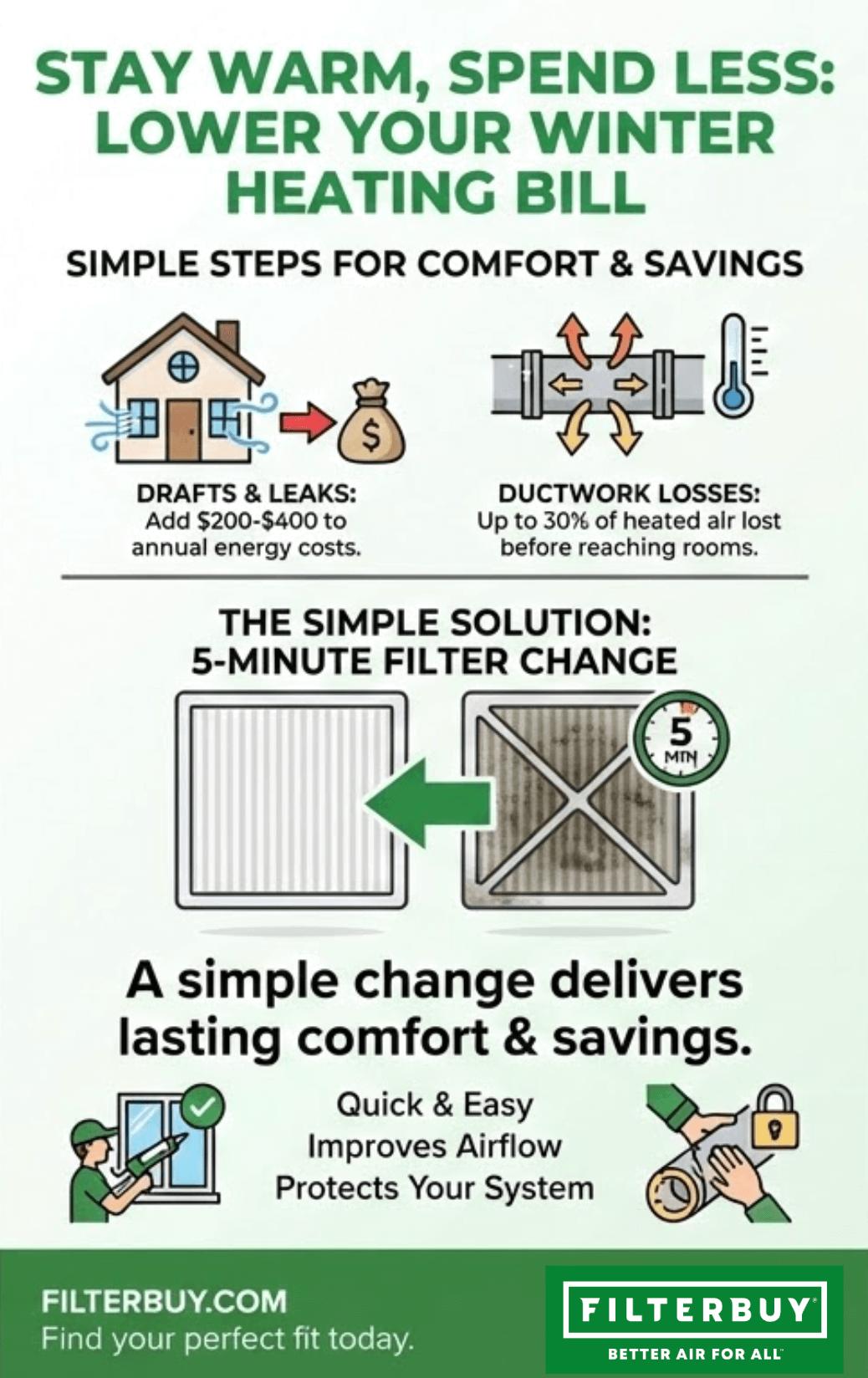
A: Change your air filter. We've been building filters in the U.S. since 2013, and after talking with homeowners every winter, the filter is almost always the first thing to check and the last thing people think about.
Here's why it matters so much:
A clogged filter can increase energy consumption by up to 15%
A fresh pleated MERV 8–13 filter restores airflow in under five minutes
We've watched customers cut $30–$50 per month just by getting on a regular replacement schedule
Pair that with a thermostat set to 68°F. In our experience, those two moves together deliver the most immediate winter savings of anything a homeowner can do.
A: More often than the packaging suggests. The "every 90 days" rule isn't aggressive enough for peak heating season. Your furnace works significantly harder from November through March, which means your filter fills up faster.
What we recommend based on millions of filters shipped:
No pets, average household: Every 60–90 days
One or two pets: Every 30–60 days — pet dander clogs filters faster than most people expect
Allergy sufferers or heavy heating use: Every 30 days, no exceptions
Quick test our support team shares all the time: Pull the filter out on the first of each month. Hold it up to a light source. If you can't see light through the pleats, it's done.
We built our auto-delivery subscription specifically because customers kept telling us they knew they should change more often — but life got in the way. Now it just shows up when it's time.
A: No — and this is the question our team answers more than any other.
The problem: Higher MERV filters have denser media. If your blower isn't built for that resistance, you get the same strain as a dirty filter. We've seen homeowners install a MERV 16 and call weeks later because their bills went up instead of down.
What we've found after a decade of manufacturing across four U.S. factories:
Below MERV 8: Lets too many pollutants through. Your air quality and system both suffer.
MERV 8–13: The sweet spot for nearly every residential home. Captures dust, pollen, pet dander, mold spores, and some bacteria — without straining your furnace.
Above MERV 13: Designed for hospitals and commercial settings. Don't go here unless your HVAC manual confirms your system can handle it.
We built our entire product line around the MERV 8–13 range because that's where efficiency and air quality consistently meet for the homes we serve.
A: A filter change alone won't solve everything — and that's something not every filter company will say. We've had customers see real improvement after switching to our pleated filters, only to plateau because something else was working against them: a drafty window, leaky ductwork, or a thermostat set too high.
The whole-home approach that consistently delivers the best results:
Seal air leaks — Start with windows, doors, and exterior wall outlets. A $10 tube of caulk and a roll of weatherstripping go a long way. The DOE says this alone can save 5–30% annually.
Inspect your ducts — We've talked with homeowners changing their filter like clockwork but still heating unevenly. The culprit: leaky ducts losing 20–30% of warm air before it reaches living spaces.
Set your thermostat to 68°F — Drop it 7–10°F at night or when away. A programmable thermostat makes this automatic and can save up to 10% per year.
Let the sun help — Open south-facing curtains during the day, close them at night. Customers in older homes tell us it makes a noticeable difference.
We started recommending this approach years ago because our customers kept teaching us that the filter is step one — not the only step. Each fix amplifies the others.
A: Yes — a properly sized pleated filter in the MERV 8–13 range is safe for the vast majority of residential systems. We've confirmed this over a decade of manufacturing and direct customer feedback.
Why pleated actually performs better than fiberglass:
Flat fiberglass filters have limited surface area — they either let too much through or clog fast
Pleated folds dramatically increase surface area, allowing more air to pass while trapping more contaminants
We chose to specialize in pleated construction for this exact reason
What actually causes airflow problems isn't the pleated design — it's one of two things:
Wrong size — Gaps around an ill-fitting filter let unfiltered air bypass into your system
Wrong MERV rating — A filter rated higher than your system is designed for creates resistance the blower can't overcome
How we solve both:
We manufacture over 600 standard sizes and build custom filters for hard-to-fit systems
Our team helps match the right MERV rating to your specific system
After shipping millions of pleated filters to U.S. homes, we can say with confidence: when the fit and rating are right, pleated is the best option for your HVAC — winter or any season
Your lower winter heating bill is one filter away. Shop your size at Filterbuy.com — over 600 sizes, fast free shipping, and American-made quality delivered right to your door.
