How to Clean a Mini Split: The Complete DIY Maintenance Guide
July 8, 2026
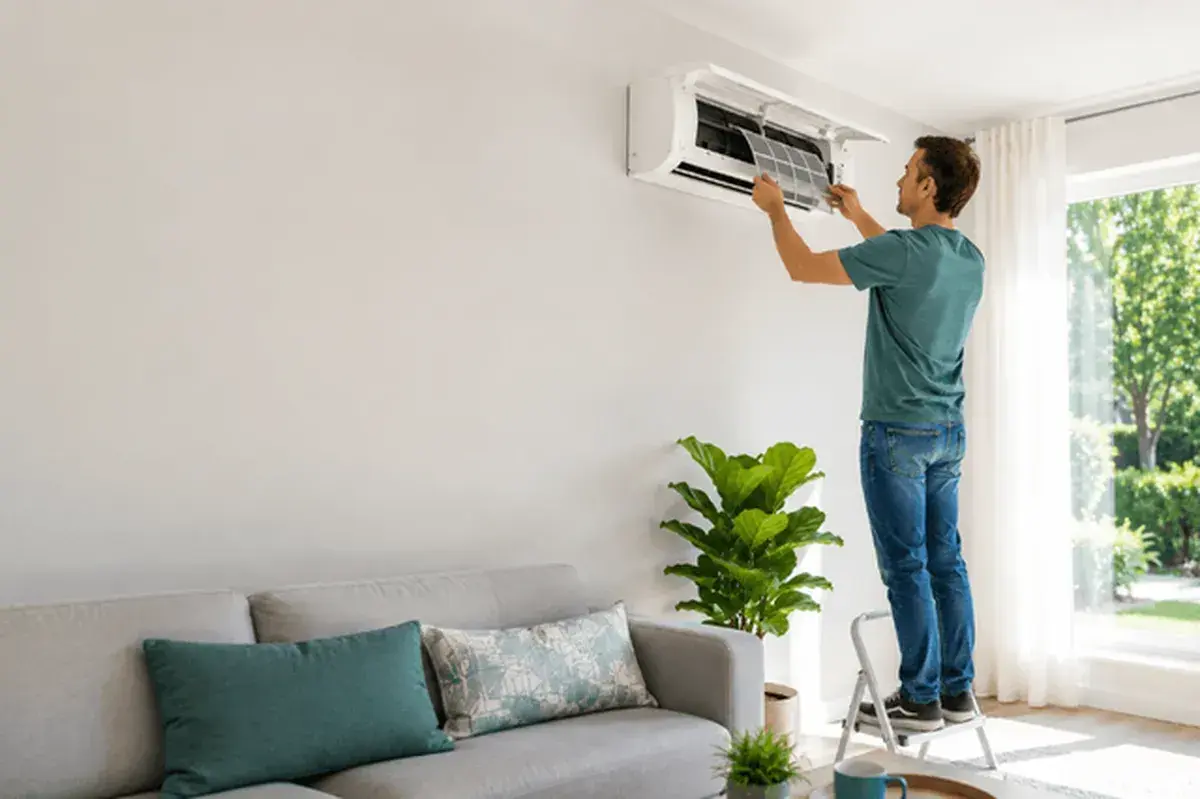
How to Clean a Mini Split
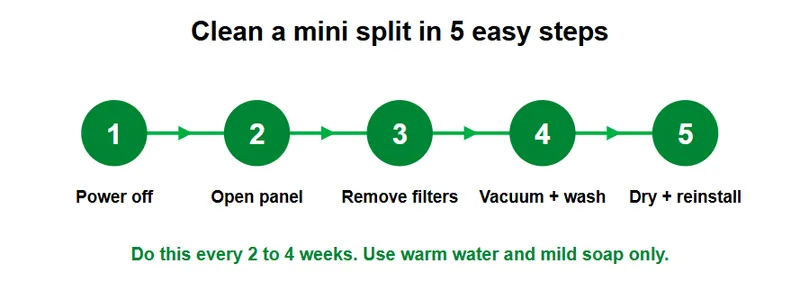
To clean a mini split, turn off the power, slide out the reusable filters, vacuum and wash them with warm water and mild soap, then let them air dry completely before putting them back. Do this every 2 to 4 weeks. It takes just a few minutes and common household items.
Every few months, wipe down the indoor unit and clear debris around the outdoor condenser. Not sure your current unit is worth the upkeep? Take the quick quiz below to find a low-maintenance mini split built for easy cleaning.
Answer 3 quick questions and we'll match you to the right mini split for your space.
Quick Answer
To clean a mini split: (1) shut off power at the breaker, (2) lift the front panel and wash the reusable filters in warm water, (3) let them dry completely, (4) clean the evaporator coils with a no-rinse coil cleaner, (5) wipe down the blower wheel, (6) flush the condensate drain line, and (7) clear debris from the outdoor unit. Rinse the filters every 2–4 weeks and deep-clean the coils once or twice a year. The full job takes about 20–30 minutes with basic household tools.
Top Takeaways
It's a DIY job you can actually do. Cleaning a mini split takes about 20–30 minutes with basic household tools, no HVAC license required. Just cut the power first, every time.
Don't stop at the filter. The most common mistake is rinsing the filter and skipping the coils and drain line, which is exactly what leaves you with weak airflow and that musty smell. Work from the filters inward.
A little cleaning saves real money. Keeping filters and coils clean can trim your system's energy use by roughly 5–15%, on top of clearing out odors and helping the unit last longer.
Stick to a simple schedule. Rinse the filters every 2–4 weeks, deep-clean the coils once or twice a year, and flush the drain line every few months.
Know when to call a pro. A careful wipe-down covers routine upkeep, but a full blower-wheel deep clean, or any refrigerant or electrical issue, is a job for a licensed technician.
Your mini split runs quietly in the background, which is exactly why it’s easy to forget it needs cleaning. But a ductless system pulls the same room air across its filters and coils thousands of times a day, and dust, pollen, pet dander, and grime build up faster than most homeowners expect. That buildup shows up in ways you can feel: weaker airflow, higher energy bills, and that faint musty smell when the unit first kicks on.
Here’s the good news, from a company that has built replacement filters for every major mini split brand for more than a decade: keeping a mini split clean is a straightforward DIY job, no HVAC license required. This guide walks you through every part of the system, from the washable filters to the outdoor condenser, so you can restore performance, cut down odors, and get back to breathing cleaner air. If you want the full seasonal routine beyond cleaning, see our complete mini split maintenance guide. We’ll also flag the few moments where it’s smarter to call a pro.
“After walking thousands of homeowners through this, I can tell you the pattern almost never changes: people rinse the filter, skip the coils and drain line, then call us a month later about a musty smell. Cleaning a mini split isn’t hard. It’s just easy to do half of it and assume you’re done.”
Michelle Wan · Brand Manager & Air Quality Writer, Filterbuy
Why Cleaning Your Mini Split Matters
A dirty mini split doesn’t just get less pleasant to run. It costs you real money and comfort. Here’s what a little maintenance actually protects:
Lower energy bills. The U.S. Department of Energy estimates that keeping filters and coils clean can cut a system’s energy use by roughly 5–15%. Dust on the coils acts like insulation, so the unit has to run longer to hit the same temperature.
Cleaner indoor air. Your mini split recirculates the air in the room. When the filters and coils are caked with dust and mold spores, the system pushes those particles right back at you, a real problem for anyone with allergies or asthma.
Fewer odors and less mold. The coils stay damp during cooling. Add trapped dust and you’ve created the perfect home for mold and mildew, the usual culprit behind that musty smell at startup.
A longer-lasting system. A clogged filter or blocked drain line forces the unit to strain, wears parts out faster, and can leave water pooling where it shouldn’t. Regular cleaning is the cheapest repair you’ll ever make.
Clean Air Doesn't Stop Here: More Ways to Breathe Easy
You've got the mini split handled, nice work. Here are a few more resources to keep your whole home's air clean, without the hassle.
Get the Whole Routine Down, Not Just the Cleaning
Cleaning takes care of the buildup you can see today. This companion guide walks you through the full seasonal routine, so your system keeps running strong all year.
→ How to Maintain Your Mini Split
Know What's Really Behind That Panel
Indoor air can sound complicated. It doesn't have to be. Here's a plain-English rundown of how your ductless system works, so every step you take makes sense.
→ What Is a Ductless Mini Split?
Thinking About a New Unit? Start Here
If your mini split is getting up there in years and needs constant repairs, cleaning can only do so much. See how the most reliable brands stack up before you decide.
Upgrade What You Breathe, Not Just What You Rinse
Your mini split's mesh filter keeps dust off the coils, but it's not built to catch the fine stuff you actually breathe. MERV 13 filters grab particles like smoke and fine dust that a pre-filter lets slip right through.
See What Your Air Is Up Against Today
Curious what's floating around before your next filter change? Check your local air quality in real time. It takes a few seconds and tells you a lot.
→ Live Air Quality Index (AQI) Map
Find Your Exact Size, We'll Handle the Rest
Skip the trip to the hardware store. We make 600+ standard and custom sizes right here in the USA, ship them fast and free, and with auto-delivery a fresh filter shows up right when it's time.
Keep Your Whole System Running Efficiently
A clean mini split is a great start, but your central system matters too. ENERGY STAR's straightforward guide covers the simple habits that keep any HVAC system humming.
→ ENERGY STAR: Heat & Cool Efficiently
Supporting Statistics
The case for cleaning your mini split isn’t just anecdotal. Federal data backs it up. After a decade making filters for millions of U.S. homes, here are three numbers worth knowing:
2–5×
Dirtier air indoors than out
Indoor air can hold some pollutants at 2–5× outdoor levels. Americans spend about 90% of their time inside.
Your mini split recirculates that air all day. Clean filters and coils decide what you breathe.
Source: U.S. EPA, Indoor Air Quality
52%
Of home energy is heating and cooling
Space heating and air conditioning are the single largest slice of a typical home’s annual energy use.
A dirty system runs longer to hit the same temperature. Cleaning protects your biggest energy expense.
Source: U.S. EIA, Use of Energy in Homes
26.8M
Americans have asthma
That’s 8.2% of the population, per CDC surveillance data.
Dust mites, mold, and pet dander (common in neglected units) are EPA-listed asthma triggers.
Sources: CDC, Most Recent Asthma Data · U.S. EPA, asthma triggers
What You’ll Need
You almost certainly have most of this already. No specialty gear required for routine cleaning:
A screwdriver (for the outdoor unit’s cover, if applicable)
Warm water, mild dish soap, and a soft brush or old toothbrush
A vacuum with a soft brush attachment
Microfiber cloths
A no-rinse evaporator coil cleaner (foaming spray made for HVAC coils)
A garden hose with a spray nozzle (for the outdoor condenser)
Optional: a mini split cleaning bag (“cleaning jacket”) to catch drips during a deep coil clean, and a fin comb to straighten bent fins
SAFETY FIRST
Never clean any part of a mini split while it’s powered on. Turn the unit off with the remote, then switch off the breaker for both the indoor and outdoor units before you start. Wear gloves and eye protection, and avoid spraying liquids near electrical components or the circuit board.
How Often Should You Clean a Mini Split?
Frequency depends on how hard you run the system and what’s floating around your home. Use this as your baseline schedule:
How to Clean a Mini Split: Step-by-Step
Work through these steps in order. Cleaning from the filters inward means debris flows toward the drain instead of recontaminating parts you’ve already done.
Step 1: Cut the power
Turn the unit off at the remote, then flip the breaker for both the indoor and outdoor units. This is non-negotiable. You’ll be working near electrical parts and using water.
Step 2: Clean the filters
Lift or unclip the front panel of the indoor unit. It usually swings upward. Slide out the mesh filters (most units have two).
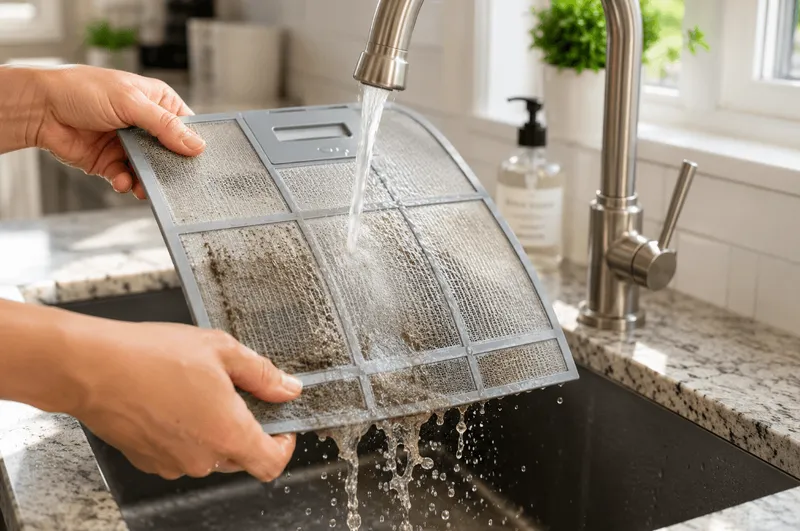
Vacuum off loose dust, then wash the filters in warm water with a little mild soap. Use a soft brush for stubborn grime. Mini split filters are reusable. You’re cleaning them, not replacing them.
Rinse thoroughly and set them somewhere to air-dry completely. In our experience this is the step people rush most, and a damp filter snapped back into a warm unit is the fastest route to that musty smell.
Step 3: Clean the evaporator coils
With the filters out, you’ll see the metal evaporator coils, rows of thin aluminum fins. Vacuum or gently brush away loose dust, always moving parallel to the fins so you don’t bend them.
Spray a no-rinse coil cleaner evenly across the coil surface and let it foam for 5–10 minutes. It breaks down dust and biological buildup, then drains out through the condensate line with no rinsing needed. Skip bleach, vinegar, and all-purpose cleaners; they can corrode the fins.
If any fins are bent, straighten them gently with a fin comb. Bent fins restrict airflow and quietly drag down efficiency.
Step 4: Wipe down the blower wheel
The blower wheel sits just behind the coils. It’s the barrel-shaped fan that moves air. Wipe accessible surfaces with a damp microfiber cloth or a small brush to lift off the dust film. Even a light coating here cuts airflow and adds noise.
REVIEWER’S TIP · DAVID CLARK, LICENSED HVAC TECHNICIAN, FILTERBUY
“A full blower-wheel deep clean means removing the casing and using a cleaning bag and low-pressure water. That’s where most DIYers should stop and call a pro. For routine upkeep, a careful wipe-down is plenty. If you still hear a scratchy noise or smell mold after cleaning, the buildup is deeper than a cloth can reach.”
Step 5: Flush the condensate drain line
The drain line carries condensation from the indoor unit to the outside. Over time, algae and sludge clog it, which leads to water dripping from the front of the unit and musty smells.
Check the line for standing water or blockages. Flush it with a mix of warm water and white vinegar (or use a wet/dry vacuum at the outdoor end to pull out gunk). Avoid bleach, which can damage some tubing.
Step 6: Clean the outdoor condenser unit
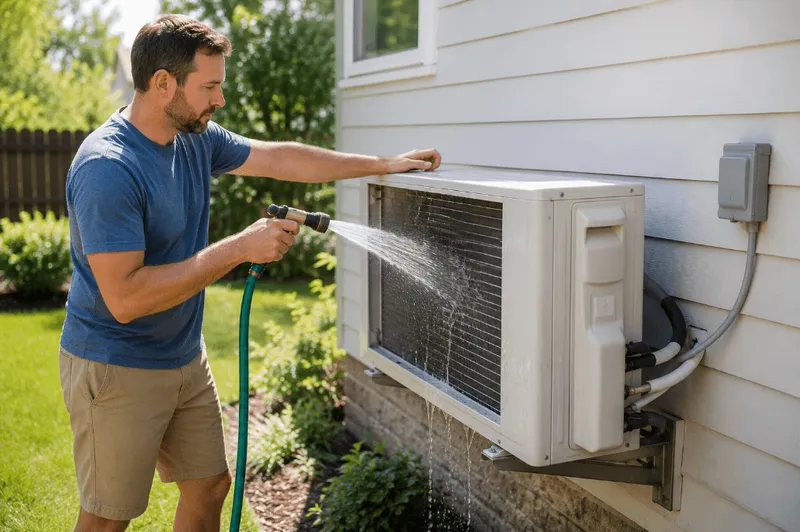
Confirm the outdoor unit’s power is off. Clear away leaves, grass clippings, and debris from around and inside the casing, and keep at least two feet of clearance for airflow.
Rinse the condenser fins with a garden hose on low pressure, spraying from the inside out to push debris away from the coil. Never use a pressure washer, which bends the delicate aluminum fins.
Step 7: Reassemble and test
Once everything is fully dry, slide the filters back in the way they came out and close the front panel until it clicks.
Restore power at the breaker and run the unit on a medium fan setting for 10–15 minutes. You should feel stronger airflow and cooler air, with no scratchy sounds. That’s your dirty mini split, cleaned.
When to Call a Professional
DIY cleaning handles the vast majority of mini split maintenance. Here’s a quick guide to what you can safely tackle yourself and when it’s time to bring in a licensed technician:
A professional deep clean (casing removed, coils and blower wheel steam-cleaned) typically runs $150–$300 per indoor unit and is worth scheduling every couple of years for a heavily used system. And if your unit is more than 10–12 years old and needs frequent repairs, cleaning may be fighting a losing battle. It could be time to compare the most reliable mini split brands and plan a replacement.
Don’t Stop at the Mini Split
Cleaning your ductless system is a big win for your home’s air, but here’s a distinction a decade of building these filters has taught us: the mesh pre-filter inside a mini split is a comfort filter, not a health filter. It’s designed to keep dust off the coils, not to capture the fine particles that shape what you actually breathe. So a clean mini split is one piece of the picture, not the whole thing. If you also run a central HVAC system, its air filter is doing the heavy lifting for the rest of your home, and unlike your mini split’s washable filters, those need to be swapped out on schedule, a habit ENERGY STAR flags as one of the simplest ways to keep any system running efficiently.
That’s where we come in. Filterbuy has made air filters in the USA since 2013, in 600+ standard and custom sizes, including MERV 13 filters that capture finer particles like smoke and fine dust. Everything ships fast and free, factory-direct. Set up auto-delivery and a fresh filter shows up right when it’s time, so you never have to think about it. And before your next filter change, it’s worth a quick look at your local air quality to see what your system is up against.
BETTER AIR FOR ALL™
Keep your whole home breathing easy. Filterbuy is trusted by millions of U.S. households. Find your exact filter size and set up auto-delivery so you never forget a change. Shop filters by size →
Frequently Asked Questions
How often should I clean my mini split filters?
Rinse them every 2–4 weeks during heavy-use seasons, or every 2 weeks if you have pets, allergies, or a dusty home. In milder months when the unit runs less, every 1–2 months is fine.
Can I clean the evaporator coils myself?
Yes. With the power off and filters removed, apply a no-rinse foaming coil cleaner and let it drip into the drain line. Just brush gently and parallel to the fins so you don’t bend them, and avoid bleach or vinegar on the coils.
Do mini split filters need to be replaced?
Usually not. Most mini split filters are permanent and reusable, so you clean rather than replace them. Central HVAC systems are different: those disposable filters should be changed on a regular schedule, and Filterbuy makes those replacements in 600+ standard and custom sizes, made in the USA.
Why does my mini split smell musty?
A musty odor almost always points to mold or mildew on the damp coils, in the drain pan, or inside the drain line. Cleaning the coils and flushing the drain usually clears it. If it returns within a week, call a technician.
How long does it take to clean a mini split?
Routine cleaning takes about 20–30 minutes with basic tools. A full deep clean of the coils and blower wheel takes longer and is often best left to a pro.
Can I use a pressure washer on the outdoor unit?
No. A pressure washer bends the delicate aluminum condenser fins, which reduces efficiency. Use a garden hose on low pressure and spray from the inside out.
About the Author
Michelle Wan writes about home air quality and HVAC maintenance for Filterbuy, an American manufacturer that has made air filters in the USA since 2013, translating technical topics into clear, practical advice for everyday homeowners. This guide was reviewed for technical accuracy by David Clark, a Licensed HVAC Technician at Filterbuy.