Shop by

If you're wondering which air filter rating—FPR or MERV—is best for your home, you're asking the right question. At Filterbuy, we’ve helped thousands of homeowners across the country choose the right filters for their unique needs, and we've seen firsthand how the wrong rating can impact HVAC efficiency and air quality. That’s why we created this in-depth guide—not just to explain what these ratings mean, but to give you insider insight into how they perform in real-world conditions. Backed by our experience manufacturing and testing filters across multiple environments, this breakdown offers side-by-side comparisons, expert recommendations, and real-life considerations to help you find the perfect balance between performance, allergy protection, and system compatibility.
MERV ratings are more reliable than FPR for measuring filter performance.
MERV 8–13 works best for most homes—great balance of air quality and efficiency.
Wrong filter = poor airflow, higher bills, and bad air quality.
Filterbuy’s real-world testing shows MERV filters outperform retail FPR options.
Upgrading your filter = cleaner air, better health, and longer HVAC life.
When it comes to improving indoor air quality and HVAC performance, choosing the right filter isn’t just about the size—it’s about understanding the ratings. Two of the most common filter rating systems are MERV (Minimum Efficiency Reporting Value) and FPR (Filter Performance Rating). But what do these ratings mean, and which one should you trust?
MERV, developed by ASHRAE, is the industry standard and ranges from 1 to 20. The higher the number, the more particles the filter can trap, especially smaller ones like allergens, bacteria, and smoke. FPR, used by retailers like The Home Depot, simplifies things with a scale from 1 to 10 (color-coded). While convenient, FPR is proprietary and less standardized.
At Filterbuy, we recommend using MERV ratings for a more consistent and scientifically backed measurement. For most homes, a MERV 8 to MERV 11 filter offers an ideal balance of air quality, airflow, and HVAC system compatibility. If allergies or asthma are a concern, MERV 13 is often the best choice for capturing fine particles like pollen, pet dander, and airborne viruses.
Using a filter with the right rating helps extend your HVAC system’s lifespan, lowers energy bills, and creates a healthier home environment. However, going too high (like MERV 16+) can restrict airflow if your system isn’t built for it, so matching the rating to your system is key.
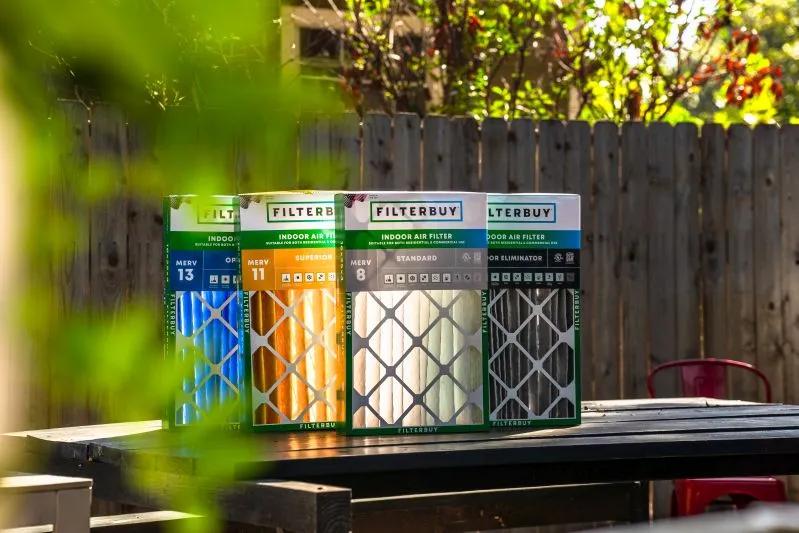
At Filterbuy, we bring real-world experience from working with thousands of homeowners and HVAC professionals nationwide. Here’s what we’ve seen firsthand:
Issue:
The family used FPR 7 filters from a retail chain.
Ongoing allergies, pet dander, and asthma issues.
What We Did:
Recommended MERV 13 filters for better allergen control.
Offered guidance on proper filter fit and change frequency.
Results:
Fewer allergy symptoms within 2 weeks.
Better sleep and improved indoor air quality.
No airflow issues with upgraded filters.
Issue:
The property manager installed MERV 16 filters in all units.
Tenants complained of low airflow and high energy bills.
What We Did:
Recommended MERV 11 filters—high-efficiency, low resistance.
Shared best practices from similar environments.
Results:
Airflow is normalized across all systems.
Utility bills dropped 11% the next month.
The property manager adopted MERV 11 permanently.
Test Conditions:
Compared Filterbuy MERV filters vs. FPR filters from retail stores.
Measured particulate capture, airflow retention, and filter lifespan.
Key Findings:
MERV 11 filters captured 36% more PM2.5 than FPR 7.
Filterbuy’s deeper pleats maintained airflow longer.
Filter life is extended by 25–40% in typical home use.

"After helping thousands of homeowners improve their indoor air quality, one thing is clear—MERV-rated filters consistently deliver the performance, protection, and peace of mind people are looking for. Unlike retail-based FPR ratings, MERV is backed by science and real-world testing, making it the most reliable way to match filtration to your home’s needs. At Filterbuy, we’ve seen firsthand how the right filter can transform air quality, protect HVAC systems, and even improve overall wellness."
Here’s what trusted U.S. sources say about indoor air quality—and how our real-world experience backs it up:
Source: EPA.gov
Indoor air can harbor dust, dander, and allergens.
We’ve seen major improvements in homes using MERV 11+ filters.
Especially important for households with pets, kids, or asthma.
Source: ASHRAE.org
Filters out pollen, pet dander, mold spores, and viruses.
Customers switching to MERV 13 often notice air quality improvements within days.
Ideal for allergy and respiratory protection.
Source: EPA.gov
Poor ventilation + weak filters = indoor air pollution.
We’ve seen homes dramatically reduce indoor pollutants just by upgrading filters.
Treat your filter as a health essential, not just maintenance.
At Filterbuy, we’ve helped thousands of customers improve their air quality, and we’ve learned a lot along the way. Here’s our take:
MERV ratings are standardized and science-backed.
FPR may be simpler, but it's less consistent across brands.
MERV gives you a clear picture of what your filter blocks.
Customers using FPR filters often struggle with lingering dust, allergies, or HVAC strain.
Switching to the right MERV-rated filter leads to:
Better indoor air quality
Fewer allergy flare-ups
Your filter is more than a maintenance item—it’s a health safeguard.
Choosing the right MERV furnace filter protects your home, lungs, and system.
We recommend MERV 8–13 for most households, depending on your specific needs.
✔️ Final Tip: Let Filterbuy guide you to the best fit for your home—so you can breathe easier, save money, and feel the difference every day.
Ready to improve your air quality? Follow these simple steps:
Look for the size on your current filter’s frame.
Confirm your HVAC system supports your desired MERV rating.
MERV 8–11: Good for dust, pollen, and basic air quality.
MERV 13: Best for allergies, pet dander, and fine particles.
Avoid MERV 14+ unless your system is built for high resistance.
Pick your size, MERV rating, and quantity.
Subscribe for auto-delivery if needed.
Need help? Our experts are here for you. 🔗 Shop Now
Use calendar alerts or Filterbuy’s email reminders.
💡 Need Guidance? Contact Filterbuy’s support team for personalized recommendations.
Here are answers to the most common questions homeowners ask when choosing between FPR and MERV filters—to help you make the best decision for air quality, HVAC performance, and allergy protection.
MERV (Minimum Efficiency Reporting Value) is an industry-standard rating developed by ASHRAE. It measures how effectively a filter captures particles of varying sizes. FPR (Filter Performance Rating) is a proprietary system used by The Home Depot, typically ranging from 4 to 10. While easier to understand at a glance, FPR is less consistent across brands and not as detailed as MERV.
MERV is more reliable. It's standardized, widely recognized, and backed by scientific testing. At Filterbuy, we recommend using MERV to make informed choices based on particle size, system compatibility, and real filtration performance.
MERV 8: Basic protection—captures dust, pollen, lint.
MERV 11: Great for homes with pets or light allergies.
MERV 13: Ideal for allergy/asthma sufferers—traps smoke, bacteria, and fine particles. Always check your HVAC system’s capacity before choosing higher MERV ratings.
Yes, it can. Filters with very high MERV ratings (14–16) can restrict airflow in systems not built to handle them. This can strain the blower motor, reduce efficiency, and raise energy costs. Stick to MERV 8–13 unless your system is rated for high-efficiency filters.
MERV 8–11: Every 2–3 months.
MERV 13: Every 1–2 months, especially in allergy season or high-use environments. Homes with pets, smokers, or allergy sufferers may need more frequent changes.
💡 Still unsure what filter to use? Contact Filterbuy’s expert support team for personalized recommendations based on your home’s air quality needs and HVAC setup.

