
Irving Real-Time AQI Tracker


Get Alerts For Unhealthy AQI In Your Area
When air quality in your area reaches unhealthy levels, we'll send you a quick alert, along with expert tips on how to reduce your exposure.
What's Actually In Irving Air Today?
What High AQI Means for Your Lungs in Irving
How to Read AQI
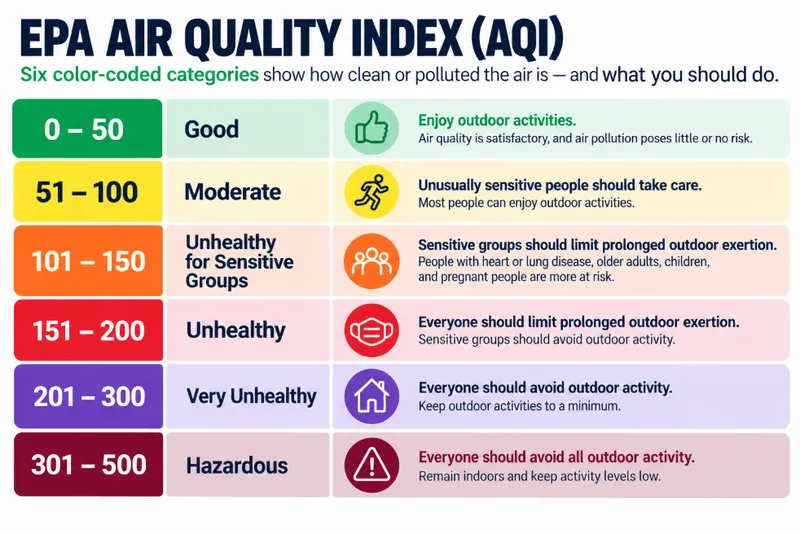
The Air Quality Index (AQI) measures how polluted the air is and how it may affect your health.
0–50 (Good): Air quality is satisfactory.
51–100 (Moderate): Acceptable, but some pollutants may pose minor concerns.
101–150 (Unhealthy for Sensitive Groups)
151–200 (Unhealthy)
201–300 (Very Unhealthy)
301+ (Hazardous)
Moderate
Still okay for most, but if you have asthma or allergies, take it easy and avoid long outdoor workouts.
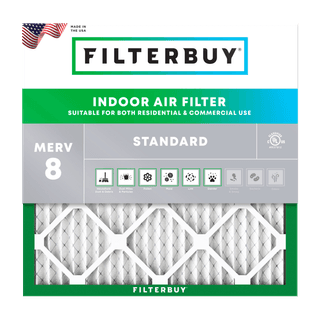
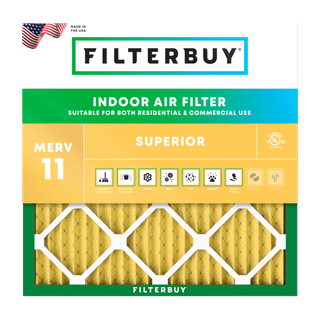
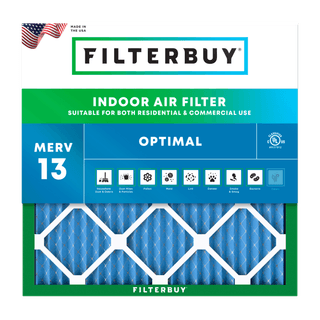
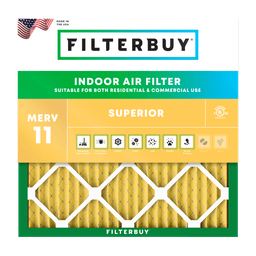
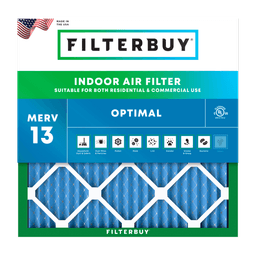
Shop MERV 11 filters→What's the Right Filter for Your AQI Level?


Check Today's Live Real Time Air Quality Index AQI Map in Irving, TX Now
TL;DR
The Filterbuy live AQI map above pulls Irving's current air quality index from regulatory monitors across Dallas County and the wider Dallas-Fort Worth area. Read the color first, then the number. Green and yellow are fine for most people. Once the map turns orange, sensitive groups should ease off outdoors and let the HVAC run with a clean filter behind closed windows.
Key Takeaways
Irving sits in the nine-county Dallas-Fort Worth ozone nonattainment area, rated serious under the U.S. Environmental Protection Agency's 2015 ozone standard.
Ozone is the region's federal compliance problem, but fine particulate is the one that changes what you do indoors.
Ozone season runs March 1 through November 30, with the worst readings on hot, low-wind afternoons.
The nearest regulatory monitors sit east and northwest of the city, so a single Irving number can miss your street.
Ozone breaks down fast indoors. Fine particulate does not, so filtration is the indoor answer.
How to Read Irving's Live Air Quality Map Before You Head Outside
Start with color rather than the digits. Every station carries a color band, and that band is the fastest read on whether the day needs adjusting. The number beside it is not an average of everything in the air but whichever pollutant is scoring highest at that moment, which in Irving means ozone on hot afternoons and fine particulate whenever dust or smoke moves through.
Values refresh through the day rather than resetting at midnight, because the EPA's NowCast method weights recent hours more heavily so a fast change is not buried in a 24-hour average. Full definitions live at AirNow's AQI basics page.
What Each AQI Color Means for an Irving Afternoon
The scale runs from 0 to 500, and our AQI color chart walks through every band on it. What changes from one city to the next is how often you land in each one.
Scale set by the U.S. EPA and identical nationwide. Readings above 100 are treated as unhealthy, first for sensitive groups and then for everyone as the number climbs.
What to Do Once the Map Reaches 100
AQI 100 is where Filterbuy tells customers to move. That is our line rather than a category change, since the Unhealthy for Sensitive Groups band starts at 101 and we would rather act at the threshold than after crossing it. At 100 and above, four things:
Put a MERV 13 in the HVAC if the system is on a lower tier. The central system moves far more air than any portable unit, so this is the whole-home layer.
Set the thermostat fan to On, not Auto. On Auto the system only filters while heating or cooling; on On it filters continuously.
Run a portable HEPA air cleaner in each occupied room, bedrooms first. This treats the room harder than the central system can.
Close the house up, and do not add smoke of your own. No candles, no frying, no vacuuming without a sealed unit.
The EPA's recommendation is a filter rated MERV 13 or higher in a central system during smoke events. The trigger at 100 and the air cleaner in every occupied room are ours. Both go further than the agency specifies.
Why the Number on the Map May Not Match the Air on Your Street
Irving does not sit on top of a regulatory monitor. The closest state reference sites are Dallas Hinton Street to the east and Grapevine Fairway to the northwest, leaving the city in the gap between them. Either one is a regional signal rather than a reading of the air over Valley Ranch or the Heritage District, which is why the Dallas and Fort Worth maps can disagree with this one the same day.
Wind direction matters more than most residents realize. A conceptual model for Dallas-Fort Worth published by the Texas Commission on Environmental Quality (TCEQ) found the highest ozone design values showing up north and northwest of the metroplex, at Grapevine Fairway, Keller, and Eagle Mountain Lake, while the lowest sit to the east and southeast. Southeasterly winds push precursors across the urban core and the ozone forms downwind of it. Irving sits along that path, so the air overhead has often been cooking for hours before it arrives.
Ozone peaks from mid-afternoon into early evening, so a green morning reading tells you little about a 5 p.m. soccer practice.
What Actually Drives Air Quality in Irving
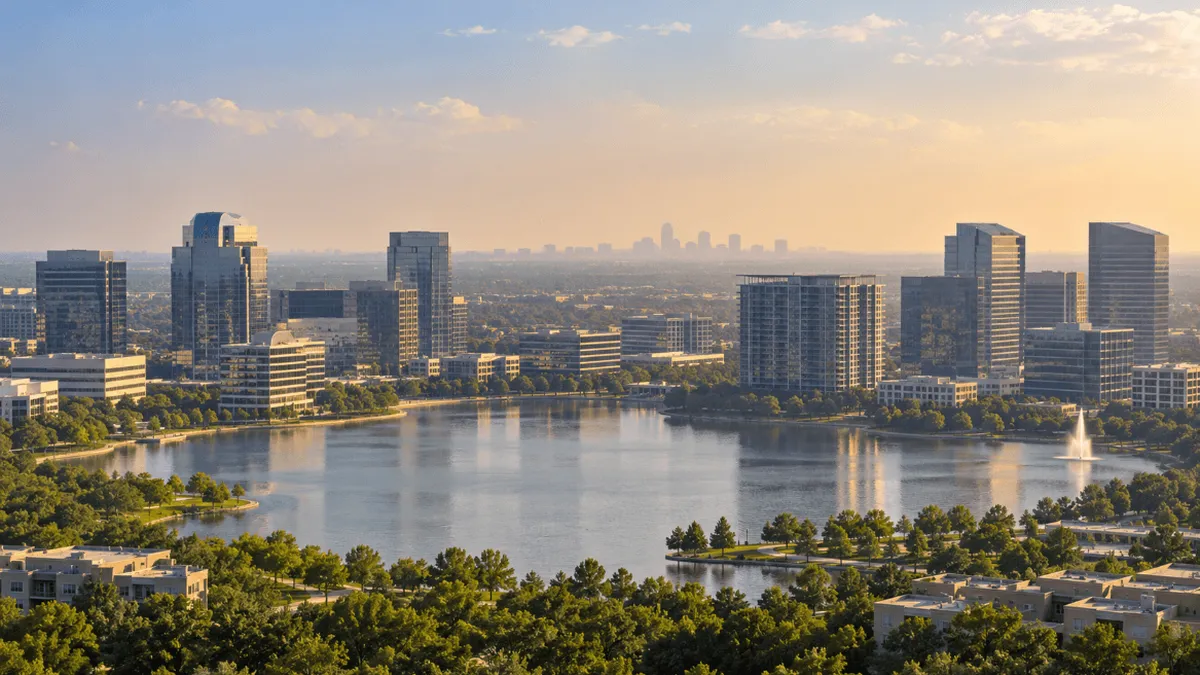
Irving's air problem is a traffic and sunlight problem before it is anything else. SH 183, SH 114, I-635, Loop 12, and SH 161 wrap the city, and DFW International Airport sits on its western edge. None of them emit ozone directly. It forms when nitrogen oxides and volatile organic compounds react in sunlight and heat, which North Texas supplies nine months of the year.
No mountain range or valley traps pollution here the way an inversion does in Salt Lake City, and the flat terrain cuts both ways. Wind clears the city out on a breezy day, but on a stagnant, cloudless afternoon in the mid-90s nothing moves the precursors along and readings climb until sunset.
Dallas-Fort Worth ozone runs on two peaks rather than one summer hump. TCEQ modeling documents a first from April through June and a second from August through October, with a July dip when humidity and cloud cover interrupt formation. Late September can be worse than mid-July. The North Central Texas Council of Governments tracks the regional design value against the 70 ppb federal standard all season.
The Days When Particles, Not Ozone, Are the Problem
Fine particulate is the pollutant that changes indoor behavior, and Irving gets it from three recurring sources. Saharan dust crosses the Atlantic on the trade winds most summers between June and August, pushing PM2.5, the fine particles small enough to reach deep into the lungs, and coarser PM10 into the moderate range and higher. Wildfire smoke from Canada and the western states arrives on upper-level flow, sometimes under skies that look clear from the ground. Agricultural burning across the Central Plains filters thin smoke into North Texas, which TCEQ's daily forecast discussion calls out by name when it happens.
Particle air pollution is not a minor category here. The American Lung Association's State of the Air 2026 report, covering 2022 through 2024, ranked Dallas-Fort Worth 9th worst nationally for ozone with an F, and 22nd worst for year-round PM2.5 particle pollution, down from 30th. When smoke does arrive, the steps for keeping wildfire smoke out of the house apply here too.
What an Ozone Action Day Means for Your Day
An Ozone Action Day is a forecast, not a measurement. TCEQ issues them about a day ahead for Dallas-Fort Worth whenever conditions favor high ozone, which gives people time to act before it forms.
On one of those days it helps to combine errands, refuel after dark, leave the gas mower alone, and move hard exercise to early morning. If someone in the house has asthma or COPD, the chronic lung disease, follow the guidance their clinician and AirNow give for high-AQI days.
You can have alerts sent to you through Air North Texas, the NCTCOG campaign covering Irving, and the City of Irving's air quality page carries EPA guidance. For same-day conditions the Irving air quality map above is the fastest check, and the live Texas AQI map shows the rest of the state.
Our Take: Why We Tell Irving Homeowners to Treat Two Pollutants Differently
We manufacture air filters, which is why the next sentence is worth saying out loud: a furnace filter does almost nothing for Irving's ozone problem. Ozone is chemically unstable. It breaks down on contact with duct walls and furniture, so indoor levels sit well below outdoor levels whenever windows are shut. On a high-ozone afternoon the answer is timing and ventilation, not filtration.
Fine particulate is the opposite problem, and the one filters are built for. It moves indoors readily and hangs in the air for hours, and the cheap fiberglass panels common in builder-grade systems barely slow it down. That is where a filter earns its keep, and where filter-buying here goes wrong: one product bought for air quality in general, when the two pollutants behave in opposite directions indoors.
“I don't want anyone to feel like they need an HVAC license just to pick the right filter. In Irving it comes down to one question: is today's number ozone, or is it particulate? If it is ozone, close up and wait it out. If it is smoke or dust, the filter in your return is what changes the air you breathe.”
Michelle Wan, Brand Manager and Air Quality Writer, Filterbuy
Filterbuy has built filters in the United States since 2013 and is now the largest air filter manufacturer in North America. That much we can speak to directly. What we cannot see from a web page is your duct system, which is why the recommendation below ends with a tier and a size instead of a single part number.
Which Filter the Map's Reading Calls For
A filter's MERV rating, short for Minimum Efficiency Reporting Value, describes how much fine particulate it captures per pass. Most furnaces and HVAC systems accommodate a MERV 13 without equipment problems as long as the filter gets replaced often, which is the EPA's framing. Treat it as a fit check, the same as confirming a size. Our guide to which MERV rating to run at a given AQI sets the thresholds.
Have a technician measure static pressure before moving above MERV 11 on an older system. No ductwork means no filter slot, and a portable HEPA unit sized to the room is the right answer there.
For a home with central HVAC these are two layers rather than a choice. A MERV 13 in the system treats the whole house, while a portable HEPA (high-efficiency particulate air) cleaner treats its own room harder than the central system can. Run both on smoke days. A MERV 11 is the everyday tier and stays fine for pollen season, but smoke maps to MERV 13.
No ducts, no filter slot. In an apartment or an older home running window units, portable HEPA cleaners are the primary defense rather than a supplement. Size by smoke CADR at roughly two thirds of the room's square footage, so a 300 square foot bedroom wants about 200. Skip anything that generates ozone, ionizers included, since the EPA advises against air cleaners that produce it. Activated carbon, the media in Filterbuy's Odor Eliminator, helps with odors and gases, but it adds to particle filtration rather than replacing it.
During a smoke episode, stop going by the calendar. Check the filter and change it once it looks dark brown or black, which can be well before the interval printed on the box. A spare on the shelf is the practical version of that.
Why Most of This Advice Needs a Second Version in Irving
Almost every air quality page misses the same thing about Irving. Irving's owner-occupied housing rate is 38.1 percent against 65.2 percent nationally (U.S. Census Bureau). Roughly six in ten of the city's 94,845 households rent. Advice that opens by telling you to upgrade your furnace filter assumes control over an HVAC system that most readers of this page do not have.
If you rent, three things are still yours to do. Start by photographing the size and MERV rating on the existing filter frame, so you know what is in the system. Then ask your property manager in writing what the change interval is between March and November, when a loaded filter costs you the most. The third needs nobody's permission: a portable HEPA unit in the bedroom, covering the room where you spend the most hours.
Irving's age profile shifts the guidance as well. Census figures put 26.2 percent of residents under 18 and only 8.7 percent over 65, so sensitive-group advice at an orange reading here is mostly about children rather than retirees. The window to plan around is school pickup and evening practice, not a morning walk.
Supporting Statistics
Mobile sources produce 63 to 65 percent of Dallas-Fort Worth nitrogen oxide emissions, against 13 to 14 percent from point sources (TCEQ, 2023 National Emissions Inventory). Irving's ozone comes out of traffic, not smokestacks.
More than 492,000 Texas children, close to 7 percent, have asthma (Texas DSHS), with smoke and pollen among the named triggers. The orange band above begins where they feel it first.
Americans spend about 90 percent of their time indoors, where some pollutants run 2 to 5 times higher than outside (EPA Report on the Environment). Outdoor AQI is the number you see. Indoor air is the air you breathe.
Frequently Asked Questions
Get Ahead of the Next Orange Day
Irving's air changes fast, so keep a MERV 13 on the shelf for smoke and dust weeks and let auto-delivery handle the rest. That way you never run a loaded filter through an ozone-season heat wave. Filterbuy makes more than 600 sizes in the USA, shipped free and factory-direct.
Glossary
AQI (Air Quality Index): The EPA's 0 to 500 daily air quality scale, calculated per pollutant, highest value reported.
Ozone (O3): A gas formed when nitrogen oxides and volatile organic compounds react in sunlight. A lung irritant, and the pollutant DFW fails federal standards on.
PM2.5: Fine particulate 2.5 micrometers or smaller, from combustion, smoke, and dust. Small enough to reach deep lung tissue.
Nonattainment area: An EPA designation for a region that fails a federal air standard. DFW is serious nonattainment for the 2015 ozone standard, deadline 2027.
Ozone Action Day: A next-day TCEQ forecast warning that conditions favor high ozone.
MERV: Minimum Efficiency Reporting Value, the 1 to 16 scale for how well a filter captures particles.