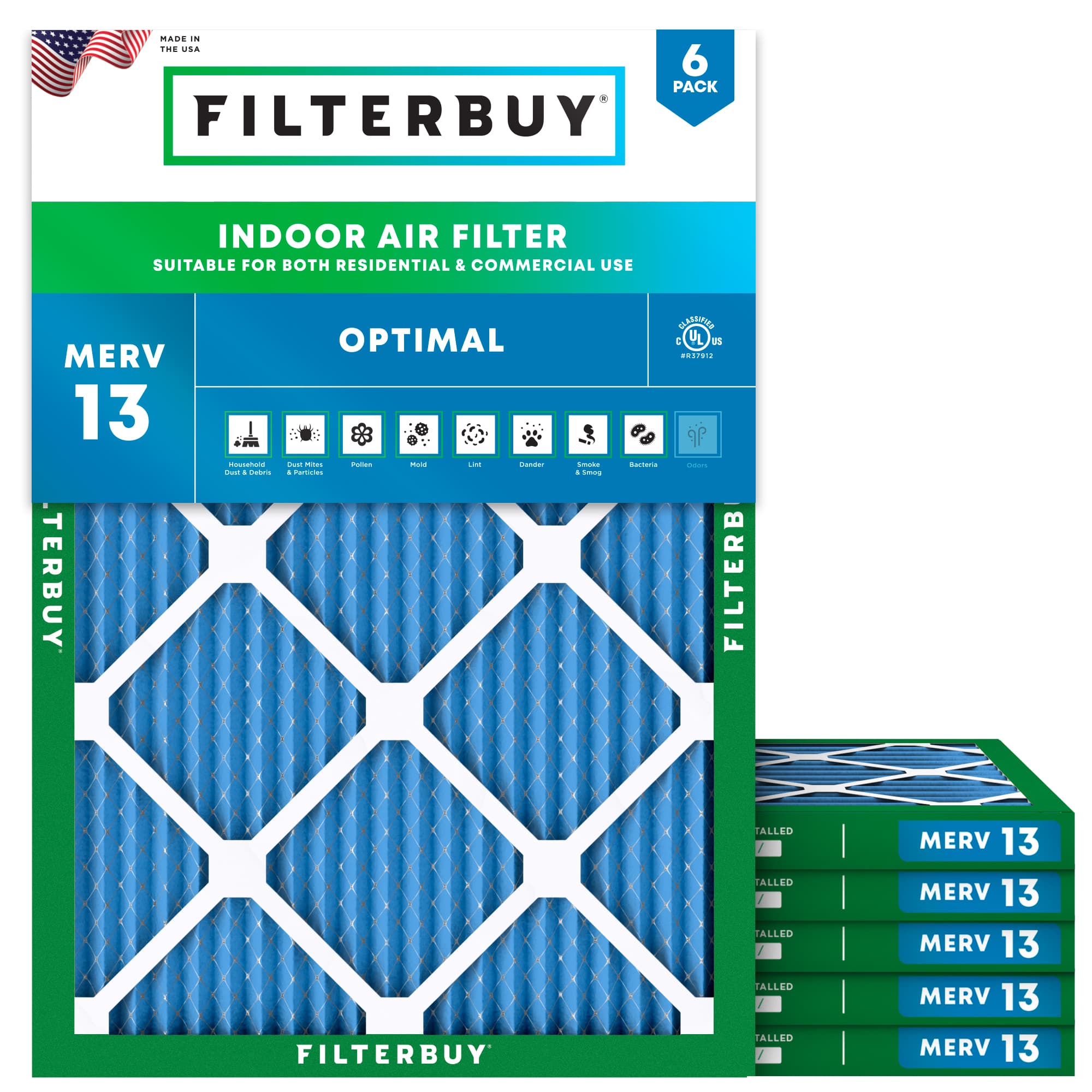
Actual Size: 21.5x23.5x0.75
 Free Delivery
  Factory-Direct Low Prices, Made in the USA
 Hassle-Free Returns & Free Exchanges
RESIDENTIAL AND/OR COMMERCIAL USE
Change Every 3 Months
Actual Size: 21.5x23.5x0.75
Free Delivery Factory-Direct Low Prices, Made in the USAHassle-Free Returns & Free ExchangesRESIDENTIAL AND/OR COMMERCIAL USE
Change Every 3 Months
Actual Size: 21.5x23.5x0.75
Free Delivery Factory-Direct Low Prices, Made in the USAHassle-Free Returns & Free ExchangesRESIDENTIAL AND/OR COMMERCIAL USE
Change Every 3 Months
At Filterbuy, we don't cut corners—we craft high-quality air filters right here in the USA and ship them to your doorstep for free. No delays, no gimmicks—just clean air, made easy. With thousands of five-star reviews and filters built for real life & every HVAC system, it's no wonder why over 4 million families trust Filterbuy.

Proudly Made In The USA

Fast, Free Shipping on Every Order

Premium Materials That Go The Distance

85,000+ 5-Star Reviews From Happy Customers

Save Up to 70% Per Filter with Packs


Measure length × width × depth with a tape measure to find the actual size.

Round up each dimension to the nearest whole number to get the nominal size. Example: 21.5x23.5x0.75 in → 22x24x1 nominal.

Search by nominal size on our site for the best fit.


If the filter you buy doesn't fit, we'll send you a better size.
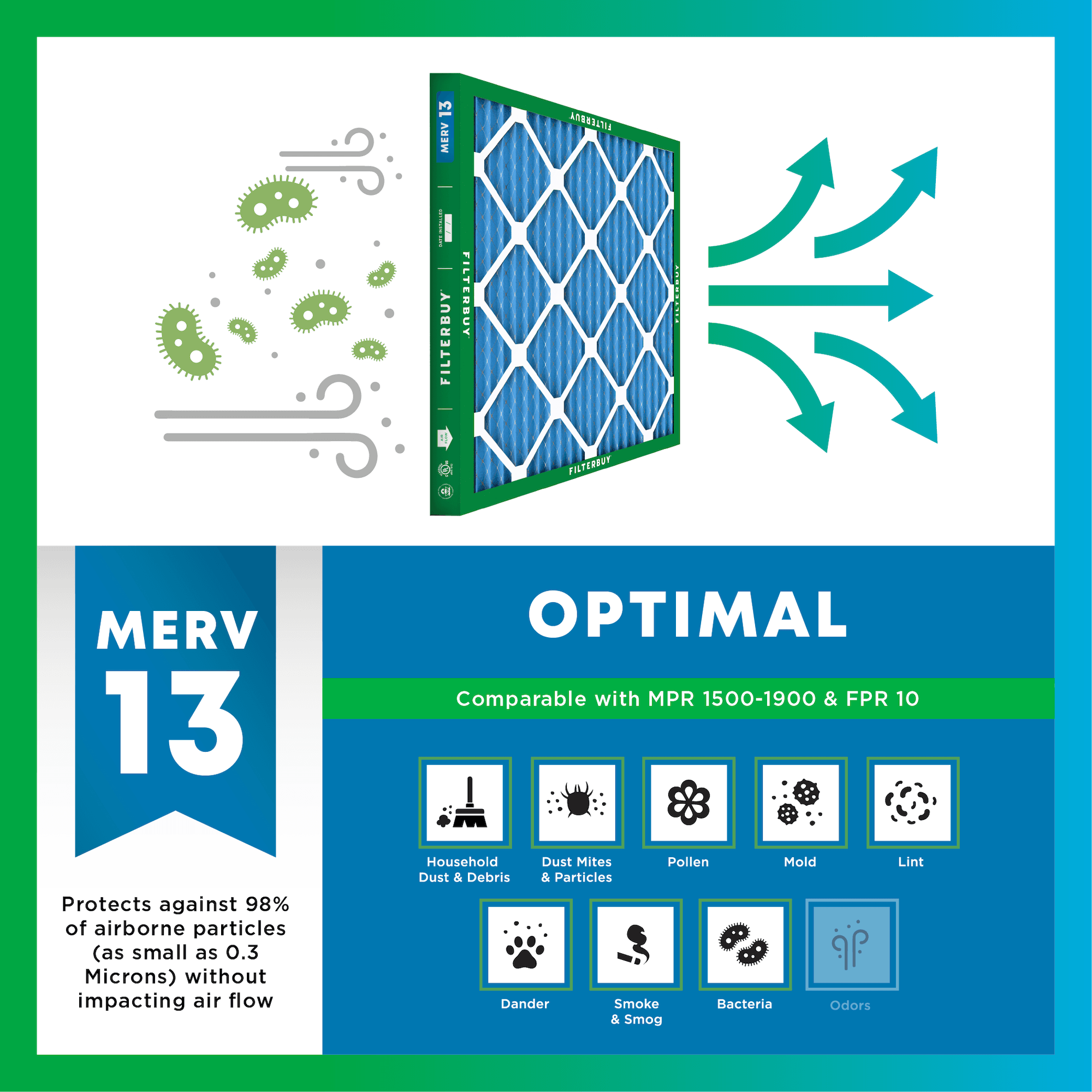
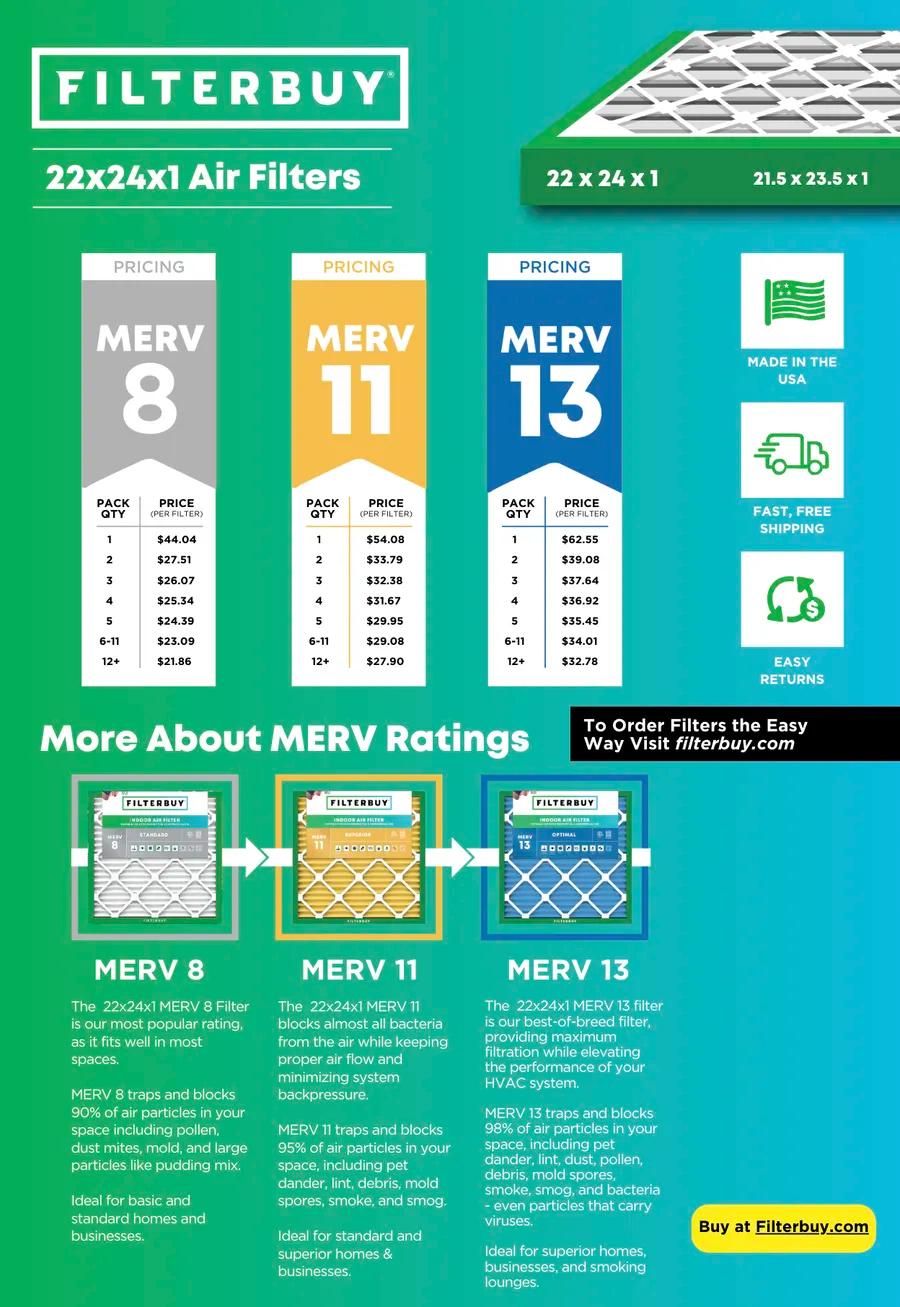
MERV stands for Minimum Efficiency Reporting Value—but don't let the technical name fool you. It's just a way to rate how well an air filter traps stuff like dust, pollen, pet dander, and smoke. The higher the MERV number, the more particles it catches—and the cleaner your air will be.

Comparable to:FPR: 4-7
MPR: 600-1000
 Dust & Debris
 Dust Mites & Particles
 Pollen
 Mold
Mold Lint
Lint Dander
Comparable to:FPR: 6-9
MPR: 1200-1550
Dust & DebrisDust Mites & ParticlesPollenMoldLintDander Smoke & Smog
Comparable to:FPR: 10
MPR: 1900-2800
Dust & DebrisDust Mites & ParticlesPollenMoldLintDanderSmoke & Smog Bacteria


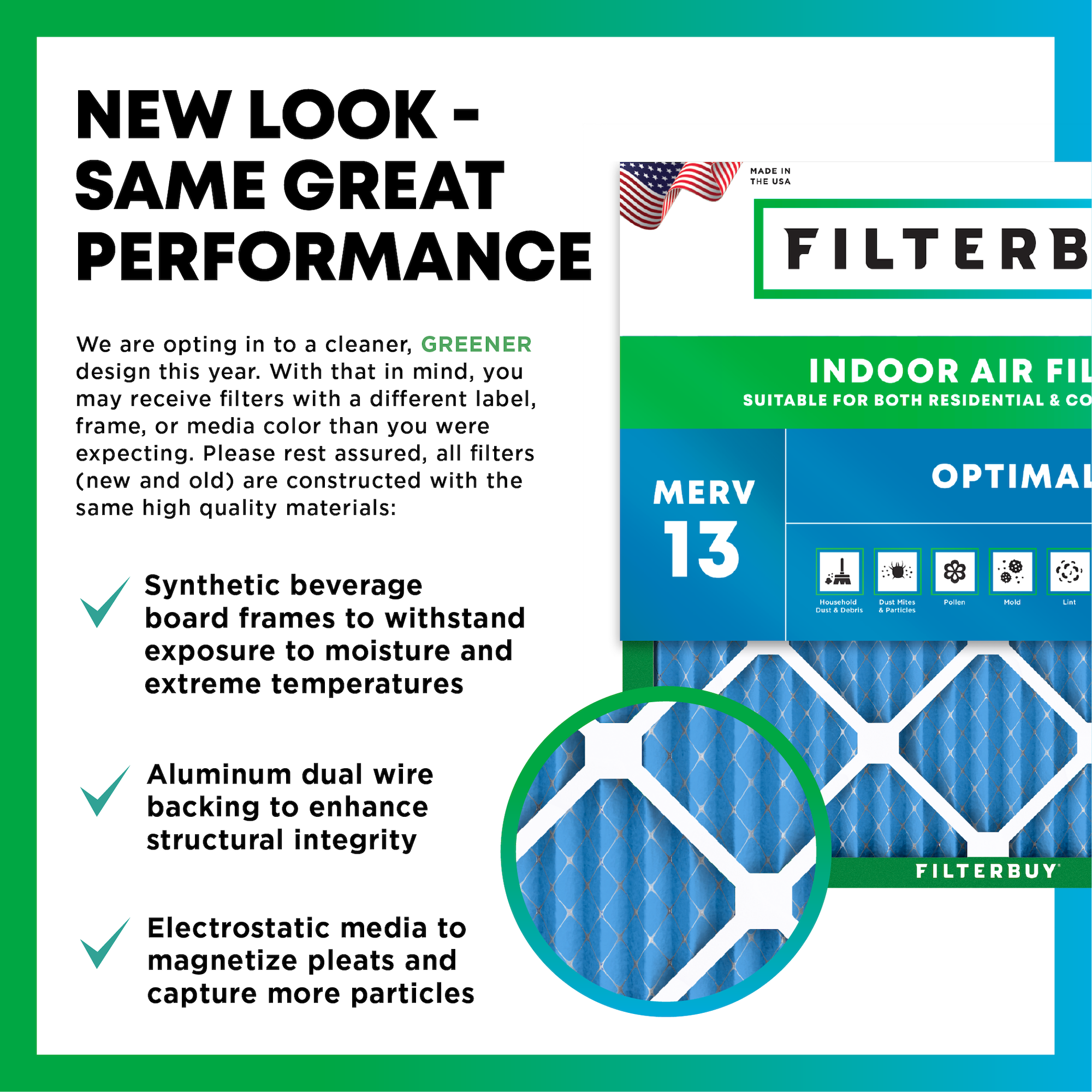
We build every Filterbuy filter to deliver reliable 90-day performance—thanks to smart design and premium materials that do the heavy lifting. Here's what makes the difference:
More pleats = more surface area to capture dust and debris, keeping your air cleaner longer.
Pleats are magnetized to attract and trap microscopic particles—like pet dander, pollen, and smoke.
Engineered to resist warping in extreme temperatures and high humidity.

A layer of metal reinforcement keeps pleats evenly spaced and structurally sound—no sagging, even at high airflow.
Assembled with care. Built to perform. Ships fast, free, and reliably from our U.S. facilities.

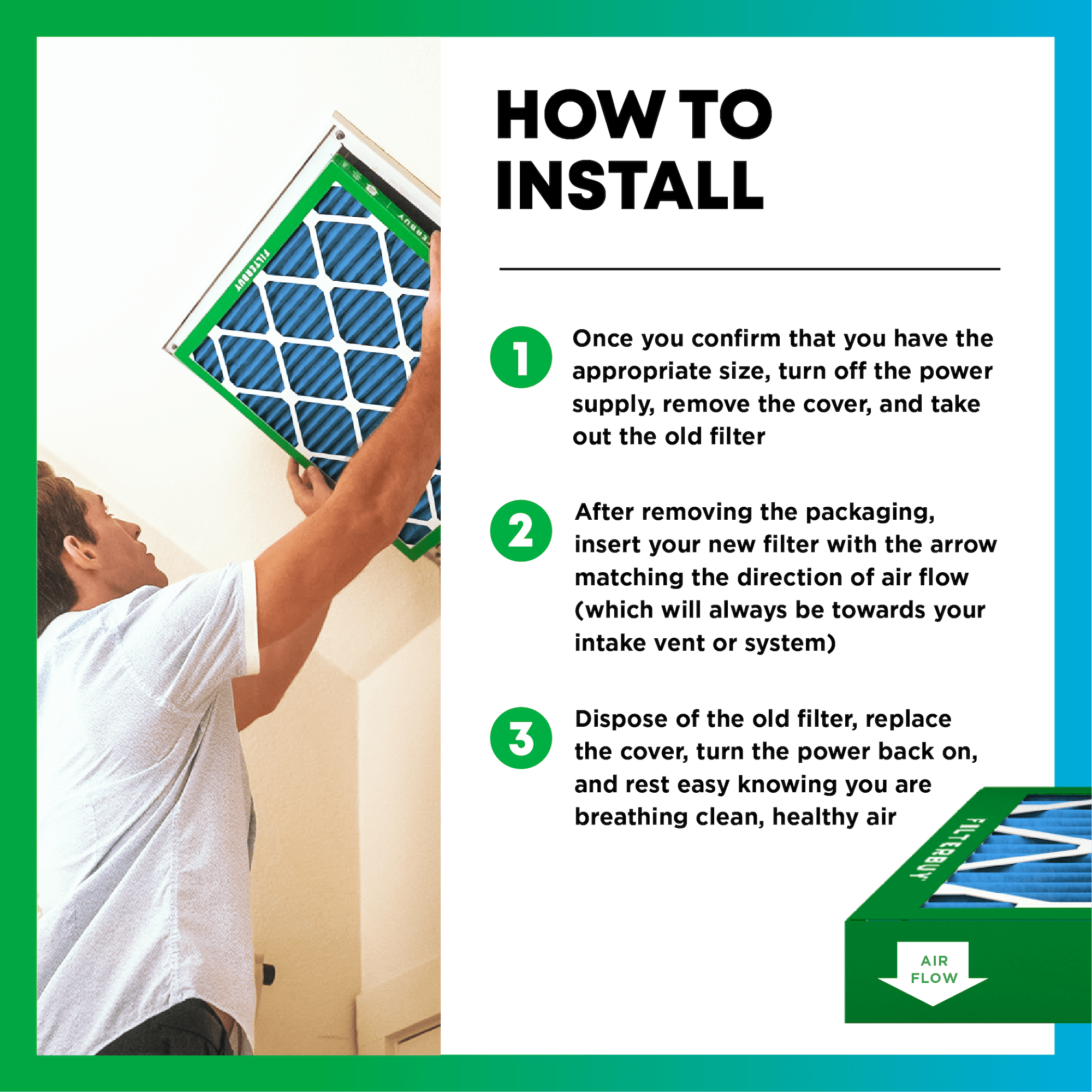
Turn Off Your HVAC SystemSafety first.

Remove The Old FilterLook for the airflow arrow and make note of the direction.

Slide In Your New FilterArrow should point toward the system (same direction as before).

Turn Your System Back OnAnd enjoy the fresh, clean air.

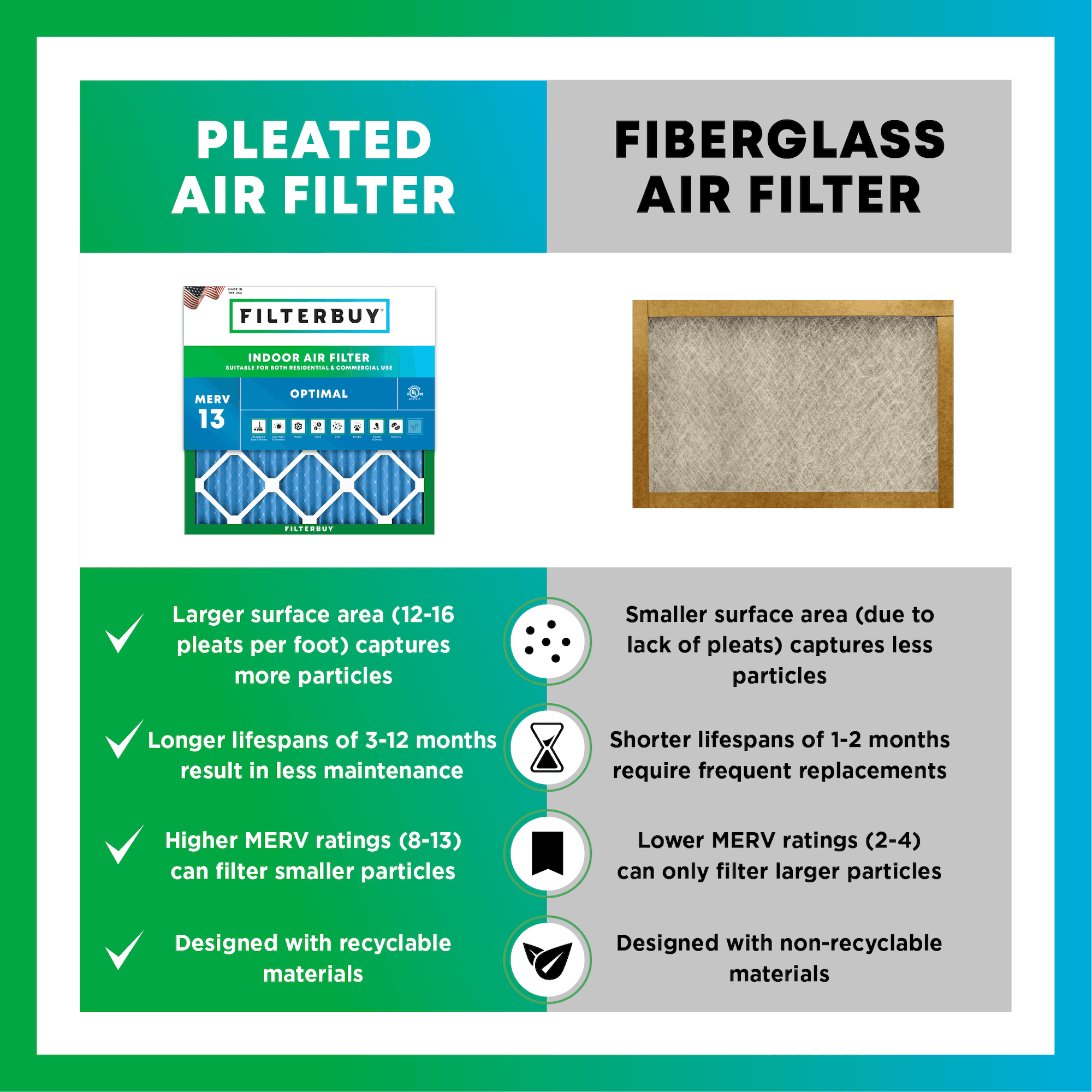
Not all air filters are created equal. Pleated filters don't just last longer—they actually clean your air better. Here's how they stack up:

Efficiency:
High (MERV 8–13) – Traps more particles
Lifespan:
90 days – Long-lasting performance
Air Quality:
Excellent – Cleaner, healthier air
Materials:
Recyclable and durable

Efficiency:
Low (MERV 4 or less) – Misses small stuff
Lifespan:
30 days or less – Replace often
Air Quality:
Minimal – Basic protection only
Materials:
Thin, flimsy, and not recyclable
Pleated filters are a no-brainer—more protection, less hassle, and better air for your home.
Changing your filter on time keeps your HVAC system running efficiently—and helps protect your lungs from dust, allergens, and airborne irritants. Here's how often to swap it out based on your needs:

For most homes without pets or special air quality concerns. Great for general upkeep and energy efficiency.

Shedding fur, dander, and allergy triggers can build up fast. Changing your filter every two months helps keep the air fresher and symptoms at bay.

For households affected by smoke, pollution, or respiratory conditions, monthly changes ensure maximum protection.

| Nominal Size | 22 x 24 x 1 inches |
| Actual Size | 21.5 x 23.5 x 0.75 inches |
| Filter Type | Pleated |
| Media | Electrostatically Charged |
| Frame | Beverage Board |
| MERV Ratings Available | 8, 11, 13 |
| Lifespan | Up to 90 Days |
| Origin | Made in USA |
Most homeowners replace their air filter and never think twice about the rating. After manufacturing millions of filters and working with customers across every home type imaginable, we've seen what that habit actually costs — and it shows up in allergy flare-ups, overworked HVAC systems, and air that feels clean but isn't. The particles doing the most damage are the ones you never see. The 22x24x1 MERV 13 was built for exactly that problem.
What years of filter manufacturing taught us is that MERV 13 isn't just a step up — it's a category shift. It targets the fine particulate matter that lower-rated filters pass right through. This guide tells you what's actually in your air, what MERV 13 captures that others miss, and why getting the fit and rating right on a 22x24x1 is the upgrade your home's air quality has been waiting for.
22x24x1 MERV 13 Air Filter
A 22x24x1 MERV 13 air filter is a high-efficiency residential air filter designed to capture particles as small as 0.3 microns — including pet dander, mold spores, smoke particles, bacteria, and virus-carrying particles that lower-rated filters allow to pass through.
Key facts:
Dimensions: 22x24x1 nominal - the size is usually smaller, 21.5 x 23.5 x 0.75 inches.
MERV 13 rating: collects 85 per cent of 1 -3 micron particles.
Suggested by: The CDC and ASHRAE as the recommended performance standard for residential air filtration.
Application: Pets, asthma or allergy, little children, seniors, etc.
Replacement period: 90 days on average per house, 60 days in case of pets or allergy victims.
Fit is important: There is an opening around the frame of the filter that bypasses the filter and defeats the MERV 13 rating completely.
HVAC compatibility: Compatible with the majority of modern home furnaces, air conditioning units, and heat pumps.
Once millions of filters have been produced, one fact has become clear in every house and every HVAC system: the correct rating in combination with the correct fit is what makes the difference between the actual air protection and the semblance of it.
Your indoor air is more polluted than you think. The EPA confirms indoor air can be 2 to 5 times more polluted than outdoor air. The particles doing the most damage are invisible. A MERV 13 stops them before they reach your lungs or your HVAC system. MERV 13 is the rating the CDC and ASHRAE recommend for a reason. It captures at least 85 percent of particles in the 1 to 3 micron range — the size most linked to deep lung penetration.
For homes with:
Pets
Allergy or asthma sufferers
Young children or elderly family members
MERV 13 isn't an upgrade. It's the standard your home requires. The right rating only works with the right fit. A MERV 13 with a gap is just an expensive MERV 8. A precise-fit 22x24x1 — installed with no bypass — is what separates real filtration from the appearance of it.
Replacement timing matters as much as rating selection. A clogged MERV 13 stops filtering and starts restricting.
Most households: replace every 90 days
Pets or allergy sufferers: replace every 60 days
Set a schedule — and stick to it. Cleaner air protects your HVAC system, too. Fine particulate matter accumulates on evaporator coils and inside ductwork. It reduces efficiency and shortens equipment lifespan. A properly fitted MERV 13 stops that debris before it ever reaches your system.
Your home feels clean. Your floors are swept, your counters wiped, but your air speaks otherwise. Whenever your HVAC system is turned on, it moves whatever has accumulated in your ductwork and filter: dust mite debris, pet dander, mold spores, pollen, bacteria, and tiny particulate matter that is fine enough to circumvent a healthy respiratory system. They are not seasonal issues. To truly clean your home, you must understand the purpose of an air filter in capturing these contaminants.
Not all filters are built to intercept the particles that matter most. A standard 22x24x1 MERV 8 filter — the most common found in homes — captures larger debris reasonably well but allows fine particles measuring 1 to 3 microns to pass right through. Bacteria, smoke particles, and fine dust fall squarely in that range. If your household includes allergy sufferers, pets, young children, or anyone with respiratory sensitivities, a MERV 8 filter isn't working hard enough for your situation.
MERV 13 is where filtration crosses into a higher tier of performance. Tested and rated to capture particles as small as 0.3 to 1 micron, a MERV 13 filter intercepts fine dust, pet dander, mold spores, smoke particles, bacteria, and certain virus-carrying particles that lower-rated filters never touch. Some users might compare this to a 22x24x1 MERV 11 option, but after manufacturing filters across every MERV rating, we've found MERV 13 represents the sweet spot for residential air quality — delivering hospital-adjacent filtration performance without the airflow restrictions of a MERV 16.
A high-performance filter only works when it fits correctly. An imprecise fit — even a small gap along the filter frame — creates a bypass where unfiltered air moves around the filter entirely, defeating the purpose of a higher MERV rating. The 22x24x1 dimension is a less common residential size, which means it pays to source it from a manufacturer who builds to exact tolerances rather than cutting standard sizes down. You may also see similar logic applied to an odd-sized 23.25x29.25x1 filter. Our filters are manufactured to precise dimensions, ensuring a sealed, gap-free fit that keeps every cubic foot of air moving through the filter media — not around it.
Cleaner air and a healthier HVAC system aren't separate benefits — they're connected. Fine particulate matter that bypasses a lower-rated filter doesn't disappear. It accumulates on your evaporator coil, inside your ductwork, and on moving system components. Over time, that buildup reduces efficiency, increases energy consumption, and shortens equipment lifespan. This is especially critical during a prolonged Florida heatwave when systems are taxed. A properly fitted 22x24x1 MERV 13 filter intercepts that debris before it ever reaches your system, reducing wear and helping your HVAC run cleaner and longer.
MERV 13 filters are more labor-intensive than less-rated ones, hence they also clog faster. A 90-day replacement schedule is a good benchmark in most households. Better results on a 60-day cycle may be observed in homes with pets, allergy sufferers, or more dust than average. A clogged filter which is in need of replacement, will cause limited airway, will cause increased labor of your HVAC, and ultimately will no longer trap particles. Being on time is as significant as the appropriateness of the rating in the first place.
"After manufacturing millions of filters across every MERV rating, the one thing we tell every customer is this: the rating on the box only delivers if the filter actually seals — because a MERV 13 with a gap is just an expensive MERV 8 with a shortcut for particles to take."
We're obsessed with making sure you have the right information to protect your home's air — not just the right filter. These seven resources cover everything from the science behind MERV ratings to real-world replacement guidance, so you can make a confident, informed decision for your family.
Everything you need to confirm fit, performance, and value — actual dimensions, multi-pack pricing, and full compatibility details for furnace, AC, and heat pump systems. This is where manufacturing expertise meets the filter your home has been waiting for. https://filterbuy.com/air-filters/22x24x1/merv-13/
After working with millions of customers across every home type, we built this guide to help you match the right MERV rating to your actual household — pets, allergies, system age, and local air quality included. If you're deciding between MERV 8, 11, or 13, start here first. https://filterbuy.com/resources/air-filter-basics/which-merv-rating-should-I-use/
The EPA's authoritative breakdown of how MERV ratings are tested and what particle sizes each tier is built to capture. When you want an unbiased, science-backed explanation of why MERV 13 outperforms lower ratings, this is the source to trust. https://www.epa.gov/indoor-air-quality-iaq/what-merv-rating
Every MERV rating on every filter box — including ours — is derived from this testing standard. Understanding how filters are evaluated under ASHRAE 52.2 gives you the context to know exactly what MERV 13 performance means in your home's real-world conditions. https://www.ashrae.org/technical-resources/bookstore/standard-52-2
A manufacturer-level resource that explains why matching your MERV rating to your specific system matters as much as the rating itself. Essential reading for homeowners upgrading from a lower-rated filter and wanting to protect both their air and their equipment. https://www.carrier.com/residential/en/us/products/indoor-air-quality/what-is-merv-rating/
Covers the ASHRAE origins of the MERV standard and cites real research showing that MERV 7–13 filters perform nearly as effectively as HEPA in residential HVAC systems. https://en.wikipedia.org/wiki/Minimum_efficiency_reporting_value
One thing we've seen consistently after years of manufacturing filters: the wrong fit defeats the right rating every time. This guide covers the critical difference between nominal and actual filter size, proper installation direction, and replacement schedules by household type. https://aspenaireinc.com/guide-to-merv-ratings/
After manufacturing millions of filters and hearing directly from the families relying on them, we've watched these statistics play out in real homes and real HVAC systems. Here's what the research confirms — and why it matters for your 22x24x1 MERV 13 decision.
According to the U.S. Environmental Protection Agency:
Americans spend approximately 90 percent of their time indoors
Indoor pollutant concentrations are often 2 to 5 times higher than outdoor levels
Indoor pollution has been climbing for decades due to tighter construction, synthetic materials, and household products
We hear this confirmed regularly by customers who switched to a MERV 13 and immediately noticed a difference in how their home felt and how their family breathed. That invisible buildup is exactly what a properly fitted 22x24x1 MERV 13 intercepts — before it reaches your lungs or your HVAC system. To further improve your environment, you might consider if activated carbon removes VOCs from your indoor air.
Source: U.S. Environmental Protection Agency — Indoor Air Quality https://www.epa.gov/report-environment/indoor-air-quality
Key performance data from the CDC and ASHRAE:
MERV 13 is the recommended performance target for recirculated indoor air
A MERV 13 filter captures at least 85 percent of particles in the 1 to 3 micron range
Particles in this range are most associated with deep lung penetration and can remain airborne for hours
After manufacturing filters across every MERV tier, we've found MERV 13 consistently sits at the intersection of high-efficiency performance and real-world residential compatibility. It's not a coincidence that the nation's leading public health and engineering organizations landed on the same rating we recommend.
Source: Centers for Disease Control and Prevention — Ventilation in Buildings https://www.cdc.gov/coronavirus/2019-ncov/community/ventilation.html
Over 28 Million Americans Have Asthma — and the Triggers Are Already in Your Air According to the Asthma and Allergy Foundation of America:
Over 28 million Americans currently live with asthma
Asthma and allergies combined affect more than 60 million people nationwide
Allergic disease ranks as the fifth leading chronic condition in the U.S.
The most common triggers — pet dander, mold spores, and dust — are exactly what MERV 13 is built to capture
Customers tell us this hits closest to home when someone in the household starts noticing fewer flare-ups after a filter upgrade. For the tens of millions of families managing asthma or allergy symptoms, a MERV 13 isn't a premium upgrade. It's the baseline protection those households have needed all along.
Source: Asthma and Allergy Foundation of America — Asthma Facts https://aafa.org/asthma/asthma-facts/
Most homeowners don't think about their air filter until something goes wrong. After manufacturing millions of filters and working with customers across every type of home, we've traced that pattern back to the same root cause almost every time — a filter that wasn't built for the job it was being asked to do.
Here's our honest take after years of being obsessed with this problem: The gap between a basic filter and a MERV 13 isn't just a performance difference. It's a protection difference.
A lower-rated filter handles what you can see
A MERV 13 handles what you can't
Fine particulate matter bypasses cheaper filters, accumulates in ductwork, settles on evaporator coils, and keeps cycling through the air your family breathes every day
The particles doing the most damage are invisible — and they've been getting a free pass through most homes for years
What we believe, based on everything we've learned from manufacturing and from customers who've made the switch: The 22x24x1 MERV 13 isn't a premium product for special circumstances. It's the standard every home deserves. The CDC recommends it, ASHRAE targets it, and over 60 million Americans dealing with asthma and allergies need it. Families who've upgraded tell us the difference is something they feel — not just something they read on a spec sheet.
The results speak for themselves:
Fewer sick days
Quieter HVAC cycles
Less dust on surfaces you just cleaned
Family members who sleep better and breathe easier
That's not a marketing promise. That's what a properly fitted, precision-manufactured MERV 13 filter actually delivers — and it's exactly why we built one for every home that needs it, including yours.
You know what's in your air. You know why MERV 13 stops it. Here's exactly what to do next.
Step 1: Confirm Your Filter Size
Find the size printed on your existing filter frame
Look for the nominal size (rounded number) — it should read 22x24x1
If the frame is unreadable, measure the slot: width x length x depth, rounded up to the nearest inch
Step 2: Confirm MERV 13 Is Right for Your Household
Pets in the home → MERV 13
Allergy or asthma sufferers → MERV 13
Young children or elderly family members → MERV 13
Smoke, bacteria, or fine dust concerns → MERV 13
Single-occupant home, basic dust only → MERV 8 may suffice
Step 3: Choose Your Pack Size at Filterbuy
1-pack — first-time buyers confirming fit and performance
2 or 4-pack — ideal for a standard 90-day replacement schedule
6-pack — maximum savings, full year of coverage
Step 4: Set a Replacement Schedule
Most households: every 90 days
Pets or allergy sufferers: every 60 days
High-dust or heavy-use homes: inspect monthly
Set a phone reminder or set up a filter subscription so you never miss a change
Step 5: Install It Correctly
Power down your HVAC system
Remove the old filter
Locate the airflow arrow on the new filter frame
Install with the arrow pointing toward the furnace or air handler
Check all four edges for gaps — any bypass defeats the MERV 13 rating
Power your system back on and note the installation date
Step 6: Monitor Results After Your First Cycle
Less dust on surfaces?
Fewer allergy or asthma flare-ups?
HVAC running quieter and cycling less often?
If yes across the board — you've found your filter. For those in South Florida, you may also need to consider annual preventative AC maintenance to keep your system peak. If your home has unique air quality challenges, contact a Filterbuy air quality specialist to dial in the right rating and replacement schedule for your specific situation.
Q: What does a 22x24x1 MERV 13 air filter capture that lower-rated filters miss?
A: A MERV 13 captures particles as small as 0.3 to 1 micron. Lower-rated filters can't reach this performance tier. Particles a MERV 13 intercepts that a MERV 8 misses include fine dust, lint, pet dander, mold spores, smoke, bacteria, and virus-carrying particles. You can find more detail in the MERV 11 vs 12 comparison. These are the particles most linked to respiratory irritation, allergy flare-ups, and long-term HVAC buildup.
Q: Will a MERV 13 filter restrict airflow in my HVAC system?
A: In most modern residential HVAC systems, a MERV 13 operates without meaningful airflow restriction. Compatibility factors include system age, motor capacity, and the manufacturer's maximum rating. For those in colder climates, review our furnace tips for extreme cold to ensure airflow is sufficient. A properly fitted MERV 13 delivers high-efficiency filtration without the airflow penalties of MERV 16 or HEPA-level filters.
Q: What is the actual size of a 22x24x1 air filter and why does it matter?
A: The 22x24x1 is a nominal size used for identification. The actual size is typically 21.5 x 23.5 x 0.75 inches. Poor fit is the most common reason a high-rated filter underperforms. If you need a specialized size, like a 23.25x29.25x1 MERV 11 or a 23.25x29.25x1 MERV 13, precision manufacturing is key to preventing gaps.
Q: How often should I replace a 22x24x1 MERV 13 air filter?
A: Most households should replace every 90 days, while those with pets or allergies should aim for 60 days. Regular changes prevent your HVAC from working harder. Residents in Palm Beach County can contact us for HVAC system repair in Loxahatchee Groves if a clogged filter has caused damage.
Q: Is a 22x24x1 MERV 13 the right filter for a home with pets and allergy sufferers?
A: Yes. This is one of the most common household profiles that benefits most from a MERV 13 upgrade. A MERV 13 intercepts the full range of particles responsible for allergic reactions. If you suspect air quality issues have led to growth in your system, learn how to remove mold from your air ducts. We also offer HVAC system installation in Royal Palm Beach for homeowners looking for a fresh start with high-efficiency filtration.
You've seen what's in your air and you know what it takes to stop it — a precise-fit 22x24x1 MERV 13 built to capture what lower-rated filters let slip through. For ongoing protection in tropical climates, follow our guide for South Florida HVAC maintenance to keep your home healthy year-round.

