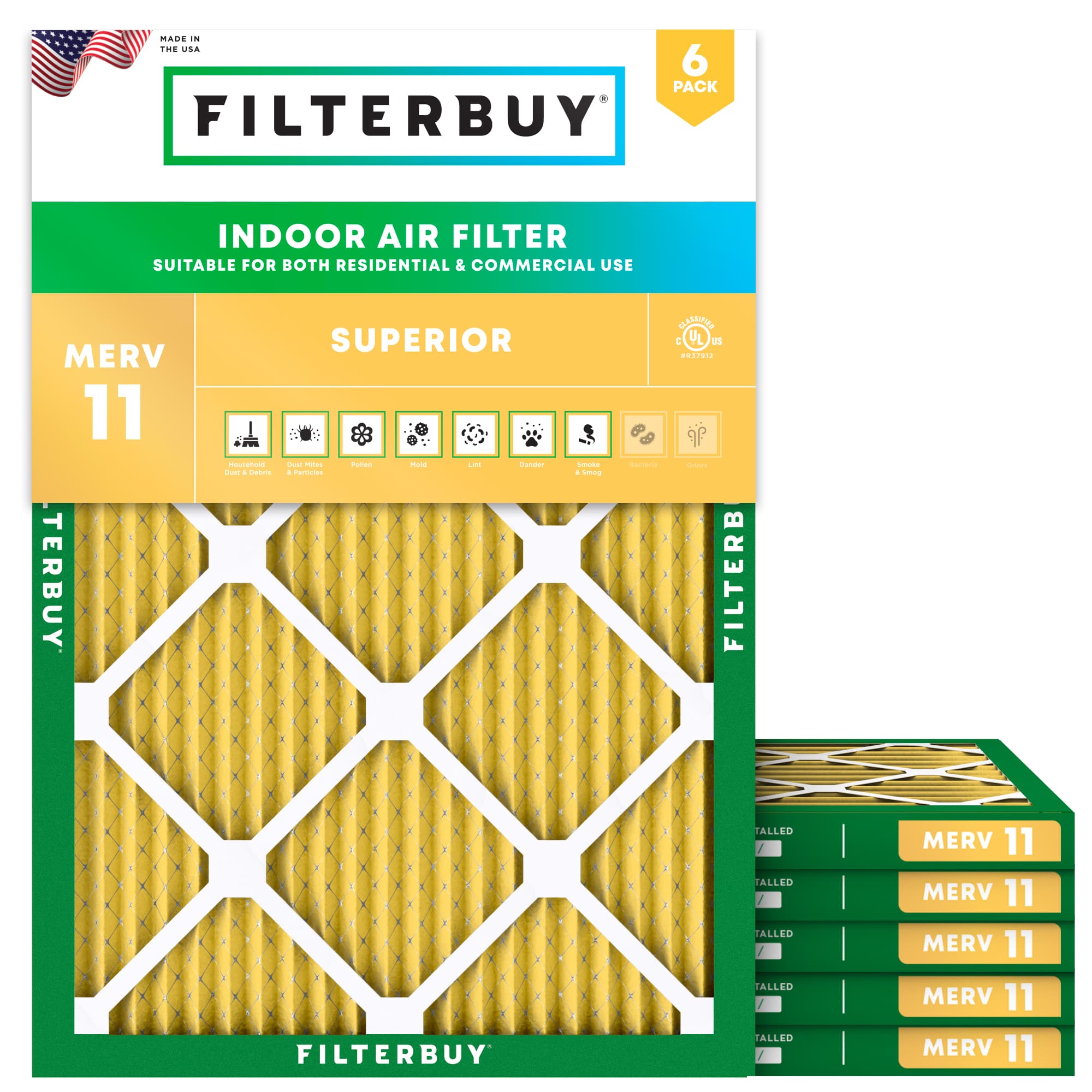
Actual Size: 23.25x29.25x0.75"
 Free Delivery
  Factory-Direct Low Prices, Made in the USA
 Hassle-Free Returns & Free Exchanges
RESIDENTIAL AND/OR COMMERCIAL USE
Change Every 3 Months
Actual Size: 23.25x29.25x0.75"
Free Delivery Factory-Direct Low Prices, Made in the USAHassle-Free Returns & Free ExchangesRESIDENTIAL AND/OR COMMERCIAL USE
Change Every 3 Months
Actual Size: 23.25x29.25x0.75"
Free Delivery Factory-Direct Low Prices, Made in the USAHassle-Free Returns & Free ExchangesRESIDENTIAL AND/OR COMMERCIAL USE
Change Every 3 Months
At Filterbuy, we don't cut corners—we craft high-quality air filters right here in the USA and ship them to your doorstep for free. No delays, no gimmicks—just clean air, made easy. With thousands of five-star reviews and filters built for real life & every HVAC system, it's no wonder why over 4 million families trust Filterbuy.

Proudly Made In The USA

Fast, Free Shipping on Every Order

Premium Materials That Go The Distance

85,000+ 5-Star Reviews From Happy Customers

Save Up to 70% Per Filter with Packs


Measure length × width × depth with a tape measure to find the actual size.

Round up each dimension to the nearest whole number to get the nominal size. Example: 23.25x29.25x0.75" in → 23.25x29.25x1 nominal.

Search by nominal size on our site for the best fit.


If the filter you buy doesn't fit, we'll send you a better size.
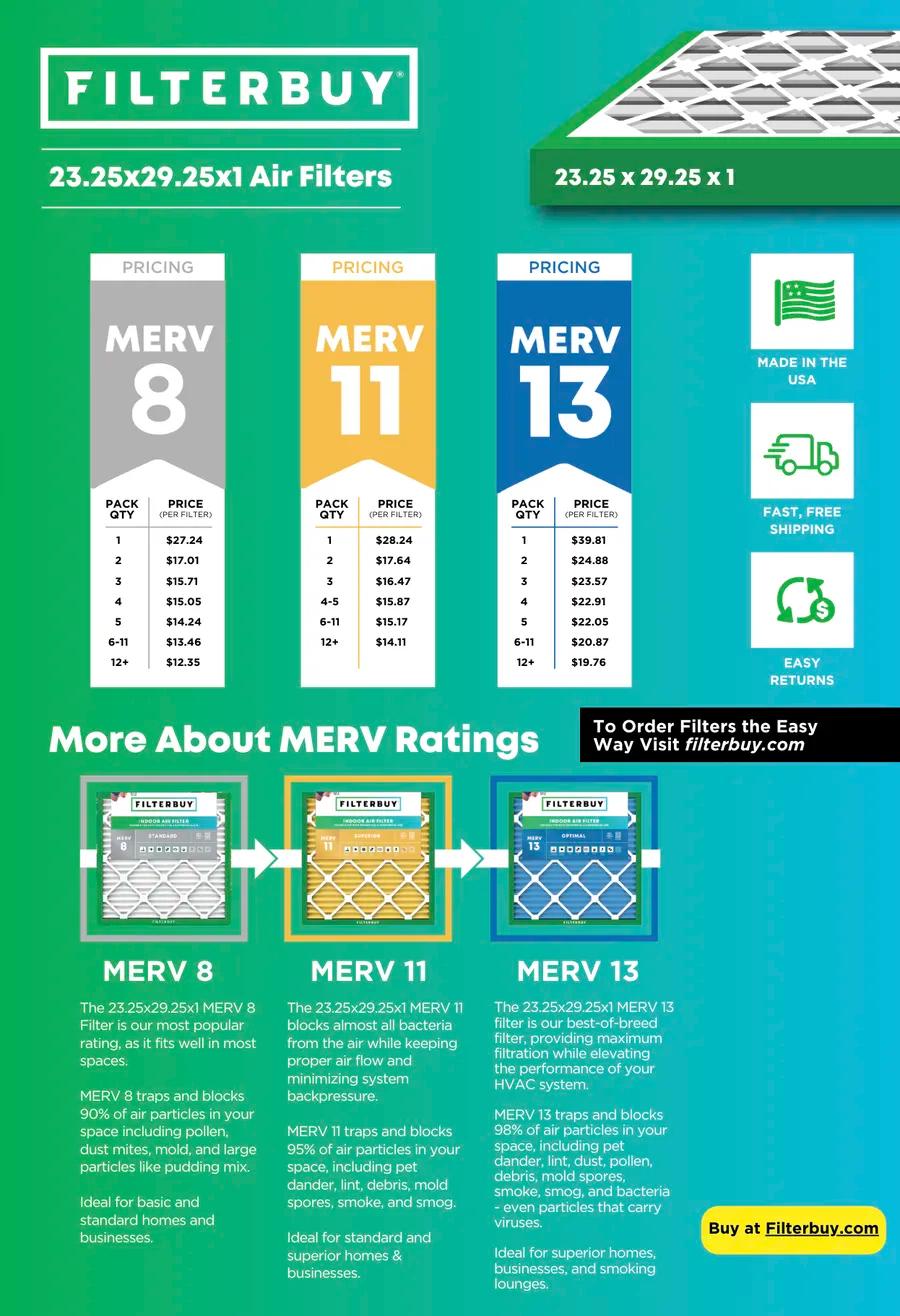
MERV stands for Minimum Efficiency Reporting Value—but don't let the technical name fool you. It's just a way to rate how well an air filter traps stuff like dust, pollen, pet dander, and smoke. The higher the MERV number, the more particles it catches—and the cleaner your air will be.

Comparable to:FPR: 4-7
MPR: 600-1000
 Dust & Debris
 Dust Mites & Particles
 Pollen
 Mold
Mold Lint
Lint Dander
Comparable to:FPR: 6-9
MPR: 1200-1550
Dust & DebrisDust Mites & ParticlesPollenMoldLintDander Smoke & Smog
Comparable to:FPR: 10
MPR: 1900-2800
Dust & DebrisDust Mites & ParticlesPollenMoldLintDanderSmoke & Smog Bacteria


We build every Filterbuy filter to deliver reliable 90-day performance—thanks to smart design and premium materials that do the heavy lifting. Here's what makes the difference:
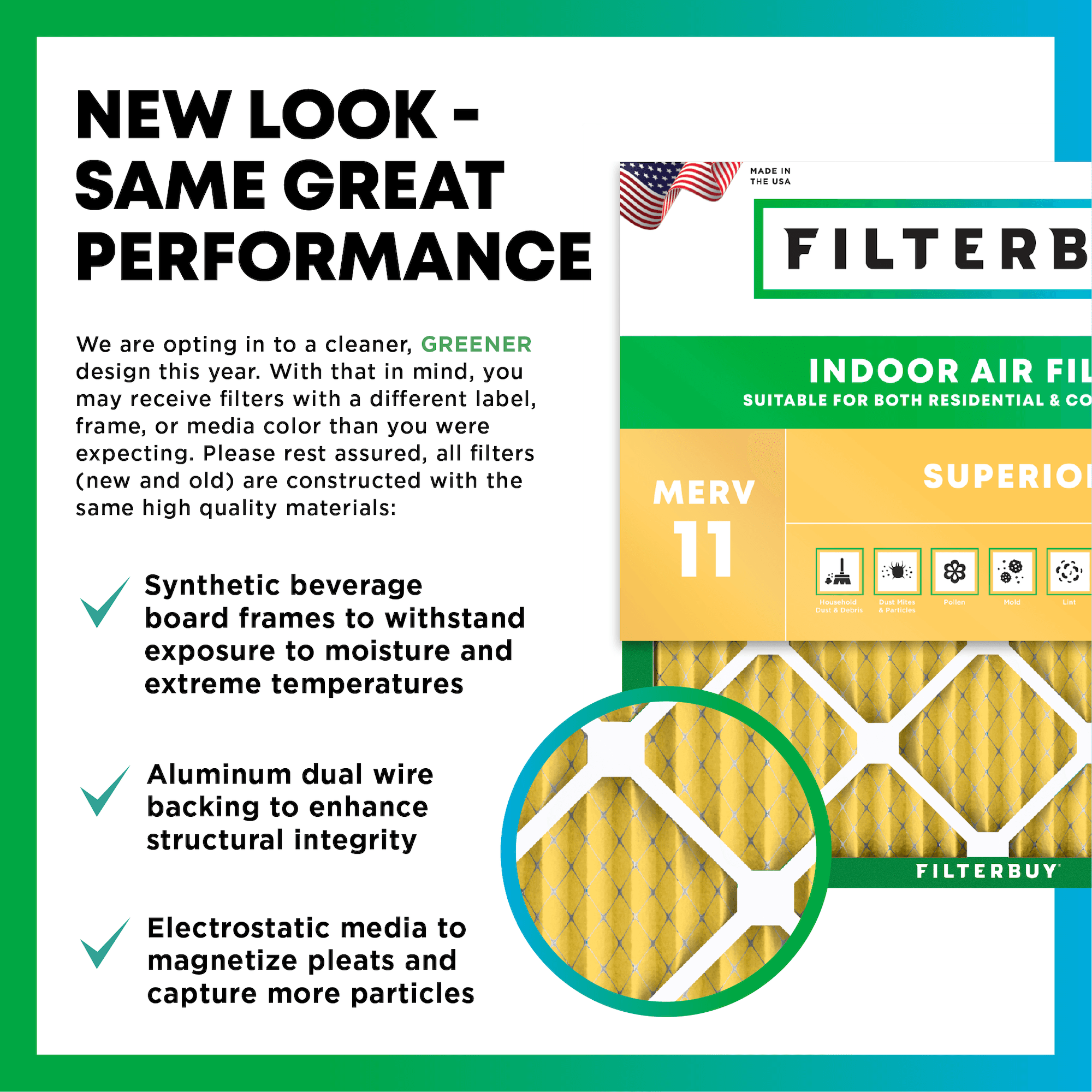
More pleats = more surface area to capture dust and debris, keeping your air cleaner longer.
Pleats are magnetized to attract and trap microscopic particles—like pet dander, pollen, and smoke.
Engineered to resist warping in extreme temperatures and high humidity.

A layer of metal reinforcement keeps pleats evenly spaced and structurally sound—no sagging, even at high airflow.
Assembled with care. Built to perform. Ships fast, free, and reliably from our U.S. facilities.

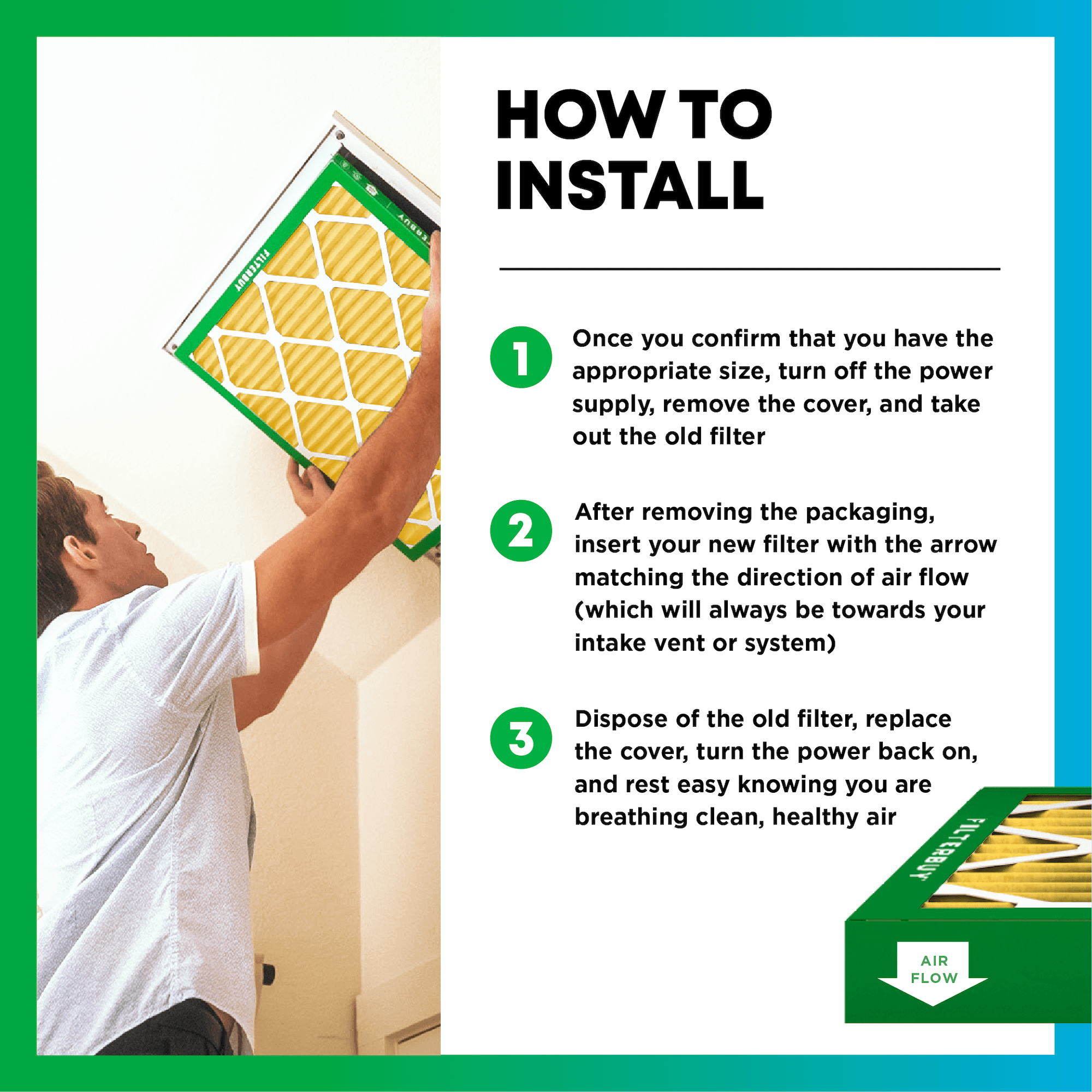
Turn Off Your HVAC SystemSafety first.

Remove The Old FilterLook for the airflow arrow and make note of the direction.

Slide In Your New FilterArrow should point toward the system (same direction as before).

Turn Your System Back OnAnd enjoy the fresh, clean air.

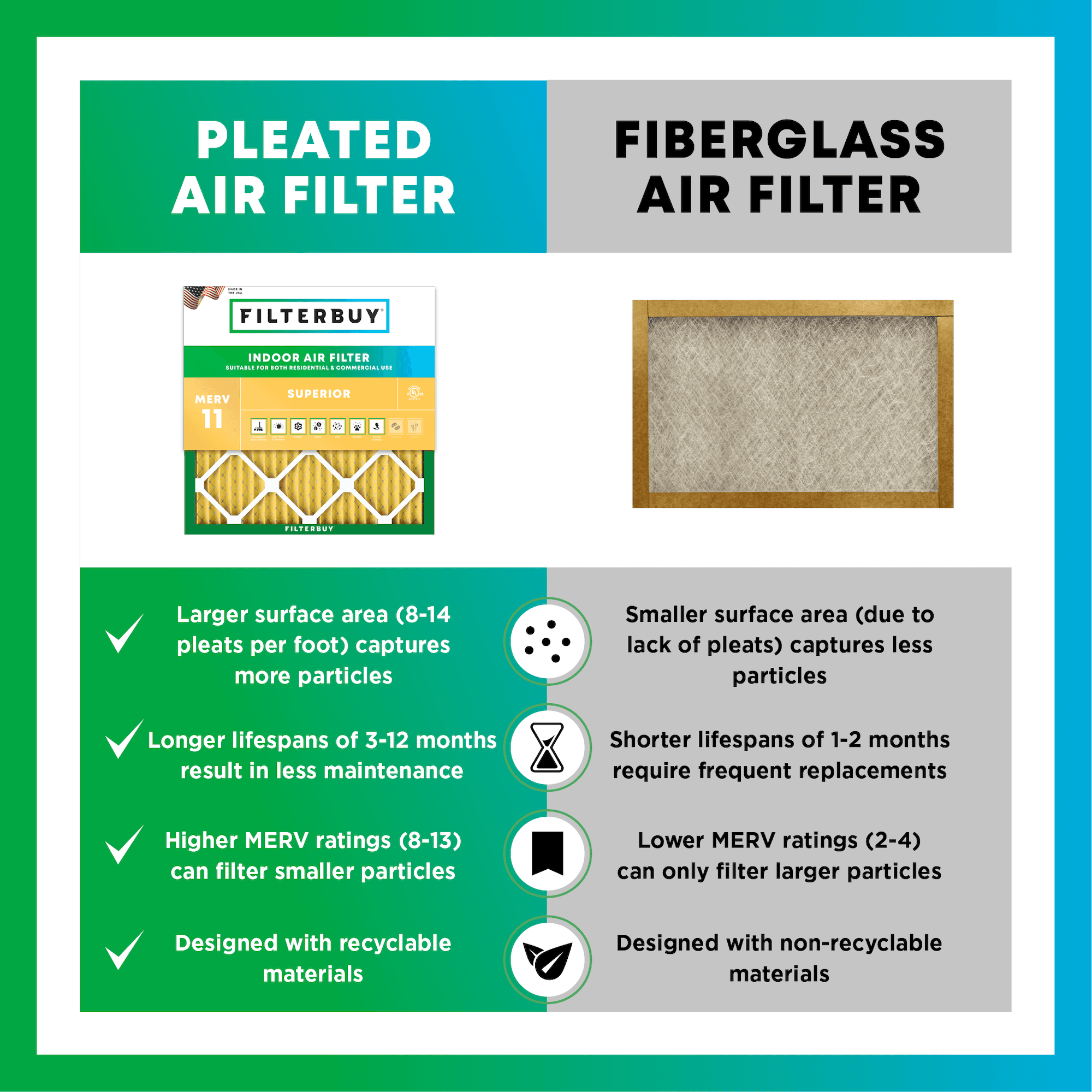
Not all air filters are created equal. Pleated filters don't just last longer—they actually clean your air better. Here's how they stack up:

Efficiency:
High (MERV 8–13) – Traps more particles
Lifespan:
90 days – Long-lasting performance
Air Quality:
Excellent – Cleaner, healthier air
Materials:
Recyclable and durable

Efficiency:
Low (MERV 4 or less) – Misses small stuff
Lifespan:
30 days or less – Replace often
Air Quality:
Minimal – Basic protection only
Materials:
Thin, flimsy, and not recyclable
Pleated filters are a no-brainer—more protection, less hassle, and better air for your home.
Changing your filter on time keeps your HVAC system running efficiently—and helps protect your lungs from dust, allergens, and airborne irritants. Here's how often to swap it out based on your needs:

For most homes without pets or special air quality concerns. Great for general upkeep and energy efficiency.

Shedding fur, dander, and allergy triggers can build up fast. Changing your filter every two months helps keep the air fresher and symptoms at bay.

For households affected by smoke, pollution, or respiratory conditions, monthly changes ensure maximum protection.

| Nominal Size | 23.25 x 29.25 x 1 inches |
| Actual Size | 23.25 x 29.25 x 0.75" inches |
| Filter Type | Pleated |
| Media | Electrostatically Charged |
| Frame | Beverage Board |
| MERV Ratings Available | 8, 11, 13 |
| Lifespan | Up to 90 Days |
| Origin | Made in USA |
If your home has pets, allergy sufferers, or anyone who simply deserves cleaner air — a basic filter isn't enough. After manufacturing millions of air filters and hearing directly from customers across the country, we've learned one thing consistently: most homes are underfiltered, and most homeowners don't find out until the sneezing starts, the dust builds up, or the HVAC bill climbs. The 23.25x29.25x1 MERV 11 air filter is the answer we recommend most for households caught in that gap — homes that need more than a MERV 8 can deliver but don't require the airflow restrictions that come with higher-rated options. At MERV 11, you get filtration that captures pet dander, pollen, mold spores, and fine dust particles without putting unnecessary strain on your system.
The precision-cut 23.25x29.25x1 dimensions matter more than most people realize. Customers tell us that switching from an ill-fitting filter to one sized exactly for their system is often the difference between air that feels clean and air that actually is. A proper fit eliminates bypass gaps — the hidden weak points where unfiltered air flows around a loose filter and straight into your home. This page breaks down exactly what the 23.25x29.25x1 MERV 11 filter captures, who it's built for, and why it consistently outperforms the filters most households are still using today.
The 23.25x29.25x1 MERV 11 air filter is a precision-cut residential air filter designed to capture the airborne particles most responsible for allergy symptoms, pet dander buildup, and declining indoor air quality — while remaining fully compatible with standard residential HVAC systems.
Key facts:
Size: 23.25x29.25x1 (actual dimensions — not nominal)
MERV rating: 11
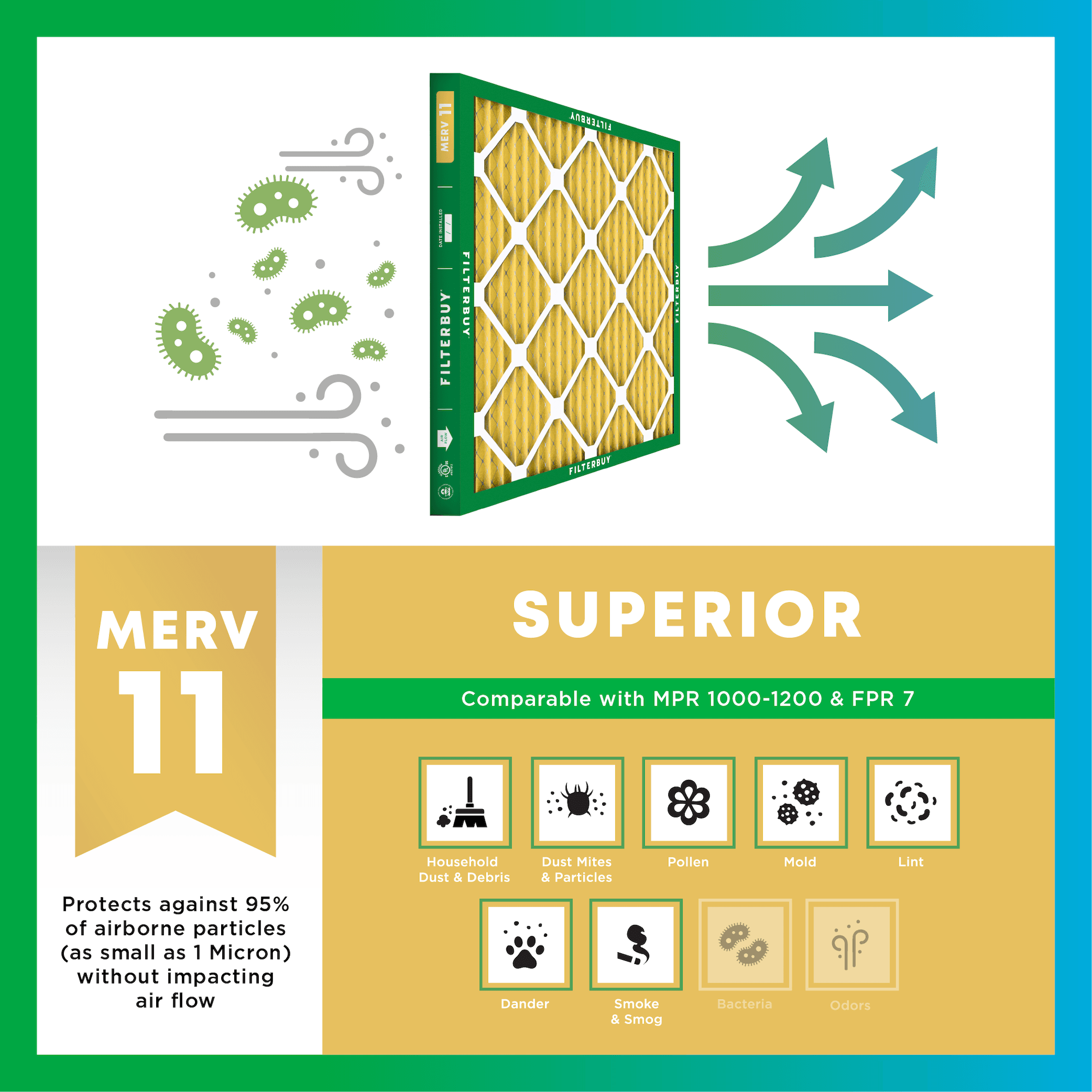
Captures: pet dander, pollen, mold spores, dust mite debris, and fine dust particles as small as 1 micron
Compatible with: standard residential HVAC systems, furnaces, and air handlers
Replacement schedule: every 60 days for homes with pets or allergy sufferers — every 90 days for standard households
Best for: homes with pets, allergy or asthma sufferers, or any household prioritizing cleaner indoor air
Why MERV 11:
Meaningful filtration upgrade over standard MERV 8
No airflow restrictions associated with MERV 13 and above
The rating we recommend most after manufacturing millions of filters and working with customers across every type of household situation
Bottom line: The 23.25x29.25x1 MERV 11 air filter delivers the right balance of filtration performance and HVAC compatibility for most homes — precisely sized for a flush, gap-free fit that ensures every cubic foot of air your system moves passes through the filter media.
MERV 11 is the performance sweet spot for most homes.
Captures pet dander, pollen, mold spores, and dust mite debris
No airflow restrictions associated with higher-rated filters
For homes with pets or allergy sufferers, MERV 11 isn't an upgrade — it's the appropriate baseline
Fit is just as critical as filtration rating.
A poor fit creates bypass gaps that let unfiltered air circulate freely
Precision-cut 23.25x29.25x1 dimensions eliminate those gaps
Proper sizing provides the entire performance the MERV 11 rating claims.
There is a high likelihood that you will be more surprised by the pollution of your indoor air.
EPA studies prove the fact that indoor air may be 2-5 times more polluted than the one outside.
The major barrier between your family and those contaminants is your HVAC filter.
Your indoor air is likely more polluted than you think.
EPA research confirms indoor air can be 2 to 5 times more contaminated than outdoor air
Your HVAC air filter is the primary defense between your family and those contaminants
A basic or clogged filter is not an adequate defense
Filter neglect costs more than a replacement filter does.
A clogged filter drives up energy consumption
Accelerates HVAC wear and increases repair risk
Replace every 60 to 90 days to protect your system, your energy bill, and your air quality
Better air is a habit, not a one-time fix.
Right filter + correct size + consistent replacement = compounding results
Set a reminder, stay stocked, and let the filter do the work
MERV is an acronym used to describe Minimum Efficiency Reporting Value, a genre of standard rating that was invented by the American Society of Heating, Refrigerating, and Air-Conditioning Engineers (ASHRAE) as a method to rate the effectiveness of an air filter in collecting airborne particles. The scale ranges between 1- 16 in residential and commercial applications, with high values representing tighter filtration. It is a significant improvement over the MERV 8 filters that are available in most homes, without crossing over into the higher resistance region of MERV 13 and above, which could overload residential HVAC systems not set up to do that kind of filtration.
The MERV 11 filtration performance covers the categories of particles that most commonly contribute to the symptoms of allergy, respiratory irritation, and the degrading indoor air quality of ordinary homes:
Pet Dander: Pet dander is one of the most stubborn indoor air quality problems, which is made up of tiny skin flakes that are discharged by cats, dogs, and other pets. These particles are trapped at MERV 11, and they do not recycle to your living room.
Pollen: Houses are infiltrated with pollen in the seasons through open windows, open doors, and even on clothing. MERV 11 filtration is effective against pollen particles, and it is a good choice as a seasonal measure against allergy-sensitive households.
Dust Mite Debris: A group of Dust mites is not an airborne particle; however, the tiny particles left behind by them are airborne particles, and one of the most common triggers of asthma and allergy symptoms. This debris is filtered by your circulating air by MERV 11.
Fine Dust and Lint: MERV 11 is effective at capturing the general household dust, textile fibers, and other construction-related particles, which lowers the surface accumulation that is an indicator of ineffective filtration.
Filter ratings only tell part of the story. A MERV 11 filter that doesn't fit your system correctly can't deliver MERV 11 performance — and this is where a lot of households quietly lose the benefit they're paying for. The 23.25x29.25x1 dimensions are a precision cut designed to seat flush against your filter housing with no gaps along the edges. When a filter fits correctly, every cubic foot of air your system moves passes through the filter media.
When it doesn't, air bypasses the filter entirely through the path of least resistance — the gaps — carrying with it the exact particles the filter was supposed to catch. After working with customers across a wide range of home configurations, we've found that filter bypass is one of the most underdiagnosed reasons homes with upgraded filters still struggle with dust, allergens, and air quality complaints. Getting the size exactly right isn't a minor detail — it's the foundation that makes everything else work.
By having a clue of where MERV 11 would fall in terms of other common ratings, you are likely to make the right decision and choose the right one, which would suit your particular situation. Most homes have standard MERV 8 filters as a standard filter. They can deal fairly well with the large particles, such as dust, pollen, and lint, but are ineffective with the fine contaminants, such as pet dander, mold spores, and other small particles in the air. For households without pets or allergy concerns, MERV 8 may be adequate — but for most modern homes, it leaves meaningful filtration gaps.
MERV 11 filters seal those seals without exceeding. They scoop up the entire gamut of the everyday household pollutants and are compatible with the airflow of the enormous majority of residential HVAC systems. The rating we most consistently suggest to residential users is MERV 11, with our experience of manufacturing air conditioners, as we believe that this is the most suitable rating in homes with pets in the house, individuals with allergies, or people who do not need to modify their system.
MERV 13 filters provide filtration that is adjacent to the hospital, catching bacteria, smoke, and droplets with virus-carrying inside them, but the higher density media increases airflow resistance. A vast number of residential systems are not designed for that resistance, which can decrease the efficiency, overload the blower motor, and cause the system not to last as long as it could have otherwise had the filter changed often enough. MERV 11 is a reasonable compromise between significant filtration area gain and the compatibility of HVAC in the long run in most households.
The frequency of replacement of the filter will depend on the exact conditions within your home; however, general rules relying on the experience of the filter apply as a good starting point. In the majority of the households, a 23.25x29.25x1 MERV 11 will serve well with changing after every 60-90 days. Homes that have pets, more than one occupant, or sufferers with active allergies normally have better replacement around the 60-day mark. Homes that are used lightly or contain fewer airborne contaminating sources may experience consistent results across the entire 90-day window.
The most reliable indicator isn't a calendar — it's the filter itself. A filter that has done its job will show visible particle buildup across the media surface. If you hold it up to light and airflow is visibly obstructed, it's time to replace it, regardless of how recently it was installed. Keeping a consistent replacement schedule protects both your indoor air quality and your HVAC system. A clogged filter forces your system to work harder to move air, increasing energy consumption and accelerating wear on components that are expensive to repair or replace.
"After manufacturing millions of air filters and working with customers across every type of home configuration, we've found that the single biggest filtration mistake households make isn't choosing the wrong MERV rating — it's installing a filter that doesn't fit correctly, because a filter with bypass gaps performs no better than no filter at all."
At Filterbuy, we're obsessed with giving you every tool you need to make the best decision for your home's air quality — and that means pointing you toward the most authoritative sources available, not just our own. After manufacturing millions of filters and working with customers across every type of household situation, we've learned that confident filter decisions come from understanding the full picture. These seven resources cover the standards, science, and practical guidance behind everything we build.
The MERV Rating Standard That Started It All
ASHRAE Standard 52.2 — Method of Testing General Ventilation Air-Cleaning Devices Every MERV rating on every filter we manufacture traces back to this ASHRAE testing standard — and we think you should know exactly what that rating certifies before you buy. This is the foundational reference for understanding how filters are evaluated, compared, and held to a measurable performance standard. https://www.ashrae.org/technical-resources/standards-and-guidelines
What's Really Floating Through Your Home's Air
U.S. Environmental Protection Agency — Indoor Air Quality Guide
Don't take your indoor air for granted. The EPA's indoor air quality resource makes the invisible visible — identifying the most common household air pollutants, their health implications, and how the right filtration strategy can protect your family and your home. An essential read for anyone serious about the air their family breathes. https://www.epa.gov/indoor-air-quality-iaq
The Respiratory Health Case for Upgrading Your Filter
American Lung Association — Air Filters and Indoor Air Quality
We hear from customers every day who upgraded to MERV 11 because someone in their household was struggling with allergies or asthma — and the difference is real. The American Lung Association backs that up with guidance on how improved filtration directly supports respiratory health, especially for the households that need it most. https://www.lung.org/clean-air/indoor-air
How Your Filter Choice Affects Your Energy Bill U.S. Department of Energy — Maintaining Your Air Conditioner and Heating System After working with millions of customers, we've seen firsthand how the wrong filter — or a neglected one — quietly drives up energy costs and accelerates HVAC wear. The DOE's maintenance guidance connects filter selection and replacement frequency directly to system efficiency, giving you the full cost picture behind every filter decision. https://www.energy.gov/energysaver/maintaining-your-air-conditioner
What the CDC Says About Filtration and Airborne Contaminants Centers for Disease Control and Prevention — Ventilation in Buildings Clean air isn't just about comfort — it's about protection. The CDC's ventilation guidance references MERV rating recommendations for reducing airborne contaminant exposure in residential settings, adding public health authority to what we've always believed: the right filter makes a meaningful difference in the air your family lives in every day. https://www.cdc.gov/coronavirus/2019-ncov/community/ventilation.html
The Science Behind Pet Dander, Pollen, and Dust Mite Allergens National Institute of Environmental Health Sciences — Allergens and Air Quality
We built the 23.25x29.25x1 MERV 11 filter to target the particles that matter most in real homes — and the NIEHS research on indoor allergens explains exactly why those particles are so persistent and so impactful. If you want to understand the science behind what your filter is working against, this is the resource that puts it in plain terms. https://www.niehs.gov/health/topics/agents/allergens
Your Complete Guide to Choosing the Right MERV Rating Filterbuy — MERV Rating Guide: Choosing the Right Air Filter for Your Home
Not sure whether MERV 11 is the right call for your home? We put together this guide specifically to answer that question — breaking down every tier of the MERV scale, what each rating captures, and how to match filtration performance to your household's real-world needs. It's the most practical starting point we know of for making a filter decision you'll feel confident about. https://www.filterbuy.com/resources/merv-rating-chart/
We don't ask customers to take our word for it — we point them to the research. After manufacturing millions of air filters and working with households across the country, the data below reflects what we've seen play out in real homes.
Customers who upgrade to MERV 11 are often surprised by how many changes — and the EPA explains why:
Indoor air can be 2 to 5 times more polluted than outdoor air
In some homes, contamination levels are significantly worse depending on ventilation and pollutant sources
Americans spend approximately 90% of their time indoors
The filter in your HVAC system isn't a minor maintenance item. It's the primary line of defense between your family and the air they breathe every day.
Source: U.S. Environmental Protection Agency — Introduction to Indoor Air Quality https://www.epa.gov/indoor-air-quality-iaq/introduction-indoor-air-quality
The most consistent thing we hear from customers switching to MERV 11 is that someone in their household has allergies — and basic filters weren't cutting it. The CDC puts the scale of that problem into perspective:
More than 100 million Americans experience allergies each year
It ranks among the most common chronic health conditions in the country
Leading triggers include pet dander, dust mite debris, mold spores, and pollen — the exact particles MERV 11 is engineered to capture
For households with allergy sufferers, the filter you choose isn't routine maintenance. It's a daily health decision.
Source: Centers for Disease Control and Prevention — Allergies https://www.cdc.gov/nchs/fastats/allergies.htm
Poor Filtration Has a Direct Cost Beyond Your Health
Years of customer interactions have shown us that HVAC efficiency complaints and filter neglect go hand in hand. The DOE quantifies what's at stake:
Heating and cooling account for nearly 50% of the average American home's total energy use
It is the single largest household energy expense that most families carry
A clogged or underperforming filter forces your system to work harder, driving up energy costs and accelerating mechanical wear
Choosing a properly rated, correctly sized MERV 11 filter — and replacing it on schedule — is one of the simplest ways to protect both your indoor air and the system that conditions it.
Source: U.S. Department of Energy — Heating and Cooling https://www.energy.gov/energysaver/heating-cooling
Most home improvements are visible. Air filtration isn't — and that's exactly why it gets underestimated. After manufacturing millions of filters and working with customers across every type of household, our honest opinion is this: the gap between a basic MERV 8 and a properly fitted MERV 11 is one of the most underappreciated quality-of-life upgrades available to any homeowner — and it costs far less than most people expect. Here's what years in this industry have taught us:
The fit matters as much as the rating. A MERV 11 filter with bypass gaps delivers MERV 8 results at best. Precision sizing isn't a premium feature — it's a performance requirement.
Most homes are underfiltered. Upgrading to MERV 11 isn't an overcorrection. For households with pets, allergy sufferers, or anyone wanting cleaner air, it's the appropriate baseline.
Filter neglect is expensive. The compounding cost of a clogged filter — in energy waste, system wear, and degraded air quality — consistently outweighs the cost of a simple replacement schedule.
Poor air quality is invisible until it isn't. By the time it becomes noticeable — through allergy symptoms, dust buildup, or an overworked HVAC system — it's already been affecting your household longer than you'd want.
The 23.25x29.25x1 MERV 11 filter isn't a complicated product. But the decision to use the best HVAC air filter replacement, sized exactly for your system and replaced consistently, compounds quietly in your favor every day. Cleaner air. A more efficient system. A home environment that supports your family's health. With the right filter in place, these aren't aspirational outcomes — they're simply what happens. We've seen it across millions of customer interactions. Better air starts with the right filter. Everything else follows.
Knowing your home needs better filtration is the first step. Here's exactly what to do next.
Confirm Your Filter Size
Check your actual filter dimensions before ordering:
Read the dimensions printed on your existing filter's cardboard frame
Check your HVAC owner's manual for the manufacturer-recommended size
Measure your filter housing directly if your existing filter is unmarked
Note: Nominal and actual sizes differ. The 23.25x29.25x1 is the actual size — confirm your housing fits these exact dimensions before ordering. While you are at it, ensure you don't need other common sizes like 19.25x23.25x1 air filters, 16x28x1 air filters, or 12x25x1 air filters.
Confirm Your MERV Rating Need
Match your filter to your household's situation:
Pets in the home → MERV 11 minimum recommended
Allergy or asthma sufferers → MERV 11 minimum recommended
General dust and air quality concerns → MERV 11 delivers meaningful improvement over MERV 8
Severe respiratory conditions → consult your physician about MERV 13
Order the Right Quantity
Stay stocked and stay on schedule:
1-pack: suitable for a single replacement or trial
4-pack or 6-pack: covers a full year on a 60 to 90-day schedule
Bulk orders: ideal for homes with multiple HVAC systems or filter sizes
A stocked supply means a clogged filter never runs a day longer than it should.
Set a Replacement Reminder
Filters go unchanged because of forgetting, not neglect. Once installed:
Every 60 days for homes with pets or allergy sufferers
Every 90 days for standard household conditions
Check visually at 45 days if your home has heavy dust, nearby construction, or high HVAC use
Install Your Filter Correctly
A great filter installed incorrectly still underperforms:
Find the airflow direction arrow on the filter frame
Point the arrow toward the blower — away from the return air duct
Confirm the filter seats flush on all four sides
If the filter feels loose, contact us for sizing guidance before proceeding
Monitor Your Home's Air Quality
Watch for signs your filtration is working:
Less dust accumulation near vents
Fewer allergy symptoms during peak pollen and pet dander seasons
HVAC system reaching set temperatures more efficiently
Visible particle buildup on the filter at replacement time — confirmation it did its job
Consider a professional air duct cleaning to clear out existing buildup in your vents.
Explore a Filter Subscription
Remove the decision entirely:
Receive your 23.25x29.25x1 MERV 11 filters on your preferred schedule
Never run a clogged filter because a replacement wasn't on hand
Stay on track without a separate order every few months
You can easily set up a filter subscription to automate your home maintenance.
Clean air isn't a one-time decision. It's a habit. These steps make it an easy one. If you need more complex help, look into Jupiter HVAC system installation, Loxahatchee Groves HVAC system repair, or a So Flo HVAC maintenance plan.
A: MERV stands for Minimum Efficiency Reporting Value — an ASHRAE standardized scale measuring how effectively a filter captures airborne particles. After manufacturing filters for over a decade and working with millions of customers, MERV 11 is the rating we recommend most for residential homes.
MERV 11 captures:
Pet dander
Pollen
Mold spores
Dust mite debris
Fine dust particles as small as 1 micron
MERV 11 is the right choice if your home has pets, allergy or asthma sufferers, indoor air quality concerns, or a standard residential HVAC system. It delivers meaningful improvement over MERV 8 without the airflow restrictions of MERV 13 — the performance sweet spot for most households. You should also consider pre-winter HVAC preparation to ensure efficiency year-round.
A: The 23.25x29.25x1 is the actual size — the true physical dimensions of the filter. This is one of the most common points of confusion we hear from customers. Here's what to know:
Nominal sizes are rounded numbers that don't reflect true dimensions
Actual sizes reflect the filter's real physical measurements
Always match your replacement filter to the actual size of your existing filter's cardboard frame
Why it matters: A correctly sized filter seat flushes on all four sides, eliminating bypass gaps. Bypass gaps allow unfiltered air to circulate freely — regardless of MERV rating.
A: Based on years of customer feedback and real-world performance data, we recommend every 60 days for homes with pets, allergy sufferers, or multiple occupants, and every 90 days for standard household conditions. A visual check at 45 days is recommended for homes with heavy dust or high HVAC use. The most reliable indicator isn't a calendar — it's the filter itself: hold it up to light; if airflow is visibly obstructed across the media surface, replace it. A filter that has done its job will show you. Proper replacement is a key part of any HVAC air conditioner maintenance checklist.
A: Based on manufacturing millions of filters and working across a wide range of system configurations, MERV 11 is compatible with the vast majority of residential HVAC systems. MERV 11 does not create airflow restrictions in standard residential systems, whereas MERV 13 and above can strain systems not designed for denser filter media. The most common airflow issue we see is a neglected, clogged filter — not the rating itself. To keep airflow healthy, stay on your 60 to 90-day replacement schedule and never run a filter past visible obstruction. A clean MERV 11 filter works with your system — not against it. Avoiding system strain can help defer the cost of a new HVAC system for as long as possible.
A: This is one of the most common questions from customers running MERV 8 filters who still notice dust buildup or allergy symptoms. Here's the honest breakdown:
What MERV 8 handles adequately: General household dust, lint, and larger pollen particles.
What MERV 8 misses that MERV 11 captures: Pet dander, mold spores, dust mite debris, fine dust particles, and smaller pollen particles.
When customers tell us their home finally feels cleaner after switching to MERV 11, it's not a placebo effect. It's the difference between a filter that handles the easy particles and one that captures the ones that actually affect how your family feels.
Order your 23.25x29.25x1 MERV 11 air filter today and experience the difference that precision sizing, proven filtration performance, and over a decade of American manufacturing expertise make in the air your family breathes every single day.

