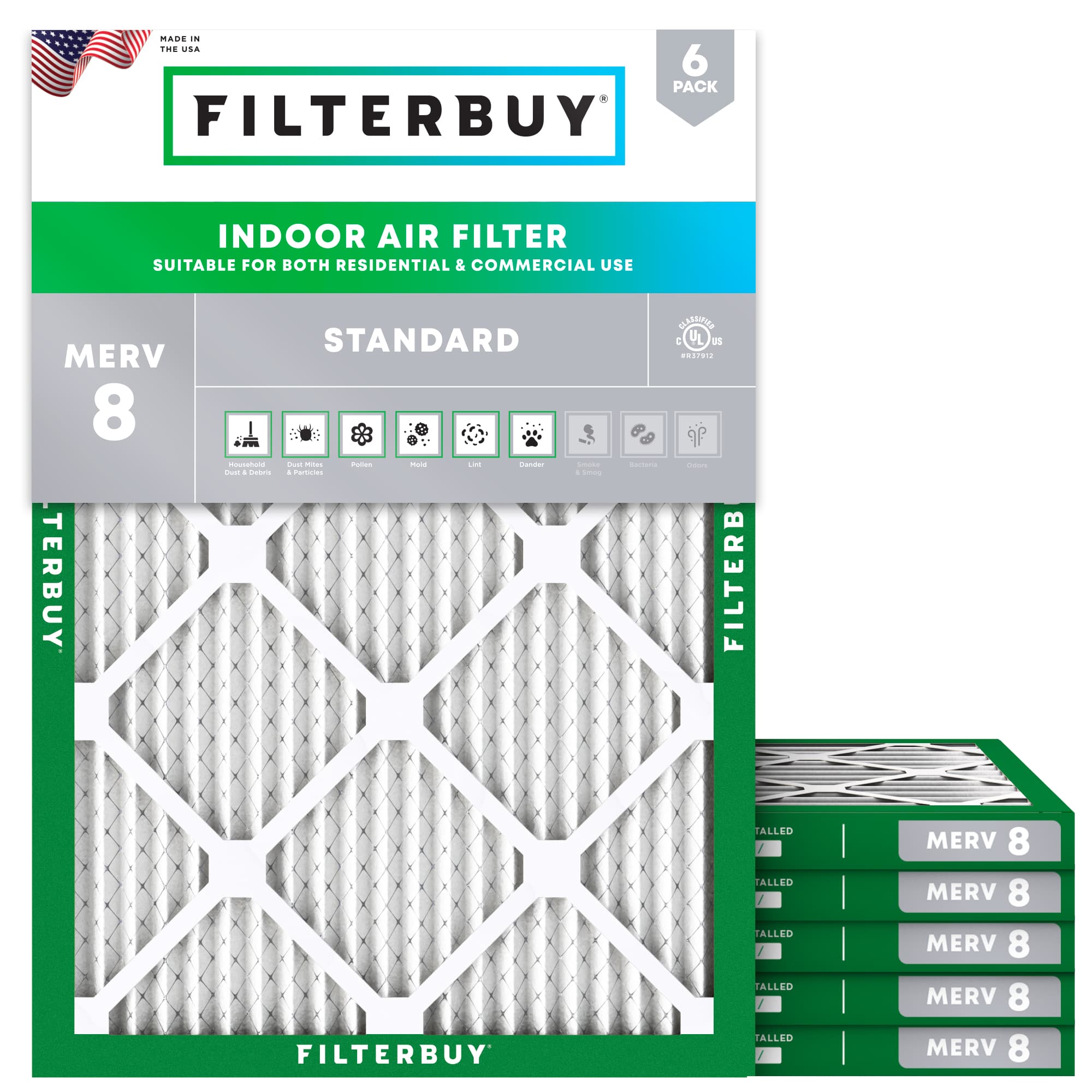
Actual Size: 23.25x29.25x1"
 Free Delivery
  Factory-Direct Low Prices, Made in the USA
 Hassle-Free Returns & Free Exchanges
RESIDENTIAL AND/OR COMMERCIAL USE
Change Every 3 Months
Actual Size: 23.25x29.25x1"
Free Delivery Factory-Direct Low Prices, Made in the USAHassle-Free Returns & Free ExchangesRESIDENTIAL AND/OR COMMERCIAL USE
Change Every 3 Months
Actual Size: 23.25x29.25x1"
Free Delivery Factory-Direct Low Prices, Made in the USAHassle-Free Returns & Free ExchangesRESIDENTIAL AND/OR COMMERCIAL USE
Change Every 3 Months
At Filterbuy, we don't cut corners—we craft high-quality air filters right here in the USA and ship them to your doorstep for free. No delays, no gimmicks—just clean air, made easy. With thousands of five-star reviews and filters built for real life & every HVAC system, it's no wonder why over 4 million families trust Filterbuy.

Proudly Made In The USA

Fast, Free Shipping on Every Order

Premium Materials That Go The Distance

85,000+ 5-Star Reviews From Happy Customers

Save Up to 70% Per Filter with Packs


Measure length × width × depth with a tape measure to find the actual size.

Round up each dimension to the nearest whole number to get the nominal size. Example: 23.25x29.25x1" in → 23.25x29.25x1 nominal.

Search by nominal size on our site for the best fit.


If the filter you buy doesn't fit, we'll send you a better size.
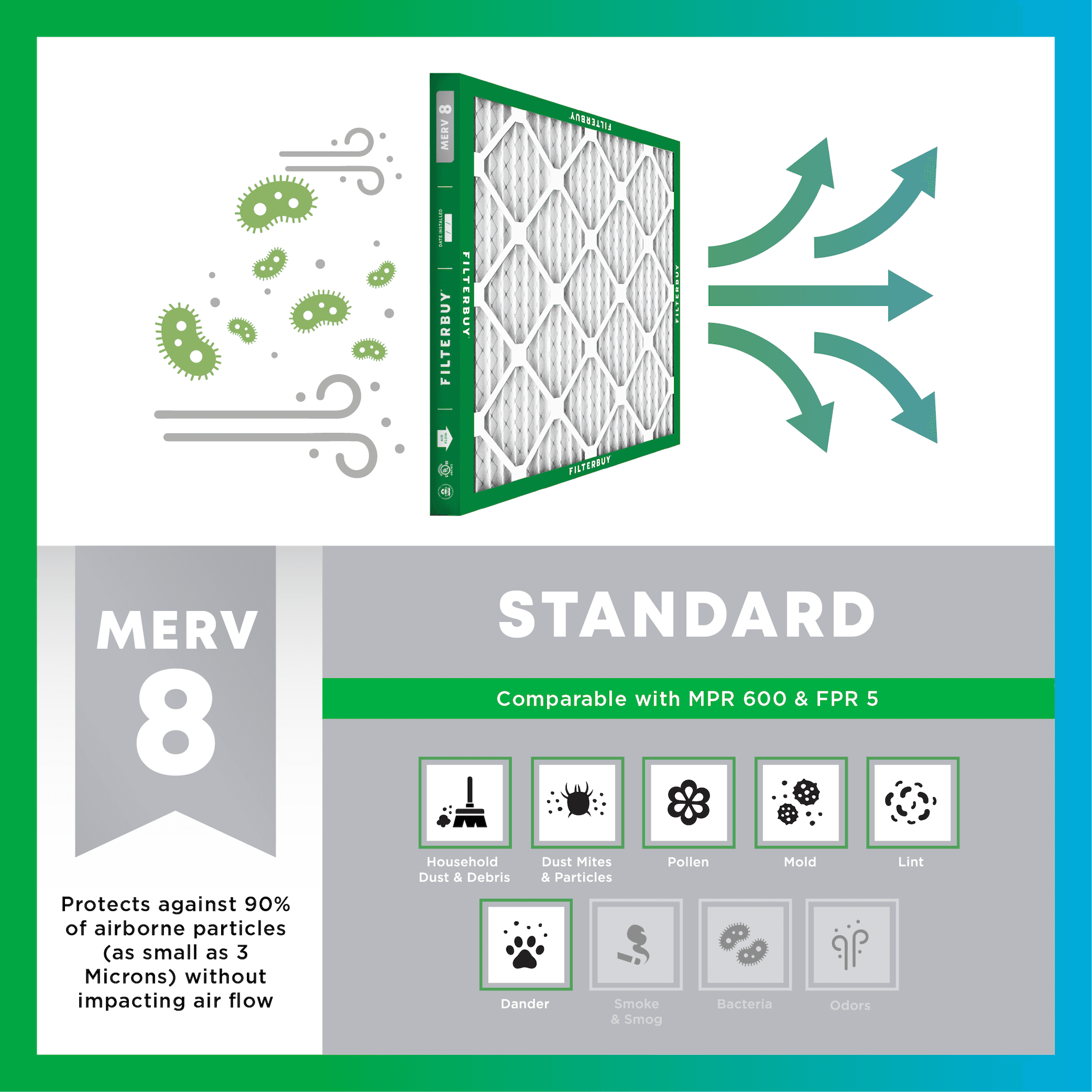
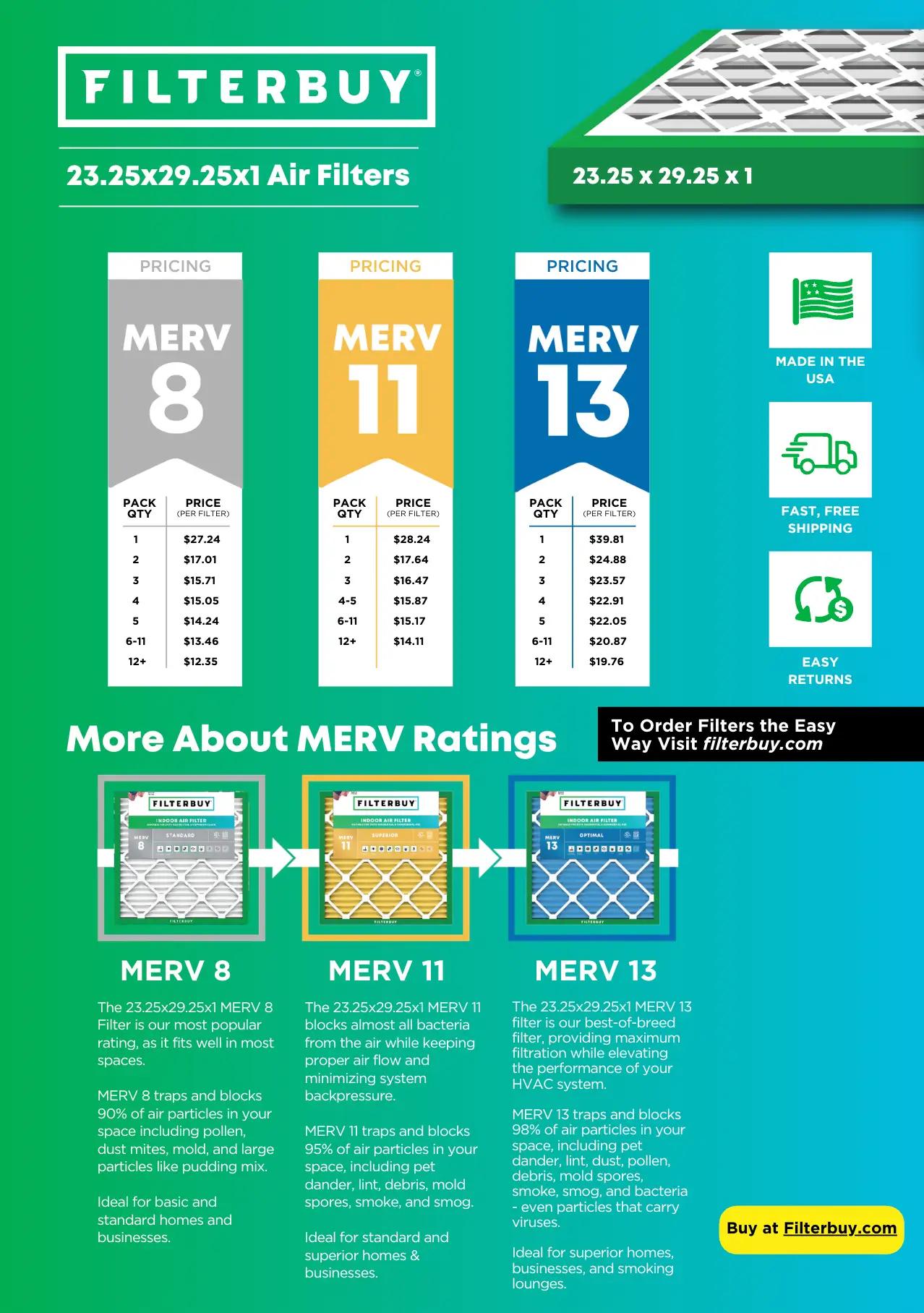
MERV stands for Minimum Efficiency Reporting Value—but don't let the technical name fool you. It's just a way to rate how well an air filter traps stuff like dust, pollen, pet dander, and smoke. The higher the MERV number, the more particles it catches—and the cleaner your air will be.

Comparable to:FPR: 4-7
MPR: 600-1000
 Dust & Debris
 Dust Mites & Particles
 Pollen
 Mold
Mold Lint
Lint Dander
Comparable to:FPR: 6-9
MPR: 1200-1550
Dust & DebrisDust Mites & ParticlesPollenMoldLintDander Smoke & Smog
Comparable to:FPR: 10
MPR: 1900-2800
Dust & DebrisDust Mites & ParticlesPollenMoldLintDanderSmoke & Smog Bacteria


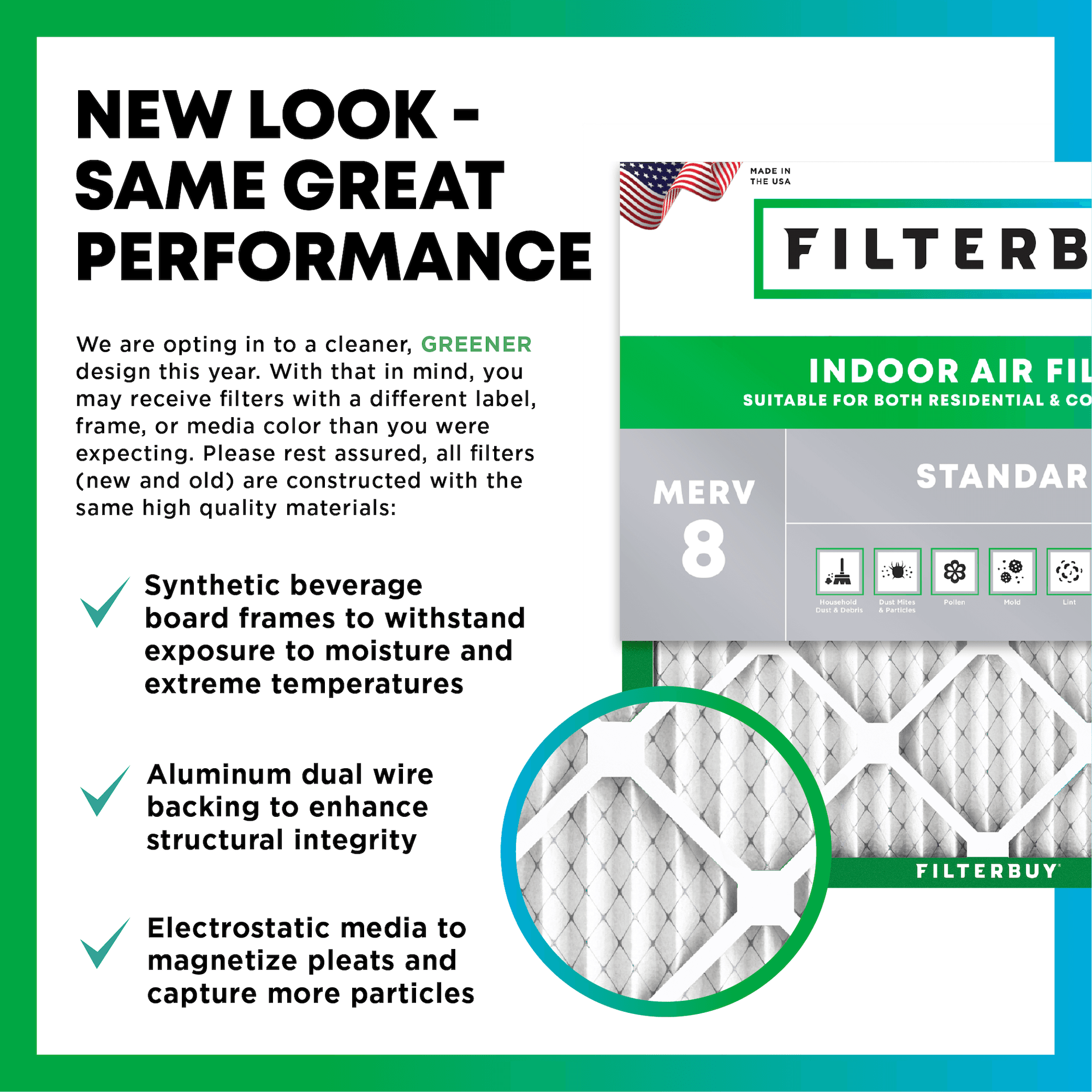
We build every Filterbuy filter to deliver reliable 90-day performance—thanks to smart design and premium materials that do the heavy lifting. Here's what makes the difference:
More pleats = more surface area to capture dust and debris, keeping your air cleaner longer.
Pleats are magnetized to attract and trap microscopic particles—like pet dander, pollen, and smoke.
Engineered to resist warping in extreme temperatures and high humidity.

A layer of metal reinforcement keeps pleats evenly spaced and structurally sound—no sagging, even at high airflow.
Assembled with care. Built to perform. Ships fast, free, and reliably from our U.S. facilities.

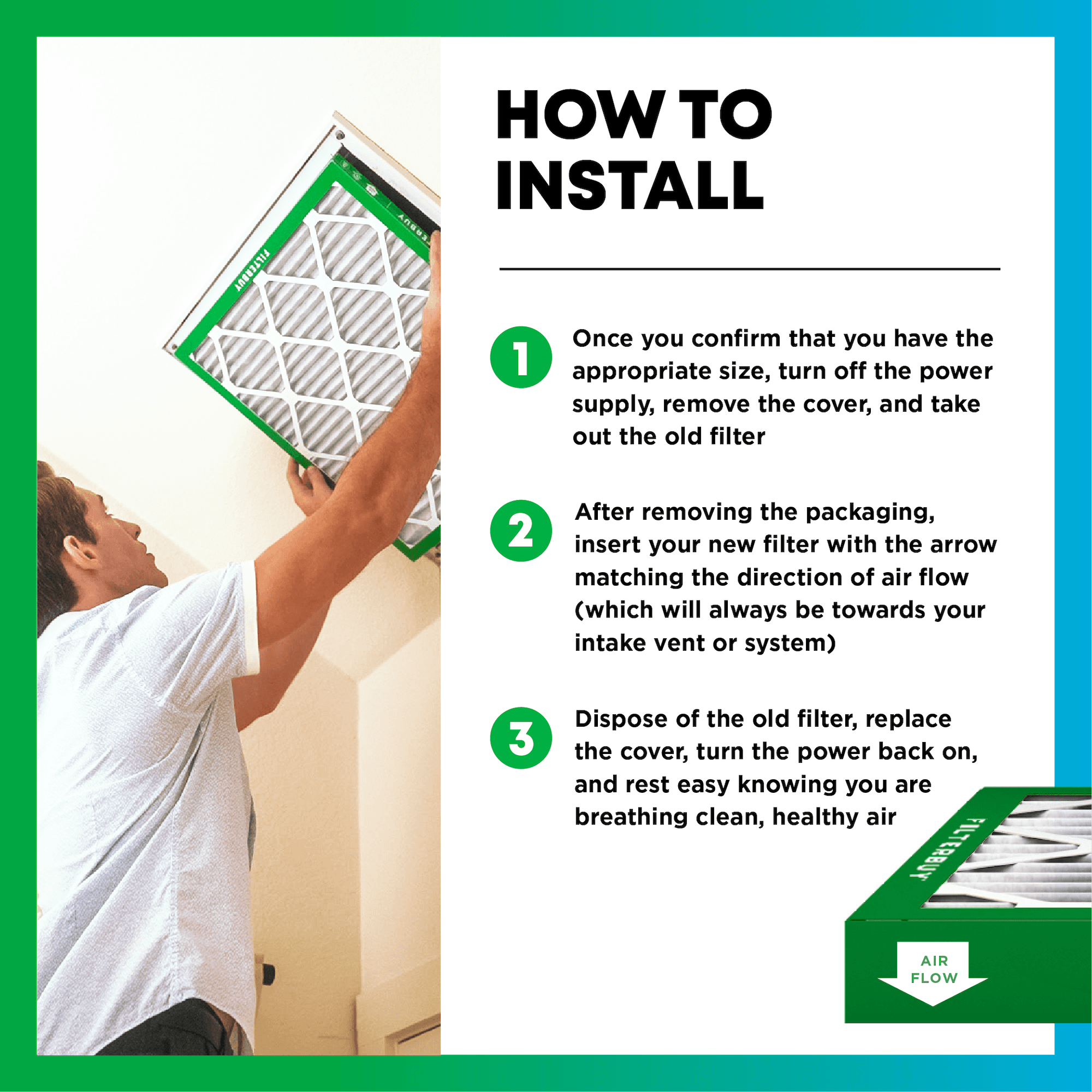
Turn Off Your HVAC SystemSafety first.

Remove The Old FilterLook for the airflow arrow and make note of the direction.

Slide In Your New FilterArrow should point toward the system (same direction as before).

Turn Your System Back OnAnd enjoy the fresh, clean air.

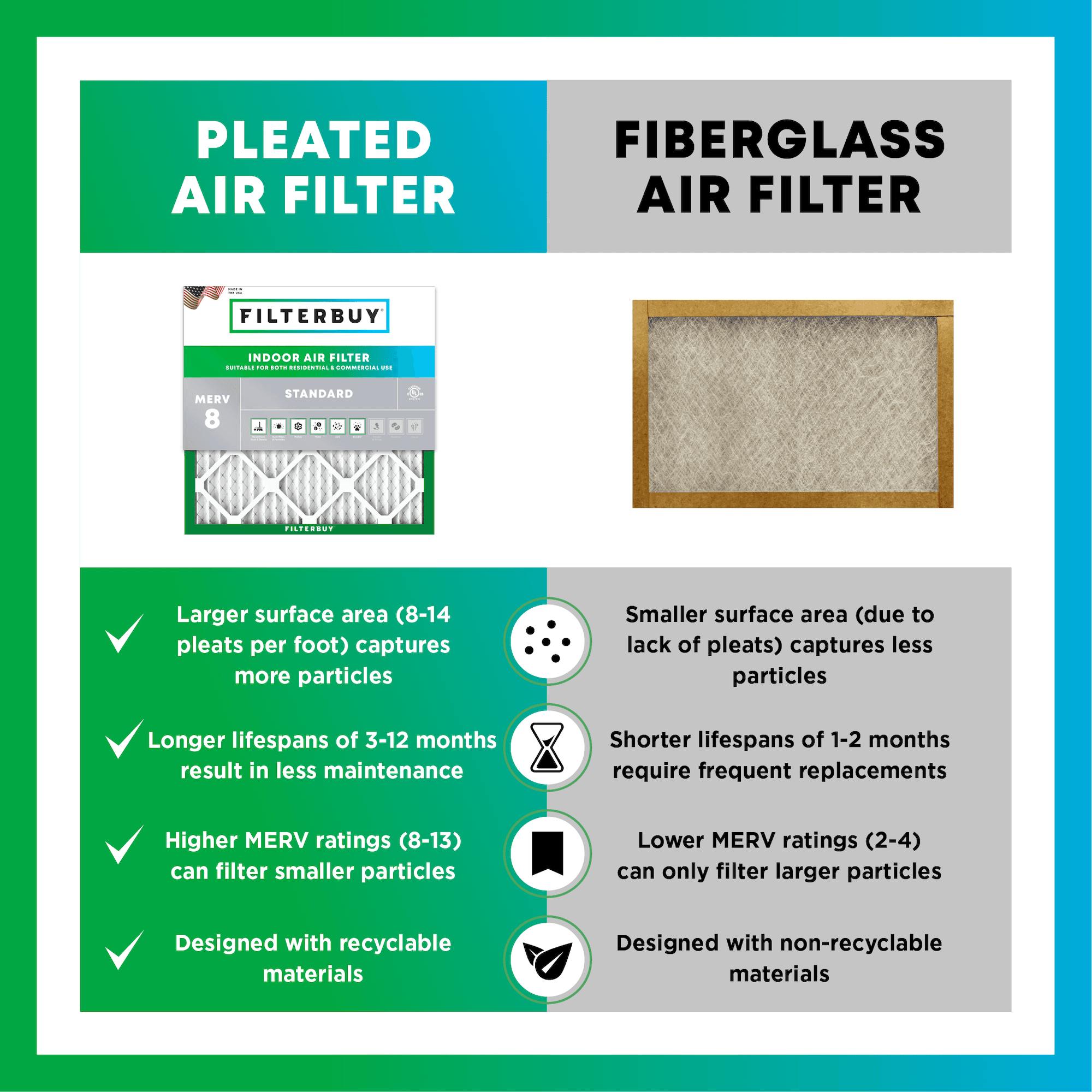
Not all air filters are created equal. Pleated filters don't just last longer—they actually clean your air better. Here's how they stack up:

Efficiency:
High (MERV 8–13) – Traps more particles
Lifespan:
90 days – Long-lasting performance
Air Quality:
Excellent – Cleaner, healthier air
Materials:
Recyclable and durable

Efficiency:
Low (MERV 4 or less) – Misses small stuff
Lifespan:
30 days or less – Replace often
Air Quality:
Minimal – Basic protection only
Materials:
Thin, flimsy, and not recyclable
Pleated filters are a no-brainer—more protection, less hassle, and better air for your home.
Changing your filter on time keeps your HVAC system running efficiently—and helps protect your lungs from dust, allergens, and airborne irritants. Here's how often to swap it out based on your needs:

For most homes without pets or special air quality concerns. Great for general upkeep and energy efficiency.

Shedding fur, dander, and allergy triggers can build up fast. Changing your filter every two months helps keep the air fresher and symptoms at bay.

For households affected by smoke, pollution, or respiratory conditions, monthly changes ensure maximum protection.

| Nominal Size | 23.25 x 29.25 x 1 inches |
| Actual Size | 23.25 x 29.25 x 1" inches |
| Filter Type | Pleated |
| Media | Electrostatically Charged |
| Frame | Beverage Board |
| MERV Ratings Available | 8, 11, 13 |
| Lifespan | Up to 90 Days |
| Origin | Made in USA |
Your 23.25x29.25x1 MERV 8 is installed, yet dust keeps appearing. Customers tell us this is one of the most frustrating HVAC problems they face—and with an uncommon size like 23.25x29.25x1, the culprit is almost always the same thing.
After manufacturing millions of filters, we've learned that persistent dust rarely means your MERV 8 is failing. It means air is finding another path. Oddball dimensions like 23.25x29.25x1 are especially prone to slight fit variances that create invisible gaps—and even a 1/8" gap lets dust bypass your filter entirely.
This guide shares what we've discovered from decades of filter production and thousands of customer conversations: the real reasons dust persists after installation and the precise fixes that actually work.
Short answer: Air is bypassing your filter—not passing through it.
After manufacturing millions of filters, we've identified the top causes:
Gap around filter. Uncommon sizes like 23.25x29.25x1 are prone to fit variances. Measure your slot and confirm exact dimensions.
Backward installation. The airflow arrow may be pointing in the wrong direction. It should always face the blower motor.
Duct leaks. Typical homes lose 20-30% of air through duct gaps. Seal joints with mastic or foil tape.
Clogged filter. Saturated media forces air around the edges. Check monthly and replace when gray.
Non-HVAC dust source.s Particles entering through windows and doors bypass filtration entirely. Combine filtering with air sealing.
Key insight: MERV 8 captures 70-85% of household dust particles. If dust persists, the filter isn't failing—air is finding another path.
Check these first:
Hold flashlight behind filter—light around edges means bypass
Confirm the arrow points toward the air handler
Inspect accessible ductwork for gaps
Note where dust accumulates (near vents vs. near windows)
Still seeing dust after checking all four? Consider upgrading to MERV 11 or MERV 13—but verify your system can handle increased airflow resistance first.
After manufacturing millions of filters and helping thousands of customers troubleshoot this exact issue, here's what you need to know.
MERV 8 captures 70-85% of particles between 3-10 microns. That includes most household dust. If dust persists, the problem is almost always somewhere else.
Uncommon sizes like 23.25x29.25x1 are prone to fit issues.
Common bypass points:
Gaps between the filter and the frame
Warped or damaged filter slots
Undersized filters in oversized housings
The fix: Even 1/8" gaps let significant unfiltered air through. Measure your slot and confirm exact fit.
Federal data confirms 20-30% of conditioned air escapes through typical duct systems.
What this means for dust:
Leaky return ducts pull dirty air from attics and crawlspaces
This air enters your home without ever passing through filtration
No MERV rating can fix a duct problem
We hear this weekly: filters installed backward for months.
Remember:
Airflow arrow points toward the blower motor
Wrong direction reduces efficiency by up to 50%
Takes 10 seconds to check
A saturated filter doesn't just waste energy—it lets dust through.
Warning signs:
Visible gray or brown discoloration
Reduced airflow from vents
System running longer than usual
Our advice: Check monthly. Replace when dirty. Don't wait 90 days for oddball sizes.
Not all dust travels through your HVAC system.
Sources your filter can't address:
Dust entering through windows and doors
Particles are settling before reaching the return vents
Activity-generated dust from walking, cleaning, and cooking
The solution: Combine filtration with regular cleaning and air sealing.
For some homes, upgrading makes sense.
Consider MERV 11 or MERV 13 if:
Multiple pets in the household
Allergy or asthma sufferers present
Nearby construction or renovation
High outdoor pollution levels
Always verify your system can handle increased airflow resistance first.
The Bottom Line
Persistent dust with a new 23.25x29.25x1 MERV 8 installed has a fixable cause. Start with fit and installation. Check your ducts. Rule out sources beyond your HVAC. Upgrade your MERV rating only after addressing the basics.
That's what we've learned after millions of filters—and it works.
A MERV 8 filter captures 70-85% of particles between 3-10 microns—more than enough for typical household dust. When dust persists, the problem almost always falls into one of four categories we see repeatedly.
This is the number one issue with uncommon sizes like 23.25x29.25x1. Your filter might measure slightly undersized, or your filter slot may have expanded over time. Either way, unfiltered air rushes through the gaps instead of through the filter media.
What we've found: Customers often don't realize their "23.25x29.25x1" slot actually needs a true custom-cut filter. Standard manufacturing tolerances can leave gaps that seem minor but defeat the filter's purpose entirely.
Every filter has an arrow indicating airflow direction—it should point toward the blower motor. We hear from customers weekly who've had filters installed backward for months, reducing efficiency by up to 50%.
A clogged MERV 8 can't capture new particles. In dusty environments or homes with pets, your 23.25x29.25x1 may need replacement every 30-60 days rather than the standard 90.
Some dust enters through windows, doors, and structural gaps—bypassing your HVAC system completely. If dust concentrates near exterior walls or entryways, your filter isn't the issue.
Hold a flashlight behind your installed filter. Light visible around the edges means air bypass. Next, confirm the airflow arrow points toward your air handler. Finally, check the filter surface—if it's visibly gray or clogged, replacement is overdue.
MERV 8 handles standard dust effectively. However, if your home has construction nearby, multiple pets, or occupants with allergies, upgrading to MERV 11 or MERV 13 captures finer particles that your current filter misses. Just verify your system can handle the increased airflow resistance first.
"After reviewing thousands of customer calls about dust issues, we've found that 9 out of 10 times the filter is doing its job—it's the air sneaking around it that isn't. With uncommon sizes like 23.25x29.25x1, even a gap you can barely see with your eye can let through enough unfiltered air to dust your entire living room in a week."
When customers call about dust issues after installing a new filter, we point them to these trusted resources. Each one addresses a root cause we see regularly—and together they cover every angle of the problem.
Customers often expect MERV 8 to stop all dust—but that's not how the rating system works. The EPA breaks down exactly which particle sizes each MERV level captures, so you know what your filter can and can't do. Source: U.S. Environmental Protection Agency https://www.epa.gov/indoor-air-quality-iaq/what-merv-rating
We tell customers this constantly: your filter only captures what passes through it. This EPA guide explains why larger dust particles settle on surfaces before ever reaching your return vent—and why filtration is just one piece of the puzzle. Source: U.S. Environmental Protection Agency https://www.epa.gov/indoor-air-quality-iaq/guide-air-cleaners-home
After manufacturing millions of filters, we know a saturated filter is as bad as no filter at all. The Department of Energy covers replacement timing, efficiency loss from clogged media, and what happens when dirt starts bypassing the filter entirely. Source: U.S. Department of Energy https://www.energy.gov/energysaver/air-conditioner-maintenance
Here's what we've learned from thousands of customer conversations: sometimes the filter isn't the problem—the dust source is. The EPA catalogs where indoor particles actually come from, helping you pinpoint issues your filter was never designed to solve. Source: U.S. Environmental Protection Agency https://www.epa.gov/indoor-air-quality-iaq/sources-indoor-particulate-matter-pm
This is one of the most overlooked causes of persistent dust. ENERGY STAR explains how leaky ducts pull dirty air from attics and crawlspaces directly into your living space—completely bypassing your filter, no matter what MERV rating you use. Source: ENERGY STAR https://www.energystar.gov/saveathome/heating-cooling/duct-sealing
Customers with oddball sizes like 23.25x29.25x1 often focus on filter fit—but gaps around windows and doors let just as much unfiltered air inside. The Department of Energy shows you how to find and seal these hidden entry points. Source: U.S. Department of Energy https://www.energy.gov/energysaver/air-sealing-your-home
Before upgrading from MERV 8 to MERV 11 or 13, you need to confirm your HVAC system can handle the increased airflow resistance. ASHRAE's technical guidance explains why—and how to check compatibility before making changes that could strain your equipment. Source: American Society of Heating, Refrigerating and Air-Conditioning Engineers https://www.ashrae.org/File%20Library/Technical%20Resources/Technical%20FAQs/TC-02.04-FAQ-02.pdf
After fielding thousands of calls from customers frustrated by persistent dust, we've learned to look beyond the filter itself. These federal statistics validate what we see every day.
Customers assume outdoor air is the problem. After years of troubleshooting dust issues, we know better.
What actually generates indoor dust:
Cooking and cleaning activities
Walking across carpet and upholstered furniture
Pet movement and dander
HVAC system operation stirring settled particles
Your 23.25x29.25x1 filter only captures what reaches the return vent. Everything else settles on surfaces before filtration ever happens.
Source: U.S. Environmental Protection Agency https://www.epa.gov/air-research/indoor-air-quality-exposure-and-characterization-research
This statistic explains one of the most common patterns we hear: "I installed a new filter, and I'm still seeing dust everywhere."
How duct leaks bypass your filter:
Gaps form at joints, connections, and seams over time
Return ducts pull unfiltered air from attics, crawlspaces, and wall cavities
Dirty air enters your living space without ever passing through filtration
Dust accumulates regardless of your filter's MERV rating
We tell customers this constantly—the best filter in the world can't help if air is finding another path.
Source: ENERGY STAR, U.S. Environmental Protection Agency https://www.energystar.gov/saveathome/heating-cooling/duct-sealing
Energy waste is just the visible symptom. Here's what we've discovered after manufacturing millions of filters:
What a saturated filter actually does:
Creates back-pressure against airflow
Forces air around filter edges instead of through the media
Amplifies fit problems with uncommon sizes like 23.25x29.25x1
Allows captured particles to be released back into the airflow
Our recommendation for oddball sizes: Check filters monthly rather than waiting the standard 90 days. Dust load and fit tolerances vary significantly from typical installations.
Source: U.S. Department of Energy https://www.energy.gov/energysaver/maintaining-your-air-conditioner
A MERV 8 filter installed correctly should dramatically reduce household dust. When it doesn't, the filter is rarely the problem.
The three most common culprits we see:
Air bypassing the filter through gaps or a poor fit
Duct leaks are pulling unfiltered air from unconditioned spaces
Dust sources that never reach your HVAC system
Before replacing your filter or upgrading to a higher MERV rating, run through this checklist:
Check filter fit. Hold a flashlight behind the installed filter. Light around the edges means air bypass.
Verify airflow direction. The arrow should point toward your air handler, not away from it.
Inspect filter condition. Visible gray buildup means it's time to replace—don't wait for the 90-day mark.
Examine accessible ductwork. Look for obvious gaps, disconnected joints, or damaged sections.
Identify dust patterns. Dust concentrated near windows and doors suggests infiltration, not filter failure.
MERV 8 handles standard household dust effectively. Consider MERV 11 or MERV 13 if:
Multiple pets live in your home
Occupants have allergies or respiratory sensitivities
Nearby construction generates fine particulates
Previous steps haven't resolved the issue
Important: Verify your HVAC system can handle increased airflow resistance before upgrading.
The Bottom Line
After manufacturing millions of filters and thousands of customer conversations, we've learned that persistent dust almost always has a fixable cause. With an uncommon size like 23.25x29.25x1, precise fit matters more than most homeowners realize. Start with the diagnostics above—and if you need a filter that fits your exact specifications, that's what we do best.
You've identified the problem. Here's how to fix it.
Step 1: Confirm Proper Filter Fit
Oddball sizes like 23.25x29.25x1 require precise measurements.
What to check:
Measure your filter slot with a tape measure—don't rely on the old filter's label
Compare actual dimensions to your current filter size
Look for gaps larger than 1/8" on any side
If gaps exist: Consider a custom-cut filter sized to your exact specifications.
Step 2: Verify Correct Installation
A properly rated filter installed incorrectly performs like no filter at all.
Quick installation checklist:
Locate the airflow arrow printed on the filter frame
Point the arrow toward the blower motor or air handler
Ensure the filter sits flat without bowing or bending
Confirm the fit of the filter slot or over seals, completely
Step 3: Inspect Your Duct System
Duct leaks bypass your filter entirely. Check what you can access.
Signs of duct problems:
Visible gaps at joints and connections
Dusty residue around duct seams
Rooms that never reach the right temperature
Excessive dust near supply vents
If you find issues: Seal accessible leaks with mastic or foil tape. For extensive problems, contact an HVAC professional.
Step 4: Evaluate Your Filter Rating
MERV 8 works for most homes. But not all.
Consider upgrading to MERV 11 or MERV 13 if:
You have multiple pets
Household members have allergies or asthma
You live near construction or high-traffic roads
Standard filtration hasn't solved the problem
Before upgrading: Confirm your system can handle the increased airflow resistance.
Step 5: Establish a Maintenance Schedule
Uncommon filter sizes often require closer attention.
Our recommendation for 23.25x29.25x1 filters:
Check monthly rather than waiting 90 days
Replace when visibly gray—regardless of time elapsed
Increase frequency during high-dust seasons or renovation projectsthe
Keep 2-3 replacement filters on hand to avoid gaps in filtration
Ready to Solve Your Dust Problem?
Find your exact 23.25x29.25x1 size with the MERV rating that matches your needs. We manufacture filters for uncommon dimensions—because after millions of filters produced, we know one size doesn't fit all.
After manufacturing millions of filters, we know that uncommon sizes demand precision. Find your exact 23.25x29.25x1 MERV 8 (or upgrade to MERV 11 or 13) and get the dust-free air you expected from day one.
A: Air bypass is the most common cause, not filter failure.
Top reasons dust persists:
Gaps between the filter and the frame are letting unfiltered air through
Filter installed backward (arrow should point toward blower)
Duct leaks are pulling dirty air from attics or crawlspaces
Dust sources that never reach your HVAC return vents
With uncommon sizes like 23.25x29.25x1, even a 1/8" gap defeats filtration. Check fit first.
A: Yes—for most homes.
What MERV 8 captures:
70-85% of particles between 3-10 microns
Common household dust
Pollen and mold are the spores
The duct mite debris
When the filter may not be enough:
Multiple pets in the home
Allergy or asthma sufferers present
Nearby construction activity
High outdoor pollution levels
If dust persists with a proper fit, the problem is usually air bypass or duct leaks—not filter strength.
A: Check monthly. Replace when visibly dirty. Don't wait 90 days.
Factors that affect replacement frequency:
Number of pets and occupants
Local air quality conditions
Home age and air sealing quality
HVAC runtime and usage patterns
Our recommendation for oddball sizes:
Inspect the filter every 30 days
Replace at the first sign of gray or brown discoloration
Keep 2-3 replacements on hand
Increase frequency during renovations or high-pollen seasons
Uncommon dimensions like 23.25x29.25x1 often have unique fit tolerances that affect loading speed.
A: Yes. This is one of the most overlooked causes we see.
The facts:
Typical homes lose 20-30% of air through duct leaks
Leaky return ducts pull unfiltered air from unconditioned spaces
This air bypasses your filter completely
Signs of duct leaks:
Excessive dust near supply vents
Rooms that won't hold temperature
Visible gaps at duct joints
Higher than expected energy bills
Quick fix: Seal accessible leaks with mastic or foil tape. For extensive damage, contact an HVAC professional.
A: Only after ruling out other causes.
Before upgrading, confirm:
Filter fits without gaps
Airflow arrow points toward the blower
The duct system is sealed
The filter isn't clogged or overdue for replacement
Upgrade to MERV 11 or MERV 13 when:
Basics are addressed, and dust persists
Pets, allergies, or respiratory concerns exist
Outdoor air quality is poor
Construction or renovation nearby
Important: Higher MERV ratings increase airflow resistance. Verify your HVAC system can handle it before upgrading.

