
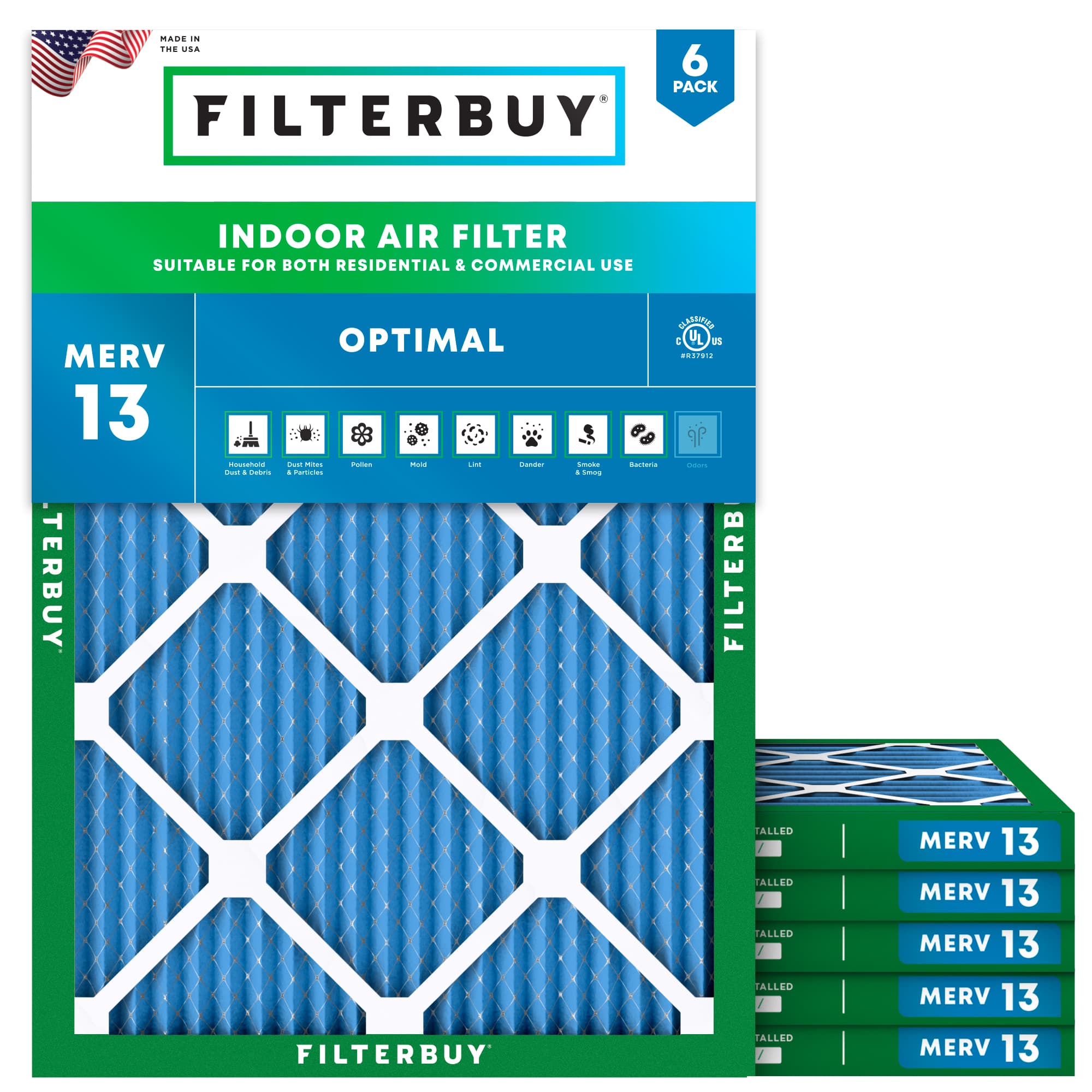
21.5x23x1 MERV 13 Pleated Air Filter
Actual Size: 21.5x23.0x0.75
 Free Delivery
  Factory-Direct Low Prices, Made in the USA
 Hassle-Free Returns & Free Exchanges
RESIDENTIAL AND/OR COMMERCIAL USE
Change Every 3 Months
21.5x23x1 MERV 13 Pleated Air Filter
Actual Size: 21.5x23.0x0.75
Free Delivery Factory-Direct Low Prices, Made in the USAHassle-Free Returns & Free ExchangesRESIDENTIAL AND/OR COMMERCIAL USE
Change Every 3 Months
21.5x23x1 MERV 13 Pleated Air Filter
Actual Size: 21.5x23.0x0.75
Free Delivery Factory-Direct Low Prices, Made in the USAHassle-Free Returns & Free ExchangesRESIDENTIAL AND/OR COMMERCIAL USE
Change Every 3 Months
About
- This is a list 21.5x23x1 MERV 13 air filter replacement for your furnace, air conditioner, heat pump, or HVAC system
- Actual air filter size: 21.5x23.0x0.75
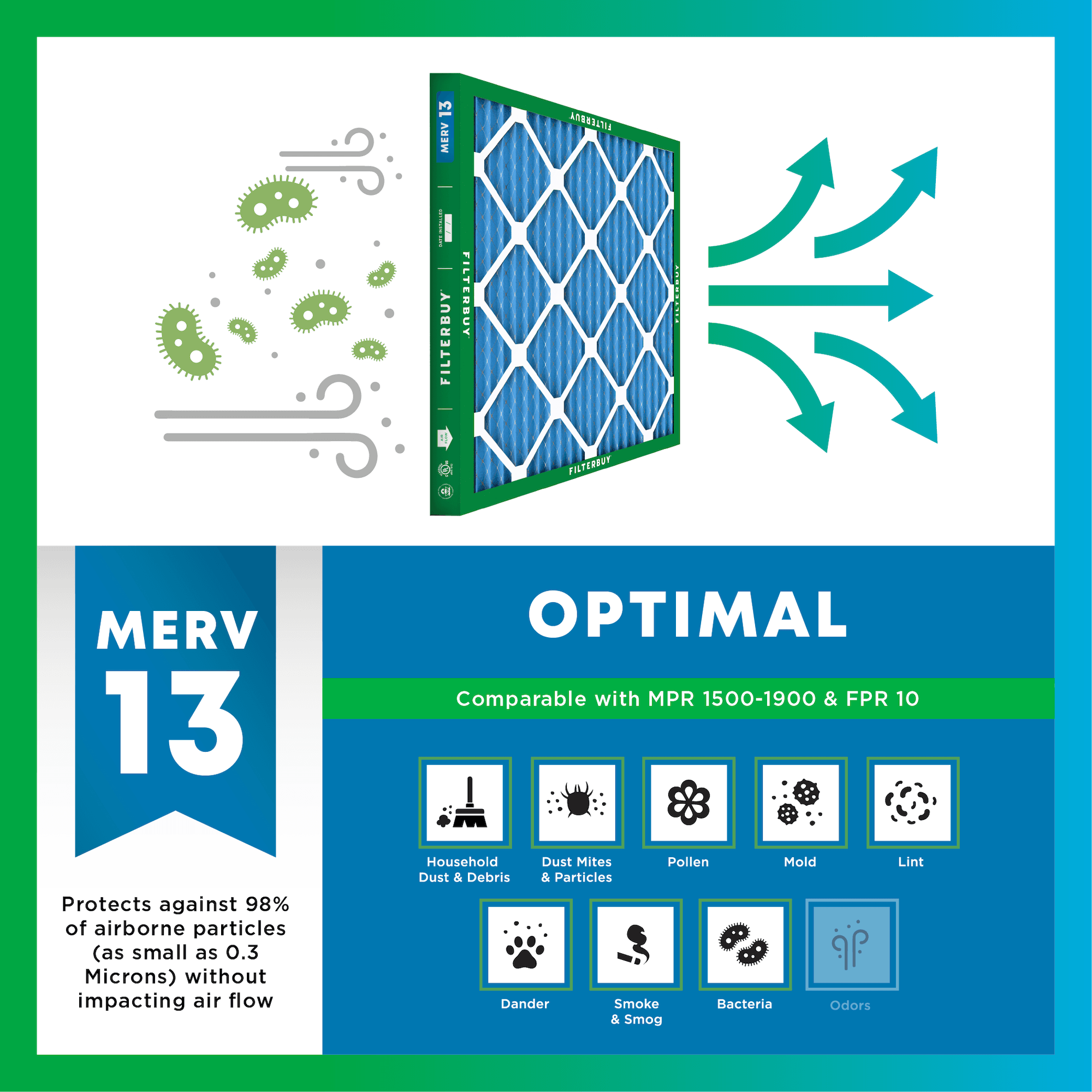
- MERV 13 synthetic media (comparable with MPR 1500/1900 and FPR 10) offers the best protection from dust, pollen, pet dander, mold, smog, bacteria, and virus carrying particles by trapping 98% of airborne particles without impacting air flow.
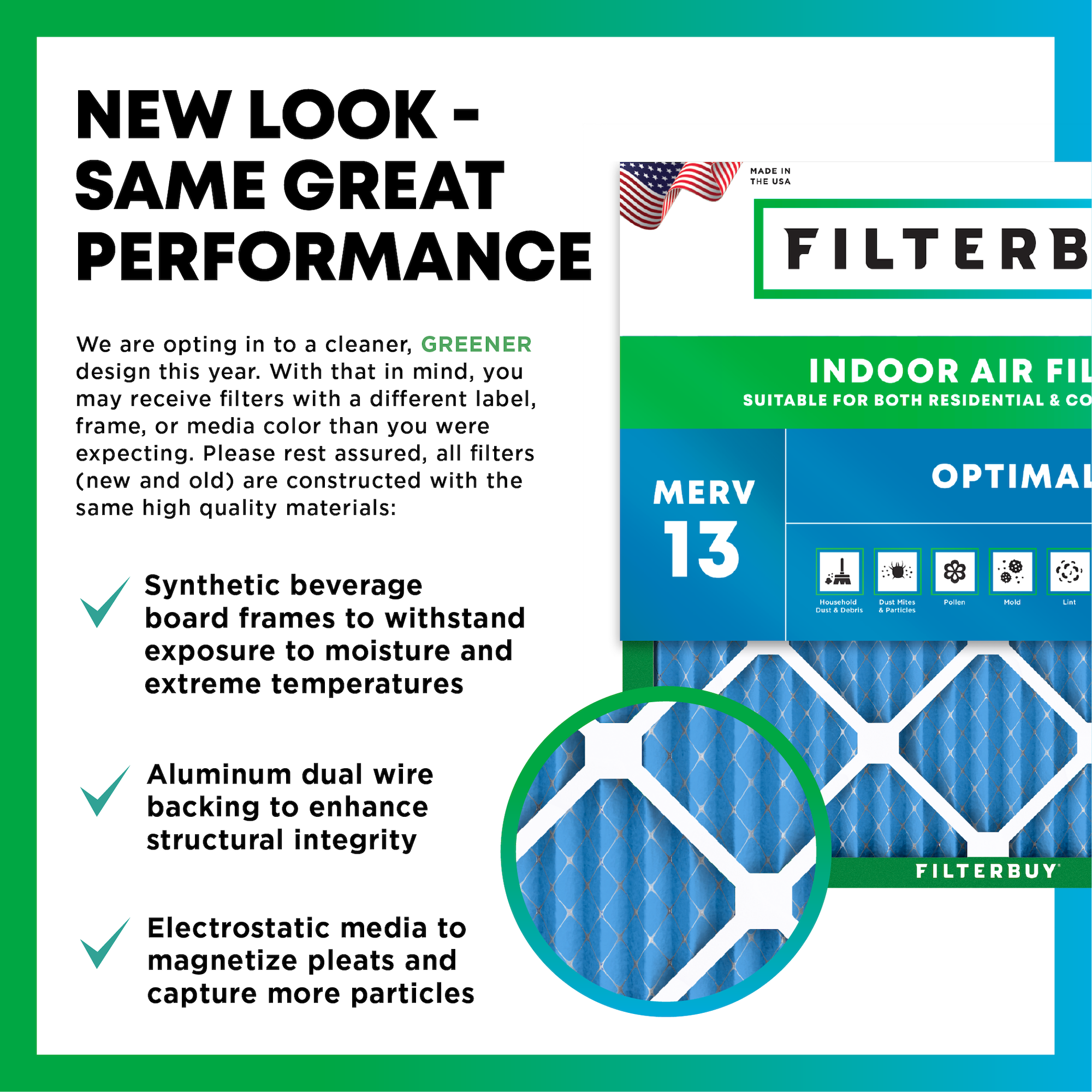
- High-quality construction means electrostatically charged pleated filter media, reinforced wire backing for structural integrity, and a durable frame to resist heat and humidity
- Built to last 3 months. 300% longer than fiberglass models
- 100% manufactured in the United States and designed with recyclable materials
- Learn more about 21.5x23x1 Air Filters
Top-Rated Filters. American Made. Delivered Free.
At Filterbuy, we don't cut corners—we craft high-quality air filters right here in the USA and ship them to your doorstep for free. No delays, no gimmicks—just clean air, made easy. With thousands of five-star reviews and filters built for real life & every HVAC system, it's no wonder why over 4 million families trust Filterbuy.

Proudly Made In The USA

Fast, Free Shipping on Every Order

Premium Materials That Go The Distance

85,000+ 5-Star Reviews From Happy Customers

Save Up to 70% Per Filter with Packs
Things to Know About Filter Sizes

Nominal Size
- The rounded size printed on your filter or HVAC unit (e.g., 21.5x23x1).
- Usually whole numbers to make identifying and ordering easier.
- A label for compatibility—not the exact measurement.

Actual Size
- The true, trimmed dimensions of the filter (e.g., 21.5x23.0x0.75 inches).
- Filters are manufactured slightly smaller so they slide into the filter slot without forcing.
- If you don't know your nominal size, measure your filter to get the actual size, then round up to find the nominal size to search on our site.

Why the difference?
- Nominal sizes simplify shopping and standardize categories.
- Actual sizes ensure the filter fits properly inside your HVAC's filter rack.
How To Find Your Nominal Size When You Don't Know It


Measure length × width × depth with a tape measure to find the actual size.

Round up each dimension to the nearest whole number to get the nominal size. Example: 21.5x23.0x0.75 in → 21.5x23x1 nominal.

Search by nominal size on our site for the best fit.

Why Getting the Right Size Matters
- Too small? Air can bypass the filter, reducing air quality and efficiency.
- Too big? It won't fit—risking bent frames and airflow issues.
- Just right? You get maximum performance, better filtration, and cleaner air.

Free Exchange Policy
If the filter you buy doesn't fit, we'll send you a better size.

What's a MERV Rating?
MERV stands for Minimum Efficiency Reporting Value—but don't let the technical name fool you. It's just a way to rate how well an air filter traps stuff like dust, pollen, pet dander, and smoke. The higher the MERV number, the more particles it catches—and the cleaner your air will be.

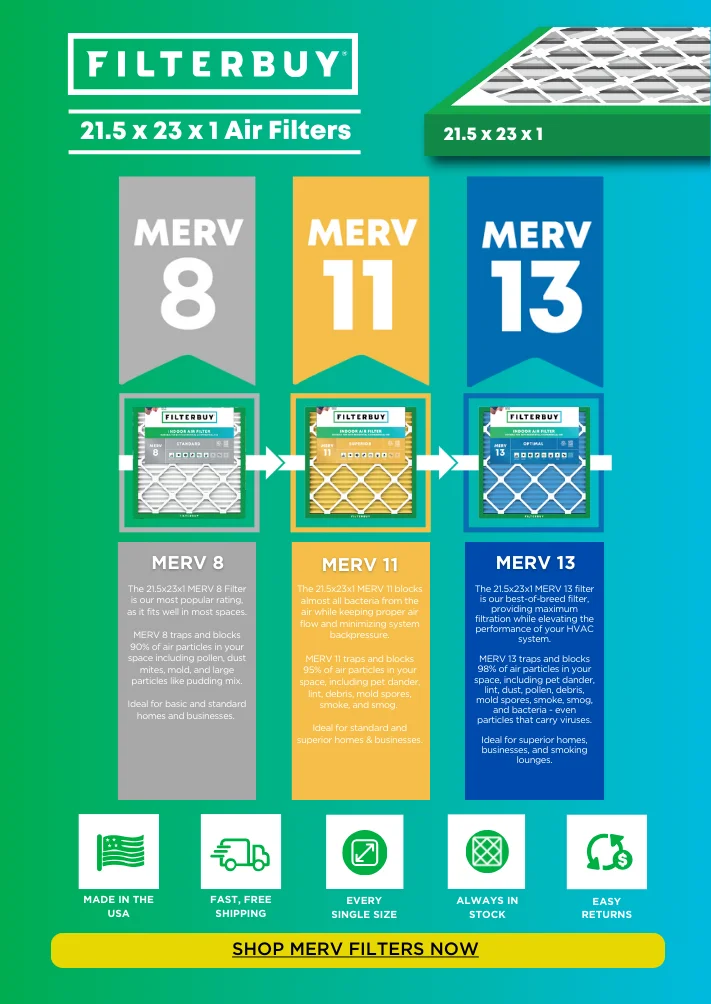
Merv 8
Comparable to:FPR: 4-7
MPR: 600-1000
 Dust & Debris
 Dust Mites & Particles
 Pollen
 Mold
Mold Lint
Lint Dander
Merv 11
Comparable to:FPR: 6-9
MPR: 1200-1550
Dust & DebrisDust Mites & ParticlesPollenMoldLintDander Smoke & Smog
Merv 13
Comparable to:FPR: 10
MPR: 1900-2800
Dust & DebrisDust Mites & ParticlesPollenMoldLintDanderSmoke & Smog Bacteria
MERV 8
Comparable to:FPR: 4-7MPR: 600-1000


MERV 11
Comparable to:FPR: 6-9MPR: 1200-1550

MERV 13
Comparable to:FPR: 10MPR: 1900-2800
What Makes Our Filters Last 90 Days? Quality, From the Inside Out
We build every Filterbuy filter to deliver reliable 90-day performance—thanks to smart design and premium materials that do the heavy lifting. Here's what makes the difference:
Pleated Design
More pleats = more surface area to capture dust and debris, keeping your air cleaner longer.
Electrostatically Charged Media
Pleats are magnetized to attract and trap microscopic particles—like pet dander, pollen, and smoke.
Synthetic Beverage Board Frame
Engineered to resist warping in extreme temperatures and high humidity.

Aluminum Dual Wire Backing
A layer of metal reinforcement keeps pleats evenly spaced and structurally sound—no sagging, even at high airflow.
Made in the USA
Assembled with care. Built to perform. Ships fast, free, and reliably from our U.S. facilities.
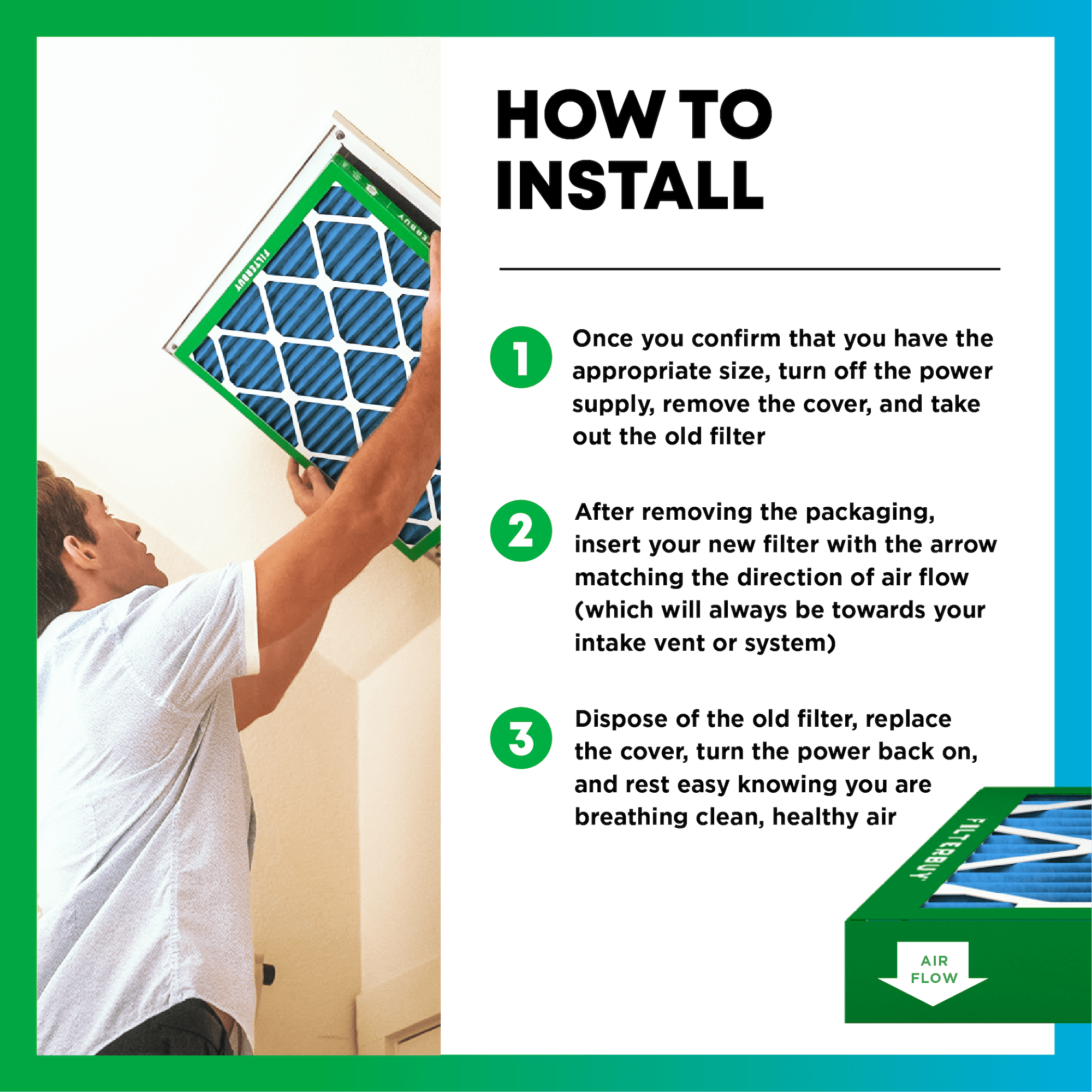
How to Install Your Filter in 4 Simple Steps

Turn Off Your HVAC SystemSafety first.

Remove The Old FilterLook for the airflow arrow and make note of the direction.

Slide In Your New FilterArrow should point toward the system (same direction as before).

Turn Your System Back OnAnd enjoy the fresh, clean air.

Never forget to replace your air filter again.
- Save 5% on every order
- Choose Your Delivery Schedule
- Edit, Skip, or Cancel Anytime.
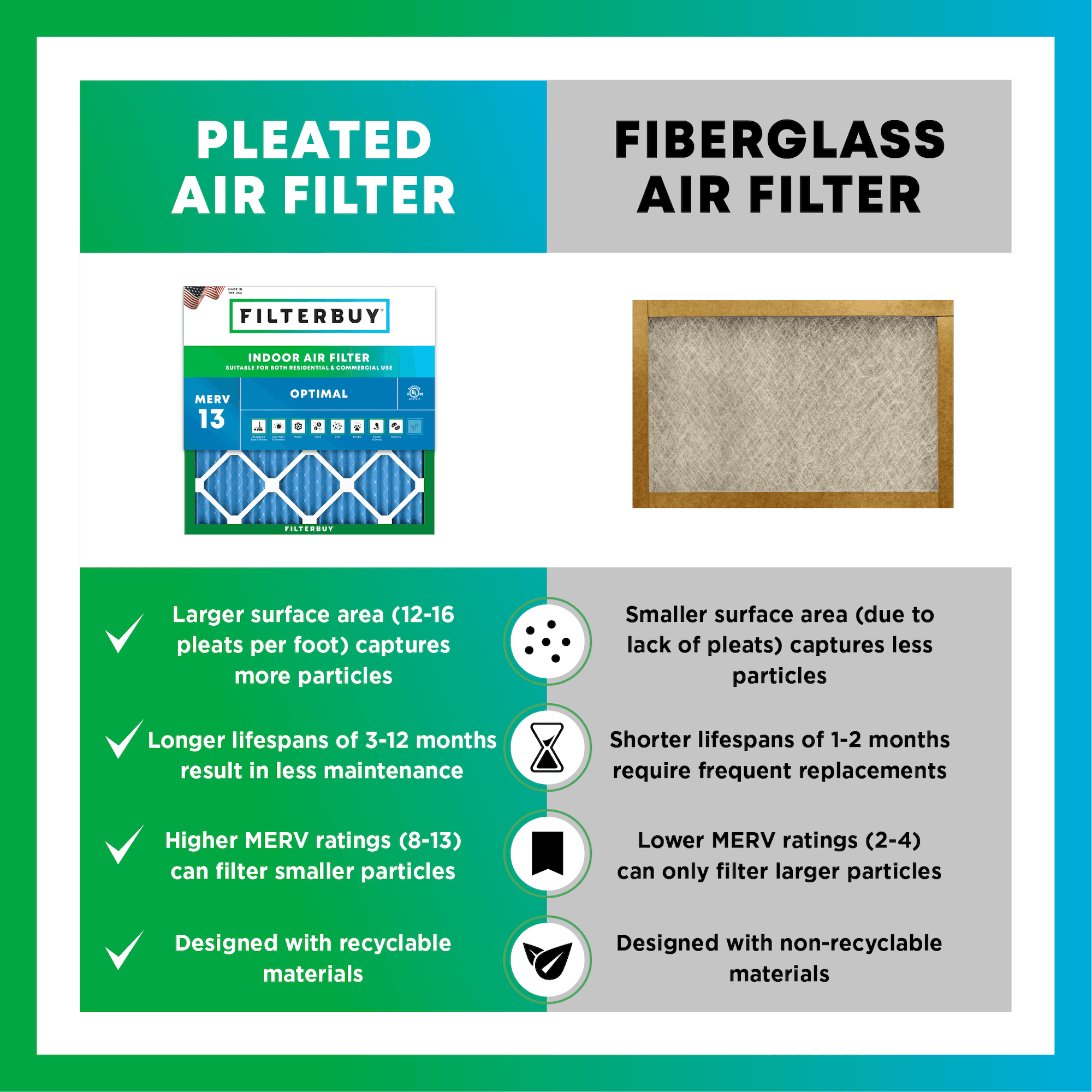
Pleated Filters vs. Fiberglass—What's the Difference?
Not all air filters are created equal. Pleated filters don't just last longer—they actually clean your air better. Here's how they stack up:

Pleated Filters
Efficiency:
High (MERV 8–13) – Traps more particles
Lifespan:
90 days – Long-lasting performance
Air Quality:
Excellent – Cleaner, healthier air
Materials:
Recyclable and durable

Fiberglass Filters
Efficiency:
Low (MERV 4 or less) – Misses small stuff
Lifespan:
30 days or less – Replace often
Air Quality:
Minimal – Basic protection only
Materials:
Thin, flimsy, and not recyclable
Pleated filters are a no-brainer—more protection, less hassle, and better air for your home.
How Often Should You Change Your Filter?
Changing your filter on time keeps your HVAC system running efficiently—and helps protect your lungs from dust, allergens, and airborne irritants. Here's how often to swap it out based on your needs:

Every 90 Days
Standard ScheduleFor most homes without pets or special air quality concerns. Great for general upkeep and energy efficiency.

Every 60 Days
If You Have Pets or AllergiesShedding fur, dander, and allergy triggers can build up fast. Changing your filter every two months helps keep the air fresher and symptoms at bay.

Every 30 Days
If You Have Respiratory Concerns or Live in Smog/Wildfire ZonesFor households affected by smoke, pollution, or respiratory conditions, monthly changes ensure maximum protection.

Want to stay on track? Set a reminder—or skip the stress with auto-delivery so fresh filters show up right when you need them.
Don't Just Take Our Word For It...
Got More Questions? We've Got Answers.
Product Specifications
| Nominal Size | 21.5 x 23 x 1 inches |
| Actual Size | 21.5 x 23.0 x 0.75 inches |
| Filter Type | Pleated |
| Media | Electrostatically Charged |
| Frame | Beverage Board |
| MERV Ratings Available | 8, 11, 13 |
| Lifespan | Up to 90 Days |
| Origin | Made in USA |
Best 21.5x23x1 MERV 13 Furnace & HVAC Air Conditioner Filters
Author: Michelle Wan, Brand Manager and Air Quality Writer | Reviewer: David Clark, Licensed HVAC Technician | Published: August 12, 2026 | Updated: August 12, 2026
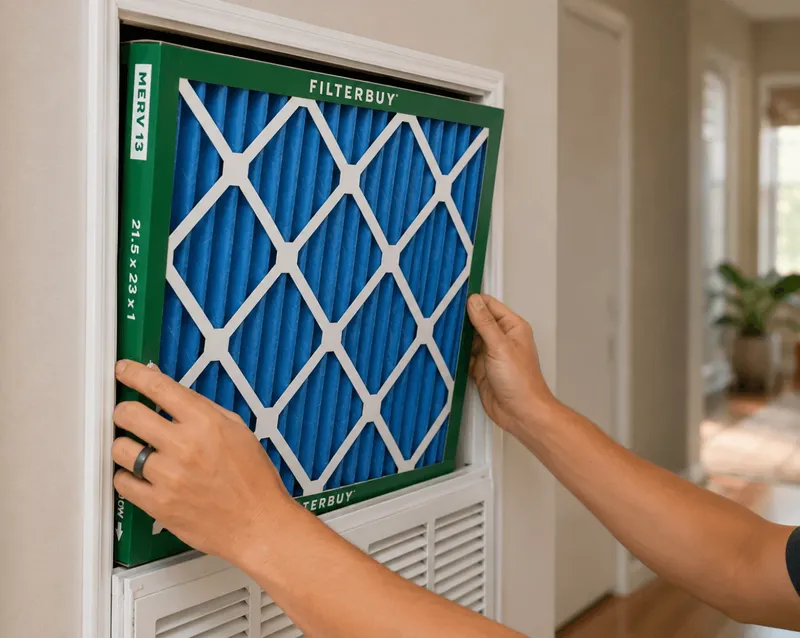
21.5x23x1 is one of those sizes that sends people to three hardware stores, then to the internet. It is not a rounding of 21x23, and not close enough to 22x24 to substitute. Filterbuy cuts this size in our U.S. plants, and built a free exchange policy around this exact problem. “Almost fits” is a common way to buy a filter, and the one decision that cancels out the MERV 13 upgrade you just paid for.
TL;DR Quick Answers
What it is: A 1-inch nominal pleated filter, true size 21.50" x 23.00" x 0.75", rated MERV 13 under ANSI/ASHRAE Standard 52.2.
What it captures: Dust, lint, pollen, mold spores, dust mites, pet dander, smoke and smog, and bacteria-carrying droplets.
Best for: Allergy or asthma households, pets, or wildfire smoke, plus any system whose slot measures 21.5 x 23.
Replace every: 90 days standard, 60 with pets or allergies, 30 during wildfire or high-pollution stretches.
Do you need a custom order? No. Filterbuy stocks 21.5x23x1 as a production size in MERV 8, MERV 11, and MERV 13, in any quantity, with per-filter pricing dropping at 2, 4, 6, and 12.
Top Takeaways
MERV 13 is the tier the standards bodies point to. Both the EPA and ASHRAE name it for meaningfully better indoor air quality in homes.
Fit matters more on a MERV 13 than on a MERV 8. Research on filter bypass found that high-efficiency filters lose more of their rated performance to gaps than low-efficiency filters do.
A loaded filter leaks worse than a clean one. As it fills, resistance rises and more air diverts around it. That is a filtration argument for changing on schedule, not just energy.
Check your system before jumping to MERV 13 in a 1-inch format. Most equipment from roughly 2010 on handles it; older or undersized returns deserve a look.
Why 21.5x23x1 Is a Size You Won’t Find at the Hardware Store
21.5x23x1 is a non-standard nominal size, so big-box retailers rarely stock it even though the systems using it are common. Nominal sizes are rounded shelf labels. We cut the filter slightly smaller. Here that means an actual 21.50" x 23.00" x 0.75".
If your old filter is missing or crushed, measure the slot opening and round up to the nearest quarter inch. You can also browse every 21.5x23x1 filter Filterbuy makes.
The Fit Problem: Why "Close Enough" Undercuts MERV 13 Most
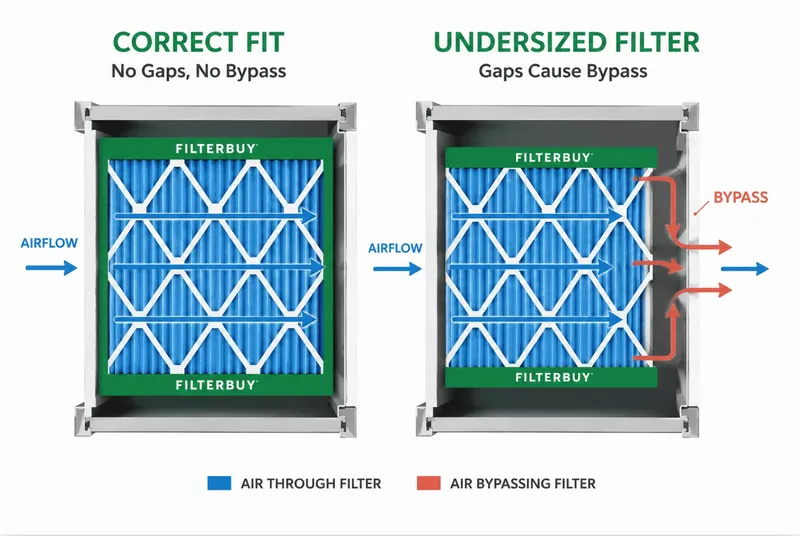
A filter that does not seal loses more of its rating than a cheap filter would. Ratings are measured on the media in a sealed test duct; real installations are not sealed. Air takes the path of least resistance, so a gap between frame and slot sends return air around the filter, then into the supply stream headed for your rooms.
The uncomfortable finding from the research: bypass penalizes high-efficiency filters more than cheap ones. In modeling published in ASHRAE Transactions, small gaps around a well-seated filter had little effect, but sizeable gaps degraded high-efficiency filters far more than low-efficiency ones. A higher-MERV filter presents more resistance, so proportionally more air chooses the gap. Worse, filters with real gaps degrade as they load. Field testing by Lawrence Berkeley National Laboratory in occupied homes found the same mechanism.
Buy a 21x23 because it was on the shelf and you have paid the MERV 13 price while giving away much of the benefit. The Filterbuy three-step fit check takes under a minute.
What If Your Slot Isn’t Exactly 21.5 x 23?
A small clearance is normal. A fingertip-width gap is worth sealing, usually without buying a new filter. Three cases:
The nominal-to-actual difference is not a gap. Filterbuy cuts filters about a quarter inch under nominal so they slide in without binding, and the rack lip covers that clearance. What matters is the leak path around a seated frame, not the label.
A gap you can slide a fingertip into is worth sealing, and you do not need a new filter for it. Adhesive foam weatherstrip on the rack lip, not the filter, gives the frame something to seat against. A few dollars, ten minutes.
If the slot is a genuinely different size, order that size. You can also build a custom filter. Never force an oversized filter in. A bowed frame leaks worse than the gap you were closing.
What MERV 13 Actually Means
ANSI/ASHRAE Standard 52.2 tests a filter across twelve particle size bands in three ranges, then assigns the rating from the worst result. That floor is deliberately conservative, not an average.
Table 1: MERV 13 Certified Minimums by Particle Range
MERV is assigned from the lowest of the three range results, not the average, under ANSI/ASHRAE Standard 52.2. The 50% floor in the finest E1 band is what the rating certifies.
One honest note, because this category usually writes it the other way: MERV 13’s guaranteed floor in the finest E1 band is 50%, not 85%. The 85% belongs to the E2 band. Filterbuy’s test better, but the floor is what the rating certifies, and we would rather you buy on the number actually promised.
MERV 13 sits at FPR 10 and MPR 1900–2800 in retail rating systems. The Filterbuy MERV rating guide walks through the full scale.
Will MERV 13 Restrict Airflow in My System?
Usually not. Most residential systems from roughly 2010 onward run MERV 13 in a 1-inch format without trouble. What matters is return duct sizing, blower type, and whether the filter gets changed on time. Depth matters more than MERV. A 1-inch filter has less media area than a 4-inch, so it reaches meaningful pressure drop sooner.
Here is how Filterbuy builds around that. Our MERV 13 in this size runs 16 pleats per foot; our MERV 8 and MERV 11 run 14. Denser media resists more airflow, so added surface area hands some back. The pleat count does work your blower would otherwise do.
Watch for weaker airflow at the registers, whistling at the slot, or longer run times. If you see those, or your system predates 2010, have a tech check static pressure. Filterbuy also stocks this size in MERV 8 and MERV 11 if lower resistance is the better call.
How Often to Replace a 21.5x23x1 MERV 13 Filter
Every 90 days in a standard home, 60 with pets or allergies, and 30 during wildfire smoke or heavy smog.
Table 2: Replacement Interval by Household Type
Auto-delivery on your chosen schedule saves 5% and can be skipped, edited, or cancelled at any time.
Check your local air quality. Above 100 regularly, use the shorter interval.
The upgrade people regret isn’t going to MERV 13. It’s going to MERV 13 in a filter that doesn’t seat properly. I’ve pulled filters out of slots with a half-inch gap on one side and a homeowner wondering why their allergies didn’t improve. Measure the slot. Buy that exact size. Then change it on schedule. That sequence is worth more than any two-MERV jump.
David Clark, Licensed HVAC Technician, Filterbuy
Where to Verify Everything on This Page: 7 Primary Sources
Every claim above traces to one of these seven.
1. Confirm What the MERV Scale Actually Certifies
How Minimum Efficiency Reporting Values work and what particle sizes the scale covers.
Source: EPA: What is a MERV rating?
2. Get the Federal Guidance on Upgrading a Furnace Filter
The EPA’s consumer hub on residential filtration, covering where a higher-MERV filter helps and where it does not.
Source: EPA: Air Cleaners and Air Filters in the Home
3. See Why MERV 13 Became the Recommended Minimum
From ASHRAE, which authors Standard 52.2 and defines MERV. The primary source behind the MERV 13 recommendation.
Source: ASHRAE: Filtration and Disinfection
4. Read the Technical Q&A Behind That Recommendation
Which filters are recommended, and what happens to airflow resistance when you upgrade.
Source: ASHRAE: Filtration and Disinfection FAQ (PDF)
5. Run MERV 13 Without Hurting Your HVAC System
DOE guidance on running high-MERV filters without hurting system performance. Start here if airflow worries you.
Source: Building America Solution Center: High-MERV Filters
6. See What Loading and Bypass Do in Real Houses
LBNL measured loading, pressure drop, and bypass in occupied homes. The field evidence behind our fit argument.
Source: LBNL-6144E: System Effects of High Efficiency Filters in Homes (PDF)
7. Check Whether Your Filter Is Actually Sealing
Under a minute. Tells you whether air is slipping around your filter instead of through it.
Source: Filterbuy: How to Check If Your Filter Fits Properly
Supporting Statistics
Three federal figures behind this page.
90% of your time is spent indoors. Some pollutant levels run 2 to 5 times higher inside than out. Your HVAC filter is the main air cleaner in the house.
Source: EPA: Indoor Air Quality, Report on the Environment
A clean filter cuts AC energy use by 5 to 15%. Loading is what drives that number. The same loading pushes air around a poorly fitted filter.
Source: DOE Energy Saver 101: Home Cooling (PDF)
MERV 13 is recommended. Only MERV 6 to 8 is required. ENERGY STAR requires MERV 6. Zero Energy Ready Home and Indoor airPLUS require MERV 8. EPA and ASHRAE recommend MERV 13.
Source: Building America Solution Center (DOE/PNNL)
Frequently Asked Questions
Is 21.5x23x1 a Custom Size?
No. Filterbuy stocks it as a standard production size in MERV 8, 11, and 13, shipping free in any quantity. It is uncommon at retail, which is why it is often mistaken for a custom order. For sizes we do not stock, our custom air filter builder covers it.
Is 21.5x23x1 the Same as 21.5x23.5x1?
No, and the half inch matters. They are separate production sizes. A 21.5x23.5 filter will not seat in a 21.5x23 rack, and the reverse leaves a gap along one edge.
Can I Use a 21x23 or 22x24 Instead?
Not advisable. An undersized filter leaves a perimeter gap, and that penalty falls hardest on high-efficiency filters like MERV 13. If yours does not fit, the Filterbuy free exchange policy sends the right size.
Does MERV 13 Help With Wildfire Smoke?
Yes. Wildfire smoke is dominated by fine particles, and MERV 13 is the highest efficiency commonly recommended for home HVAC. During smoke events, run the fan continuously, watch your local AQI, and replace monthly.
How Many Should I Buy at Once?
Four filters cover a year at the 90-day interval. Per-filter pricing drops at 2, 4, 6, and 12, and auto-delivery saves another 5%.