
Mild Smoke Inhalation Symptoms & Treatment: What to Watch For and How to Recover Safely
January 29, 2026

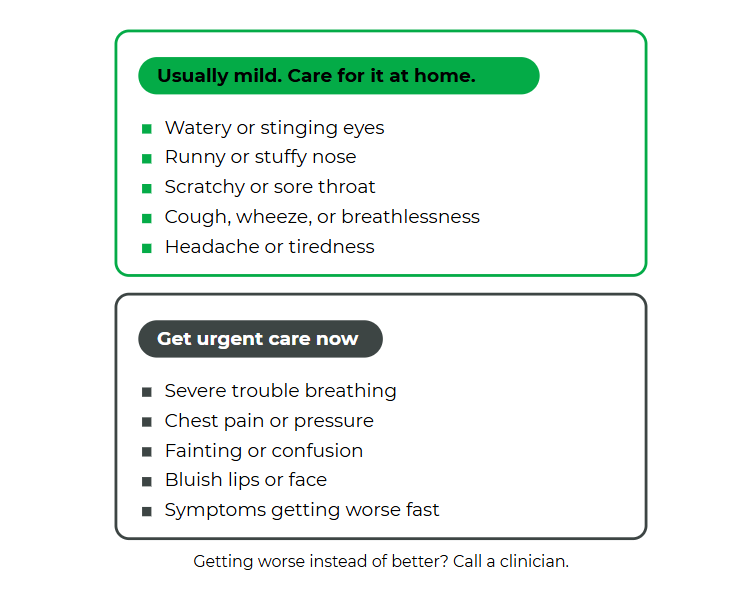
Mild smoke inhalation usually looks like watery eyes, a scratchy throat, a cough, and a headache, and it often eases within hours to a couple of days once you are breathing cleaner air. Rest, drink fluids, keep windows closed, and set your HVAC or window AC to recirculate. Chest pain, severe trouble breathing, fainting, bluish lips, or confusion is not mild and needs urgent care.
Getting to cleaner air is the first step, so check whether smoke is drifting into your area before you plan outdoor time. Indoors, your central filter is what the air keeps passing through. MERV 11 captures finer particles like pet dander and mold spores, and MERV 13 captures microscopic particles.
Answer 3 quick questions and we will match you to your filter.
Or see where the smoke is right now on the live wildfire and smoke map.
This page is general information about smoke exposure and air filtration. It is not medical advice.
Wildfire smoke is a mix of gases and ultra fine particles that can travel far and reach deep into the lungs. Even brief exposure can irritate eyes and airways. This guide focuses on mild smoke inhalation symptoms, when to get help, and simple recovery steps you can do at home with clean air habits, a room True HEPA purifier, and a high MERV central filter.
Key Takeaways
Mild smoke often causes watery eyes, runny or stuffy nose, sore throat, cough, wheeze, shortness of breath, headache, and fatigue
Get to cleaner air, set HVAC or window AC to recirculate, and run a room True HEPA purifier in a clean room
Upgrade your central HVAC filter to the highest safe MERV, ideally MERV 13, and replace it sooner after heavy smoke
High risk groups should seek care sooner and anyone with chest pain, severe breathing trouble, fainting, or confusion needs urgent help
Symptoms To Watch For
Common Mild Symptoms
Watery or stinging eyes
Irritation of the eye surface and tear ducts from fine particles and gases.Runny or stuffy nose
Swelling of the nasal lining with extra mucus as the nose tries to trap particles.Scratchy or sore throat
Dryness and inflammation of the upper airway after particle exposure.Cough or phlegm
Reflex to clear inhaled particles, often with thicker mucus than usual.Wheeze or noisy breathing
Narrowing of the lower airways creates a musical or whistling sound on exhale.Shortness of breath
Sensation of working harder to breathe or getting winded with light activity.Headache
Diffuse head pain that can accompany airway irritation and poor air quality.Tiredness or lightheadedness
Overall fatigue or brief dizziness as the body responds to inhaled irritants.
Heart Related Effects To Take Seriously
Wildfire smoke is linked with higher emergency visits for cardiovascular and respiratory problems as smoke density rises. Any chest pain, pressure, fainting, or new confusion needs urgent care.
Who Is Most At Risk
People with asthma, COPD, or heart disease, older adults, children, pregnant people, outdoor workers, and those with fewer protections face higher risk and should seek care sooner.
How Long Does Smoke Inhalation Take To Heal
Recovery depends on how much smoke you inhaled and your health. Mild irritation often improves after you leave the smoke and rest. If breathing symptoms do not improve or they get worse, contact a healthcare provider.
Smoke Inhalation Treatment In Hospital
If a clinician suspects more than a mild injury, treatment focuses on supporting breathing and protecting the airway. This can include oxygen therapy, medicines for the airways, and in some cases ventilator support, with evaluation such as blood tests and imaging.
Fire Smoke Inhalation Treatment At Home
Get to cleaner air and limit new exposures.
Rest and drink fluids.
Keep windows closed during smoky periods. Set HVAC or window AC to recirculate. Close any fresh air intake if present.
Use a portable air cleaner with True HEPA sized to the room you use most.
Upgrade your central filter. EPA notes that moving to MERV 13 or higher can be especially important during smoke and that MERV 13 to 16 can remove up to about 95% of particles that pass through. Many systems can take MERV 13 if the filter fits correctly and is replaced often. Ask an HVAC professional if unsure.
During heavy smoke avoid high heat cooking that adds particles. Avoid single hose portable AC units because they can pull more outdoor smoke indoors.
During Smoky Periods
Set Up A Clean Room
Pick one room you use most. Close windows and doors. Run a True HEPA air cleaner that is sized to the room. Set central HVAC or window AC to recirculate and close any outside air intake. Keep the unit intake and outlet clear.
Masks When You Must Go Out
Keep NIOSH approved N95 respirators on hand and learn proper fit. They can lower exposure to smoke particles when you need to go outside.
Check Smoke And Aqi Before Activities
Use AirNow for current advisories and the Fire and Smoke Map. Plan outdoor time for cleaner periods and move exercise indoors when the AQI is poor.
After The Smoke
After the smoke clears
Ventilate when outdoor air improves. Open windows for a short flush if local guidance allows. Inspect your HVAC filter and consider replacing it sooner after heavy smoke since captured particles can load the filter faster. Ensure the filter fits the slot snugly.
After Smoke Cleanup
Wipe hard surfaces with a damp microfiber cloth. Vacuum carpets and upholstery with a HEPA or small particle vacuum. Launder throws and washable curtains. Check and replace the HVAC filter sooner if the air is very smoky.
Return To Activity
Wait until symptoms ease and outdoor air improves. Start with light indoor movement. Add outdoor exercise in shorter sessions and watch for cough or chest tightness.
Health Considerations
Irritant Vs. Allergic Symptoms
Smoke irritation affects nearly everyone. Allergy flares can look similar but are driven by immune response. If you have allergies or asthma, expect stronger symptoms and use your written care plan.
For People With Asthma Or Copd
Keep rescue medicine close. Use a spacer if one was prescribed. Track symptoms or peak flow for a few days after heavy smoke. Contact your clinician sooner if your baseline control worsens.
Children And Pregnancy
Children breathe more air per body weight and can show faster fatigue or cough. Pregnant people can be more sensitive to smoke exposure. Plan earlier indoor days and call a clinician sooner if symptoms persist.
Make Your Home A Clean Air Zone This Smoke Season
For whole home protection during smoky periods, use Filterbuy MERV 11 or MERV 13 pleated filters if your system supports them. Pair this with a room True HEPA purifier in bedrooms and living areas for extra polishing.
If odors are a concern, choose Filterbuy’s Odor Eliminator option with activated carbon for gases and smells at the system level.
FAQs
What Are Common Mild Smoke Inhalation Symptoms?
Watery or stinging eyes. Runny or stuffy nose. Scratchy or sore throat. Cough with or without phlegm. Wheeze. Shortness of breath. Headache. Tiredness.
How Do I Know If It Is An Emergency?
Get urgent care for severe trouble breathing, chest pain, fainting, bluish lips or face, or fast worsening symptoms.
How Long Does Mild Smoke Inhalation Take To Heal?
Many people feel better within hours to a couple of days after leaving the smoke. Call a clinician if symptoms do not improve or get worse.
What Helps At Home Right Away?
Go to cleaner air. Close windows. Set HVAC or window AC to recirculate. Create a clean room and run a room air cleaner with True HEPA.
Do Air Purifiers Help And Which Type?
Yes. Use a portable air cleaner with True HEPA that is sized to your room. Keep the intake and outlet clear.
What Hvac Filter Should I Use During Smoke?
Use the highest MERV your system safely supports. Many homes use MERV 11 or MERV 13. Replace the filter sooner after very smoky periods.
Should I Wear A Mask Outside During Smoky Days?
Yes, if you must go out. A well fitted NIOSH approved N95 can reduce smoke particle exposure.
Is It Okay To Open Windows?
Keep windows closed when outdoor air is smoky. Ventilate with open windows only when outdoor air improves.
Who Is Most At Risk From Smoke?
People with asthma, COPD, or heart disease, older adults, children, pregnant people, outdoor workers, and those with fewer protections. They should seek care sooner.
What Should I Do After The Smoke Clears?
Air out the home when outdoor air improves. Wipe dusty surfaces. Vacuum with a HEPA or small particle vacuum. Check the HVAC filter and replace if heavily loaded.