
HEPA Air Filter vs. MERV Rating Chart: Choosing the Right Filter for Your Home
September 24, 2025

Homeowners are becoming increasingly aware that indoor air quality affects their families' health and comfort. With rising concerns about allergens, pollution, and airborne viruses, many people are searching for effective filtration solutions. However, the terminology around air filters can be confusing. Should you choose a HEPA filter or stick with a MERV-rated option? This guide from Filterbuy will clear up the confusion and help you make the best filter choice for your home.
Key Takeaways
Poor air quality can impact health, comfort, and overall well-being, making filtration solutions a critical consideration for homeowners.
HEPA filters are highly effective at capturing small particles (including those as small as 0.3 microns) with a 99.97% efficiency rate.
MERV-rated filters are rated on a scale from 1 to 20 based on their ability to remove particles of varying sizes, with higher ratings indicating greater efficiency.
Consider factors like allergy sensitivities, household size, local air quality, and budget when selecting the right air filter from Filterbuy for your home.
Understanding MERV Ratings
MERV stands for Minimum Efficiency Reporting Value, a standardized system that rates how effectively air filters capture particles. The scale runs from 1 to 16, with higher numbers indicating better filtration performance.
For residential applications, most homeowners benefit from filters in the MERV 8-13 range:
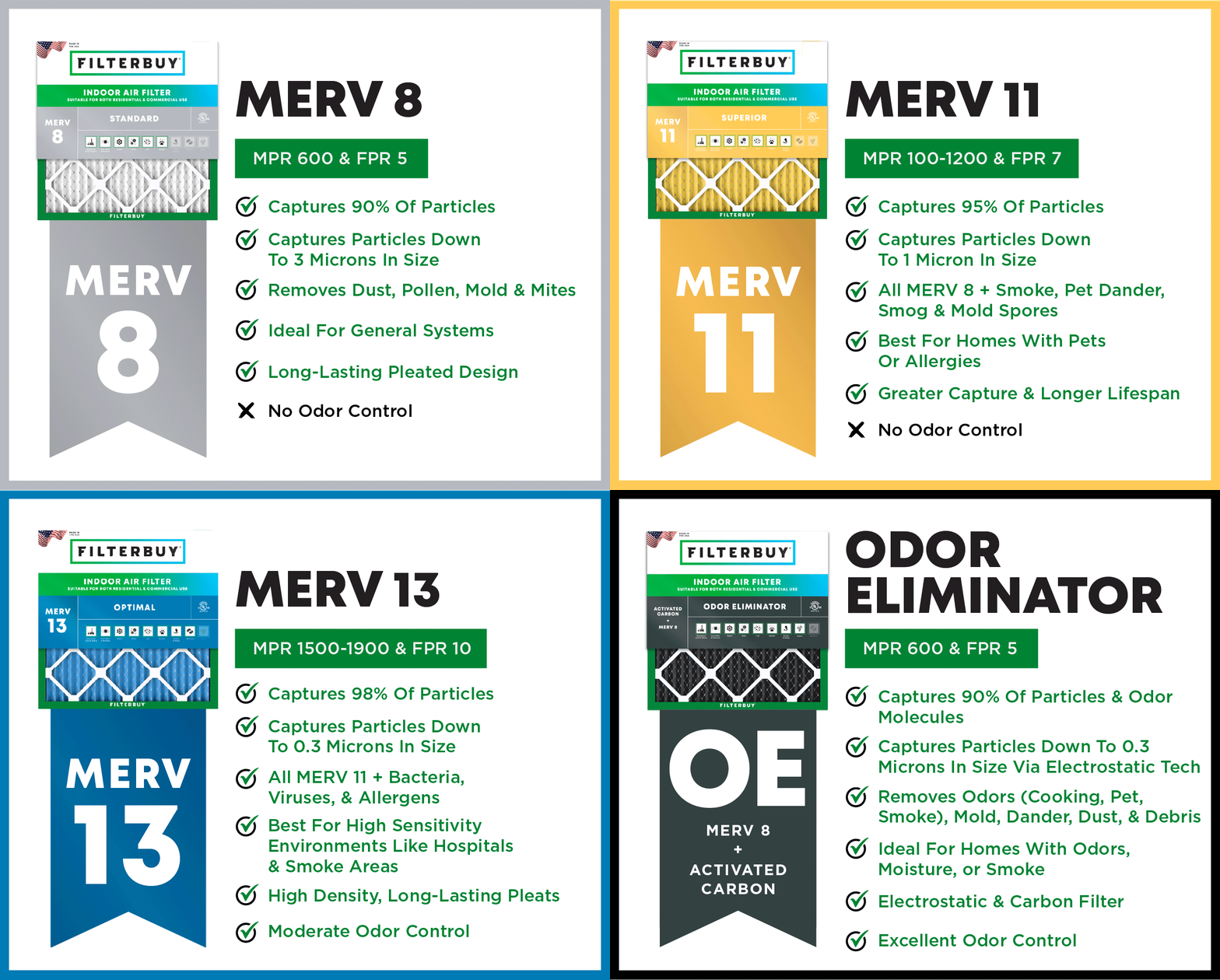
MERV 8: Captures large particles like dust, lint, and pollen
MERV 11: Removes smaller particles including pet dander, dust mite debris, and mold spores
MERV 13: Filters fine particles such as bacteria, smoke, and some virus-carrying droplets
MERV Rating Chart
| MERV Rating | Particle Size Captured | Typical Applications |
|---|---|---|
| 1–4 | 10+ microns | Basic residential filters |
| 5–8 | 3–10 microns | Standard home use |
| 9–12 | 1–3 microns | Superior residential filtration |
| 13–16 | 0.3–1 microns | Hospital-grade applications |
What is a HEPA Air Filter?
HEPA (High Efficiency Particulate Air) filters represent the gold standard in air filtration. To earn the HEPA designation, a filter must remove at least 99.97% of particles that are 0.3 microns or larger in diameter. This performance level is equivalent to MERV 17-20 ratings.
HEPA filters are commonly used in:
Hospitals and medical facilities
Cleanrooms and laboratories
Commercial aircraft
High-end air purifiers
Pros of HEPA Filters:
Unmatched filtration: Removes virtually all microscopic particles
Proven performance: Meets strict efficiency standards
Excellent for allergies: Captures even the smallest allergens
Cons of HEPA Filters:
Higher cost: More expensive than standard MERV filters
Airflow restriction: Dense media can strain HVAC systems
System incompatibility: Most residential HVAC systems cannot accommodate true HEPA filters
HEPA vs. MERV: What's the Difference?
The key differences between HEPA and MERV filters come down to performance standards, applications, and system requirements.
Filtration Performance:
HEPA filters capture 99.97% of 0.3-micron particles in a single pass
MERV 13 filters capture approximately 75-85% of particles in the same size range
Airflow Requirements:
HEPA filters require powerful fans to push air through dense media
MERV-rated pleated filters allow better airflow in residential systems
Practical Applications:
HEPA: Best for standalone air purifiers and specialized environments
MERV: Designed for whole-home HVAC integration
Most residential HVAC systems cannot generate enough airflow to effectively use true HEPA filters without modifications. This is where high-quality pleated MERV filters become the practical solution for homeowners seeking cleaner air.
Proper Installation for Optimal Performance
Whether you choose MERV 8, 11, or 13, proper installation ensures maximum effectiveness:
Check airflow direction: Look for arrows on the filter frame indicating airflow direction
Ensure proper fit: The filter should fit snugly without gaps around the edges
Replace on schedule: Change filters every 60-90 days, or sooner if they appear gray or dirty
Monitor system performance: If you notice reduced airflow, consider a lower MERV rating
Why Pleated Filters from Filterbuy Are the Smart Choice
Pleated filters offer significant advantages over basic fiberglass options:
More Surface Area: Pleated design provides more filtration media in the same space, increasing particle capture without restricting airflow.
Better Value: Last longer than fiberglass filters, providing better cost-per-use.
Superior Performance: Capture smaller particles more effectively than flat filters.
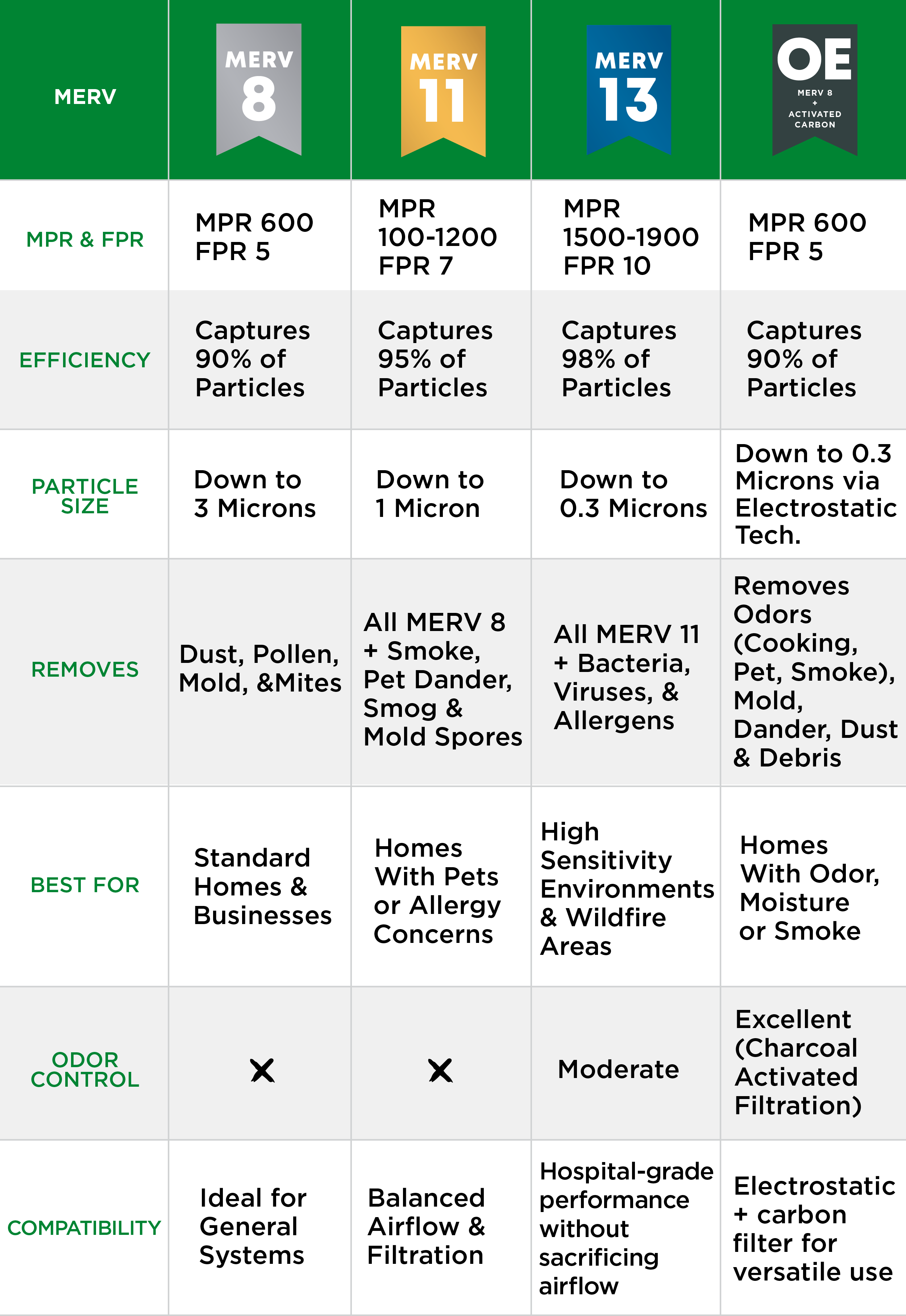
Filterbuy's pleated MERV 8, 11, and 13 filters strike the perfect balance between hospital-grade filtration and residential system compatibility. Made in the USA with quality materials, these filters provide reliable air quality improvement at affordable prices.
Filterbuy Gives You the Best Filter Choice for Your Home
While HEPA filters represent the pinnacle of air filtration technology, they're designed for hospital and laboratory environments, not residential HVAC systems. For 99% of homeowners, high-quality pleated MERV filters deliver the right combination of performance, system compatibility, and value.
MERV 8 filters handle everyday dust and pollen effectively. MERV 11 provides superior protection against pet dander and mold spores. MERV 13 offers near-HEPA performance while working seamlessly with your existing HVAC system.
Don't let perfect be the enemy of good. Choose the highest MERV rating your system can handle, replace filters regularly, and enjoy cleaner, healthier air throughout your home.
Ready to upgrade your home's air quality? Shop Filterbuy's pleated filters today to protect both your air and your HVAC system. With free shipping, bulk savings, and convenient auto-delivery options, maintaining clean air has never been easier.
Frequently Asked Questions
What MERV rating is equivalent to HEPA?
True HEPA performance is equivalent to approximately MERV 17-20. However, MERV 13 filters offer excellent filtration for residential use, capturing most harmful particles that concern homeowners.
Is MERV 13 good for allergies?
Yes, MERV 13 filters effectively capture common allergens including pollen, pet dander, dust mite debris, and mold spores. They also filter out bacteria and some virus-carrying particles.
Does higher MERV restrict airflow?
Higher MERV ratings do create more airflow resistance. However, quality pleated filters like those from Filterbuy are designed to balance filtration efficiency with proper airflow for residential systems.
Can MERV 8 improve air quality?
Absolutely. MERV 8 filters capture larger particles like dust, lint, and pollen, providing noticeable improvements in air quality compared to basic fiberglass filters.
What's the difference between MERV 13 and HEPA?
The main difference is efficiency: HEPA filters remove 99.97% of 0.3-micron particles, while MERV 13 filters capture 75-85% in the same size range. However, MERV 13 filters work in standard home systems, while HEPA typically requires specialized equipment.
Can my HVAC handle MERV 13 filters?
Many modern systems can, but older or less powerful HVAC units may struggle with airflow. Always check your system’s manual or consult a technician before upgrading.
Why are MERV 13 filters more expensive?
They use denser, higher-quality media to trap finer particles. This added efficiency increases manufacturing costs but delivers better health benefits.
How often should I replace my air filter?
Most pleated filters should be replaced every 90 days, but homes with pets, allergies, or high dust levels may need replacements every 60 days.
What happens if I use the wrong size filter?
An incorrectly sized filter can cause air leaks, reduce efficiency, and allow unfiltered air into your system. Always match the exact size recommended for your unit.
Do pleated filters last longer than fiberglass filters?
Yes. Pleated filters typically last 2–3 times longer than fiberglass filters because of their larger surface area and better particle capture.