Adding a Mini Split AC System in South Dakota:
The Real 2026 Rebate Picture
Written by Michelle Wan · Reviewed for technical accuracy by David Clark, Licensed HVAC Technician Published: July 21, 2026 · Updated: July 21, 2026
In 2026, most South Dakota mini split rebates come from your local electric utility, not the federal government. A ductless mini split runs about $3,000 to $8,000 installed. The federal 25C tax credit expired at the end of 2025, and South Dakota is the only state that opted out of the federal $14,000 HEEHRA rebate, so what is left is your co-op or utility rebate, often a few hundred dollars.
Take the quick match below and we will point you to the right system, then you check your provider for the rebate.

Answer a few quick questions and we will match you to the right mini split for your South Dakota home.
TL;DR
Adding a ductless mini split AC system in South Dakota usually costs about $3,000–$8,000 installed, and in 2026 most rebate savings come from your local electric utility or cooperative, not the federal government. The federal 25C heat-pump tax credit expired December 31, 2025, and South Dakota is the only state that opted out of the federal HEEHRA rebate program. That leaves local utility and co-op rebates, typically a few hundred dollars, as the savings that remain.
Key Takeaways
A ductless mini split adds cooling (and usually heating) to homes without ductwork; South Dakota installs commonly run $3,000–$8,000 depending on how many rooms you cool.
The federal 25C tax credit that paid up to $2,000 for qualifying heat pumps expired December 31, 2025. Systems installed in 2026 no longer qualify.
South Dakota is the only U.S. state to opt out of the federal HEEHRA / Home Energy Rebates, so the widely advertised $14,000 point-of-sale rebate is not available to South Dakota homeowners.
Local utilities and co-ops still pay, usually a few hundred dollars. Southeastern Electric Cooperative pays $300 for a ductless mini split; larger rebates ($600–$800) generally go to ducted air-source or geothermal heat pumps.
Utility rebate budgets are first-come, first-served and change often, so confirm the current amount with your provider before you buy.
What “Adding a Mini Split AC System” Means in South Dakota
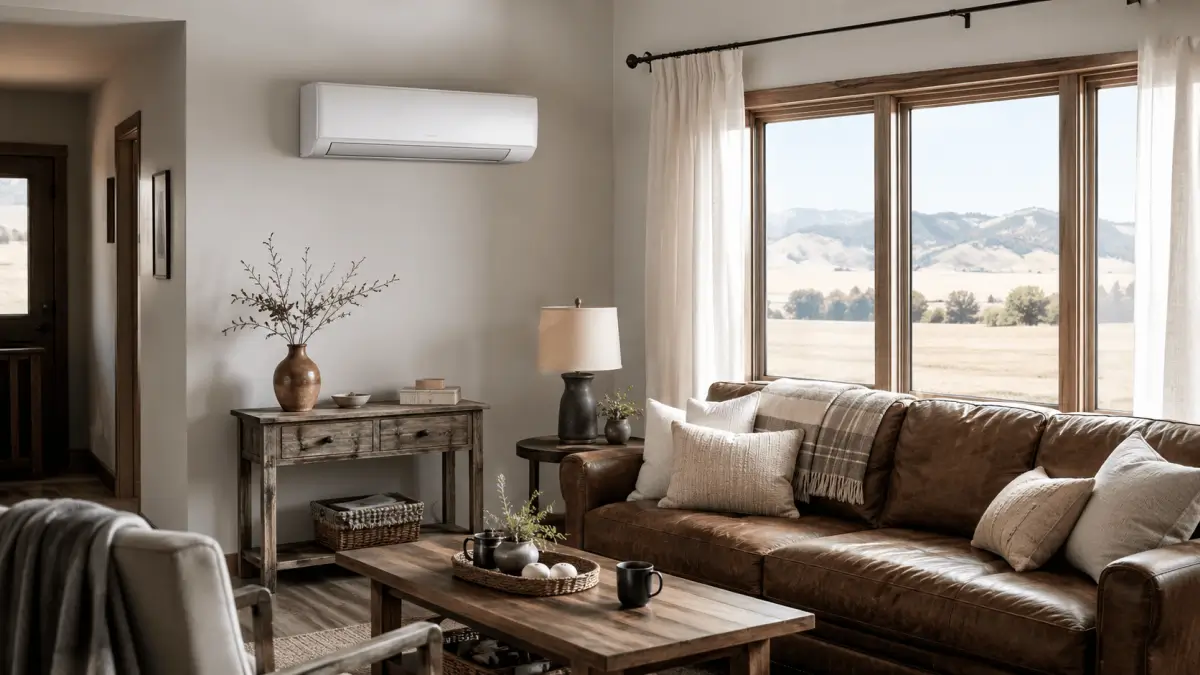
A ductless mini split is a heating and cooling system with one outdoor condenser connected to one or more indoor units, with no ductwork required. Each indoor “head” cools (and usually heats) its own zone, so you can add comfort to a single room, a finished basement, a garage, an addition, or a whole older home that never had ducts. Most units sold today are heat pumps, meaning the same system cools in summer and heats in the shoulder seasons. Because a mini split has no ducts, it also avoids the duct losses that can waste about 30% of the energy a central system uses, according to the EPA’s ENERGY STAR program.
Mini splits are a popular fit for South Dakota homes precisely because so many of them (farmhouses, older Sioux Falls and Rapid City homes, cabins, and additions) lack the ductwork a central AC needs. Adding one avoids tearing into walls to run ducts. Filterbuy builds its own R-32 ductless mini split heat pumps in 12,000 to 24,000 BTU sizes, spec’d to the ENERGY STAR-aligned efficiency most 2026 rebates look for, so the unit that adds comfort is also built to qualify for the rebate.
How Much Does It Cost to Add a Mini Split in South Dakota?
Adding a mini split in South Dakota typically costs $3,000–$8,000 installed. A single-zone system for one room sits at the lower end; a multi-zone system serving three or four rooms reaches the upper end. Equipment size (measured in BTUs), the number of indoor heads, and installation complexity drive the price more than any other factor. Filterbuy breaks the price down further in its mini split installation cost guide.
The 2026 Rebate Picture: What Actually Changed
Most mini split rebate guides are written for the whole country, and they quietly mislead South Dakota homeowners, because the two federal programs they lean on are gone or off-limits here. Filterbuy has made air filters in the U.S. since 2013, now builds its own line of mini split heat pumps, and works with rebate programs week to week across the country. After tracking those programs state by state, we’ll say it plainly: South Dakota is the one place where the usual “stack every incentive” playbook falls apart. Here is the honest, current picture.
At a glance, here is where each rebate program stands for South Dakota in 2026:
The federal 25C tax credit expired December 31, 2025. Under Section 25C, homeowners could claim 30% of a qualifying heat pump’s cost, up to $2,000 a year. The One Big Beautiful Bill Act (Public Law 119-21), signed July 4, 2025, moved up the expiration date. Systems installed in 2026 do not qualify. If your mini split was up and running before the end of 2025, the credit is still yours, so file IRS Form 5695 with your 2025 return. Filterbuy’s 2026 mini split tax credit guide walks through the filing details.
South Dakota opted out of the federal HEEHRA rebates. The Inflation Reduction Act created HEEHRA (Home Electrification and Appliance Rebates), part of the DOE Home Energy Rebates program, which gives income-qualified households up to $14,000 in point-of-sale rebates for equipment like heat pumps. South Dakota is the only state or territory in the country that declined to participate, forfeiting roughly $68 million in allocated funds. That means the $14,000 rebate you may see advertised nationally is not available to South Dakota homeowners.
The practical takeaway: in 2026, the rebate money a South Dakotan can actually collect for a mini split comes almost entirely from local electric utilities and cooperatives.
“Everywhere else in the country, our advice is simple: stack the federal credit, the state program, and your utility rebate. In South Dakota we have to say the opposite: the federal ladder is gone, so don’t count a dollar you haven’t confirmed with your own electric co-op. The homeowners who come out ahead here are the ones who call their utility before they call anyone else.”
Filterbuy Team
South Dakota Utility and Co-op Mini Split Rebates
Your rebate is set by whoever bills you for electricity, not the state, so the first move is figuring out who that is. Western South Dakota is largely served by Black Hills Energy; the southeast by Southeastern Electric Cooperative; many rural areas by cooperatives like Sioux Valley Energy; and Sioux Falls-area municipal utilities through Heartland Energy. Not sure? Check the name at the top of your power bill, or run your ZIP code through DSIRE.
Most of these programs pay a few hundred dollars for a qualifying ductless (mini split) heat pump, with efficiency and sizing requirements. Larger rebates tend to go to ducted air-source or geothermal systems rather than ductless mini splits. A few providers also offer low-interest financing for qualifying heat pumps (Sioux Valley Energy is one), so ask your utility about loan programs as well as rebates.
Rebate amounts last verified July 2026. Programs are budget-limited and change often; confirm the current figure on your provider's application before you buy.
What You’ll Actually Pay After a Rebate
The math on a typical single-zone job looks like this, using real 2026 figures (yours will vary with size, labor, and provider):
Installed cost, 18,000 BTU single-zone mini split: about $4,000 (equipment plus a licensed install)
Southeastern Electric ductless mini split rebate: -$300
Federal tax credit in 2026: $0 (the 25C credit expired at the end of 2025)
Estimated out-of-pocket: about $3,700
The honest lesson here: in South Dakota, the rebate trims the cost; it doesn’t transform it. Budget close to the full installed price and treat the co-op rebate as a few hundred dollars back, not the four-figure federal windfall homeowners in other states are stacking this year.
When It Pays to Chase the Bigger Rebate
Look closely at the table and a pattern jumps out: the ductless mini split rebate is the smallest one most South Dakota utilities pay. Southeastern Electric pays $300 for a ductless mini split, but $600 for a ducted air-source heat pump and $800 for geothermal. So if your home already has ductwork, or you’re replacing a whole-home system anyway, pricing out a ducted air-source or geothermal heat pump can more than double what you get back.
A mini split still wins when you have no ductwork, want to condition one or two rooms, or are adding comfort to a garage, addition, or finished basement. The move is to match the equipment to the job first, then claim the rebate that equipment qualifies for, not the other way around.
Start With a Mini Split That’s Built to Qualify
The fastest way to lose a South Dakota rebate is to buy the wrong equipment. Every program here checks the efficiency rating, ENERGY STAR certification, and a matched AHRI number before it pays, so the smart order of operations is to choose a unit built to those specs first. Filterbuy’s own R-32 ductless mini splits are spec’d to the efficiency most 2026 rebates require and sold direct, which keeps the equipment side simple: pick a Filterbuy mini split that qualifies, have a local licensed contractor install it, then let your co-op or utility cut the rebate check.
How to Claim a Mini Split Rebate in South Dakota
Follow these steps to make sure your install qualifies and your paperwork clears.
Find your electric provider first. Your utility or cooperative, not the state, runs the rebate. Start at your provider’s “rebates” or “energy efficiency” page.
Check the efficiency and sizing rules before you buy. Most programs require an ENERGY STAR certified unit and set minimum SEER2/HSPF2 ratings or a minimum tonnage. Buying the wrong model is the most common reason a rebate is denied.
Use a licensed local installer and keep every document. Save the itemized invoice showing manufacturer, model number, and price, plus the outdoor unit’s serial number and the AHRI reference number for the matched system.
Submit promptly. Many programs are first-come, first-served and close when funds run out. Apply as soon as the install is complete.
Ask your tax advisor about 2025 installs. If your system was running before December 31, 2025, confirm whether you can still claim the 25C credit on your 2025 return.
Will a Mini Split Keep Up in South Dakota Winters?
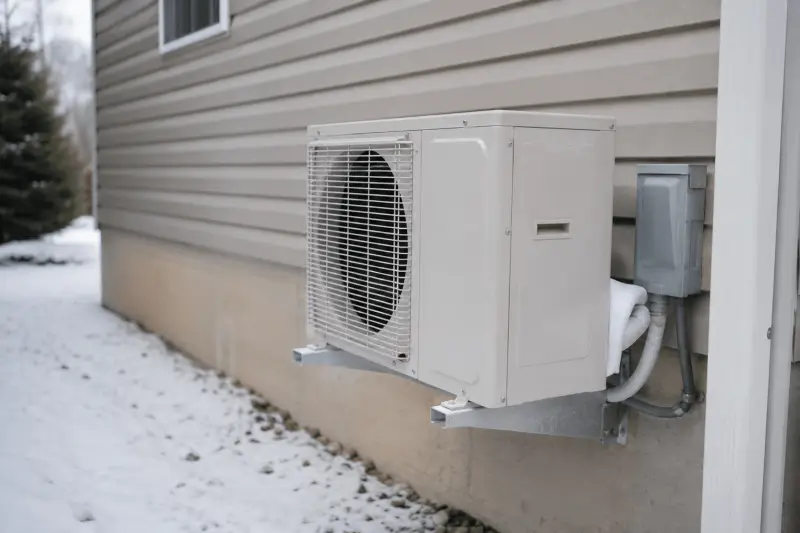
A mini split heat pump cools reliably all summer in South Dakota, but as a heat source it needs a backup for the coldest stretches. Standard heat pumps lose efficiency as temperatures fall, and when the thermometer drops well below freezing (routine in a South Dakota winter), the system may not deliver enough heat on its own. Plan on a supplemental heat source (your existing furnace, electric baseboard, or a wood/pellet stove) for deep cold.
If you want the mini split to carry more of the heating load, look specifically at cold-climate models, which are engineered to hold efficiency at low temperatures. A larger single-zone unit such as a 2-ton (24,000 BTU) mini split can serve as the primary heat source for a large room in milder weather. Right-sizing the unit to the space matters even more in a cold climate than a mild one. ENERGY STAR’s ductless heating and cooling guide explains how the systems work and what efficiency ratings to look for.
Reviewer’s tip from David Clark, Licensed HVAC Technician: “In a South Dakota winter, size the mini split for the room and plan the backup heat from day one. Don’t count on one wall head to carry a whole house at 15 below zero. Look for a cold-climate-rated unit tested to 5°F, then keep the furnace or electric backup wired in behind it. That backup isn’t only about comfort: several co-op rebates here require electric primary heat and a heat meter, so how you plan the heating and how you qualify for the rebate end up being the same decision.”
Keep Your Mini Split (and Your Air) Clean
One upkeep detail specific to mini splits: the washable pre-filter behind the indoor unit’s panel protects the equipment, not your lungs. It traps dust and lint so the coil stays efficient, but it isn’t real air filtration. Rinse it every few weeks, and if that same room is also served by a central HVAC system, keep a quality pleated filter on that system handling the actual air-cleaning. Filtration is Filterbuy’s home ground. We’ve made air filters in the USA since 2013 and shipped them to more than two million households, so this is the step we tell neighbors not to skip.
Frequently Asked Questions
Glossary
Ductless mini split: A heating and cooling system with one outdoor condenser and one or more wall-, floor-, or ceiling-mounted indoor units, requiring no ductwork.
Heat pump: A system that moves heat rather than burning fuel; it cools in summer and heats in cooler weather. Most mini splits are heat pumps.
25C tax credit: A federal income-tax credit (Energy Efficient Home Improvement Credit) that paid up to $2,000 for qualifying heat pumps; it expired December 31, 2025.
HEEHRA: The Home Electrification and Appliance Rebate program, a federal point-of-sale rebate of up to $14,000 for income-qualified households. South Dakota opted out.
ASHP: Air-source heat pump, a heat pump that exchanges heat with outdoor air; a ducted or ductless mini split is one type.
SEER2 / HSPF2: Standardized ratings for cooling efficiency (SEER2) and heating efficiency (HSPF2); utilities set minimums for rebate eligibility.
ENERGY STAR: A U.S. EPA certification for energy-efficient equipment; most rebates require it.
AHRI reference number: An identifier confirming a matched heating/cooling system’s rated performance, verifiable in the AHRI Directory and often required on rebate applications.
The 7 Places We Check Before Adding a Mini Split in South Dakota
The honest part most pages skip: in South Dakota, the real mini split money comes from your local utility, not Washington. So before you buy anything, this is the homework we do, the same sources we point a neighbor to. Every one is a government agency, a non-profit database, or the utility actually cutting the check. No sales pitch, no filler.
Get the Straight Story on the Federal Tax Credit
We would rather give you the truth than help you plan around a credit that’s gone. The Federal 25C Credit Ended December 31, 2025. Only systems installed in 2025 (filed on Form 5695) still count. Check the IRS page before you trust any site still promising a 2026 federal write-off. Source: IRS: Energy Efficient Home Improvement Credit
See Why the $14,000 Federal Rebate Skips South Dakota
This one surprises people. South Dakota is the only state that opted out of the federal HEEHRA rebates, so that $14,000 point-of-sale deal you’ve read about? Not on the table here. The Department of Energy’s page lays out who’s in and who’s not. Source: U.S. Department of Energy: Home Energy Rebates Program
Find the Rebates Hiding in Your ZIP Code
Not every rebate makes the headlines. Punch in your South Dakota ZIP code and this free database pulls up every state, local, and utility incentive tied to your address, the fastest way to catch the ones your neighbors miss. It’s run by NC State University, so it’s built to inform, not to sell. Source: DSIRE: Database of State Incentives for Renewables & Efficiency
Make Sure Your Unit Clears the Efficiency Bar
Buying the wrong model is the number-one reason a rebate gets denied, and it’s an easy mistake to dodge. Almost every South Dakota rebate wants an ENERGY STAR-certified unit at a set SEER2/HSPF2 rating. This EPA page breaks down what those numbers mean in plain English, plus a Rebate Finder. Source: ENERGY STAR: Ductless Heating & Cooling
Confirm Your System Is a Real Matched Pair
A mini split only earns its rated efficiency when the indoor and outdoor units are certified to work together. Your rebate application will ask for an AHRI reference number, so look up your exact pairing here before you sign anything. Thirty seconds now saves a denied application later. Source: AHRI: Directory of Certified Product Performance
Grab Your Rebate If Black Hills Energy Powers Your Home
If you’re out west near Rapid City, this is your page. Black Hills Energy rebates a ductless mini split rated 15.2 SEER2 or higher, and the current 2026 application (with the exact dollar amount) is linked right there. Source: Black Hills Energy: South Dakota Residential Electric Rebates
See What a Southeastern SD Co-op Actually Pays
Southeastern Electric publishes a clear, itemized rebate list that makes a useful benchmark before you check your own provider. Its page also spells out the fine print most co-ops share: a 2-ton minimum, electric primary heat, and one rebate every 10 years. Source: Southeastern Electric Cooperative: Heat Pump Rebates
Supporting Statistics
We don’t make claims we can’t back. Here are the three numbers behind adding a mini split in South Dakota.
Heating and Cooling Is the Biggest Energy Cost in Your Home
52% of the average U.S. home’s annual energy use goes to heating and air conditioning (2020).
That’s more than every appliance, light, and screen combined.
The takeaway: the efficiency of the system you add moves your biggest bill.
Source: U.S. Energy Information Administration: Use of Energy in Homes
A Mini Split Slashes Heating Energy
ENERGY STAR ductless mini splits use up to 60% less energy than electric resistance heat (baseboard, wall, or radiant).
A heat pump moves heat instead of burning fuel to make it.
In a long South Dakota winter, that’s a real dent in the monthly bill.
South Dakota Left Federal Rebate Money on the Table
South Dakota is the only U.S. state or territory to opt out of the federal Home Energy Rebates (HEEHRA).
It forfeited roughly $68 million, up to $14,000 per household.
That’s why your rebate path runs through local utilities, not Washington.
Ready to Add a Mini Split?
The simplest path in South Dakota comes down to two moves: start with a Filterbuy mini split that’s built to qualify, then claim the rebate your local utility pays. Filterbuy sells ductless mini split heat pump systems sized for South Dakota homes and spec’d for the efficiency rebates require, and our guides handle the rest: the mini split installation cost guide, our 2026 mini split tax credit guide, and rebate breakdowns for other states like our Arizona guide. Get the equipment right with one brand; let your co-op cut the check.
Rebate programs, amounts, and eligibility change frequently and vary by provider. This article is general information, not tax or financial advice. Confirm current details with your utility and a qualified tax advisor before purchasing.
Sources and Further Reading
ENERGY STAR: Ductless Heating & Cooling (how mini splits work)
Utility programs: Black Hills Energy (SD) · Southeastern Electric Cooperative · Sioux Valley Energy · Heartland Energy
About the Author and Reviewer
Michelle Wan is Brand Manager and air quality writer at Filterbuy, where she turns MERV ratings, filtration, and HVAC efficiency into plain-English advice and fronts much of the brand’s educational video content (B.A., University of California, Santa Cruz). She writes from direct work with Filterbuy’s U.S. manufacturing team.
David Clark is a Licensed HVAC Technician with Filterbuy HVAC Solutions who reviewed this guide for technical accuracy.
Filterbuy has manufactured air filters in the USA since 2013, shipped them to more than two million households, and now builds its own line of R-32 ductless mini split heat pumps.