Mini Split AC in Kansas City, MO: Installation, Costs & Filter Guide (MO Climate)
By Michelle Wan, Brand Manager and Air Quality Writer | Reviewed by David Clark, Licensed HVAC Technician
Published September 16, 2026 | Updated September 16, 2026
A single-zone mini split installed in Kansas City, MO typically costs $2,000 to $6,000 in 2026. Whole-home systems with four or five zones run $10,000 to $18,000 or more. If the unit will heat a room all winter, choose a cold-climate model sized by a Manual J load calculation. The federal 25C tax credit has ended, so check Evergy rebates before you sign. Take the quick quiz below to match your space to the right setup.
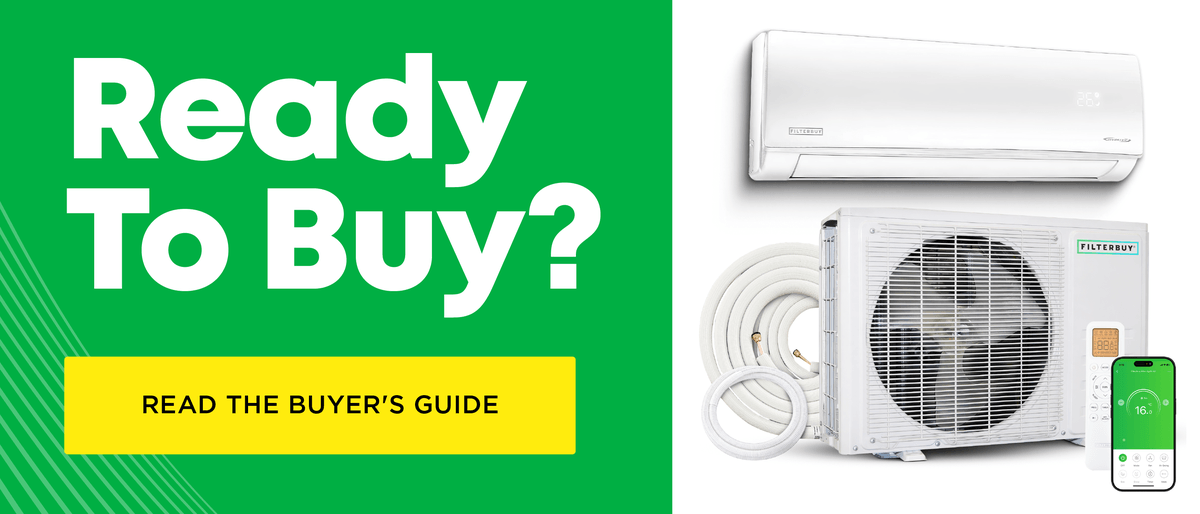
Filterbuy single-zone systems start at $799, with free 2-day delivery on in-stock systems and a 7-year compressor warranty. Professional installation is required.
Shop Filterbuy Mini Split Systems

Answer a few quick questions and we'll help you find the mini split setup that fits your space.
A mini split is a ductless heat pump that heats and cools individual rooms through a wall-mounted indoor head connected by refrigerant lines to an outdoor condenser. Kansas City, Missouri runs that equipment through a mixed climate, where humid summers give way to single-digit winter design days and spring brings smoke from the Kansas prairie. Filterbuy sells single-zone ductless systems and manufactures pleated furnace filters, so this guide covers both the equipment and the air it moves.
TL;DR
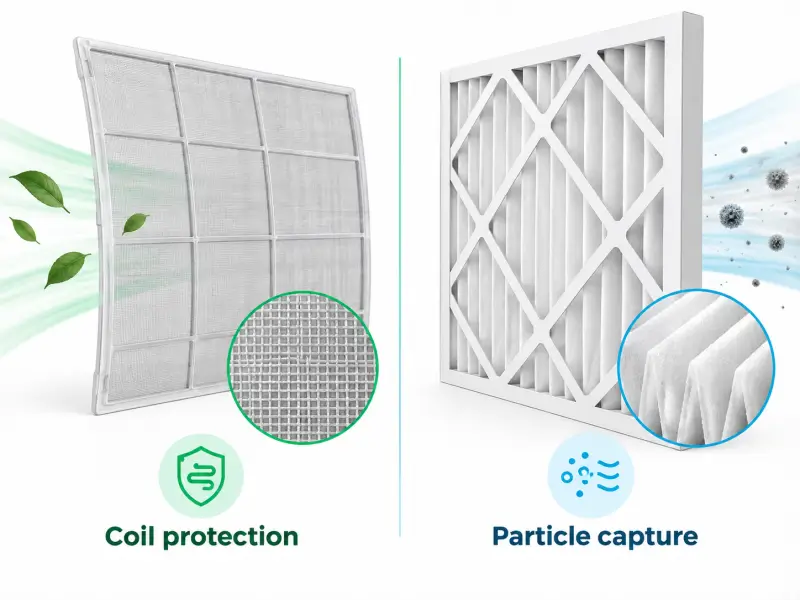
Mini split installation in Kansas City, MO runs about $2,000 to $6,000 for a single-zone system in 2026. In Climate Zone 4A, a mini split carrying winter heat should be a cold-climate model sized by a Manual J load calculation. The federal 25C credit ended December 31, 2025, leaving Evergy utility programs as the main incentive. The mesh screen in a mini split head protects the coil and does not capture fine particles.
Key Takeaways
A single-zone ductless mini split installed in Kansas City generally costs $2,000 to $6,000 in 2026.
Kansas City falls in IECC Climate Zone 4A, and ENERGY STAR lists 9°F winter and 94°F summer design temperatures for Wyandotte County.
The federal Section 25C heat pump credit expired December 31, 2025, and Missouri's state home energy rebates are not yet open, so Evergy programs are the practical 2026 incentive.
How Much Does Mini Split Installation Cost In Kansas City, MO?
Mini split installation in Kansas City, MO costs about $2,000 to $6,000 for a single-zone ductless system in 2026, and a four- or five-zone whole-home system reaches $10,000 to $18,000 or more. Zone count drives most of that spread.
Angi's July 2026 Kansas City data puts HVAC contractor rates at roughly $60 to $120 per hour.
Housing age matters locally. Older homes in neighborhoods like Brookside and Waldo may lack panel room for a dedicated circuit, so ask whether electrical work is included.
Ask every installer to list equipment and labor separately, then check equipment against a published price like Filterbuy's. More pricing detail is in Filterbuy's guide to Missouri mini split costs and rebates.
Mini Split Configurations Compared For Kansas City Homes
Ranges follow Filterbuy's 2026 Missouri pricing. Panel upgrades and permits can add cost.
What Size Mini Split Does A Kansas City Home Need?
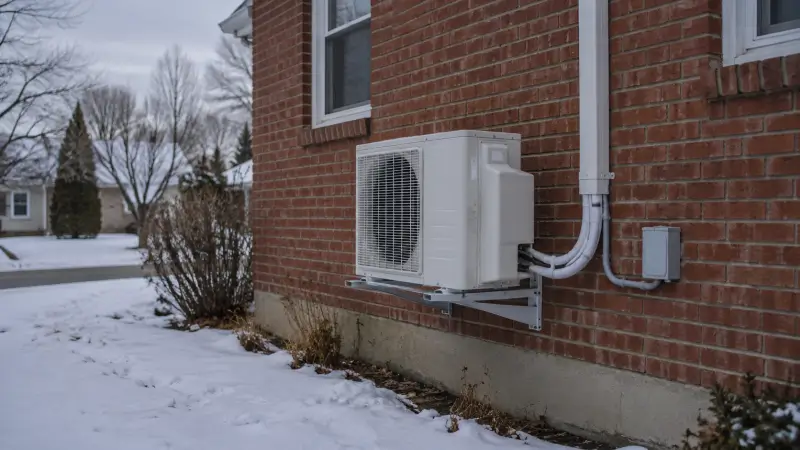
The right mini split size for a Kansas City home comes from a Manual J load calculation run against local design temperatures. Kansas City sits in IECC Climate Zone 4A, a mixed-humid zone, so the system has to handle a humid July afternoon and a single-digit January night alike.
The ENERGY STAR county-level design temperature guide assigns Wyandotte County a 99 percent winter design temperature of 9°F and a 1 percent summer design temperature of 94°F, both drawn from the Kansas City Downtown Airport weather station.
ENERGY STAR certifies cold-climate heat pumps with third-party performance testing down to 5°F, and Kansas City's 9°F design day sits just above that verified point. Below 5°F, capacity falls off, so keep an existing gas furnace as backup. The best mini split for a Kansas City home is a Manual J-sized model with verified heating capacity at 5°F if it will carry winter heat.
Humidity is the summer trap. An oversized mini split short cycles, shutting off before the coil pulls moisture out, so the room ends up cool but clammy.
Which Mini Split Rebates Apply In Kansas City In 2026?
Evergy utility programs are the main mini split incentive for Kansas City homeowners in 2026. The federal Section 25C Energy Efficient Home Improvement Credit was terminated for systems placed in service after December 31, 2025 under Public Law 119-21. Confirm eligibility with a tax professional.
Evergy, the metro's main electric utility, runs separate Missouri and Kansas rebate programs. Most require an authorized Trade Ally contractor, so check with Evergy before you sign.
Missouri's state home energy rebates are funded but not yet open to homeowners. Johnson and Wyandotte county homes fall under Evergy's Kansas program, covered in the Filterbuy guide to Kansas mini split costs and rebates.
Where A Filterbuy Mini Split Fits A Kansas City Home
Filterbuy ductless mini split systems start at a published $799 for the 12,000 BTU model and ship free with 2-day delivery on in-stock systems. Each carries a 7-year compressor and 3-year parts warranty. The 12,000 BTU model covers up to 550 sq ft and runs on 115V or 230V. The single-zone line runs to 24,000 BTU at 17 SEER2, which clears the federal minimum and is built for value, not maximum efficiency.
The Filterbuy line fits a garage workshop or a room addition the ductwork never reached. It provides reliable heating down to 5°F, so if a mini split will carry the winter heat for a room you live in, choose a certified cold-climate model instead.
Professional installation is required and is arranged separately. The warranty is void if the system is self-installed. Compare sizes and current pricing on Filterbuy ductless mini split systems.
Why Kansas City Air Needs A Filter Plan Beyond The Mini Split
Kansas City homes need a filter plan beyond the mini split because the U.S. Environmental Protection Agency states that ductless mini split heat pumps generally do not filter fine particles. The same EPA guidance on ductless mini splits recommends a portable air cleaner when a unit lacks a MERV 13 or higher filter.
Kansas City's first seasonal air quality load arrives in spring. The Kansas Department of Health and Environment reports that prescribed burning of the Flint Hills tallgrass prairie, southwest of the metro, concentrates in early to mid-April and releases large amounts of particulate matter and ozone precursors. Wyandotte and Johnson counties are on the state's April burn restriction list, and the Kansas Flint Hills smoke management plan traces its origins to April 2003, when ozone monitors in Kansas City, Missouri exceeded the federal 8-hour standard. The Mid-America Regional Council also issues a daily SkyCast ozone forecast from March through October. Check current readings on the Filterbuy Kansas City air quality map.
The second, ragweed pollen, peaks in September. The Asthma and Allergy Foundation of America notes that ragweed season generally starts around August and peaks in mid-September, and its 2026 Allergy Capitals report ranked the Kansas City, Missouri metro 42nd of 100.
As a filter manufacturer, Filterbuy puts fit ahead of rating. The EPA advises a snug filter that is never bent or crushed, because a filter that leaks around its edges captures less than its rating promises. A ducted furnace, where one exists, is where a correctly sized pleated filter does whole-home work. Filterbuy MERV 13 air filters fit that furnace, not the ductless head. For rooms served only by a mini split, a portable air cleaner fills the gap, as Filterbuy's breakdown of mini split versus air purifier setups explains.
Filtration Options Compared For A Kansas City Mini Split Home
Confirm your furnace blower can accommodate a MERV 13 rating before upgrading.
How To Clean And Maintain A Mini Split In Kansas City
Rinse the washable mesh filter in each mini split head every two to four weeks during heavy heating and cooling months, and let it dry completely before reinstalling it.
Turn the system off at the controller and the breaker before opening the head.
Lift the front panel and slide out the mesh screens. Vacuum off loose debris.
Rinse the screens with lukewarm water and mild soap, then let them air-dry fully.
Replace, never wash, any carbon or specialty filter behind the mesh.
Reinstall the screens and note the date.
Book a professional mini split service visit once a year for the coil, blower wheel, drain line, and refrigerant charge. Call for repair when a head drips water indoors or shows an error code. Constant running without holding temperature needs a technician too. Filterbuy systems, backed by a 7-year compressor warranty, include a filter-cleaning reminder. In smoke and ragweed season, rinse before the reminder appears.
If a furnace also runs, Filterbuy filter auto-delivery ships its replacement filter on schedule.
A Year-Round Mini Split Calendar For Kansas City
Kansas City mini split upkeep follows the local air seasons, so Filterbuy mapped each task to its month.
March: Rinse screens before burn season. The regional ozone season opens March 1.
April: Flint Hills burning peaks. Keep windows shut on smoky days and rinse screens every two weeks.
May to July: Check the drain line and outdoor coil, and watch SkyCast ozone alerts.
August to October: Ragweed builds toward its mid-September peak. Return to two-week rinses.
November: Book annual service before heating season and clear leaves from the outdoor unit.
December to February: Keep snow off the condenser. Brief defrost fan pauses are normal.
How To Vet A Mini Split Contractor In Kansas City
Hire a mini split installer in Kansas City, MO only after confirming a current city contractor license and a written Manual J load calculation. The job also needs a permit. The Permits Division handles City of Kansas City contractor licensing.
Search the city's licensed contractor database first.
Ask for a line-item bid that separates equipment, labor, line set, electrical work, and permit fees.
Confirm the installer is an Evergy Trade Ally if you plan to claim a utility rebate.
Ask for the rated heating capacity at 5°F alongside the nameplate BTU figure.
Verify EPA Section 608 refrigerant certification.
Supporting Statistics
1. 95% Of Missouri Homes Use Air Conditioning
Missouri has 2.43 million occupied homes.
95% use air conditioning.
19% use individual units, which include ductless mini splits.
16% run a dehumidifier.
Source: U.S. Energy Information Administration, 2020 Residential Energy Consumption Survey
2. Poor Installation Adds About 30% To Energy Use
Improper installation can raise heating and cooling energy use by about 30%.
Oversizing and wrong refrigerant charge were among the common faults.
Source: NIST HVAC installation fault study
3. Kansas City Earned An F For Ozone
Metro rank: 35th worst in the nation for ozone in 2026.
Clay County, MO: 7.7 unhealthy ozone days per year.
Wyandotte County, KS: failing grade for year-round particle pollution.
Source: American Lung Association, State of the Air 2026
The Air Conditioning Contractors of America, which publishes Manual J, states that a proper load calculation is "required by national building codes and most state and local jurisdictions."
"Because Filterbuy makes pleated filters and also sells ductless systems, the question I hear most is whether the mini split will clean the air. In Kansas City's smoke and ragweed seasons, the answer is no. The screen in the head protects the coil. The filtration work belongs to the furnace filter or a portable air cleaner." Michelle Wan, Brand Manager and Air Quality Writer, Filterbuy
Frequently Asked Questions
Glossary
Ductless Mini Split: A heating and cooling system that connects an outdoor condenser to one or more indoor heads with refrigerant lines instead of ductwork.
Cold-Climate Heat Pump: A heat pump certified by ENERGY STAR with third-party performance testing at 5°F.
IECC Climate Zone 4A: The International Energy Conservation Code mixed-humid zone that covers the Kansas City metro.
Manual J: The Air Conditioning Contractors of America residential load calculation used to size equipment for a specific home.
MERV: Minimum Efficiency Reporting Value, the ASHRAE scale that rates pleated filter efficiency.
Section 25C: The federal Energy Efficient Home Improvement Credit, terminated for equipment placed in service after December 31, 2025.
Flint Hills: The largest remaining unplowed tallgrass prairie in North America, in eastern Kansas.