
Kansas City Real-Time AQI Tracker


Get Alerts For Unhealthy AQI In Your Area
When air quality in your area reaches unhealthy levels, we'll send you a quick alert, along with expert tips on how to reduce your exposure.
What's Actually In Kansas City Air Today?
What High AQI Means for Your Lungs in Kansas City
How to Read AQI
The Air Quality Index (AQI) measures how polluted the air is and how it may affect your health.
0–50 (Good): Air quality is satisfactory.
51–100 (Moderate): Acceptable, but some pollutants may pose minor concerns.
101–150 (Unhealthy for Sensitive Groups)
151–200 (Unhealthy)
201–300 (Very Unhealthy)
301+ (Hazardous)
Moderate
Still okay for most, but if you have asthma or allergies, take it easy and avoid long outdoor workouts.
Shop MERV 11 filters→What's the Right Filter for Your AQI Level?
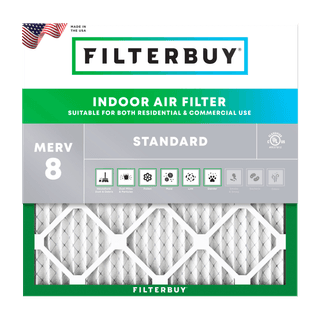
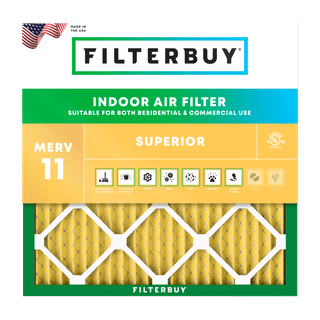
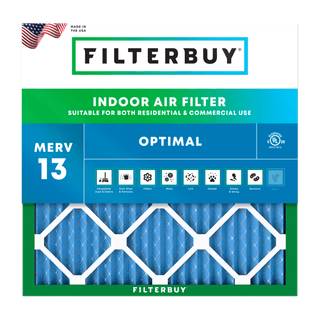



Check Today's Live Real Time Air Quality Index AQI Map in Kansas City, MO Now
Step outside on a hot July afternoon in Kansas City, and the air can look completely clear while ozone quietly climbs to levels your lungs will notice by dinnertime. That gap between what you can see and what you actually breathe is the reason we built the live map on this page. It reads the current Kansas City AQI straight from official monitors and refreshes throughout the day, so you know what the air is doing before you send the kids out back or head out for a run.
Clean air is what we obsess over at Filterbuy every single day. Most of what reaches your family's lungs is invisible. Our goal here is simple. We turn that air into a number you can read at a glance, then show you how to act on it and protect the people under your roof.
TL;DR Quick Answers
For today's Kansas City air quality, check the live AQI map above for the current color and number.
Under 100 is fine for most people, over 100 calls for care among sensitive groups, and over 150 affects everyone.
Kansas City PM2.5 shows on the live map next to the AQI, and it is worth watching on smoky or still days.
On a high reading, shut the windows and run a clean, high-quality HVAC filter indoors.
Top Takeaways
The live map reads today's Kansas City AQI from official monitors and shows it as a color, from green up to maroon.
Ozone and PM2.5 drive most of Kansas City's air quality, and ozone peaks across the warm months from March through October.
Cross 100 on the AQI, and sensitive groups should ease up outdoors. Cross 150, and the air can reach everyone.
Wildfire smoke can spike local PM2.5 fast, even when the fire is hundreds of miles away.
When the outdoor air turns rough, a closed window and a clean, high-quality HVAC filter are the fastest way to protect the air inside.
What The Live Air Quality Index AQI Map In Kansas City Shows Right Now
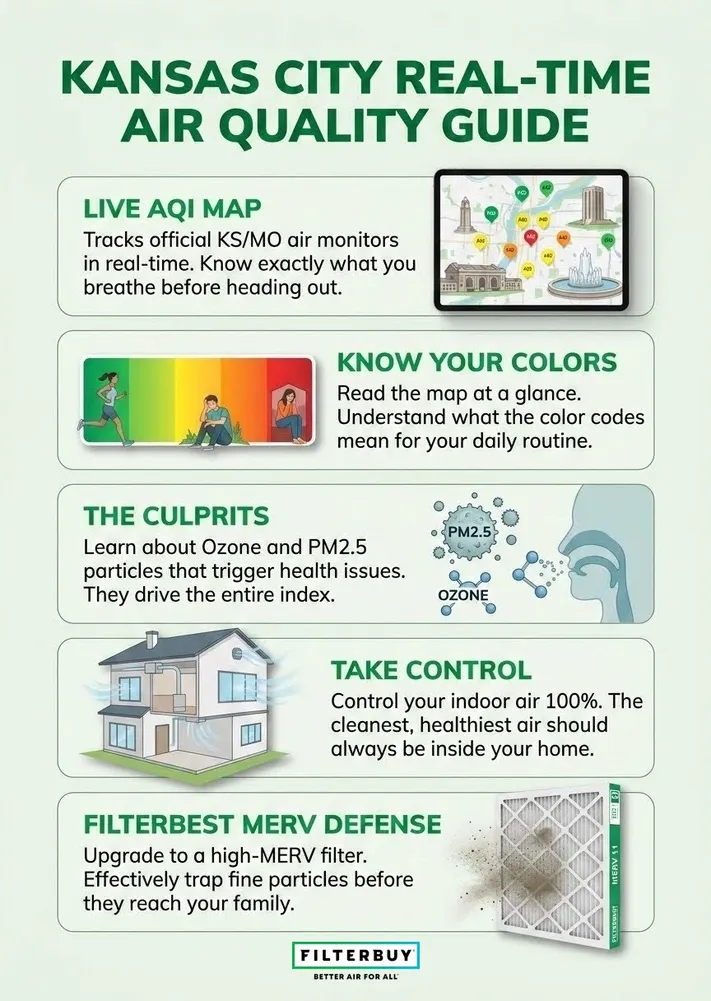
The map at the top of this page pulls readings from official government monitors around the metro and turns them into one number and one color. The color does most of the work. Green, from 0 to 50, means clean air and a green light for the day. Yellow runs 51 to 100 and stays fine for most people. Orange starts at 101 and begins to bother sensitive groups, while red from 151 to 200 reaches everyone. Purple and maroon, anything past 200, mark the rare days to stay inside and keep the doors shut. Like the weather, the number shifts by the hour, so a quick look tells you where things stand right now.
How The Air Quality Index Works In Kansas City
The AQI watches several pollutants at once and reports whichever one is worst at the moment. In Kansas City, two pollutants do most of the damage: ground-level ozone and fine particle pollution, the stuff measured as PM2.5. If you want the full method behind the scale, this plain-language explainer on how the Air Quality Index is calculated lays it out.
Ozone builds on hot, sunny afternoons, which is why the Missouri Department of Natural Resources runs an ozone season from March 1 through October 31. PM2.5 is different. It comes from traffic, industry, and wood smoke, and it can jump when wildfire smoke drifts in from hundreds of miles away. Those particles are small enough to ride deep into your lungs, so a rising number deserves respect even when the sky overhead looks perfectly blue.
Here is the part you actually control. When the outdoor number climbs, the cleanest air around you is the air inside your own home. Shut the windows, keep your HVAC system running, and put a fresh, high-quality filter in front of it. That combination keeps a lot of the outdoor mess out of the rooms where your family sleeps and breathes.

After manufacturing filters for over a decade and serving more than two million households, we have learned something simple about air. People protect what they can see. That is the whole reason we put a live map on this page. When a parent in Kansas City can glance at one honest number and decide whether to keep the windows shut today, they make a better call for their family in about three seconds. None of us controls the air outside. The air inside your home is yours to manage, and the right filter is the easiest lever you have.
— Filterbuy Indoor Air Quality Team
Seven Trusted Places To Track Kansas City Air Quality
These are the sources we keep bookmarked. Each one comes from a separate authority, so you can cross-check today's reading and dig deeper whenever you want.
Source: Reading The Air Quality Index The Right Way From EPA AirNow. The EPA's own guide to the six AQI colors and what each one means for your health and your day's plans.
Source: Missouri's Official Current Air Quality Dashboard. Current and forecast readings straight from the state agency that monitors the air around Kansas City.
Source: How Air Pollution Affects Your Health From The CDC. Plain explanations of how ozone and particle pollution work on your body, and who tends to feel them first.
Source: Nationwide AQI Monitoring And Forecast Tools On Drought.gov. A national map and data tools that pair live AQI readings with drought and wildfire conditions.
Source: Your Local National Weather Service Office For Kansas City. Local forecasts, heat advisories, and air quality alerts from the weather office that covers the Kansas City metro.
Source: Kansas City's Air Quality Report Card From The American Lung Association. The metro's annual grades for ozone and particle pollution, with multi-year trends you can track over time.
Source: The Daily Kansas City Ozone Forecast Known As The MARC SkyCast. The region's daily ozone forecast is issued every afternoon from March through October for Greater Kansas City.
Three Numbers That Put Kansas City Air In Context
In 2024, the EPA tightened its yearly health limit for fine particles to 9.0 micrograms per cubic meter of air, down from 12.0, to give people more protection. Source: The EPA's National Air Quality Standard For Fine Particles
The World Health Organization links outdoor air pollution to roughly 4.2 million early deaths worldwide in 2019, most of them tied to fine particles like PM2.5. Source: The World Health Organization's Outdoor Air Pollution Fact Sheet
A 2021 study in Nature Communications found that a 10-microgram rise in wildfire-specific PM2.5 pushed respiratory hospital visits up by 1.3 to 10 percent, far more than the same rise from everyday PM2.5. Source: University Of California Research On Wildfire Smoke And Breathing
Our Honest Take On A Five-Second Daily Habit
Here is what we believe after years of paying attention to what people breathe. Checking real time air quality in Kansas City should be as ordinary as checking the forecast. Five seconds buys you a real edge, especially on summer afternoons when ozone builds and on smoky days when particle levels climb with almost no warning.
You do not need to fear the number. You need to read it and respond. A green or yellow morning is a green light for the park. An orange or red one is your cue to cut outdoor workouts short, keep the windows closed, and lean on clean indoor air. In our experience, the families who handle bad-air days best are not the ones with the nicest weather. They are the ones who pay attention and move early. That is the quiet power of one honest reading.
What To Do With Today's Kansas City AQI Reading
Put this page to work for you. Bookmark it so the live Kansas City reading sits one tap away each morning. Set a simple house rule, like moving exercise indoors whenever the AQI climbs past 100. And upgrade your HVAC filter before peak season, giving your indoor air the same attention you give the outdoor number.
If you spend time across the state line or have family nearby, you can watch conditions there too with the live AQI map for Wichita, Kansas. The more local readings you keep an eye on, the easier planning ahead becomes.
Frequently Asked Questions
Take Control Of The Air You Actually Breathe
You cannot change the number on the map, but you can change what your family breathes at home. When Kansas City's outdoor air turns rough, the right filter is your first line of defense against the particles trying to slip inside. Find the correct size and MERV rating for your system at Filterbuy and give every room cleaner air, starting today.