
North Las Vegas Real-Time AQI Tracker


Get Alerts For Unhealthy AQI In Your Area
When air quality in your area reaches unhealthy levels, we'll send you a quick alert, along with expert tips on how to reduce your exposure.
What's Actually In North Las Vegas Air Today?
What High AQI Means for Your Lungs in North Las Vegas
How to Read AQI
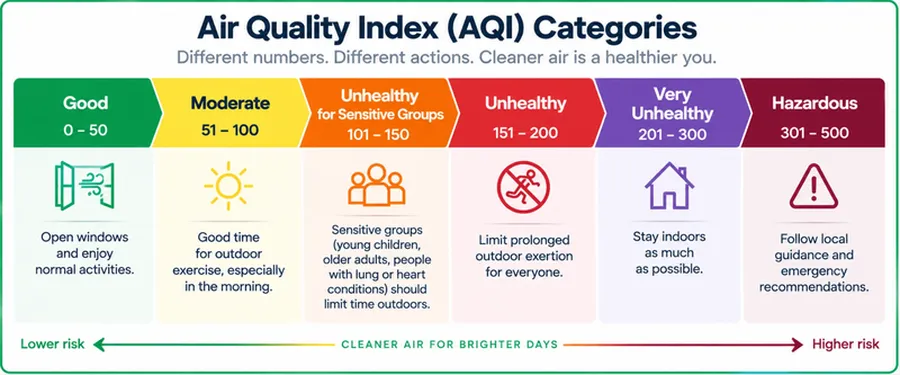
The Air Quality Index (AQI) measures how polluted the air is and how it may affect your health.
0–50 (Good): Air quality is satisfactory.
51–100 (Moderate): Acceptable, but some pollutants may pose minor concerns.
101–150 (Unhealthy for Sensitive Groups)
151–200 (Unhealthy)
201–300 (Very Unhealthy)
301+ (Hazardous)
Moderate
Still okay for most, but if you have asthma or allergies, take it easy and avoid long outdoor workouts.
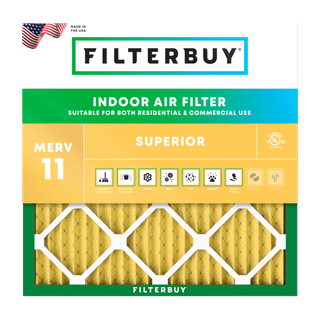
Shop MERV 11 filters→What's the Right Filter for Your AQI Level?

Check Today's Live Real Time Air Quality Index AQI Map in North Las Vegas, NV Now
TL;DR
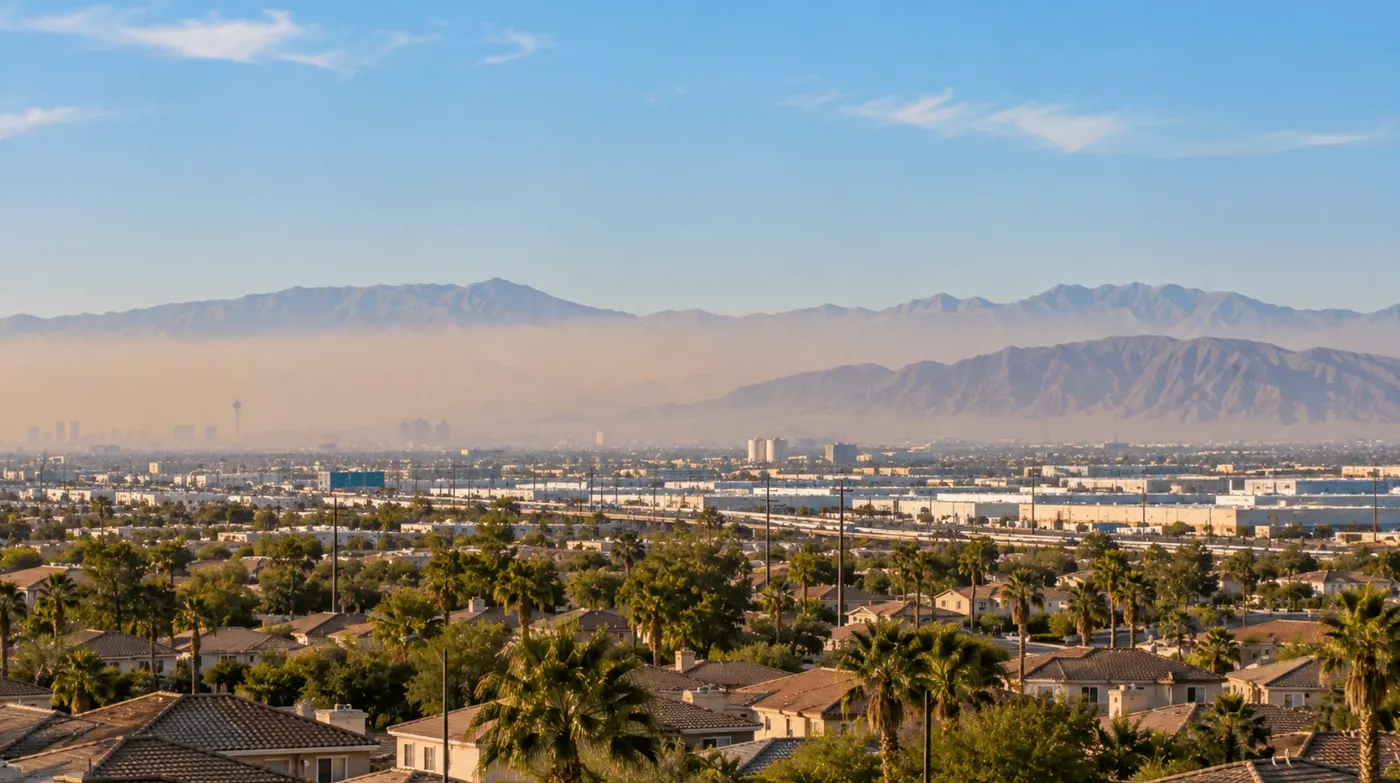
The live AQI map above shows current readings for North Las Vegas, NV from Clark County and EPA AirNow monitors. Two problems drive conditions here: ozone building through hot afternoons, and desert dust spiking within minutes.
Key Takeaways
The map updates through the day. Everything below explains how to read it, not what it says now.
The EPA reclassified the Las Vegas Valley, including North Las Vegas, Serious ozone nonattainment in January 2025.
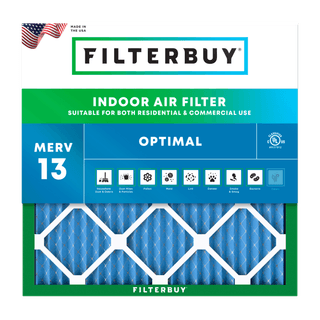
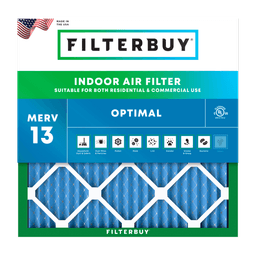
At AQI 100 and above: MERV 13 in the HVAC, thermostat fan on On, a portable HEPA cleaner in each occupied room, house closed up.
Ozone and dust call for opposite responses: ozone breaks down indoors, dust and smoke follow you in and need filtration.
How to Read the Live North Las Vegas AQI Map
The number on the Filterbuy map above converts the day's worst pollutant into one 0 to 500 score, usually ozone on summer afternoons or particulate during dust and smoke. Tap the nearest monitor rather than a citywide average: the I-15 and Apex freight corridor does not read like the west side along the 215.
Clark County runs 18 sites, named on its live county map; the nearest to most addresses here are Walnut Community Center and Joe Neal. Readings lag, too: hourly AQI uses NowCast, which smooths sudden changes, so a dust plume reaches your throat before the map does. If you see or smell dust while the map reads Good, trust your senses.
What Each AQI Level Means for Your Day in North Las Vegas
Six EPA categories, each changing what a North Las Vegas household should do. Ozone falls away after sundown; particulate does not, so a 120 from ozone at 4 p.m. usually means a comfortable evening while a 120 from smoke can still be 120 at midnight.
Thresholds follow the U.S. EPA Air Quality Index. Guidance is general, not a substitute for advice from your physician.
What to Do When North Las Vegas AQI Reaches 100
AQI 100 is where Filterbuy tells customers to act. That is our line, not a category change: the EPA scale keeps 100 at the top of Moderate and starts Unhealthy for Sensitive Groups one point higher. We move at the threshold rather than after it. Four steps, in order.
Put MERV 13 in the HVAC
Switch up if the system runs a lower tier. It moves far more air than any portable unit, so this is the whole-home layer.
Set the thermostat fan to On
On Auto the system filters only while heating or cooling. On filters continuously.
Add a portable HEPA air cleaner in each occupied room
Bedrooms first. The room unit and the HVAC filter do different jobs; run both.
Close the house up
Windows and doors shut, and skip candles, frying, and vacuuming without a sealed unit.
Two sources sit behind that list. The EPA recommends MERV 13 or higher in a central system during smoke events. Acting at AQI 100, and running a cleaner in every occupied room rather than one, is Filterbuy's own recommendation. From 151 the steps hold and the filter wants checking more often. At 201 and above, AirNow and local agency guidance come first; filtration is one layer, not the answer.
What Is Actually in North Las Vegas Air
Three pollutants drive nearly every high-AQI day: ozone from emissions cooking in sunlight, PM10 from desert and construction dust, and PM2.5, the fine combustion particulate smoke is made of.
North Las Vegas carries source signatures the rest of the valley does not. Apex Industrial Park, roughly 18,000 acres inside city limits along I-15 and US-93, is a freight chokepoint for goods moving inland from the Southern California ports, with Union Pacific rail and heavy construction. Diesel volume and disturbed ground add nitrogen oxides and particulate, and the county's Apex monitor northeast of the city tracks pollution flowing out of the valley, putting the city on that outbound path. The county also samples on New Year's Eve and July 4, when fireworks push PM2.5 past exceedance levels.
It is not the valley's ozone hotspot, though. Clark County's 2022 to 2024 design values put Mountains Edge highest at 73 ppb, with Walnut and Joe Neal at 72 against a 70 standard. Ozone is valley-wide; dust is local, and nearness to a grading site matters more than your ZIP code.
What North Las Vegas Air Does Through the Year
Air quality here runs on a calendar, and the response changes with it.
Compiled from Clark County advisory schedules and monitoring records. Any year can break the pattern; the live map rules.
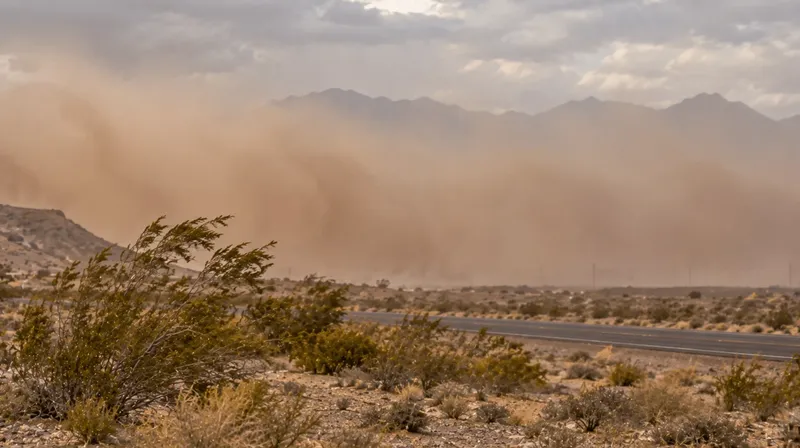
Dust brings the fastest change. Winds near 25 mph with gusts over 40 trigger a Clark County dust advisory, an event-specific notice with a start and end time, and monsoon outflow from Arizona can push a dust wall in unannounced, as in August 2026. With the city under constant construction, the county requires a dust control operating permit for any site disturbing a quarter acre or more. Report excess dust to the county hotline, 702-385-DUST (3878).
Smoke is slower, arriving from fires hundreds of miles away and settling in for days; the Filterbuy North Las Vegas smoke map and the AirNow Fire and Smoke Map show plume position. The county also keeps a standing ozone and wildfire smoke advisory from April 1 through September 30: shift workouts to early morning and watch the map on hot afternoons. Free email alerts come through EnviroFlash. Compare the Filterbuy Nevada AQI map or the Las Vegas AQI page.
Winter is the season most people overlook. Cold, still air settles into the basin beneath a warmer layer and whatever the valley emits stays put. That is why the EPA designated it a carbon monoxide nonattainment area in 1978, and why the county still samples wood smoke. A calm December morning can read worse than a windy one.
Our Take: Ozone and Dust Are Not the Same Problem
Filterbuy has built pleated air filters in the US since 2013, and the question desert customers ask most is whether a filter upgrade helps on a bad-air day. It depends which pollutant drives the number, a distinction most guidance skips.
Ozone degrades quickly indoors, so closing up a North Las Vegas house works and a filter upgrade adds little; standard filters cannot remove it. Particulate is the reverse: dust and smoke enter through gaps and intakes, stay suspended for hours, and are what a filter captures, which is why EPA wildfire guidance centres on filtration.
A high AQI is not one problem with one answer. On an ozone day the building envelope does the work. On a dust or smoke day the filter does. Knowing which number you are looking at changes what you should do about it.
Michelle Wan, Brand Manager and Air Quality Writer, Filterbuy
The rule is short. On an ozone day, close up and wait. On a dust or smoke day, close up and filter.
Matching Your Filter to the AQI Level
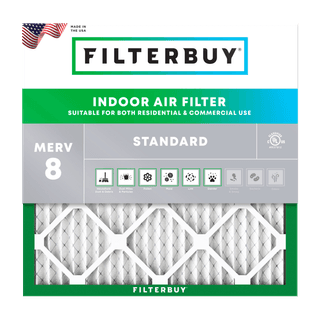
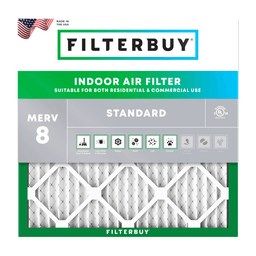
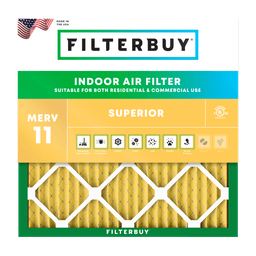
Match the filter to the pollutant driving the North Las Vegas reading: MERV 8 on clear days, MERV 13 during smoke. Our breakdown of which MERV rating suits each AQI level has the detail.
Smoke maps to MERV 13. Fit matters as much as rating: gaps at the edges let air bypass the media.
Upgrading is a fit check, like confirming a size. The EPA's guide to air cleaners notes that most furnaces and HVAC systems accommodate a MERV 13 filter without equipment problems, provided it is replaced frequently. Filterbuy builds MERV 8 through 13 in over 600 sizes and cuts custom.
Skip the calendar while smoke is around: check the filter and replace it when it looks dirty, dark brown or black, often well before the normal interval. Keep spares on hand. Size a portable cleaner so its smoke CADR is at least two-thirds of the room's square footage, per EPA clean room guidance, so a 300 square foot bedroom wants about 200. Avoid anything producing ozone, including ionizers.
Homes without ductwork have no whole-home layer, so portable HEPA cleaners are the primary defense, not a supplement, and an evaporative cooler should switch to refrigerated air or shut off during dust or smoke. One limit: smoke is particles and gases, and a pleated filter captures particles. It reduces what is in the air, but does not make it clean.
Supporting Statistics
Ozone: 0.074 ppm against a 0.070 ppm limit
The 2021 to 2023 design value missed the federal standard, triggering Serious reclassification on January 21, 2025, with an August 3, 2027 deadline. Source: Federal Register
Particulate: 8.7 against 9.0, and 222 against 150
Annual PM2.5 sits just under the 9.0 microgram standard while the top 24-hour PM10 reading hit 222 against a 150 limit. Chronic levels pass; dust events do not. Source: Clark County 2025 Annual Monitoring Network Plan
Health burden: 22.3 unhealthy ozone days a year
Clark County earns an F grade and the metro ranks 11th worst nationally. Source: American Lung Association, 2026 State of the Air
Frequently Asked Questions
Glossary
AQI (Air Quality Index): The EPA's 0 to 500 scale turning pollutant levels into one number across six categories.
PM2.5: Fine particulate 2.5 micrometers or smaller, small enough to reach deep lung tissue. The main part of smoke.
PM10: Coarse particulate 10 micrometers or smaller, including windblown desert dust.
Ground-level ozone: A gas formed when nitrogen oxides and volatile organic compounds react in sunlight. The county's main pollutant.
NowCast: The averaging method behind hourly AQI. It smooths spikes and can lag rapid changes.
MERV: Minimum Efficiency Reporting Value, the 1 to 16 particle-capture scale. MERV 13 is the smoke tier.