
North Las Vegas, NV Live Wildfire Smoke Map
Get Alerts For Wildfires In Your Area
The moment a wildfire starts near you, you'll get an instant alert and simple tips to reduce your smoke exposure.
What's In The Smoke
30xSmaller than a human hair
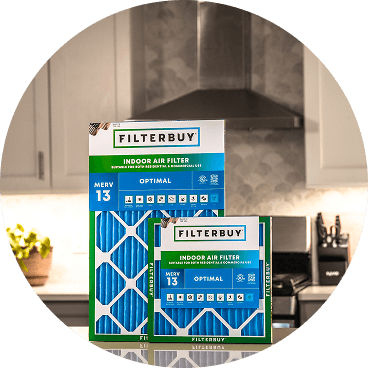
Fine enough to reach deep into the lungs. A MERV 13 is built to capture it.
How Far It Travels


It Doesn't Stay Local
Smoke rides the wind far downwind — you can get smoky air with no fire nearby.
What To Do During A Smoke Event
Simple steps to reduce indoor exposure.
- Stay In, Close UpShut windows and doors to keep smoke out.
- Set Fan To "On"Keeps air cycling through your filter, not just when heating or cooling.
- Recirculate AirSwitch off fresh-air intake so you're not pulling smoke in.
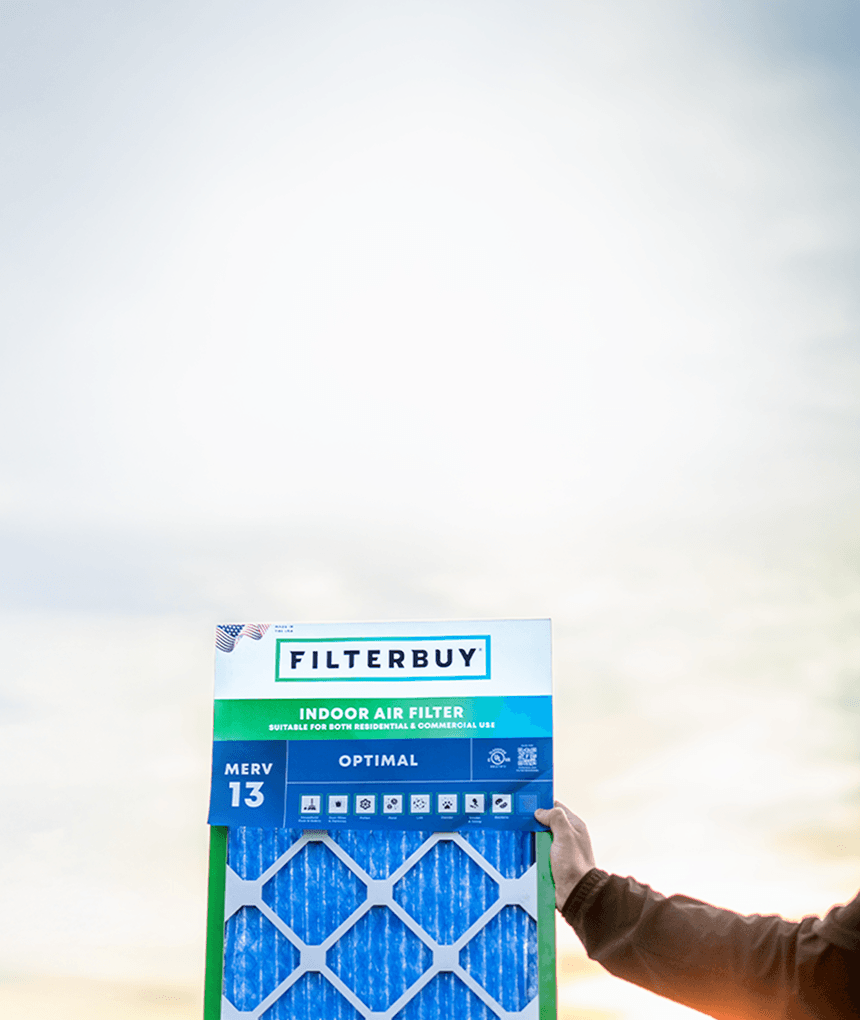
- Run A MERV 13Built to capture the fine PM2.5 in smoke.
- Add A PurifierExtra filtration for the room you use most.
- Wear an N95 if OutsideFits snug to block fine particles — a cloth mask won't.


The Best Air Filter For Wildfire Smoke
During smoke events, the EPA recommends upgrading to a MERV 13 filter — or the highest-rated filter your system can handle — to help reduce the fine particles smoke brings indoors. MERV 13 is the level most home HVAC systems can run while still capturing PM2.5, the fine particulate that makes up the bulk of wildfire smoke.
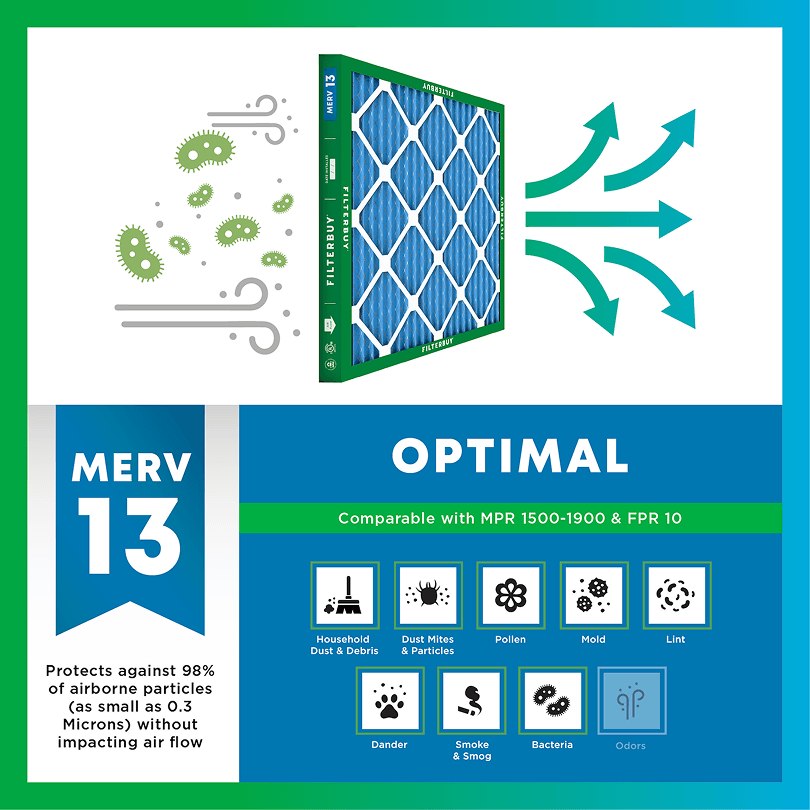
- Captures PM2.5 particles
- Blocks ash, soot, and smoke odor
- Keeps your indoor air safe—even when the outdoor air is dangerous
- Meets the EPA's recommended rating for filtering fine wildfire smoke particles.

Wildfire Smoke FAQs
Facts About Wildfires
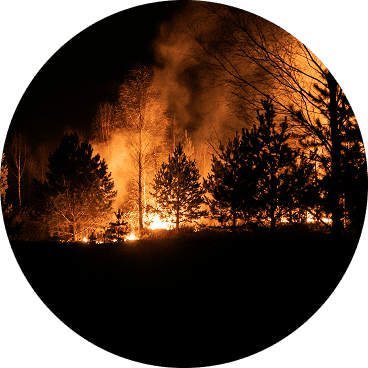
Over 70,000 wildfires burn in the U.S. every year.
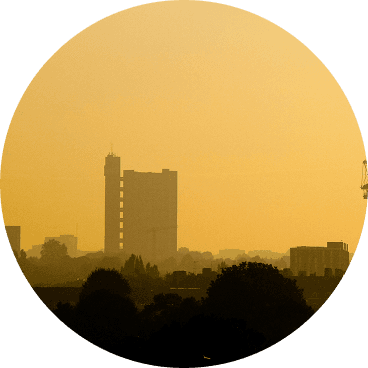
Wildfire smoke can travel 1,000+ miles, affecting states that aren't even near the blaze.
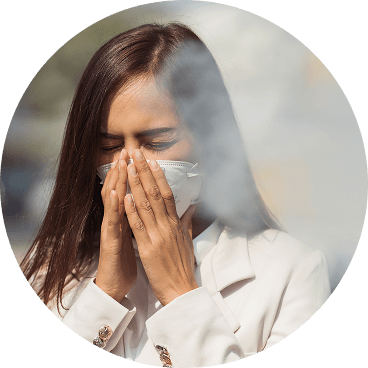
Exposure to wildfire smoke can worsen asthma, trigger heart issues, and lead to ER visits.
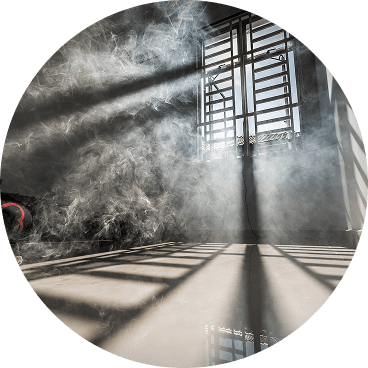
Indoor air can hold more fine particles during wildfire events unless it's properly filtered.
The EPA advises using MERV 13 filters or portable HEPA air cleaners during wildfire smoke events.
Don't Wait Until The Smoke's Inside.
Use the live wildfire smoke tracker and upgrade your air filters today to protect your lungs and your home.
Shop Filters For Smoke Protection
Live North Las Vegas, NV Forest Wildfire & Smoke Map Today: Local Air Quality Tracking & Indoor Protection Solutions from Filterbuy.com's Air Obsessed Experts
By Michelle Wan · Technically reviewed by David Clark, Licensed HVAC Technician · Published August 2, 2026 · Published August 2, 2026
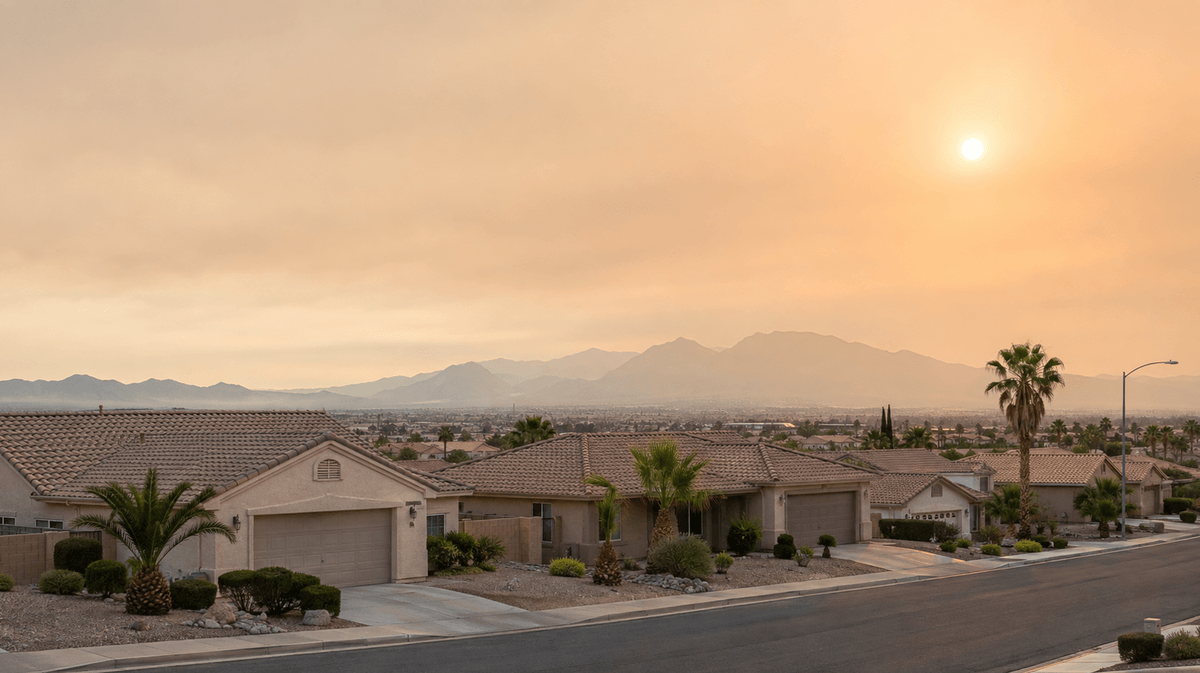
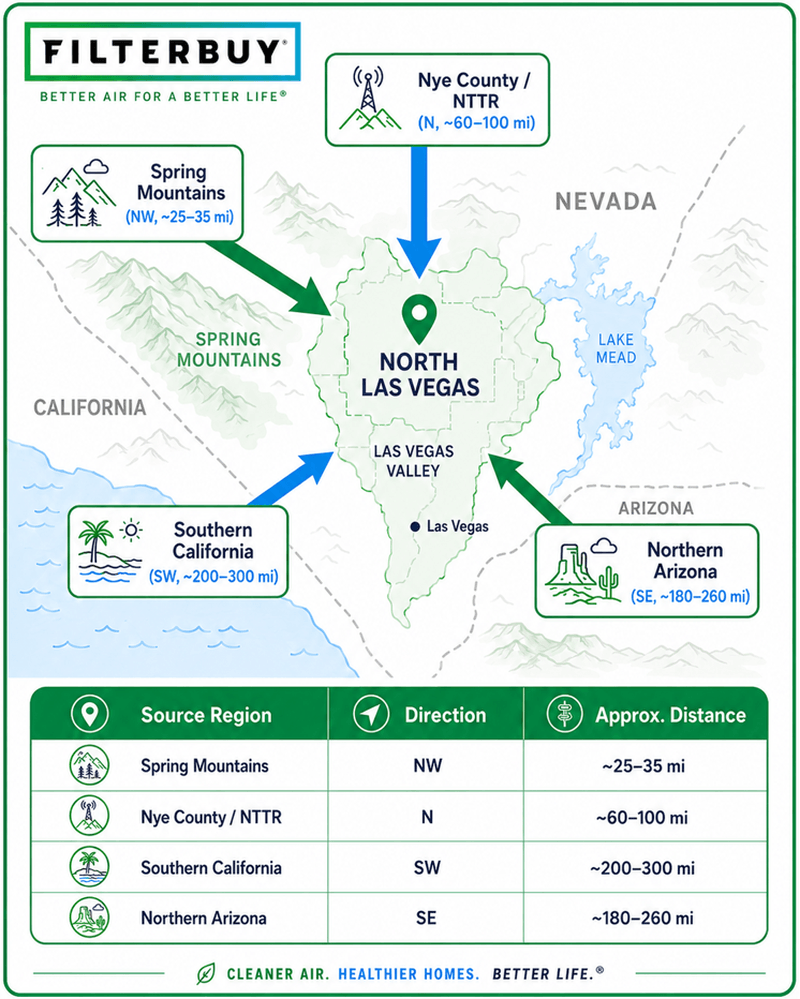
Smell smoke in North Las Vegas but can't see a fire? You're breathing someone else's. Almost all of it is imported: the Spring Mountains 25 miles out, California 250 miles beyond that. Filterbuy cuts every filter we sell, and the valley is where we watch that pattern hardest.
TL;DR
The live map above tracks active wildfires and smoke for North Las Vegas, NV, updated hourly from EPA AirNow and Clark County data. Smoke here is usually carried in from the Spring Mountains, central Nevada, Southern California, or Arizona rather than a local fire. When it arrives: close the house, switch your HVAC to recirculate, run a MERV 13 filter with the fan on, and shut down or filter any swamp cooler.
Key Takeaways
Nearest conifer forest: the Spring Mountains, ~25 mi northwest, site of the 27,881-acre Carpenter 1 Fire (2013).
Most smoke here is imported from fires hundreds of miles away.
Clark County's ~18 valley monitors feed the readings above.
Running a swamp cooler during smoke pumps it indoors; EPA says cover the intake with 4-inch MERV 13 or run it sparingly.
Smoke can load a filter in weeks, not the usual 60 to 90 days.
Is There a Wildfire Near North Las Vegas Right Now?
Check the live map above. Fires within roughly 300 miles appear as icons, and overlays show smoke drift. If no icons appear near Clark County but the AQI is high, the smoke was transported in. That is the common pattern here. For evacuation orders, follow Clark County Emergency Management.
Where Does North Las Vegas Smoke Actually Come From?
North Las Vegas has almost no burnable forest inside city limits, so the smoke you smell started elsewhere. No fire map answers what valley homeowners actually ask: if nothing is burning here, where is it from? That is why Filterbuy built this table. Read it with the wind direction.
Table 1: Smoke Source Regions
Distances are approximate straight-line distances from North Las Vegas, NV.
A clear map does not mean clean air: in September 2024, three California fires 200+ mi away pushed Las Vegas AQI to 130–170, with ash falling in the valley.
What Does Today's AQI Mean for Your Household?
The Air Quality Index converts pollutant levels into one 0–500 number. During smoke, the driver is almost always PM2.5, particles small enough to reach deep into the lungs.
Table 2: What Today's AQI Means
During a smoke event, the pollutant driving the AQI is almost always PM2.5. Source: U.S. EPA Air Quality Index.
Check what is driving the number, not just the number. An ozone reading usually falls once the sun goes down. A smoke reading can sit for days and keep working on indoor air after the outdoor map turns green. Ozone means wait; smoke means filter. See Filterbuy's live Las Vegas AQI tracker.
What Should You Do When Smoke Reaches North Las Vegas?
Six steps, about 20 minutes. Sealing comes before filtration in Filterbuy's order on purpose: a MERV 13 filter cannot outrun an open window.
Close the envelope. Shut windows, exterior doors, the fireplace damper, and pet doors. Towel gaps under doors facing the wind.
Switch the HVAC to recirculate. Close the fresh-air intake. Swamp cooler? See below.
Set the thermostat fan from Auto to On. EPA notes this can cut indoor PM2.5 by roughly 50%.
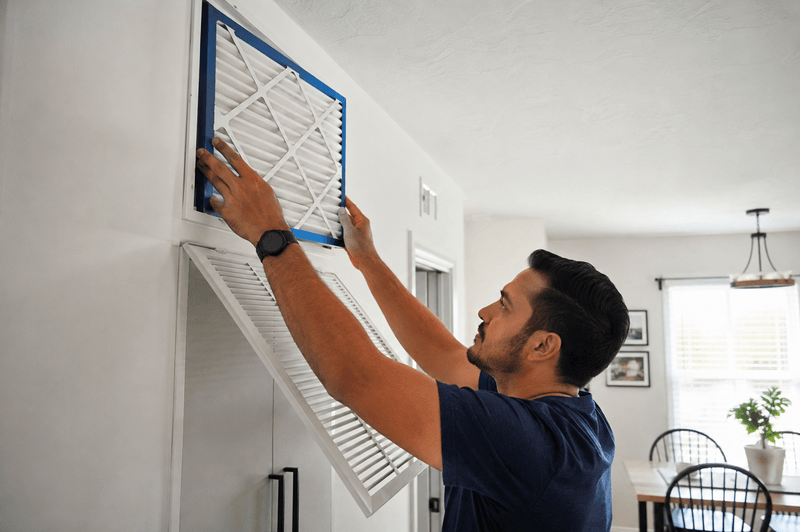
Install a fresh MERV 13 filter before the plume arrives.
Build one clean room. Add a HEPA cleaner to your bedroom, sized so its smoke CADR is two-thirds of the room's square footage.
Stop adding smoke indoors. No candles, frying, gas range, or vacuuming; vacuuming re-suspends particles.
If You Cool with a Swamp Cooler, the Plan Changes
An evaporative cooler pulls unfiltered outdoor air into the house by design. That is how it cools. During a smoke event, it becomes the fastest route smoke has indoors, and closing the windows does not help, because the cooler is the opening.
EPA guidance is specific: if you can safely reach the unit, cover the outside air intakes with 4-inch-thick MERV 13 furnace filters, or run the cooler sparingly. Check that filter often, since weather degrades it.
The heat trade-off comes first. In a 110-degree July, shutting off your only cooling is its own hazard. If you cannot stay cool with the cooler off or filtered, EPA's advice is to go somewhere you can. Heat moves faster than smoke.
It is also why Filterbuy cuts 4-inch and custom sizes: an intake cover is rarely a catalog size.
Which Filter Stops Wildfire Smoke, and How Fast Does Smoke Wear It Out?
Wildfire smoke is mostly PM2.5, and the 1-inch fiberglass pad most homes ship with catches lint, not fine particles. EPA advises MERV 13, or as high a rating as your system's fan and filter slot can safely accommodate.
Table 3: Which Filter Stops Wildfire Smoke
MERV 13 is the highest rating most residential HVAC systems can run safely. Higher-MERV media restricts airflow, so confirm your blower can handle it before upgrading.
Check your system first: higher-MERV media restricts airflow, and an older blower can struggle with the static pressure.
Because Filterbuy manufactures its own filters rather than reselling them, we see the failure most guides skip: fit beats rating. A MERV 13 that leaks at the edges filters less than a sealed MERV 8. Find your air filter size.
Smoke also shortens filter life. Filters here already fight desert dust, so one that normally runs 60 to 90 days can need replacing within weeks.
The mistake I see every fire season here is people watching the mountains instead of the map. Nothing is burning in the Spring Mountains, so the windows stay open, and the smoke reaching them left California two days ago.
Michelle Wan, Brand Manager and Air Quality Writer, Filterbuy
Every smoke season I get calls about an AC that stopped cooling, and more often than not the equipment is fine. The filter is packed with smoke and desert dust, and the airflow has nowhere to go. Out here, I tell people to pull the filter and look at it before they call me.
David Clark, Licensed HVAC Technician
Essential Resources: Where to Check Next When Smoke Reaches North Las Vegas
Seven sources, in the order a smoke event unfolds.
See every fire and plume in one view: how the AirNow Fire and Smoke Map works, the tool feeding the map above.
Get the most accurate local reading: Clark County's air quality program, which runs the valley's regulatory monitors.
Track Nevada fires by acreage and containment: Nevada Fire Info's live dashboards.
Find evacuations and road closures: InciWeb's Nevada incident map.
Know whether the wind will bring it here: the National Weather Service Las Vegas office. Smoke here is imported, so wind decides everything.
Follow federal indoor guidance: CDC's wildfire smoke safety guidance, which recommends MERV 13 and recirculate mode.
Get alerted before you smell it: EnviroFlash air quality alerts, free from EPA and state agencies.
Supporting Statistics
1. Wildland fires produce most U.S. fine particle pollution.
52% of national PM2.5 (EPA 2020 National Emissions Inventory). EPA wildland fire research
2. A high-efficiency filter cuts indoor particles roughly in half.
About 50%, but only with the fan running continuously. EPA strategies to reduce smoke exposure indoors
3. Clark County already fails on short-term particle pollution.
An F grade, 31st worst of 224 U.S. metros, with 12 orange and two red particle days. American Lung Association State of the Air
Frequently Asked Questions
Track the Smoke Today, Then Filter It Out Tonight
Get a MERV 13 filter in the return before the next plume, not during it. The households that ride out a smoke stretch comfortably upgraded early. We build 600+ sizes plus custom filters for returns a shelf never stocks.
About the Author and Reviewer
Michelle Wan is Brand Manager and Air Quality Writer at Filterbuy, covering AQI trends and wildfire smoke, and works directly with our manufacturing teams.
David Clark, Licensed HVAC Technician, Filterbuy HVAC Solutions, reviewed this page for accuracy on airflow, static pressure, and system compatibility.
Related Sources
Glossary
AQI: EPA's 0–500 scale converting pollutant levels into one number across six categories.
PM2.5: Fine particles 2.5 micrometers or smaller, the primary hazard in wildfire smoke.
MERV: The 1–16 scale rating how well a filter captures particles; higher catches smaller.
Evaporative cooler: A swamp cooler. Cools by drawing outdoor air through wet pads, so it brings smoke indoors.
Subscribe to wildfire smoke alerts for North Las Vegas, NV, to get a heads-up before the next event reaches your area.