
Simi Valley Real-Time AQI Tracker


Get Alerts For Unhealthy AQI In Your Area
When air quality in your area reaches unhealthy levels, we'll send you a quick alert, along with expert tips on how to reduce your exposure.
What's Actually In Simi Valley Air Today?
What High AQI Means for Your Lungs in Simi Valley
How to Read AQI
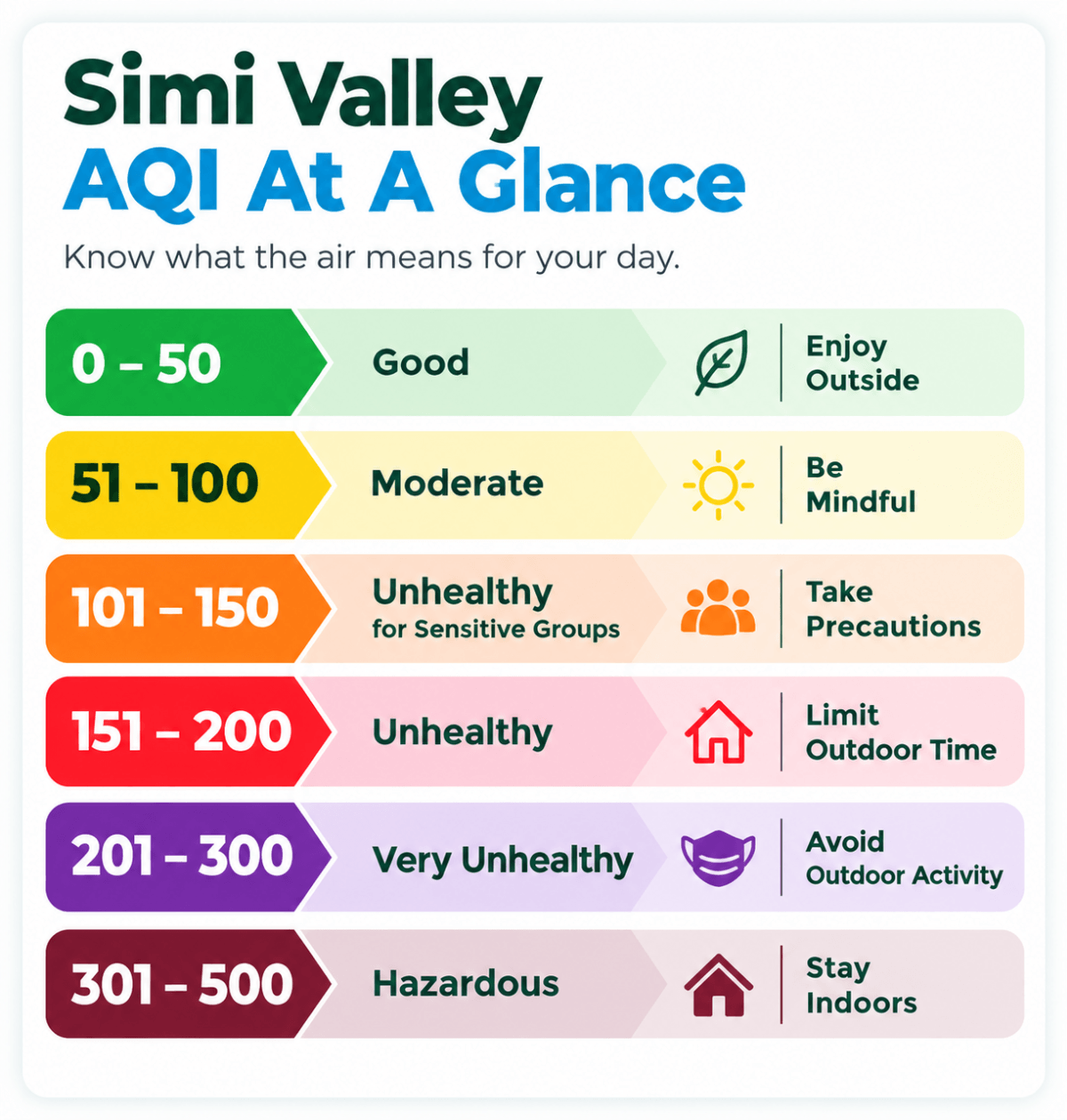
The Air Quality Index (AQI) measures how polluted the air is and how it may affect your health.
0–50 (Good): Air quality is satisfactory.
51–100 (Moderate): Acceptable, but some pollutants may pose minor concerns.
101–150 (Unhealthy for Sensitive Groups)
151–200 (Unhealthy)
201–300 (Very Unhealthy)
301+ (Hazardous)
Moderate
Still okay for most, but if you have asthma or allergies, take it easy and avoid long outdoor workouts.
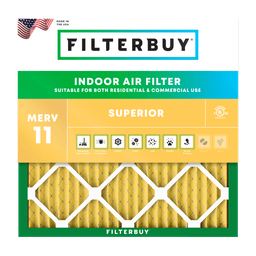
Shop MERV 11 filters→What's the Right Filter for Your AQI Level?


Check Today's Live Real Time Air Quality Index AQI Map in Map Simi Valley, CA Now
The live air quality index map above gives you Simi Valley's current AQI in about ten seconds. Type in your neighborhood or ZIP code, and the map returns today's number, its color band, and the pollutant driving it. Air here can look clear and still sit in the orange range, which is why the reading tells you more than the view out your window.
A number on its own does not tell you much. The rest of this page turns it into decisions about your household and the indoor moves that help.
TL;DR
Simi Valley's air quality index comes from a Ventura County Air Pollution Control District station on the Simi Valley High School campus, which measures ozone, PM2.5, and PM10 in real time. On hot afternoons, ground-level ozone usually pushes the number up, while PM2.5 climbs fast during wildfire smoke episodes. Check Filterbuy's live AQI map above for the current number and color, then match your indoor response to that band.
Key Takeaways
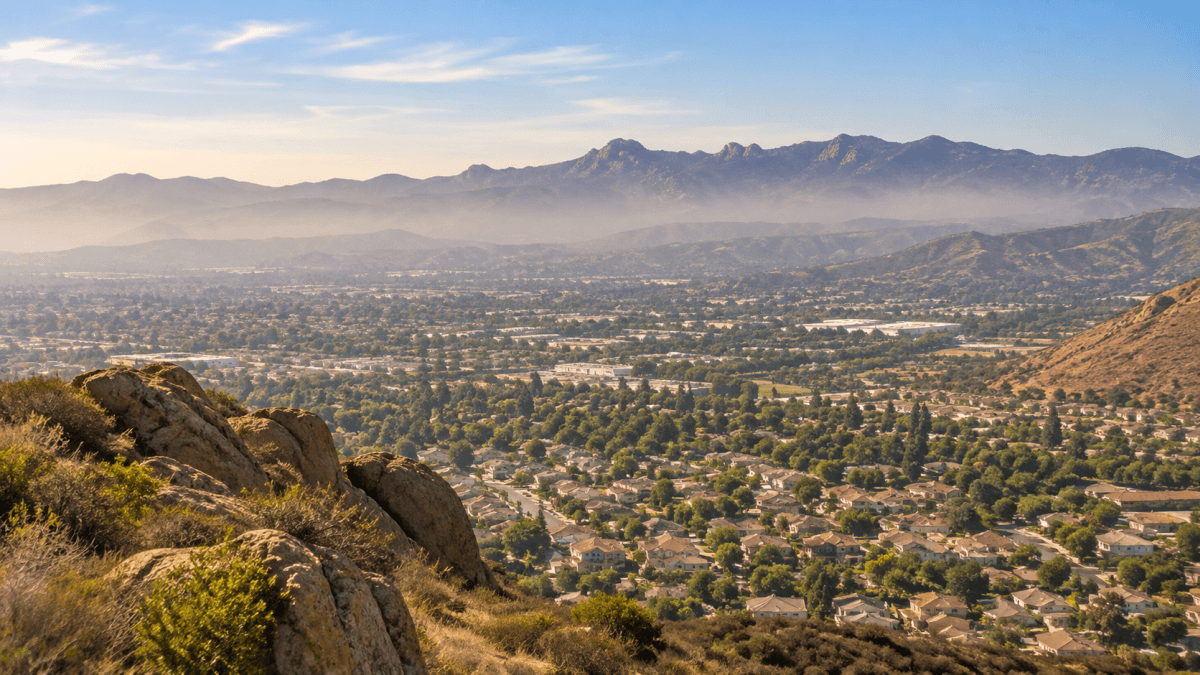
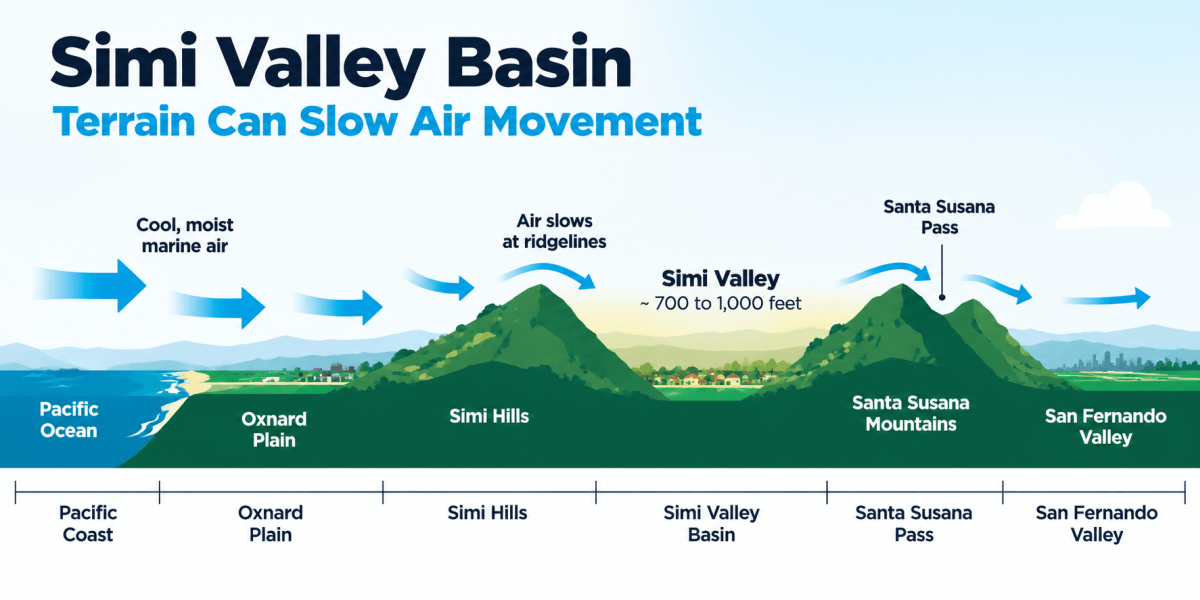
Simi Valley sits on a valley floor between roughly 700 and 1,000 feet, ringed by the Santa Susana Mountains and the Simi Hills. That bowl shape holds pollution near the ground on still days.
Summer ozone is Ventura County's defining air quality problem, and the county sits under a federal Serious nonattainment classification.
Green and yellow readings are fine for most people. Orange is where sensitive groups should ease off, and red or higher applies to everyone.
Wildfire smoke can lift Simi Valley PM2.5 within hours, so the local AQI can change several times a day.
Simi Valley is one of only two Ventura County monitors reporting PM10, so wind-blown dust registers here.
Why Simi Valley's Air Quality Index Changes So Much In One Day
Two pollutants take turns driving Simi Valley's AQI. Ground-level ozone builds through hot, sunny afternoons and peaks late in the day, while fine particulate matter, known as PM2.5, arrives with wildfire smoke and can spike at any hour. How long either one lingers comes down to terrain.
Ozone is not emitted directly from a tailpipe. It forms when nitrogen oxides and reactive organic gases react in sunlight, which is why the reading is often lowest at 7 a.m. and highest near 4 p.m. The full air quality index definition walks through each band and the health language attached to it.
Simi Valley sits in a syncline valley in the Transverse Ranges, closed off by the Santa Susana Mountains to the north and the Simi Hills to the east and south. Santa Susana Pass is the one low gap through to the San Fernando Valley, so marine air has to work harder to reach here than it does the Ventura coast. On calm days, whatever forms locally tends to stay put.
Nearby readings help you place today's number. Our statewide California AQI map shows how other cities are doing right now, and the Los Angeles air quality index map covers conditions on the other side of the pass. For the country as a whole, there is the national AQI map.
Where Simi Valley's Live AQI Readings Come From
Simi Valley's official readings come from a Ventura County Air Pollution Control District station on the Simi Valley High School campus at 5400 Cochran Street. That site reports ozone and particulate matter in real time, and it feeds the AirNow network behind most live maps.
VCAPCD runs five permanent stations across Ventura County, and Simi Valley is one of only two that report PM10 alongside ozone and PM2.5. The other three track ozone and PM2.5 only, which matters here because coarse dust lifts on Santa Ana wind days and would otherwise go unrecorded.
What The Simi Valley Monitor Can And Cannot Tell You
Every AQI number on this Filterbuy page traces back to one instrument shelter on Cochran Street, and a single point represents some pollutants better than others. Ozone spreads across the whole valley, so that reading travels well. Coarse dust and traffic exhaust stay close to their source, so your own street can look different.
When ozone is driving the number, Cochran Street is a fair proxy for the whole valley floor. On a Santa Ana day, or if you live along State Route 118, it can understate what you are actually breathing at home, so check a neighborhood sensor before you open the windows.
What Each AQI Color Means For Your Day In Simi Valley
The AQI runs on a 0 to 500 scale split into six color bands, each carrying a specific health message. The table below translates every band into what it means for a Simi Valley household today.
AQI categories and color bands follow the U.S. EPA Air Quality Index. Check the live map above for the current Simi Valley reading.
Which Filter Rating Matches Today's Simi Valley Reading
MERV stands for Minimum Efficiency Reporting Value, the scale that rates how much a filter captures. Match the rating to the reading on the map above rather than to whatever was in the return last time.
MERV ratings follow the ASHRAE 52.2 scale, which runs from 1 to 16. A higher rating only helps if your system holds its normal airflow.
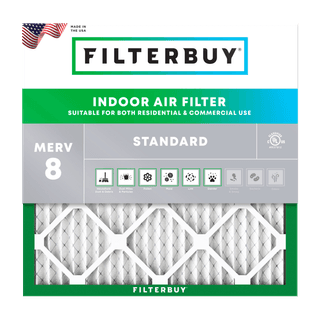
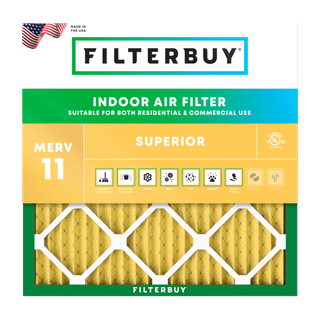
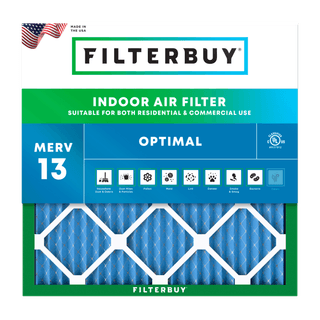
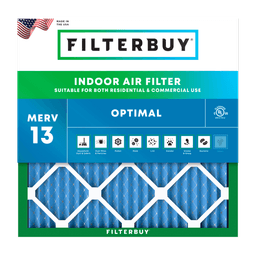
Filterbuy builds MERV 8 air filters, MERV 11 air filters, and MERV 13 air filters in standard sizes, with custom air filter sizes available when a return does not match a stock dimension. Check your equipment guidance before jumping permanently to a higher rating.
7 Essential Simi Valley Air Quality Resources Worth Bookmarking
See the live map and smoke tracker in one place. AirNow California Live AQI And Fire And Smoke Map pairs real time AQI with a wildfire smoke layer, run by the U.S. EPA.
Check the local monitor directly. VCAPCD Current Air Quality For Ventura County posts readings from the Simi Valley station and every other county site.
Understand what PM2.5 actually is. EPA Particulate Matter (PM) Basics explains the particle sizes behind smoke day readings.
Know who is most at risk from smoke. CDC Wildfire Smoke Risk Factors covers children, older adults, and people with chronic conditions.
Read the local forecast before you plan. NWS Los Angeles/Oxnard Local Area Forecast issues the public and fire weather outlook for the county.
See the research behind the health warnings. NIEHS Air Pollution And Your Health summarizes decades of federal research.
Sign up for local emergency alerts. Simi Valley Office Of Emergency Services runs VC Alert for evacuation and public safety notices.
Supporting Statistics On Simi Valley And Ventura County Air Quality
Three measured findings explain why the number on the map above moves.
Ventura County Is A Serious Ozone Nonattainment Area.
The federal limit is 70 parts per billion over eight hours.
The U.S. EPA applied it on August 3, 2018.
Attainment is required by 2026.
Source: California Air Resources Board
The Woolsey Fire Ignited Directly Above Simi Valley.
It started on November 8, 2018 near the Santa Susana Field Laboratory.
It burned close to 100,000 acres.
No fire on record has burned more of Santa Monica Mountains National Recreation Area.
Source: National Park Service
44% Of Americans Breathe Air That Earns A Failing Grade.
State of the Air 2026 counted 152.3 million people in counties failing on ozone or particle pollution.
California holds 8 of the 25 most polluted U.S. cities.
Source: American Lung Association
Your Next Steps When The Simi Valley AQI Climbs
Check your local air quality on the live map above and note which pollutant is leading today, because particles and ozone call for different responses.
If the reading tops 100, close windows and doors, switch your thermostat fan from Auto to On so air keeps moving through the filter, and hold off on indoor sources of air pollution at home such as frying and candles.
On particle days, run a MERV 13 filter, which the EPA recommends for reducing smoke particles indoors, and keep a spare on hand so you are not shopping in the middle of a smoke event. On ozone days, filtration will not help, because ozone is a gas and pleated media does not capture it.
Confirm the filter sits tight with no gaps, because bypass air defeats a good filter.
Run a portable HEPA unit in each occupied room.
Frequently Asked Questions
Breathe Easier In Simi Valley With Filters Built In The USA
When the map turns, the filter in your return is the part you still control. Filterbuy is a U.S. air filter manufacturer headquartered in Talladega, Alabama, that produces pleated residential and commercial HVAC filters in MERV 8, MERV 11, and MERV 13 across standard and custom sizes. Set replacements on Filterbuy Auto Delivery so a fresh one arrives before the next smoke event rather than after. Our indoor air quality resource library has sizing help and filter comparisons.