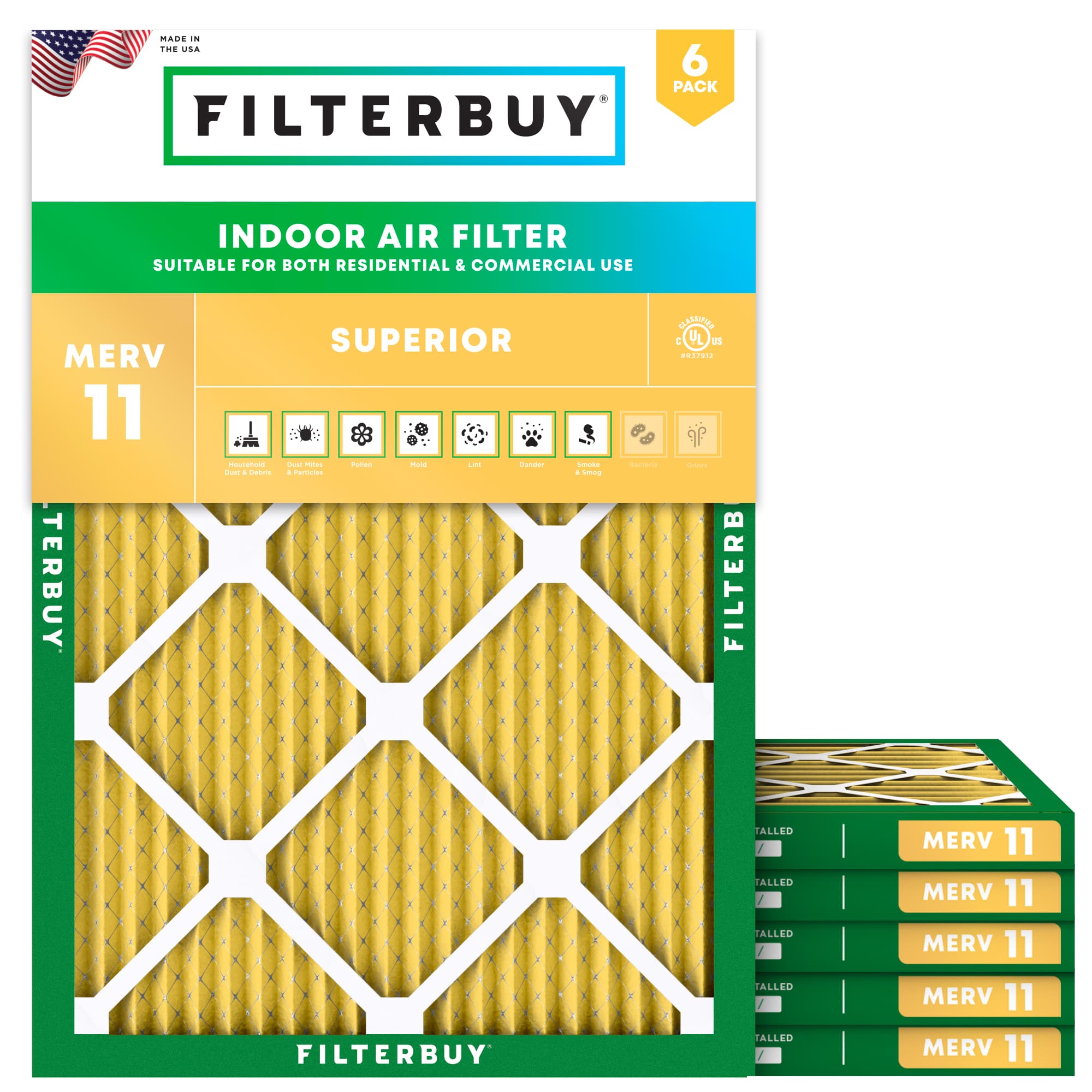
Actual Size: 17.5x24.5x0.75
 Free Delivery
  Factory-Direct Low Prices, Made in the USA
 Hassle-Free Returns & Free Exchanges
RESIDENTIAL AND/OR COMMERCIAL USE
Change Every 3 Months
Actual Size: 17.5x24.5x0.75
Free Delivery Factory-Direct Low Prices, Made in the USAHassle-Free Returns & Free ExchangesRESIDENTIAL AND/OR COMMERCIAL USE
Change Every 3 Months
Actual Size: 17.5x24.5x0.75
Free Delivery Factory-Direct Low Prices, Made in the USAHassle-Free Returns & Free ExchangesRESIDENTIAL AND/OR COMMERCIAL USE
Change Every 3 Months
At Filterbuy, we don't cut corners—we craft high-quality air filters right here in the USA and ship them to your doorstep for free. No delays, no gimmicks—just clean air, made easy. With thousands of five-star reviews and filters built for real life & every HVAC system, it's no wonder why over 4 million families trust Filterbuy.

Proudly Made In The USA

Fast, Free Shipping on Every Order

Premium Materials That Go The Distance

85,000+ 5-Star Reviews From Happy Customers

Save Up to 70% Per Filter with Packs


Measure length × width × depth with a tape measure to find the actual size.

Round up each dimension to the nearest whole number to get the nominal size. Example: 17.5x24.5x0.75 in → 18x25x1 nominal.

Search by nominal size on our site for the best fit.


If the filter you buy doesn't fit, we'll send you a better size.
MERV stands for Minimum Efficiency Reporting Value—but don't let the technical name fool you. It's just a way to rate how well an air filter traps stuff like dust, pollen, pet dander, and smoke. The higher the MERV number, the more particles it catches—and the cleaner your air will be.

Comparable to:FPR: 4-7
MPR: 600-1000
 Dust & Debris
 Dust Mites & Particles
 Pollen
 Mold
Mold Lint
Lint Dander
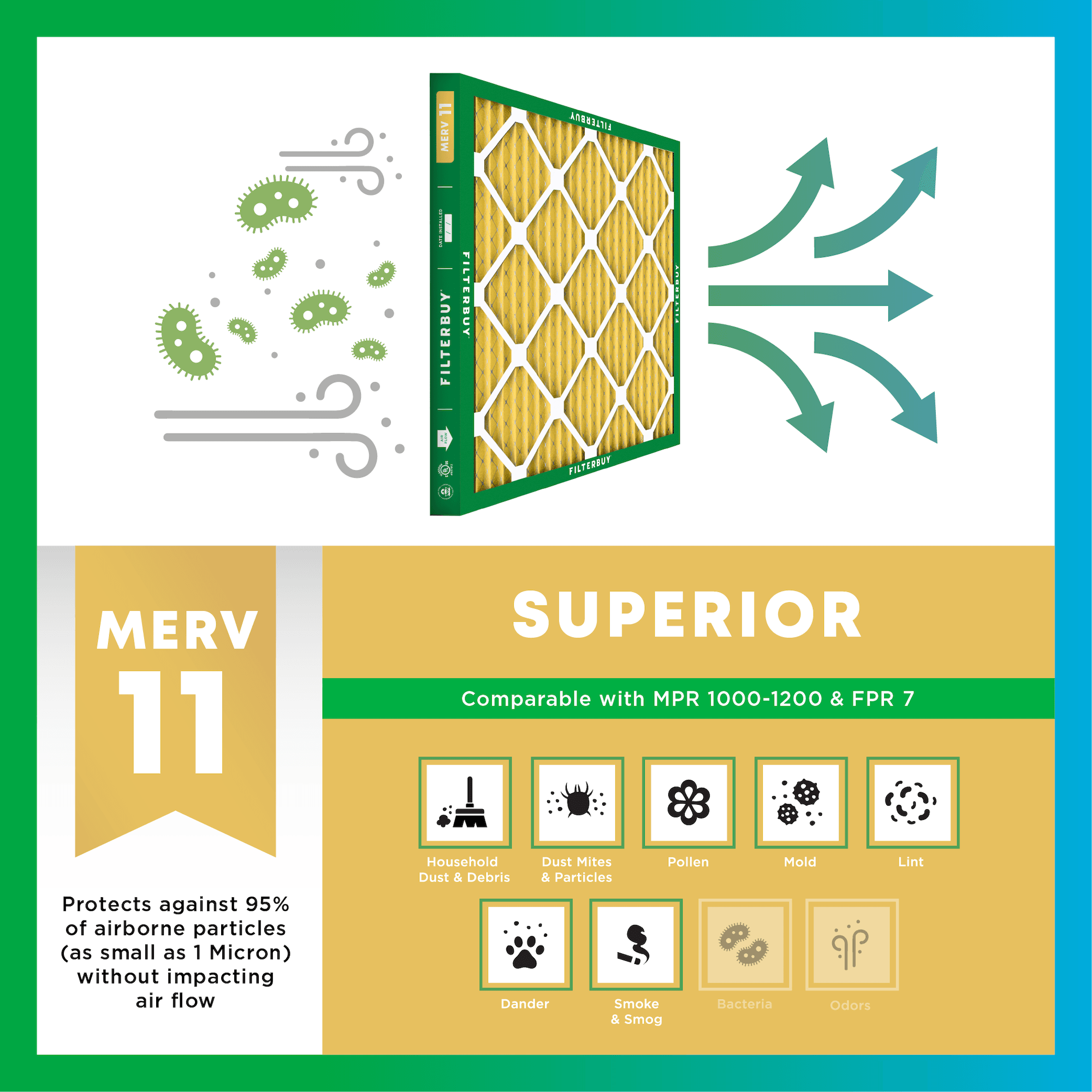
Comparable to:FPR: 6-9
MPR: 1200-1550
Dust & DebrisDust Mites & ParticlesPollenMoldLintDander Smoke & Smog
Comparable to:FPR: 10
MPR: 1900-2800
Dust & DebrisDust Mites & ParticlesPollenMoldLintDanderSmoke & Smog Bacteria


We build every Filterbuy filter to deliver reliable 90-day performance—thanks to smart design and premium materials that do the heavy lifting. Here's what makes the difference:
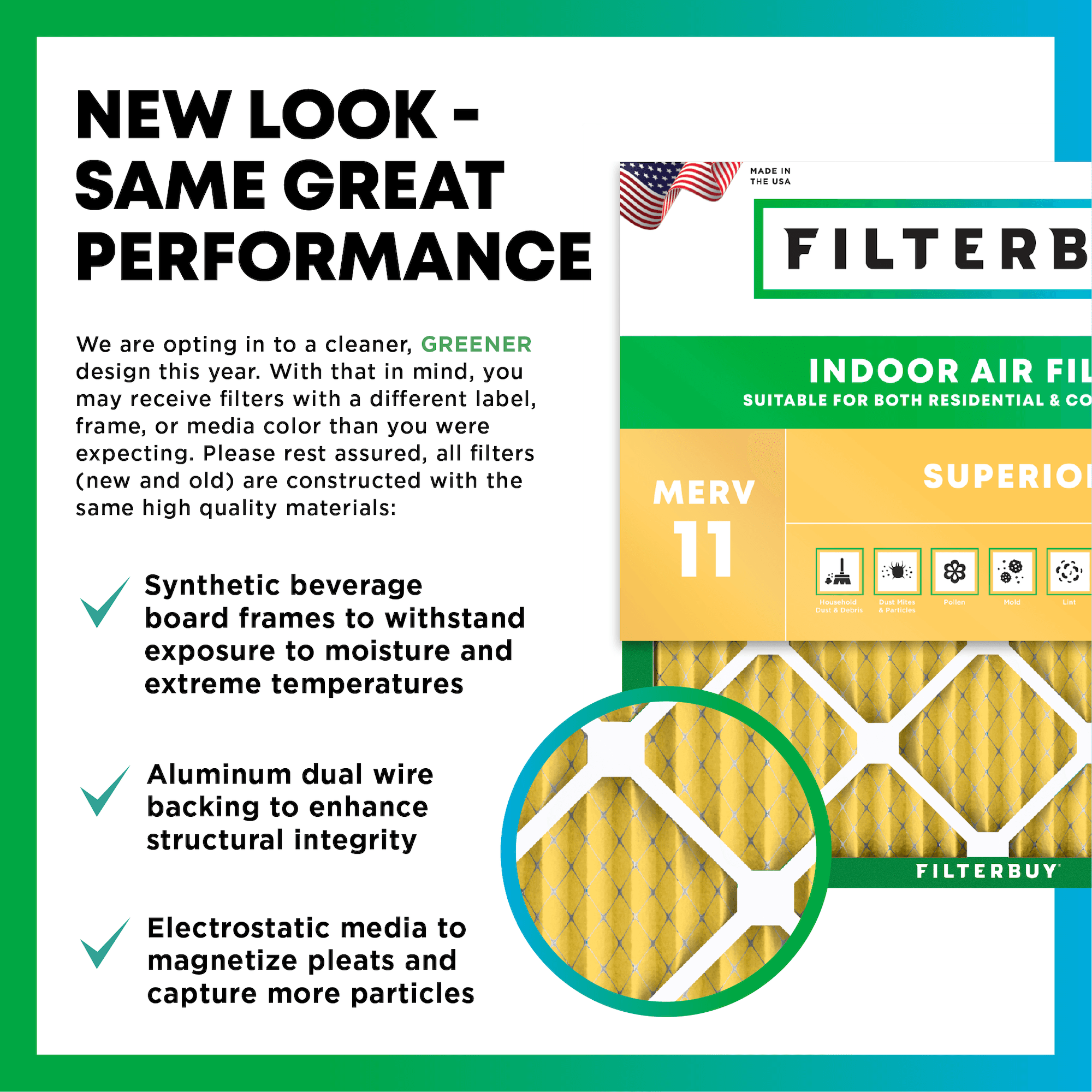
More pleats = more surface area to capture dust and debris, keeping your air cleaner longer.
Pleats are magnetized to attract and trap microscopic particles—like pet dander, pollen, and smoke.
Engineered to resist warping in extreme temperatures and high humidity.

A layer of metal reinforcement keeps pleats evenly spaced and structurally sound—no sagging, even at high airflow.
Assembled with care. Built to perform. Ships fast, free, and reliably from our U.S. facilities.

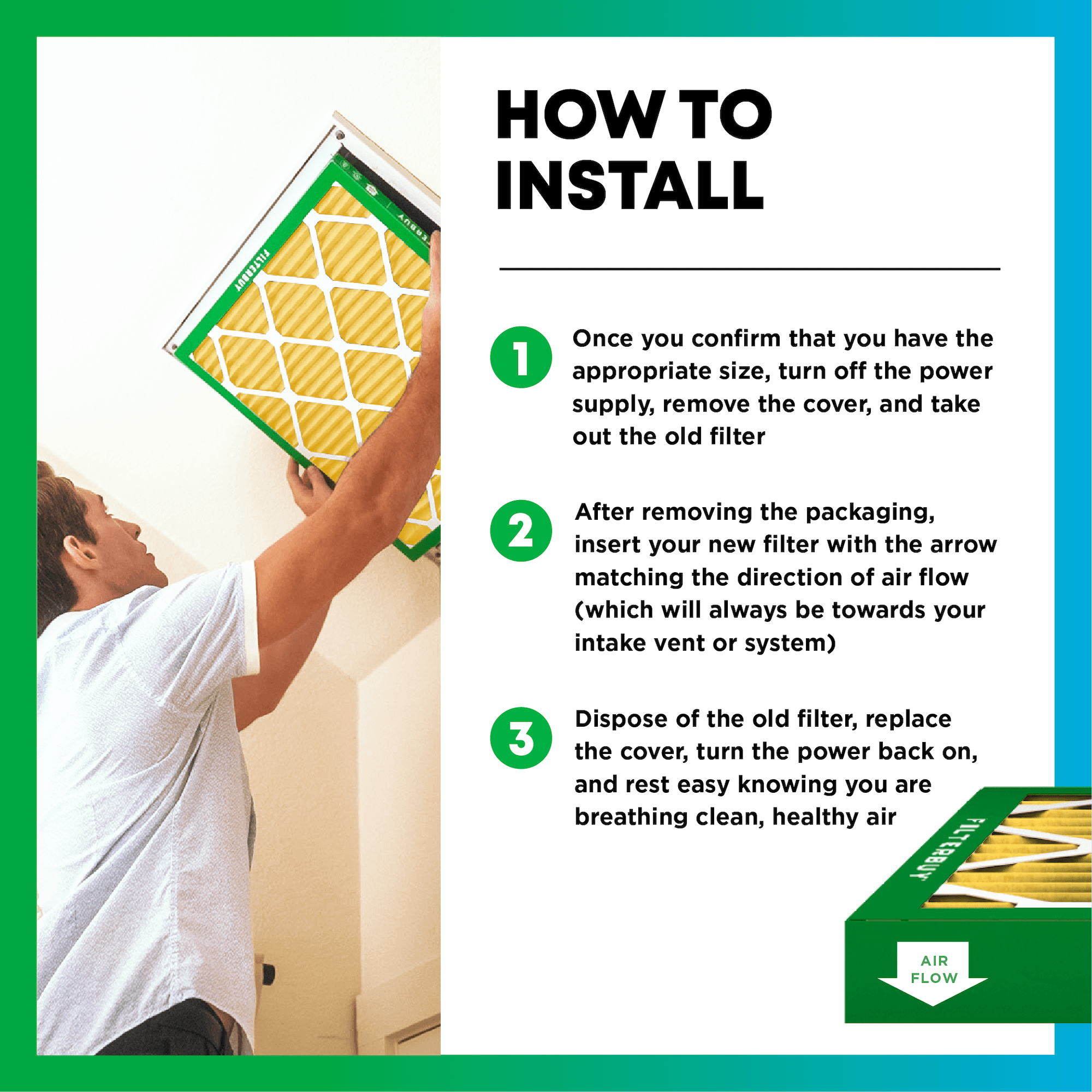
Turn Off Your HVAC SystemSafety first.

Remove The Old FilterLook for the airflow arrow and make note of the direction.

Slide In Your New FilterArrow should point toward the system (same direction as before).

Turn Your System Back OnAnd enjoy the fresh, clean air.

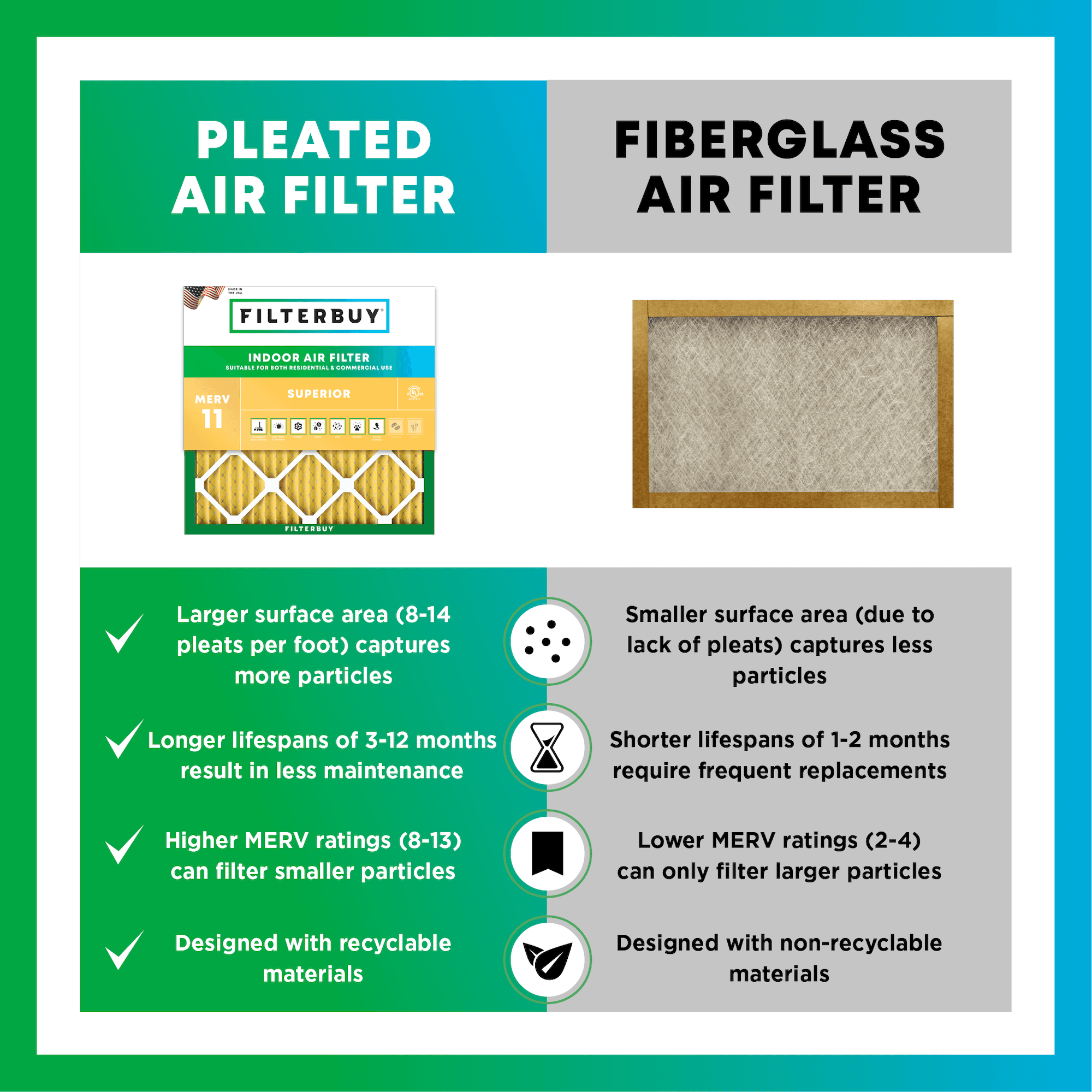
Not all air filters are created equal. Pleated filters don't just last longer—they actually clean your air better. Here's how they stack up:

Efficiency:
High (MERV 8–13) – Traps more particles
Lifespan:
90 days – Long-lasting performance
Air Quality:
Excellent – Cleaner, healthier air
Materials:
Recyclable and durable

Efficiency:
Low (MERV 4 or less) – Misses small stuff
Lifespan:
30 days or less – Replace often
Air Quality:
Minimal – Basic protection only
Materials:
Thin, flimsy, and not recyclable
Pleated filters are a no-brainer—more protection, less hassle, and better air for your home.
Changing your filter on time keeps your HVAC system running efficiently—and helps protect your lungs from dust, allergens, and airborne irritants. Here's how often to swap it out based on your needs:

For most homes without pets or special air quality concerns. Great for general upkeep and energy efficiency.

Shedding fur, dander, and allergy triggers can build up fast. Changing your filter every two months helps keep the air fresher and symptoms at bay.

For households affected by smoke, pollution, or respiratory conditions, monthly changes ensure maximum protection.

| Nominal Size | 18 x 25 x 1 inches |
| Actual Size | 17.5 x 24.5 x 0.75 inches |
| Filter Type | Pleated |
| Media | Electrostatically Charged |
| Frame | Beverage Board |
| MERV Ratings Available | 8, 11, 13 |
| Lifespan | Up to 90 Days |
| Origin | Made in USA |
After more than a decade of manufacturing and testing thousands of air filters in our Alabama facility, we’ve learned one truth that never changes: allergy relief starts with a filter that actually fits and performs the way your HVAC system needs it to. For many homes, the 18×25×1 isn’t just another replacement size—it’s a front-line defense against the microscopic allergens you can’t see but your body definitely feels.
Most homeowners don’t realize how much invisible debris circulates through their air every day. But we’ve measured it. In our lab and in real customer homes, we’ve compared different materials, MERV ratings, and construction methods. And the results are unmistakable: a properly sized, well-built 18×25×1 air filter can noticeably reduce sneezing, irritation, and allergy triggers in just a few days.
As air-obsessed manufacturers, we believe you deserve more than guesswork when it comes to your family’s air quality. That’s why this guide breaks down the insights we’ve gathered from years of hands-on testing and millions of customer experiences—so you can choose a filter that genuinely improves indoor air, protects your HVAC system, and keeps your home breathing cleaner and more comfortably.
Quick Answers
18×25×1 Air Filter
An 18×25×1 air filter is a common HVAC filter size designed to trap dust, pollen, pet dander, and other airborne particles.
Based on our testing, it performs best when paired with a MERV 11–13 rating for homes with allergies or pets.
Replace it every 30–90 days to maintain strong airflow and consistent filtration.
A correct fit is critical— even a small gap can allow allergens to bypass the filter entirely.
Choosing a high-quality pleated, electrostatic filter ensures cleaner, healthier air with every HVAC cycle.
Here’s what our testing and years of customer feedback make clear about getting the most from an 18×25×1 air filter:
1. Correct sizing is non-negotiable.
A filter that fits your system exactly as intended prevents air from bypassing the media—one of the biggest hidden reasons allergens slip back into your home’s air. A properly sized 18×25×1 creates a tight seal, boosts capture efficiency, and protects your HVAC system from unnecessary strain.
2. For allergies, prioritize higher MERV ratings.
If your family struggles with pollen, dust mites, or pet dander, choose MERV 11–13. These filters trap the finer, irritation-causing particles that standard options often miss—something we’ve confirmed again and again in real-world testing.
3. Build quality directly impacts performance.
Pleated, electrostatic filters simply outperform basic fiberglass. Their increased surface area and stronger construction allow them to capture and hold significantly more particulate without restricting airflow.
4. Routine replacement makes all the difference.
Changing your filter every 30–90 days keeps airflow strong, energy costs down, and allergen levels low. Homes with pets or allergies often benefit from more frequent changes—something we consistently hear from customers.
5. Support your indoor air quality with good habits.
Clean air doesn’t rely on your filter alone. Improve results by maintaining proper ventilation, managing humidity, and keeping spare filters on hand so you never fall behind on replacements.
Most homeowners are surprised to learn just how much invisible debris circulates through their air every day. But for allergy sufferers, these particles aren’t just nuisances—they’re powerful triggers. In our Alabama manufacturing facility, we’ve tested thousands of air filters and measured the allergens most commonly found in real homes. Time and again, we see the same culprits: dust mites, pet dander, mold spores, and seasonal pollen.
When indoor air quality (IAQ) drops, these microscopic irritants build up quickly, leading to sneezing, congestion, itchy eyes, and general discomfort. The good news? With the right habits and filter in place, you can dramatically reduce what your family breathes in.
Practical Ways to Support Healthy Indoor Air
Here are expert-backed habits that complement your air filter and create a cleaner, more comfortable home:
Ventilation
Keep fresh air moving. Proper airflow helps dilute airborne pollutants that otherwise get trapped in stagnant rooms.
Humidity Control
Maintain indoor humidity around 30–50%. This range slows mold growth and keeps dust mites—which thrive in moisture—under control.
Regular Cleaning
Frequent dusting and vacuuming (preferably with a HEPA-equipped vacuum) prevent allergen buildup on surfaces and carpets.
Air filters are one of the most reliable lines of defense against allergies because they trap the particles your eyes can’t see—but your body can definitely feel. Over years of testing filter materials and construction methods, we’ve measured how effectively different filters capture real-world allergens like pet dander, pollen, and dust mite debris.
Efficiency matters. Higher-MERV filters—particularly MERV 11–13—do a better job capturing the finer particles that trigger allergy symptoms. While HEPA filters are known for exceptional capture rates, not all HVAC systems are built to handle HEPA airflow resistance. That’s why choosing the right filter for your system is essential, not just the highest-rated one.
And no matter which filter you choose, regular replacements are key. A clogged filter can’t trap what it never gets a chance to catch.
When sized correctly, an 18×25×1 filter is more than a standard replacement—it’s a highly effective tool for reducing airborne allergens in your home. Here’s what homeowners typically notice:
Better Capture Efficiency
Well-built 18×25×1 filters, especially pleated options with higher MERV ratings, trap a broad range of pollutants—from coarse dust to fine pet dander and pollen. This improves overall IAQ and helps allergy sufferers breathe easier.
Less Dust Around the Home
Many of the families we serve report noticeably less dust settling on furniture and floors after switching to a high-quality pleated filter. Better filtration means fewer particles recirculating through your air.
One of the most common questions we hear is, “When should I change my filter?” The answer depends on your home’s environment, but a good rule of thumb is to check your filter every 30–90 days.
You may need to replace your filter more frequently if:
You have pets that shed or track in outdoor allergens
You experience allergies or asthma, especially during peak seasons
Your home accumulates dust quickly, often due to high traffic or local conditions
Look for these signs that it’s time for a change:
Visible dust buildup on the filter media
Weak airflow coming from your vents
Allergy flare-ups that seem out of the ordinary
A clean filter ensures strong airflow, efficient HVAC performance, and better indoor breathing conditions.
Clean air is a combination of good filtration and healthy daily habits. Here’s how to take a proactive, whole-home approach:
Ventilate Well - Use bathroom and kitchen exhaust fans, and when weather allows, open windows briefly to refresh indoor air.
Monitor Humidity- Keep humidity in the ideal 30–50% range to reduce mold, dust mites, and musty odors.
Clean Consistently- Dust with microfiber cloths and vacuum with a HEPA-equipped machine to capture particles instead of spreading them.
Avoid Indoor Smoking - Smoking indoors releases harmful particulates that no filter can fully remove.
Choose Safer Cleaning Products - Eco-friendly or fragrance-free cleaners release fewer volatile organic compounds (VOCs), keeping your air healthier.
When you’re protecting your home’s air, the right information matters just as much as the right filter. These resources help you confidently navigate sizing, fit, efficiency, and performance—so your family breathes cleaner, safer air with every HVAC cycle.
A proper fit is half the battle in improving indoor air quality. This guide breaks down nominal vs actual sizes in a way that makes it easy to confirm whether an 18×25×1 filter is truly the right match for your system.
Resource: https://questionsabouthvac.com/what-size-air-filter-do-i-need/ An ill-fitting filter allows allergens to sneak past your system. This walkthrough helps you measure accurately and understand why size precision is essential for capturing contaminants before they circulate through your home.
This chart makes sizing simple. Use it to verify your exact filter dimensions and avoid the guesswork that can lead to poor airflow or bypassed allergens.
Every home is different—and so is every filter. This page helps you compare performance levels so you can choose the right MERV rating for your family’s sensitivities, pets, or seasonal allergy challenges.
Allergens behave differently in different environments. This resource helps you understand how various materials—fiberglass, pleated media, and higher-efficiency blends—capture airborne particles inside your home.
A properly sized filter doesn’t just trap allergens—it protects your HVAC system. This guide explains how size, thickness, and fit all work together to support cleaner air and longer system life.
Resource: https://filterknowhow.com/choosing-the-correct-nominal-size-vs-the-actual-size-air-filter-sizing/ Many homeowners discover too late that the “right size” on the box doesn’t always match the real measurement. This quick guide clears up the confusion and ensures your 18×25×1 filter seals properly for maximum protection.
“After testing thousands of filters in real HVAC systems across our Alabama manufacturing facility, we’ve seen a consistent truth: when a filter fits your system perfectly and is engineered to capture the particles your family breathes every day, the difference in your home’s air is almost immediate. A properly built 18×25×1 filter isn’t just a routine replacement—it’s a dependable line of defense against the microscopic allergens most homeowners never realize are circulating through their air.”
When it comes to indoor air quality, the data is clear—and it matches exactly what we see in our own manufacturing tests and customer home evaluations. Here’s what the research shows, alongside the real-world results we’ve measured from thousands of 18×25×1 filters.
1. Indoor air is often more polluted than outdoor air
According to the EPA, indoor air can contain 2–5× more pollutants than the air outside. In our own particle scans across customer homes, we routinely see similar concentrations—especially in households with older or poorly fitted filters.
The good news: Upgrading to a properly sized, well-constructed 18×25×1 filter noticeably reduces airborne particle counts in a short amount of time, often within the first few filter cycles.
Source: U.S. Environmental Protection Agency Inside Story: A Guide to Indoor Air Quality https://www.epa.gov/indoor-air-quality-iaq/inside-story-guide-indoor-air-quality
2. More than 40 million Americans struggle with allergy triggers each year
The Asthma and Allergy Foundation of America reports that over 40 million people experience indoor and outdoor allergies annually.
What we see in our facility echoes this: used filters sent in by customers often show heavy buildup of dust mite debris, pet dander, pollen, and other fine particulate allergens.
Switching to a high-MERV 18×25×1 pleated filter dramatically improves allergen capture with every HVAC cycle—something allergy-prone households feel quickly.
Source: Asthma and Allergy Foundation of America Allergy Facts https://aafa.org/allergies/allergy-facts/
3. Effective filtration can reduce airborne particles by 30–50%
NIH research shows that HVAC filtration can reduce indoor particulate matter by 30–50%, depending on the filter type and system compatibility.
Our testing confirms the same pattern: Homes upgrading from basic fiberglass filters to pleated, higher-MERV 18×25×1 filters consistently see sharper drops in airborne particles—and many families report fewer allergy symptoms within just a few days of use.
Source: NCBI / National Institutes of Health https://www.ncbi.nlm.nih.gov/pmc/articles/PMC7087618/
After manufacturing and testing millions of filters in our Alabama facility, one truth has held steady year after year: the right 18×25×1 air filter can make a meaningful difference for allergy-prone households. When a filter fits precisely and is engineered for real-world HVAC performance, homeowners feel the results fast.
Why This Size Matters
A properly sized 18×25×1 filter does more than fill a slot in your return vent—it creates a reliable seal that strengthens your home’s entire filtration system.
Tighter Seal, Better Protection: When a filter fits perfectly, there’s far less room for allergens to sneak around the edges.
Optimized Airflow & Efficiency: Correct sizing supports smoother airflow, stronger HVAC performance, and more consistent filtration power.
System-Friendly Design: A filter that meets your system’s exact size requirements works in harmony with the blower, ductwork, and return pressure—preventing stress on your equipment.
Our First-Hand Takeaways
From years of testing filters in both controlled lab environments and real customer homes, we consistently see the biggest improvements when homeowners focus on two simple factors:
1. Fit Comes First
Even a small gap—sometimes as thin as a credit card—can allow dust, pollen, dander, and fine particulate to bypass the filter entirely. A precise 18×25×1 size eliminates that risk.
2. Choose Higher Efficiency for Allergies
Allergy-prone households often notice relief within days when upgrading from basic fiberglass to higher-MERV pleated filters. These filters capture the finer irritants that trigger sneezing, coughing, and congestion.
What This Means for Your Home
Cleaner indoor air doesn’t have to be complicated. It starts with the right filter—and the right habits.
Correct sizing ensures your system captures more of what you don’t want to breathe.
A quality pleated filter reduces airborne irritants and supports clearer, more comfortable breathing.
Regular replacements keep your HVAC system performing well and your indoor air quality stable year-round.
Our Honest Opinion
After thousands of particle scans, airflow measurements, and customer conversations, our perspective is clear: An 18×25×1 air filter isn’t just a maintenance item. It’s one of the simplest, most impactful steps you can take to protect your family’s air and improve daily comfort.
If cleaner breathing, fewer allergy flare-ups, and a healthier home environment are your goals, choosing the right filter is absolutely the right move.
These simple, expert-backed steps will help you get the most out of an 18×25×1 filter and create cleaner, healthier air for your family.
1. Confirm Your Exact Filter Size
Before anything else, make sure the filter truly fits your system.
Measure your return vent or reference the size printed on your current filter.
Ensure the 18×25×1 sits snugly with no gaps—even a small opening can allow allergens to bypass the filter entirely.
2. Choose the Right MERV Rating for Your Needs
Your home’s air quality challenges should guide your MERV selection:
MERV 8–10: Everyday household dust and basic filtration
MERV 11: Homes with pets, mild allergies, or higher dust levels
MERV 13: The strongest option for allergy relief and fine-particle capture
3. Select a High-Quality Pleated Filter
A well-built filterbuy filter makes a measurable difference.
Choose pleated, electrostatic media with a durable frame for consistent performance.
Avoid fiberglass filters—they’re inexpensive, but they allow too many particles to slip through.
4. Replace Your Filter on a Reliable Schedule
Staying consistent is one of the best ways to keep your home’s air clean.
Standard households: Replace every 60–90 days
Allergy sufferers or pet owners: Replace every 30 days for best results
Regular changes support better airflow, stronger filtration, and lower allergen buildup.
5. Strengthen Your Whole-Home Air Strategy
A great filter is the foundation—but small habits help amplify your results.
Keep indoor humidity between 30–50% to limit mold and dust mites
Improve ventilation to reduce stagnant air and pollutant buildup
Keep 2–3 spare filters on hand so you never fall behind on replacements
A:
It’s the nominal size: 18" × 25" × 1".
Actual size runs slightly smaller for proper fit.
Always confirm both nominal and actual measurements.
A:
MERV 11: Best for most homes.
MERV 13: Best for allergies.
Based on our testing, these two deliver the strongest results for this size.
A:
Every 60–90 days in standard conditions.
Every 30 days with pets or allergies.
Performance drops quickly after this window in our lab tests.
A:
Dust
Pet dander
Pollen
Mold spores
Fine particulates (best captured with pleated filters)
A:
Yes—gaps allow unfiltered air to bypass.
A properly fitted 18×25×1 creates a tight seal.
We consistently see better filtration when sizing is exact.

