
15x20x1 Air Filters
Actual Size: 14.5x19.5x0.75

3 month filters
2. Select Quantity
Buying multiple sizes?


Made in the USA
Ships in 24 hours
15x20x1 Air Filters Air Filter Description
Available In MERV Rating: 8, 11, 13
Made in the USA
Ships in 24 hours
Merv comparison
Scroll to see more.
 MERV 8 |  MERV 11 |  MERV 13 | |
|---|---|---|---|
| Best for | Standard Residential/Commercial Healthy Families | Superior Residential/Commercial Allergy Sufferers | Optimal Residential/Commercial Hospital Grade |
| Comparable ratings | MPR 600 & FPR 5 | MPR 1000-1200 & FPR 7 | MPR 1500 - 1900 & FPR 10 |
| Filtration | Captures 90% of Airborne Particles | Captures 95% of Airborne Particles | Captures 98% of Airborne Particles |
| Dust, lint & debris | |||
| Mold, pollen | |||
| Dander, dust mites | |||
| Smoke & Smog | |||
| Bacteria | |||
| Odor, vocs |
Is it time to change your filter?
Generally, we recommend you replace your air filters every 90 days. Find out below if you should change your filters more often.

If someone in your home has asthma or allergies...
Change your filter every
6 weeks
to ensure indoor air quality is at its best.
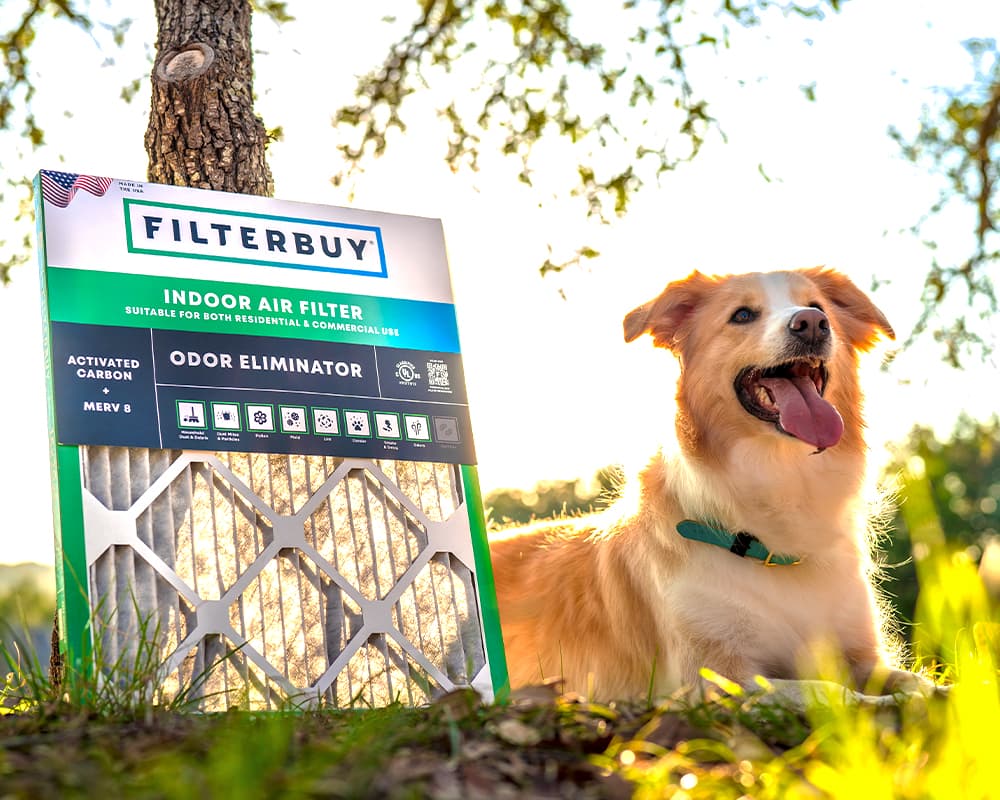
If you have pets...
Change your filter every
2 months
to avoid shedding and odor buildup.

If you have young children...
Change your filter every
2-3 months
as having clean air is even more important with children in your home.
If someone in your home has asthma or allergies...
Change your filter every
6 weeks
to ensure indoor air quality is at its best.
If you have pets...
Change your filter every
2 months
to avoid shedding and odor buildup.
If you have young children...
Change your filter every
2-3 months
as having clean air is even more important with children in your home.
Your Guide to Filterbuy 15x20x1 Air Filters
Choosing the right 15x20x1 air filter is crucial for clean air and efficient HVAC. Consider different filter types. Like fiberglass for larger particles and pleated filters for dust and allergens. Pay attention to the MERV rating. Higher ratings mean better filtration but ensure proper airflow. Choose a filter that fits your HVAC correctly to avoid straining your HVAC.
Understanding these factors, you select the best filter for your home and enjoy improved indoor air quality.
Look for more tips to ensure the best choice for your living space.
Key Takeaways
Measure existing filters accurately to maintain optimal HVAC performance and air quality.
Select appropriate filter types: pleated captures more allergens while HEPA serves allergy sufferers well.
Grasp MERV ratings; higher numbers indicate better filtration but might hinder airflow, affecting HVAC efficiency.
Verify compatibility with HVAC specifications to prevent airflow issues and enhance energy efficiency.
Choose Filterbuy 15x20x1 pleated air filters for cleaner air, improved comfort and enhanced HVAC performance.
Basics of Air Filter Sizes
Picking any filter from the shelf won't work; finding the correct fit is essential. Correct filter dimensions are essential for optimal HVAC performance. A filter that is either too small or too large will not fit correctly and will reduce air filtration effectiveness.
While selecting an air filter, consider the material as well. Pleated options capture more dust, pollen, and allergens. Balancing filter dimensions with suitable material maximizes indoor air quality.
Using the wrong size air filter increases your energy bills. When your HVAC struggles to pull air through a poorly fitting filter, it works harder. Wasting energy and driving up your energy costs. Accurately measuring your existing filters and ensuring you use the correct size is crucial. It helps efficient operation and maintains good indoor air quality.
Types of 15x20x1 Air Filters
Understanding the various types of furnace filter 15x20x1 is important. This enhances your home's air quality. Filters come in several forms, each crafted with distinct materials that determine efficiency.
Fiberglass filters serve as the most basic choice, capturing larger particles but lacking effectiveness against smaller allergens.
Pleated filters are favored for improved performance. They utilize a larger surface area to effectively trap dust, pollen and pet dander. Resulting in cleaner air indoors.
HEPA filters are the best choice for people with respiratory problems. These filters excel at capturing tiny particles. Ensuring the air remains as clean as possible. Be aware that higher efficiency may necessitate more frequent changes.
Electrostatic filters offer another option, using static electricity to attract and hold particles. This unique design can enhance air quality while needing less frequent replacement.
Filterbuy pleated air filters 15x20x1 are at least 20 times more efficient than standard fiberglass filters at capturing dust, allergens, and bacteria.
These air conditioner filters 15x20x1 feature a strong beverage board frame that can handle humidity and temperatures up to 200° F. No warping or weakening here under high temperatures.
Filterbuy uses a special synthetic electrostatic media. This advanced material is significantly more efficient at capturing particles compared to basic cotton media used in other filters.

Compatibility With HVAC Systems
Always verify that the filter matches your specific system, as mismatched options can block airflow and stress HVAC. This blockage reduces filter effectiveness and may raise energy costs since the system must work harder to circulate air.
Check the air filter’s dimensions and specifications suggested by your HVAC manufacturer. A properly sized filter supports optimal airflow, improving system lifespan and maintaining comfort in your home.
Consider the MERV rating. It shows how effectively the filter removes particles from the air.
Choosing a compatible filter helps maintain high efficiency, directly affecting indoor air quality. Investing in the right air filter protects both your HVAC unit and your family's health.
At Filterbuy, we help you make decisions that protect comfort while safeguarding your investment. Wise choices lead to benefits over time!
Supporting Facts and Statistics
Higher MERV-rated filters in HVAC systems catch small particles like pollen, mold, and dust better, leading to cleaner air indoors, according to the EPA.
The U.S. Department of Energy says checking and changing air filters regularly can cut energy use by 5% to 15%. Clean filters help HVAC systems work better, reducing energy costs and saving you money on bills.
The EPA also stresses the importance of using properly sized filters that fit correctly. Filters that don’t fit well can leave gaps, reducing their ability to filter air effectively and forcing your HVAC system to work harder, which increases energy costs.
Why Choose Filterbuy 15x20x1 Pleated Air Filter
Choosing the right air filter is a key step toward a healthier and more comfortable home. This small decision affects indoor air quality and overall well-being.
At Filterbuy, we offer reliable solutions that address allergens, reduce energy costs, and improve HVAC performance. We aim to simplify effective filter selection and deliver real results. We focus on more than just clean air. We want to help you create a home where you and your family breathe easier. And enjoy a better quality of life.
We offer fast and free shipping straight to your door. Plus, all our filters are proudly made right here in the USA. We use the highest quality American made materials. We're proud of the products we sell with over 65,000 5-star reviews from happy customers.
Frequently Asked Questions
Does my air filter need to be the exact size?
Yes. Your air filter needs to match the exact size specified by your HVAC system. Using an incorrect size results in poor filtration, reduced airflow and potential damage to your HVAC. Always check your unit’s manual for the proper dimensions.
Is MERV 11 too high for residential?
No. MERV 11 suits most residential systems. Especially if you want better filtration for allergens like pet dander and mold spores. Ensure your HVAC unit can handle it to maintain efficient airflow.
What MERV rating is best for airflow?
MERV 8 offers the best balance between good airflow and effective filtration. It captures common particles like dust and pollen. Without overly restricting air movement in your system.
Can I use 16x20x1 instead of 16x25x1?
No. You can’t use a 16x20x1 air filter in place of a 16x25x1 filter. A mismatched size will leave gaps. It compromises filtration and reducing your HVAC’s efficiency.
What happens if your air filter is too big?
If your air filter is too big, it won’t fit properly in the designated slot, causing improper filtration or airflow issues. Always use the correct size to ensure your HVAC functions efficiently.
What is better, MERV 8 or 11?
MERV 11 is better if you need higher filtration for allergens and smaller particles. While MERV 8 is ideal for dust and pollen removal. Choose based on your home’s air quality needs and your HVAC unit’s compatibility.
Is MERV 11 too restrictive for old furnace?
MERV 11 may be too restrictive for an older furnace if it wasn’t designed to handle higher-efficiency filters. Check the system’s specifications. Or consult a professional to avoid straining the furnace.
Is high MERV bad for AC?
A high MERV rating can be bad for your AC if the system isn’t designed to handle reduced airflow. This strains the unit, reduce efficiency and lead to higher energy bills. Always ensure compatibility with your system.
What is the main drawback of using a high MERV filter?
The main drawback of a high MERV filter is restricted airflow. It can strain your HVAC and reduce efficiency. This leads to higher energy bills and potential wear on the equipment.
Is MERV 11 good for home AC?
Yes. MERV 11 is good for home AC systems. It provides enhanced filtration for allergens and smaller particles. Ensure your HVAC can handle it to avoid reduced airflow or strain.
How often should I replace my air filter?
Replace your air filter every 1 to 3 months. Depending on your usage, air quality and if you have pets or allergies. Regular replacements ensure optimal airflow and system efficiency.