July 9, 2026
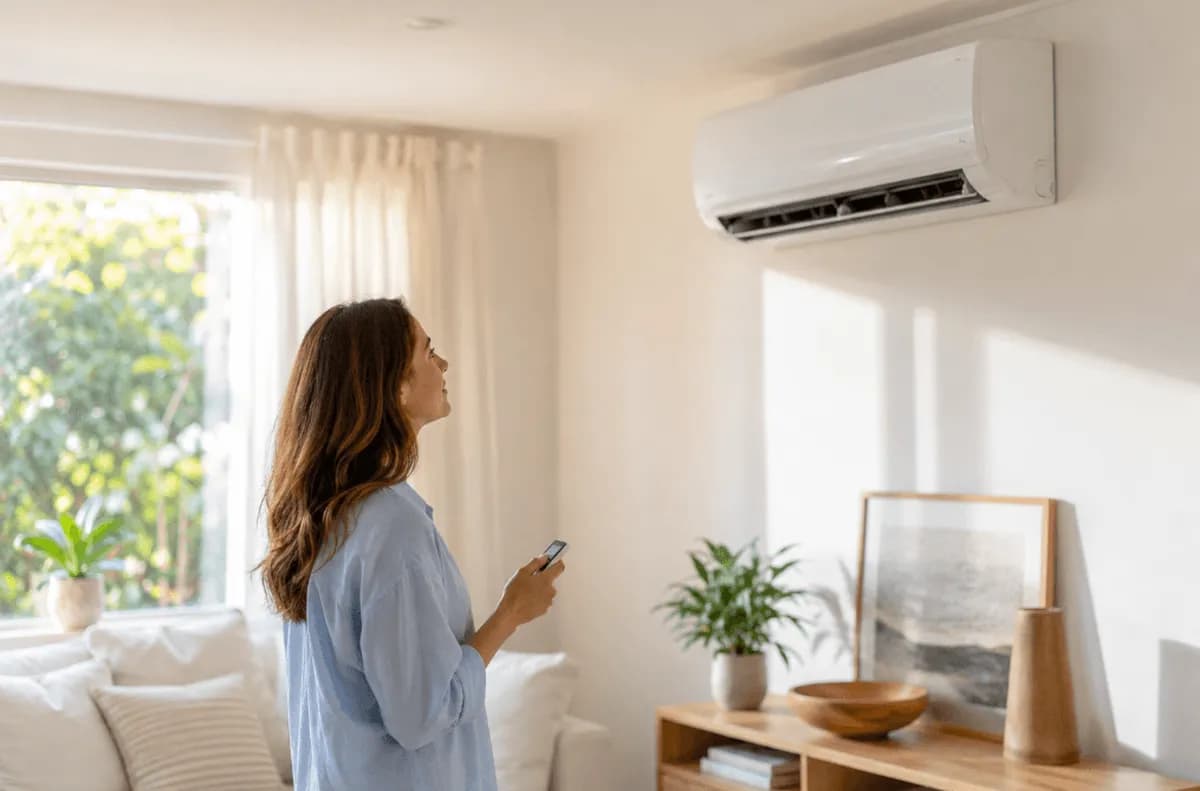
Your mini split works hard in the background, quietly heating and cooling the rooms you use most. Because it runs so smoothly, it's easy to forget it needs care at all. We think that's exactly the trap. At Filterbuy, we design and make air filters for a living, so we spend our days on airflow and the small habits that keep it clean, and we look at mini split upkeep a little differently than a general checklist. A ductless system hides its wear where you can't see it, on the filters, the coils, and the drain line, until efficiency slips or the air starts to smell musty. The good news is that keeping a mini split healthy takes a predictable rhythm, not guesswork. We've built this guide around that rhythm so you can protect your comfort, your energy bill, and your family's air with a schedule you can actually follow. Give a mini split a little steady attention on a schedule, and it will keep your rooms comfortable and your air clean for years.
Clean or rinse your mini split's indoor filters about every two to four weeks, and have a licensed HVAC technician service the full system once a year. Systems that run year-round, sit near a kitchen, or share a home with pets need more frequent filter cleaning and often benefit from two professional visits a year, one before cooling season and one before heating season. Homeowners can handle filters, exterior wiping, and clearing debris around the outdoor unit. Coil cleaning, refrigerant checks, and electrical work belong to a professional.
A mini split needs light homeowner maintenance every two to four weeks and one professional service visit per year at minimum. Clean the washable indoor filters every two to four weeks, rinse the outdoor unit and clear nearby debris each season, and schedule a licensed technician annually to clean the coils, check refrigerant, and inspect the electrical connections. Year-round systems often need two pro visits.
You can safely do part of it yourself. Cleaning the indoor filters, wiping the unit, and clearing leaves and debris from around the outdoor condenser are all homeowner tasks. Deeper work, including chemical coil cleaning, refrigerant charge checks, and electrical testing, requires a licensed technician with the right tools and EPA certification to handle refrigerant. For a task-by-task walkthrough of the homeowner cleaning steps, follow our step-by-step mini split cleaning guide.
Skipping maintenance quietly raises your energy bills and shortens the system's life. Dust clogs the filters and coils, airflow drops, and the compressor works harder to reach the same temperature. Neglected units also collect moisture and dust that feed mold on the coils and in the drain line, which the system then circulates into your rooms.
Clean or rinse your mini split's washable indoor filters every two to four weeks during regular use, and more often with pets, allergies, or a nearby kitchen.
Book a licensed HVAC technician for a full service at least once a year. Systems that heat and cool year-round often need two visits, one in spring and one in fall.
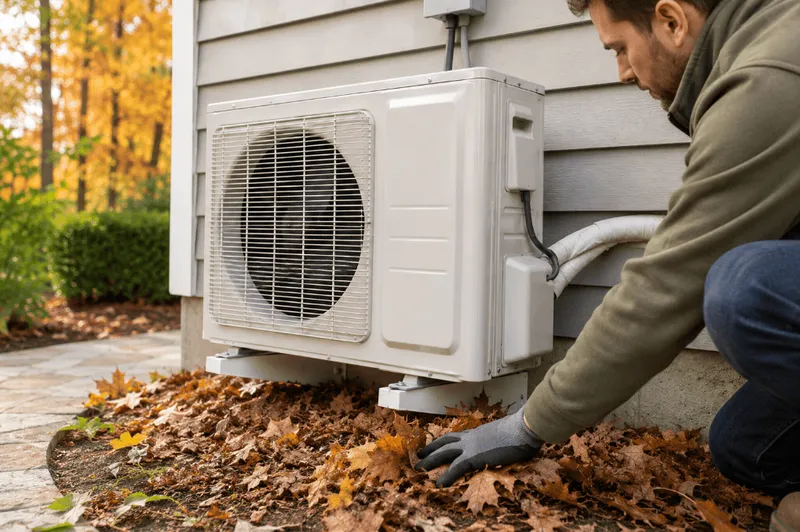
Homeowner tasks are the filters, wiping the indoor head, and keeping the outdoor unit clear of leaves, grass, and snow.
Professional tasks are coil cleaning, refrigerant checks, condensate drain clearing, and electrical inspection, because they need special tools and EPA-certified handling.
A musty smell, weak airflow, water dripping from the indoor unit, or ice on the coils means your mini split needs service sooner, not at the next scheduled visit.
Each indoor head in a multi-zone system needs its own filter cleaning, so a three-room setup means three filters to check on the same schedule.
Mini split maintenance follows two clocks. The first is a short homeowner cycle of every two to four weeks for filters and quick checks. The second is a seasonal and annual cycle for professional service. Matching your tasks to the season keeps the system ready before it has to work hardest, whether that's peak summer cooling or the first cold snap of winter.
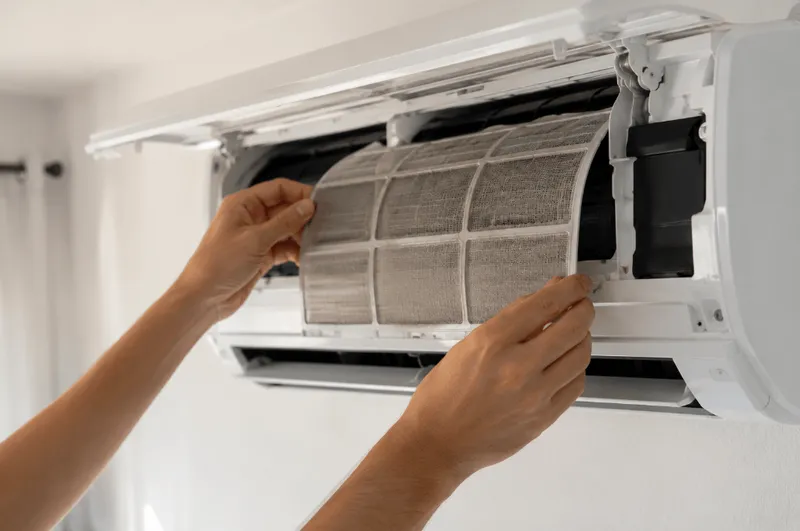
Filters are the single most important part of mini split care, and they're the part homeowners control. A ductless system pulls room air across a washable mesh filter before it reaches the coil. When that mesh clogs with dust, airflow drops, the coil runs colder, and the whole system strains. Cleaning the filters every two to four weeks keeps airflow steady and protects the parts behind them. To clean one, turn the unit off, lift the front panel, slide out the filters, vacuum or rinse them with mild soap and water, let them dry fully, then reseat them. Never run a mini split without its filters, and never put a damp filter back in, because trapped moisture invites mold.
The part most maintenance advice skips is the one we pay closest attention to at Filterbuy. That mesh filter is built for airflow, not for catching fine dust. Cleaning it on schedule protects your efficiency and keeps moisture and mold off the coil, but on its own it does little for the fine particles and allergens you actually breathe. We tell homeowners to treat the mesh as the floor for their air quality, not the ceiling. If cleaner air is the goal, a unit with stronger built-in filtration, or an added air-cleaning step, does the work the bare mesh can't.
One caution if you're coming from a central system. A ducted furnace or AC uses a disposable filter you swap about every three months, but a mini split uses a washable mesh you clean about every two weeks, roughly six times as often. Borrowing your old furnace schedule is the quickest way to starve a mini split of airflow, so give it its own reminder.
This schedule maps every task to the time of year it matters most. Homeowner tasks are quick and repeatable. Professional tasks cluster around the shoulder seasons, spring and fall, when technicians can tune the system before the demand of summer and winter.
Every two to four weeks is the baseline for filter cleaning, but your home changes the math. Pets, allergies, cooking, and constant use all load filters faster. Use this table to set your own cleaning interval, then check the filter on that schedule and clean it whenever it looks dusty. There's an air-quality payoff too, because clean filters are a big part of how a clean mini split improves your indoor air quality.
A simple rule keeps mini split maintenance safe. If a task is about cleaning surfaces you can reach and clearing what you can see, it's yours. If it involves refrigerant, sealed electrical parts, or the inside of the coil, it belongs to a licensed technician. Federal rules require EPA-certified professionals to handle refrigerant, so charge checks and leak repairs are never a homeowner job.
Do It Yourself
Clean or rinse the washable indoor filters.
Wipe the indoor head and vents with a soft, damp cloth.
Gently rinse the outdoor condenser fins with a garden hose on low pressure, never a pressure washer.
Clear leaves, grass, snow, and debris from around the outdoor unit.
Check that the condensate drain line runs freely and isn't dripping inside.
Leave It to a Licensed Technician
Deep or chemical cleaning of the evaporator and condenser coils.
Checking and adjusting the refrigerant charge, and repairing any leaks.
Clearing a clog inside the condensate drain.
Inspecting and tightening electrical connections and testing capacitors.
Diagnosing ice buildup, short cycling, or a drop in heating or cooling.
Some symptoms mean you shouldn't wait for your next scheduled visit. Use this quick guide to spot the likely cause and see whether it's a job you can handle or one for a technician. Catching these early usually turns a repair into a tune-up.
After manufacturing filters for over a decade and serving more than two million households, we've learned that a mini split rewards one habit above all others, keeping its airflow clean. That's why we put this guide in front of a licensed technician who services these systems for a living.
“Nearly every mini split I'm called out to fix comes down to the same two things, a filter nobody cleaned and a drain line nobody checked. People assume that mesh filter is scrubbing their air, but it's really there to protect the coil and keep air moving, so the moment it clogs the whole system starts to struggle. The units I never see a second time belong to owners who clean the filter every couple of weeks and book one honest tune-up a year. Twenty minutes a month beats a compressor replacement every time.”
David Clark, Licensed HVAC Technician
These sources shaped the guidance above. Each is an independent government or nonprofit authority on heat pumps, ductless systems, and indoor air.
Source: ENERGY STAR Heating and Cooling Maintenance Checklist What to expect from a professional tune-up, including coil cleaning and condensate drain checks.
Source: EPA Guide to Air Cleaners in the Home How filtration and wall-mounted ductless units affect indoor air.
Source: CDC Guidance on Mold in the Home Why moisture control and clean drain lines matter for HVAC systems.
Source: NIEHS Overview of Indoor Air Quality and Health The research linking indoor particles, allergens, and mold to health.
Source: California Air Resources Board Fact Sheet on Home Air Cleaning Devices How well-maintained HVAC filtration protects whole-home air.
Source: ACCA HVAC Standards and Codes The ANSI/ACCA 4 QM standard defining minimum residential maintenance tasks.
Source: Asthma and Allergy Foundation of America on a Healthier Home Maintaining your HVAC and replacing filters to reduce allergens.
Three numbers show why steady maintenance pays off.
A neglected heat pump can use 10 to 25 percent more energy than a well-maintained one.
Source: ENERGY STAR – Air-Source Heat Pumps
Ductless mini split mesh filters need cleaning about every two weeks.
Source: Ductless (Mini-Split) Heat Pumps, Building America Solution Center
Heating and cooling run about 52 percent of a typical home's yearly energy use, so an efficient system protects a big share of your bill.
Source: Use of Energy in Homes, U.S. Energy Information Administration
Mini Split (Ductless System). A heating and cooling system with one or more wall- or ceiling-mounted indoor heads connected by refrigerant lines to an outdoor unit, delivering conditioned air without ductwork.
Evaporator Coil. The indoor coil inside each mini split head that absorbs or releases heat. Dust on this coil lowers efficiency and can hold moisture that feeds mold.
Condenser (Outdoor Unit). The outdoor part of a mini split that releases or gathers heat. It needs clear airflow and space free of leaves, grass, and snow.
Condensate Drain Line. The tube that carries water away from the indoor unit as it removes humidity. A clog causes indoor dripping and mold.
Refrigerant. The fluid that carries heat between the indoor and outdoor units. By federal rule, only EPA-certified technicians may handle or recharge it.
MERV (Minimum Efficiency Reporting Value). A 1-to-16 scale, defined by ASHRAE, that rates how well a filter captures particles. Higher numbers capture smaller particles.
HEPA (High Efficiency Particulate Air). A filter type, defined by the Department of Energy, that captures at least 99.97 percent of particles at 0.3 microns. Most mini splits use washable mesh filters rather than HEPA.
HVAC. Short for heating, ventilation, and air conditioning, the systems that condition indoor air.
Tune-Up (Professional Service). A scheduled visit where a licensed technician cleans coils, checks refrigerant, clears the drain, and inspects electrical parts.
After years of thinking about air at Filterbuy, we keep landing in the same place. The best mini split maintenance plan is the one you'll actually keep, and that means making it small and routine. We'd rather you clean your filters faithfully every few weeks and book one honest annual visit than aim for a perfect plan you abandon by June. The filters are where most of the payoff lives, because they protect everything behind them and they cost you nothing but a few minutes. If your system runs all year, treat the second professional visit as insurance rather than an extra. Mini splits reward the owners who pay a little attention often, and they wear out fast for the ones who wait for something to break. We think that trade is an easy one to make. And if you're weighing a ductless system for another room, our complete mini split buying guide walks through sizing and what to look for before you buy.
Ready to build your own rhythm? Start here.
Find your filters today, clean them, and set a repeating reminder every two to four weeks.
Set your interval using the household table above, then adjust it based on how dusty the filters look.
Book your annual professional tune-up now for the shoulder season, spring for cooling or fall for heating.
If your system runs year-round, schedule the second visit so you have one before summer and one before winter.
Want the bigger picture on what your system is protecting you from? Read our guide to indoor air quality basics.
At least once a year for most homes. Systems that both heat and cool year-round do best with two visits, one before cooling season in spring and one before heating season in fall. A professional visit covers coil cleaning, a refrigerant check, drain clearing, and an electrical inspection.
Every two to four weeks during regular use. Clean them every one to two weeks if you have pets, allergies, or a head mounted near a kitchen. Check the filter on that schedule and clean it any time it looks dusty, since a clogged filter is the most common cause of weak airflow.
No. Running a mini split without its filters lets dust reach the coil directly, where it's much harder to remove and where it can hold moisture that grows mold. Always clean the filters and let them dry fully before putting them back.
A musty smell usually means moisture and mold on the coil or in the condensate drain line. Clean the filters first and make sure the drain runs freely. If the smell continues, book a technician to clean the coil and clear the drain, because deep coil cleaning is a professional job.
Yes. Dirty filters and coils force the system to run longer to reach the same temperature. The U.S. Department of Energy reports that a neglected heat pump can use meaningfully more energy than a well-maintained one, so routine care protects both comfort and your bill.
Well-maintained ductless systems commonly last many years longer than neglected ones, and manufacturers often require proof of regular maintenance to honor a warranty. Consistent filter cleaning and annual professional service are the two habits that most extend a mini split's life.
You're the one who keeps your home's air clean, and a mini split makes that easier when you give it a little steady care. Set your filter reminder, book your annual visit, and keep a fresh filter ready for the next change. When you're ready to stock up on the right replacements and upgrades for your system, browse our mini split and HVAC filters and let Filterbuy help you breathe easier, one clean filter at a time.
