June 25, 2026
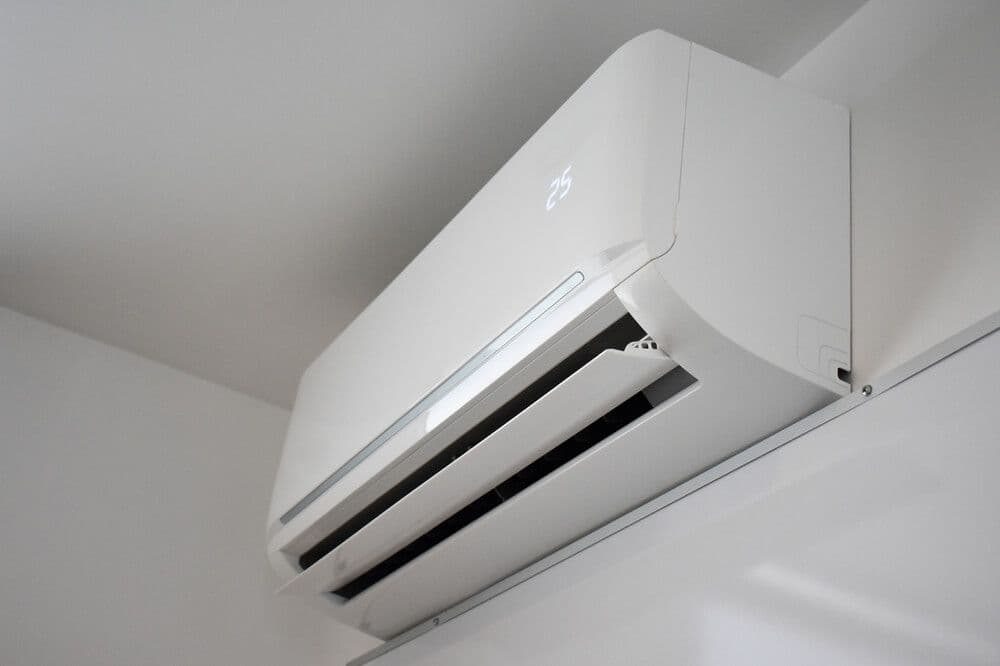
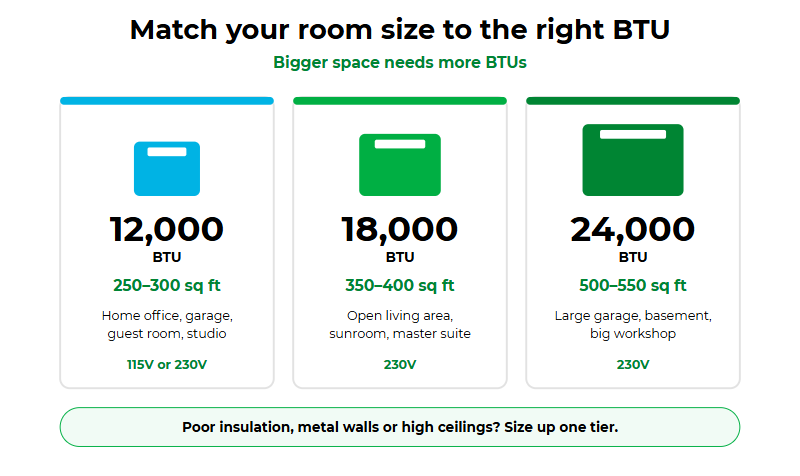
A mini split heats and cools one room with no ductwork, and the most important choice is matching the unit’s BTU size to your room’s square footage. Pick by the size of the space you want to cover, then size up one tier if the room has poor insulation, metal walls or high ceilings.
12,000 BTU — 250 to 300 sq ft (home office, garage, guest room, studio)
18,000 BTU — 350 to 400 sq ft (open living area, sunroom, master suite)
24,000 BTU — 500 to 550 sq ft (large garage, finished basement, big workshop)
Every Filterbuy mini split is SEER 17, single zone and installs through a small hole in the wall. Not sure which size fits? Take the quick quiz below and we’ll match you to the right one.
Or browse all mini split systems →
Answer 3 quick questions and we’ll match you to your perfect mini split size.
A mini split is one of the simplest ways to heat and cool a room that your central AC cannot reach. No ductwork. No major renovation. Just fast, quiet comfort wherever you need it.
This guide covers everything you need to pick the right size and understand how it works.
A mini split heats and cools one room without any ductwork. It has two parts: an indoor wall unit and an outdoor box connected through a small hole in the wall. No ducts. No major renovation.
They work best in spaces your central system cannot reach. Garages, bonus rooms, sunrooms, finished basements and older homes without central air are all perfect fits. Mini splits can also save up to 25 to 40% on energy costs compared to traditional HVAC.
The short answer is yes, for the right space. Mini splits give you precise control over one room's temperature, lower energy bills and much quieter operation than older systems.
For garages, additions and rooms your central AC cannot reach, a mini split is almost always worth it. Energy savings over time offset the upfront cost and the comfort difference is immediate.
A mini split has two parts: an indoor wall unit and an outdoor box. A small hole in the wall connects them with a refrigerant line. No ductwork needed.
Instead of creating hot or cold air from scratch, it moves heat. In summer it pulls heat out of your room and sends it outside. In winter it pulls heat from the outdoor air and brings it inside, even when it is very cold out.
Because air goes directly into the room instead of through ducts, mini splits avoid the energy loss that central HVAC systems have.
A mini split moves heat instead of creating it — that is why it uses so much less energy.
Mounts high on the wall. Blows conditioned air directly into the room.
Houses the compressor. Moves heat in or out depending on the season.
Most air conditioners work by blasting on at full power and then shutting off completely. This causes temperature swings, wastes energy and puts more wear on the system.
Filterbuy mini splits use a variable speed inverter compressor. It ramps up quickly to reach your target temperature and then slows down to maintain it. The result is a steadier, more comfortable room and up to 30 to 50% less electricity used compared to a standard system.
BTU measures how much heating and cooling power a unit has. A bigger room needs more BTUs.
The most common mistake is buying a unit that is too small. An undersized unit runs nonstop and never fully cools the space. When in doubt, size up. This is especially true for spaces with poor insulation, high ceilings or metal walls.
SEER stands for Seasonal Energy Efficiency Ratio. It measures how efficiently a system cools over an entire season. The higher the SEER rating, the less electricity it uses to do the same job.
The federal minimum is SEER 13 to 14. A SEER 17 unit uses noticeably less energy than a minimum rated system, which adds up to real savings on your monthly bill over time.
Higher is more efficient. The federal minimum is 13 to 14.
This is about what electrical outlet you already have, not about performance. Both voltages deliver the same heating and cooling.
If you are not sure what you have, a licensed electrician can check your panel quickly before you buy.
Refrigerant is the fluid that moves heat through the system. Older systems use R410A. R32 is a newer refrigerant that does the same job with less environmental impact. It has a 68% lower global warming potential than R410A, needs less refrigerant to do the same job and transfers heat more efficiently.
R410A is being phased out across the industry. R32 is where things are headed.
Lower is better
Use this table to find the right unit for your space. If your space has poor insulation, metal walls or high ceilings, size up one tier.
| Your Space | Room Size | Best Unit |
|---|---|---|
| Home office, small bedroom, studio | 250 to 300 sq ft | 12,000 BTU |
| Large bedroom, sunroom, open garage | 350 to 400 sq ft | 18,000 BTU |
| Large garage, open floor plan, basement | 500 to 550 sq ft | 24,000 BTU |
| Poor insulation, metal walls or high ceilings | Any size | Size Up One TierPro Tip |
Mini splits require professional installation by a licensed HVAC contractor. DIY installation voids the 5-year warranty and federal law requires EPA 608 certification to handle refrigerant. Most single zone installs take 4 to 8 hours from start to finish.
Here's what a typical installation looks like.
Contractor checks your panel, wall and route for the line set.
Indoor unit goes high on the wall. Outdoor unit goes on a pad or bracket.
A small hole in the wall connects both units. No ductwork needed.
Lines are vacuumed and tested before refrigerant is released.
System is tested and confirmed working before the contractor leaves.
Most single zone installs take 4 to 8 hours from start to finish.
Mini split systems that meet efficiency thresholds may qualify for:
Federal Tax Credits under the Inflation Reduction Act (up to 30% of equipment costs for qualifying systems)
Utility rebates through your local electric provider
State energy efficiency programs (availability varies significantly by state)
SEER 17 systems generally meet or exceed the efficiency requirements for most rebate programs. We recommend checking the DSIRE database (dsireusa.org) or your utility provider's website for current programs in your state.
Note: Tax credit and rebate eligibility depends on your specific tax situation, installation method, and program requirements. Consult a tax professional for guidance on your specific situation.
Every Filterbuy mini split comes with all of the features below. No add-on packages, no extra fees.
Control temperature from anywhere on your phone.
Reads the temp where you sit, not just at the wall.
About as loud as a quiet library — you will barely notice it.
Works in cold climates with an intelligent defrost cycle built in.
Heats the coil after cooling to prevent mold and odors.
Catches dust, allergens and particles before they reach you.
Schedule it to be ready before you walk in the door.
Comes back on automatically if the power goes out.
Built-in refrigerant leak detection for peace of mind.
Full 5-year coverage with professional installation.
Keeps the outdoor unit from freezing in cold weather.
Above the federal minimum for lower monthly energy bills.
Yes — a licensed contractor needs access to both the indoor space and the outdoor area where the condenser will be mounted.
No. DIY installation voids the 5-year warranty and is not legal without EPA 608 certification for refrigerant handling. Your installer needs to be a licensed HVAC contractor.
A single-zone system may not be enough. For larger spaces, talk to an HVAC contractor about whether a larger single-zone unit or a multi-zone system is a better fit. We'd also recommend getting a proper load calculation done.
At low fan speeds, indoor units run at approximately 28–30 dB — quieter than a typical conversation. At maximum speed they can reach ~45 dB. Outdoor units run at ~52–55 dB, comparable to a normal conversation.
With regular maintenance (cleaning filters, annual professional service), mini split systems typically last 15–20 years. The self-cleaning function helps reduce internal buildup between service visits.
Yes. These systems heat reliably down to 5°F (-15°C) outdoor temperature, supported by the intelligent defrost cycle and chassis heating belt. They're a viable year-round heating and cooling solution in most U.S. climates.
Clean or rinse the indoor filters every 4–6 weeks during heavy use
Use the self-cleaning function regularly
Schedule a professional inspection annually
Keep the outdoor unit clear of debris, ice, and obstructions
Here's the quick version:
| If your space is... | Choose this system |
|---|---|
| 250–300 sq ft, has a standard outlet | 12,000 BTU – 115V |
| 250–300 sq ft, has a 230V circuit | 12,000 BTU – 230V |
| 350–400 sq ft | 18,000 BTU – 230V |
| 500–550 sq ft | 24,000 BTU – 230V |
| Poorly insulated or high heat load | Size up one tier |
Garages, workshops, guest rooms, home offices, studios — 250 to 300 sq ft
Open-concept spaces, larger garages, Florida rooms, master suites, studio apartments — 350 to 400 sq ft
Large garages, workshops, open living areas, bonus rooms, finished basements — 500 to 550 sq ft
Have questions before you buy? Our team is here to help you find the right system for your space.