Mini Split vs Window AC: Which Is Better for Your Home?
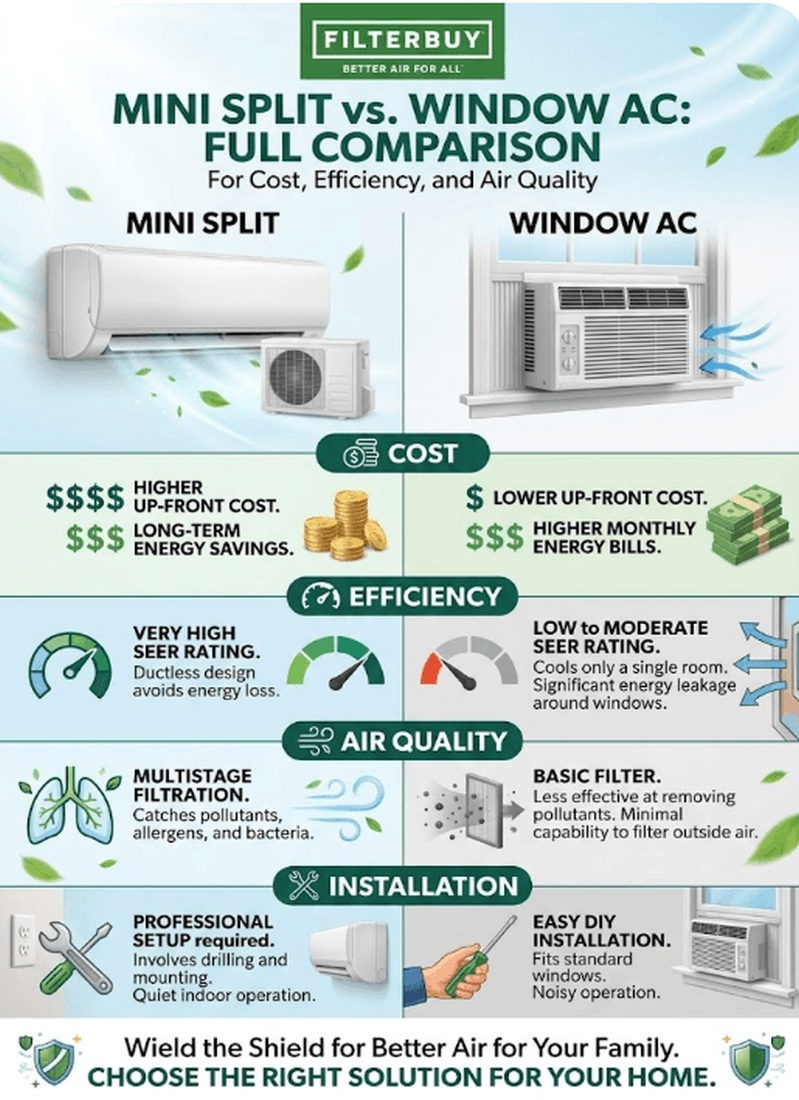
For most homes, a mini split is the better long-term choice, while a window AC is the cheaper day-one option. A window AC costs $150–$700 and installs yourself in minutes; a mini split runs $2,000–$10,000 installed by a licensed pro.
After that, the mini split pulls ahead. It wins 7 of 8 categories:
- Efficiency: SEER 17–25+ vs. 8–15, using 30–50% less electricity.
- Noise: ~30 dB (a whisper) vs. ~55 dB (a running dishwasher).
- Lifespan: 15–20 years vs. 8–10 years.
- Comfort & features: heat-pump heating, room zoning, and WiFi control a window unit can’t match.
- Appearance: mounts on the wall and keeps your window clear.
A window AC still makes sense for a tight budget or a temporary, portable fix. Not sure which fits your space? Take the quick match quiz below.

Answer 3 quick questions and we’ll match you to the right cooling setup for your home.
Already decided? Shop Filterbuy mini split systems →
Window AC units seem like the obvious choice. They're cheaper, easier to install, and available everywhere. A mini split, on the other hand, costs significantly more upfront.
But why are more homeowners choosing mini splits every year?
The short answer: performance. While window AC units win on day-one price, mini splits consistently outperform them on efficiency, noise, lifespan, and comfort. Over time, those advantages add up, often enough to offset the higher initial investment.
Key Takeaways
Energy Efficiency: Mini splits are significantly more efficient than window AC units, leading to lower energy bills over time.
Noise Levels: Mini splits operate much quieter compared to the often noisy window AC units.
Longevity: With proper maintenance, mini splits last longer than window AC units, providing better value in the long run.
Overall Comfort: Mini splits offer more consistent and customizable cooling, which improves overall indoor comfort.
Long-Term Savings: Despite the higher initial cost, the efficiency and performance of mini splits can lead to significant savings over their lifespan.
Mini Split vs Window AC: Quick Comparison
Before diving into the details, here's a side-by-side look at how these two systems stack up:
| Feature | Mini Split AC | Window AC |
|---|---|---|
| Upfront Cost | $$$ | $ |
| Efficiency (SEER) | 17 SEER2 | 8–15 |
| Noise | ~30 dB | ~55 dB |
| Installation | Professional required | DIY |
| Lifespan | 15–20 years | 8–10 years |
| Heating | Yes (heat pump) | No (most models) |
| Aesthetics | Wall-mounted | Blocks window |
| Cooling Coverage | Multiple rooms | Single room |
Let's break down each category in more detail.
Upfront Cost: Window AC Wins on Price
Window AC units are far cheaper to buy and install.
A standard window AC unit typically runs between $150 and $700, depending on the size and brand. Installation is a DIY job that takes 15–30 minutes. You open the window, set the unit in place, and plug it in. No contractor needed.
A mini split system is a different story.
Equipment and professional installation combined typically range from $2,000 to $10,000, depending on the number of zones, brand, and local labor costs. You'll need a licensed HVAC professional to handle refrigerant lines, drill through walls, and mount both the indoor and outdoor units.
That upfront gap is significant. But cost-over-time tells a more complete story, which is where mini splits start to close the gap fast.
Energy Efficiency: Mini Splits Use Much Less Electricity
This is one of the biggest differences between the two systems, and it's worth understanding properly.
SEER (Seasonal Energy Efficiency Ratio) measures how efficiently an AC unit converts electricity into cooling. The higher the SEER rating, the less electricity it uses to produce the same amount of cooling.
Window AC units: SEER ratings typically fall between 8 and 15
Mini split systems: SEER ratings typically range from 17 to 25+
That gap translates directly to your energy bill. Mini splits can use 30–50% less electricity than comparable window units, largely because of inverter technology. Unlike traditional compressors that cycle fully on and off, inverter-driven compressors adjust their output continuously based on the amount of cooling needed. The result is steadier temperatures and significantly lower energy consumption.
For homes in hot climates or households that run their AC for several months a year, those savings compound quickly. A mini split that costs more upfront can pay for a significant portion of that difference through lower monthly utility bills.
Noise Levels: Mini Splits Are Much Quieter
Ask anyone who has lived with a window AC unit: the noise is hard to ignore.
Window units typically operate at 50–65 decibels—roughly the volume of a normal conversation or a running dishwasher. The compressor, fan, and vibration all combine inside a single unit that sits just a few feet from where you sleep or work.
Mini splits run at 19–30 decibels on average. That's close to the sound of a whisper or rustling leaves. The reason is straightforward: the compressor (the loudest component) sits in the outdoor unit, away from your living space. The indoor unit quietly circulates air with a low-profile fan.
For bedrooms, home offices, or any space where background noise matters, the difference is noticeable from day one.
Installation: Window AC Is Easier
For speed and simplicity, window units are hard to beat. Most people can install one without any tools or prior experience. It's a plug-and-play solution that takes under 30 minutes.
Mini split installation is considerably more involved. A typical setup requires:
Mounting the indoor air handler on the wall
Installing the outdoor compressor unit on a pad or wall bracket
Drilling a hole through the wall to run refrigerant lines, electrical wiring, and a condensate drain
Connecting and charging the refrigerant system
Always have a mini split installed by a licensed HVAC professional.
Refrigerant handling requires proper certification, and improper installation can affect system performance, void your warranty, or pose safety risks. So, better to ask for help with the installation process to avoid any problems.
Appearance & Window Space
Window units aren't subtle. They hang out of your window, block natural light, and often clash with both the interior and exterior of your home. Some HOAs and apartment buildings restrict or ban them outright for this reason.
Mini splits take a different approach. The indoor unit mounts flush against the wall, typically near the ceiling, and the outdoor unit is placed outside, often out of sight. Your windows stay clear, your room looks cleaner, and natural light flows in uninterrupted.
For homeowners who care about the look and feel of their space, this is a meaningful advantage.
Lifespan & Maintenance
A window AC unit typically lasts 8–10 years with regular care. A mini split system, built with higher-quality components and more sophisticated engineering, typically lasts 15–20 years.
Maintenance requirements are similar for both:
Clean or replace filters monthly during heavy use seasons
Schedule professional servicing annually to check refrigerant levels, clean coils, and inspect electrical connections
The longer lifespan of a mini split means you're replacing the unit less often, another factor that helps close the upfront cost gap over time.
Smart Features & Comfort
Modern mini splits come loaded with features that window units simply don't offer:
WiFi control: adjust temperature from your phone, from anywhere
Smart thermostat compatibility: set schedules and monitor usage
Room zoning: cool specific rooms independently without running the system everywhere
Precise temperature stability: inverter technology maintains your set temperature more accurately, without the on/off cycling of traditional units
Most window AC units offer basic controls at best. Some newer models include remote controls or a single timer, but the gap in smart home integration remains come up in wide.
Mini Split vs Portable AC: A Quick Note
Portable AC units sometimes come up in, this conversation as a budget-friendly alternative. They're worth addressing briefly, because they're often a poor trade-off.
Portable units are less efficient than both window ACs and mini splits, and they create negative air pressure inside the room by exhausting hot air through a duct, which draws warm outside air back in through gaps in walls, doors, and windows. That limits how effectively they cool a space.
A portable AC works as a temporary or last-resort solution. For anything longer-term, a window AC or, better yet, a mini split is a smarter investment.
Our Pick: The Filterbuy Mini Split
If you're ready to make the switch to a mini split, the Filterbuy Mini Split is a strong place to start.
Here's what it offers:
17 SEER2 efficiency: meaningful energy savings over standard window units
~30 dB quiet operation: one of the quietest cooling options available
Smart WiFi control: manage temperature and schedules from your phone
115V option available: no special electrical work required for many installations
No window blockage: keeps your space looking clean and open
Fast Free Shipping: delivered quickly so you can get started sooner
Important: Filterbuy sells only mini-split units. Installation must be completed by a licensed HVAC professional to ensure proper setup, warranty coverage, and safe refrigerant handling.
Verdict: Which Air Conditioner Is Better?
Here's the final breakdown by category:
| Category | Winner |
|---|---|
| Upfront Cost | Window AC |
| Energy Efficiency | Mini Split |
| Noise | Mini Split |
| Lifespan | Mini Split |
| Comfort | Mini Split |
| Appearance | Mini Split |
| Heating | Mini Split |
| Smart Features | Mini Split |
Mini splits win in 7 out of 8 categories. The only area where window AC comes out ahead is upfront cost, and even that advantage shrinks over time as energy savings and longer lifespan reduce the total cost of ownership.
A window AC makes sense if you need a quick, temporary fix, have a very tight budget, or need a unit you can take with you when you move. For everyone else, especially those planning to stay in their home for several years, a mini split delivers better performance, comfort, and long-term value.
For all your air quality needs, including filters that help optimize the performance of your mini split or window AC units, check outFilterbuy. With a wide selection of high-quality filters available, you can ensure your system runs efficiently and delivers the clean air you deserve.
Frequently Asked Questions