
Are Mini Splits Worth It?
Honest Cost vs. Value Analysis (2026)
Yes — in the right situations, a mini split is worth it. You pay more upfront, but a ductless system pays you back through lower energy bills, usually breaking even in about 3 to 7 years and lasting 15 to 20. The bigger the gap it fills — a room without ducts, an addition, or stubbornly high bills — the more clearly it makes sense.
A mini split tends to be worth it when:
- Your home has no existing ductwork
- You want room-by-room temperature control
- You’re cooling a garage, addition, or one stubborn room
- You’re looking to lower monthly energy bills
Not sure it’s the right call for your space? Take the quick match quiz below.

Answer 3 quick questions and we’ll match you to the right mini split for your home.
Ready to shop? Browse mini split systems →
Homeowners often look at a ductless system and immediately ask the big question:
Are mini-splits worth it?
Making the switch from traditional heating and cooling is a major decision — and the answer is a confident yes, especially in the right situations.
These systems can completely transform uncomfortable living spaces and slash monthly utility bills. To help you decide whether a mini split makes sense for your home, this guide walks through the key benefits, real-life use cases, and a transparent cost breakdown so you know exactly what to expect.
Key Takeaways
Energy Efficiency: Mini split systems are highly energy-efficient and can significantly reduce monthly utility bills compared to traditional HVAC systems.
Zoned Comfort: Customized temperature control in individual rooms makes them ideal for spaces with varying heating and cooling needs.
Easy Installation: No ductwork required — less invasive and faster to set up than central air systems.
Versatile Applications: Perfect for add-ons, garages, older homes, or any space without existing ductwork.
Year-Round System: One unit handles both heating and cooling, replacing two appliances in one.
What Is a Mini Split AC (And How Is It Different?)
To understand the value, you first need to understand the hardware. A mini split air conditioner is a ductless cooling and heating system consisting of two main components: an outdoor compressor and one or more indoor air-handling units. Refrigerant lines connect the outdoor unit directly to the indoor wall units through a small hole in your wall.
When comparing a mini split vs central air, the primary difference is the delivery method. Central AC pushes conditioned air through a massive, often inefficient network of ducts hidden in your walls and attic. Mini splits deliver the air directly into the room.
If you compare them to standard window units, the differences are night and day. Window air conditioners block your view, create a lot of noise, and offer poor insulation. A mini split is a permanent, whisper-quiet fixture that seals your home from outside elements.
The Biggest Benefits of Mini Splits
There are several reasons why these ductless systems have become wildly popular across North America. Here are the main advantages you can expect.
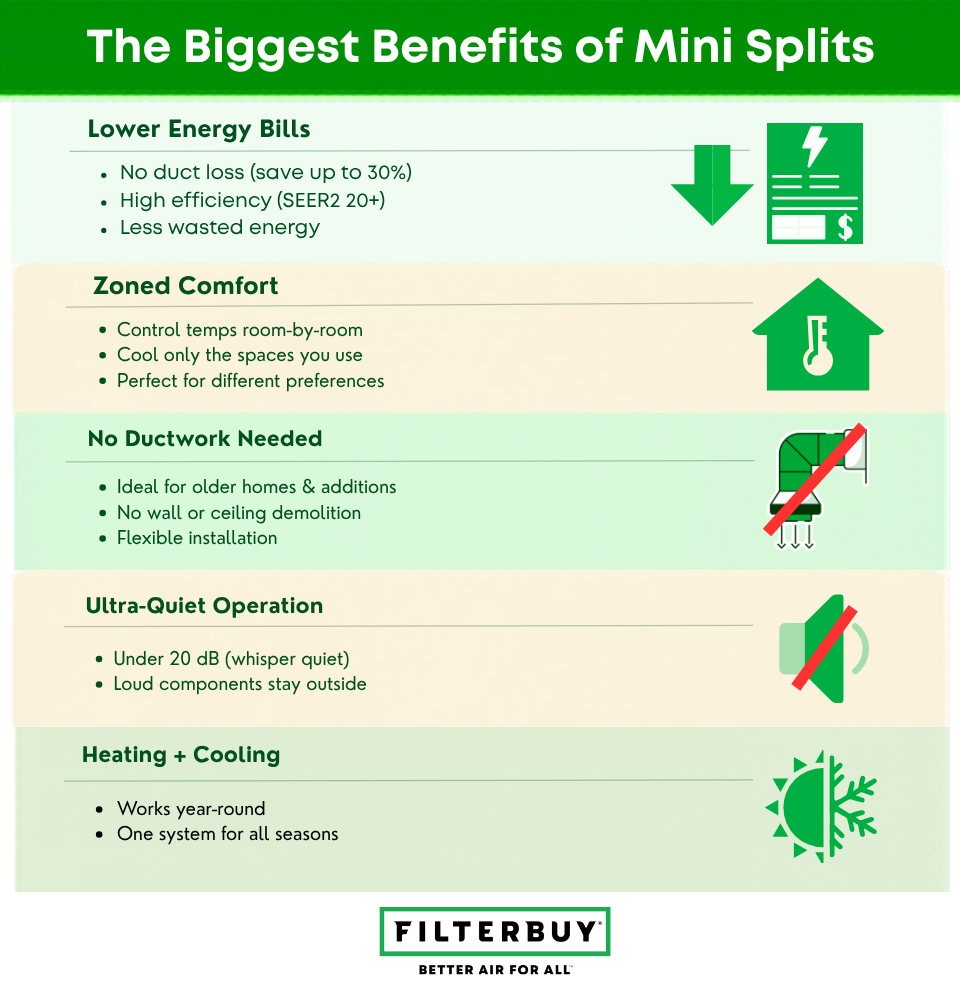
Lower Energy Bills (No Duct Loss)
Traditional ductwork is notorious for leaking. According to experts, duct losses can account for more than 30% of energy consumption for space conditioning, especially if the ducts are located in an unconditioned attic.
By eliminating the ducts entirely, you secure massive mini split energy savings. Furthermore, modern units often boast SEER2 ratings of 20 or higher, making them some of the most energy-efficient climate control options on the market.
Zoned Comfort (Room-by-Room Control)
Almost every home has that one room that refuses to stay comfortable. Zoned comfort is arguably the best feature of a ductless system. Because each indoor unit has its own thermostat, you can cool the living room during the day and only cool the bedrooms at night. This is perfect for families with different temperature preferences.
No Ductwork Needed
Installing new ductwork in an older home requires tearing open walls and ceilings. Because mini splits bypass ducts completely, they are the ideal solution for historic homes, converted attics, and newly built spaces. Keep in mind that mini splits typically need professional installation.
Quiet Operation
You hardly notice when a mini split is running. The noisy components are housed outside, while the indoor units operate at remarkably low sound levels. Many indoor handlers run at less than 20 decibels, which is quieter than a human whisper or rustling leaves.
Heating + Cooling in One System
Most mini splits are actually heat pumps. This means they can reverse their operation to provide powerful, efficient heating during the winter, giving you a complete year-round climate control system in a single package.
We promised an honest review, and that means looking closely at the drawbacks. Understanding the potential negatives is crucial before you finalize your decision. Let’s address the sticker shock head-on. The initial ductless mini split cost is significantly higher than buying a few window units.
Wall Units Are Visible
Aesthetic preferences matter. Unlike central air vents that blend seamlessly into your ceiling, a mini split requires mounting a noticeable plastic unit on your wall or ceiling. Some homeowners dislike the visual impact this has on their interior design.
Installation Isn’t DIY
While you can buy DIY kits, the vast majority of systems require a licensed HVAC professional for installation. Working with high-voltage electricity and pressurized refrigerant lines is dangerous, and improper installation can void your warranty.
Real Cost Breakdown (And ROI)
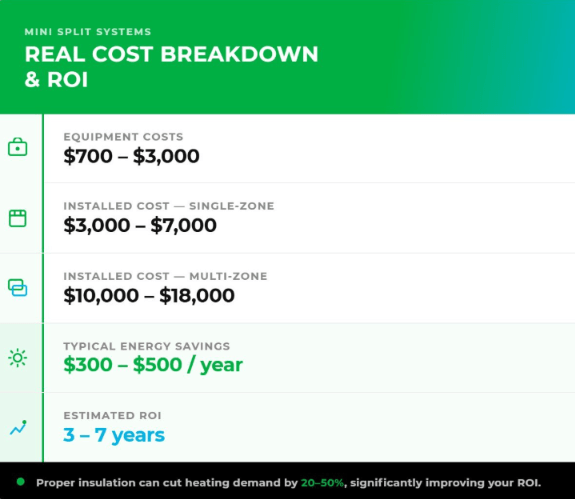
If you are seriously wondering if buying a mini split is worth it, you need to look at the math. Here is a realistic breakdown of what you can expect to spend and save.
Equipment Costs: $700–$3,000
Installed Cost (Single-zone): $3,000–$7,000
Installed Cost (Multi-zone): $10,000–$18,000
Typical Energy Savings: $300–$500 per year
Estimated ROI: 3–7 years
While the upfront cost is high, you do not have to shoulder the entire burden yourself. Under current federal guidelines, installing an ENERGY STAR-certified heat pump can qualify you for a federal tax credit of up to $2,000. Many local utility companies also offer lucrative rebates for upgrading to high-efficiency systems.
When Mini Splits Are 100% Worth It
Certain scenarios make choosing a ductless system an absolute no-brainer. Based on real install scenarios, a mini split is highly recommended if you fit into these categories:
Older homes without ducts: You get modern cooling without destroying your walls.
Adding a mini split for garage / addition: Perfect for garage gyms, workshops, or new sunrooms where extending existing ductwork is impossible.
Rooms always too hot or cold: Easily fix the climate in a problematic upstairs bedroom or finished basement.
Downsizing energy costs: Empty nesters can turn off the central AC and use a single wall unit to cool just the living room or primary bedroom.
Best Mini Split AC Options
Navigating through mini split AC reviews can be overwhelming. Here's a quick breakdown of what to look for at different budget levels.
Budget: Look for affordable systems that meet basic cooling needs without extra frills.
Mid-range: These systems should provide a good balance of reliability, energy efficiency, and modern features.
Premium: Top-tier brands offer unmatched longevity and elite performance, especially in cold climates.
DIY: Some systems are specifically designed for handy homeowners to install themselves, often featuring pre-charged refrigerant lines.
Our Pick: Filterbuy Mini Split
If you are looking for a solid entry-level option for homeowners testing mini splits, we recommend looking into the Filterbuy Mini Split.
This 12,000 BTU system operates at an impressive 17 SEER2 rating, making it an efficient choice for cooling single rooms, garages, or additions.
Plus, it comes with a comprehensive 7-year compressor to give you absolute peace of mind.
Are Mini Splits Worth It?
Ultimately, the decision to install a mini split depends on your home's layout and personal goals.
A mini split is an excellent choice if:
Your home doesn't have existing ductwork.
You're looking to lower your monthly energy bills.
You want precise, room-by-room temperature control.
You're building a home addition or converting a garage.
If a mini split sounds like the perfect solution for you, browse Filterbuy today to find the ideal fit.
Frequently Asked Questions