Single-Zone vs Multi-Zone Mini Splits: What's the Difference?
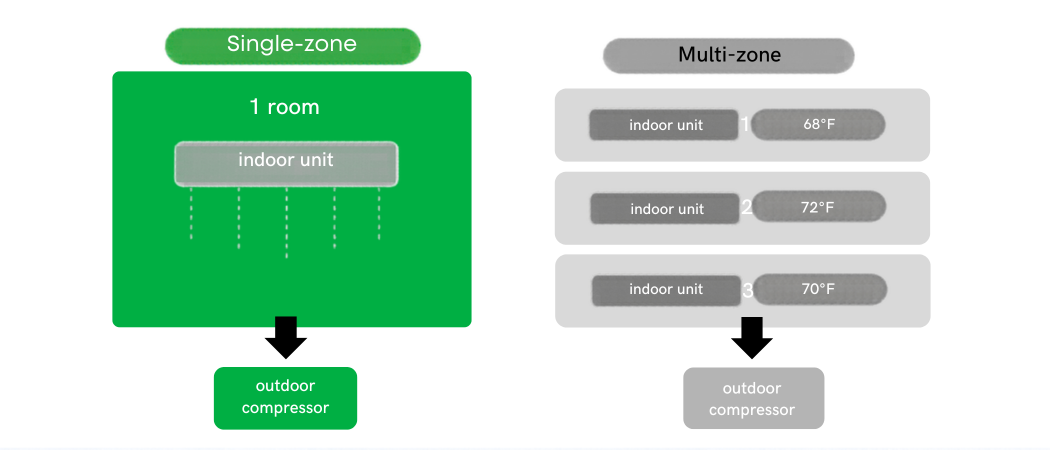
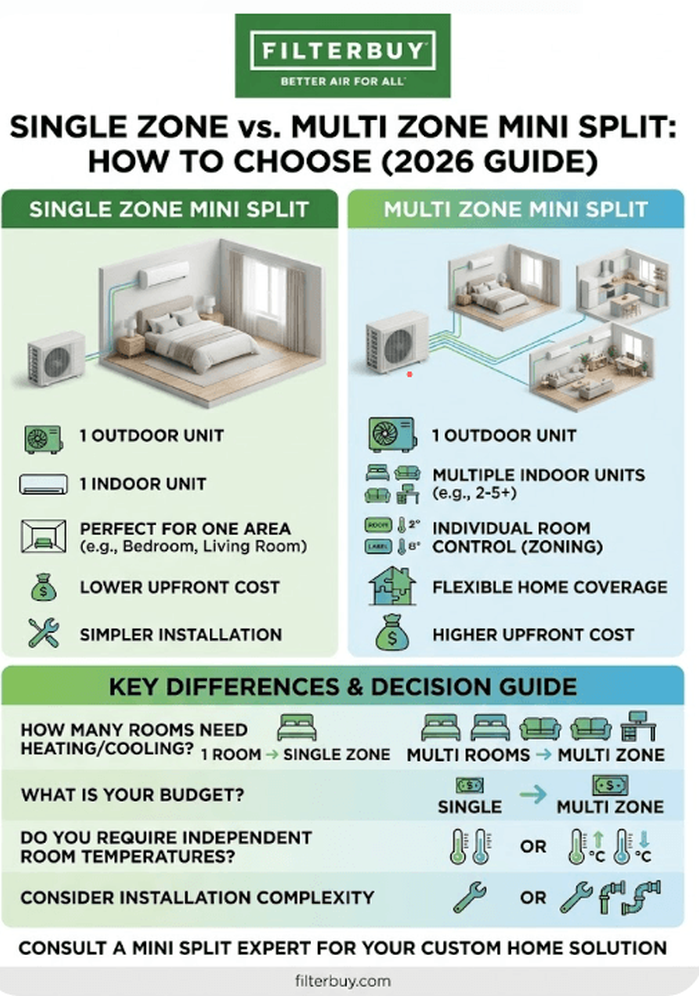
Choose a single-zone mini split to cool one room, and a multi-zone system to cool several rooms from a single outdoor unit. A single-zone setup links one outdoor compressor to one indoor head, so it is simpler to install and costs less up front. A multi-zone system links one outdoor compressor to two to five indoor heads, each with its own thermostat, so every room sets its own temperature.
- Single-zone: one outdoor unit to one indoor head, one room, lower upfront cost, simpler install.
- Multi-zone: one outdoor unit to 2 to 5 indoor heads, multiple rooms, independent control in each room.
Browse the Filterbuy Mini Split Systems built for bedrooms, offices, and garages, then take the quick match quiz below.

Answer 3 quick questions and we will match you to the right mini split for your home.
Upgrading your home cooling is a major decision, especially when you are trying to keep costs manageable and energy bills low. If you are exploring your options, you have likely come across the ductless mini split system. These highly efficient systems offer excellent climate control without the need for bulky ductwork. However, homeowners quickly face a common question during the planning phase: Do I need just one unit, or multiple?
At a basic level, these systems come in two main configurations: single-zone and multi-zone. A single-zone system connects one outdoor compressor to one indoor unit, perfectly cooling a dedicated space. A multi-zone system connects one outdoor compressor to several indoor units, providing multi-room cooling throughout your home.
Understanding how mini split zones are explained is the first step toward a successful installation. Choosing the right configuration directly impacts your upfront installation costs, long-term energy efficiency, and overall comfort.
Key Takeaways
Single-Zone Systems: Ideal for cooling or heating a single, dedicated space with one outdoor compressor connected to one indoor unit.
Multi-Zone Systems: Designed for cooling or heating multiple rooms with one outdoor compressor connected to several indoor units.
Installation and Efficiency: Selecting the appropriate system impacts installation costs, energy efficiency, and overall comfort.
Planning Matters: Proper understanding of mini split zones is crucial for ensuring a successful and cost-effective installation.
What Is a Single-Zone Mini Split AC?
A single-zone mini split AC is the most straightforward ductless configuration available. The basic setup consists of exactly two main components: one outdoor condenser and one indoor air handler. These two units are connected by a small conduit housing the power cable, refrigerant tubing, and a condensate drain.
Because the system is dedicated to one specific room or space, it is incredibly efficient at maintaining an exact temperature. This setup is highly popular for specific home additions or stubborn rooms that never seem to cool down.
Typical uses for a single-zone system include:
Bedrooms
Home offices
Garages and workshops
Sunrooms
Small apartments or studio layouts
Key Benefits
The single-zone configuration shines when it comes to simplicity and targeted performance. Because the outdoor unit only has to support one indoor head, you get maximum efficiency perfectly matched to the room's cooling load. This also means you face far fewer mini split installation considerations compared to a whole-house retrofit. You benefit from a lower upfront cost, simpler installation, and completely independent operation.
Average Costs
For a standard single-zone unit, the typical installed cost ranges from $2,500 to $4,500. Depending on your local energy rates and usage habits, the estimated operating cost sits around $65 to $110 per month.
Looking for a reliable single-zone system? The Filterbuy 17 SEER2 Mini Split is an excellent choice for bedrooms, offices, and garages. It offers targeted comfort with 5-year compressor / 1-year parts.
What Is a Multi-Zone Mini Split AC?
If you need to cool more than one room, you will want to look into a multi-zone mini split AC. The system structure starts with one large outdoor condenser, but it connects to two, three, four, or even five indoor units. Each room receives its own indoor head and an independent thermostat control, allowing family members to set their preferred temperatures.
Example Configurations
Mini Split AC 2 Zone: Perfect for cooling a primary bedroom and a home office using just one outdoor unit.
3–4 Zone Systems: Ideal for cooling multiple bedrooms alongside a main living area.
Whole-Home Setups: A comprehensive mini split system for multiple rooms, completely replacing the need for traditional central air.
Key Benefits
The primary advantage of a multi-zone system is reducing outdoor equipment clutter. Instead of placing three or four bulky condensers around the perimeter of your house, you only need one. You also gain the luxury of independent temperature control per room, meaning you can turn down the AC in empty guest rooms to save money.
Key Differences: Single-Zone vs Multi-Zone Mini Splits
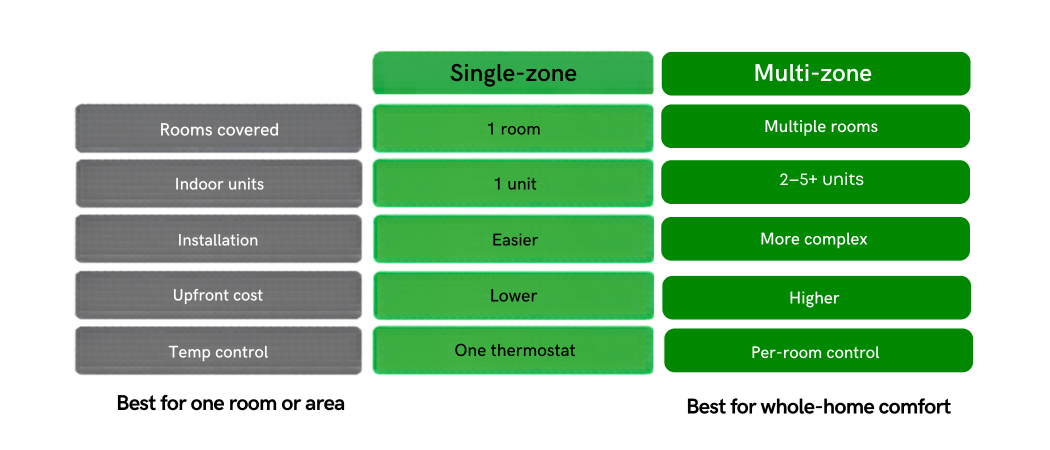
When comparing a single zone vs multi zone mini split, a few core differences stand out regarding efficiency and installation complexity.
| Feature | Single-Zone Mini Split AC | Multi-Zone Mini Split AC |
|---|---|---|
| Indoor Units | 1 | 2–5+ |
| Coverage | One room | Multiple rooms |
| Installation | Simple | More complex |
| Upfront Cost | Lower | Higher |
| Efficiency | Highest for a single space | Efficient for whole-home use |
| Control | One thermostat | Individual room control |
It is worth noting that single-zone units often achieve slightly higher SEER ratings. Because the compressor is perfectly matched to a single indoor load, there is zero energy wasted on managing refrigerant distribution across multiple long line sets.
Cost Comparison: Single-Zone vs Multi-Zone Systems
Budgeting for a ductless system requires looking at two distinct categories: what you pay on day one, and what you pay every month on your electric bill.
Upfront Installation Cost
As you add more indoor units, your total price increases, though the mini split cost per zone often decreases.
Single-zone system: $2,500 – $4,500 installed
Mini split AC 2 zone: $4,500 – $7,500 installed
3–5 zone multi systems: $7,500 – $15,000+ installed
Monthly Operating Cost
Operating costs vary wildly depending on the SEER efficiency mini split rating, your local electricity rates, and your runtime hours. However, typical ranges look like this:
Single zone mini split AC: ~$110/mo
Mini split AC 2 zone: ~$170/mo
Multi-zone mini split AC: ~$70/mo (This assumes you selectively turn off zones in unoccupied rooms, highlighting the energy-saving power of zone control).
When to Choose a Single-Zone Mini Split
A single-zone setup is your best bet when you are dealing with isolated temperature issues. If you have a garage conversion, are upgrading a home office, or want to add comfort to a sunroom without modifying your central HVAC, this is the way to go.
Interestingly, installing multiple single-zone systems can sometimes outperform one large multi-zone system. You gain total redundancy—if one outdoor unit requires maintenance, the rest of the house stays cool.
When to Choose a Multi-Zone Mini Split
Multi-zone systems are designed for broader home comfort. They are the top choice for multi-story homes, whole-home ductless retrofits, or cooling multiple bedrooms. Families who constantly argue over the thermostat will love having different temperatures in different rooms. Plus, the space savings of having just one outdoor unit keep your landscaping looking clean.
Can You Add More Zones Later?
Homeowners frequently ask: how many zones can a mini split have, and can I add more later?
The answer depends entirely on your outdoor unit. You can only add extra indoor units if the outdoor condenser was originally designed to support them. For example, a 3-port condenser has a maximum capacity of three indoor units. A 5-port condenser can support up to five.
If you suspect you might finish your basement or add a sunroom in the future, it is highly recommended to size your outdoor condenser accordingly from the start. Leaving an unused port gives you easy expansion options down the road.
Single-Zone vs Multi-Zone: Which Is Right for You?
Choosing between these two excellent systems comes down to your immediate needs and your property layout.
Choose a single-zone system if:
You need targeted comfort in one specific room.
You want the absolute highest energy efficiency possible.
You prefer a simpler, faster installation process.
Choose a multi-zone system if:
You want to cool multiple rooms simultaneously.
Your outdoor yard or patio space is limited.
You want independent room control for different family members.
Talk to an HVAC Professional Before Choosing
While researching mini split indoor units and SEER ratings online is helpful, nothing replaces the expertise of a licensed HVAC professional. System sizing matters tremendously for both efficiency and equipment longevity.
A local expert will evaluate your home's square footage, insulation quality, BTU requirements, electrical capacity, and the line set routing needed for your specific floor plan.
Keep in mind that while Filterbuy sells high-quality mini split systems directly to consumers, the actual installation should always be handled by licensed professionals to ensure safe operation and warranty compliance.
Upgrade Your Home Comfort Today With Filterbuy
Whether you need a simple fix for a hot garage or a two-zone setup for your upstairs bedrooms, ductless technology offers incredible comfort and control. By understanding the core differences between system types, you can confidently invest in the right equipment for your space.
Upgrade your comfort with a Filterbuy Mini Split System. Perfect for bedrooms, offices, garages, and targeted cooling.
Filterbuy also offers the following:
Energy-efficient SEER 17 performance
Fast Free Shipping
5-Year Warranty
Explore our mini split systems today to find the perfect fit for your home.
Frequently Asked Questions