
Chesapeake, VA Live Wildfire Smoke Map
Get Alerts For Wildfires In Your Area
The moment a wildfire starts near you, you'll get an instant alert and simple tips to reduce your smoke exposure.
What's In The Smoke
30xSmaller than a human hair
Fine enough to reach deep into the lungs. A MERV 13 is built to capture it.
How Far It Travels


It Doesn't Stay Local
Smoke rides the wind far downwind — you can get smoky air with no fire nearby.
What To Do During A Smoke Event
Simple steps to reduce indoor exposure.
- Stay In, Close UpShut windows and doors to keep smoke out.
- Set Fan To "On"Keeps air cycling through your filter, not just when heating or cooling.
- Recirculate AirSwitch off fresh-air intake so you're not pulling smoke in.
- Run A MERV 13Built to capture the fine PM2.5 in smoke.
- Add A PurifierExtra filtration for the room you use most.
- Wear an N95 if OutsideFits snug to block fine particles — a cloth mask won't.


The Best Air Filter For Wildfire Smoke
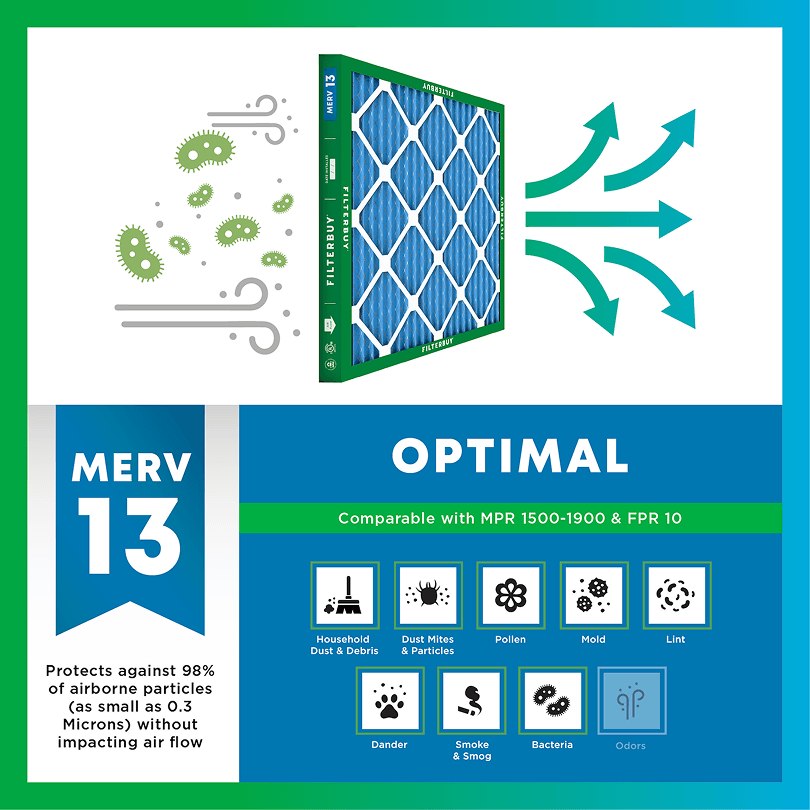
During smoke events, the EPA recommends upgrading to a MERV 13 filter — or the highest-rated filter your system can handle — to help reduce the fine particles smoke brings indoors. MERV 13 is the level most home HVAC systems can run while still capturing PM2.5, the fine particulate that makes up the bulk of wildfire smoke.
- Captures PM2.5 particles
- Blocks ash, soot, and smoke odor
- Keeps your indoor air safe—even when the outdoor air is dangerous
- Meets the EPA's recommended rating for filtering fine wildfire smoke particles.

Wildfire Smoke FAQs
Facts About Wildfires
Over 70,000 wildfires burn in the U.S. every year.
Wildfire smoke can travel 1,000+ miles, affecting states that aren't even near the blaze.
Exposure to wildfire smoke can worsen asthma, trigger heart issues, and lead to ER visits.
Indoor air can hold more fine particles during wildfire events unless it's properly filtered.
The EPA advises using MERV 13 filters or portable HEPA air cleaners during wildfire smoke events.
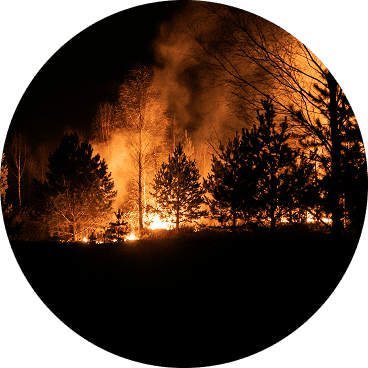
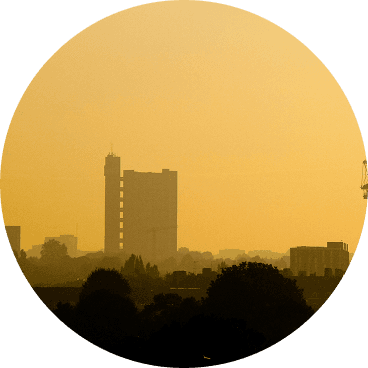
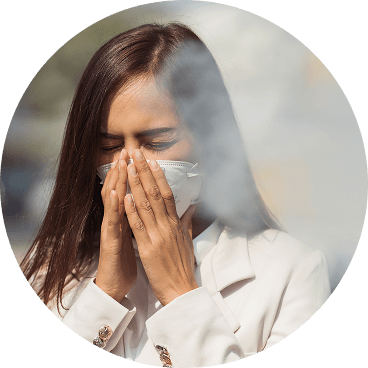
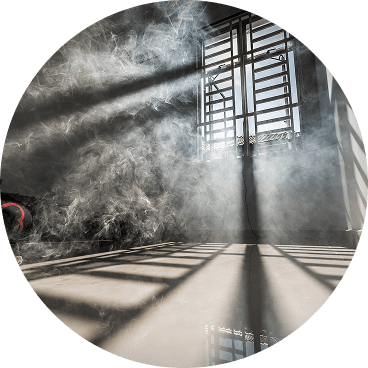
Don't Wait Until The Smoke's Inside.
Use the live wildfire smoke tracker and upgrade your air filters today to protect your lungs and your home.
Shop Filters For Smoke Protection
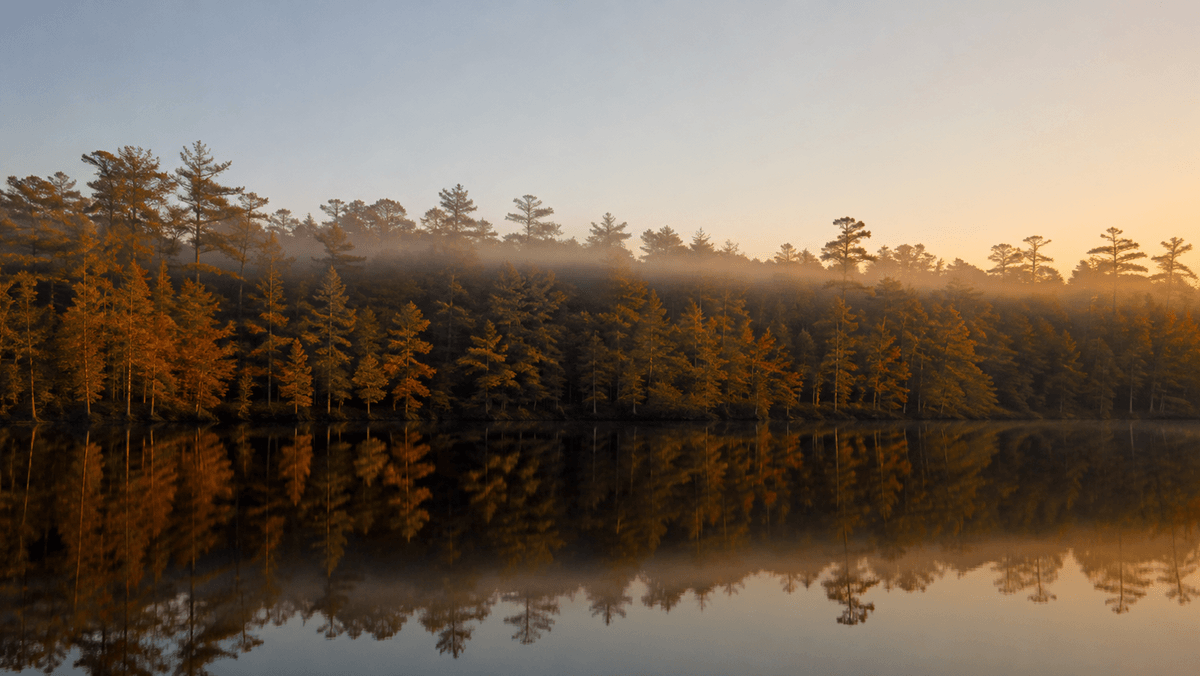
Live Chesapeake, VA Forest Wildfire & Smoke Map Today: Local Air Quality Tracking & Indoor Protection Solutions From Filterbuy.com’s Air Obsessed Experts
Author: Michelle Wan, Brand Manager and Air Quality Writer at Filterbuy
Technically reviewed by: David Clark, Licensed HVAC Technician
Published: August 15, 2026 · Updated: August 15, 2026
Chesapeake, Virginia, faces wildfire smoke from two sources: peat fires in the Great Dismal Swamp National Wildlife Refuge, much of which lies inside the city limits, and Canadian smoke carried in on upper-level winds. Check the live map below for active fires and smoke over Hampton Roads right now.
We build one of these pages for every market we ship into, and Chesapeake broke the template. Almost every city needing a smoke map sits downwind of the fire; Chesapeake sits on top of 112,000 acres of peat. Peat does not burn like brush. It smolders underground for weeks, pushing low, dense smoke into Deep Creek, Great Bridge, and Western Branch long after the surface flames are out.
TL;DR Quick Answers
Filterbuy’s quick take: Peat fires in the Great Dismal Swamp, partly inside the city limits, can smolder for months as they did in 2008 and 2011, while Canadian smoke clears in days. Chesapeake has no PM2.5 monitor of its own, so read the satellite layer alongside the dots. Check the AirNow map and the DEQ forecast, and keep a MERV 13 on hand before smoke season.
Top Takeaways
Much of the Great Dismal Swamp refuge sits inside Chesapeake, 112,000 acres of peat across Virginia and North Carolina.
Chesapeake has no regulatory PM2.5 monitor. DEQ’s nearest sit in Norfolk and Virginia Beach, so weight the satellite layer accordingly.
Peat fires last months, not days. The 2008 South One Fire burned 121 days, the longest on record in Virginia.
A west or southwest wind is the warning sign, since the refuge lies upwind of the populated corridor.
MERV 13 is the filter standard for smoke, capturing far more PM2.5 than the MERV 8 most homes run.
Live Wildfire and Smoke Map for Chesapeake, VA
The map here layers active fire detections, satellite smoke plumes, and the nearest PM2.5 readings. Colored dots are ground monitors reporting fine particle pollution in near real time; gray or brown shading is smoke seen from orbit.
How to read it. Monitors refresh about hourly, so the satellite layer usually shows smoke before any dot changes color. Our guide on how to read a wildfire smoke map walks the full legend.
The Chesapeake monitor gap. Chesapeake has no regulatory PM2.5 monitor of its own. Building this page, we went looking and could not find one: DEQ’s nearest particle monitors sit in Norfolk and Virginia Beach, and the two Suffolk sites measure ozone. On a west wind, smoke crosses Deep Creek and Great Bridge before reaching anything that would register it.
I have written these city pages for markets all over the country, and Chesapeake is the first where I had to tell readers to trust the satellite layer over the monitor. The dot nearest most Chesapeake homes measures air that already went past them.
Michelle Wan, Brand Manager and Air Quality Writer, Filterbuy
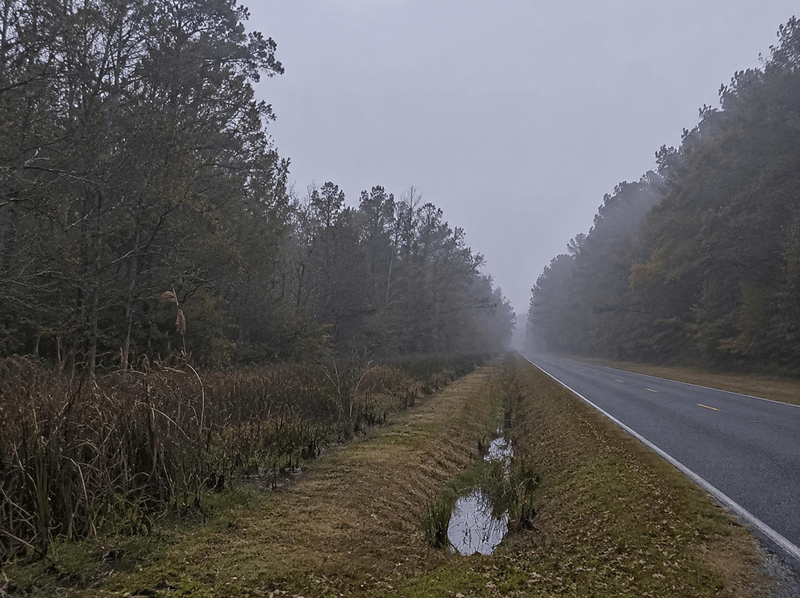
Where Chesapeake’s Wildfire Smoke Comes From
Two sources, and they behave nothing alike. A peat fire inside the refuge can smolder for months, while Canadian smoke arrives from a thousand miles away and clears in days.
Original Filterbuy framework, built from NASA, USFWS, USGS, and Virginia DEQ source data.
Because the refuge crosses the state line, one fire can surface on two of our maps: the Virginia Beach map downwind, and the North Carolina map to the south.
The local risk. Generations of drainage ditching dried the peat out and left it flammable. The 2008 South One Fire burned 4,884 acres across 121 days, and the 2011 Lateral West Fire reached 6,358 acres. These fires are hard to put out because they burn below the surface, which is why Hurricane Irene dropped 10 to 15 inches of rain on the 2011 fire, and it kept going. The refuge now manages 64 water-control structures to re-wet the peat.
The distant risk. Canadian smoke reached Virginia repeatedly through 2025 and 2026. Our guide to Canadian wildfire smoke covers which states take the worst of it, and our East Coast guide explains why a hazy sky and a bad AQI reading differ.
The preventable risk. Debris burning leads Virginia’s wildfire causes, per the Virginia Department of Forestry, which is why the 4 PM Burning Law bans open-air burning before 4 p.m. from February 15 through April 30 within 300 feet of woods. Whoever starts a fire owes suppression costs if it escapes. Chesapeake adds year-round rules under its Open Air Burn Policy:
Water on site, and no burning in high wind or a Red Flag Warning.
Piles no larger than 4x4x4 feet, and no closer than 50 feet to a structure.
A neighbor’s smoke complaint means the fire must be out for 24 hours.
Bonfires, pit burns, and agricultural burns need a Fire Marshal permit.
When Is Wildfire Smoke Risk Highest in Chesapeake?
Chesapeake has two peak windows rather than a single summer season, and they call for different responses.
February 15 to April 30, the preventable season. The 4 PM Burning Law is in force, and smoke is usually local, more often a neighbor’s yard than the refuge.
June through September, the peat season. Both catastrophic refuge fires started here, South One in June 2008 and Lateral West in August 2011, each during drought. This window produces months of smoke.
Year-round, prescribed burns. USFWS runs planned burns, so smoke over the swamp on a calm winter day is often intentional. Check the refuge page before assuming otherwise.
What Today’s Air Quality Forecast Means for Your Health
An AQI above 100 is the line where sensitive groups should cut back outdoors, and above 150 everyone should. The NWS Wakefield office and Virginia DEQ issue the daily Hampton Roads forecast, which names Chesapeake.
Category thresholds match the EPA national Air Quality Index scale used by Virginia DEQ and the National Weather Service Wakefield office.
One caution we repeat: Hampton Roads Code Orange alerts are often issued for ground-level ozone rather than smoke, and filtration cannot touch ozone. Check which pollutant triggered the alert. The most exposed are children, older adults, and anyone with asthma, COPD, or heart disease, along with port workers, farm crews, and anyone outdoors all day.
How to Keep Wildfire Smoke Out of Your Chesapeake Home
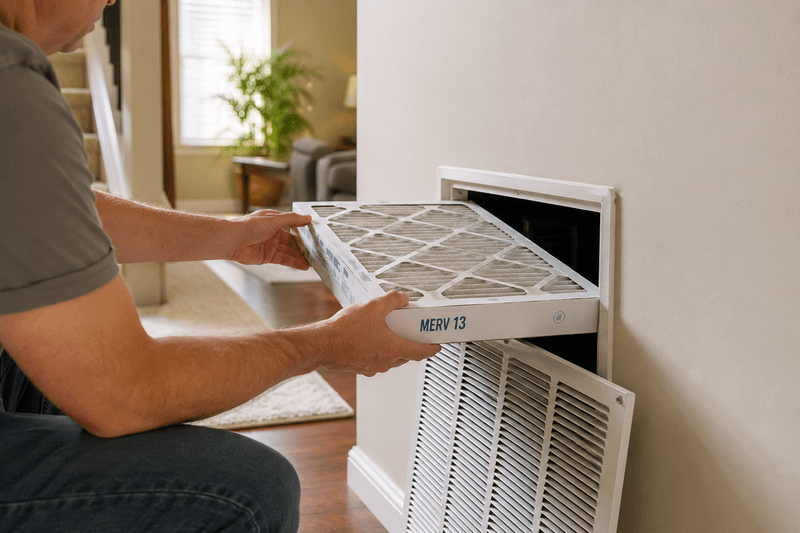
Close the windows, run the HVAC fan on ON with the fresh-air intake shut, and install a MERV 13 filter. Our full walkthrough covers how to keep wildfire smoke out of your house; here is the short version for Chesapeake.
Close windows, set the fan to ON, and switch any fresh-air intake to recirculate, so air cycles through your filter instead of pulling smoke in.
Upgrade to MERV 13, which the EPA recommends for smoke. Check which MERV rating fits your system first.
Change filters on a smoke schedule, not a calendar. This is the one thing we advise differently in Chesapeake, because a three-day Canadian episode loads a filter once, while a peat fire smoldering for months means two or three changes.
Set up a clean room with a portable air cleaner for anyone with asthma, COPD, or heart disease.
The part nobody warns you about is the smell. A three-day event takes its odor with it, but a peat fire works campfire smell into upholstery and bedding over weeks. MERV 13 captures particles, not odor compounds, which is what an activated carbon filter is for.
Chesapeake is one of the few places where the fire risk and our customers share ZIP codes. After a decade of manufacturing filters in the USA, the pattern never changes: the families who ride out a smoke event comfortably already had the right filter in before it started.
David Heacock, Founder and CEO, Filterbuy
Where to Track Chesapeake Wildfire Smoke
Six sources covering fire activity, air quality, local burn rules, and health guidance.
AirNow Fire and Smoke Map, layering fires, plumes, and monitor readings.
Virginia DEQ Air Quality Forecast, for the daily forecast and email alerts.
Great Dismal Swamp NWR, for fire management and prescribed burn notices.
Chesapeake Open Air Burn Policy, for local burn rules and permits.
EPA Wildfires and Indoor Air Quality, on how smoke gets into a house.
CDC Wildfire Smoke Safety, for symptoms warranting a doctor.
Three Statistics That Explain Chesapeake’s Smoke Risk
Virginia’s Longest-Burning Fire Started in Chesapeake’s Backyard
South One burned 4,884 acres across 121 days at a suppression cost above $11 million, the longest-duration fire on record in the state.
Source: U.S. Forest Service
One Avoided Swamp Fire Is Worth an Estimated $3.69 Million in Health Benefits
USGS valued a single avoided catastrophic refuge wildfire at $3.69 million (2015 USD), or $306 per hectare, from emergency room visits across seven Virginia localities using EPA BenMAP.
Source: USGS
Peat Fires Can Survive a Hurricane
Lateral West reached 6,358 acres by August 26, 2011, and kept burning through Hurricane Irene, which is why a swamp fire is a months-long event.
Source: NASA Earth Observatory
Frequently Asked Questions
Protect Your Home’s Air Before the Next Smoke Event
We manufacture MERV 13 filters in the USA in over 600 sizes, so you can find your exact fit before the next event reaches Chesapeake. Shop MERV 13 Filters and keep spares on hand before the season starts or set up auto-delivery!
This page is general information about air quality and filtration. It is not medical advice and not emergency guidance. During an active fire, follow Chesapeake Fire and local emergency management. For your own health, talk to a healthcare professional; for what your system can handle, a licensed HVAC technician.
Subscribe to wildfire smoke alerts for Chesapeake, VA, to get a heads-up before the next event reaches your area.