
Chula Vista, CA Live Wildfire Smoke Map
Get Alerts For Wildfires In Your Area
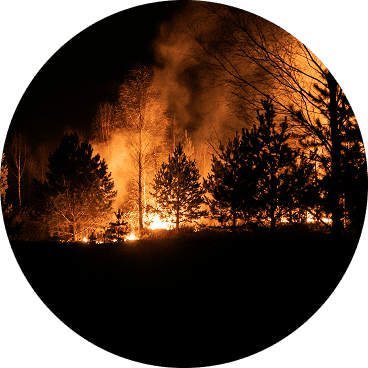
The moment a wildfire starts near you, you'll get an instant alert and simple tips to reduce your smoke exposure.
What's In The Smoke
30xSmaller than a human hair
Fine enough to reach deep into the lungs. A MERV 13 is built to capture it.
How Far It Travels


It Doesn't Stay Local
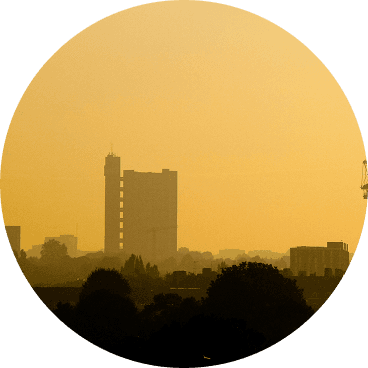
Smoke rides the wind far downwind — you can get smoky air with no fire nearby.
What To Do During A Smoke Event
Simple steps to reduce indoor exposure.
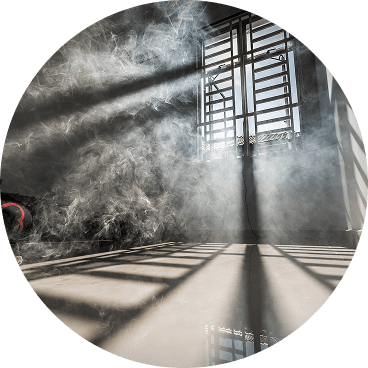
- Stay In, Close UpShut windows and doors to keep smoke out.
- Set Fan To "On"Keeps air cycling through your filter, not just when heating or cooling.
- Recirculate AirSwitch off fresh-air intake so you're not pulling smoke in.
- Run A MERV 13Built to capture the fine PM2.5 in smoke.
- Add A PurifierExtra filtration for the room you use most.
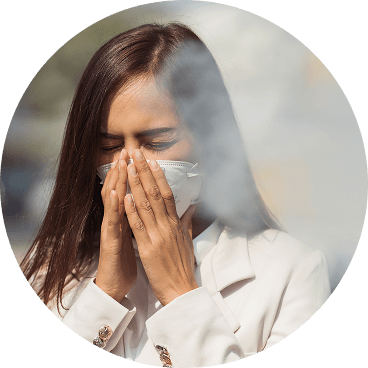
- Wear an N95 if OutsideFits snug to block fine particles — a cloth mask won't.


The Best Air Filter For Wildfire Smoke
During smoke events, the EPA recommends upgrading to a MERV 13 filter — or the highest-rated filter your system can handle — to help reduce the fine particles smoke brings indoors. MERV 13 is the level most home HVAC systems can run while still capturing PM2.5, the fine particulate that makes up the bulk of wildfire smoke.
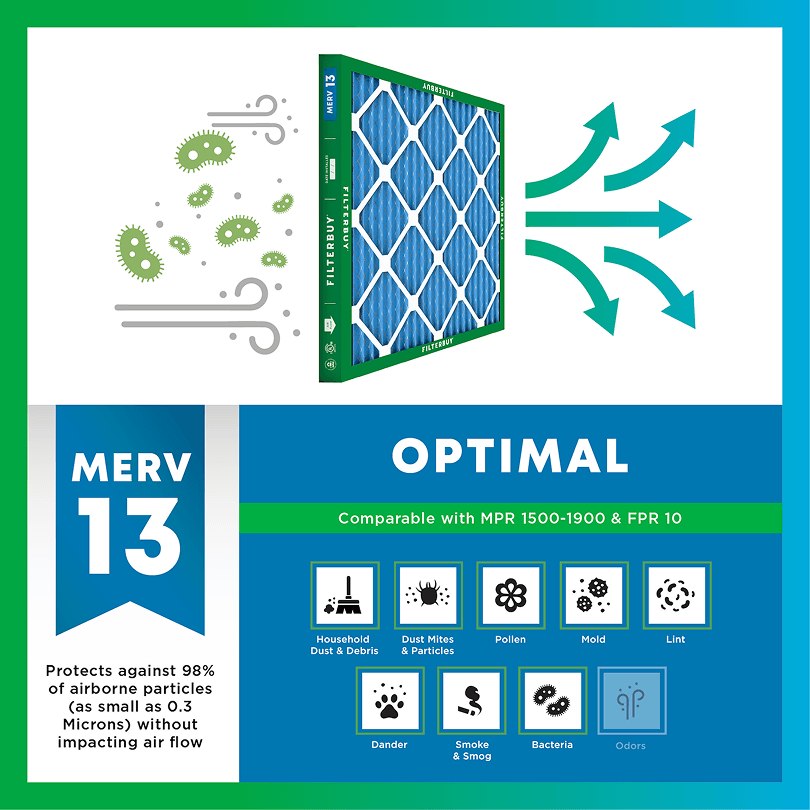
- Captures PM2.5 particles
- Blocks ash, soot, and smoke odor
- Keeps your indoor air safe—even when the outdoor air is dangerous
- Meets the EPA's recommended rating for filtering fine wildfire smoke particles.

Wildfire Smoke FAQs
Facts About Wildfires
Over 70,000 wildfires burn in the U.S. every year.
Wildfire smoke can travel 1,000+ miles, affecting states that aren't even near the blaze.
Exposure to wildfire smoke can worsen asthma, trigger heart issues, and lead to ER visits.
Indoor air can hold more fine particles during wildfire events unless it's properly filtered.
The EPA advises using MERV 13 filters or portable HEPA air cleaners during wildfire smoke events.
Don't Wait Until The Smoke's Inside.
Use the live wildfire smoke tracker and upgrade your air filters today to protect your lungs and your home.
Shop Filters For Smoke Protection
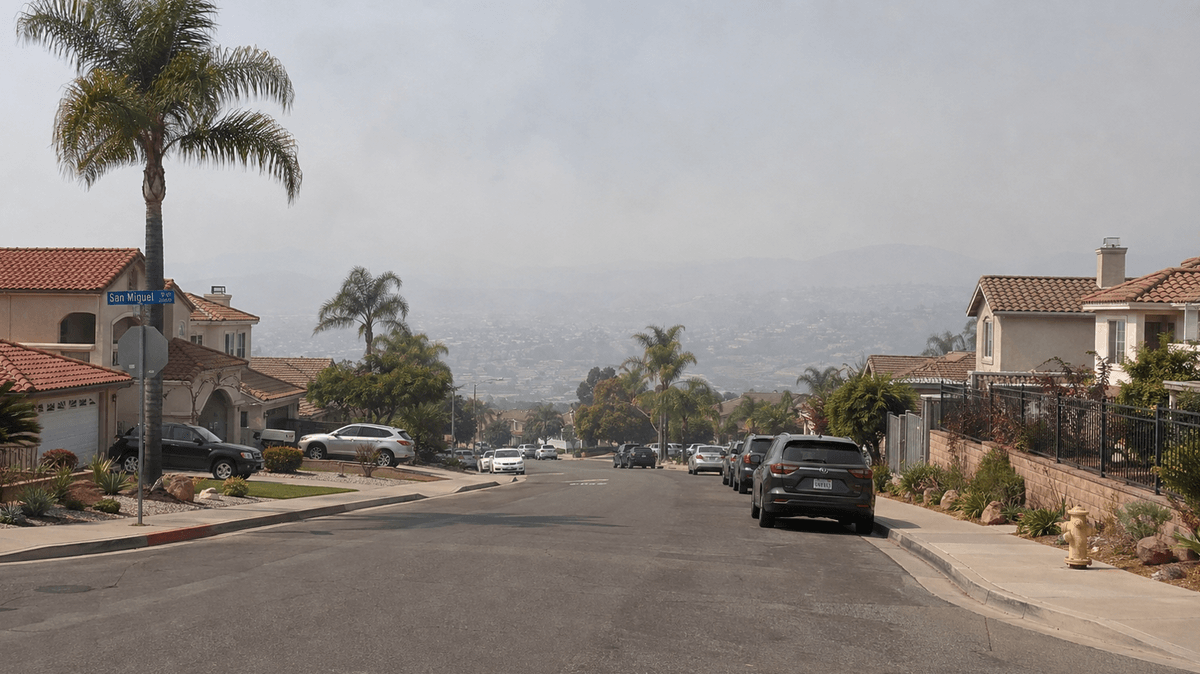
Live Chula Vista, CA Wildfire & Smoke Map Today: Local AQI and Indoor Protection
By Michelle Wan · Technically reviewed by David Clark, Licensed HVAC Technician · Published August 9, 2026
If you can smell smoke in Chula Vista, the fire is probably not close. The South Bay sits downwind of Otay Mountain and the county backcountry, so haze reaches the city while flames stay twenty miles out. Filterbuy makes the filters named here and maintains the map above.
TL;DR
The map above pairs CAL FIRE perimeters with EPA AirNow PM2.5 readings. When nearby monitors turn orange, close the house, set the HVAC to recirculate, move the fan from Auto to On, and put a MERV 13 filter in the return. Everything below corrects one mistake: watching the fire instead of the air.
Key Takeaways
Chula Vista smoke almost always starts elsewhere: Otay Mountain, the East County backcountry, or northern Baja California.
The Border 2 Fire burned 6,625 acres from January 23, 2025. No perimeter reached the city, yet Southwestern College opened as a shelter.
Wildfire PM2.5 drives respiratory hospitalizations harder than the same mass from traffic or industry.
The EPA directs households to MERV 13, or the highest rating the system tolerates, with the blower running continuously.
About a quarter of San Diego County homes have no air conditioning, so Filterbuy sorted this advice by what you control.
How to Read the Chula Vista Wildfire and Smoke Map
Read the monitor dots before the flame icons. Chula Vista picks up smoke from fires that never approach the city, so PM2.5 readings tell you more than any perimeter.
Flame icons mark active fires from CAL FIRE; tap one for acreage and containment. Colored dots show ground-level PM2.5 on the EPA scale, and readings vary by neighborhood, so check the dot nearest you. Cross-check the San Diego AQI map, the San Diego smoke map, or the federal AirNow Fire and Smoke Map.
Where Chula Vista Smoke Comes From
Three sources account for most smoke days: Otay Mountain about fifteen miles southeast, the backcountry around Campo, Boulevard, and Ramona, and fires in northern Baja California. Santa Ana wind carries all three toward the coast, reversing the onshore breeze the city relies on. Chula Vista rarely sits inside a perimeter, and the gap between not threatened and not breathable is what this map closes.
Chula Vista Smoke Risk by Season
Risk runs year-round, peaking with backcountry fires in late summer and Santa Ana events October through March.
Filterbuy organized this calendar from publicly reported San Diego County incident timing and National Weather Service wind patterns. Use it for planning, not forecasting.
The Border 2 Fire, Seen From Chula Vista
Seven days, 6,625 acres, zero structures lost, no perimeter inside the city. Chula Vista still got an evacuation shelter, a road closure, and a week of smoke. That gap is this page’s argument.
Compiled by Filterbuy from CAL FIRE incident updates, January 23–30, 2025. The fire was never inside Chula Vista city limits.
What the AQI Number Means for Your House Today
The Air Quality Index converts pollutant levels into one number, 0 to 500. Treat each band as an instruction, not a color.
Category thresholds follow the U.S. EPA Air Quality Index scale for PM2.5.
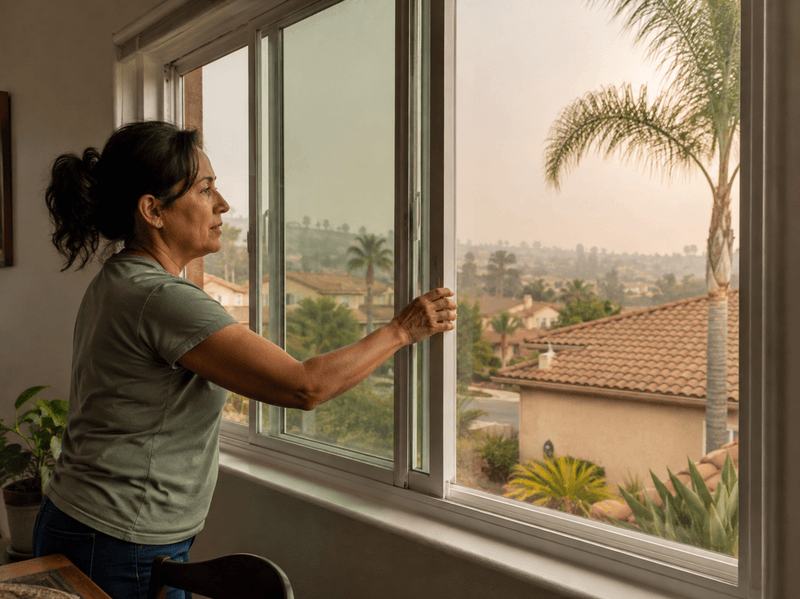
Your Indoor Plan When Smoke Reaches the South Bay
Once nearby monitors turn orange, work these six steps in order.
Close windows, doors, and fresh-air intakes, then set the thermostat to recirculate, per EPA indoor air guidance.
Move the fan from Auto to On so air keeps passing the media between cooling cycles.
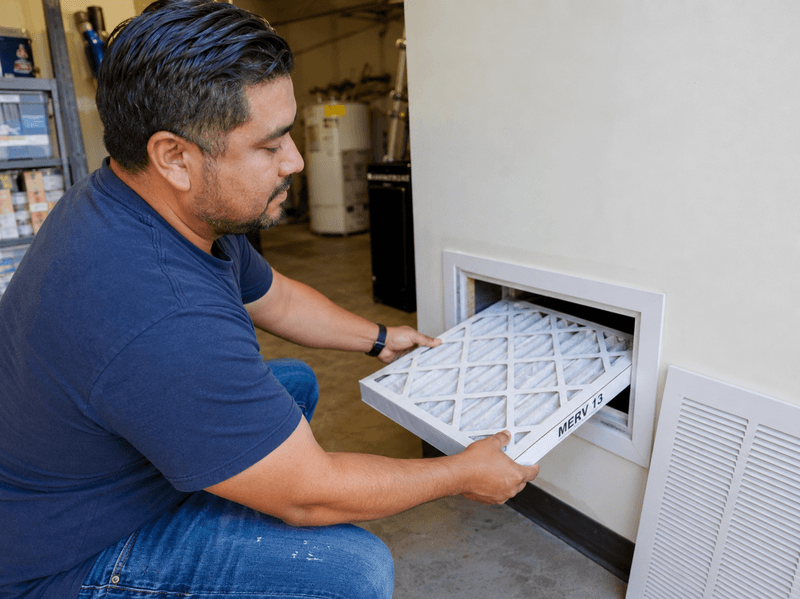
Install a MERV 13 filter sized to your return and seal the slot cover. Air slipping around the frame never gets cleaned.
Add a portable air cleaner rated for one room, usually a bedroom.
Skip candles, gas cooking, frying, and vacuuming while the plume sits overhead.
Replace the filter early. Smoke loads media in weeks, not ninety days.
What to Do Without a Central HVAC System
If you rent or have no central air, a portable cleaner in one closed room is your main tool, not a filter upgrade. Roughly one in four San Diego County homes has no air conditioning, and Chula Vista is 59.8 percent owner-occupied.
About one in four San Diego County homes has no air conditioning, so the middle two rows apply to more of the city than the first.
Choosing a Filter for Smoke
MERV 13 is the rating the EPA names for wildfire smoke, and it is not HEPA. A pleated MERV 13 captures much of the PM2.5 while still letting a residential blower move enough air.
MERV ratings follow the ASHRAE 52.2 scale. Confirm your blower holds normal airflow before running MERV 13 continuously.
The problem in South Bay homes is rarely the rating. It is the slot. A one-inch return on a blower spec’d for MERV 8 holds acceptable airflow with a MERV 13 on install day, then short-cycles a week into heavy smoke once the media loads. Judge the upgrade after a smoke stretch, not on install day.
If airflow drops or the unit short-cycles, step down to MERV 11 and add a portable cleaner. Our MERV 13 versus HEPA comparison covers when each earns its place.
The EPA agrees, telling households to prepare ahead of an event. Filterbuy pleats every filter named here in Talladega, Alabama, in 600 sizes plus custom dimensions.
Chula Vista is the example I reach for when somebody tells me they don’t live in fire country. The nearest flames can sit twenty miles out and still push a week of PM2.5 through your return. We have been cutting filters for more than a decade, and the pattern never changes: people shop during the smoke, when the size they need is the size everybody else needs too. Buy for the wind, not for the fire.
David Heacock, Founder and Chief Executive Officer, Filterbuy
Essential Resources
EPA Reduce Your Smoke Exposure
Federal guidance on filters, recirculate mode, and cleaner air rooms.
Source: U.S. Environmental Protection Agency
AirNow When Smoke Is in the Air
Actions to take during a smoke event, from the agency running the index.
Source: AirNow, U.S. EPA
CDC Wildfire Smoke and Chronic Conditions
For asthma, COPD, and heart disease, plus respirator sizing.
Source: Centers for Disease Control and Prevention
San Diego County Smoke Advisory
The local air district issues advisories by community.
Source: San Diego County Air Pollution Control District
Supporting Statistics
Wildfire PM2.5 Hits Lungs Harder Than Ordinary Particle Pollution
Across Southern California, a 10 microgram per cubic meter rise in wildfire-specific PM2.5 tracked with respiratory hospitalization increases of 1.3 to 10 percent, against 0.67 to 1.3 percent for PM2.5 from other sources.
Source: Aguilera et al., Nature Communications, 2021 (PMC7935892)
The San Diego-Chula Vista-Carlsbad Metro Ranks Fifth Worst
The 2026 State of the Air report placed the metro area fifth worst nationally, tied with Visalia and up from 59th, the largest single move on that list. See our worst air quality cities in the US.
Source: American Lung Association, State of the Air 2026
Two in Five Residents Are in an EPA At-Risk Age Group
Census QuickFacts puts 24.5 percent of the city under 18 and 13.4 percent at 65 or older, so about 38 percent falls into the two age bands the EPA names as most vulnerable to wildfire smoke, across 85,710 households.
Source: Filterbuy calculation from U.S. Census Bureau QuickFacts; at-risk groups per EPA wildfire smoke and health
Frequently Asked Questions
Protect Your Indoor Air Before the Next Wind Event
Get the filter into your return before smoke arrives. Shop MERV 13 pleated filters and turn on automatic delivery for smoke season.
About the Author and Reviewer
Michelle Wan is Brand Manager and Air Quality Writer at Filterbuy.
David Clark, Licensed HVAC Technician, reviewed this page for airflow, static pressure, and system compatibility.
Subscribe to wildfire smoke alerts for Chula Vista, CA, to get a heads-up before the next event reaches your area.