Carbon air filters for HVAC systems trap odors, smoke, and VOCs, leaving your home’s air cleaner and fresher. Thanks to their odor-absorbing layer, they last longer than standard dust filters. For quick installation, measure your existing filter’s length, width, and thickness first. Check the filter each month and replace it every three to six months for best results. Filterbuy stocks dependable carbon filters in nearly every size—keeping indoor air quality high without straining your budget.
Start by verifying your current filter's measurements or checking the slot for a precise fit.
Pick sturdy filters that reliably capture harmful particles, helping you breathe easier and enjoy a healthier home.
Incorporate potent odor-control features to tackle both chemical fumes and those stubborn lingering scents.
Mind the filter's lifespan to reduce replacement frequency while keeping performance strong.
Keep to a simple maintenance routine—monthly checks and timely swaps—for optimal system health.
Consider dependable brands like Filterbuy to stay within budget without sacrificing quality.
Carbon air filters do two jobs at once:
Remove odors and chemicals – The activated-carbon layer grabs cooking smells, pet odors, smoke, and many household fumes that a regular dust filter cannot hold.
Protect your HVAC equipment – By trapping sticky residues and fine particles, the filter keeps the coil and blower cleaner, helping the system move air freely and use less energy.
Cleaner air plus a cleaner system means fewer allergy triggers, less musty smell, and steadier HVAC performance. Swapping in a carbon filter—and replacing it on schedule—is an easy way to support a healthier home. Filterbuy makes it simple with U.S.-made filters, free shipping, and custom sizes on request.
Understanding carbon filters' function reveals why they matter much for healthier indoor air. They harness porous activated carbon to capture contaminants, banishing unpleasant smells and airborne particles.
As air moves along your system, VOCs, smoke, and gaseous pollutants stick to the carbon, effectively lowering harmful debris and consistently freshening every room.
Carbon filters truly stand out for storing pollutants over time, delaying the need for replacement. Its expansive surface area traps airborne threats, and Filterbuy offers dependable choices for seamless upkeep.
While buying carbon air filters, emphasizing crucial factors paves the way for picking the best, like Filterbuy's.
Start with efficiency; it gauges how thoroughly airborne particles and pollutants are intercepted. Superior efficiency raises overall air quality, significantly benefiting every corner of your indoor environment.
Odor removal also deserves attention. Carbon filters excel at snatching lingering scents, serving crucial roles when cutting unpleasant smells is vital. Seek designs that tackle cooking fumes, pet dander, and smoke for a clean home.
Finally, examine lifespan and upkeep needs. Extended durability reduces replacement frequency, while simple maintenance keeps overall performance sharp, letting your HVAC system run smoothly over time.
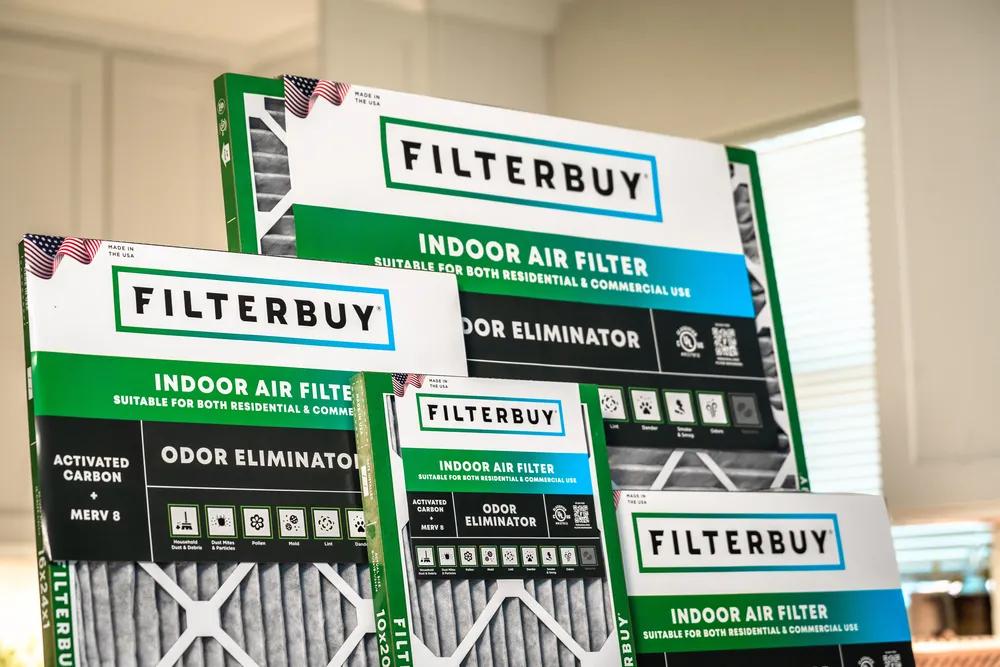
Following efficiency needs, zero in on the right size for carbon air filters, like those from Filterbuy. Accurate measurements sustain airflow across HVAC systems, amplifying performance.
Search existing filters for dimensional labels, such as length, width, and thickness. When details are absent, measure the filter's slot precisely.
Adhere to manufacturer instructions to align with your system's needs. A mismatched size might spark possible bypass concerns or hamper airflow efficiency.
Securing an exact fit elevates filtration efficiency and prolongs your system's lifespan. Recheck measurements before purchase to avert setbacks and ensure future replacement stays simple.
Consistent care keeps carbon air filters at peak performance. Check the service span from Filterbuy, typically three to six months. Usage and indoor conditions may influence this period, so monthly evaluations prove valuable.
Watch out for buildup or fading that signals a needed replacement. Adhering to recommended replacement intervals keeps air purity and system efficiency high.
Always power down the HVAC system before exchanging filters to avoid stray debris. Carefully discard used filters and position fresh ones properly, following airflow direction markers.
Keeping a steady replacement schedule cultivates a thriving indoor environment.
Exploring carbon air filters for your furnace or HVAC setup becomes straightforward through Filterbuy. Their line simplifies boosting indoor air quality, providing reliable and efficient choices.
Their snug fit and sturdy build support efficient HVAC operation while continuously delivering consistently clean airflow.
Opting for Filterbuy elevates indoor health. Their carbon filters feature MERV ratings and minimal replacement, ensuring better air quality.
Yes. Carbon air filters effectively remove odors, gases, and chemicals, making them ideal for homes with smokers, pets, or strong cooking smells. However, they don’t capture fine particles as efficiently as HEPA filters.
A single filter serves the AC and furnace in most central HVAC systems. This filter, located in the return air duct, cleans the air before it reaches either unit.
Activated carbon filters are less effective at capturing fine particles, such as dust and allergens, and require regular replacement as their odor-absorbing capacity diminishes. They can also be more expensive than standard filters.
While both are similar, activated carbon filters outperform charcoal filters due to enhanced absorption capacity. They are superior for eliminating odors, gases, and volatile organic compounds (VOCs).
Carbon filters excel at removing odors and gases but aren’t as effective as HEPA filters at capturing fine particles like dust, pollen, and pet dander. Combining both offers comprehensive air filtration.
Carbon air filters typically last 3 to 6 months, depending on usage and air quality. Inspect them regularly and replace them when odor control or airflow declines.
Refer to your HVAC manual for the recommended size and type. Consider your needs—such as allergy relief or odor control—and select a filter with the appropriate MERV rating or carbon filtration features.
No. Running your AC without a furnace filter can let dust and debris enter the system, reducing efficiency and potentially causing damage.
Yes. In a central HVAC system, both heating and AC units typically use the same filter to clean incoming air.
Carbon filters focus on odors and gases but struggle with fine particles like dust and allergens. They also require regular replacement, which can increase overall costs.
Due to their dense structure, carbon filters may slightly restrict airflow. High-quality models are designed to balance effective filtration with minimal airflow reduction. Always verify your HVAC system’s compatibility before purchasing.
Although generally safe, carbon filters can become saturated over time and may release trapped contaminants back into the air. Regular maintenance and timely replacement are essential to minimize any potential risks.
