

Tip: Ensure you buy the exact air filter size for your system. Certain brands have precise dimensions that only fit their specific models. See related filters
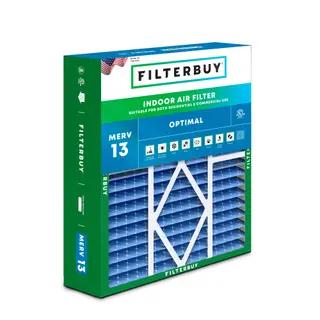
Five Seasons 22X24X5 MERV 13 Replacement Filter
Actual Size: 22.06x23.94x5.25
 Free Delivery
  Factory-Direct Low Prices, Made in the USA
 Hassle-Free Returns & Free Exchanges
RESIDENTIAL AND/OR COMMERCIAL USE
Change Every 3 Months
Tip: Ensure you buy the exact air filter size for your system. Certain brands have precise dimensions that only fit their specific models. See related filters
Five Seasons 22X24X5 MERV 13 Replacement Filter
Actual Size: 22.06x23.94x5.25
Free Delivery Factory-Direct Low Prices, Made in the USAHassle-Free Returns & Free ExchangesRESIDENTIAL AND/OR COMMERCIAL USE
Change Every 3 Months
Tip: Ensure you buy the exact air filter size for your system. Certain brands have precise dimensions that only fit their specific models. See related filters
Five Seasons 22X24X5 MERV 13 Replacement Filter
Actual Size: 22.06x23.94x5.25
Free Delivery Factory-Direct Low Prices, Made in the USAHassle-Free Returns & Free ExchangesRESIDENTIAL AND/OR COMMERCIAL USE
Change Every 3 Months
About
- This is a list 22X24X5 MERV 13 air filter replacement for your furnace, air conditioner, heat pump, or HVAC system
- Actual air filter size: 22.06x23.94x5.25
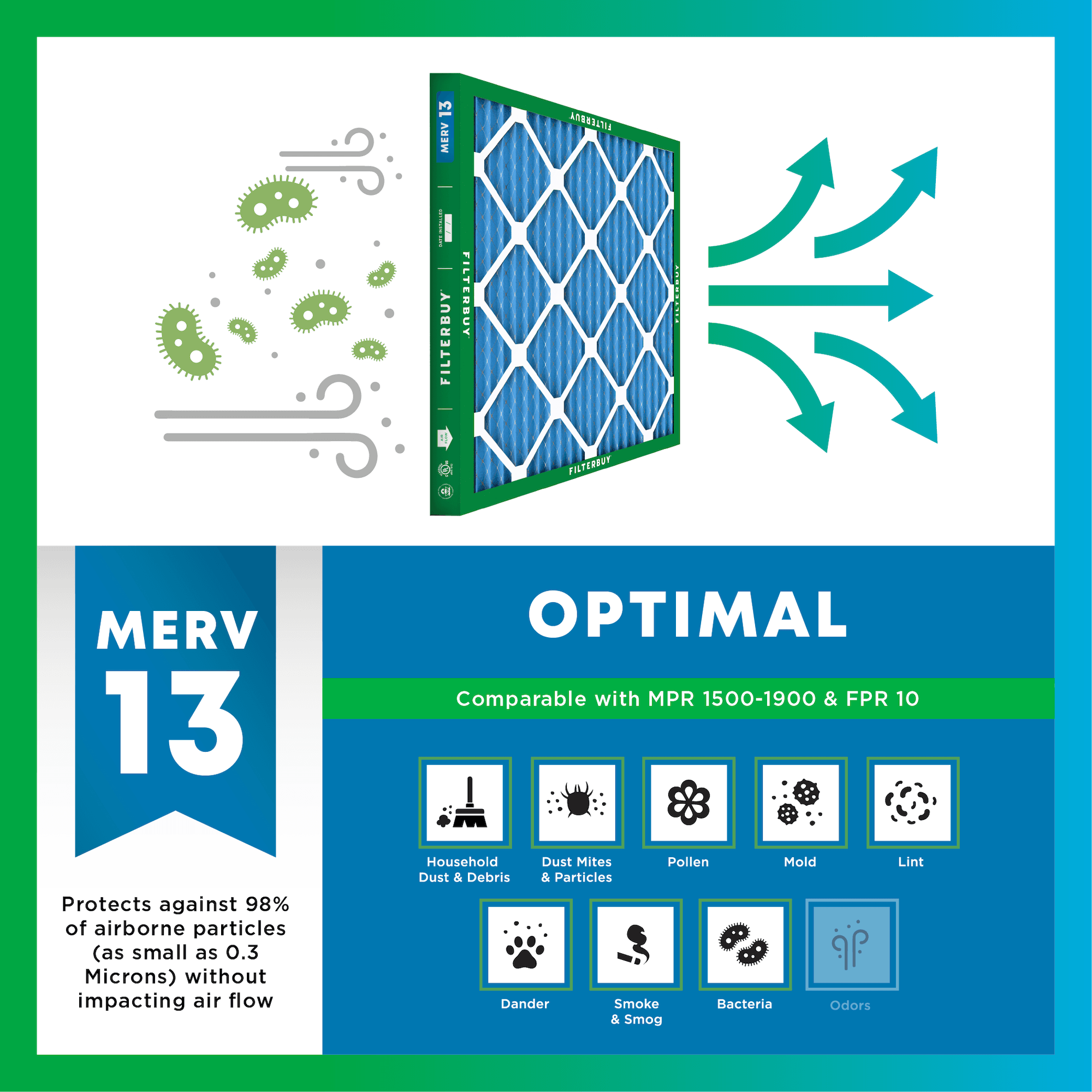
- MERV 13 synthetic media (comparable with MPR 1500/1900 and FPR 10) offers the best protection from dust, pollen, pet dander, mold, smog, bacteria, and virus carrying particles by trapping 98% of airborne particles without impacting air flow.
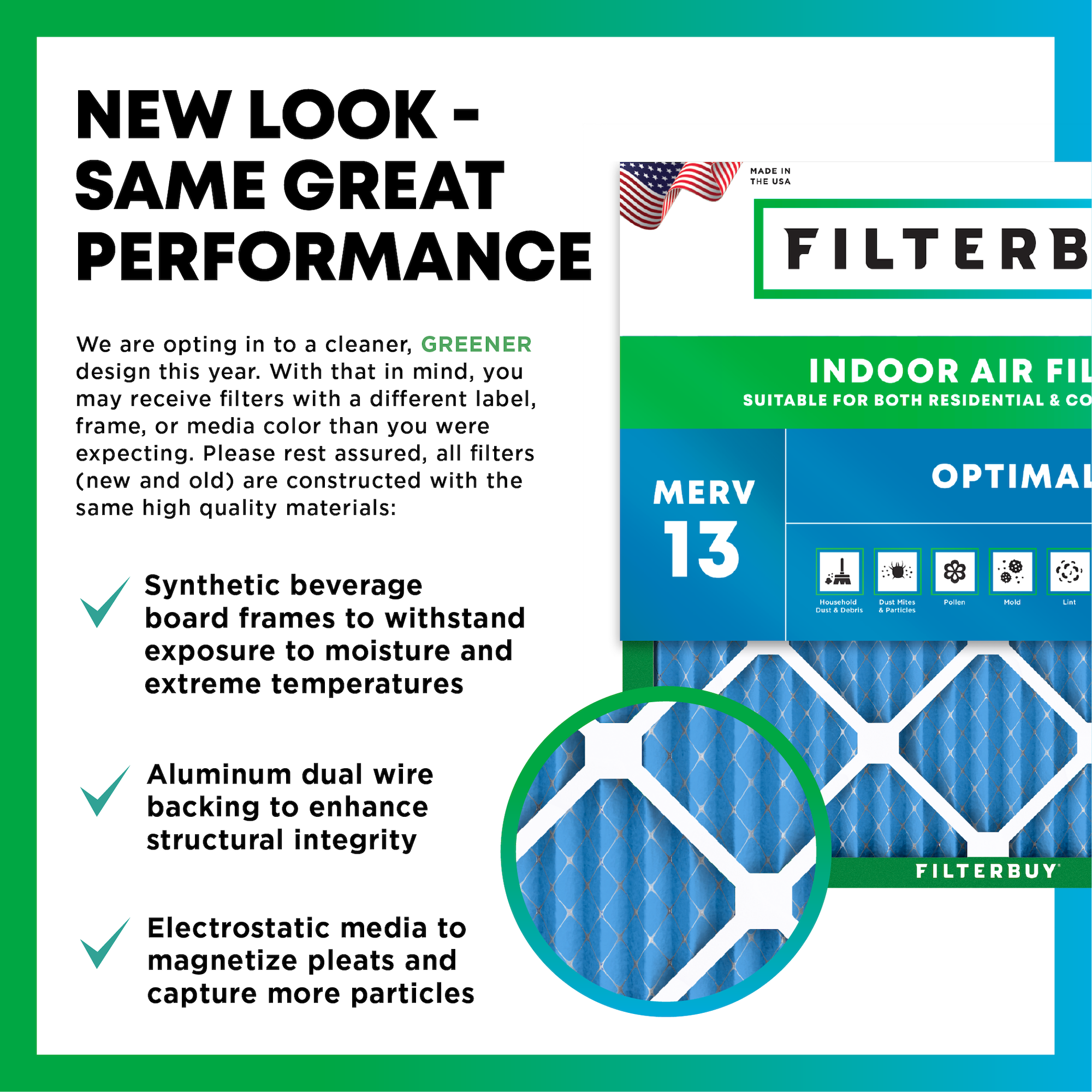
- High-quality construction means electrostatically charged pleated filter media, reinforced wire backing for structural integrity, and a durable frame to resist heat and humidity
- Built to last 3 months. 300% longer than fiberglass models
- 100% manufactured in the United States and designed with recyclable materials
- Learn more about 22X24X5 Air Filters
Top-Rated Filters. American Made. Delivered Free.
At Filterbuy, we don't cut corners—we craft high-quality air filters right here in the USA and ship them to your doorstep for free. No delays, no gimmicks—just clean air, made easy. With thousands of five-star reviews and filters built for real life & every HVAC system, it's no wonder why over 4 million families trust Filterbuy.

Proudly Made In The USA

Fast, Free Shipping on Every Order

Premium Materials That Go The Distance

85,000+ 5-Star Reviews From Happy Customers

Save Up to 70% Per Filter with Packs
Things to Know About Filter Sizes

Nominal Size
- The rounded size printed on your filter or HVAC unit (e.g., 22X24X5).
- Usually whole numbers to make identifying and ordering easier.
- A label for compatibility—not the exact measurement.

Actual Size
- The true, trimmed dimensions of the filter (e.g., 22.06x23.94x5.25 inches).
- Filters are manufactured slightly smaller so they slide into the filter slot without forcing.
- If you don't know your nominal size, measure your filter to get the actual size, then round up to find the nominal size to search on our site.

Why the difference?
- Nominal sizes simplify shopping and standardize categories.
- Actual sizes ensure the filter fits properly inside your HVAC's filter rack.
How To Find Your Nominal Size When You Don't Know It


Measure length × width × depth with a tape measure to find the actual size.

Round up each dimension to the nearest whole number to get the nominal size. Example: 22.06x23.94x5.25 in → 22X24X5 nominal.

Search by nominal size on our site for the best fit.

Why Getting the Right Size Matters
- Too small? Air can bypass the filter, reducing air quality and efficiency.
- Too big? It won't fit—risking bent frames and airflow issues.
- Just right? You get maximum performance, better filtration, and cleaner air.

Why Choose a 5″ filter

5″ filters give you maximum filtration with minimal maintenance — lasting up to 12 months while handling higher MERV ratings without restricting airflow.
Sizing note:
- Requires a 5″ cabinet or system.
- Actual thickness varies by brand (~4¾″–5¼″), so check your model for the best fit.

Free Exchange Policy
If the filter you buy doesn't fit, we'll send you a better size.

What's a MERV Rating?
MERV stands for Minimum Efficiency Reporting Value—but don't let the technical name fool you. It's just a way to rate how well an air filter traps stuff like dust, pollen, pet dander, and smoke. The higher the MERV number, the more particles it catches—and the cleaner your air will be.

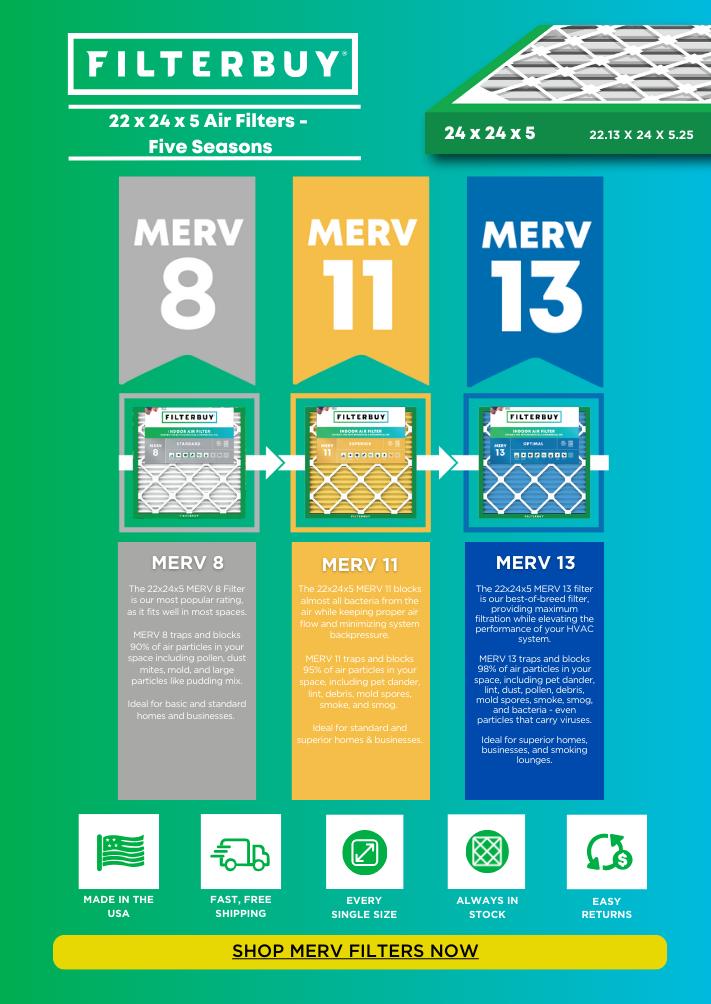
Merv 8
Comparable to:FPR: 4-7
MPR: 600-1000
 Dust & Debris
 Dust Mites & Particles
 Pollen
 Mold
Mold Lint
Lint Dander
Merv 11
Comparable to:FPR: 6-9
MPR: 1200-1550
Dust & DebrisDust Mites & ParticlesPollenMoldLintDander Smoke & Smog
Merv 13
Comparable to:FPR: 10
MPR: 1900-2800
Dust & DebrisDust Mites & ParticlesPollenMoldLintDanderSmoke & Smog Bacteria
MERV 8
Comparable to:FPR: 4-7MPR: 600-1000


MERV 11
Comparable to:FPR: 6-9MPR: 1200-1550

MERV 13
Comparable to:FPR: 10MPR: 1900-2800
What Makes Our Filters Last 90 Days? Quality, From the Inside Out
We build every Filterbuy filter to deliver reliable 90-day performance—thanks to smart design and premium materials that do the heavy lifting. Here's what makes the difference:
Pleated Design
More pleats = more surface area to capture dust and debris, keeping your air cleaner longer.
Electrostatically Charged Media
Pleats are magnetized to attract and trap microscopic particles—like pet dander, pollen, and smoke.
Synthetic Beverage Board Frame
Engineered to resist warping in extreme temperatures and high humidity.

Aluminum Dual Wire Backing
A layer of metal reinforcement keeps pleats evenly spaced and structurally sound—no sagging, even at high airflow.
Made in the USA
Assembled with care. Built to perform. Ships fast, free, and reliably from our U.S. facilities.
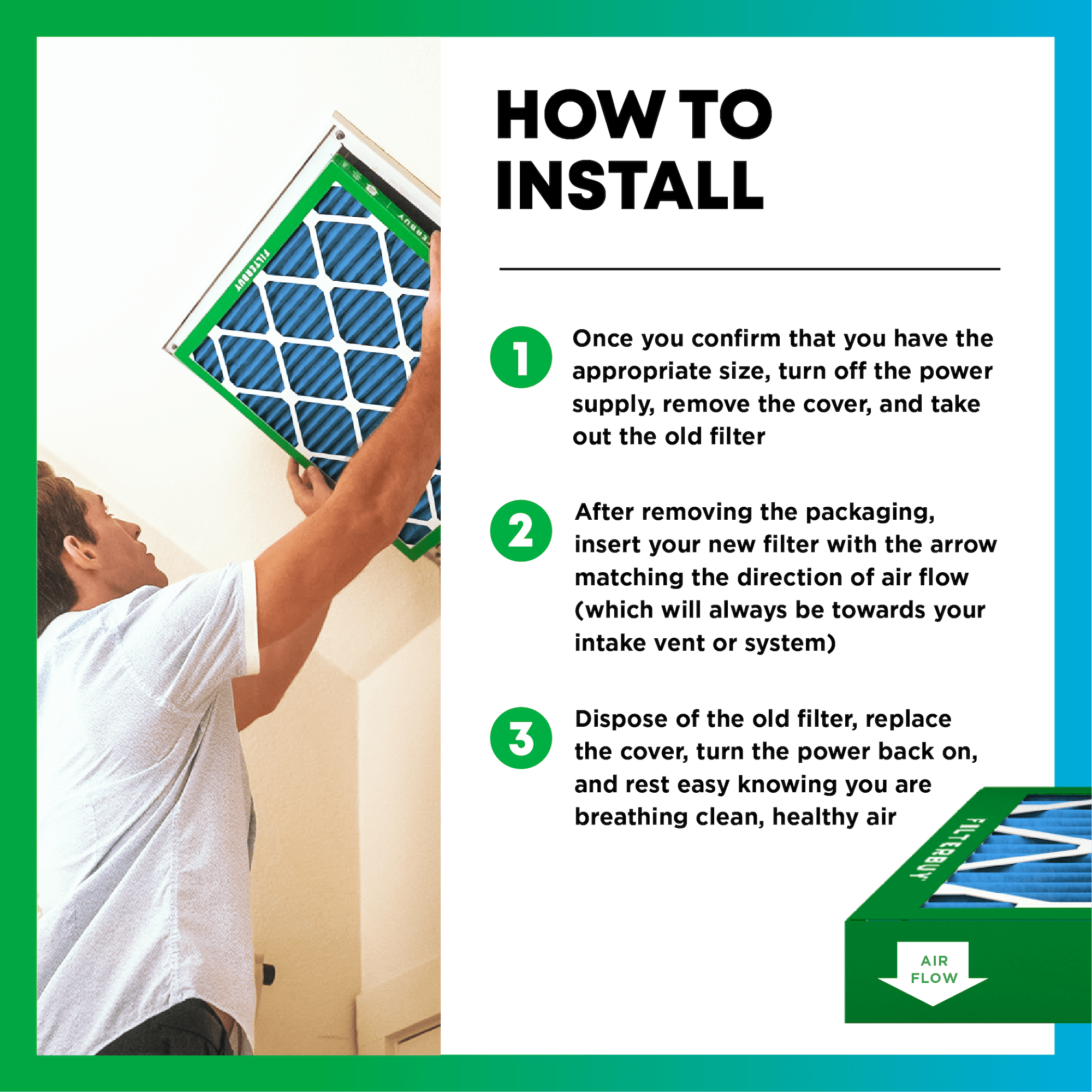
How to Install Your Filter in 4 Simple Steps

Turn Off Your HVAC SystemSafety first.

Remove The Old FilterLook for the airflow arrow and make note of the direction.

Slide In Your New FilterArrow should point toward the system (same direction as before).

Turn Your System Back OnAnd enjoy the fresh, clean air.

Never forget to replace your air filter again.
- Save 5% on every order
- Choose Your Delivery Schedule
- Edit, Skip, or Cancel Anytime.
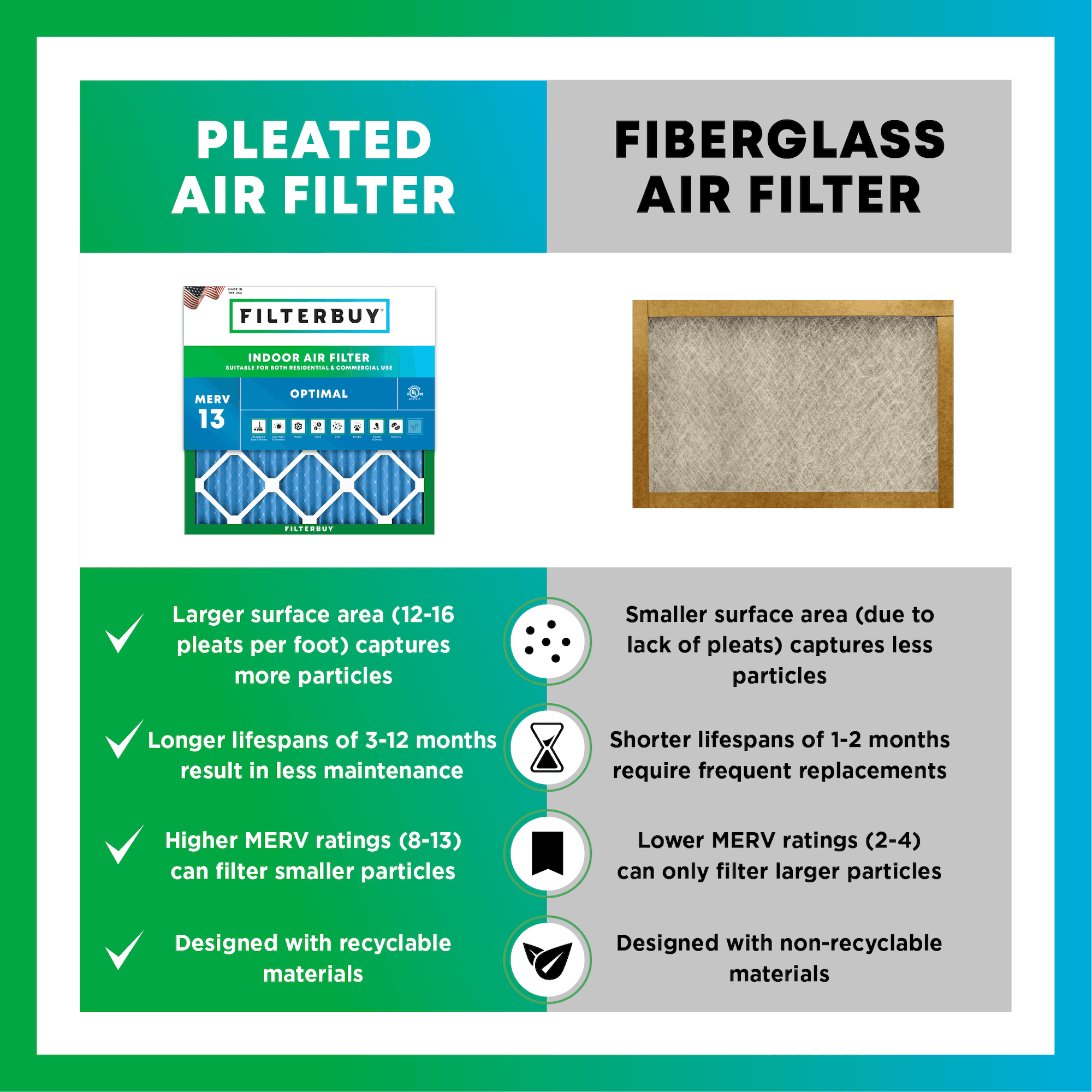
Pleated Filters vs. Fiberglass—What's the Difference?
Not all air filters are created equal. Pleated filters don't just last longer—they actually clean your air better. Here's how they stack up:

Pleated Filters
Efficiency:
High (MERV 8–13) – Traps more particles
Lifespan:
90 days – Long-lasting performance
Air Quality:
Excellent – Cleaner, healthier air
Materials:
Recyclable and durable

Fiberglass Filters
Efficiency:
Low (MERV 4 or less) – Misses small stuff
Lifespan:
30 days or less – Replace often
Air Quality:
Minimal – Basic protection only
Materials:
Thin, flimsy, and not recyclable
Pleated filters are a no-brainer—more protection, less hassle, and better air for your home.
How Often Should You Change Your Filter?
Changing your filter on time keeps your HVAC system running efficiently—and helps protect your lungs from dust, allergens, and airborne irritants. Here's how often to swap it out based on your needs:

Every 90 Days
Standard ScheduleFor most homes without pets or special air quality concerns. Great for general upkeep and energy efficiency.

Every 60 Days
If You Have Pets or AllergiesShedding fur, dander, and allergy triggers can build up fast. Changing your filter every two months helps keep the air fresher and symptoms at bay.

Every 30 Days
If You Have Respiratory Concerns or Live in Smog/Wildfire ZonesFor households affected by smoke, pollution, or respiratory conditions, monthly changes ensure maximum protection.

Want to stay on track? Set a reminder—or skip the stress with auto-delivery so fresh filters show up right when you need them.
Don't Just Take Our Word For It...
Got More Questions? We've Got Answers.
Product Specifications
| Nominal Size | 22X24X5 |
| Actual Size | 22.06 x 23.94 x 5.25 inches |
| Filter Type | Pleated |
| Media | Electrostatically Charged |
| Frame | Beverage Board |
| MERV Ratings Available | 8, 11, 13 |
| Lifespan | Up to 12 Months |
| Origin | Made in USA |
MERV 13 22x24x5 Five Seasons Air Filter — Stop Recirculating Dust, Pet Dander & Bacteria Through Your Home's Air
Most air filters trap what you can see. The problem is what you can't.
Dust, pet dander, and bacteria don't announce themselves — they circulate silently through your HVAC system and back into the rooms where your family breathes every day. After manufacturing filters for over a decade and serving more than two million households, we've learned that the filter most homeowners are using wasn't built to stop them.
The Filterbuy MERV 13 22x24x5 Five Seasons Air Filter was. Rated to capture particles as small as 0.3 microns — including bacteria, mold spores, and fine pet dander — it delivers the kind of whole-home filtration that makes a measurable difference in the air your family actually breathes. And because it's built to last through every season, you're not just upgrading your filter. You're upgrading your home's air, for good.
TL;DR Quick Answers
What Is a MERV 13 22x24x5 Five Seasons Air Filter?
A MERV 13 22x24x5 Five Seasons Air Filter is a high-efficiency, 5-inch whole-home air filter designed for residential HVAC media cabinet systems. Here is what defines it:
MERV 13 rating: Captures at least 50% of airborne particles in the 0.3 to 1 micron range — including fine pet dander, airborne bacteria, mold spores, and smoke particles that standard MERV 8 filters were never designed to stop
22x24x5 dimensions: A whole-home media filter size that fits dedicated media cabinet housings — not standard 1-inch return vent slots
Five Seasons design: Built to perform across every seasonal HVAC demand — peak summer cooling, deep winter heating, spring allergy surges, fall dust mobilization, and shoulder seasons in between
5-inch media depth: Provides four to five times more filtration surface area than a 1-inch filter at the same MERV rating — delivering stronger airflow, greater dust-holding capacity, and a service life of 6 to 12 months under normal household conditions
After manufacturing filters for over a decade and serving more than two million households, the MERV 13 22x24x5 Five Seasons Air Filter represents the most impactful whole-home air quality upgrade available to any homeowner with a compatible media cabinet — without modifying their existing HVAC system.
Top Takeaways
Your HVAC system is either protecting your home's air or recycling its contaminants. The filter is the only thing determining which. MERV 13 is the minimum meaningful threshold for stopping the fine particles — dust, pet dander, bacteria, and mold spores — that a standard MERV 8 was never designed to capture.
The 5-inch depth isn't a size upgrade — it's a performance upgrade. Compared to a 1-inch filter at the same MERV rating, a 5-inch media filter delivers: 4 to 5 times more filtration surface area, stronger airflow as it loads, greater dust-holding capacity, longer service life, and less strain on your HVAC system across every season.
A filter that doesn't fit correctly isn't filtering. Gaps as small as one-eighth of an inch create bypass channels that allow unfiltered air straight into your ductwork — regardless of MERV rating. Measure your slot before every order. Confirm the fit before every installation.
Nearly 3 in 4 American households own a pet — and a MERV 8 was never built to handle what that means for indoor air. Pet dander becomes airborne, enters your return duct, and redistributes through every room with every air cycle. For pet households, upgrading to MERV 13 is the single most impactful air quality decision a homeowner controls.
A saturated filter doesn't just stop working — it becomes the problem. An overdue MERV 13 actively restricts airflow, drives up energy costs, and strains your blower motor. Replace every 3 to 6 months for pet and allergy households. Set the reminder the day you install. Don't wait until you remember.
What Does MERV 13 Actually Mean for Your Home's Air?
MERV stands for Minimum Efficiency Reporting Value — the industry-standard scale used to measure how effectively an air filter captures airborne particles. The higher the rating, the smaller the particles it traps.
Most homes ship with a basic MERV 8 filter from the builder. That filter handles larger debris — lint, dust, pollen — but it was never designed to stop the contaminants that cause the most health concern. A MERV 13 filter demonstrates at least 50% removal efficiency for the smallest particles tested, in the 0.3 to 1 micron range — the size range where bacteria, fine pet dander, and mold spores live.
The EPA recommends choosing a filter with at least a MERV 13 rating when upgrading to higher efficiency filtration. In our experience manufacturing filters for over a decade and serving more than two million households, MERV 13 is the single most impactful upgrade most homeowners can make without modifying their existing HVAC system.
The Contaminants a Standard Filter Lets Through
Here is what a MERV 8 filter routinely misses — and what the Filterbuy MERV 13 22x24x5 Five Seasons filter is built to stop:
Dust and fine particulate matter — Microscopic dust particles smaller than 1 micron pass freely through lower-rated filters and settle on surfaces, furniture, and lungs.
Pet dander — Dander particles shed by dogs and cats are some of the most persistent indoor allergens. A MERV 8 filter is not rated to capture particles in the 0.3 to 1.0 micron range, meaning pet dander, smoke, and some airborne bacteria are likely to get through.
Airborne bacteria — Bacteria travel on respiratory droplets and fine particles. At MERV 13, filters capture particles as small as 0.3 microns at high efficiency, covering the vast majority of airborne bacteria and many virus-carrying respiratory droplets.
Mold spores — Spores released by mold colonies inside walls, ducts, and damp areas re-enter your air supply with every HVAC cycle.
Smoke and smog — Fine smoke particles — from cooking, wildfires, or outdoor pollution — measure below 2.5 microns and pass through standard filters entirely.
Why the 22x24x5 Size and Five Seasons Design Matter
Filter size is not just a measurement — it is a compatibility requirement. The 22x24x5 dimension is a whole-house filter size, typically found in media cabinet systems and high-capacity air handlers built for superior whole-home filtration. A proper fit means no air bypasses the filter media — and with a 5-inch depth, the Filterbuy Five Seasons filter holds significantly more media surface area than a standard 1-inch filter.
More surface area means three things:
Higher dust-holding capacity — The filter captures more before it needs replacing.
Lower airflow restriction — Deeper pleating maintains strong airflow even as the filter loads with particles.
Longer service life — The Five Seasons design is engineered to perform across every season your HVAC runs, from peak summer cooling to deep winter heating.
In our experience, homeowners who switch from 1-inch filters to a 5-inch media filter in the same MERV 13 rating consistently report fewer HVAC service calls and longer equipment life — because the filter is doing what it was designed to do without stressing the system.
Who Benefits Most from MERV 13 Filtration?
Not every home has the same air quality needs. Based on what we have seen across more than two million households, these situations make a MERV 13 upgrade most impactful:
Pet owners — Dogs and cats shed dander year-round. MERV 13 captures the fine dander particles that pass through lower-rated filters and recirculate through your home's air.
Allergy and asthma sufferers — The EPA recommends that consumers concerned about small particles choose furnace filters with at least a MERV 13 rating, noting that high concentrations of fine particles are associated with health risks — especially in sensitive populations such as children, the elderly, and those with existing respiratory conditions like asthma and allergies.
Households with young children or elderly family members — Developing and aging respiratory systems are more vulnerable to fine airborne particles.
Homeowners in wildfire-prone or high-pollution areas — A true high-efficiency filter rated MERV 13 to 16 can reduce indoor particles by as much as a significant margin during smoke events.
How to Get the Most from Your MERV 13 22x24x5 Filter
A high-performance filter only works when it is maintained. Here is what we recommend based on real-world feedback from households across the country:
Replace every 6 to 12 months for typical households without pets or heavy allergen exposure. The Five Seasons design is built for extended life — but a saturated filter restricts airflow and loses efficiency.
Replace every 3 to 6 months if you have one or more pets, allergy sufferers, or live in an area with seasonal wildfire or high outdoor pollution.
Check the fit before installation — The 22x24x5 should slide snugly into the media cabinet with no gaps at the edges. Air bypassing the filter defeats its purpose entirely.
Run your HVAC fan more frequently — Your filter only cleans air when the system is moving air. Running the fan on a schedule — not just when heating or cooling — maximizes the number of air passes through the filter each day.
"After manufacturing millions of air filters across our U.S. facilities and hearing directly from over two million households, one pattern stands out clearly — homeowners who upgrade to a 5-inch MERV 13 filter stop treating their HVAC system like a dust recycler and start using it as the whole-home air protection system it was always designed to be."
Essential Resources for MERV 13 22x24x5 Five Seasons Air Filter Owners
Don't take your indoor air for granted. After manufacturing filters for over a decade and serving more than two million households, we know that the homeowners who get the most out of a MERV 13 upgrade are the ones who understand what their filter is stopping — and why every detail, from rating to fit to replacement schedule, matters. We've pulled together the seven most important resources to help you protect your greatest assets: your family, your home, and your HVAC system.
1. Understand What MERV Ratings Actually Measure — Before You Buy Another Filter
Most homeowners don't realize that not all filters are tested the same way — or that the number on the frame tells you exactly which invisible threats your filter is and isn't stopping. The EPA's official MERV explainer breaks down how filters are rated across three particle size ranges and confirms what we've seen firsthand: MERV 13 is the threshold where real protection against fine particles begins.
Source: What Is a MERV Rating? — U.S. EPA
2. Get the EPA's Complete Guide to Choosing, Installing, and Maintaining Your HVAC Filter
Here's something that surprises a lot of homeowners: a high-rated filter that isn't installed correctly offers no more protection than a cheap fiberglass one. The EPA's consumer guide on air cleaners covers how to select the highest-efficiency filter your system can handle, how to verify a proper seal, and how often to replace based on your household — the same guidance we build our own replacement recommendations around.
Source: Guide to Air Cleaners in the Home — U.S. EPA
3. Find Out What Your HVAC System Is Already Recirculating Through Your Home's Air
We can't see the pollutants floating through our homes — but they're there, cycling through your vents and back into the rooms where your family breathes every day. The EPA's resource on biological pollutants reveals how mold, bacteria, pet dander, and dust mites enter your HVAC system and get redistributed room to room with every air cycle. This is the resource that makes the invisible visible.
Source: Biological Pollutants and Indoor Air Quality — U.S. EPA
4. Know Which Airborne Contaminants Are Triggering Symptoms in Your Household Right Now
If anyone in your home deals with allergies, asthma, or unexplained respiratory symptoms, this resource is essential reading. The EPA's asthma triggers guide identifies pet dander, dust mites, mold, and bacteria as the primary indoor allergens driving episodes — the exact contaminants that MERV 13 filtration is built to stop before they reach your family's lungs. You're the hero of your household, and this is how you identify what you're up against.
Source: Asthma Triggers: Gain Control — U.S. EPA
5. Discover Why 5-Inch Filter Depth Is the Detail That Changes Everything for Your HVAC System
Pro Tip: After manufacturing over 50 million filters across our U.S. facilities, one pattern stands out — homeowners who upgrade to a 5-inch media filter consistently report fewer HVAC service calls and longer system life. Our in-depth guide on filter thickness explains exactly why: 5-inch media filters provide four to five times more filtration surface area than a 1-inch filter, which means stronger airflow, greater dust-holding capacity, and a longer service life — even at MERV 13.
Source: Why Does Furnace Filter Thickness Matter? — Filterbuy
6. Measure Your 22x24x5 Filter Slot Correctly — Because a Poor Fit Defeats the Entire Purpose
Here's what most homeowners don't realize: a gap as small as one-eighth of an inch around your filter frame creates a bypass channel that allows unfiltered air — carrying dust, dander, and bacteria — to flow straight into your ductwork, regardless of your filter's MERV rating. We've seen it across more than two million households. Our step-by-step sizing guide walks you through nominal vs. actual dimensions and exactly how to confirm a proper fit before you install.
Source: How to Measure Your Air Filter — Filterbuy
7. Get Your Exact Replacement Schedule — Built from Real Data Across More Than Two Million Homes
Changing your filter on time isn't just a maintenance task — it's the difference between a filter that's actively protecting your family and one that's silently restricting airflow and recycling contaminants back into your air. Our MERV 13 resource covers exactly how often to replace based on pets, allergies, seasonal wildfire exposure, and household conditions — grounded in over a decade of direct customer feedback and manufacturing experience.
Source: MERV 13 as the New Standard for Healthier Homes — Filterbuy
Supporting Statistics on Indoor Air Quality & MERV 13 Filtration
After manufacturing filters for over a decade and serving more than two million households, we know the data behind indoor air quality tells a story most homeowners never hear until it starts affecting their family. These three statistics put the urgency of MERV 13 filtration into perspective.
Your Home's Air Is Up to 5 Times More Polluted Than the Air Outside It
Americans spend approximately 90% of their time indoors — where concentrations of some pollutants are often 2 to 5 times higher than typical outdoor concentrations.
Most people assume the air quality problem is outside. It isn't. In our experience, the homes that struggle most with:
Persistent dust buildup
Chronic allergy symptoms
Accelerated HVAC wear and service calls
...aren't located near highways or industrial zones. They're ordinary homes where the filter hasn't been upgraded in years. Your HVAC system circulates your home's entire air volume multiple times every day. What it carries depends entirely on what's standing in its way.
Source: U.S. Environmental Protection Agency — Indoor Air Quality
URL: https://www.epa.gov/report-environment/indoor-air-quality
MERV 13 More Than Doubles the Minimum Filtration Requirement for the Particles That Matter Most
Filters rated MERV 13 and above are required to demonstrate at least 50% removal efficiency for the smallest particles tested — the fine particles of greatest health concern.
The real difference between MERV 11 and MERV 13 comes down to one number. Here's what that gap looks like in practice:
MERV 8: Not rated to capture particles in the 0.3 to 1 micron range — where bacteria, fine pet dander, and mold spores live
MERV 11: Required to capture only 20% of fine particles in that same range
MERV 13: Required to capture at least 50% — more than doubling the minimum protection threshold
After manufacturing millions of filters and hearing directly from the households using them, the families who notice the biggest improvement after switching are almost always upgrading from a MERV 8 or MERV 11. The EPA data confirms what we see firsthand: MERV 13 is where meaningful protection against the smallest, most health-relevant particles begins.
Source: U.S. Environmental Protection Agency — Guide to Air Cleaners in the Home
URL: https://www.epa.gov/indoor-air-quality-iaq/guide-air-cleaners-home
Nearly 3 in 4 American Households Own a Pet — and a Standard Filter Was Never Built to Handle What That Means for Your Air
An estimated 71% of U.S. households — approximately 94 million families — own a pet, according to the 2024–2025 National Pet Owners Survey conducted by the American Pet Products Association (APPA).
Nearly 3 in 4 American homes have a pet. Pet owners feel the MERV 13 difference most immediately — and here's why:
Pet dander doesn't stay where your dog sleeps or your cat grooms
It becomes airborne and enters your return duct
Your HVAC system then redistributes it through every room with every air cycle
A MERV 8 filter — the default in most homes — was never engineered to stop fine dander particles at that size range
In our experience serving more than two million households, filter grade isn't a preference for pet owners. It's the single most impactful air quality variable a homeowner controls.
Source: Insurance Information Institute — Facts + Statistics: Pet Ownership and Insurance
URL: https://www.iii.org/fact-statistic/facts-statistics-pet-ownership-and-insurance
Final Thoughts on the MERV 13 22x24x5 Five Seasons Air Filter
Most homeowners think about their air filter twice a year — when they remember to change it, and when they forget they should have. After manufacturing filters for over a decade and serving more than two million households, we've come to believe that's exactly the problem.
The MERV 13 22x24x5 Five Seasons Air Filter isn't a premium product for a niche household. It's the right answer for any home where people breathe — which is every home.
Our Honest Opinion — Built from Millions of Filter Changes and Thousands of Household Conversations
The filter is the most undervalued line of defense in the American home.
Not the air purifier. Not the duct cleaning service. Not the whole-home UV system. The filter — installed correctly, rated appropriately, and replaced on schedule — does more measurable work protecting your family's air than almost any other single investment a homeowner can make. At a fraction of the cost.
What the 5-Inch Media Format Changes — and Why It Matters
Homeowners who switch from a 1-inch MERV 13 to a 5-inch MERV 13 don't just get better filtration. They get a filter that:
Works with their HVAC system instead of against it
Maintains stronger airflow as it loads with contaminants
Holds significantly more particulate before needing replacement
Eliminates the monthly filter swap cycle most households quietly abandon over time
The "Five Seasons" name reflects something we've observed directly. A properly sized, properly installed 5-inch MERV 13 filter performs reliably across every seasonal demand your HVAC system faces:
Peak summer cooling
Deep winter heating
Spring allergy surges
Fall dust mobilization
Shoulder seasons — where systems run inconsistently and filtration is most frequently neglected
Four Things We'd Tell Every Homeowner Considering This Filter
After more than a decade of manufacturing and direct customer feedback, our perspective is straightforward:
Upgrade the rating. MERV 13 is the minimum meaningful threshold for households with pets, allergy sufferers, children, or elderly family members — which describes the vast majority of American homes.
Upgrade the depth. A 5-inch media filter in a compatible cabinet is the single most impactful HVAC upgrade most homeowners can make without calling a contractor.
Don't negotiate on fit. A filter that doesn't seal completely against its housing — regardless of MERV rating — isn't filtering. Measure before you order. Every time.
Respect the replacement schedule. A saturated MERV 13 doesn't just stop working. It restricts airflow, strains your blower motor, and drives up energy costs. The filter protecting your family last season can become the problem this season if it isn't replaced on time.
The homeowners who treat filter selection as a health decision — not a hardware errand — notice the difference first and feel it longest. That's what the Filterbuy MERV 13 22x24x5 Five Seasons Air Filter was built for.
Next Steps — Your Action Plan for Cleaner Home Air
You've done the research. Here's exactly what to do next to make sure your MERV 13 22x24x5 Five Seasons Air Filter works the way it was designed to — from installation to replacement.
Step 1 — Confirm Your Filter Slot Dimensions Before You Order
A 22x24x5 filter only works if it fits correctly. Before ordering:
Locate your media cabinet — typically between your return duct and air handler
Remove the existing filter and check the dimensions printed on the frame
If no size is printed, measure the interior slot length, width, and depth to the nearest ¼ inch
Round up to the nearest whole number to confirm your nominal size matches 22x24x5
Inspect the filter track for gaps, warping, or damage that could allow air bypass
Not sure if your system is compatible? Our team can confirm the right fit before you order.
Step 2 — Check Your HVAC System's Compatibility with MERV 13
Most modern systems handle MERV 13 without issue — especially in a 5-inch media cabinet. Before installing:
Check your HVAC system manual or look up your unit's model number online
Confirm the system fan is rated to handle MERV 13 at your cabinet's dimensions
If your system is older or you're unsure, consult a licensed HVAC technician first
Never force a filter into a housing it wasn't designed for — a poor fit causes more harm than a lower-rated filter that seals correctly
Step 3 — Install Your Filter Correctly on the First Try
A MERV 13 filter that isn't installed correctly offers no advantage over one that is. Follow these steps every time:
Turn off your HVAC system before opening the media cabinet
Remove the old filter carefully — it will be loaded with captured contaminants
Seal and dispose of the old filter immediately to prevent re-releasing particles
Check the airflow direction arrow printed on the new filter frame
Insert the filter with the arrow pointing toward the blower motor
Confirm the filter sits flush against all four sides with no visible gaps
Close and latch the cabinet door securely
Restore power and run the fan for 15 minutes to confirm normal airflow
Step 4 — Set Your Replacement Schedule Before You Need It
The most common reason a MERV 13 stops protecting your home is simple — it was never replaced. Set your schedule now:
Every 6 to 12 months — typical household without pets or elevated allergen exposure
Every 3 to 6 months — households with pets, allergy sufferers, or smokers
Every 2 to 3 months — wildfire-prone areas, high-pollution zones, or active construction nearby
Pro Tip: Inspect your filter monthly for the first 3 months after installation. This tells you exactly how quickly your home loads a filter — and calibrates your personal replacement interval going forward. Set a recurring reminder the day you install. Don't rely on memory.
Step 5 — Order Your Replacement Filter Before Your Current One Expires
The most common gap in home air protection isn't a failing HVAC system or a wrong filter rating. It's the window between when a filter should be replaced and when a replacement actually arrives. Close that gap now:
Bookmark the Filterbuy 22x24x5 MERV 13 Five Seasons product page
Set up a subscription delivery timed to your replacement schedule
Keep one replacement filter on hand at all times — installation takes less than five minutes
Still Have Questions? We're Here to Help.
After serving more than two million households and manufacturing filters for over a decade, we've heard every question about filter sizing, MERV ratings, HVAC compatibility, and replacement schedules. Here's where to go next:
Browse the Filterbuy Resource Center for in-depth guides on filter sizing, MERV ratings, and HVAC maintenance
Contact our customer support team directly to confirm the right filter for your specific system
Use our filter size finder to verify your exact dimensions and compatible filter options
Your family's air is worth getting right. We're obsessed with making sure you do.
FAQ on MERV 13 22x24x5 Five Seasons Air Filter
Q: What Does MERV 13 Mean and Why Does It Matter for a 22x24x5 Five Seasons Air Filter?
A: MERV stands for Minimum Efficiency Reporting Value. It measures how effectively a filter captures airborne particles across three size ranges.
Here is what separates MERV 13 from lower-rated filters:
MERV 8: Not rated to capture particles in the 0.3 to 1 micron range — the size range where bacteria, fine pet dander, mold spores, and smoke particles live
MERV 13: Required to demonstrate at least 50% removal efficiency for those same fine particles — the contaminants of greatest health concern
After manufacturing filters for over a decade, the gap between MERV 8 and MERV 13 is wider than most homeowners realize. Particles a MERV 8 misses pass straight through and recirculate into your home's air.
The 22x24x5 Five Seasons format makes the MERV 13 rating work harder by pairing it with a 5-inch media depth. The result:
Four to five times more filtration surface area than a 1-inch filter at the same rating
Stronger airflow maintained longer as the filter loads
Extended service life across every seasonal demand your HVAC system faces
No monthly replacement cycle that causes most homeowners to abandon filter maintenance
Q: How Often Should I Replace My MERV 13 22x24x5 Five Seasons Air Filter?
A: A saturated MERV 13 doesn't announce itself. It stops protecting your home and starts restricting airflow — silently. Set your replacement schedule before you need it.
Recommended replacement intervals:
Every 6 to 12 months — typical household without pets or elevated allergen exposure
Every 3 to 6 months — households with one or more pets, allergy sufferers, or smokers
Every 2 to 3 months — wildfire-prone areas, high-pollution zones, or homes near active construction
Pro Tip: Inspect your filter monthly for the first 3 months after installation. Here is why:
The first 3 months reveal how quickly your specific home loads a filter
That loading rate is your home's air quality fingerprint
It tells you exactly when to replace — more accurately than any general guideline
Set your replacement reminder the day you install. By the time you remember, your filter may already be working against you.
Q: Is the 22x24x5 Five Seasons Air Filter Compatible with My HVAC System?
A: The 22x24x5 is a whole-home media filter size. It fits a dedicated media cabinet housing — not a standard 1-inch return vent slot.
To confirm compatibility before ordering:
Locate the media cabinet mounted to your air handler or furnace
Open the cabinet door and check the dimensions on your existing filter frame
Confirm the slot depth accommodates a 5-inch filter
Cross-reference your HVAC system manual or model number
Common compatible media cabinet brands include:
Honeywell
Carrier
Trane
Lennox
Bryant
Aprilaire
Goodman
Important: Never force a filter into a housing it was not designed for. A correctly sized lower-rated filter that seals properly will always outperform a high-rated filter that leaks around the edges. If you inherited an HVAC system and are unsure what cabinet is installed, our customer support team can help you identify compatibility before you order.
Q: What Is the Actual Size of the Filterbuy MERV 13 22x24x5 Five Seasons Air Filter?
A: Every air filter has two measurements. Understanding the difference prevents ordering errors, poor fits, and air bypass.
Nominal size: The rounded measurement used for labeling and ordering — this is 22x24x5
Actual size: Slightly smaller than nominal — manufactured deliberately so the filter slides cleanly into the media cabinet without bending or forcing the frame
How to order the correct size every time:
Check the dimensions printed on your current filter frame — that nominal size is what you order
If no size is printed, measure the interior of your media cabinet slot — not the exterior — to the nearest ¼ inch
Round up to the nearest whole number to find your nominal size
Install and confirm the filter sits flush against all four sides with no visible gaps
From our manufacturing experience: gaps as small as one-eighth of an inch create bypass channels that route unfiltered air directly into your ductwork. The filter's MERV rating becomes irrelevant the moment it stops sealing completely.
Q: How Does the MERV 13 22x24x5 Five Seasons Filter Compare to a Standard 1-Inch MERV 13 Filter?
A: Both filters carry a MERV 13 rating. In our experience tracking filter performance across more than two million households, the rating is where the similarity ends.
Here is what the 5-inch depth changes in practice:
Filtration surface area: 4 to 5 times more than a 1-inch filter at the same MERV rating — more capacity to capture particles before airflow drops
Service life: 1-inch MERV 13 filters require replacement every 1 to 3 months. The Five Seasons 5-inch filter lasts 6 to 12 months under normal household conditions
Airflow performance: Greater depth distributes air more evenly across the media surface — static pressure stays lower, airflow stays stronger, blower motor works less
HVAC system impact: A 1-inch MERV 13 can restrict airflow in systems not designed for high-efficiency thin filters. A 5-inch media cabinet is engineered to handle MERV 13 filtration without stressing the system
Cost efficiency: Fewer replacements per year plus reduced HVAC strain makes the 5-inch MERV 13 the more cost-effective long-term choice for any household with a compatible media cabinet
What we have seen consistently across more than two million households: homeowners who switch from a 1-inch to a 5-inch MERV 13 in a compatible media cabinet report:
Cleaner air
Fewer HVAC service calls
Longer equipment life
Less day-to-day maintenance intervention
The filter is finally doing the job it was always capable of doing.
Stop Recirculating Dust, Pet Dander & Bacteria — Order Your MERV 13 22x24x5 Five Seasons Air Filter Today
Your family deserves better than a filter that lets the most harmful airborne particles pass straight through — and now you have everything you need to make the upgrade with confidence. Click here to order the Filterbuy MERV 13 22x24x5 Five Seasons Air Filter and take the most impactful step a homeowner can take toward cleaner, healthier whole-home air.