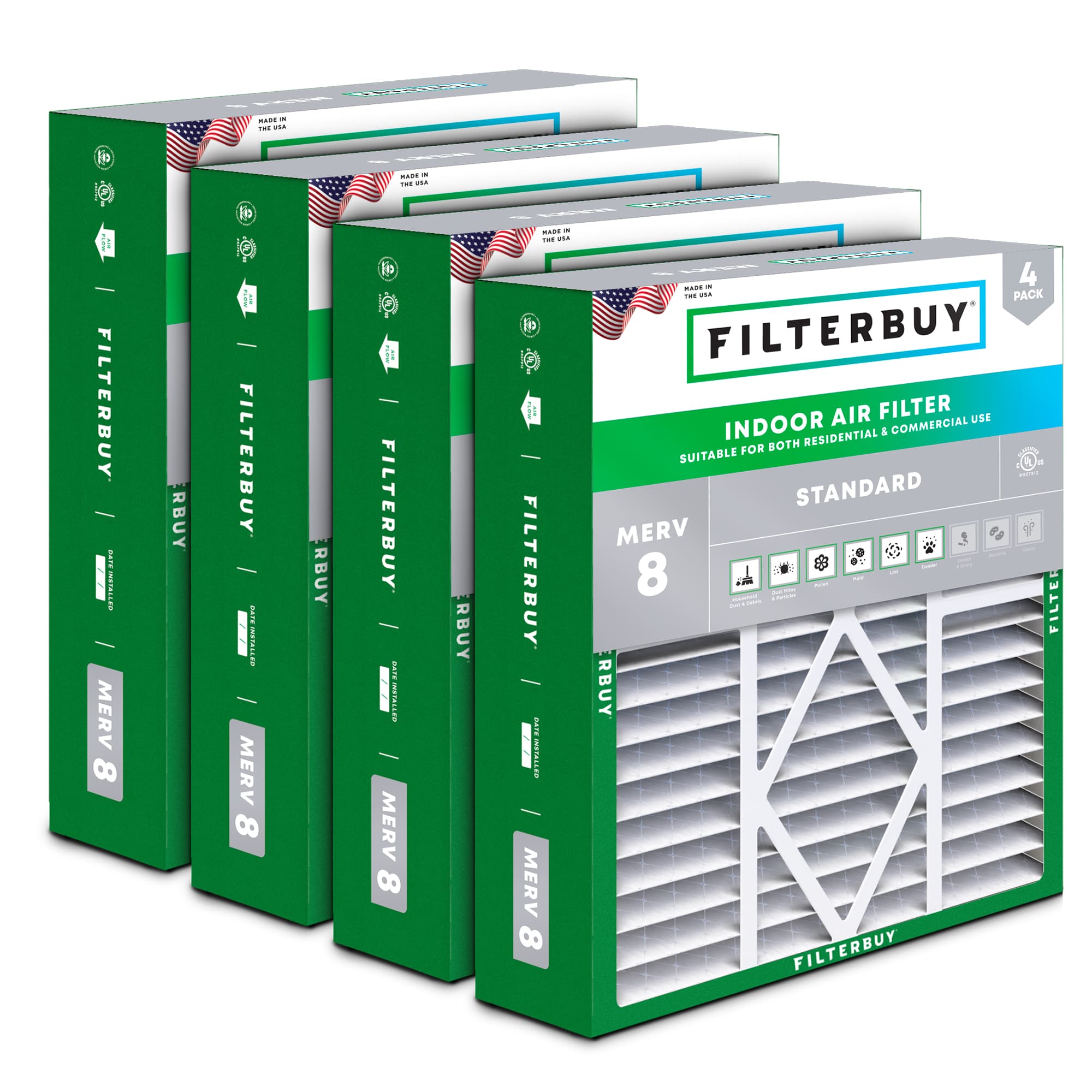
Tip: Ensure you buy the exact air filter size for your system. Certain brands have precise dimensions that only fit their specific models. See related filters
Actual Size: 22.13x24x5.25"
 Free Delivery
  Factory-Direct Low Prices, Made in the USA
 Hassle-Free Returns & Free Exchanges
RESIDENTIAL AND/OR COMMERCIAL USE
Change Every 3 Months
Tip: Ensure you buy the exact air filter size for your system. Certain brands have precise dimensions that only fit their specific models. See related filters
Actual Size: 22.13x24x5.25"
Free Delivery Factory-Direct Low Prices, Made in the USAHassle-Free Returns & Free ExchangesRESIDENTIAL AND/OR COMMERCIAL USE
Change Every 3 Months
Tip: Ensure you buy the exact air filter size for your system. Certain brands have precise dimensions that only fit their specific models. See related filters
Actual Size: 22.13x24x5.25"
Free Delivery Factory-Direct Low Prices, Made in the USAHassle-Free Returns & Free ExchangesRESIDENTIAL AND/OR COMMERCIAL USE
Change Every 3 Months
At Filterbuy, we don't cut corners—we craft high-quality air filters right here in the USA and ship them to your doorstep for free. No delays, no gimmicks—just clean air, made easy. With thousands of five-star reviews and filters built for real life & every HVAC system, it's no wonder why over 4 million families trust Filterbuy.

Proudly Made In The USA

Fast, Free Shipping on Every Order

Premium Materials That Go The Distance

85,000+ 5-Star Reviews From Happy Customers

Save Up to 70% Per Filter with Packs


Measure length × width × depth with a tape measure to find the actual size.

Round up each dimension to the nearest whole number to get the nominal size. Example: 22.13x24x5.25" in → 22X24X5 nominal.

Search by nominal size on our site for the best fit.


5″ filters give you maximum filtration with minimal maintenance — lasting up to 12 months while handling higher MERV ratings without restricting airflow.
Sizing note:

If the filter you buy doesn't fit, we'll send you a better size.
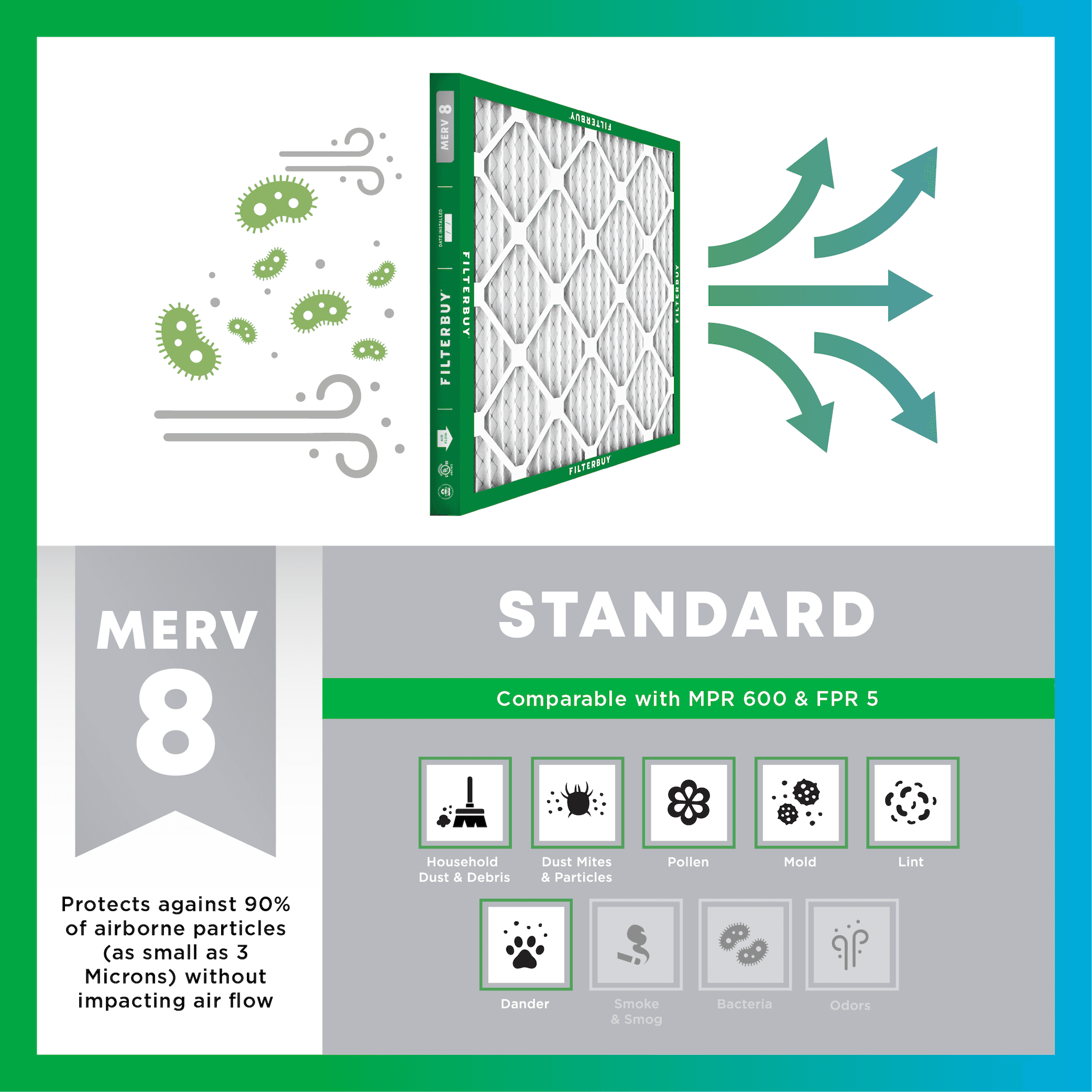
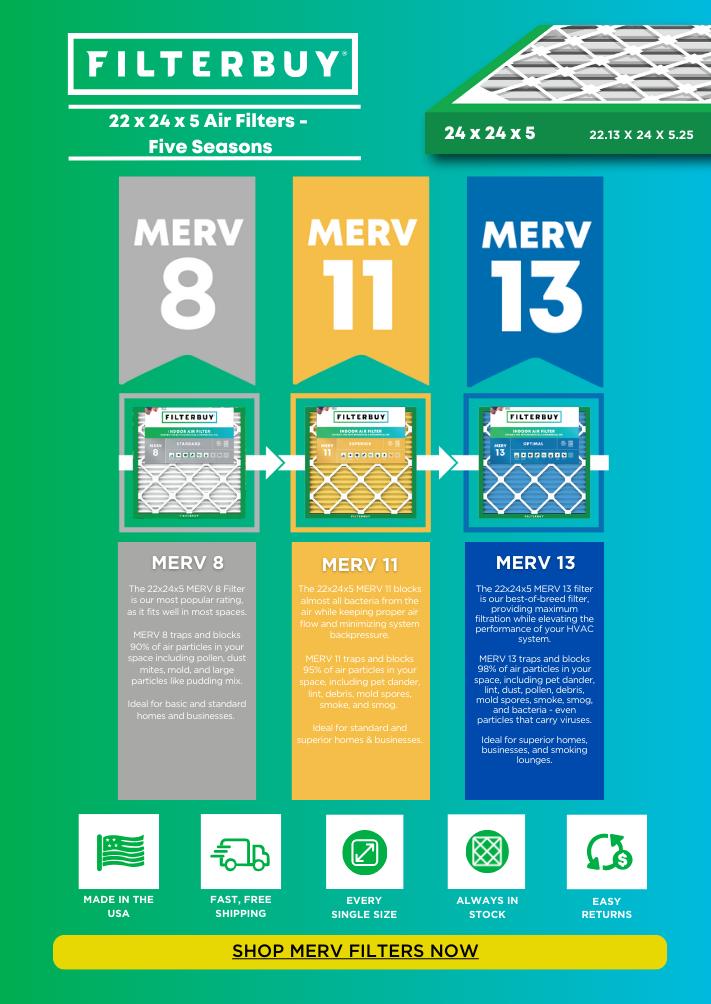
MERV stands for Minimum Efficiency Reporting Value—but don't let the technical name fool you. It's just a way to rate how well an air filter traps stuff like dust, pollen, pet dander, and smoke. The higher the MERV number, the more particles it catches—and the cleaner your air will be.

Comparable to:FPR: 4-7
MPR: 600-1000
 Dust & Debris
 Dust Mites & Particles
 Pollen
 Mold
Mold Lint
Lint Dander
Comparable to:FPR: 6-9
MPR: 1200-1550
Dust & DebrisDust Mites & ParticlesPollenMoldLintDander Smoke & Smog
Comparable to:FPR: 10
MPR: 1900-2800
Dust & DebrisDust Mites & ParticlesPollenMoldLintDanderSmoke & Smog Bacteria


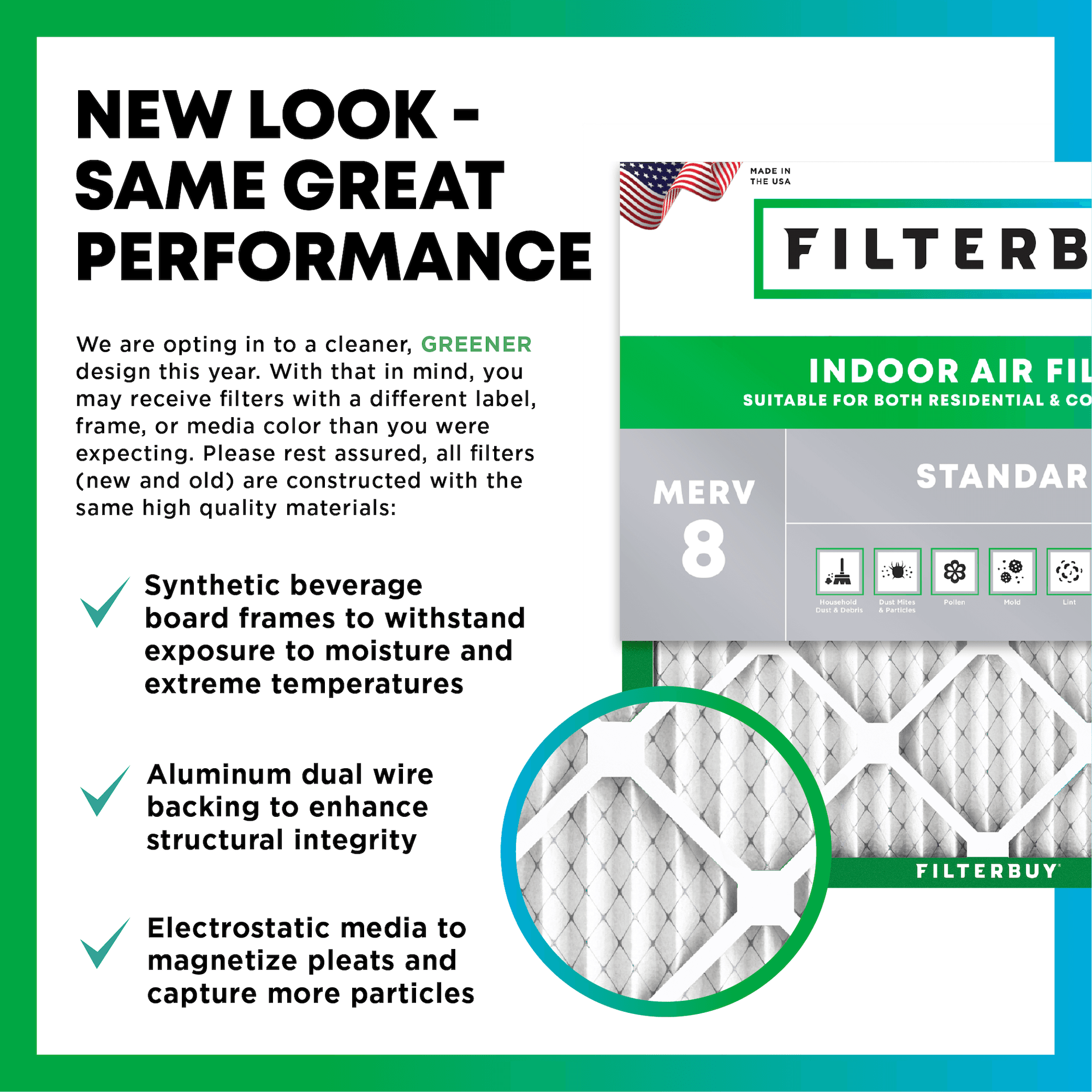
We build every Filterbuy filter to deliver reliable 90-day performance—thanks to smart design and premium materials that do the heavy lifting. Here's what makes the difference:
More pleats = more surface area to capture dust and debris, keeping your air cleaner longer.
Pleats are magnetized to attract and trap microscopic particles—like pet dander, pollen, and smoke.
Engineered to resist warping in extreme temperatures and high humidity.

A layer of metal reinforcement keeps pleats evenly spaced and structurally sound—no sagging, even at high airflow.
Assembled with care. Built to perform. Ships fast, free, and reliably from our U.S. facilities.

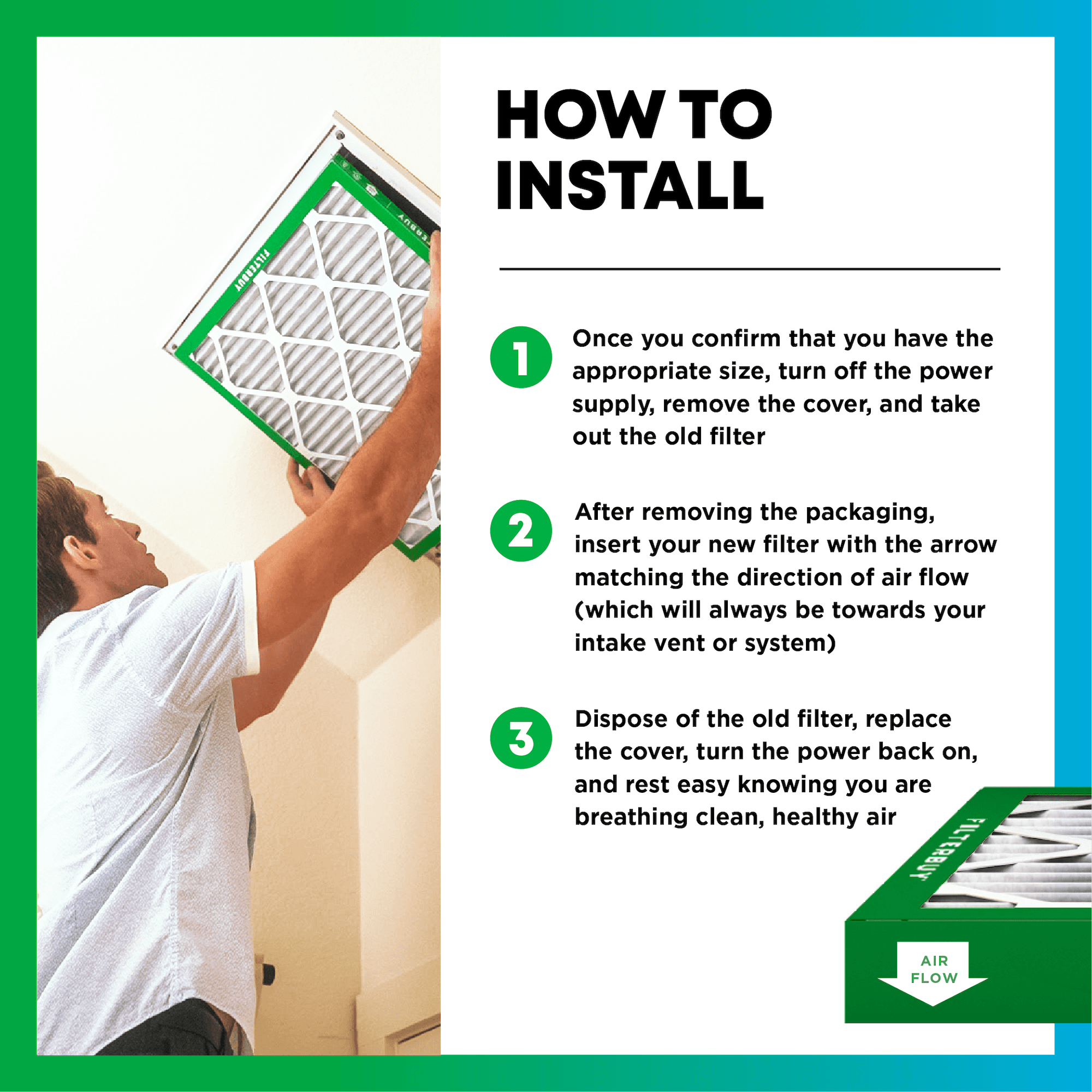
Turn Off Your HVAC SystemSafety first.

Remove The Old FilterLook for the airflow arrow and make note of the direction.

Slide In Your New FilterArrow should point toward the system (same direction as before).

Turn Your System Back OnAnd enjoy the fresh, clean air.

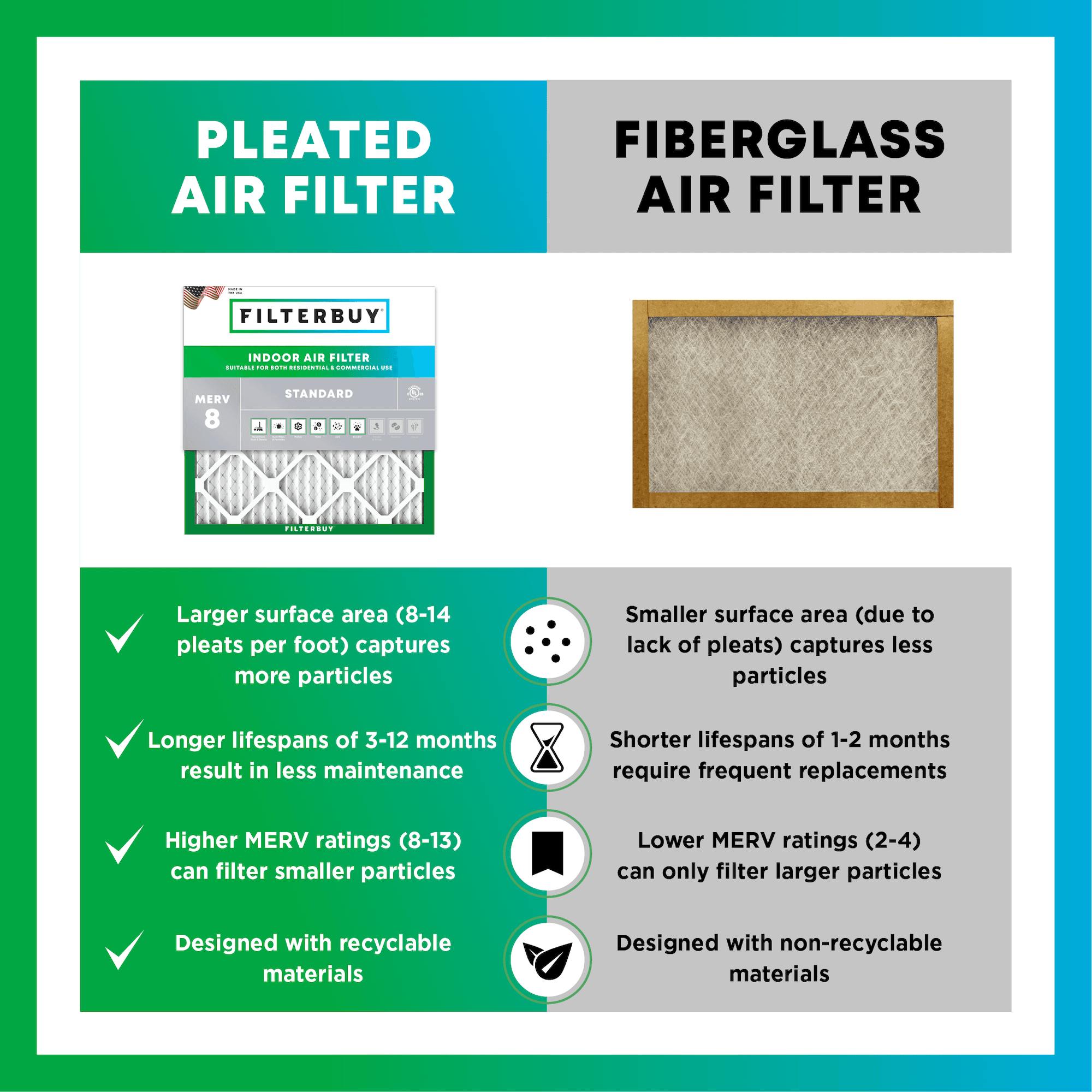
Not all air filters are created equal. Pleated filters don't just last longer—they actually clean your air better. Here's how they stack up:

Efficiency:
High (MERV 8–13) – Traps more particles
Lifespan:
90 days – Long-lasting performance
Air Quality:
Excellent – Cleaner, healthier air
Materials:
Recyclable and durable

Efficiency:
Low (MERV 4 or less) – Misses small stuff
Lifespan:
30 days or less – Replace often
Air Quality:
Minimal – Basic protection only
Materials:
Thin, flimsy, and not recyclable
Pleated filters are a no-brainer—more protection, less hassle, and better air for your home.
Changing your filter on time keeps your HVAC system running efficiently—and helps protect your lungs from dust, allergens, and airborne irritants. Here's how often to swap it out based on your needs:

For most homes without pets or special air quality concerns. Great for general upkeep and energy efficiency.

Shedding fur, dander, and allergy triggers can build up fast. Changing your filter every two months helps keep the air fresher and symptoms at bay.

For households affected by smoke, pollution, or respiratory conditions, monthly changes ensure maximum protection.

| Nominal Size | 22X24X5 |
| Actual Size | 22.13 x 24 x 5.25" inches |
| Filter Type | Pleated |
| Media | Electrostatically Charged |
| Frame | Beverage Board |
| MERV Ratings Available | 8, 11, 13 |
| Lifespan | Up to 12 Months |
| Origin | Made in USA |
Most homeowners don't think about their air filter until something goes wrong. After manufacturing filters for over a decade and helping more than two million households breathe easier, we've learned that the MERV 8 rating isn't a compromise — it's a deliberate sweet spot. It captures the everyday particles that quietly degrade your home's air quality and HVAC efficiency without creating the airflow restriction that higher-rated filters can impose on standard residential systems.
The Filterbuy MERV 8 22x24x5 Five Seasons air filter is built for consistent, year-round performance in homes that need reliable protection across every season — from spring pollen loads to winter dust buildup. This page covers what MERV 8 filtration captures, how to confirm the 22x24x5 size fits your system, and how to get the most out of every filter change.
The Filterbuy MERV 8 22x24x5 Five Seasons air filter is a 5-inch deep-media pleated air filter engineered for year-round whole-home filtration in residential HVAC systems with a dedicated 5-inch filter cabinet.
Key facts at a glance:
MERV 8 rating — captures particles as small as 3 microns, including dust, pollen, mold spores, and pet dander.
22x24x5 nominal size — actual dimensions are 21.5 x 23.5 x 4.375 inches.
5-inch media depth — provides greater surface area, longer filter life, and consistent airflow restriction compared to standard 1-inch filters.
Five Seasons performance — engineered to handle spring pollen, summer mold spores, fall dust, winter indoor pollutants, and the heating-to-cooling transition period.
Replacement interval — every 6 to 12 months depending on household conditions.
Best for — standard residential homes without severe respiratory conditions that need reliable, consistent everyday air filtration without straining their HVAC system.
After manufacturing filters for over a decade and serving more than two million households, the MERV 8 22x24x5 Five Seasons filter represents the reliable everyday choice for homeowners who want whole-home protection across every season — little effort, big impact.
MERV 8 is a deliberate engineering choice, not a compromise. Consistent, appropriate filtration outperforms aggressive filtration in most residential systems. At 5-inch depth, it captures dust, pollen, mold spores, and pet dander — without the airflow restriction that strains standard HVAC equipment.
Filter depth changes the performance equation. The 5-inch media bed maintains consistent efficiency across the entire replacement cycle — not just at the start. Thin filters load quickly and create pressure spikes. This one doesn't.
Size accuracy matters more than most homeowners realize. A filter that doesn't seat flush allows unfiltered air to bypass the media entirely. Always measure your cabinet opening before ordering. Confirm actual dimensions — not just the nominal size.
Replacement schedule is the variable most homeowners underestimate. A loaded filter stops cleaning the air and actively increases static pressure. The result: higher energy costs and accelerated wear on your blower motor. Set your replacement reminder the same day you install.
MERV 8 is federally recognized as the minimum standard for occupant protection. Both the EPA's Indoor airPLUS program and the DOE's Zero Energy Ready Home program require MERV 8 or higher in certified homes — the threshold where filtration transitions from protecting equipment to protecting people.
The MERV scale runs from 1 to 20. Most standard fiberglass filters fall between MERV 1 and MERV 4 — they protect the HVAC equipment but do very little for the air you breathe. MERV 8 is where meaningful residential filtration begins. At this rating, a filter captures particles as small as 3 microns, including dust and dust mite debris, pollen, mold spores, lint, and pet dander. These are the particles that account for the vast majority of everyday indoor air quality complaints we hear from homeowners across the country.
What MERV 8 doesn't target — fine smoke particles, bacteria, and microscopic allergens — those fall into MERV 11 and MERV 13 territory. For households without severe allergy conditions or respiratory sensitivities, MERV 8 handles the everyday invisible load without asking more of your HVAC system than it's designed to give.
Filter thickness directly affects two things: how much media surface area is available to capture particles, and how long the filter can do that job before needing replacement. A standard 1-inch filter relies on a small amount of filtration media compressed into a thin frame. The 22x24x5 Five Seasons filter uses a 5-inch deep pleated design that dramatically expands that surface area.
In our experience manufacturing both 1-inch and 5-inch filters, the deeper media bed does more than extend filter life — it maintains consistent airflow restriction over a longer period. Thin filters can load up quickly and create resistance spikes that strain blower motors. The 5-inch depth absorbs particle accumulation more gradually, keeping your system running at the efficiency it was designed for across the full replacement cycle.
The "Five Seasons" designation isn't marketing language — it reflects how this filter performs across the distinct air quality challenges each season brings to a home.
Spring introduces heavy pollen loads from trees, grasses, and flowering plants.
Summer brings increased humidity, which elevates mold spore counts both indoors and outdoors.
Fall pushes leaf mold, ragweed pollen, and increased dust activity as homes close up.
Winter concentrates indoor air pollutants — dust, dander, and combustion byproducts — as ventilation drops.
The fifth season is the transition period between heating and cooling cycles, when HVAC systems shift modes and stir up settled debris in ducts and air handlers.
A MERV 8 filter at 5-inch depth handles all five of these load conditions without requiring mid-season replacements in most homes.
The 22x24x5 filter is most commonly used in high-capacity residential HVAC systems and whole-home media air cleaners with a dedicated 5-inch filter cabinet. These cabinets are often installed on the return air side of the air handler and are specifically designed to hold deep-media filters.
Before ordering, measure the actual opening of your filter cabinet — not the existing filter. Nominal sizes and actual sizes are not always identical, and a filter that doesn't seat properly will allow unfiltered air to bypass the media entirely. The Filterbuy 22x24x5 has a precise actual size of 21.5 x 23.5 x 4.375 inches, which is engineered to seat snugly in standard 22x24x5 cabinets without gaps.
Because of the 5-inch media depth, this filter typically lasts significantly longer than standard 1-inch replacements. For most households, a replacement interval of every 6 to 12 months is appropriate. Homes with pets, high dust activity, or multiple occupants should lean toward the 6-month end. Lightly occupied homes or vacation properties can often reach the full 12 months before replacement is needed.
After serving more than two million households, the most consistent mistake we see isn't choosing the wrong MERV rating — it's forgetting to change the filter on schedule. A loaded filter doesn't just fail to clean the air. It actively increases static pressure across your system, reducing airflow, raising energy costs, and accelerating wear on the blower motor and heat exchanger.
"After manufacturing filters for over a decade and working with more than two million households, the pattern is clear: a MERV 8 filter at 5-inch depth isn't a middle-ground choice — it's the right engineering decision for the vast majority of residential systems, delivering consistent particle capture across every season without the airflow penalties that push undersized or over-rated filters into early failure."
Don't take your indoor air for granted — and don't take our word for it alone. After manufacturing filters for over a decade and serving more than two million households, we've learned that the most confident Filterbuy customers are the ones who come in informed. These are the seven resources we point to most often when homeowners want to go deeper on MERV ratings, filter sizing, HVAC compatibility, and the real science behind what's floating through their home's air.
Most homeowners have seen the term MERV on an air filter package but have never been given a straight answer about what it actually means for their home. The EPA's official MERV rating resource closes that gap — explaining exactly how filtration efficiency is measured, what each rating level captures, and why the number on the label matters for the air your family breathes every day.
Source: What Is a MERV Rating? — U.S. Environmental Protection Agency
URL: https://www.epa.gov/indoor-air-quality-iaq/what-merv-rating
Filter thickness, fit, sizing, and replacement timing aren't guesswork — they're decisions with real consequences for your HVAC system and your indoor air quality. The EPA's consumer guide to air cleaners covers all of it in plain language, giving you the grounded, authoritative framework to make the right call for your home.
Source: Guide to Air Cleaners in the Home — U.S. Environmental Protection Agency
URL: https://www.epa.gov/indoor-air-quality-iaq/guide-air-cleaners-home
One of the most common questions we hear from homeowners is whether a portable air purifier can do the same job as an upgraded HVAC filter. The answer is no — and this EPA resource explains exactly why. Understanding what whole-home in-duct filtration does that a room purifier cannot is the first step toward protecting every room in your home, not just one.
Source: Air Cleaners and Air Filters in the Home — U.S. Environmental Protection Agency
URL: https://www.epa.gov/indoor-air-quality-iaq/air-cleaners-and-air-filters-home
Here's something most filter shoppers don't know: the EPA's Indoor airPLUS program requires a minimum of MERV 8 filtration in certified residential homes — not because it's average, but because it's the threshold where meaningful air protection begins. This technical bulletin also explains how filter depth and static pressure interact with your HVAC system's blower motor, which is directly relevant to the performance of a 5-inch deep-media filter.
Source: Indoor airPLUS Filtration Technical Bulletin — U.S. Environmental Protection Agency
URL: https://www.epa.gov/sites/default/files/2020-06/documents/2019.11_tech_bulletin_filtration.pdf
For homeowners who want the full picture — filter media types, efficiency metrics, HVAC system compatibility, and the health research behind filtration upgrades — this is the most comprehensive government reference available. In our experience, this is the resource that turns cautious shoppers into confident ones.
Source: Residential Air Cleaners: A Technical Summary (3rd Edition) — U.S. Environmental Protection Agency
Not all filters rated MERV 8 perform the same — and filter depth is one of the biggest reasons why. This U.S. Department of Energy resource guide explains the relationship between filter thickness, pressure drop, and airflow restriction, making it an essential read for any homeowner choosing between a standard 1-inch replacement and a 5-inch deep-media filter like the 22x24x5 Five Seasons.
Source: High-MERV Filters Resource Guide — Building America Solution Center, U.S. Department of Energy
URL: https://basc.pnnl.gov/resource-guides/high-merv-filters
Protecting your family's health is exactly why you're here — and the American Lung Association makes the connection between MERV ratings and respiratory outcomes clearer than any product page can. This resource is especially valuable for households managing allergies, asthma, or sensitivities to airborne particles, where the right filter decision can make a measurable difference in daily quality of life.
Source: Air Cleaning — American Lung Association
URL: https://www.lung.org/clean-air/indoor-air/protecting-from-air-pollution/air-cleaning
The invisible particles cycling through your home's air aren't a theory — they're a documented public health reality. Here's what the research shows, and why it shapes every filter we manufacture.
Americans spend approximately 90% of their time indoors, where some pollutant concentrations run 2 to 5 times higher than outdoors — per decades of EPA research. After manufacturing filters for over a decade and working with more than two million households, this statistic rarely surprises us. It almost always surprises homeowners.
What that means in practice:
The air quality problem most families assume is an outdoor concern is already circulating inside.
It moves through the same ductwork, vents, and rooms where families sleep and eat.
A properly rated MERV 8 filter, changed on schedule, is one of the most accessible tools a homeowner has to manage that invisible daily load.
Source: Indoor Air Quality — U.S. Environmental Protection Agency
URL: https://www.epa.gov/report-environment/indoor-air-quality
The CDC reports 1.4 million emergency department visits annually with asthma as a primary diagnosis. What that number doesn't show is what's driving those visits at the household level — and that's where our manufacturing experience becomes relevant.
The particles most responsible for indoor asthma triggers:
Dust mite debris
Mold spores
Pet dander
All three sit squarely within the MERV 8 capture range. After serving millions of households across every climate and season, we've seen what a consistent reduction in everyday particle load can do for families managing respiratory sensitivities.
Source: FastStats: Asthma — Centers for Disease Control and Prevention
URL: https://www.cdc.gov/nchs/fastats/asthma.htm
Both the EPA's Indoor airPLUS program and the U.S. Department of Energy's Zero Energy Ready Home program require a minimum of MERV 8 filtration in certified residential homes. That federal threshold marks the point where filtration transitions from equipment protection to meaningful occupant health protection.
What sets the Filterbuy MERV 8 22x24x5 apart:
Built to sustain certified MERV 8 performance across a full replacement cycle — not just day one.
5-inch media depth maintains consistent filtration under real household conditions.
Engineered to perform through every seasonal air quality shift a home encounters.
The difference isn't just meeting a rating. It's earning it every day until replacement.
Source: High-MERV Filters Resource Guide — Building America Solution Center, U.S. Department of Energy
URL: https://basc.pnnl.gov/resource-guides/high-merv-filters
Most homeowners treat air filter selection as a maintenance task — something to check off the list without much deliberation. After manufacturing filters for over a decade and working with more than two million households, we see it differently. The filter in your HVAC system is the only mechanical line of defense between your family and the invisible particle load building up in your home every single day.
Here's our honest take: this is the filter we'd put in our own homes for everyday protection. Not because it's the highest-rated option we manufacture — it isn't. But because consistent, appropriate filtration outperforms aggressive filtration every time.
A MERV 13 filter in a system not engineered for its static pressure doesn't protect anyone.
A MERV 8 filter at 5-inch media depth, seated properly and changed on schedule, does exactly what it's designed to do — season after season.
The right rating for your system matters more than the highest rating available.
Filter depth determines how long protection holds — not just how strong it starts.
Replacement schedule is the variable most homeowners underestimate and most HVAC systems suffer for.
Every season brings a different air quality challenge. A filter built for year-round performance is engineered to meet all of them.
The MERV 8 22x24x5 Five Seasons filter won't make the invisible visible in a dramatic way. You won't feel it working. That's exactly the point — and after more than a decade in this business, we've learned that quiet, consistent protection is what a home's air quality needs most.
You've done the research. Here's exactly what to do next — in the right order, with no guesswork.
Measure the actual cabinet opening — not the existing filter. Nominal and actual sizes are not always identical. A filter that doesn't seat flush allows unfiltered air to bypass the media completely.
Check these three things before ordering:
Cabinet opening width, height, and depth.
That your system uses a dedicated 5-inch media cabinet on the return air side.
Actual size of the Filterbuy 22x24x5: 21.5 x 23.5 x 4.375 inches.
MERV 8 is the right everyday choice for most homes — but your specific situation matters.
MERV 8 is the right fit if your home has:
Standard dust, pollen, lint, and pet dander as primary air quality concerns.
A standard residential HVAC system without a high-efficiency filtration upgrade.
No occupants with severe asthma or acute respiratory conditions.
Consider MERV 11 or MERV 13 if your home has:
Occupants with diagnosed respiratory conditions or severe allergies.
Multiple pets or high dander loads.
Elevated sensitivity to fine particles or smoke.
Once you've confirmed your size and rating, ordering is straightforward. Every Filterbuy filter is manufactured to order at our U.S. facilities — not pulled from warehouse stock that's been sitting for months.
Pro tip from our manufacturing floor:
Order a multi-pack.
Having your next filter on hand eliminates the most common reason homeowners miss their replacement window.
A properly installed filter matters as much as the filter itself.
Follow these steps on installation day:
Power down your HVAC system before opening the filter cabinet.
Note the airflow direction arrow — it must point toward the air handler.
Slide the filter in until its seats flush on all four sides with no visible gaps.
Close and latch the cabinet door completely. An unsealed cabinet is one of the most common sources of filtration bypass we see in the field.
Restore power and run a full cycle to confirm normal airflow.
The most valuable thing you can do after installing a new filter is schedule its replacement before you forget.
Recommended replacement intervals:
Every 6 months — homes with pets, multiple occupants, or elevated dust activity.
Every 9 months — average households with standard air quality conditions.
Every 12 months — lightly occupied homes or vacation properties.
Don't wait for reduced airflow or higher energy bills to signal a loaded filter. By that point, the static pressure increase has already been working against your blower motor for weeks. Set the reminder today — little effort, big impact.
A: The Five Seasons designation reflects the five distinct air quality challenges a home encounters each year. After manufacturing filters for over a decade, we built this filter around one core observation: particle load changes significantly across every seasonal phase.
The five seasonal air quality challenges this filter is engineered for:
Spring — heavy pollen loads from trees, grasses, and flowering plants.
Summer — elevated mold spore counts driven by humidity.
Fall — ragweed, leaf mold, and dust redistributed as homes close for the season.
Winter — concentrated indoor pollutants as ventilation drops.
The fifth season — the heating-to-cooling transition period, when HVAC systems shift modes and redistribute settled debris through ductwork.
The 5-inch deep-media design absorbs all five load conditions without losing efficiency mid-cycle.
A: Both filters carry the same MERV 8 rating. But that rating measures particle capture efficiency — not how long that efficiency holds or how hard your system works to maintain it.
The key differences from our manufacturing experience:
A 1-inch filter exhausts its load capacity quickly. Resistance spikes stress blower motors before most homeowners notice the filter needs changing.
The 22x24x5 Five Seasons filter uses a 5-inch pleated media bed. It absorbs particle accumulation gradually.
The result: consistent airflow restriction and filtration performance across the full replacement cycle — not just the first few weeks.
Same rating. Fundamentally different performance over time.
A: Serving more than two million households has given us a clear picture of what cycles through residential air. MERV 8 captures particles as small as 3 microns — the particles that matter most in everyday household conditions.
Particles this filter captures:
Dust and dust mite debris
Pollen from trees, grasses, and flowering plants
Mold spores
Pet dander
Lint and textile fibers
Carpet and fabric particles
What MERV 8 does not capture:
Fine smoke particles
Bacteria
Sub-micron allergens below 1 micron
Those require MERV 11 or MERV 13 filtration. In our experience, the households that genuinely need a higher rating are those managing diagnosed respiratory conditions or acute sensitivities. For most homes, MERV 8 handles the everyday invisible particle load without over-restricting standard residential HVAC systems.
A: The most consistent pattern we see across two million households isn't the wrong filter choice — it's the right filter left in too long.
Recommended replacement intervals:
Every 6 months — homes with pets, multiple occupants, or elevated dust activity.
Every 9 months — average households with standard air quality conditions.
Every 12 months — lightly occupied homes or vacation properties.
What happens when a filter runs past its replacement window:
Filtration efficiency drops as media becomes saturated.
Static pressure increases across the system.
Energy costs rise.
Blower motor wear accelerates.
The single most protective step after installation: set your replacement reminder before you close the cabinet door.
A: Filter sizing mistakes fall into two categories — ordering the wrong nominal size, and assuming nominal size matches actual size. Both cause the same problem: an unseated filter that allows unfiltered air to bypass the media entirely.
Where the 22x24x5 is most commonly used:
High-capacity residential HVAC systems.
Whole-home media air cleaners with a dedicated 5-inch filter cabinet.
Return air side of the air handler.
How to confirm the right size before ordering:
Measure your cabinet opening directly — not the old filter.
Compare your measurement to the Filterbuy 22x24x5 actual dimensions: 21.5 x 23.5 x 4.375 inches.
Confirm your system uses a dedicated 5-inch media cabinet — check your air handler documentation or consult your HVAC technician.
Precision fit matters. A filter seated flush on all four sides with no gaps is the only filter doing its job.
Your family deserves consistent, whole-home protection across every season — and the right filter makes it simple. Order the Filterbuy MERV 8 22x24x5 Five Seasons air filter today and take the most important step toward better indoor air quality your home will never let you see, but your family will always breathe.

