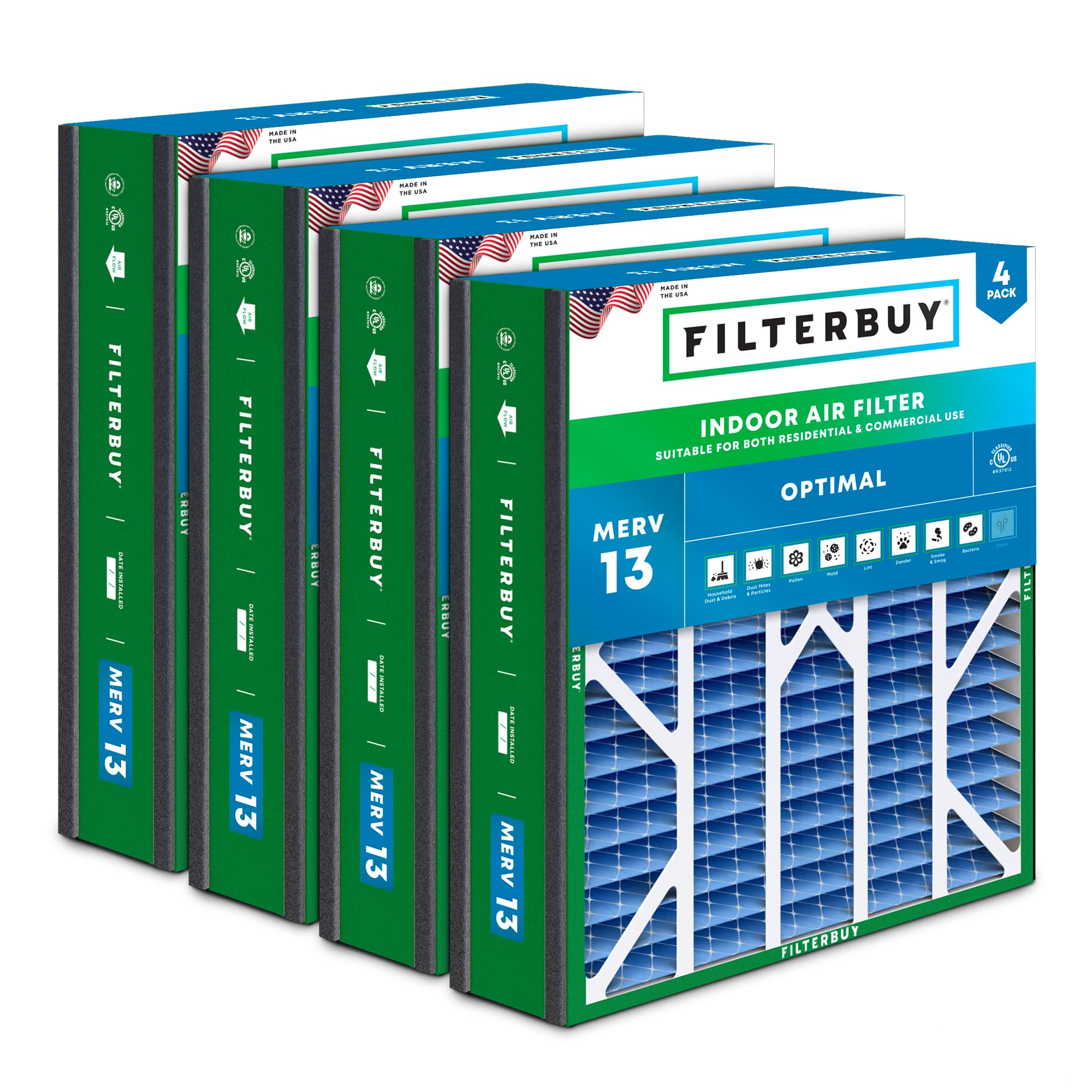
Tip: Ensure you buy the exact air filter size for your system. Certain brands have precise dimensions that only fit their specific models. See related filters
Actual Size: 20.75x20.25x4.88"
 Free Delivery
  Factory-Direct Low Prices, Made in the USA
 Hassle-Free Returns & Free Exchanges
RESIDENTIAL AND/OR COMMERCIAL USE
Change Every 3 Months
Tip: Ensure you buy the exact air filter size for your system. Certain brands have precise dimensions that only fit their specific models. See related filters
Actual Size: 20.75x20.25x4.88"
Free Delivery Factory-Direct Low Prices, Made in the USAHassle-Free Returns & Free ExchangesRESIDENTIAL AND/OR COMMERCIAL USE
Change Every 3 Months
Tip: Ensure you buy the exact air filter size for your system. Certain brands have precise dimensions that only fit their specific models. See related filters
Actual Size: 20.75x20.25x4.88"
Free Delivery Factory-Direct Low Prices, Made in the USAHassle-Free Returns & Free ExchangesRESIDENTIAL AND/OR COMMERCIAL USE
Change Every 3 Months
At Filterbuy, we don't cut corners—we craft high-quality air filters right here in the USA and ship them to your doorstep for free. No delays, no gimmicks—just clean air, made easy. With thousands of five-star reviews and filters built for real life & every HVAC system, it's no wonder why over 4 million families trust Filterbuy.

Proudly Made In The USA

Fast, Free Shipping on Every Order

Premium Materials That Go The Distance

85,000+ 5-Star Reviews From Happy Customers

Save Up to 70% Per Filter with Packs


Measure length × width × depth with a tape measure to find the actual size.

Round up each dimension to the nearest whole number to get the nominal size. Example: 20.75x20.25x4.88" in → 20X20X5 nominal.

Search by nominal size on our site for the best fit.


5″ filters give you maximum filtration with minimal maintenance — lasting up to 12 months while handling higher MERV ratings without restricting airflow.
Sizing note:

If the filter you buy doesn't fit, we'll send you a better size.
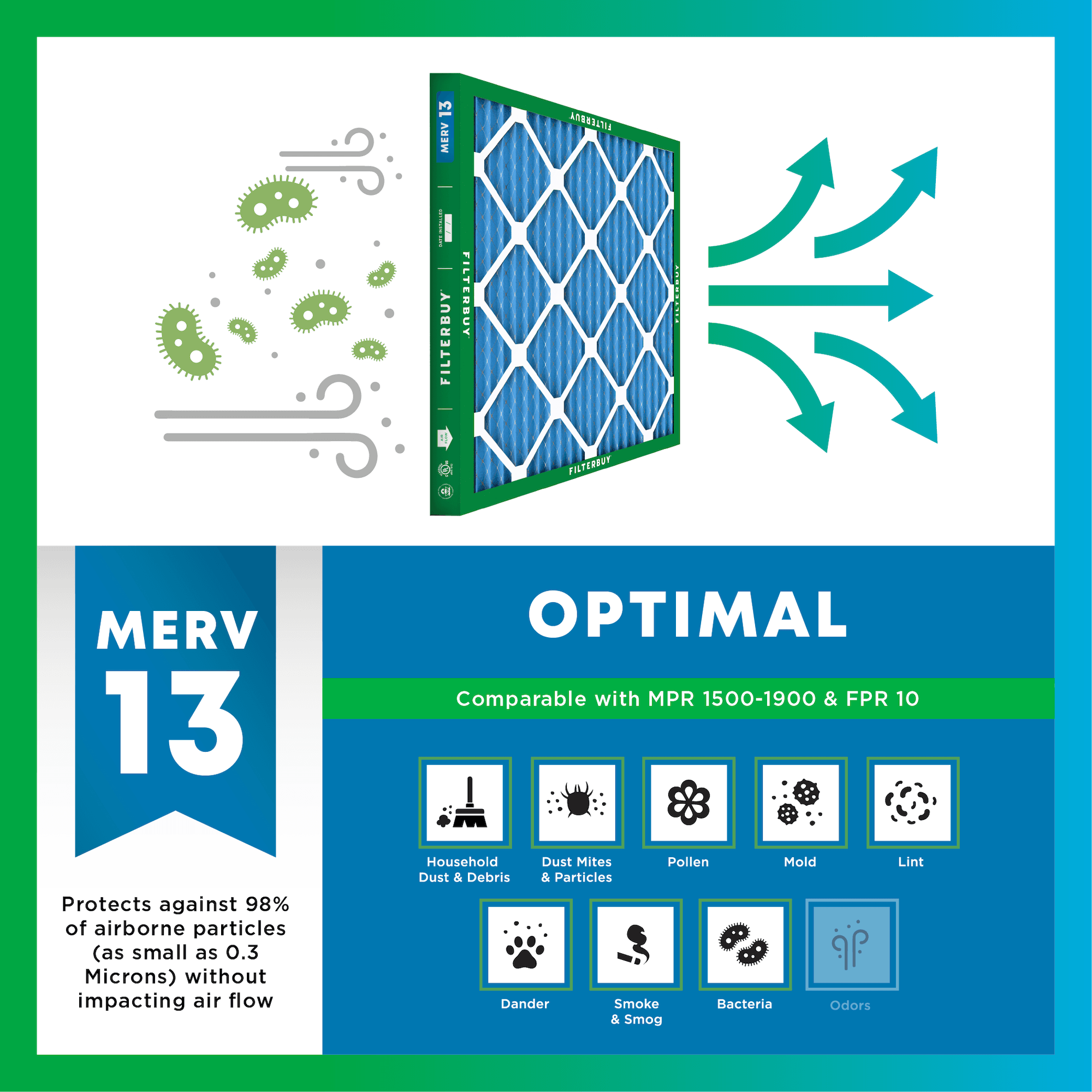
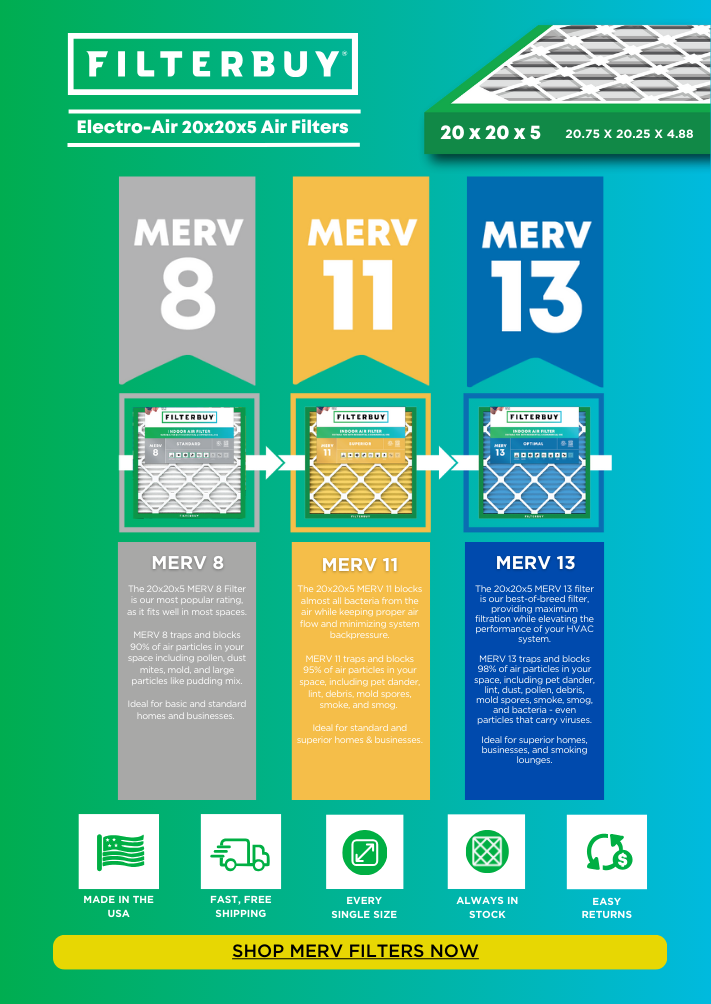
MERV stands for Minimum Efficiency Reporting Value—but don't let the technical name fool you. It's just a way to rate how well an air filter traps stuff like dust, pollen, pet dander, and smoke. The higher the MERV number, the more particles it catches—and the cleaner your air will be.

Comparable to:FPR: 4-7
MPR: 600-1000
 Dust & Debris
 Dust Mites & Particles
 Pollen
 Mold
Mold Lint
Lint Dander
Comparable to:FPR: 6-9
MPR: 1200-1550
Dust & DebrisDust Mites & ParticlesPollenMoldLintDander Smoke & Smog
Comparable to:FPR: 10
MPR: 1900-2800
Dust & DebrisDust Mites & ParticlesPollenMoldLintDanderSmoke & Smog Bacteria


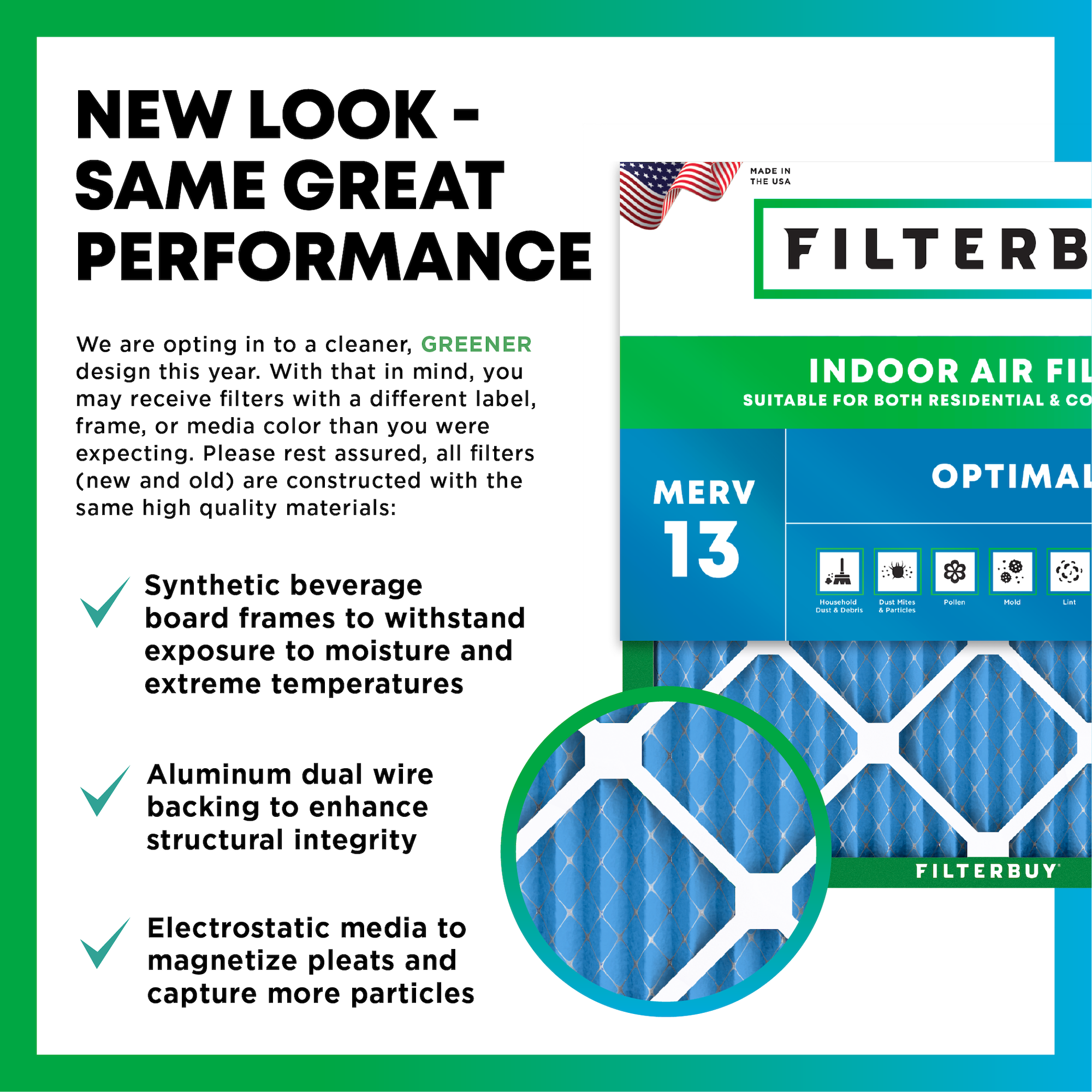
We build every Filterbuy filter to deliver reliable 90-day performance—thanks to smart design and premium materials that do the heavy lifting. Here's what makes the difference:
More pleats = more surface area to capture dust and debris, keeping your air cleaner longer.
Pleats are magnetized to attract and trap microscopic particles—like pet dander, pollen, and smoke.
Engineered to resist warping in extreme temperatures and high humidity.

A layer of metal reinforcement keeps pleats evenly spaced and structurally sound—no sagging, even at high airflow.
Assembled with care. Built to perform. Ships fast, free, and reliably from our U.S. facilities.

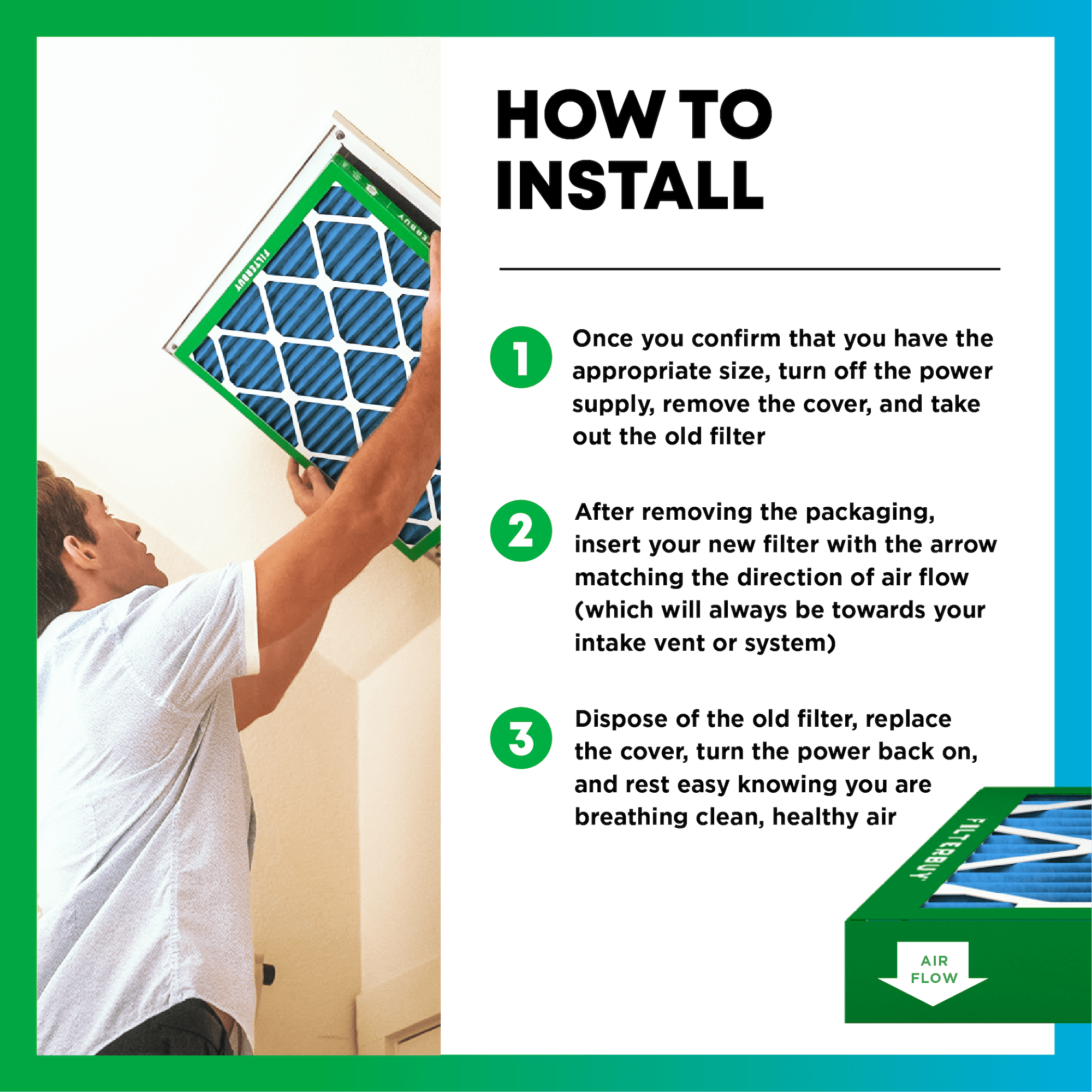
Turn Off Your HVAC SystemSafety first.

Remove The Old FilterLook for the airflow arrow and make note of the direction.

Slide In Your New FilterArrow should point toward the system (same direction as before).

Turn Your System Back OnAnd enjoy the fresh, clean air.

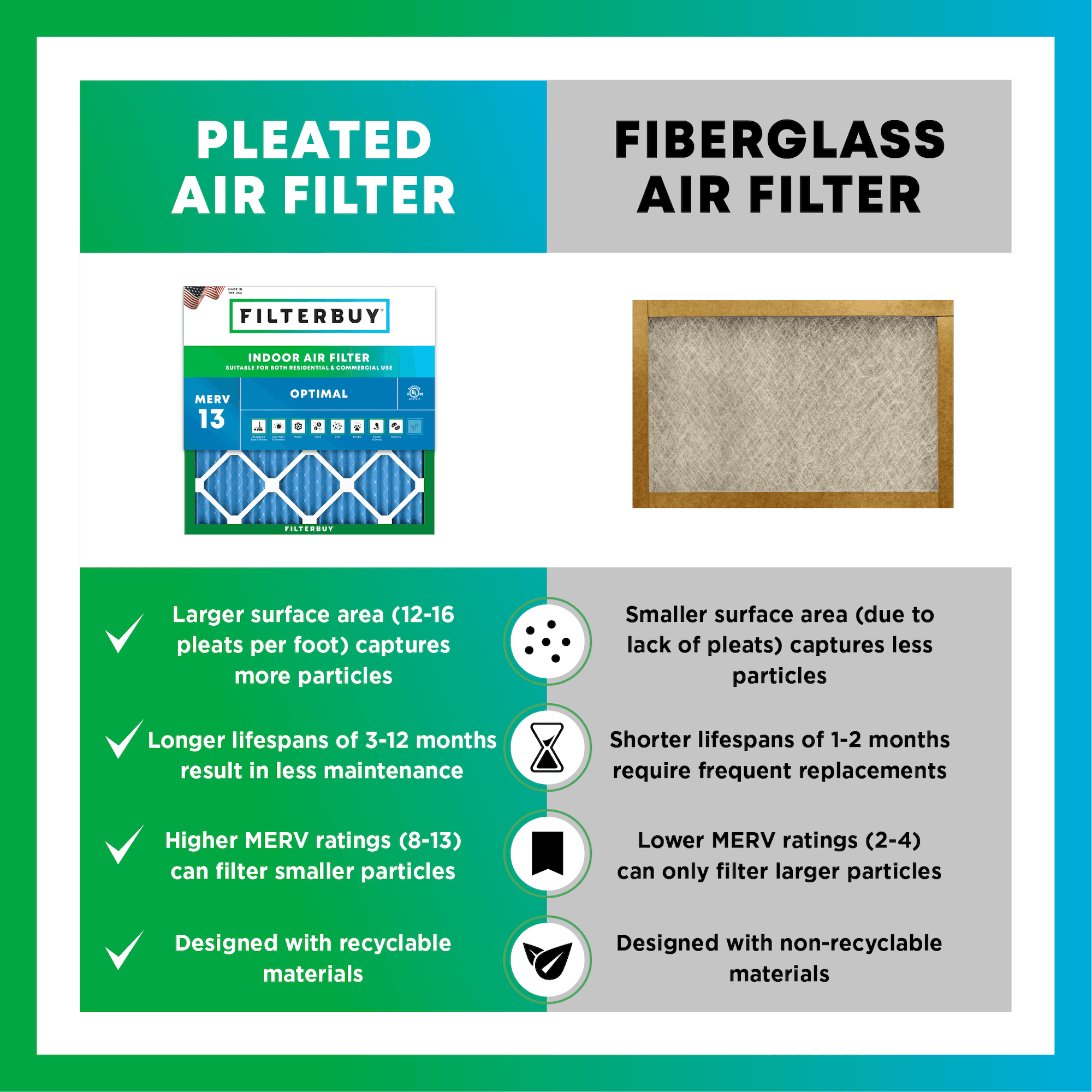
Not all air filters are created equal. Pleated filters don't just last longer—they actually clean your air better. Here's how they stack up:

Efficiency:
High (MERV 8–13) – Traps more particles
Lifespan:
90 days – Long-lasting performance
Air Quality:
Excellent – Cleaner, healthier air
Materials:
Recyclable and durable

Efficiency:
Low (MERV 4 or less) – Misses small stuff
Lifespan:
30 days or less – Replace often
Air Quality:
Minimal – Basic protection only
Materials:
Thin, flimsy, and not recyclable
Pleated filters are a no-brainer—more protection, less hassle, and better air for your home.
Changing your filter on time keeps your HVAC system running efficiently—and helps protect your lungs from dust, allergens, and airborne irritants. Here's how often to swap it out based on your needs:

For most homes without pets or special air quality concerns. Great for general upkeep and energy efficiency.

Shedding fur, dander, and allergy triggers can build up fast. Changing your filter every two months helps keep the air fresher and symptoms at bay.

For households affected by smoke, pollution, or respiratory conditions, monthly changes ensure maximum protection.

| Nominal Size | 20X20X5 |
| Actual Size | 20.75 x 20.25 x 4.88" inches |
| Filter Type | Pleated |
| Media | Electrostatically Charged |
| Frame | Beverage Board |
| MERV Ratings Available | 8, 11, 13 |
| Lifespan | Up to 12 Months |
| Origin | Made in USA |
Most people don’t think much about their air filter until the house feels dusty, allergies start acting up, or the HVAC system seems to run harder than it should. That’s usually the moment this filter starts to make sense. The MERV 13 20x20x5 Electro-Air Air Filter gives homeowners a stronger layer of protection against the particles they actually care about, while still supporting the airflow a home comfort system needs.
At FilterBuy, we talk about air this way because we’ve seen how much a filter choice can change everyday comfort. Cleaner air is part of protecting your family, your home, and the system working behind the walls to keep both in good shape. That’s what makes this filter more than a routine replacement. It’s a practical upgrade for people who want healthier air without creating new problems for their HVAC system.
The MERV 13 20x20x5 Electro-Air Air Filter is designed to capture fine airborne particles like pollen, dust, pet dander, and mold spores while still allowing your HVAC system to maintain proper airflow.
In our experience, this type of filter works best for homeowners who want cleaner indoor air without putting extra strain on their system. The 5-inch depth gives it more surface area, so it can trap more particles and last longer than standard filters.
If you’re dealing with allergies, visible dust buildup, or inconsistent air quality, this filter is a strong step toward making your HVAC system do more than just heat and cool—it helps clean the air your family breathes every day.
• The MERV 13 20x20x5 Electro-Air Air Filter captures smaller airborne particles that often affect comfort and air quality most.
• Its 5-inch depth gives the filter more surface area, which helps support airflow and longer service life.
• It’s a smart fit for homes dealing with allergies, dust buildup, or a general drop in indoor air quality.
• A well-designed high-efficiency filter can help protect both the people in the home and the HVAC system serving it.
• For many homeowners, this kind of filter upgrade delivers a noticeable difference without requiring a major system change.
The MERV 13 20x20x5 Electro-Air Air Filter is built for homeowners who want better protection than a basic filter can offer. It targets the particles that tend to create the biggest frustrations indoors, including pollen, pet dander, mold spores, dust, and some airborne bacteria. That matters if your goal is not just to catch visible debris, but to improve the air your family actually breathes every day.
What helps this filter stand out is the 5-inch, deep-pleated design. More surface area gives the filter room to trap more particles without forcing the system to work against a tight, flat surface. In practice, that balance matters. We’ve seen homeowners focus only on filtration rating and forget that airflow still drives comfort, efficiency, and long-term HVAC performance. This filter aims to give you both.
It also helps turn your HVAC system into more of a whole-home air filtration setup instead of a system that only heats and cools. If dust settles too fast in your home, if allergy symptoms get worse indoors, or if airflow feels uneven from room to room, the filter often plays a bigger role than people expect. A stronger replacement can help correct that.
If allergies tend to flare up inside your home, your air filter is often part of the problem. A MERV 13 filter like this one is designed to catch smaller airborne particles that standard filters often miss. That includes pollen, pet dander, and fine dust that circulates through your HVAC system.
In homes we’ve worked with, the difference usually shows up in small ways first. Less dust settling on surfaces. Fewer sneezing fits in the morning. Air that feels cleaner even if you can’t quite see why. It’s not instant perfection, but it’s a noticeable step in the right direction for most households.
A lot of homeowners focus on the MERV rating and overlook the size of the filter itself. That 5-inch depth isn’t just a measurement—it changes how the filter performs. With more surface area, air can pass through more easily while still being filtered thoroughly.
We’ve seen systems struggle when a high-efficiency filter doesn’t have enough depth to support airflow. That’s where this design works in your favor. It gives you stronger filtration without forcing your system to work harder than it should. Over time, that balance can help maintain both comfort and system performance.
Most HVAC systems are built to heat and cool, not necessarily to clean the air. The filter you choose is what determines how much air cleaning actually happens. Upgrading to a MERV 13 filter shifts your system closer to a whole-home air filtration setup.
If you’ve noticed uneven airflow, lingering odors, or dust that seems to come back too quickly, the filter may be limiting what your system can do. A better filter won’t fix everything, but it often improves the baseline. And once that baseline improves, the entire home tends to feel more comfortable.
“After years of working with homeowners and seeing how filtration affects real HVAC performance, we’ve found that one of the simplest ways to improve comfort is to upgrade the filter, not the equipment. A properly built MERV 13 filter like this one can clean the air more effectively while still letting the system breathe.”
When it comes to improving your indoor air, having the right information matters just as much as choosing the right filter. These resources break down how air filtration works, what affects your air quality, and how to get the most out of your HVAC system in real-world conditions.
URL: https://en.wikipedia.org/wiki/Air_filter
This guide explains how air filters are rated and what different MERV levels actually capture. If you’ve ever wondered what separates a basic filter from a MERV 13 option, this is a helpful place to start.
URL: https://filterbuy.com/resources/air-filter-basics/best-air-filters-for-allergies/
This resource walks through which filters work best for allergy-prone homes and why. It connects filtration choices directly to everyday comfort, especially if dust and pollen are ongoing issues indoors.
URL: https://www.epa.gov/indoor-air-quality-iaq
The EPA outlines common indoor air pollutants and how they affect your health. It’s a strong reference if you want a clearer picture of what’s actually circulating through your home.
URL: https://www.epa.gov/indoor-air-quality-iaq/guide-air-cleaners-home
This guide explains how filtration systems and air cleaners work together. It helps you understand where your HVAC filter fits into a broader indoor air quality strategy.
URL: https://www.ashrae.org/technical-resources
ASHRAE sets many of the standards used in HVAC design and filtration. Their resources provide deeper insight into how filters perform and how airflow and efficiency are measured.
URL: https://www.energy.gov/energysaver
The U.S. Department of Energy shares practical advice on improving HVAC efficiency. This includes how airflow, maintenance, and filtration all work together to affect system performance.
URL: https://www.energy.gov/energysaver/maintaining-your-air-conditioner
Routine maintenance plays a big role in air quality and system lifespan. This guide outlines simple steps homeowners can take to keep their HVAC system running more reliably.
A lot of homeowners assume outdoor pollution is the bigger concern. In reality, the air inside your home often carries more of the particles that affect comfort and health day to day. These numbers help explain why your air filter matters more than it seems.
URL: https://www.epa.gov/indoor-air-quality-iaq/inside-story-guide-indoor-air-quality
That means the air circulating through your HVAC system plays a direct role in what your family breathes most of the time.
2. Americans spend about 90% of their time indoors.
URL: https://www.epa.gov/report-environment/indoor-air-quality
When you add that up, even small improvements in air quality can have a noticeable impact over time.
3. MERV 13 filters capture particles in the 1.0 to 3.0 micron range.
URL: https://www.ashrae.org/technical-resources/standards-and-guidelines
That size range includes many of the particles that tend to trigger allergies and reduce overall indoor air quality, which is why this level of filtration is often recommended for residential use.
If your goal is cleaner air without putting extra strain on your HVAC system, this filter makes a strong case for itself. We’ve seen that the gap between a standard filter and a well-made MERV 13 filter shows up in everyday ways first. Less dust on surfaces. Fewer allergy complaints. Air that feels cleaner and more consistent from room to room.
That’s why this filter lands in a smart middle ground. It gives homeowners stronger protection, supports home comfort, and helps the HVAC system do its job better. For a product that most people replace on autopilot, that’s a meaningful upgrade.
1. Check your current filter size and confirm your system uses a 20x20x5 filter.
2. Replace your old filter if it has been in place for 60 to 90 days.
3. Pay attention to dust levels, airflow, and allergy symptoms after the change.
4. Set a replacement schedule so your air quality stays more consistent over time.
5. Take a quick look at your return vent before installing—make sure there’s no buildup blocking airflow. We see this more often than people expect.
6. Install the filter with the airflow arrow pointing in the right direction (toward the blower). It’s a small detail, but it makes a difference.
7. After installation, give your system a few days and notice how your home feels—airflow, dust, even how often the system cycles.
A: It captures fine particles such as pollen, dust mites, mold spores, pet dander, and some bacteria, which makes it a strong option for improving indoor air quality. In homes we’ve worked with, this usually shows up as less dust settling on surfaces and fewer airborne irritants circulating through the system. It won’t remove everything, but it targets the particles that tend to cause the most day-to-day frustration.
A: Many modern systems can handle MERV 13, especially when the filter has a 5-inch depth that helps support airflow. The added surface area makes a difference here. Still, it’s worth checking your system’s specifications or asking a technician if you’re unsure. We’ve seen older systems struggle more with airflow when the filter isn’t matched properly.
A: Most homeowners replace it every 3 to 6 months, though homes with pets, heavier dust, or allergy concerns may need shorter replacement cycles. A good rule of thumb is to check it monthly at first. Once you see how quickly it loads up in your home, you can set a schedule that actually fits your environment.
A: Yes. MERV 13 filters are a strong fit for households that want to reduce common airborne allergens inside the home. While it’s not a medical solution, we’ve seen it make a noticeable difference for people who deal with pollen, pet dander, or seasonal irritants indoors. Cleaner air often leads to fewer triggers over time.
A: They pair electrostatic performance with a deep pleated design to improve particle capture while helping the HVAC system maintain airflow. That combination matters. You’re not just trapping more particles—you’re doing it in a way that keeps the system running smoothly, which is where many standard filters fall short.
Take the next step toward cleaner air and better home comfort with the MERV 13 20x20x5 Electro-Air Air Filter designed to protect what matters most. Upgrade your filter today and give your HVAC system the performance—and your family the air quality—it was meant to deliver.

