Tip: Ensure you buy the exact air filter size for your system. Certain brands have precise dimensions that only fit their specific models. See related filters
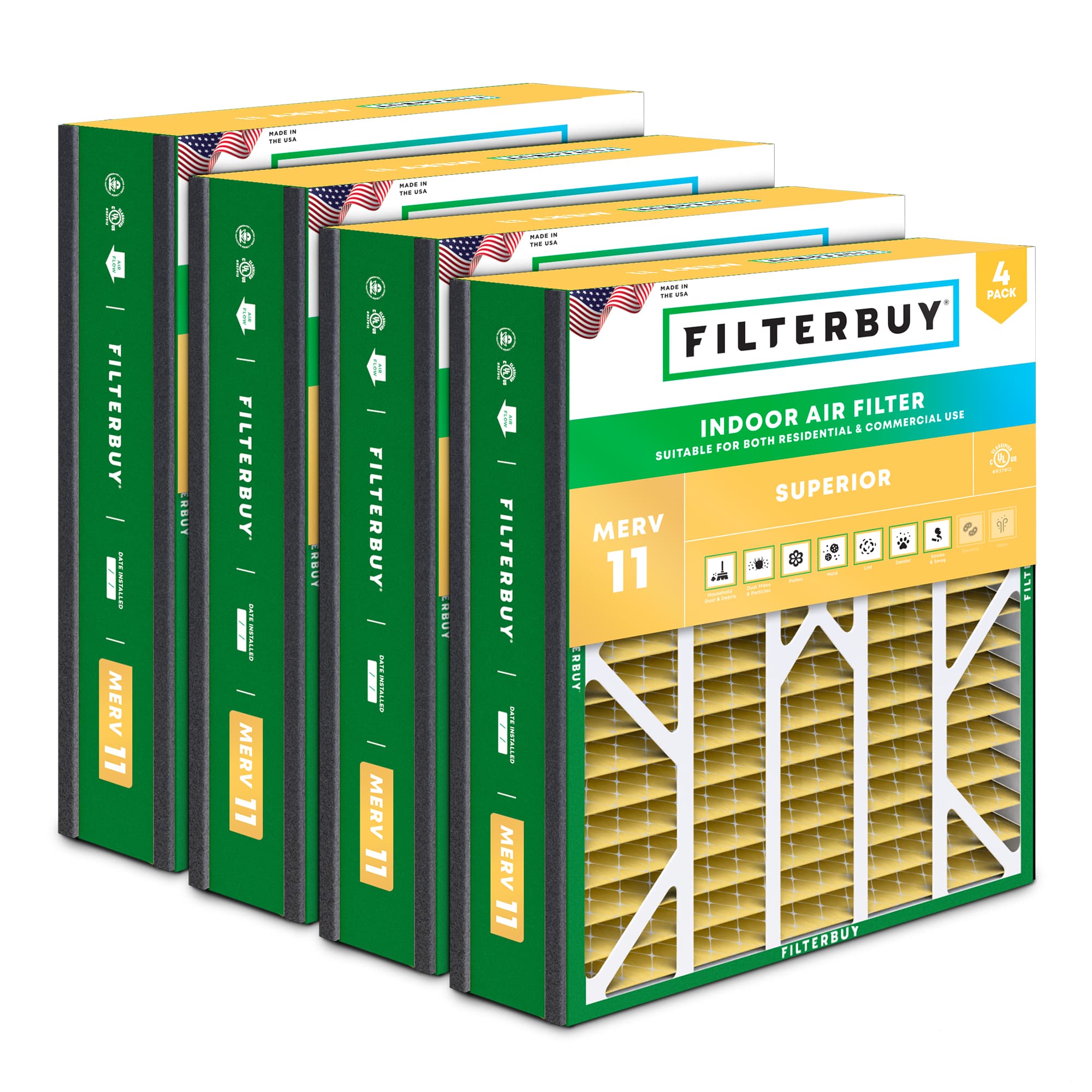
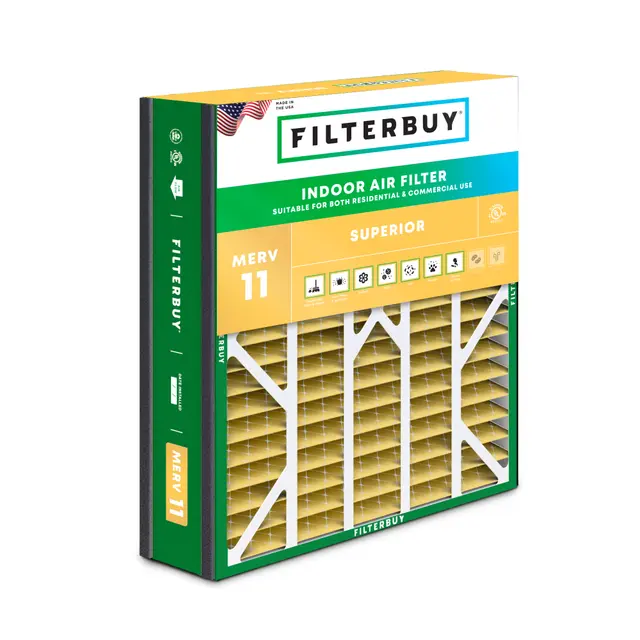
Actual Size: 20.75x20.25x4.88"
 Free Delivery
  Factory-Direct Low Prices, Made in the USA
 Hassle-Free Returns & Free Exchanges
RESIDENTIAL AND/OR COMMERCIAL USE
Change Every 3 Months
Tip: Ensure you buy the exact air filter size for your system. Certain brands have precise dimensions that only fit their specific models. See related filters
Actual Size: 20.75x20.25x4.88"
Free Delivery Factory-Direct Low Prices, Made in the USAHassle-Free Returns & Free ExchangesRESIDENTIAL AND/OR COMMERCIAL USE
Change Every 3 Months
Tip: Ensure you buy the exact air filter size for your system. Certain brands have precise dimensions that only fit their specific models. See related filters
Actual Size: 20.75x20.25x4.88"
Free Delivery Factory-Direct Low Prices, Made in the USAHassle-Free Returns & Free ExchangesRESIDENTIAL AND/OR COMMERCIAL USE
Change Every 3 Months
At Filterbuy, we don't cut corners—we craft high-quality air filters right here in the USA and ship them to your doorstep for free. No delays, no gimmicks—just clean air, made easy. With thousands of five-star reviews and filters built for real life & every HVAC system, it's no wonder why over 4 million families trust Filterbuy.

Proudly Made In The USA

Fast, Free Shipping on Every Order

Premium Materials That Go The Distance

85,000+ 5-Star Reviews From Happy Customers

Save Up to 70% Per Filter with Packs


Measure length × width × depth with a tape measure to find the actual size.

Round up each dimension to the nearest whole number to get the nominal size. Example: 20.75x20.25x4.88" in → 20X20X5 nominal.

Search by nominal size on our site for the best fit.


5″ filters give you maximum filtration with minimal maintenance — lasting up to 12 months while handling higher MERV ratings without restricting airflow.
Sizing note:

If the filter you buy doesn't fit, we'll send you a better size.
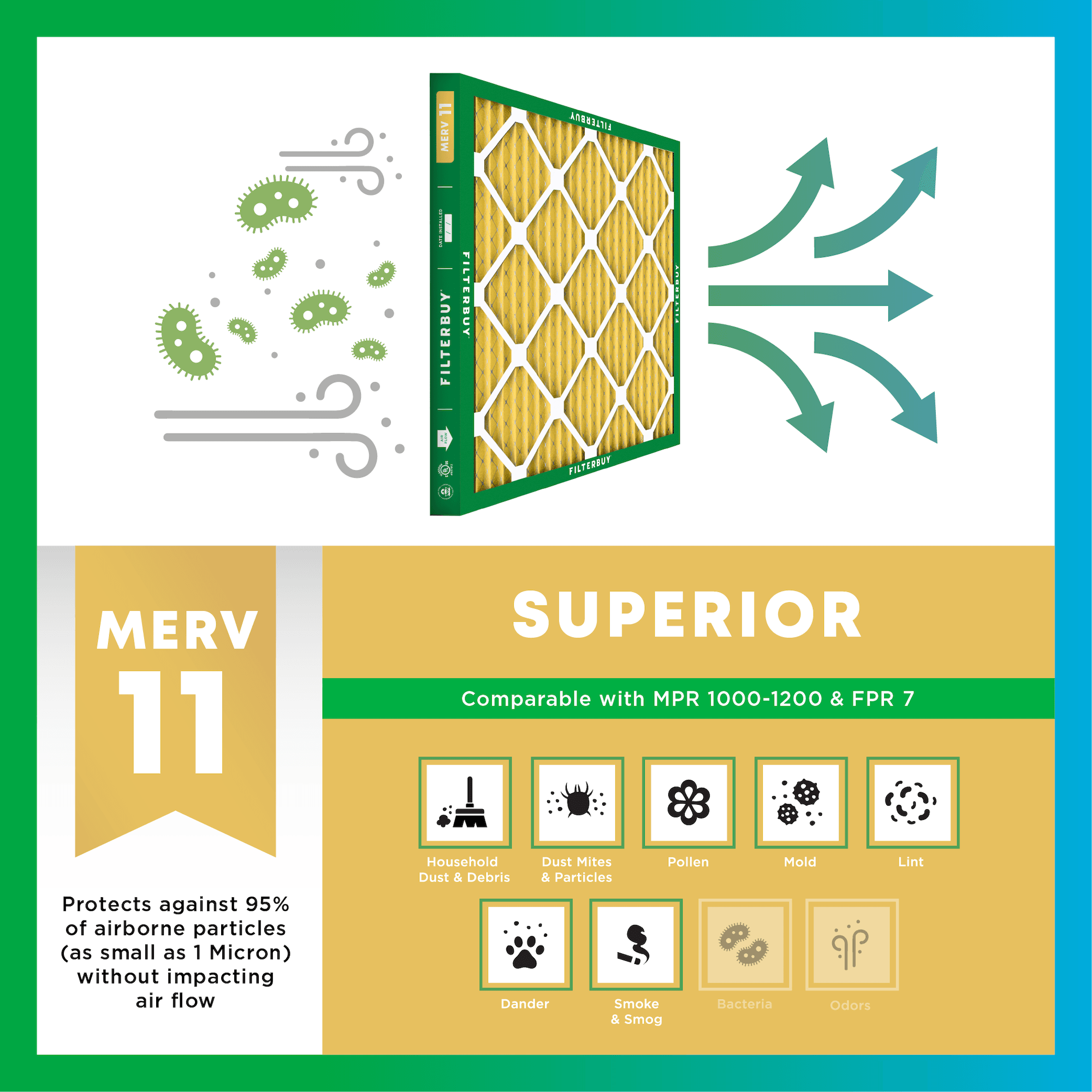
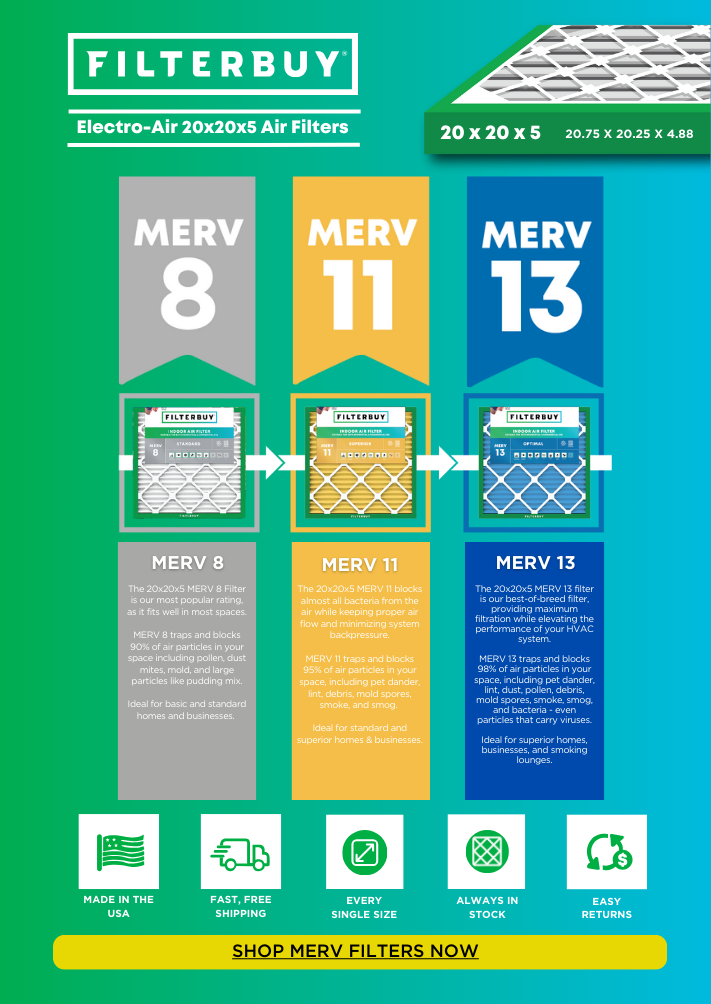
MERV stands for Minimum Efficiency Reporting Value—but don't let the technical name fool you. It's just a way to rate how well an air filter traps stuff like dust, pollen, pet dander, and smoke. The higher the MERV number, the more particles it catches—and the cleaner your air will be.

Comparable to:FPR: 4-7
MPR: 600-1000
 Dust & Debris
 Dust Mites & Particles
 Pollen
 Mold
Mold Lint
Lint Dander
Comparable to:FPR: 6-9
MPR: 1200-1550
Dust & DebrisDust Mites & ParticlesPollenMoldLintDander Smoke & Smog
Comparable to:FPR: 10
MPR: 1900-2800
Dust & DebrisDust Mites & ParticlesPollenMoldLintDanderSmoke & Smog Bacteria


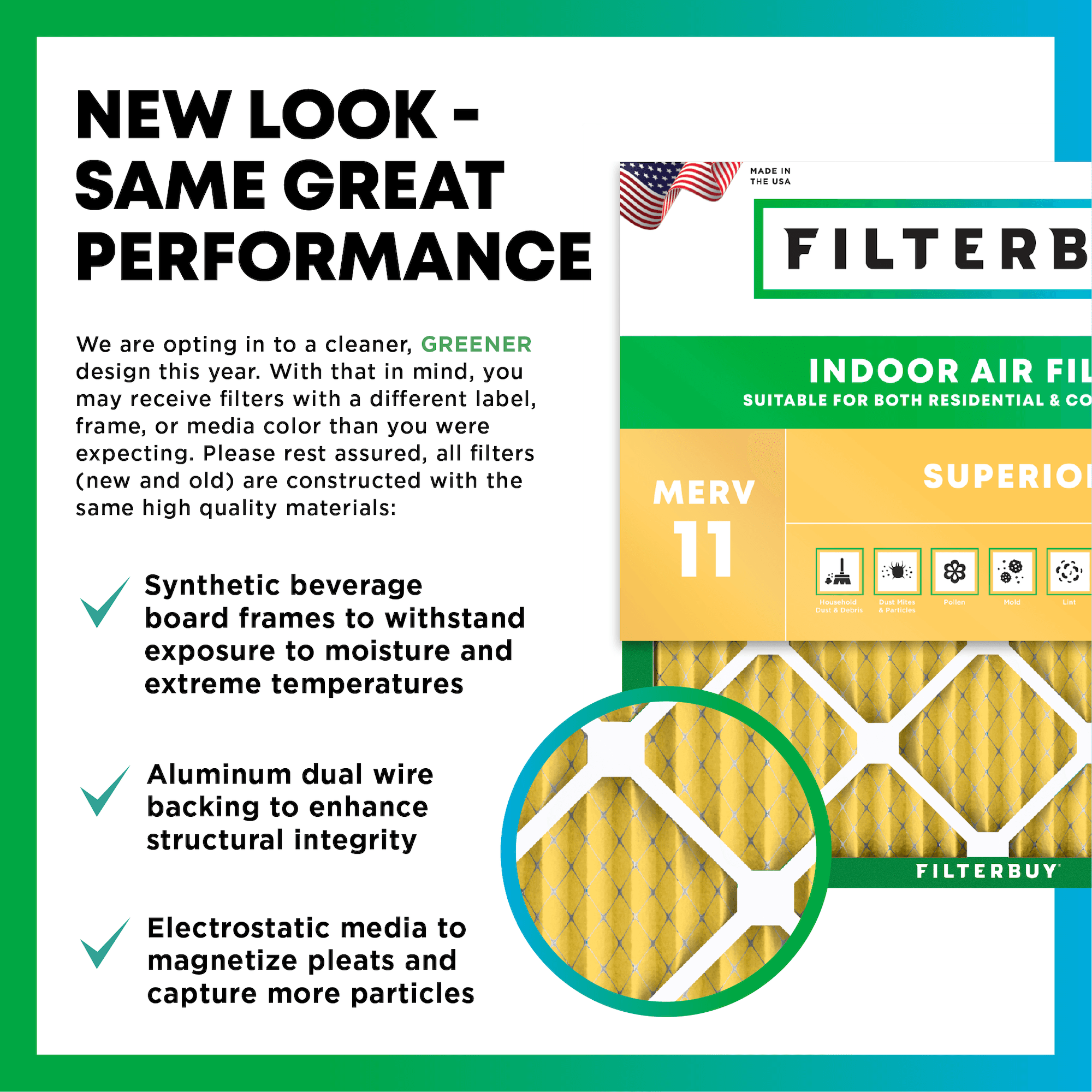
We build every Filterbuy filter to deliver reliable 90-day performance—thanks to smart design and premium materials that do the heavy lifting. Here's what makes the difference:
More pleats = more surface area to capture dust and debris, keeping your air cleaner longer.
Pleats are magnetized to attract and trap microscopic particles—like pet dander, pollen, and smoke.
Engineered to resist warping in extreme temperatures and high humidity.

A layer of metal reinforcement keeps pleats evenly spaced and structurally sound—no sagging, even at high airflow.
Assembled with care. Built to perform. Ships fast, free, and reliably from our U.S. facilities.

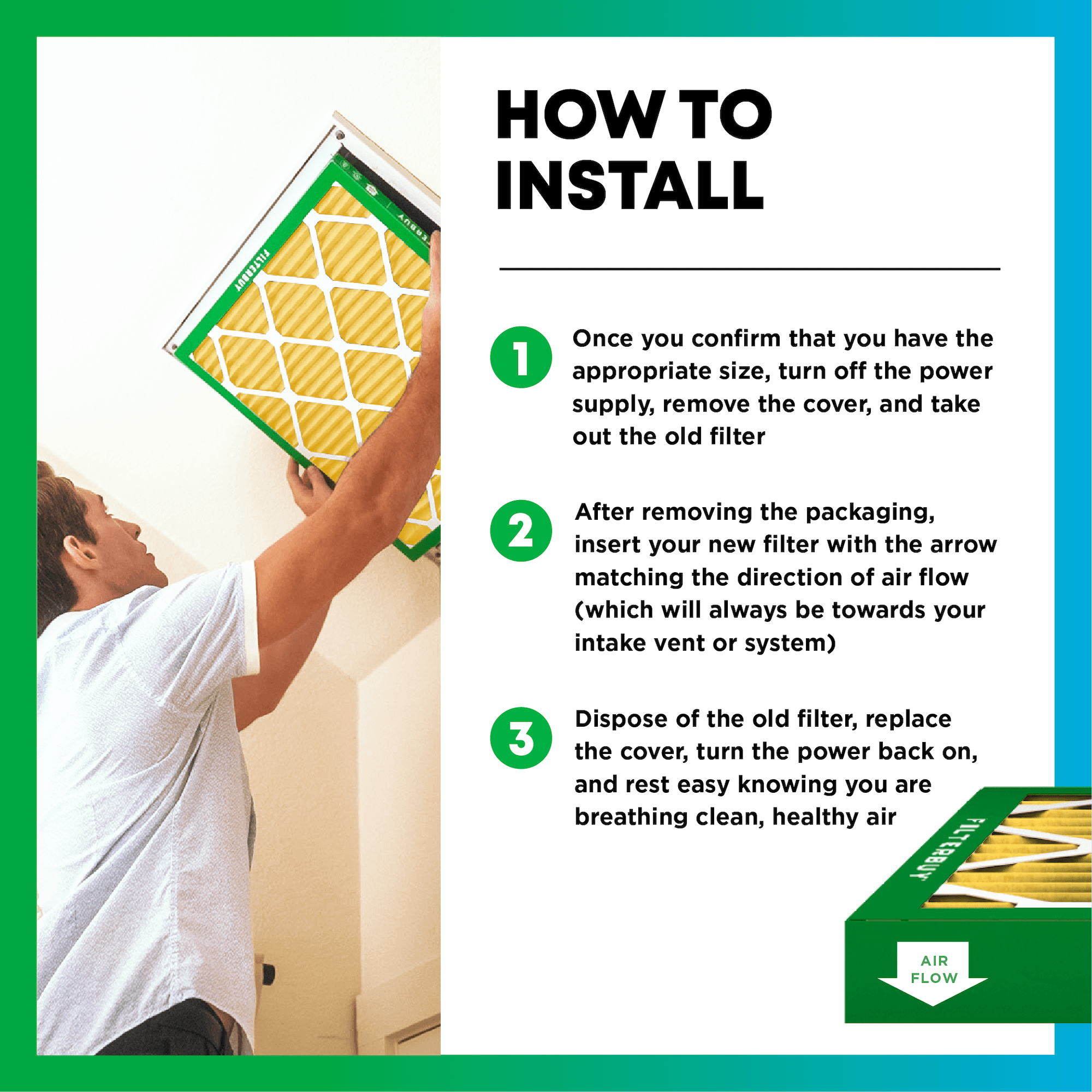
Turn Off Your HVAC SystemSafety first.

Remove The Old FilterLook for the airflow arrow and make note of the direction.

Slide In Your New FilterArrow should point toward the system (same direction as before).

Turn Your System Back OnAnd enjoy the fresh, clean air.

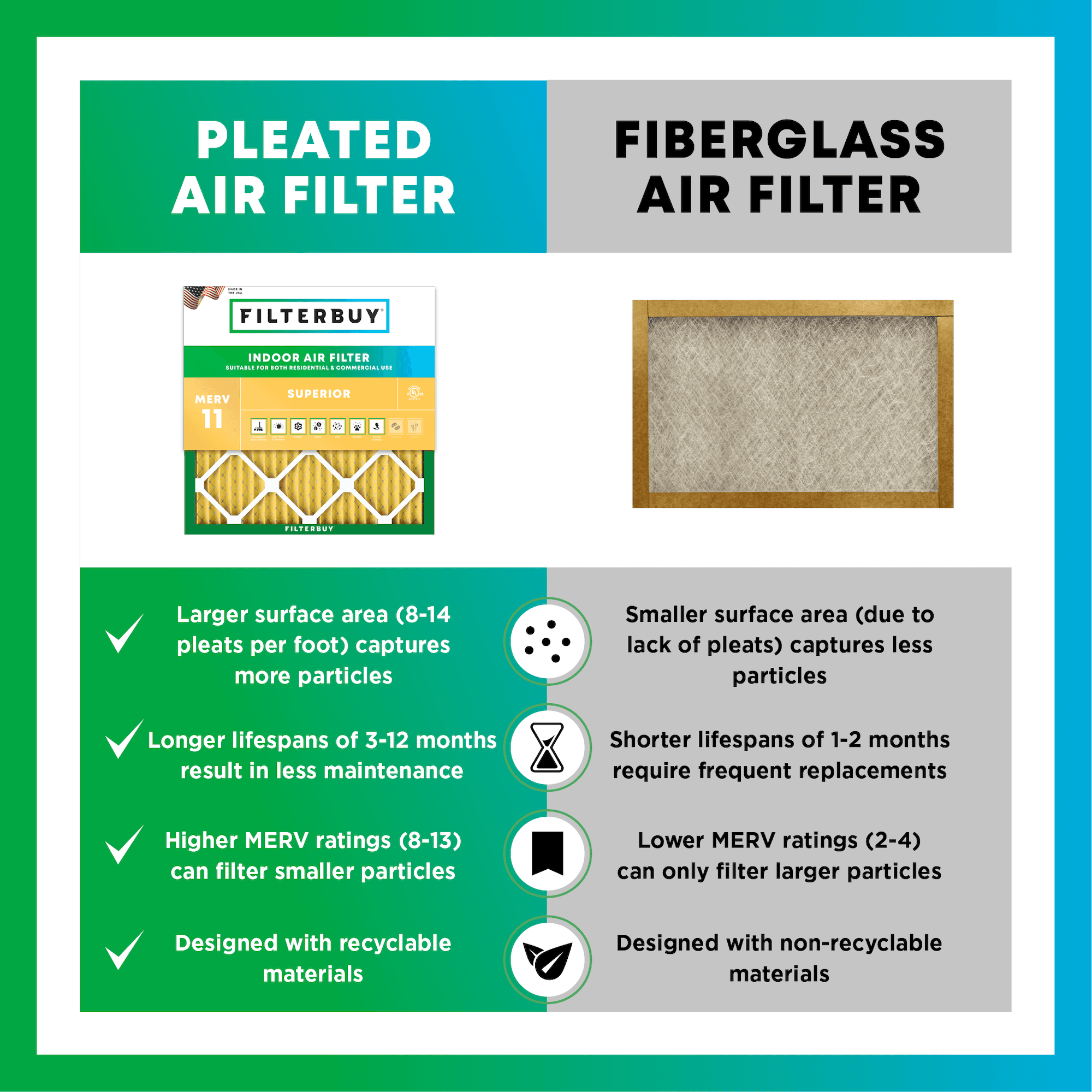
Not all air filters are created equal. Pleated filters don't just last longer—they actually clean your air better. Here's how they stack up:

Efficiency:
High (MERV 8–13) – Traps more particles
Lifespan:
90 days – Long-lasting performance
Air Quality:
Excellent – Cleaner, healthier air
Materials:
Recyclable and durable

Efficiency:
Low (MERV 4 or less) – Misses small stuff
Lifespan:
30 days or less – Replace often
Air Quality:
Minimal – Basic protection only
Materials:
Thin, flimsy, and not recyclable
Pleated filters are a no-brainer—more protection, less hassle, and better air for your home.
Changing your filter on time keeps your HVAC system running efficiently—and helps protect your lungs from dust, allergens, and airborne irritants. Here's how often to swap it out based on your needs:

For most homes without pets or special air quality concerns. Great for general upkeep and energy efficiency.

Shedding fur, dander, and allergy triggers can build up fast. Changing your filter every two months helps keep the air fresher and symptoms at bay.

For households affected by smoke, pollution, or respiratory conditions, monthly changes ensure maximum protection.

| Nominal Size | 20X20X5 |
| Actual Size | 20.75 x 20.25 x 4.88" inches |
| Filter Type | Pleated |
| Media | Electrostatically Charged |
| Frame | Beverage Board |
| MERV Ratings Available | 8, 11, 13 |
| Lifespan | Up to 12 Months |
| Origin | Made in USA |
Most homeowners don’t realize their filter is the reason dust keeps coming back. We see it all the time—systems running fine, but the air never quite feels clean. Once that filter changes, everything else starts to follow.
If you’re considering a MERV 11 upgrade for your Electro-Air 20x20x5 filter, the difference is usually easy to spot. Less dust. Fewer allergens. Air that feels lighter. The reason is simple: filtration isn’t just about fitting your system—it’s about what your system actually stops.
A MERV 11 20x20x5 filter is built for whole-home systems that need better air without restricting airflow. In homes that switch, this is where filtration starts catching what used to circulate—pollen, mold spores, pet dander, and fine particles that basic filters miss.
• MERV 11 captures smaller particles like pollen, mold spores, and pet dander
• The 5-inch design improves filtration while maintaining airflow
• Moving up from MERV 8 leads to cleaner air and fewer allergens
• Electro-Air systems work best with balanced filtration
• Consistent replacement keeps results steady over time
Basic filters protect your equipment. That’s their job. But they let smaller particles pass through—the ones that affect how your home actually feels.
A MERV 11 filter changes that. It captures pollen, mold spores, pet dander, and dust mites—particles that tend to linger and cause irritation. When homeowners upgrade, we often hear the same thing: the air finally feels different.
Not because the system changed. Because the filter finally started doing more than the minimum.
The size tells you more than whether it fits. It tells you how it performs.
A 5-inch filter has more surface area than a thin one. That gives it room to trap more particles without slowing airflow. In real homes, that balance matters. You get better filtration, but the system still moves air the way it should.
It also holds more buildup before performance drops. That means fewer replacements and more consistent results between changes.
Electro-Air systems are designed to clean air across the entire home. But they rely on the right filter to do that well.
A 20x20x5 MERV 11 filter fits that role. It improves what gets captured without restricting airflow. We’ve seen this pairing work consistently—systems run smoother, and the air feels cleaner from room to room.
Too little filtration leaves particles behind. Too much restriction slows everything down. This sits right in between.
In most homes, the change shows up quickly.
Dust settles more slowly. Allergy symptoms ease up. The air smells cleaner. Rooms feel more even.
Many homeowners also notice their system sounds and runs more steadily. When airflow and filtration are in sync, everything feels more consistent.
If you’re using a basic filter, smaller particles are still moving through your home. That doesn’t change until the filter does.
A MERV 11 upgrade keeps things simple. It doesn’t overhaul your system—it helps it do its job better.
From what we’ve seen, this is one of the most practical upgrades you can make. It’s easy to install, easy to maintain, and the results don’t take long to notice.
“In homes we service, the shift to a 5-inch MERV 11 filter is usually when people stop guessing if their air is cleaner—they can tell. Not because the system changed, but because it finally started catching what used to stay in circulation.”
When homeowners want to understand what actually improves air quality, these are the sources we point them to. Not because they’re theoretical—but because they help explain what we see every day in real homes.
Source: https://en.wikipedia.org/wiki/Air_filter
Explains how filtration levels work and what different ratings capture. If you’ve ever wondered why one filter feels “better” than another, this is where the answer starts. It breaks down particle sizes in a way that helps you connect the rating to what’s actually floating in your air.
Source: https://filterbuy.com/resources/air-filter-basics/does-air-filter-quality-matter/
Breaks down how filtration impacts airflow, system performance, and indoor air. In our experience, this is the piece many homeowners overlook—assuming all filters are roughly the same. This guide shows why that assumption doesn’t hold up once you look closer.
Source: https://www.epa.gov/indoor-air-quality-iaq
Covers common indoor pollutants and how they affect your home. It’s a good reality check. Most of what affects your comfort isn’t visible, and this helps put names to the particles your filter is working against every day.
Source: https://www.epa.gov/indoor-air-quality-iaq/guide-air-cleaners-home
Compares filtration performance across different systems and environments. If you’re trying to understand what level of filtration actually makes a difference, this resource connects performance to real-world use—not just product labels.
Source: https://www.energy.gov/energysaver/maintaining-your-air-conditioner
Shows how filter choice affects system lifespan and energy use. From what we’ve seen, airflow and efficiency go hand in hand—this explains why the right filter helps your system run better, not harder.
Numbers like these help explain what we see in real homes every day. When air quality improves, it’s not random—it’s tied to what your filter is actually capturing and how often that air is cycling through your system.
Indoor air can be 2–5 times more polluted than outdoor air (EPA)
Source: https://www.epa.gov/indoor-air-quality-iaq/inside-story-guide-indoor-air-quality
That gap surprises most homeowners. But it lines up with what we see—when airflow keeps recirculating the same air through a lower-efficiency filter, those smaller particles don’t leave. They build up, settle, and keep moving through the home.
Americans spend about 90% of their time indoors (EPA)
Source: https://www.epa.gov/report-environment/indoor-air-quality
This is why filtration matters more than people think. Your HVAC system isn’t just running occasionally—it’s constantly shaping the air you live in. The quality of that filter directly affects what you’re breathing throughout the day.
MERV 11 filters capture particles as small as 1.0–3.0 microns (ASHRAE)
Source: https://www.ashrae.org/technical-resources/standards-and-guidelines
That size range includes the particles that tend to cause the most frustration—pollen, mold spores, and pet dander. When those start getting captured instead of recirculated, that’s when homeowners begin to notice a real change in how their air feels.
We’ve seen a pattern across hundreds of homes: systems don’t usually need replacing—they need better filtration.
A MERV 11 upgrade is where that shift happens. Not because it’s extreme, but because it’s practical. It captures what matters without slowing the system down.
If you’re using an Electro-Air system with a lower-rated filter, there’s a gap between what your system could do and what it’s actually doing. This closes that gap.
1. Check your filter size. Make sure it’s 20x20x5.
2. Look at your current rating. If it’s MERV 6–8, you have room to improve.
3. Choose a MERV 11 replacement designed for whole-home systems.
4. Install it with airflow pointing toward the unit.
5. Replace it every 3–6 months. Sooner if you have pets or allergies.
6. Pay attention to the difference. Most homeowners notice it.
A: Pollen, mold spores, pet dander, dust mites, and fine airborne particles. This is where filtration starts improving everyday air.
A: Yes. A properly sized 20x20x5 filter works well with whole-house systems and maintains airflow.
A: Every 3–6 months. More often in homes with pets or higher dust.
A: In most homes, yes. Less dust and fewer allergy triggers are common.
A: Yes. It captures smaller particles that basic filters miss, which leads to cleaner air overall.
Upgrade your Electro-Air system with a Filterbuy MERV 11 20x20x5 filter and start catching what basic filters leave behind. Cleaner air is one simple change away.

