

Tip: Ensure you buy the exact air filter size for your system. Certain brands have precise dimensions that only fit their specific models. See related filters
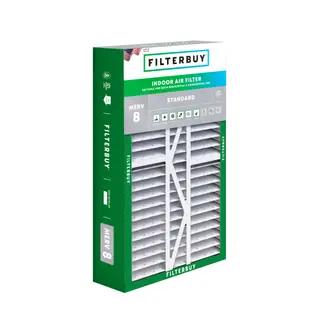
American Standard 17.5x27x5 MERV 8 Aftermarket Replacement Filter
Actual Size: 17.13x26.13x4.97
 Free Delivery
  Factory-Direct Low Prices, Made in the USA
 Hassle-Free Returns & Free Exchanges
RESIDENTIAL AND/OR COMMERCIAL USE
Change Every 3 Months
Tip: Ensure you buy the exact air filter size for your system. Certain brands have precise dimensions that only fit their specific models. See related filters
American Standard 17.5x27x5 MERV 8 Aftermarket Replacement Filter
Actual Size: 17.13x26.13x4.97
Free Delivery Factory-Direct Low Prices, Made in the USAHassle-Free Returns & Free ExchangesRESIDENTIAL AND/OR COMMERCIAL USE
Change Every 3 Months
Tip: Ensure you buy the exact air filter size for your system. Certain brands have precise dimensions that only fit their specific models. See related filters
American Standard 17.5x27x5 MERV 8 Aftermarket Replacement Filter
Actual Size: 17.13x26.13x4.97
Free Delivery Factory-Direct Low Prices, Made in the USAHassle-Free Returns & Free ExchangesRESIDENTIAL AND/OR COMMERCIAL USE
Change Every 3 Months
About
- This is a list 17.5x27x5 MERV 8 air filter replacement for your furnace, air conditioner, heat pump, or HVAC system
- Actual air filter size: 17.13x26.13x4.97
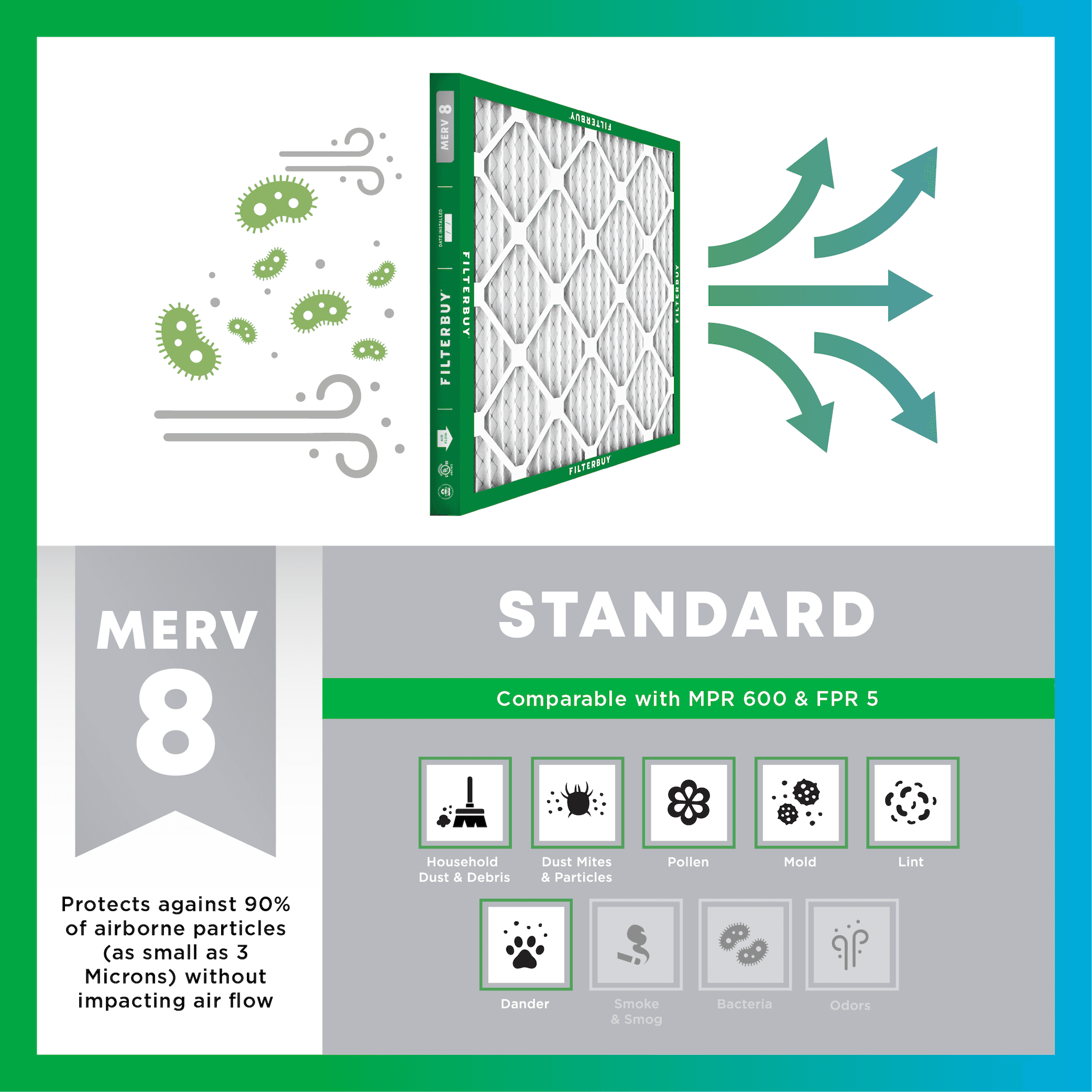
- MERV 8 synthetic media (comparable with MPR 600 & FPR 5) offers standard protection from dust, pollen, and more by trapping 90% of airborne particles without impacting air flow.
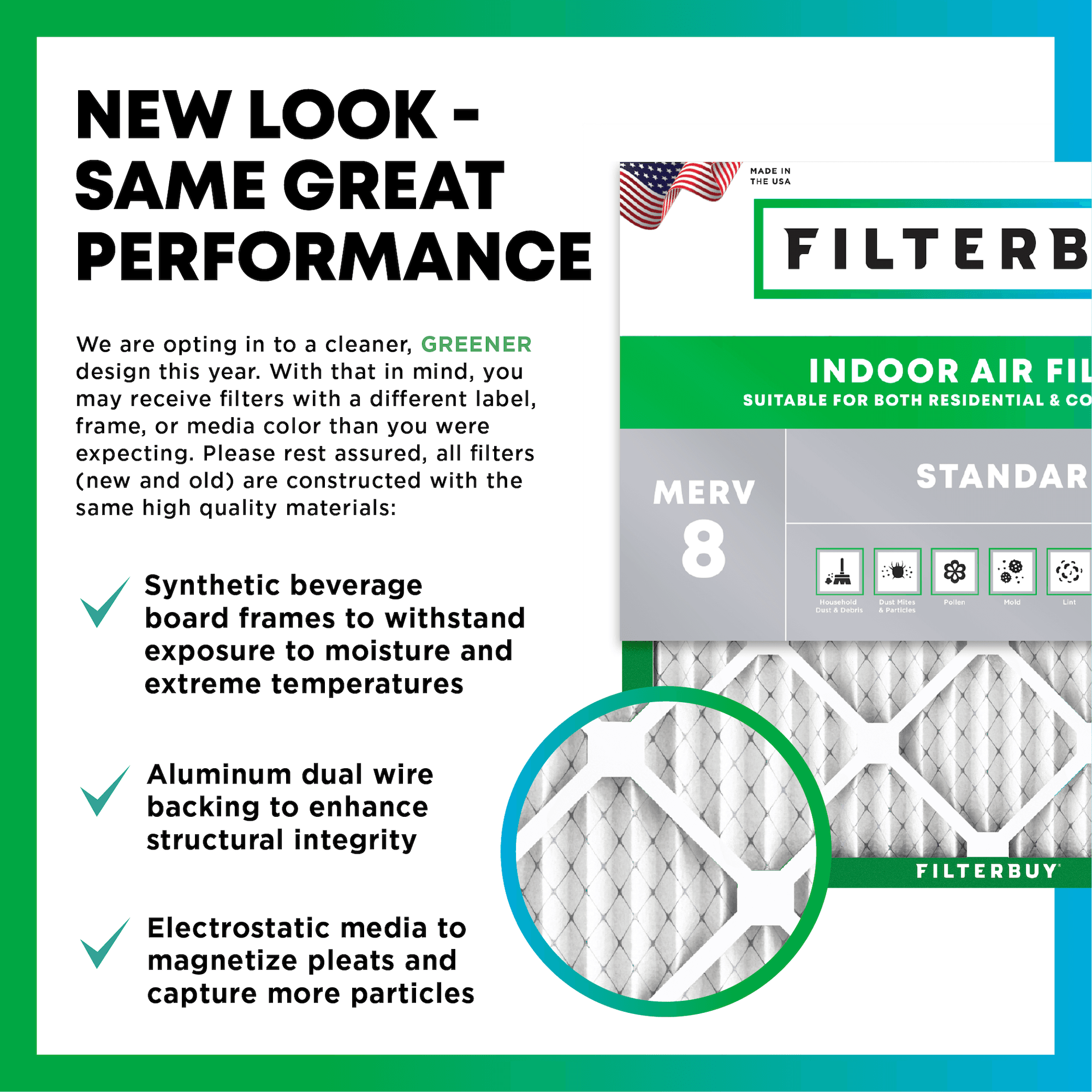
- High-quality construction means electrostatically charged pleated filter media, reinforced wire backing for structural integrity, and a durable frame to resist heat and humidity
- Built to last 3 months. 300% longer than fiberglass models
- 100% manufactured in the United States and designed with recyclable materials
- Learn more about 17.5x27x5 Air Filters
Top-Rated Filters. American Made. Delivered Free.
At Filterbuy, we don't cut corners—we craft high-quality air filters right here in the USA and ship them to your doorstep for free. No delays, no gimmicks—just clean air, made easy. With thousands of five-star reviews and filters built for real life & every HVAC system, it's no wonder why over 4 million families trust Filterbuy.

Proudly Made In The USA

Fast, Free Shipping on Every Order

Premium Materials That Go The Distance

85,000+ 5-Star Reviews From Happy Customers

Save Up to 70% Per Filter with Packs
Things to Know About Filter Sizes

Nominal Size
- The rounded size printed on your filter or HVAC unit (e.g., 17.5x27x5).
- Usually whole numbers to make identifying and ordering easier.
- A label for compatibility—not the exact measurement.

Actual Size
- The true, trimmed dimensions of the filter (e.g., 17.13x26.13x4.97 inches).
- Filters are manufactured slightly smaller so they slide into the filter slot without forcing.
- If you don't know your nominal size, measure your filter to get the actual size, then round up to find the nominal size to search on our site.

Why the difference?
- Nominal sizes simplify shopping and standardize categories.
- Actual sizes ensure the filter fits properly inside your HVAC's filter rack.
How To Find Your Nominal Size When You Don't Know It


Measure length × width × depth with a tape measure to find the actual size.

Round up each dimension to the nearest whole number to get the nominal size. Example: 17.13x26.13x4.97 in → 17.5x27x5 nominal.

Search by nominal size on our site for the best fit.

Why Getting the Right Size Matters
- Too small? Air can bypass the filter, reducing air quality and efficiency.
- Too big? It won't fit—risking bent frames and airflow issues.
- Just right? You get maximum performance, better filtration, and cleaner air.

Why Choose a 5″ filter

5″ filters give you maximum filtration with minimal maintenance — lasting up to 12 months while handling higher MERV ratings without restricting airflow.
Sizing note:
- Requires a 5″ cabinet or system.
- Actual thickness varies by brand (~4¾″–5¼″), so check your model for the best fit.

Free Exchange Policy
If the filter you buy doesn't fit, we'll send you a better size.

What's a MERV Rating?
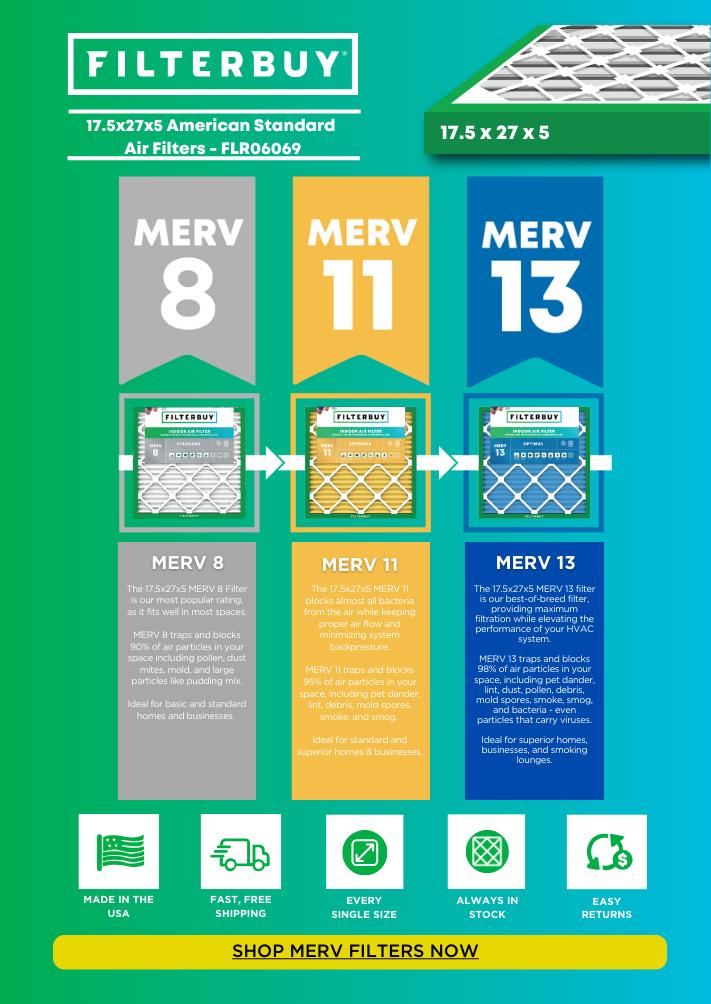
MERV stands for Minimum Efficiency Reporting Value—but don't let the technical name fool you. It's just a way to rate how well an air filter traps stuff like dust, pollen, pet dander, and smoke. The higher the MERV number, the more particles it catches—and the cleaner your air will be.

Merv 8
Comparable to:FPR: 4-7
MPR: 600-1000
 Dust & Debris
 Dust Mites & Particles
 Pollen
 Mold
Mold Lint
Lint Dander
Merv 11
Comparable to:FPR: 6-9
MPR: 1200-1550
Dust & DebrisDust Mites & ParticlesPollenMoldLintDander Smoke & Smog
Merv 13
Comparable to:FPR: 10
MPR: 1900-2800
Dust & DebrisDust Mites & ParticlesPollenMoldLintDanderSmoke & Smog Bacteria
MERV 8
Comparable to:FPR: 4-7MPR: 600-1000


MERV 11
Comparable to:FPR: 6-9MPR: 1200-1550

MERV 13
Comparable to:FPR: 10MPR: 1900-2800
What Makes Our Filters Last 90 Days? Quality, From the Inside Out
We build every Filterbuy filter to deliver reliable 90-day performance—thanks to smart design and premium materials that do the heavy lifting. Here's what makes the difference:
Pleated Design
More pleats = more surface area to capture dust and debris, keeping your air cleaner longer.
Electrostatically Charged Media
Pleats are magnetized to attract and trap microscopic particles—like pet dander, pollen, and smoke.
Synthetic Beverage Board Frame
Engineered to resist warping in extreme temperatures and high humidity.

Aluminum Dual Wire Backing
A layer of metal reinforcement keeps pleats evenly spaced and structurally sound—no sagging, even at high airflow.
Made in the USA
Assembled with care. Built to perform. Ships fast, free, and reliably from our U.S. facilities.
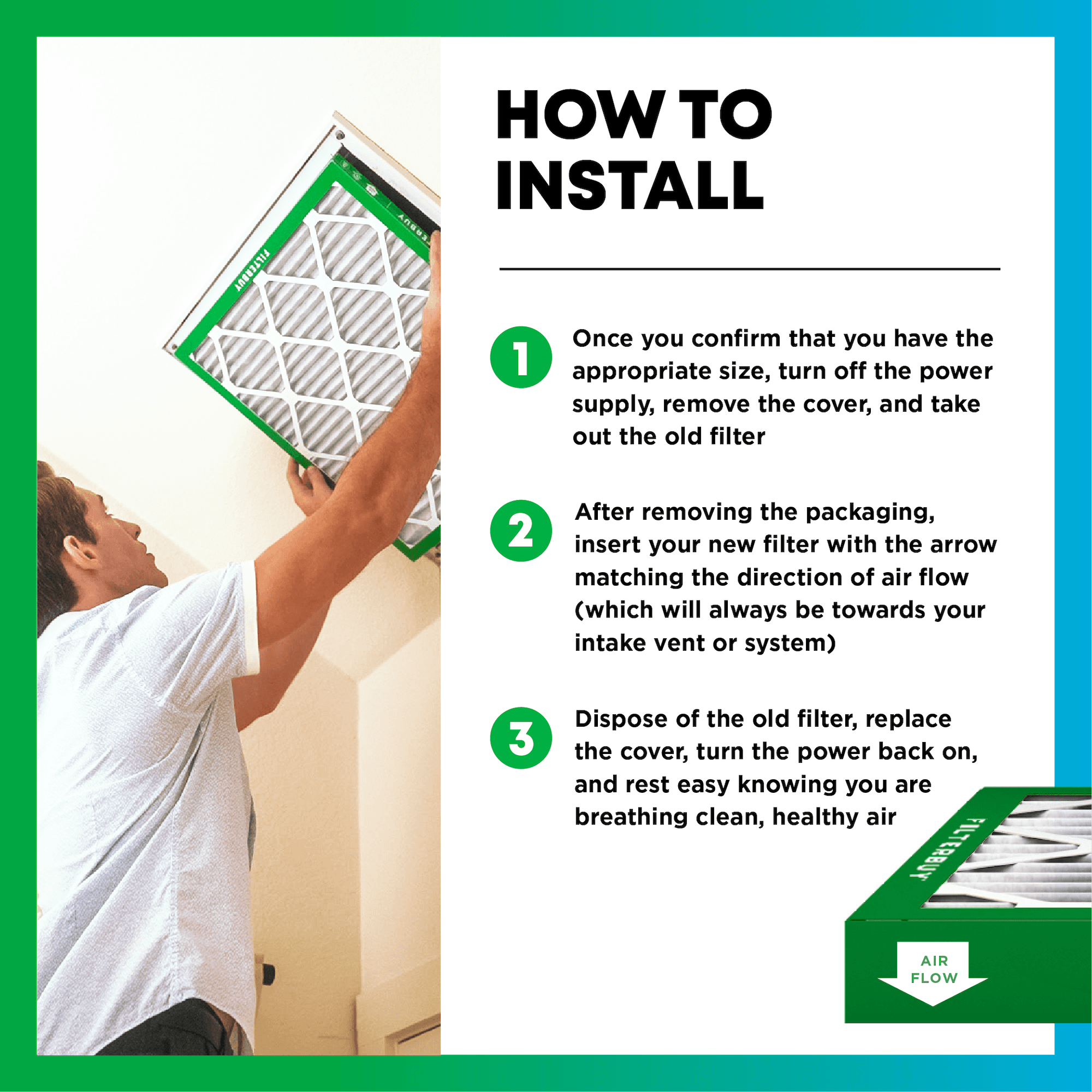
How to Install Your Filter in 4 Simple Steps

Turn Off Your HVAC SystemSafety first.

Remove The Old FilterLook for the airflow arrow and make note of the direction.

Slide In Your New FilterArrow should point toward the system (same direction as before).

Turn Your System Back OnAnd enjoy the fresh, clean air.

Never forget to replace your air filter again.
- Save 5% on every order
- Choose Your Delivery Schedule
- Edit, Skip, or Cancel Anytime.
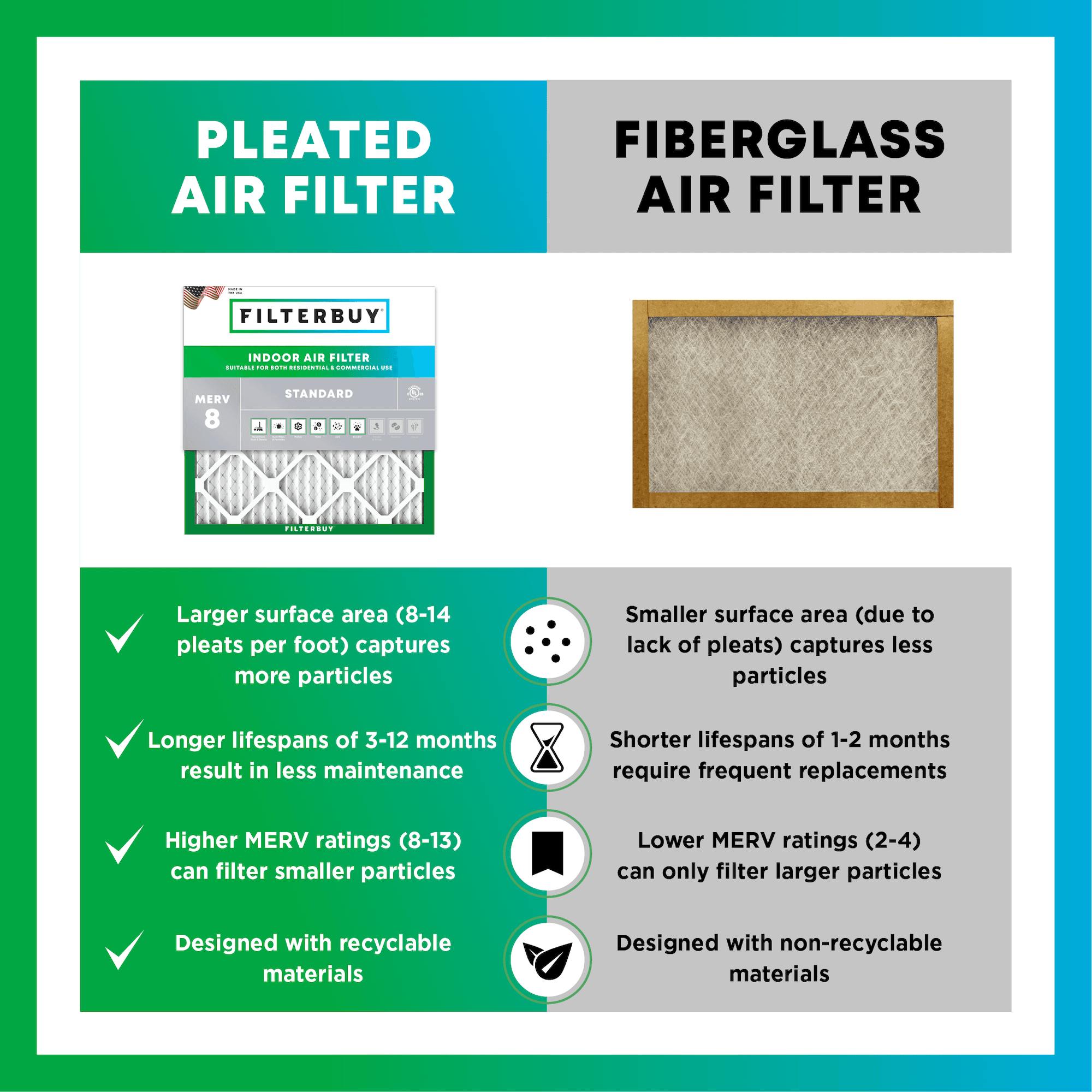
Pleated Filters vs. Fiberglass—What's the Difference?
Not all air filters are created equal. Pleated filters don't just last longer—they actually clean your air better. Here's how they stack up:

Pleated Filters
Efficiency:
High (MERV 8–13) – Traps more particles
Lifespan:
90 days – Long-lasting performance
Air Quality:
Excellent – Cleaner, healthier air
Materials:
Recyclable and durable

Fiberglass Filters
Efficiency:
Low (MERV 4 or less) – Misses small stuff
Lifespan:
30 days or less – Replace often
Air Quality:
Minimal – Basic protection only
Materials:
Thin, flimsy, and not recyclable
Pleated filters are a no-brainer—more protection, less hassle, and better air for your home.
How Often Should You Change Your Filter?
Changing your filter on time keeps your HVAC system running efficiently—and helps protect your lungs from dust, allergens, and airborne irritants. Here's how often to swap it out based on your needs:

Every 90 Days
Standard ScheduleFor most homes without pets or special air quality concerns. Great for general upkeep and energy efficiency.

Every 60 Days
If You Have Pets or AllergiesShedding fur, dander, and allergy triggers can build up fast. Changing your filter every two months helps keep the air fresher and symptoms at bay.

Every 30 Days
If You Have Respiratory Concerns or Live in Smog/Wildfire ZonesFor households affected by smoke, pollution, or respiratory conditions, monthly changes ensure maximum protection.

Want to stay on track? Set a reminder—or skip the stress with auto-delivery so fresh filters show up right when you need them.
Don't Just Take Our Word For It...
Got More Questions? We've Got Answers.
Product Specifications
| Nominal Size | 17.5 x 27 x 5 inches |
| Actual Size | 17.13 x 26.13 x 4.97 inches |
| Filter Type | Pleated |
| Media | Electrostatically Charged |
| Frame | Beverage Board |
| MERV Ratings Available | 8, 11, 13 |
| Lifespan | Up to 12 Months |
| Origin | Made in USA |
Signs Your MERV 8 17.5x27x5 American Standard Filter Needs Replacement
After manufacturing millions of MERV 8 filters in this exact 17.5x27x5 size, we've learned what customers discover the hard way: most people replace filters too late. The telltale signs were there for weeks — reduced airflow, dustier surfaces, HVAC systems running longer cycles — but went unnoticed until something broke.
Customers tell us the same story: "I didn't think a dirty filter could cause that much damage." It can. Frozen coils, blower motor burnout, and unexplained allergy flare-ups trace back to overloaded filters more often than any other single cause.
This guide shows you exactly what to look for — visual cues, performance changes, and air quality shifts — so you replace your filter at the right time, not after the damage is done.
TL;DR Quick Answers
MERV 8 17.5x27x5 American Standard Filter
What it is: A 5-inch pleated air filter designed for American Standard HVAC systems. MERV 8 captures dust, pollen, mold spores, and pet dander.
Actual dimensions: ~17.25" x 26.75" x 4.75" (nominal size 17.5x27x5 is rounded for ordering)
Replacement frequency:
No pets, light use: 60-90 days
1-2 pets: 45-60 days
3+ pets: 30-45 days
Best practice: Check monthly using the light test. Replace when light no longer passes through the pleats — regardless of calendar date.
What we've learned from manufacturing millions: The 90-day rule fails most households. Customers who check monthly and replace based on filter condition report fewer HVAC problems, lower energy bills, and better air quality than those who follow fixed schedules.
Bottom line: Your filter shows you when it's done. Trust it.
Top Takeaways
Trust your filter, not the calendar. The 90-day rule doesn't fit every household. Pets, allergies, and heavy use often mean 30-60 day replacement. The light test tells you more than any schedule.
Your system sends clear warning signals. Longer run cycles. Uneven temperatures. Weak airflow. Increased dust. Allergy flare-ups. These signs appear weeks before visible discoloration.
A $15 filter protects half your energy budget. HVAC accounts for 52% of home energy use. Dirty filters increase consumption by 5-15%.
Check monthly, replace as needed. The 30-second light test prevents emergency replacements and unexpected repair bills. Customers who adopt this habit never get caught off-guard.
Indoor air quality matters more than you think. You spend 90% of your time indoors. Pollutant levels run 2-5x higher than outside. When your filter reaches capacity, those particles recirculate.
Visible Dirt and Discoloration Across the Filter Media
A new MERV 8 filter starts with clean, white pleated media designed to capture dust, pollen, mold spores, and other common airborne particles. Over time, that media darkens as it collects contaminants. If you pull your 17.5x27x5 filter from its housing and notice heavy gray or brown discoloration — especially when the surface appears matted or clogged rather than lightly dusted — the filter has exhausted its capacity. At that point, it's restricting airflow rather than cleaning it.
Increased Dust Settling on Surfaces Throughout Your Home
One of the earliest signs homeowners report to us is a noticeable increase in dust on furniture, countertops, and floors — even shortly after cleaning. When a MERV 8 filter becomes saturated, particles that would normally be trapped pass through and circulate back into your living spaces. If you're dusting more frequently than usual without an obvious cause, your 17.5x27x5 filter is a likely culprit.
Reduced Airflow From Supply Vents
Place your hand near a supply vent while your system is running. Weak or noticeably diminished airflow often points to a clogged filter forcing your American Standard system to work harder to push air through. This restricted airflow not only reduces comfort in your home but also increases energy consumption. Customers tell us this is the sign they wish they'd caught sooner, because the added strain can accelerate wear on blower motors and other critical components.
Unusual Spikes in Your Energy Bills
A dirty filter creates resistance in your HVAC system. That resistance forces the blower to run longer and work harder to maintain your thermostat setting. If your monthly energy costs have crept up without a change in usage habits or local rates, a saturated 17.5x27x5 filter could be the hidden driver. Replacing it promptly often brings those costs back in line.
Allergy Symptoms or Declining Indoor Air Quality
MERV 8 filtration is specifically rated to capture particles like dust mites, pollen, and mold spores — the common triggers behind seasonal allergy symptoms and respiratory irritation. When the filter is overloaded, those particles recirculate through your ductwork and into every room. If household members are experiencing increased sneezing, congestion, or eye irritation indoors, a filter past its prime is one of the first things to check.
Your System Is Short Cycling or Running Constantly
Short cycling — when your American Standard unit turns on and off in rapid, brief intervals — is a telltale sign of airflow restriction. Conversely, a system that runs continuously without reaching the set temperature may also be struggling against a clogged filter. Both patterns put excessive stress on your equipment and can shorten the life of expensive components like the compressor.
It Has Been Longer Than the Recommended Replacement Interval
For most households, a MERV 8 17.5x27x5 filter should be replaced every six to twelve months. However, homes with pets, multiple occupants, or higher-than-average dust levels may need replacement closer to the six-month mark. If you can't remember when you last swapped in a fresh filter, it's almost certainly time. Setting a recurring reminder takes the guesswork out of filter maintenance and helps your American Standard system perform the way it was designed to.
"After manufacturing millions of 17.5x27x5 filters for American Standard systems, we've learned that the filter itself tells you when it's done — customers just need to know what to look for, and it's rarely what the calendar says."
Essential Resources for MERV 8 17.5x27x5 American Standard Filter Owners
After manufacturing millions of MERV 8 filters for American Standard systems, we know customers often want to dig deeper before making replacement decisions. These seven resources answer the questions we hear most frequently — from understanding what MERV 8 actually captures to knowing when your specific household conditions require more frequent changes.
1. Understand What MERV 8 Actually Filters — U.S. Environmental Protection Agency
Customers ask us constantly whether MERV 8 is "good enough." The EPA breaks down exactly what particle sizes each MERV level captures and why jumping to higher ratings isn't always the right move for residential systems.
Source: https://www.epa.gov/indoor-air-quality-iaq/what-merv-rating
2. Learn How MERV Ratings Are Tested — ASHRAE
When we manufacture filters to MERV 8 specifications, we're following ASHRAE Standard 52.2 testing protocols. This resource explains the science behind the rating — useful when comparing claims from different filter brands.
Source: https://www.ashrae.org/technical-resources/ashrae-standards-and-guidelines
3. See the Real Cost of Delayed Replacement — U.S. Department of Energy
We hear from customers weekly who didn't realize a clogged filter was driving up their energy bills. The DOE confirms what we've seen across millions of filter shipments: dirty filters increase HVAC energy consumption by 5-15%.
Source: https://www.energy.gov/energysaver/air-conditioner-maintenance
4. Build a Maintenance Schedule That Works — ENERGY STAR
Customers tell us the 90-day rule doesn't fit every household. ENERGY STAR provides flexible guidance on checking filters monthly and adjusting replacement timing based on real conditions — the same approach we recommend.
Source: https://www.energystar.gov/saveathome/heating-cooling
5. Get Specifications Direct from American Standard
Before ordering your 17.5x27x5 replacement, confirm compatibility with your specific system. American Standard's official guide covers sizing, MERV recommendations, and installation steps for their equipment.
Source: https://www.americanstandardair.com/resources/blog/hvac-air-filter-replacement-101/
6. Compare MERV 8 to Higher-Rated Options — EPA Air Cleaners Guide
Some customers with severe allergies or respiratory concerns ask whether they should upgrade beyond MERV 8. The EPA's comparison helps you weigh filtration benefits against airflow considerations for your system.
Source: https://www.epa.gov/indoor-air-quality-iaq/guide-air-cleaners-home
7. Evaluate Health Needs for Your Household — AAFA Certification Program
For families with asthma or allergy sufferers, filtration choices carry extra weight. AAFA's certification standards help determine whether MERV 8 provides adequate protection or if your situation calls for enhanced filtration.
Source: https://aafa.org/programs/certified-asthma-allergy-friendly/
Supporting Statistics
After manufacturing millions of MERV 8 filters for American Standard systems, we've seen these government statistics play out in real households every day.
90% of Your Time Is Spent Indoors
The EPA confirms what our filter inspections reveal: indoor air carries 2-5x more pollutants than outdoor air.
What customers tell us:
"I had no idea my indoor air was worse than outside"
Filters arrive gray and matted within weeks — not months
Particles they never knew existed were circulating through their homes
When your 17.5x27x5 reaches capacity, those particles bypass the media and recirculate.
Source: U.S. Environmental Protection Agency https://www.epa.gov/report-environment/indoor-air-quality
Dirty Filters Increase Energy Use by 5-15%
The Department of Energy data matches what we hear weekly from customers after they replace an overdue filter:
Systems stop running constantly
Utility bills drop noticeably
Rooms reach temperature faster
The pattern we've observed: People rarely connect rising energy costs to air filter condition — until something else fails. By then, the system has been straining for weeks.
Source: U.S. Department of Energy https://www.energy.gov/energysaver/air-conditioner-maintenance
HVAC Accounts for 52% of Home Energy Use
U.S. Energy Information Administration data shows heating and cooling consume more energy than every other appliance, device, and light combined.
When customers hesitate to replace a filter that "still looks okay," we remind them:
No other component touches that much of your energy budget
A $15 filter protects a system responsible for half your utility spend
The math always favors replacement over delay
Source: U.S. Energy Information Administration https://www.eia.gov/energyexplained/use-of-energy/homes.php
Final Thought — What Millions of Filters Have Taught Us
The Signs Are Clear Once You Know Them
Your American Standard system tells you when the filter is done:
Visual cues — gray/brown discoloration, matted debris, light test failure
Performance changes — longer run cycles, uneven temperatures, weak airflow
Air quality shifts — increased dust on surfaces, allergy symptoms flaring indoors
The government data backs it up:
EPA: Indoor air runs 2-5x more polluted than outdoor air
DOE: Clean filters reduce energy consumption by 5-15%
EIA: HVAC accounts for 52% of your home's energy use
Our Opinion
After manufacturing millions of MERV 8 17.5x27x5 filters, we've reached a clear conclusion: the 90-day replacement rule does more harm than good.
Not because 90 days is always wrong — but because it trains homeowners to ignore what their filter is actually showing them.
The pattern we see constantly:
Customer follows the calendar
Filter saturates around week six
System strains, allergies flare, energy bills climb
Customer dismisses the signs because "it isn't due yet"
Problems compound until something breaks
Your filter is the cheapest, most accessible maintenance point in your HVAC system. It costs a fraction of any repair. It takes 30 seconds to check.
What We'd Tell a Friend
One habit prevents more problems than any other: Pull the filter monthly. Hold it to a light. If you can't see through it, replace it — regardless of what the calendar says.
Trust the filter, not the schedule.
Customers who check monthly almost never call us with emergencies. They catch signs early, swap before damage occurs, and keep systems running efficiently for years.
Next Steps — What to Do Right Now
Step 1: Check Your Current Filter
Pull your filterbuy 17.5x27x5 filter and inspect it:
Hold it up to a light source
Look for gray/brown discoloration
Check for matted debris or pet hair
Note how long it's been installed
No light passing through? Replace it today.
Step 2: Document What You Find
Before discarding your old filter:
Take a photo for future comparison
Write the installation date on the new filter frame
Note any performance issues you've experienced
This creates a baseline for your household's replacement pattern.
Step 3: Set a Monthly Reminder
The 30-second monthly check:
Pull filter from cabinet
Inspect under good lighting
Perform light test
Reinstall or replace based on condition
Customers who adopt this habit tell us they never get caught off-guard again.
Step 4: Stock Up
Keep 2-4 replacement filters on hand. Running out leads to:
Delayed replacement while your system strains
Wrong filter purchases from whatever's available locally
When you install a fresh filter, the next one should already be waiting.
Know Your Replacement Frequency
Household Condition
Likely Replacement
No pets, light use
60-90 days
1-2 pets
45-60 days
3+ pets or heavy shedding
30-45 days
Allergies/asthma in home
45-60 days
Recent renovation
30 days or sooner
Wildfire smoke exposure
Immediately after event
These are starting points. Your filter shows you the real answer.
When to Call a Professional
Filter replacement is DIY-friendly. But contact an HVAC technician if you notice:
Ice on refrigerant lines after replacement
Short-cycling continues with a clean filter
Unusual noises from the air handler
Burning smell when system runs
No airflow improvement after fresh filter
A saturated filter can mask deeper issues. If symptoms persist, the problem may be elsewhere.
FAQ on "MERV 8 17.5x27x5 American Standard Filter"
Q: How often should I replace my MERV 8 17.5x27x5 American Standard filter?
A: Standard recommendation is 90 days. Our recommendation — based on manufacturing millions of this size — is to replace when the filter tells you to.
What we've observed:
Pet owners typically need replacement at 30-60 days
Allergy sufferers report best results at 45-60 days
Homes without pets may reach 90 days
The better approach: Monthly light test. Hold the filter to a light source. When light stops passing through, replace it. Customers who adopt this method catch replacement needs weeks earlier than the 90-day rule suggests.
Q: Is MERV 8 the right rating for my American Standard system?
A: For most households, yes. We manufacture MERV 8, 11, and 13 for American Standard systems. MERV 8 remains our most popular rating.
What MERV 8 captures:
Dust and lint
Pollen
Mold spores
Pet dander
Our perspective: MERV 8 handles everyday filtration without restricting airflow or straining your blower motor. Upgrade to MERV 11 or 13 only if you have documented respiratory concerns. We've seen more problems from over-filtering than under-filtering.
Q: What's the actual size of a 17.5x27x5 filter?
A: This question trips up more customers than any other.
The difference:
Nominal size (for ordering): 17.5" x 27" x 5"
Actual size (true dimensions): ~17.25" x 26.75" x 4.75"
The slight difference allows the filter to slide into your cabinet without forcing.
What we tell every customer: Verify the size printed on your current filter frame before ordering. We hear weekly from people who ordered wrong because they measured the cabinet instead of reading the filter label. A filter that doesn't fit allows unfiltered air to bypass the media entirely.
Q: Can I use a different MERV rating in my American Standard system?
A: Yes — with caution. Higher MERV means better filtration but also increased airflow resistance.
General compatibility:
MERV 11: Most American Standard systems (built in last 15 years) handle this fine
MERV 13: May strain older systems or undersized ductwork
MERV 16/HEPA: Never use in standard residential systems
What we've learned: We hear too many stories of frozen coils and burned-out blower motors from customers who assumed higher was automatically better. Check your system manual or consult an HVAC technician before upgrading beyond MERV 11.
Q: What happens if I don't replace my MERV 8 filter on time?
A: We hear this story constantly — it usually ends with a repair bill that dwarfs a year's worth of filters.
The cascade we've observed:
Restricted airflow forces longer run cycles
Energy consumption increases 5-15%
Blower motor strains against resistance
Particles bypass saturated media
Evaporator coil accumulates debris
System freezes or overheats
End result: Service calls running $300-$2,000.
Customers tell us the same thing after expensive repairs: "I didn't think a dirty filter could cause that much damage." It can. A $15 filter prevents problems costing 20-100x more to fix.
Replace Your MERV 8 17.5x27x5 American Standard Filter Today
Don't wait for rising energy bills or declining air quality to force your hand — if you've noticed any of these warning signs, your filter is overdue for a change. Order your replacement MERV 8 17.5x27x5 filter directly from Filterbuy and get factory-direct quality shipped straight to your door.