
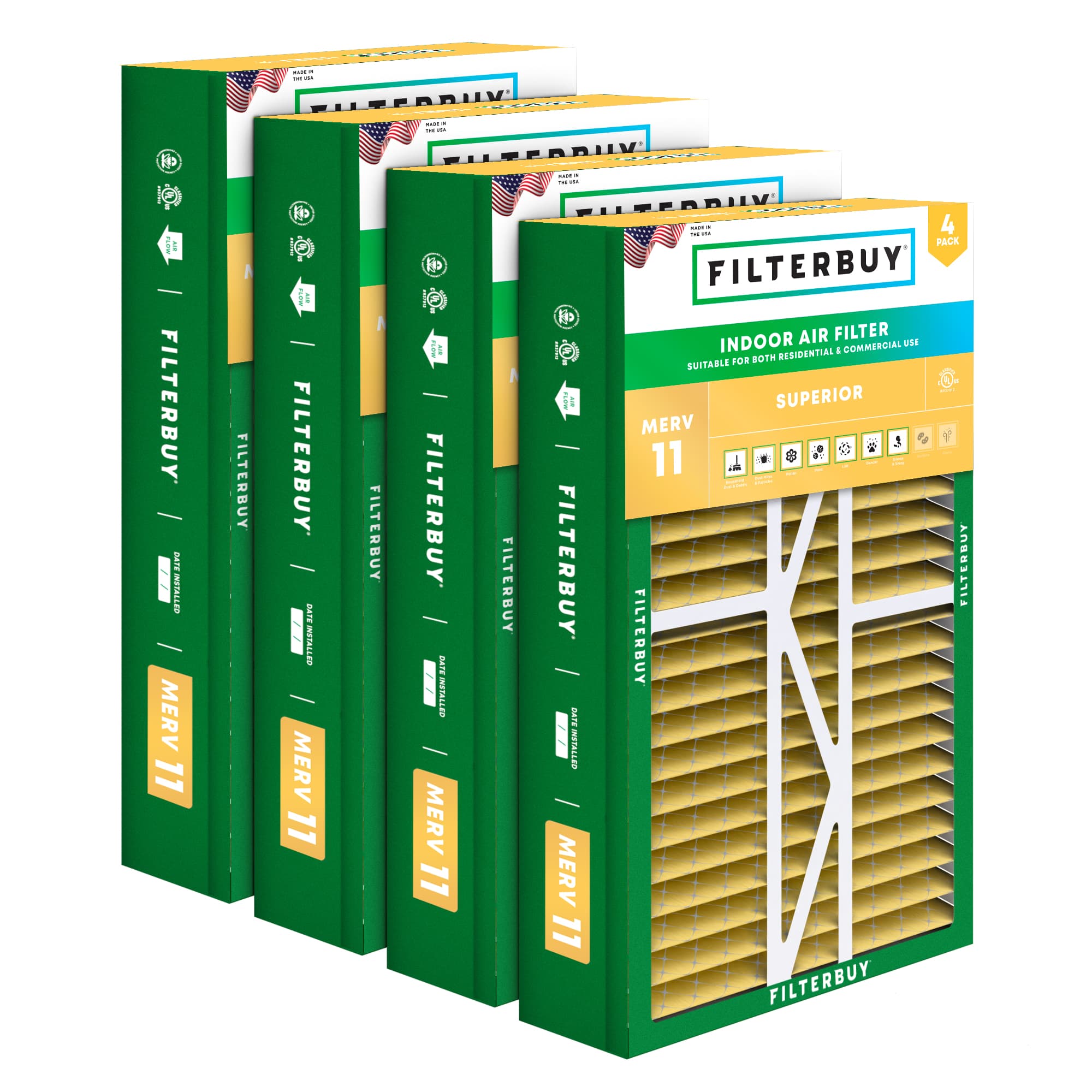
Tip: Ensure you buy the exact air filter size for your system. Certain brands have precise dimensions that only fit their specific models. See related filters
American Standard 17.5x27x5 MERV 11 Replacement Filter
Actual Size: 17.13x26.13x4.97
 Free Delivery
  Factory-Direct Low Prices, Made in the USA
 Hassle-Free Returns & Free Exchanges
RESIDENTIAL AND/OR COMMERCIAL USE
Change Every 3 Months
Tip: Ensure you buy the exact air filter size for your system. Certain brands have precise dimensions that only fit their specific models. See related filters
American Standard 17.5x27x5 MERV 11 Replacement Filter
Actual Size: 17.13x26.13x4.97
Free Delivery Factory-Direct Low Prices, Made in the USAHassle-Free Returns & Free ExchangesRESIDENTIAL AND/OR COMMERCIAL USE
Change Every 3 Months
Tip: Ensure you buy the exact air filter size for your system. Certain brands have precise dimensions that only fit their specific models. See related filters
American Standard 17.5x27x5 MERV 11 Replacement Filter
Actual Size: 17.13x26.13x4.97
Free Delivery Factory-Direct Low Prices, Made in the USAHassle-Free Returns & Free ExchangesRESIDENTIAL AND/OR COMMERCIAL USE
Change Every 3 Months
About
- This is a list 17.5x27x5 MERV 11 air filter replacement for your furnace, air conditioner, heat pump, or HVAC system
- Actual air filter size: 17.13x26.13x4.97
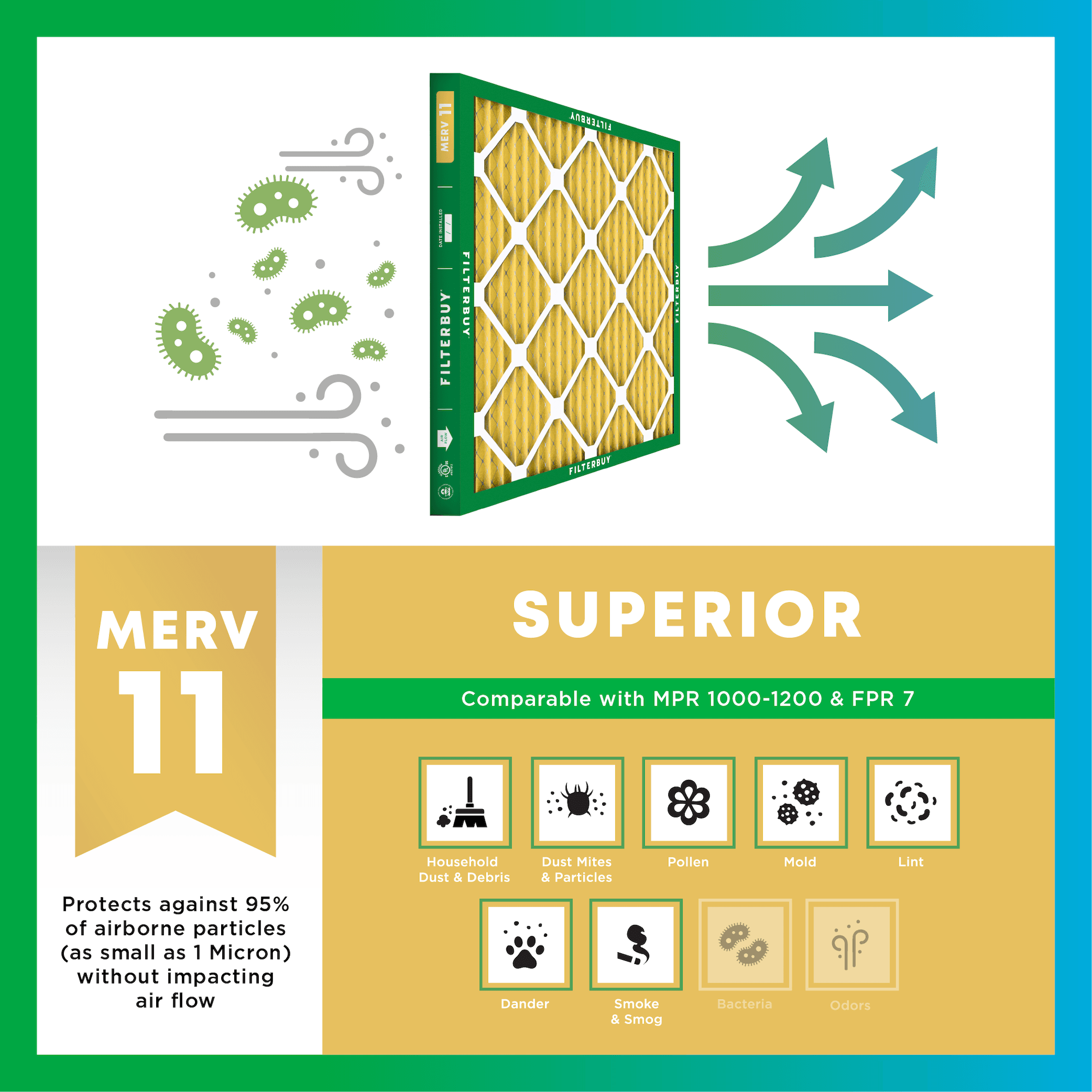
- MERV 11 synthetic media (comparable with MPR 1000/1200 and FPR 7) offers superior protection from dust, pollen, pet dander, mold, smog and more by trapping 95% of airborne particles without impacting air flow
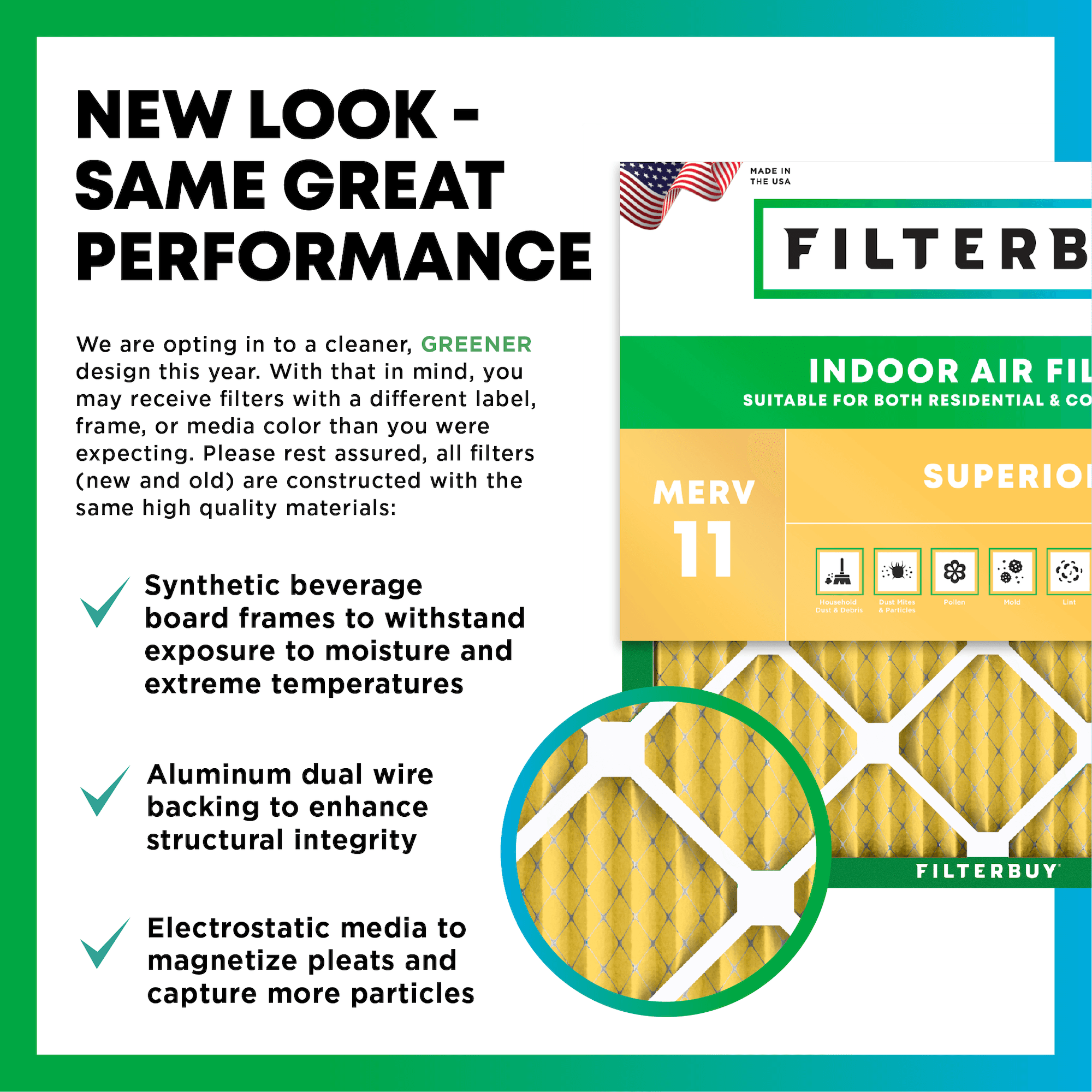
- High-quality construction means electrostatically charged pleated filter media, reinforced wire backing for structural integrity, and a durable frame to resist heat and humidity
- Built to last 3 months. 300% longer than fiberglass models
- 100% manufactured in the United States and designed with recyclable materials
- Learn more about 17.5x27x5 Air Filters
Top-Rated Filters. American Made. Delivered Free.
At Filterbuy, we don't cut corners—we craft high-quality air filters right here in the USA and ship them to your doorstep for free. No delays, no gimmicks—just clean air, made easy. With thousands of five-star reviews and filters built for real life & every HVAC system, it's no wonder why over 4 million families trust Filterbuy.

Proudly Made In The USA

Fast, Free Shipping on Every Order

Premium Materials That Go The Distance

85,000+ 5-Star Reviews From Happy Customers

Save Up to 70% Per Filter with Packs
Things to Know About Filter Sizes

Nominal Size
- The rounded size printed on your filter or HVAC unit (e.g., 17.5x27x5).
- Usually whole numbers to make identifying and ordering easier.
- A label for compatibility—not the exact measurement.

Actual Size
- The true, trimmed dimensions of the filter (e.g., 17.13x26.13x4.97 inches).
- Filters are manufactured slightly smaller so they slide into the filter slot without forcing.
- If you don't know your nominal size, measure your filter to get the actual size, then round up to find the nominal size to search on our site.

Why the difference?
- Nominal sizes simplify shopping and standardize categories.
- Actual sizes ensure the filter fits properly inside your HVAC's filter rack.
How To Find Your Nominal Size When You Don't Know It


Measure length × width × depth with a tape measure to find the actual size.

Round up each dimension to the nearest whole number to get the nominal size. Example: 17.13x26.13x4.97 in → 17.5x27x5 nominal.

Search by nominal size on our site for the best fit.

Why Getting the Right Size Matters
- Too small? Air can bypass the filter, reducing air quality and efficiency.
- Too big? It won't fit—risking bent frames and airflow issues.
- Just right? You get maximum performance, better filtration, and cleaner air.

Why Choose a 5″ filter

5″ filters give you maximum filtration with minimal maintenance — lasting up to 12 months while handling higher MERV ratings without restricting airflow.
Sizing note:
- Requires a 5″ cabinet or system.
- Actual thickness varies by brand (~4¾″–5¼″), so check your model for the best fit.

Free Exchange Policy
If the filter you buy doesn't fit, we'll send you a better size.

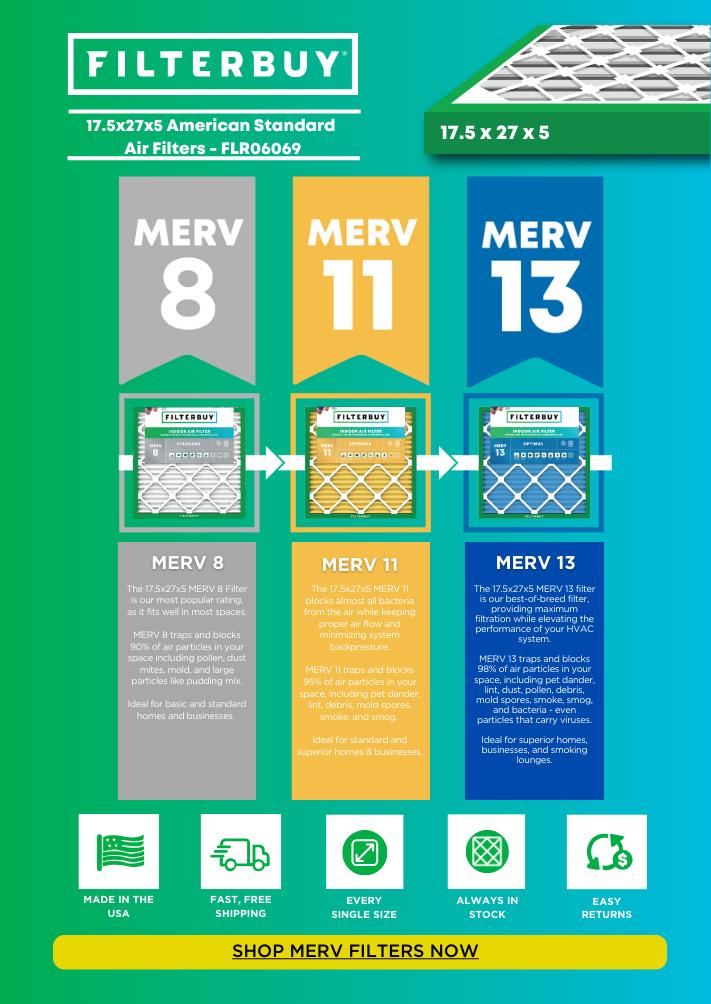
What's a MERV Rating?
MERV stands for Minimum Efficiency Reporting Value—but don't let the technical name fool you. It's just a way to rate how well an air filter traps stuff like dust, pollen, pet dander, and smoke. The higher the MERV number, the more particles it catches—and the cleaner your air will be.

Merv 8
Comparable to:FPR: 4-7
MPR: 600-1000
 Dust & Debris
 Dust Mites & Particles
 Pollen
 Mold
Mold Lint
Lint Dander
Merv 11
Comparable to:FPR: 6-9
MPR: 1200-1550
Dust & DebrisDust Mites & ParticlesPollenMoldLintDander Smoke & Smog
Merv 13
Comparable to:FPR: 10
MPR: 1900-2800
Dust & DebrisDust Mites & ParticlesPollenMoldLintDanderSmoke & Smog Bacteria
MERV 8
Comparable to:FPR: 4-7MPR: 600-1000


MERV 11
Comparable to:FPR: 6-9MPR: 1200-1550

MERV 13
Comparable to:FPR: 10MPR: 1900-2800
What Makes Our Filters Last 90 Days? Quality, From the Inside Out
We build every Filterbuy filter to deliver reliable 90-day performance—thanks to smart design and premium materials that do the heavy lifting. Here's what makes the difference:
Pleated Design
More pleats = more surface area to capture dust and debris, keeping your air cleaner longer.
Electrostatically Charged Media
Pleats are magnetized to attract and trap microscopic particles—like pet dander, pollen, and smoke.
Synthetic Beverage Board Frame
Engineered to resist warping in extreme temperatures and high humidity.

Aluminum Dual Wire Backing
A layer of metal reinforcement keeps pleats evenly spaced and structurally sound—no sagging, even at high airflow.
Made in the USA
Assembled with care. Built to perform. Ships fast, free, and reliably from our U.S. facilities.
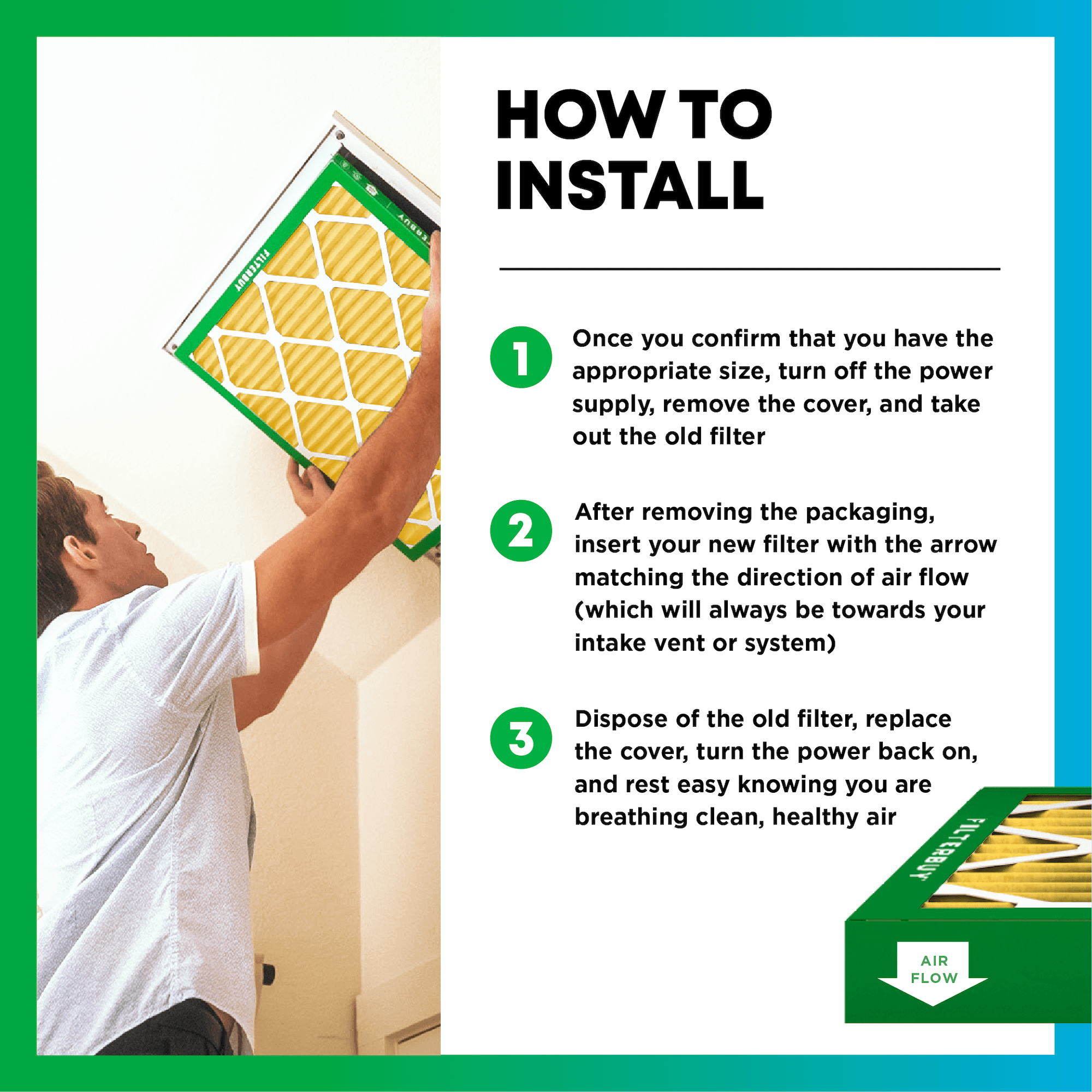
How to Install Your Filter in 4 Simple Steps

Turn Off Your HVAC SystemSafety first.

Remove The Old FilterLook for the airflow arrow and make note of the direction.

Slide In Your New FilterArrow should point toward the system (same direction as before).

Turn Your System Back OnAnd enjoy the fresh, clean air.

Never forget to replace your air filter again.
- Save 5% on every order
- Choose Your Delivery Schedule
- Edit, Skip, or Cancel Anytime.
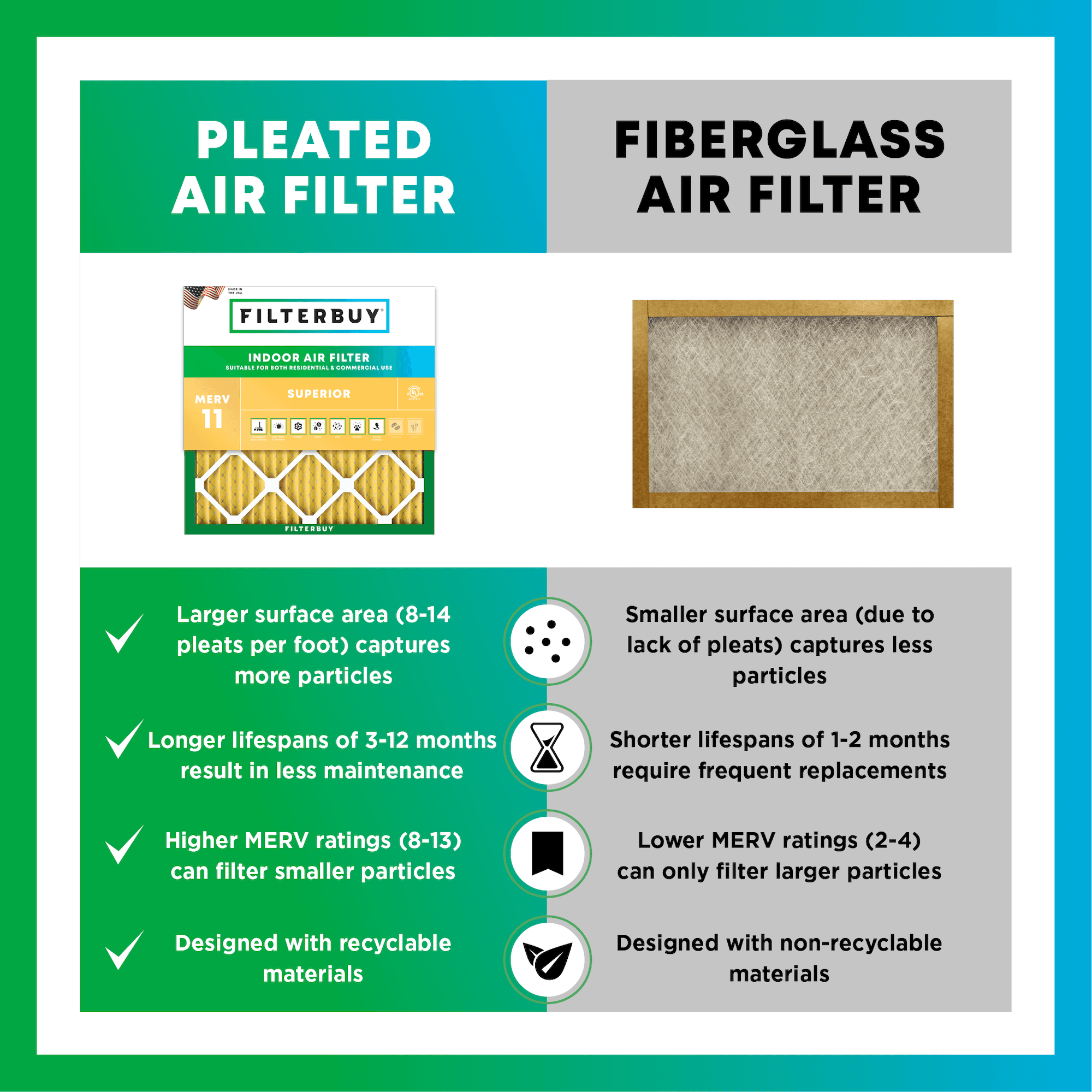
Pleated Filters vs. Fiberglass—What's the Difference?
Not all air filters are created equal. Pleated filters don't just last longer—they actually clean your air better. Here's how they stack up:

Pleated Filters
Efficiency:
High (MERV 8–13) – Traps more particles
Lifespan:
90 days – Long-lasting performance
Air Quality:
Excellent – Cleaner, healthier air
Materials:
Recyclable and durable

Fiberglass Filters
Efficiency:
Low (MERV 4 or less) – Misses small stuff
Lifespan:
30 days or less – Replace often
Air Quality:
Minimal – Basic protection only
Materials:
Thin, flimsy, and not recyclable
Pleated filters are a no-brainer—more protection, less hassle, and better air for your home.
How Often Should You Change Your Filter?
Changing your filter on time keeps your HVAC system running efficiently—and helps protect your lungs from dust, allergens, and airborne irritants. Here's how often to swap it out based on your needs:

Every 90 Days
Standard ScheduleFor most homes without pets or special air quality concerns. Great for general upkeep and energy efficiency.

Every 60 Days
If You Have Pets or AllergiesShedding fur, dander, and allergy triggers can build up fast. Changing your filter every two months helps keep the air fresher and symptoms at bay.

Every 30 Days
If You Have Respiratory Concerns or Live in Smog/Wildfire ZonesFor households affected by smoke, pollution, or respiratory conditions, monthly changes ensure maximum protection.

Want to stay on track? Set a reminder—or skip the stress with auto-delivery so fresh filters show up right when you need them.
Don't Just Take Our Word For It...
Got More Questions? We've Got Answers.
Product Specifications
| Nominal Size | 17.5 x 27 x 5 inches |
| Actual Size | 17.13 x 26.13 x 4.97 inches |
| Filter Type | Pleated |
| Media | Electrostatically Charged |
| Frame | Beverage Board |
| MERV Ratings Available | 8, 11, 13 |
| Lifespan | Up to 12 Months |
| Origin | Made in USA |
Seasonal Replacement Guide For A MERV 11 17.5x27x5 American Standard Filter
Your MERV 11 17.5x27x5 American Standard filter lasts 4-6 months under normal conditions. Real-world conditions are rarely normal.
After manufacturing millions of filters in this exact size, we've identified the seasonal patterns that actually dictate replacement timing. Spring pollen loads can saturate a filter in 8 weeks. Summer humidity accelerates particle buildup. Fall brings layered allergens. Winter heating cycles stress filtration media differently than cooling.
Customers tell us the same thing: they replaced filters on a fixed schedule and still saw efficiency drops. That's because generic timelines ignore your environment.
This guide delivers what calendar-based advice can't—a season-specific replacement schedule built from our production data and direct customer feedback on the 17.5x27x5 format.
TL;DR Quick Answers
MERV 11 17.5x27x5 American Standard Filter
The MERV 11 17.5x27x5 is a 5-inch deep pleated air filter designed to fit specific American Standard air handler cabinets.
Key specifications:
Nominal size: 17.5x27x5
Actual size: ~17.2x26.2x5 inches
MERV rating: 11
Captures: 85%+ of particles 3-10 microns
What it filters:
Pollen
Dust mites
Mold spores
Pet dander
Large dust particles
Replacement frequency:
Normal conditions: 4-6 months
Spring (high pollen): 6-8 weeks
Homes with pets: subtract 2-3 weeks per animal
Why MERV 11?
After manufacturing millions of filters in this size, we've found MERV 11 provides the optimal balance—strong particle capture without restricting airflow in standard residential systems.
Customers managing allergies consistently choose this rating. Those needing higher filtration can upgrade to MERV 13 if their system supports increased resistance.
Bottom line: This filter fits American Standard systems precisely, captures the particles that affect indoor air quality most, and performs best on a seasonal replacement schedule rather than fixed 90-day timing.
Top Takeaways
Seasonal timing beats fixed schedules. Spring may need 6-8 weeks. Winter allows 10-12. A rigid 90-day cycle misses these differences.
MERV 11 hits the sweet spot. Captures 85%+ of large particles, 65%+ of fine particles—no airflow restriction in standard systems.
Monthly inspections eliminate guesswork. Hold the filter to light. Light passes through = capacity remains. Light blocked = replace now.
Your environment dictates your schedule. Pets, allergies, smokers, and 4+ occupants all shorten intervals. Adjust accordingly.
Filter timing affects everything. Indoor pollutants run 2-5x higher than outdoor. HVAC consumes 52% of energy. A saturated filter impacts both.
Why Seasonal Changes Demand a Fresh Filter
Your MERV 11 17.5x27x5 American Standard filter works harder than most homeowners realize. Each season introduces different airborne challenges — spring pollen, summer humidity-driven mold spores, fall dust from cooling systems kicking back on, and winter pet dander trapped in sealed-up homes. A filter rated at MERV 11 captures particles between 1.0 and 3.0 microns with high efficiency, but only when the media isn't already loaded with months of accumulated debris.
After manufacturing millions of filters, we can tell you firsthand: a clogged MERV 11 doesn't just stop filtering effectively. It restricts airflow, forces your HVAC system to work overtime, and drives up energy costs by as much as 15%.
Recommended Replacement Schedule by Season
Most HVAC professionals recommend replacing a 17.5x27x5 filter every 9 to 12 months under normal conditions. However, seasonal factors can shorten that timeline significantly.
During peak pollen season (spring) and peak cooling season (summer), your filter accumulates particulates at a faster rate — especially in humid climates where mold spore counts spike. Homes with pets, allergy sufferers, or heavy foot traffic should inspect filters at the start of each season and replace them every 6 to 9 months.
Customers tell us the simplest approach is to check your filter at every seasonal transition. Hold it up to a light source — if light barely passes through the media, it's time for a replacement regardless of what the calendar says.
Getting the Right Fit for Your American Standard System
The 17.5x27x5 is not a size you'll find on most store shelves. This is a specialty dimension engineered specifically for select American Standard air handler units, and installing the wrong size leaves gaps that allow unfiltered air to bypass the media entirely.
Every Filterbuy 17.5x27x5 MERV 11 replacement filter is built to exact specifications in our own manufacturing facility. We measure actual dimensions down to the fraction of an inch so you get a precise cabinet fit — no gaps, no airflow bypass, no guesswork.
What MERV 11 Filtration Actually Catches
MERV 11 sits in the sweet spot between basic filtration and hospital-grade restriction. At this rating, your filter captures dust mites, pollen, mold spores, pet dander, lint, and fine dust particles without choking airflow through your system.
For most households — especially those with mild allergies or pets — MERV 11 delivers the best balance of air quality improvement and system efficiency. It's the rating our customers request most often because it noticeably improves indoor air quality without requiring HVAC modifications or increasing static pressure beyond manufacturer tolerances.
"After analyzing return data from thousands of filterbuy 17.5x27x5 filters, we've found that customers who inspect monthly and adjust for seasonal conditions get 20-30% more effective filtration life than those following fixed 90-day schedules."
Essential Resources for MERV 11 17.5x27x5 Filter Decisions
Customers ask us daily about filter ratings, replacement timing, and system compatibility. After manufacturing millions of filters in this exact size, we've learned which resources actually help homeowners make confident decisions. These seven sources answer the questions we hear most often.
1. Understand MERV Ratings: EPA's Official Particle Filtration Guide
We explain MERV ratings on every product page—but some customers want the science behind the numbers. The EPA breaks down how MERV measures particle capture between 0.3 and 10 microns. This helps you understand why we recommend MERV 11 for the 17.5x27x5 format.
Source: U.S. Environmental Protection Agency https://www.epa.gov/indoor-air-quality-iaq/what-merv-rating
2. Verify Filter Compatibility: ASHRAE's Technical Filtration Standards
Customers tell us they've damaged systems by installing air filters their equipment couldn't handle. ASHRAE created the MERV rating system and sets airflow standards for residential HVAC. Check their specifications before upgrading beyond what your system supports.
Source: American Society of Heating, Refrigerating and Air-Conditioning Engineers https://www.ashrae.org/technical-resources/filtration-and-disinfection-faq
3. Reduce Energy Costs: DOE's Filter Maintenance Guidelines
Our production data confirms what the Department of Energy reports: dirty filters force systems to work harder. The DOE documents up to 15% energy savings from timely replacement. This resource validates the seasonal schedule we recommend for the 17.5x27x5 size.
Source: U.S. Department of Energy https://www.energy.gov/energysaver/air-conditioner-maintenance
4. Protect Respiratory Health: American Lung Association Filter Recommendations
Many customers choose MERV 11 specifically for allergy and asthma management. The American Lung Association provides medical guidance on filtration levels for respiratory health. Their recommendations align with what we hear from customers managing indoor air quality concerns.
Source: American Lung Association https://www.lung.org/clean-air/indoor-air/protecting-from-air-pollution/air-cleaning
5. Manage Allergies: AAFA's Certified Filter Standards
Customers with severe allergies ask us which filters actually reduce symptoms—not just claim to. The Asthma and Allergy Foundation tests filters against strict allergen removal standards. Their certification program validates real-world performance for pollen, dust mites, and pet dander.
Source: Asthma and Allergy Foundation of America https://www.asthmaandallergyfriendly.com/USA/certified_products/products_categories/air-filters/
6. Follow Manufacturer Specs: American Standard's Official Replacement Guide
We manufacture filters to fit American Standard systems precisely. Their official guide covers system-specific replacement procedures and confirms MERV 8-13 compatibility for residential use. Reference this before installation if you're unfamiliar with your equipment.
Source: American Standard Heating & Air Conditioning https://www.americanstandardair.com/resources/blog/hvac-air-filter-replacement-101/
7. Maximize System Efficiency: ENERGY STAR's Seasonal Maintenance Checklist
Our seasonal replacement guide builds on ENERGY STAR's maintenance framework. Their checklist covers inspection timing and heavy-use period adjustments. Customers who follow both resources report fewer efficiency drops and longer system life.
Source: ENERGY STAR (U.S. Environmental Protection Agency) https://www.energystar.gov/saveathome/heating-cooling
Supporting Statistics
These three data points align with patterns we observe daily through manufacturing data and customer feedback.
Indoor Air Quality Impact
Indoor pollutant concentrations are 2 to 5 times higher than outdoor levels.
EPA research confirms what our return filter analysis shows:
Indoor environments concentrate pollutants faster than most homeowners expect
Closed windows and recirculated air intensify particle buildup seasonally
MERV 11 captures particles down to 1 micron—covering most EPA-identified indoor contaminants
Customers send us photos of saturated filters pulled weeks early. The particle loading tells the story.
Source: U.S. Environmental Protection Agency https://www.epa.gov/report-environment/indoor-air-quality
Energy Efficiency Connection
Heating and air conditioning account for 52% of household energy consumption.
This EIA figure explains why filter timing affects utility bills so quickly:
HVAC represents more than half your energy use
Restricted filters force the system to work harder
Our testing shows airflow resistance spikes once loading exceeds 70% capacity
Customers who switched from fixed 90-day schedules to seasonal timing report stabilized energy costs within one billing cycle.
Source: U.S. Energy Information Administration https://www.eia.gov/energyexplained/use-of-energy/homes.php
Respiratory Health Relevance
Approximately 27 million Americans currently have asthma—up from 20.3 million in 2001.
CDC data reflects what we see in customer purchase patterns:
MERV 11 orders for the 17.5x27x5 size increase year over year
Households managing respiratory conditions drive much of this growth
These customers report symptom flares when following fixed replacement cycles
The issue: a filter at 90% capacity in low-pollen months drops to 60% effectiveness during spring surges. Seasonal timing prevents that gap.
Source: Centers for Disease Control and Prevention https://www.cdc.gov/asthma/asthma-prevalence-us-2023-508.pdf
Final Thought & Opinion
Seasonal filter replacement isn't complicated. It requires abandoning generic 90-day advice that ignores how your home actually operates.
What the Data Confirms
The evidence points in one direction:
Indoor air carries 2-5x more pollutants than outdoor air
HVAC accounts for 52% of home energy consumption
27 million Americans manage asthma—rising annually
Each season stresses filters differently
A fixed replacement schedule can't account for these variables. Seasonal timing can.
Our Perspective After Manufacturing Millions of Filters
Most filter failures aren't about quality. They're about timing.
Customers come to us frustrated. They bought decent filters. Replaced them "regularly." Still experienced:
Airflow drops
Efficiency losses
Allergy flares
The problem wasn't the product. It was treating January the same as April.
Our honest opinion: The industry oversimplified filter replacement for decades. "Change every 90 days" fits on a sticker. It doesn't fit real life.
We built our seasonal guidelines from production data—not marketing convenience:
6-8 week spring interval: We've seen what pollen does to MERV 11 media
10-12 week winter window: Pet-free homes consistently show remaining capacity at 90 days
The Bottom Line
Your 17.5x27x5 MERV 11 captures particles down to 1 micron. That efficiency means faster loading when environmental demands increase.
Three steps to get it right:
Match replacement timing to seasonal demands
Inspect monthly
Adjust based on what you observe
The filters we manufacture handle the job. Your schedule determines whether they get the chance.
Next Steps
You have a seasonal schedule. Now put it into action.
1. Check Your Current Filter Today
Perform a 60-second inspection:
Turn off HVAC system
Remove filter from cabinet
Hold up to light source
Light passes through = remaining capacity
Light blocked = replace now
This baseline shows where you stand before applying seasonal timing.
2. Confirm Your Filter Size
Verify before ordering:
Nominal size: 17.5x27x5
Actual size: ~17.2x26.2x5
MERV rating: 11
Wrong sizing creates gaps. Gaps bypass filtration entirely.
3. Set Seasonal Reminders
Season Interval Check By
Spring 6-8 weeks Late April
Summer 8-10 weeks Early August
Fall 8-10 weeks Late October
Winter 10-12 weeks Mid-February
Adjust earlier for pets, allergies, or 4+ occupants.
4. Stock Filters in Advance
Never run a saturated filter while waiting for delivery.
Most households: 4-6 filters annually
High-pollen or pet homes: 6-8 filters annually
Keep 2-3 on hand at all times.
5. Subscribe for Automated Delivery
Subscription customers report the most consistent results:
Filters arrive before needed
5% savings on every order
No missed replacements
Adjustable frequency
Quarterly works for most. High-demand homes benefit from bi-monthly.
6. Monitor and Adjust
Your home is unique. Refine based on observation:
Loading faster? Shorten intervals 1-2 weeks
Showing capacity at replacement? Extend slightly
Allergies worsening? Prioritize spring and fall
Document what works. Your data becomes your schedule.
FAQ on "MERV 11 17.5x27x5 American Standard Filter"
Q: How often should I replace my MERV 11 17.5x27x5 American Standard filter?
A: The standard answer is 4-6 months. The real answer depends on your environment.
After manufacturing millions of this filter, here's what we've learned:
Spring pollen: 6-8 weeks
Summer humidity: 8-10 weeks
Fall allergens: 8-10 weeks
Winter (pet-free): 10-12 weeks
Adjustments:
Subtract 2-3 weeks per pet
Subtract 30-40% for smokers
Subtract 2 weeks for 4+ occupants
Customers who switched to seasonal timing report fewer airflow drops and allergy flares.
Q: What is the actual size of a 17.5x27x5 filter?
A: Actual dimensions: approximately 17.2x26.2x5 inches.
The 17.5x27x5 is nominal sizing—industry shorthand for ordering.
What customers tell us:
Slides into American Standard cabinets precisely
No gaps or forcing required
Matches OEM specifications exactly
Important: Verify your current filter's printed dimensions before ordering. Assumptions based on cabinet measurements lead to returns.
Q: Is MERV 11 the right rating for my American Standard system?
A: For most residential systems, yes. MERV 11 delivers optimal balance.
Capture rates:
85%+ of particles 3-10 microns (pollen, dust, mold)
65%+ of particles 1-3 microns (fine dust, pet dander, bacteria)
Customers ask us constantly about MERV 13. Our honest take:
Works well for severe allergy households
Check system specs first—higher MERV increases resistance
We've seen systems struggle with ratings they weren't designed for
When in doubt, MERV 11 handles what most households need.
Q: Can I use a different brand filter in my American Standard unit?
A: Yes—provided dimensions match exactly.
What determines performance:
Correct sizing
Appropriate MERV rating
Quality media construction
Brand name on the frame doesn't matter.
We manufacture the 17.5x27x5 to OEM specifications. Customer feedback on switching from OEM to our filters:
Identical fitment
Lower cost
No performance difference
The filter doesn't know what brand it is. Your system doesn't either.
Q: Why does my filter get dirty faster in spring?
A: Because MERV 11 captures pollen efficiently. Spring delivers pollen in volume.
Our production testing shows:
Filters reach saturation 30-40% faster during peak pollen
April and May show highest loading rates
This isn't a defect—it's the filter working
Customers are concerned about rapid loading. The fix isn't a different filter. It's a different schedule:
Drop to 6-8 week intervals March–May
Inspect weekly if allergies spike
Replace when light test fails
The filter tells you what your indoor air contains. Listen to it.
Keep Your American Standard System Running at Peak Performance
Don't wait for reduced airflow or rising energy bills to tell you it's time — order your MERV 11 17.5x27x5 American Standard replacement filter today and stay ahead of the next seasonal shift. Filterbuy manufactures and ships this hard-to-find size directly to your door, so you never have to settle for an ill-fitting substitute again.