
20x36x1 Air Filters
Actual Size: 19.75x35.75x0.75

3 month filters
2. Select Quantity
Buying multiple sizes?


Made in the USA
Ships in 24 hours
20x36x1 Air Filters Air Filter Description
Available In MERV Rating: 8, 11, 13
Made in the USA
Ships in 24 hours
Merv comparison
Scroll to see more.
 MERV 8 |  MERV 11 |  MERV 13 | |
|---|---|---|---|
| Best for | Standard Residential/Commercial Healthy Families | Superior Residential/Commercial Allergy Sufferers | Optimal Residential/Commercial Hospital Grade |
| Comparable ratings | MPR 600 & FPR 5 | MPR 1000-1200 & FPR 7 | MPR 1500 - 1900 & FPR 10 |
| Filtration | Captures 90% of Airborne Particles | Captures 95% of Airborne Particles | Captures 98% of Airborne Particles |
| Dust, lint & debris | |||
| Mold, pollen | |||
| Dander, dust mites | |||
| Smoke & Smog | |||
| Bacteria | |||
| Odor, vocs |
Is it time to change your filter?
Generally, we recommend you replace your air filters every 90 days. Find out below if you should change your filters more often.

If someone in your home has asthma or allergies...
Change your filter every
6 weeks
to ensure indoor air quality is at its best.
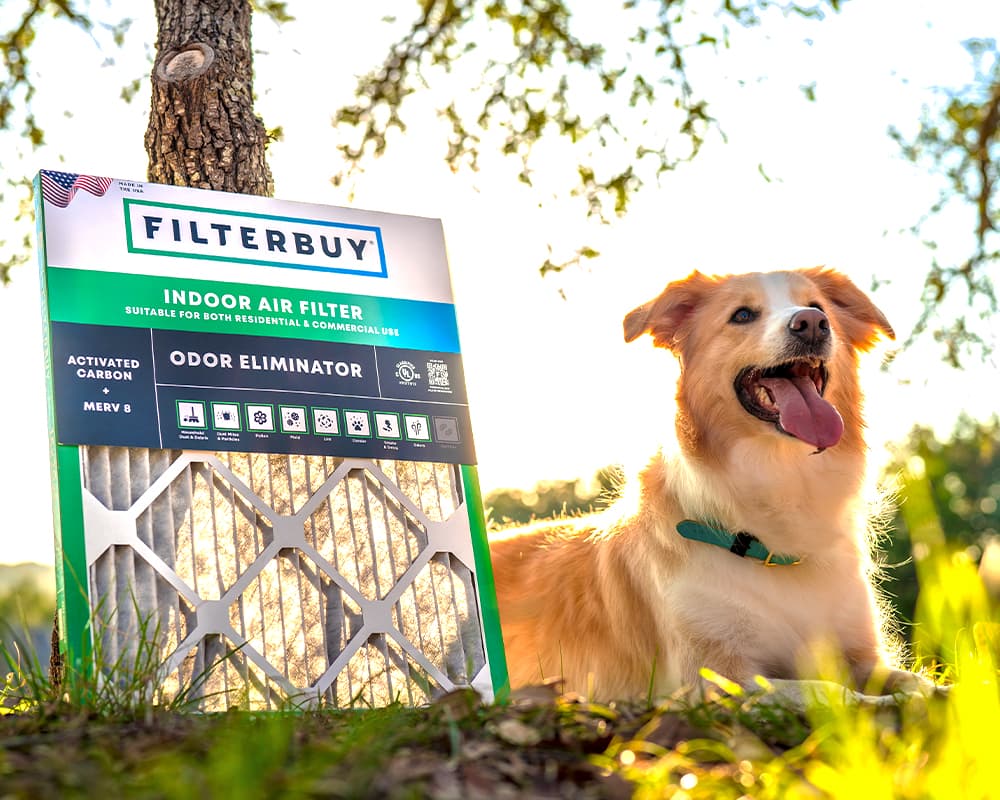
If you have pets...
Change your filter every
2 months
to avoid shedding and odor buildup.

If you have young children...
Change your filter every
2-3 months
as having clean air is even more important with children in your home.
If someone in your home has asthma or allergies...
Change your filter every
6 weeks
to ensure indoor air quality is at its best.
If you have pets...
Change your filter every
2 months
to avoid shedding and odor buildup.
If you have young children...
Change your filter every
2-3 months
as having clean air is even more important with children in your home.
All About Filterbuy 20x36x1 Air Filters
Filterbuy 20x36x1 air filters trap particles and improve air quality for up to 90 days. These filters tackle allergens and dust. High-quality materials protect your home, provide fresh air and help your HVAC system run smoothly.
People love them for both their strong filtration and energy efficiency.
Key Takeaways
Superior particle trapping ability characterizes Filterbuy 20x36x1 pleated filters, improving indoor air quality.
High-quality materials contribute durability and optimal performance.
Homes with pets or allergy sufferers should replace filters every 60 days, while 90 days for those who don’t.
These filters are specifically designed to keep HVAC systems free from debris, enhancing energy efficiency and prolonging system life.
With a MERV rating of 8, Filterbuy 20x36x1 MERV air filters show impressive performance for home use.
Filterbuy 20x30x1 Air Filters
These measurements (length, width, thickness in inches) are often rounded for convenience, like Filterbuy 20x36x1 air filter.
Filterbuy high quality air filters come in various types. Each with unique sizes and features.
Pleated filters are thicker for better efficiency.
Electrostatic filters use static electricity to trap particles
HEPA filters capture 99.97% of particles for superior performance.
A filter’s size impacts its efficiency, with larger dimensions offering better performance due to increased surface area. Thicker filters capture more particles, including smaller ones, improving air quality. Choosing the right filter depends on understanding the link between size, type and efficiency.
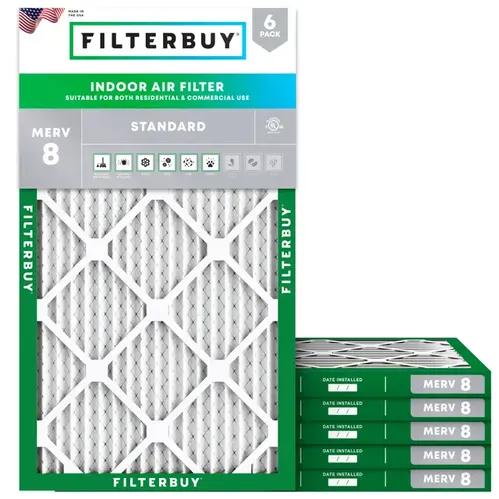
Features of Filterbuy 20x36x1 Pleated Air Filters
These filters last up to 90 days and trap airborne particles to improve air quality with high-quality materials for a healthier living space.
For homes with pets or allergy sufferers, replacing them more often ensures optimal performance.
Here are key features:
We use a special synthetic electrostatic media. This advanced material is significantly more efficient at capturing particles compared to basic cotton media used in other filters.
Our pleated air filters are at least 20 times more efficient than standard fiberglass filters at capturing dust, allergens, and bacteria.
Feature a strong beverage board frame that can handle humidity and temperatures up to 200° F. No warping or weakening here under high temperatures.
Benefits of Filterbuy High-Quality Air Filters
20x36x1 pleated air filters from Filterbuy improve health and indoor air quality. While ensuring efficiency for a healthier environment.
Here are some benefits:
Better Indoor Air Quality: Greater pollutant capture means cleaner, fresher air.
Better Efficiency: Longer-lasting, smoother, and efficient.
Health Benefits: Blocks harmful particles like dust and mold. Reducing allergies and respiratory issues.
Cost-Effective: Higher cost, but less bills and replacements.
Easy to Maintain: Less frequent changes, saving time and effort.
Installation and Maintenance Guide
Proper installation and regular maintenance of Filterbuy 20x36x1 MERV filters are essential for optimal performance. Mistakes during installation or lack of upkeep can reduce their effectiveness, affecting air quality in your home or office.
Follow these tips for correct installation:
Check your HVAC system's dimensions before buying filters, as not all systems are compatible with Filterbuy 20x36x1.
Ensure correct positioning by following the airflow direction on the filter frame.
Replace the filter every 90 days. For areas with high dust or pet dander, replace it every 60 days.
Regular maintenance is key to filter longevity. Timely replacements prevent clogs that strain HVAC systems. This leads to higher energy costs and potential damage. Consistent checks and replacements save money over time.
How Does Filterbuy Stand Out in The Competition
Filterbuy commits to quality and excellent customer service. Earning positive reviews from customers while ensuring trusted and sincere value.
We offer fast and free shipping straight to your door. Plus, all our filters are proudly made right here in the USA. We use the highest quality American-made materials. We're proud of the products we sell with over 85,000 5-star reviews from happy customers.
Frequently Ask Questions
How often should you change a Filterbuy filter?
The frequency of changing a Filterbuy filter largely depends on its lifespan. This varies based on factors such as air quality, system usage and the presence of pets. Its replacement interval is every 60 to 90 days for optimal performance. However, in environments with high allergen levels or pet dander, it requires a monthly change.
What is the best MERV rating on air filters?
The choice of MERV rating requires guidance from the specific needs and circumstances of the user. For instance, if you have allergies or respiratory conditions, a higher MERV rating, such as MERV 11 or 13, may be beneficial. However, remember that high MERV ratings may restrict airflow, potentially straining your system.
Where are Filterbuy air filters made?
Filterbuy manufacturing processes are based in the United States. Symbolizing their commitment to local production and quality assurance. They pride themselves on their comprehensive range of sizes and MERV ratings, catering to diverse household needs.
What is the MERV count on air filters?
Higher MERV counts indicate better filtration quality. MERV benefits include improved air quality and reduced allergen levels. Despite some misconceptions, a higher MERV does not necessarily restrict airflow significantly.
Is MERV 11 too high for residential?
MERV ratings are a measure of a filter's efficiency. This indicates its ability to capture airborne particles. MERV 11 filters are highly efficient, capturing smaller particles than lower-rated filters. While they offer improved air quality, they may not be necessary for all residential settings. The need for a MERV 11 filter in a home depends largely on the occupants' health concerns, such as allergies or asthma.
Does MERV 11 restrict airflow?
MERV 11 filters, due to their higher density media, indeed restrict airflow. The restriction is not necessarily a negative aspect, as it is this very quality that allows the filter to capture more particles and improve indoor air quality.
Is there a downside to high MERV filters?
While they offer high efficiency in trapping smaller particles, these filters require more energy to push air through due to their denser filtration media. This increased resistance strains your HVAC system, potentially shortening its lifespan.
Which is better, MERV 8 or 11?
MERV 8 and MERV 11 differ significantly in efficiency and filter longevity. MERV 8 filters are suitable for residential use. They capture common airborne particles effectively. They have a longer lifespan compared to their MERV 11 counterparts due to less dense filter material.
Is MERV 8 good for residential use?
Yes. MERV 8 is suitable for residential use. It is a standard efficiency rating for air filters in homes. This rating means that the filter captures particles between 3.0 and 10.0 microns, which includes common household pollutants like dust, pollen, and mold spores. Therefore, using this one helps improve the air quality in your home.
How long after changing the air filter will AC work?
After changing your air filter, a noticeable difference in your air conditioning unit's operation time may be observed. This is primarily a reflection of the post-change performance and cooling efficiency of your system. A fresh filter allows for improved airflow, reducing the strain on your AC unit and subsequently enhancing its cooling efficiency.
How to tell if an HVAC filter needs changing?
Consider replacement if the filter appears dirty, dusty or clogged. Reduced airflow, increased energy bills and the presence of dust around your home are other indicators. Replacement tips include ensuring you have the correct size and MERV rating for your particular unit.
Do pleated air filters restrict airflow?
Yes. Pleated air filters restrict airflow to some extent. The more pleats a filter has, the more surface area it has to trap particles, making the filter more efficient. However, this increased efficiency also leads to increased air resistance. Despite this, the impact on airflow is typically minimal and the improved air quality often outweighs the potential for slightly reduced airflow.