
Choosing the Right HVAC Air Filters: Insights from Filterbuy Pros
Selecting an HVAC air filter isn't just another routine task; it's like unlocking the key to a home where the air feels lighter and every breath flows smoother. Filterbuy experts don't just see filters for vents as accessories—they're the silent architects of comfort and well-being. MERV filter ratings become your guide, steering you toward the best HVAC air filters for your home. Whether you're eyeing pleated or fiberglass or zeroing in on the exact size, each choice shapes how clean and crisp your air feels in every corner of your home.
A well-timed home air filter replacement is more than routine—it's your silent shield, standing guard against the dust, allergens, and debris trying to invade your airspace. For anyone with respiratory challenges, this isn't just about maintenance—it's about breathing easier, literally. This small but mighty change turns your home into a fortress of clean air, transforming every breath into a moment of relief.
Essential Filter Facts
Understanding a rating system is a crucial recommendation from technicians when picking parts such as your filters.
Compared to fiberglass, pleated ones are popular due to increased surface area and longer service life.
Precise dimensions are vital for optimal HVAC performance, preventing unfiltered air from circumventing the system.
Experts stress frequent filter changes, typically every 30-90 days, to maintain indoor air quality and HVAC efficiency.
For individuals suffering from allergies, pleated fabric or synthetic material filters are better choices, as they are better at effectively trapping figures.
Navigating the MERV Scale
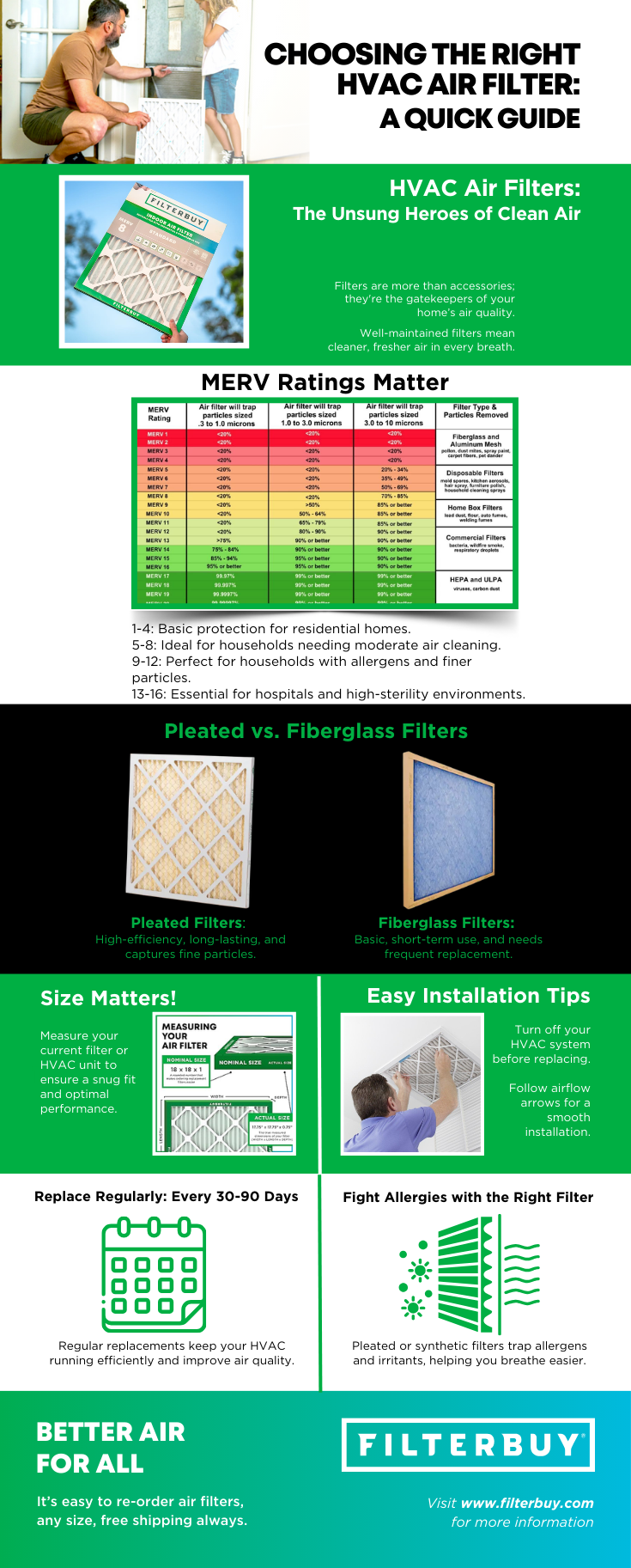
MERV, short for Minimum Efficiency Reporting Value, is the filter's bragging rights—the higher the number, the tighter its grip on unwanted guests. From dust to microscopic invaders, each step up the scale signals sharper air defense. With higher ratings, your filter becomes a gatekeeper, blocking out more irritants and leaving your air cleaner, fresher, and ready to take on the world outside. No dust bunnies or invisible offenders stand a chance.
The MERV scale stretches from 1 to 20, acting like a filtration ladder. On the lower rungs, filters rated 1 to 4 work in modest spaces, providing essential protection. Step up to 5-8, and you're in the realm of more robust filters, handling more demanding residential and commercial needs. Climb further; the 9-12 range brings top-tier residential and advanced commercial filtering. Hospitals use 13-16-rated filters to keep their air sterile in critical areas like surgery rooms. Nothing less than 17-20 will do for cleanrooms, capturing even the tiniest particles with precision.
Understanding this scale and recognizing filter efficiency levels is significant when selecting an air filter. Filterbuy technicians are here to guide and support you, helping you decide which filters are appropriate for your residence or commercial space.
Filter Face-Off: Pleated or Fiberglass?
Regarding HVAC filtration, pleated and fiberglass are like rivals with their own game plans. These two types of HVAC air filters each have their strengths—pleated filters play the long game with durability and efficiency, while fiberglass keeps things straightforward, offering a no-frills approach. Both have their own edge, depending on what kind of air defense you need.
When it comes to pleated filters, it's like having an air-cleaning powerhouse on your side. Their accordion-like surface doesn't just add flair—it creates more space to capture dust, dirt, and all the tiny particles floating in the air. Built to last longer, pleated filters don't quit early, sticking around for the long haul while offering a superior defense. With a knack for trapping even the smallest intruders, they stand tall in the efficiency game, giving you cleaner air with every breath.
Fiberglass filters, on the other hand, play the minimalist card. They get the job done but with fewer frills. Their low-efficiency rating means they miss out on the finer details—smaller particles sneak by, making regular replacements a must. With a more compact surface area, they do what they can but don't have the stamina for the long haul, catching less and bowing out sooner.
Each filter brings something different to the table, but knowing what sets pleated filters apart from fiberglass can make all the difference in your choice. Pleated filters are built for the long game, while fiberglass? It plays it safe but straightforward.
Filterbuy gets it—no two homes are the same, and neither are your filtration needs. That's why they offer a lineup of options, including reusable HVAC air filters, that balance performance, preferences, and price. Whatever your priorities, they've got the filter that fits without breaking the bank.
Fit Like a Glove: Sizing and Installing Filters
Choosing the correct furnace filter sizes is like finding the perfect lock key—it ensures every bit of air flows through the filter, and nothing sneaks past. Too big, and it won't fit; too small, and gaps let unfiltered air escape, defeating the whole purpose. To get it right, measure your current filter's length, width, and depth, or check your unit's specs. This step locks in peak performance, keeping your air clean and efficient.
Before diving into installation, ensure your HVAC system takes a breather. Find the filter housing and pull out the old one like a spent cartridge. Pay close attention to those airflow arrows on the frame—they're the compass for a smooth install. Your new filter should glide in like it was custom-made. If it's fighting back, double-check the size or direction.
A flawless fit means your filter's ready to work its magic, grabbing airborne culprits and keeping your air fresh and breathable.
The Role of Regular Filter Changes
As filters work tirelessly, they gather layers of dust and debris, quietly choking your HVAC system's performance and dimming the quality of your air. Keeping things running smoothly means staying ahead with timely filter swaps.
Most furnace filters last 30-90 days, but don't just rely on a countdown—keep an eye on them. A quick glance can tell you more than a date on the calendar. If the filter looks grimy or clogged, it's time for a change, no matter the timeline.
Filters That Keep Allergies at Bay
The Filterbuy team knows when it's time for a filter upgrade, and the clues are right in the air you breathe. Lingering dust, sneezing fits, and pesky allergens creeping in are the red flags. Pleated fabric or synthetic filters are like frontline defenders, catching the tiniest irritants before they wreak havoc. Their design isn't just about airflow—it's about keeping those invisible triggers out of your space, giving you cleaner, allergen-free air.
Allergy triggers lurking in your home are a potent reminder that skipping routine filter maintenance isn't an option. Regular check-ups keep those airborne irritants at bay, while timely filter swaps ensure they never get a foothold. Staying ahead with inspections and replacements is your best defense against allergy flare-ups.
Beyond your usual upkeep, having an expert in your corner can be a game-changer. They'll pinpoint the exact filter your system craves, saving you from the headaches of trial and error. No more backtracking or costly fixes for DIY missteps—just a smooth, seamless install that gets it right the first time.
Frequently Asked Questions
How often should HVAC filters be changed?
Every 60 to 90 days. If you have pets or allergies, consider changing them every 30 to 45 days.
What type of air filter is best for HVAC?
The best filter depends on your needs. A HEPA filter is ideal for allergies or pets as it captures smaller particles, improving indoor air quality.
Is there a difference in HVAC air filters?
Yes. Filters vary in size, material, and MERV ratings. Higher MERV ratings provide better filtration but can reduce airflow.
How many air filters does an HVAC system have?
Most systems have one filter, but larger systems or those with multiple zones may have more. Check your system's specifications.
How can I tell if my HVAC filter needs changing?
Inspect the filter visually. If it's dirty or clogged, or you notice reduced system efficiency or higher energy bills, it's time to change it.
What happens if I don't change the HVAC filter?
Not changing the filter can lower air quality and force your HVAC system to work harder, leading to higher energy costs and potential system damage.
How do I know which HVAC filter to use?
Refer to your HVAC manual or check the existing filter for size and type. Consider your needs, like allergy relief or pet dander control.
Do pleated filters restrict airflow?
Yes, especially with higher MERV ratings. While they offer better filtration, they can reduce airflow, making the system work harder.
Is MERV 14 too high for residential use?
Yes, typically. MERV 14 is better suited for commercial or hospital settings and can over-restrict home airflow.
Is it worth buying expensive air filters?
If you have allergies or asthma, expensive filters may be worth it. A standard filter with a moderate MERV rating is sufficient for general use.
What is the most common filter for HVAC systems?
Pleated filters with a MERV rating of around 8 are the most commonly used, balancing filtration and airflow.
Is MERV 11 too restrictive?
It might be for some systems. While it offers better filtration, it can reduce airflow. Always check your system's guidelines before choosing.