
Where Is the Old Furnace Filter Located in Your Home? Can’t Find the Location? Use This Step-by-Step Guide to Track It Down
September 21, 2026

Can’t Find Your Furnace Filter? Filterbuy’s Expert Guide to Locating It Fast
Over the years, we’ve helped thousands of homeowners troubleshoot HVAC issues, and one of the most common—and surprisingly frustrating—questions we get is: “Where is my furnace filter actually located?” Based on our hands-on experience servicing HVAC systems nationwide, the answer isn’t always as straightforward as you'd expect. Filters can be hidden behind return vents, inside air handlers, or even behind panels in crawl spaces.
That’s why we created this expert-backed, step-by-step guide—to demystify the process and help you identify your filter's location based on real-world system setups. Whether you're dealing with a vertical unit in a closet, a horizontal attic install, or a basement-mounted system, our team at Filterbuy has seen it all—and we’re sharing exactly what we’ve learned to save you time, stress, and guesswork.
In just a few minutes, you’ll know exactly where to look, what to look for, and how to get your filter replaced efficiently—backed by tips from HVAC pros who do this every day.
Top Takeaways
1. Know where to look. Most filters are in return vents, furnace cabinets, or air handlers.
2. Replace regularly. Change your filter every 1–3 months for best performance.
3. Dirty or missing filters = big problems. Expect reduced airflow, higher bills, and HVAC strain.
4. Get expert support. Filterbuy helps homeowners locate and replace filters confidently.
5. Choose the right MERV.
MERV 8: Basic
MERV 11: Allergy relief
MERV 13: High-efficiency (pets, smoke, asthma)

Can’t Find Your Furnace Filter? Here’s How Filterbuy Helps You Locate It Like a Pro
If you're standing in front of your HVAC unit wondering where the filter is—or if it even has one—you’re in good company. At Filterbuy, we’ve helped countless customers navigate the quirks of different furnace setups, and we’ve found that filter placement often depends on the type of system installed in your home.
Here’s a quick breakdown to help you track it down:
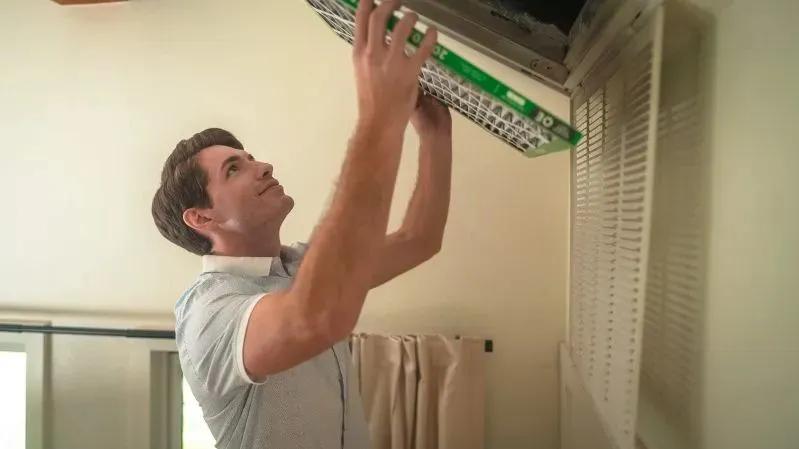
Check Behind the Return Air Vent In many homes, especially those with centralized systems, the furnace filter is hidden behind a large return vent—usually located in a hallway or near the thermostat. Unscrew the vent cover and check for a filter inside.
Look Inside or Near the Furnace Cabinet If you have a vertical or horizontal unit (common in closets, basements, or attics), the filter might be located just inside the access panel, near the blower fan. Open the panel carefully—it may be labeled.
Explore the Air Handler in Split Systems For homes with split AC/furnace systems, the air handler (often found in attics or garages) typically holds the filter. Look for a slide-in slot on the intake side of the unit.
Pro Tip from Filterbuy:
If you’re replacing an old filter, take note of its size before tossing it—many systems require a precise fit. Can’t find a filter at all? That could mean it hasn’t been changed in a while (yikes!) or was never installed—something we’ve seen more than once during customer calls.
No matter where your filter is hiding, this quick inspection can help you locate it fast—and once you do, you can upgrade to a high-performance Filterbuy replacement that improves airflow and indoor air quality right away.
Real Homeowners, Real Solutions: What Filterbuy Has Learned
We’ve helped thousands of homeowners find their furnace filters—often in places they’d never expect. These quick stories highlight common issues and the unique insights we’ve gained through real-world support.
1. Ceiling-Mounted Mystery – Denver, CO
Problem: Homeowner couldn’t find the filter near the furnace.
Discovery: It was vertically mounted behind a ceiling return vent.
Solution: Replaced with a MERV 11 Filterbuy filter.
Result: Better airflow and reduced dust within days.
Insight: Always check ceiling return vents—especially in newer homes.
2. Hidden in the Attic – Mobile, AL
Problem: Couple couldn’t find the filter on their attic-mounted HVAC.
Discovery: Slot was buried under insulation, behind blower compartment.
Solution: Installed 20x25x5 filter after locating it via video call support.
Result: Improved airflow + auto-ship subscription = peace of mind.
Insight: Attic systems often lack labels. Bring light, patience, and caution.
3. No Filter at All – Phoenix, AZ
Problem: Furnace cabinet was completely filter-free.
Discovery: No slot installed during prior renovation.
Solution: Added a return grille filter frame with standard 16x25x1 filter.
Result: Boosted HVAC performance and cleaner air in a week.
Insight: Missing filter? It may never have been installed—retrofit options work.
Why It Matters
Filterbuy doesn’t just ship filters—we help you:
Identify tricky filter placements
Troubleshoot unique system setups
Solve real problems, faster
Let our team’s experience guide you to a cleaner, healthier home—starting with knowing exactly where your filter lives.
“In our years of working directly with homeowners, we’ve found that the biggest HVAC issues often start with something as small as a forgotten filter. Whether it’s hidden behind a ceiling vent or missing entirely, locating and replacing your furnace filter is one of the simplest—and most powerful—ways to protect your system and improve your indoor air quality. At Filterbuy, we don’t just sell filters—we help people breathe easier by turning confusion into confidence.”
Supporting Statistics & Filterbuy Insights
Why Knowing Your Furnace Filter Location Matters
1. HVAC Systems Are in Nearly Every Home
89% of U.S. homes use air conditioning.
67% have central HVAC systems.
Many homeowners don’t know where their filters are.
Filterbuy Insight: We regularly guide users through locating ceiling-mounted or attic-hidden filters they didn’t even know existed.
2. Heating & Cooling = 52% of Home Energy Use
HVAC is the largest energy expense in U.S. homes.
Dirty or missing filters make systems work harder.
Filterbuy Insight: Customers often report lower bills after replacing old or improperly sized filters.
3. Duct Systems Lose 20% of Air on Average
Caused by leaks, poor connections, or airflow restrictions.
Bad filters increase static pressure, reducing efficiency.
Filterbuy Insight: We’ve helped homeowners resolve air loss by simply correcting filter type and placement.
Key Takeaway
Know where your filter is.
Keep it clean and properly sized.
Save energy, protect your system, and improve air quality.
Filterbuy brings expert-backed support to every filter search—because smart HVAC care starts with knowing where to look.
Final Thought: Why Finding Your Furnace Filter Really Matters
At Filterbuy, we’ve helped thousands of homeowners locate their hidden filters—and we’ve seen firsthand what a difference it makes.
Here’s what we’ve learned:
A forgotten or clogged filter = higher energy bills, poor airflow, and reduced air quality.
Most homeowners don’t know where their filter is—or that it’s overdue for replacement.
The moment they find it, they often say: “I wish I’d known this sooner.”
Why it’s more than just a filter:
It protects your HVAC system.
It impacts your indoor environment daily.
It plays a key role in your home’s energy efficiency.
Filterbuy’s take:
We're not just a filter brand—we’re your air quality partner.
Our goal is to give you clear, simple guidance backed by experience.
We believe you should feel confident managing your HVAC system—starting with knowing where the filter is.
Now You Know:
Where to look.
What to check.
Why it matters.
You're not just crossing off a to-do—you’re investing in a cleaner, healthier home.
Next Steps: What to Do After Finding Your Furnace Filter
1. Inspect the Filter
Is it dusty, dark, or warped?
Replace it if it’s been 90+ days or looks dirty.
2. Confirm the Size
Check the label (e.g., 16x25x1).
No label? Measure length × width × depth.
3. Choose the Right MERV Rating
MERV 8 – Basic protection
MERV 11 – Allergy-friendly
4. Order a Replacement
Shop by your exact size and needs.
Set up Auto-Ship for hassle-free changes.
5. Install + Set a Reminder
Follow airflow arrows when installing.
Set a 1–3 month reminder to check or replace.
Pro Tip: Take a photo of your filter size and location for easy reordering!
Frequently Asked Questions: Finding Your Furnace Filter
1. Where is the most common place to find a furnace filter?
The most common locations include:
Behind a large return air grille (on a wall or ceiling)
Inside or just behind the furnace cabinet
In the air handler of a split HVAC system If you're not sure, start with the return vent—it’s often the easiest to access.
2. Can a furnace have more than one filter?
Yes. Some systems use multiple filters—often one at the return grille and another inside the furnace or air handler. Always inspect both areas, especially in larger homes or zoned HVAC systems.
3. What does a furnace filter look like?
It’s typically a rectangular panel made of pleated fabric or fiberglass, framed in cardboard or metal. Common sizes include 16x25x1 or 20x20x1, and it usually has airflow arrows printed on the edge.
4. How often should I replace my furnace filter?
General guidelines:
Every 1–3 months for standard filters
Monthly for homes with pets or allergies
Up to 6–12 months for high-efficiency media filters Check your filter monthly and replace when it appears dirty.
5. What happens if I can’t find a filter at all?
It may have been removed or never installed—common in some renovations or older systems. If this happens:
Check for an unused slot in the return vent or furnace.
You can retrofit a return grille to hold a new filter. If you're unsure, contact HVAC support or reach out to the Filterbuy team for help.